
‘Wicker’ Review
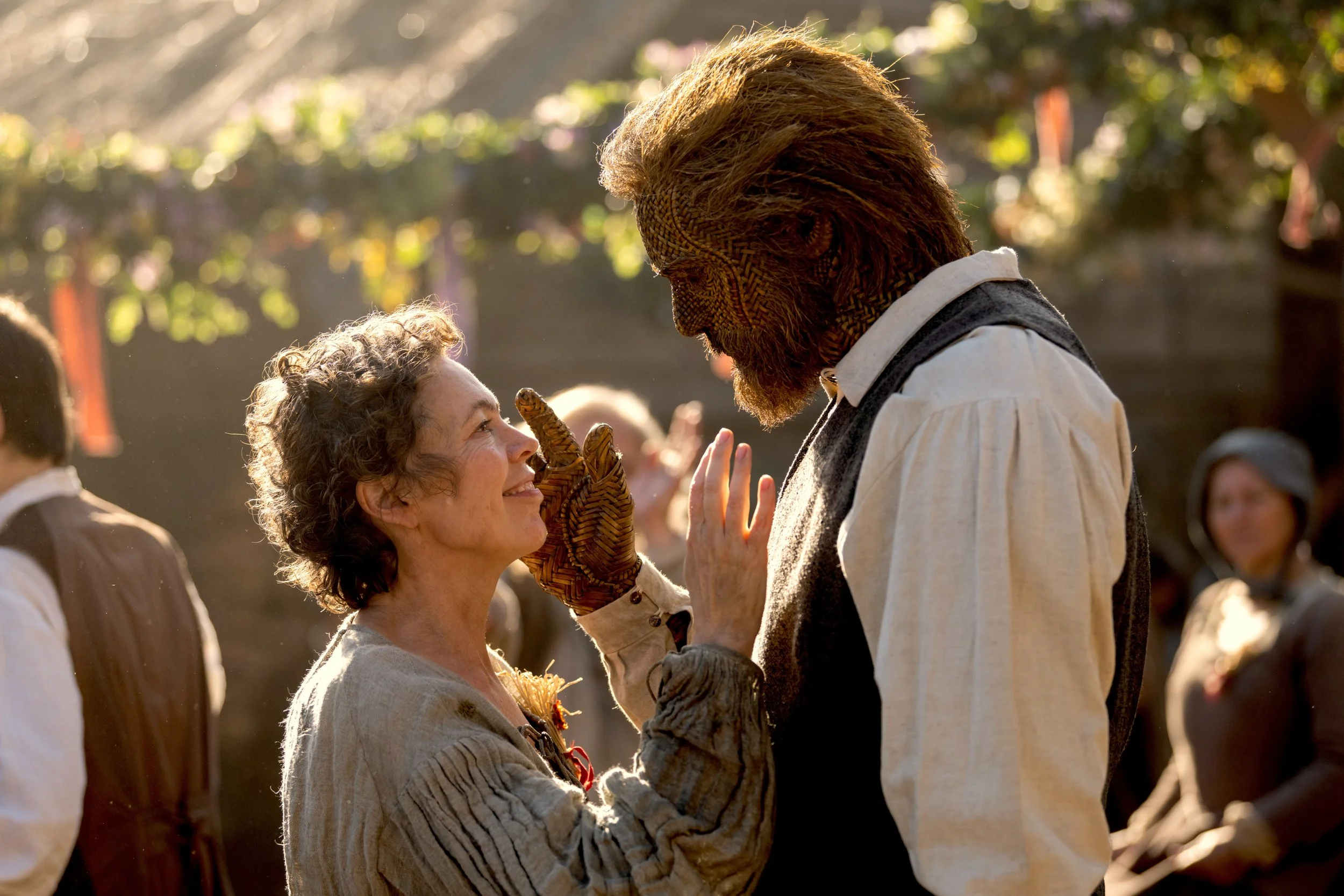
“Carrying a basketful of whimsical romance, Wicker shines as a creative expression of desire.”
October 23, 2026
“The load is always lighter when you are by my side.”
Calling all hopeless romantics! A husband woven from a basket maker is sturdy life partner material in Alex Huston Fischer and Eleanor Wilson’s deliciously charming Wicker. Fischer and Wilson, partners both in filmmaking and in marriage, ground a quirky fairy tale in the sexy sincerity of how good it feels to find genuine shared companionship. Based on the short story The Wicker Husband by Ursula Wills, Wicker follows a lonely fisherwoman who opens herself up and discovers a world full of tenderness amidst a harsh, antiquated village setting. You may have seen the lustful trailers and horny marketing for Wicker, and make no mistake, the film sprinkles erotic desire all over. However, underneath the creaky broken beds, a much more complex love story springs up. We can’t unleash our desires and be emotionally naked without the risk of heartbreak, but with that terrifying risk comes a genuine chance at feeling seen for who we are. Carrying a basketful of whimsical romance, Wicker shines as a creative expression of desire.
The great Olivia Colman plays an ostracized Fisherwoman who lives in a medieval-looking cottage by the sea. On her trips into the nearby village, she faces perpetual judgment and ridicule for her single status. Fisherwoman brushes off every dig with a cheeky retort (“Lick my worm”), and chuckles in the face of her neighbors’ strange marriage traditions. Grooms place collars on their brides as a symbol of commitment, a sharply drawn satirical note on women’s limitations in a patriarchal society. To determine the village’s next bride-to-be, Tailor’s Wife (Elizabeth Debicki) leads an oppressive ritual where virgins each shake an egg until one egg bursts with purple powder. The constant pressure of matrimony permeates the village, and Fisherwoman holds onto her independence. She views love more as a burden than a prize, closed off to the idea that anyone could lighten her load. To get the pesky neighbours off her back once and for all, she visits the local Basket Maker (Peter Dinklage) and commissions herself a husband to be made from wicker. One month later, Wicker Husband (Alexander Skarsgård) steps in and proceeds to prove that most men are doing the bare minimum.
Wicker Husband is not just a sexy piece of furniture (I’d climb that), but his own being who learns about love by experiencing Fisherwoman’s open heart. When he adorns her cottage and tends to household tasks, he does so because it makes her happy. In turn, he feels happy, and then the bed needs to be fixed. The film has a terrific sense of humour interwoven throughout, with the squeaky bed breaking and cheeky dialogue, including several brilliant (expectedly) line deliveries from Colman (“We all love jam. Is that what you’ve come so close to tell me?”). What makes Wicker click is that the humour never comes at the expense of the characters’ sincere, unconventional love story. It’s a treat to watch this relationship unfold, especially through the perspective of a woman’s experience with autonomy and figuring out what satisfies her. She commissions a husband not because she needs or wants one, but as a silly means of shooing away the villagers and having a laugh. Through his affection and emotional maturity, she opens her heart and trusts it in the hands of another, a beautiful and terrifying act that gives the film potency. The romantic bond between Fisherwoman and her Wicker Husband gives wholehearted tenderness to Wicker. It’s a fable from the stuff of dreams that uses fantasy to really enhance a profoundly moving relationship at the core. Every strand of Wicker Husband was made to be with her, and the fullness of their marriage radiates with an affirming glow. He sees through Fisherwoman’s soul and embraces her personality, the same one that the villagers ridicule, and it’s the ultimate act of authentic love. He was made for her whole being, her flammable heart as she calls it, and arrives to meet her needs.
Olivia Colman and Alexander Skarsgård anchor the film with gorgeous chemistry. Colman is brilliant at peeling back the layers to reveal Fisherwoman’s love language, and the fear of pouring her heart out. As much as she feels fiercely invigorated by finding genuine companionship, she also tends to believe the bad over the good, which manifests when a certain plot development undercuts her husband’s integrity. Colman takes us on a funny, poignant journey towards accepting that she deserves to be loved. Skarsgård makes for an excellent Wicker Husband with his sincere eyes, towering physicality, and the way he almost whispers romantic sweet nothings. He too charts a moving journey in how the character comes to define romance by learning his wife’s needs. Wicker Husband’s extraordinary makeup and costume design, and detailed face plate especially, puts the spotlight on Skarsgård’s soulful eyes to do some heavy lifting, and he carries the task with exceptional realism.
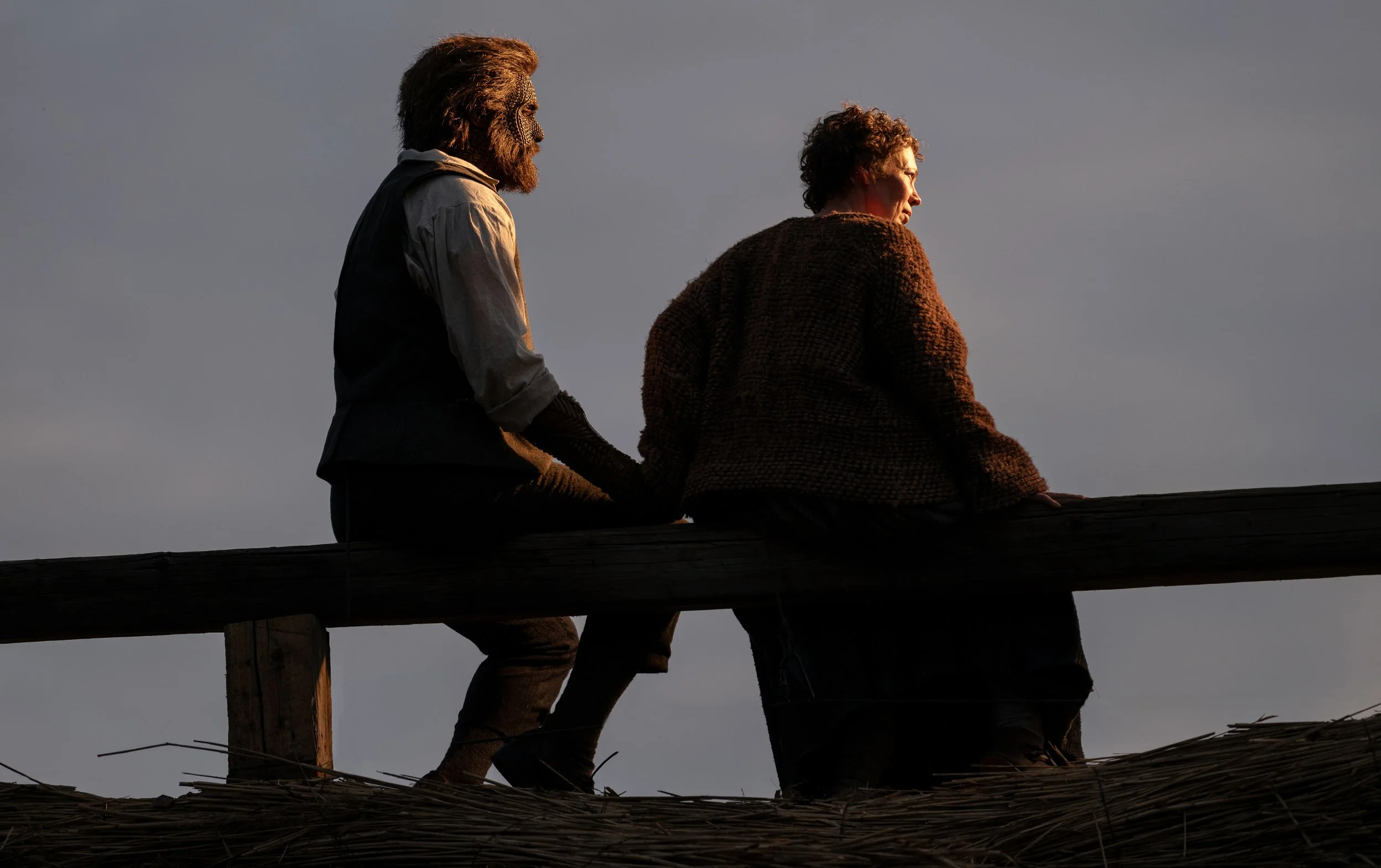
When Fisherwoman and Wicker Husband make their first few outings as a couple, the neighbours’ petty stares gradually melt away to reveal repressed sexual yearning. In a slow-dance sequence, heightened by Anna Meredith’s lovely original score, Fisherwoman and Wicker Husband bewitch everyone with an intimate sway. It’s a sensual moment that effectively rekindles desire in the unsatisfied village women, as they crave the same level of affection in their own relationships. This also illuminates deeply woven male insecurities that unfold across the entire village, as the husbands panic over the mere thought of no longer being needed. The village community is brought to life by an excellent cast, among them the wonderful Elizabeth Debicki as the rigid Tailor’s Wife. Threatened by unconventional romance, she makes a mission out of upholding the antiquated societal expectations that have kept her buttoned up from genuine desires. The bolder, more satisfied version of Fisherwoman infuriates Tailor’s Wife seemingly to no end, until she herself finds a path beyond the tailored life. Debicki is wondrous at playing her not as a cardboard cutout villain, but as an unsatisfied and complex character whose frustrations come from personal dissatisfaction, not to mention how limiting this society is for women. She excels at wickedness and bitter insecurity in equal measure.
The world of Wicker is made with remarkable care, from the lived-in performances and naturalistic cinematography to the textured set design. There’s an excellent contrast in colour palettes between the moody, muted village and warm, earthy tones of the Fisherwoman’s secluded cottage. The sound design gives weight to every creaking noise from the steamy bed she shares with Wicker Husband. The star of the visual show is undoubtedly the phenomenal makeup work on Wicker Husband, impeccably designed and created by Wētā Workshop using prosthetics and practical effects. Strand by strand, the suit and facial makeup evoke a tangible fable character come to life, made even more realistic in how light trickles through his hollow build. The crafts tell an immersive story of a grounded fairy tale, speaking to the heart of why Wicker resonates. Alex Huston Fischer and Eleanor Wilson’s delightfully unusual love story brings the importance of genuine connection into focus, crafting something real out of this harsh, increasingly artificial world.
Wicker is now playing in theatres across Canada.
