
‘Sense and Sensibility’ Review
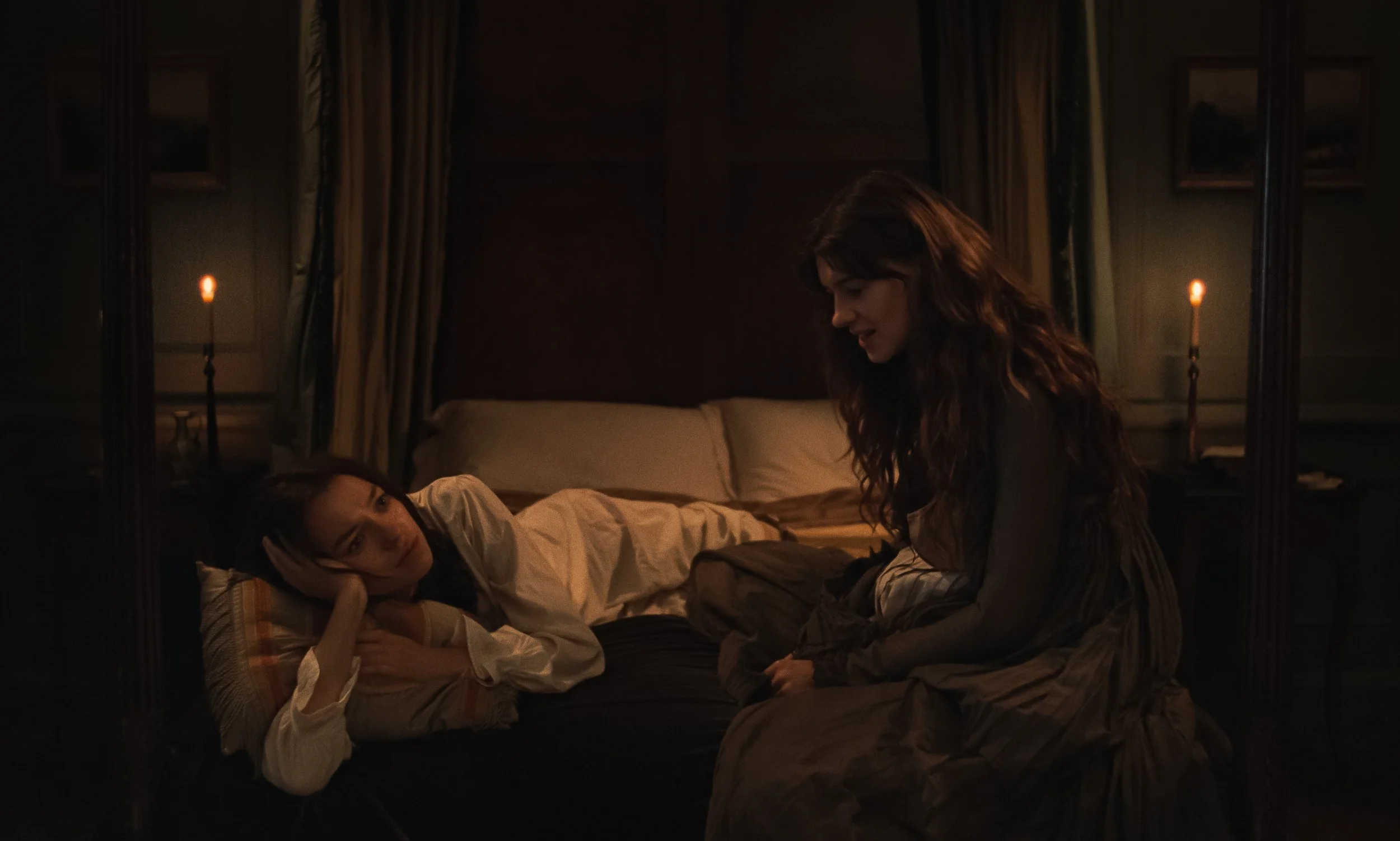
“Georgia Oakley visualizes this sublime, evergreen story for a new generation, reminding us of how alive the characters are beyond a pristinely decorated period piece.”
October 15, 2026
The 1995 film adaptation of Jane Austen’s Sense and Sensibility, written by Emma Thompson and directed by Ang Lee, set a golden standard for Austen-inspired cinema and period pieces as a whole. It’s gorgeously crafted and well versed in depicting characters shaped by their social setting. Thompson and Lee bewitched me with their depiction of women who navigate love and loss, yearning to be independent and understood during times of disparity. The film became a steady source of comfort that resonated deeper with age. In my early 20s, I identified with the fiery spirit of Marianne Dashwood (Kate Winslet), not yet acquainted with the ways of the world. When I reached my 30s and the death of my father met me, the cautious composure of Elinor Dashwood (Emma Thompson) soon took noticeable shape. After years of unleashing my inner storm on blue skies, I started to wait for a rainy day. Always prudence and honour and duty, as Marianne would say. Adaptation-wise, Sense and Sensibility ‘95 is a tough act to follow. And yet, Georgia Oakley flourishes, precisely because she sees the timelessness in Marianne and Elinor, whose experiences transcend the Georgian-Regency era. Oakley visualizes this sublime, evergreen story for a new generation, reminding us of how alive the characters are beyond a pristinely decorated period piece.
The beauty of Austen’s work comes from her eternally modern themes. Her literary genius is completely mineable for filmmakers to add personalized stamps of their own, and bring their singular experiences to the table. In Oakley’s gorgeous retelling, Austen feels modern as ever. Much the case in Oakley’s astonishing debut feature, Blue Jean, she makes Sense and Sensibility feel both specific to its time period, and thematically timeless. The film immerses you into a painterly world and finds as much sweeping excitement in unspoken gestures as it does in passionate declarations of love. Shaking off the dust collected by traditionally stuffy period dramas, Oakley brings nature into focus with a naturalistic eye. Her direction unearths an irresistibly grounded love story between women, and the enduring bonds that see them through precarious times. And while a rushed bout of pacing undercuts some key story developments in the final act, ultimately the film sticks a poetic landing.
Newly widowed Mrs. Dashwood (Caitríona Balfe) and her three daughters Elinor (Daisy Edgar-Jones), Marianne (Esmé Creed-Miles), and Margaret (Bodhi Rae Breathnach) face their father’s will with calm heads. In death, Mr. Dashwood has left the family’s Norland Park estate to his son, John (Tom Brooke), from a previous marriage. The inheritance has rendered the Dashwood women nearly penniless, with only a tiny pension to live off. John’s greedy wife, Fanny (a stoic Stacy Martin), shows no empathy towards the Dashwood women’s misfortunes. She also regards the budding romance between her brother, Edward Ferrars (George MacKay, an excellent yearner) and Elinor with disdain, prodding a change of scenery. Under severe economic stress, Mrs. Dashwood and her daughters have no choice but to leave Norland and move miles away to the quaint Barton Cottage in Devonshire. They are welcomed by their cousin, Sir John Middleton (Turlough Convery) and his mother, Mrs. Jennings (Fiona Shaw, perfectly cast), who help make the countryside feel like home. Once there, Marianne encounters two polar opposite suitors, the elusive young John Willoughby (Frank Dillane) and the sensitive older Colonel Brandon (Herbert Nordrum).
Making her feature screenwriting debut, author Diana Reid (Love & Virtue; Seeing Other People; Signs of Damage) envelops Austen’s social comedy in a coming-of-age narrative that keeps sisterhood at the core. Reid’s script retains the poetic language and essence of Sense and Sensibility, highlighting how astutely Austen wrote about people. Her characterizations echo through relevancy without a need for drastic changes to the dialogue. The magic of this story rests in Elinor and Marianne’s conflicting dispositions, where matters of the head and heart constantly ebb and flow. Elinor feels drawn to Edward’s reserve. Both characters find solace in each other as the isolated members of their respective families. Elinor is the picture of composure in a household ruled by sensibility. Edward has modest ambitions in a household driven by money and status. His shy nature is the complete opposite of what attracts Marianne, a spontaneous and fiercely romantic soul who has not yet been acquainted with the ways of the world. “The man who loves me must burn with it,” as she passionately shares, and Willoughby fits the bill. He’s the fairytale who seems to say all the right things and meets Marianne’s idyllic expectations, pushing Colonel Brandon’s attentiveness under her radar. Austen may not have had the terms “Love bombing” and “Ghosting,” but she observed characters in their nuanced dispositions and motivations (whether hidden or upfront), striking a modern chord. Having a mostly younger cast perform these roles across the board, a distinction from the ‘95 film version (apart from a teenage Kate Winslet), adds to the coming-of-age energy. Kharmel Cochrane’s brilliant casting direction brings together some of the most talented performers of their generation.
Elinor and Marianne may possess different outlooks on love, and Marianne may not understand why Elinor conceals so much, but it’s their love for each other that guides them through budding affections. Sisterhood is always at the forefront. Elinor, the sensible eldest sister, reveals very little of her aching heart to Marianne. Though, however poised Elinor’s expressions, it’s no secret that Edward’s absence has dampened the vibes in Devonshire. Elinor carries a quietly passionate yearning and isolation, brought to life by Daisy Edgar-Jones in a career-best performance. She underscores Elinor’s responsibility within the family, always putting the happiness of others before her own. What makes Edgar-Jones’ portrayal especially refreshing is how she also leans into Elinor’s loyalty, as well as her sensibility. She’s just as passionate as Marianne, only the fires burn in a different register. Flickers of bold resilience glow in her unspoken expressions, where all the magic happens. Edgar-Jones has an incredible warmth and layered complexity to her presence. Through soulful stares, she invites you into the gently unfolding drama beneath Elinor’s calm disposition, and shares excellent chemistry with George MacKay. Edward is not a particularly interesting character on the page, and MacKay brings an instantly endearing quality to him that catches your eye. One of the great yearners, MacKay adds gentle anticipation for how Edward and Elinor’s bond will continue to grow. Edward also has a more active role in this version, culminating towards a spirited confrontation with Elinor regarding his own relationship history.
Esmé Creed-Miles plays Marianne with fervent passion and spunk. She makes the period dialogue and setting feel fresh and alive, and brings out the wildflower in a classic character. Creed-Miles also keeps Marianne’s vulnerability centered throughout, as she finds her early romantic affections broken by the harsh realities of the world. The film focuses most intently on her perspective, which leaves room for an engaged position on the character’s radical sense of self. She pays little mind to Colonel Brandon’s brooding, distant gazes and falls madly in love with Willoughby’s expressive presence. It’s through her experience with Willoughby that she learns more about herself. Marianne’s guttural, rain-soaked shouting of Willoughby’s name as she watches his home from afar rattles with Creed-Miles’ authenticity. This moment feels distinctive and integral to how the film wishes to frame this character. She’s shouting not in defeat, but in defiance. She reclaims the narrative, and it trickles down to how her story further unfolds. Notably, the decision not to adapt Marianne and Brandon’s marriage from the novel feels like a radical act itself. This welcome omission underscores that Marianne is growing up, and becoming more attuned to the roots of her innermost desires. It’s more important to see that she’s been profoundly altered than it is to see a jubilant wedding. Through Creed-Miles’ version of Marianne, she reaches a compelling arc wherein she cares more to be understood and accepted as herself.
Marianne is a wild spirit, connected to and grounded by nature, and Oakley’s direction sets this earthy precedent early on. The film opens with Marianne lounging outdoors and, shortly after, running through the pasture with her father’s will in hand. Through Oakley’s observational eye, we spend more time with the characters outside than we do sitting with them in silence as they wait around for letters. We see Marianne bidding the Norland trees farewell before the Dashwoods leave for Barton Cottage. We see her messy hair, suggesting a very spirited and organic world beyond the frame. Perhaps she had been running through meadows moments ago. The grounded approach extends across several departments, from Grace Snell’s costumes to Francesca Di Mottola’s production design. This rustic, unbuttoned version of Sense and Sensibility truly underscores how Austen was simply writing about people.
There’s an immersive, patient rhythm to Oakley’s vision that echoes the work of Kelly Reichardt, in that rich layers of life are found as much in the landscapes people inhabit than in the people themselves. An enormous part of what makes Sense and Sensibility shine is the intentionality behind the visual language. Shooting on film, Oakley and cinematographer Arnaud Potier bring out lived-in textures from the setting. There’s a magnificent flow to the transition shots and framing, notably when the Dashwoods leave Norland, and we observe the estate staff through the back window of a carriage. It’s a gorgeously crafted distinction between a prim and proper society, and the earthy countryside where organic moments roam free. In a standout scene of Elinor and Edward skipping stones, the serene landscape gives way to simmering affection between the two of them, a moment’s peace where they build yearning through small gestures. The film spends time with the characters’ temperaments, gathering rich material from what they reveal and conceal.
Textured environments give way to more substantial characters and thematically resonant storytelling, which Oakley conveyed beautifully in Blue Jean and has now brought to the fabric of Sense and Sensibility. Among such characters, Mrs. Jennings stands out through a terrific performance by Fiona Shaw. It’s especially fitting that Shaw’s hearty laugh precedes a formal introduction to her character. She brings sparkling comedic energy and an emotional grounding to a role that could have gone overlooked. The brilliant casting of Herbert Nordrum (The Worst Person In The World) feels like a page bookmarked from Alan Rickman’s Colonel Brandon in the ‘95 version, in that both characters stand out through a memorable voice and quietly expressive face. Brandon is a man of few words, reverberating in his physical attentiveness towards Marianne. He’s often misunderstood as a reserved character, and Nordrum excels at leaning into the pained expressions that suggest a history of heartache kept under wraps.
One of the great romantic ripples from Sense and Sensibility is the notion that to love is to be loved. It’s about yearning for the happiness of another, as well as your own. It’s about finding your pillars of support, and finding yourself along the way. It’s a resonant picture of how love sometimes comes at a cost of one’s self, and it takes a community to rebuild anew, radically changed as Marianne so passionately communicates. Georgia Oakley’s Sense and Sensibility is a dazzling Austen refresh for new generations to engage with and interlace their own experiences of modern love into the timeless characters. Austen’s work continues to shine as an incredible foundation for contemporary creatives to mine through, and Oakley has made this story feel like her own.
