
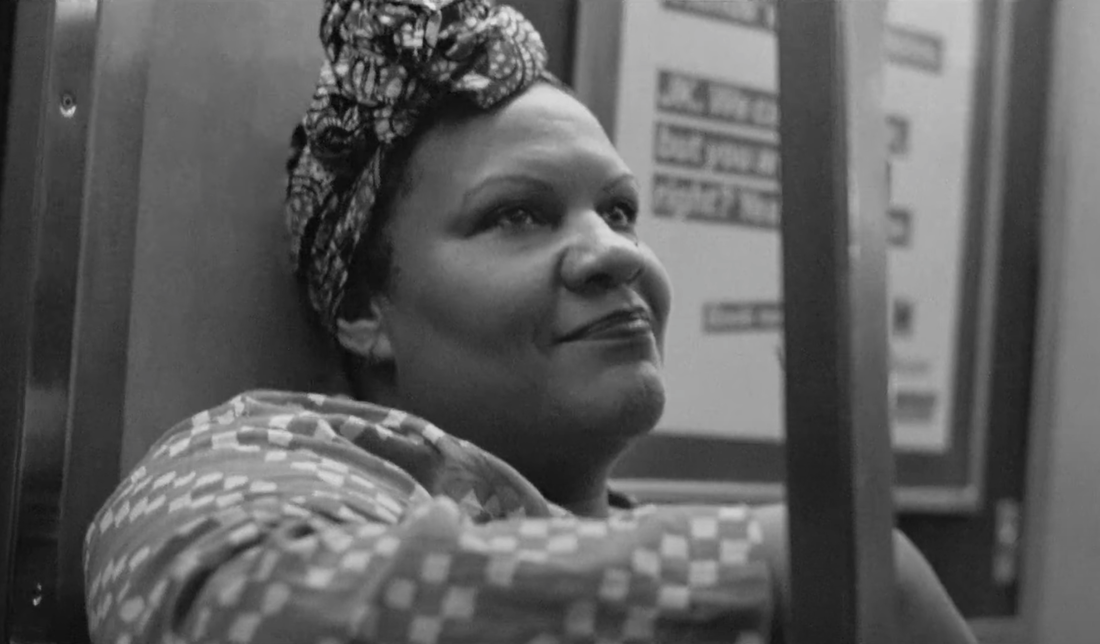
‘The Forty-Year-Old Version’ Review
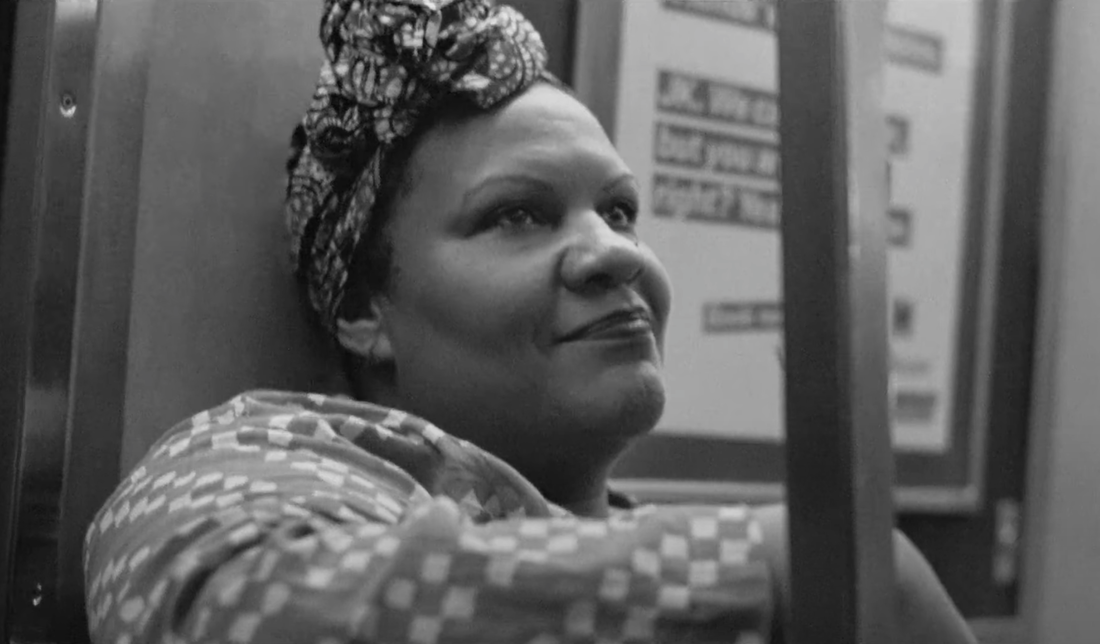
October 11, 2020
Radha Blank’s funny and passionate directorial debut feature, The Forty-Year-Old Version, is by far one of the best films of the year. Blank, who stars in the film and wrote the screenplay, is an incredible storyteller with a clear vision about artistic expression.
The story is about Radha, a playwright looking for a breakthrough in New York City. Ten years after writing a play and winning a ’30-Under-30’ award, she now teaches a small group of students for a theatre company that doesn’t get the proper funding. She is at the mid-life point where she’s being “rediscovered”, even though she’s been here all this time, working and writing. She’s currently working on a play about a Black couple living in a gentrified Harlem. Her friend and agent, Archie (Peter Y. Kim), tries to look for avenues that would welcome her voice. The search gets her in the room with celebrated theatre producer J. Whitman (Reed Birney), who makes her empty promises that she’ll get to actually tell her story. He has a history of misrepresentation and wants Radha’s play done his way: completely reshaped to suit white audiences.
At the heart of this story, beautifully directed in black and white, is an authentic voice who needs to be heard. Blank explores working in a white dominated industry that continually pushes marginalized artists to compromise their stories. As Radha loses more and more control of her own play, she starts using her voice as RadhaMUSPrime, rapping about her experiences. She eventually meets music producer D (Oswin Benjamin), who encourages her and the two form an intimate connection as the play’s opening night quickly approaches.
Blank also includes documentary-style interviews with people on the subject of turning forty. This adds another layer of perspective to the sentiment that 40 is not too late, that there is an audience for ’40-Over-40’. The 40-Year-Old Version is a compelling film with a brilliant lead performance by Blank and a pitch perfect supporting cast, who altogether make a memorable mark.
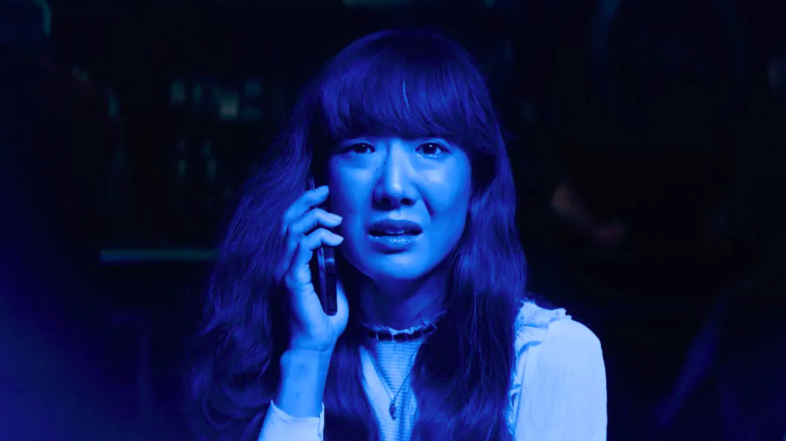
‘She Dies Tomorrow’ Review
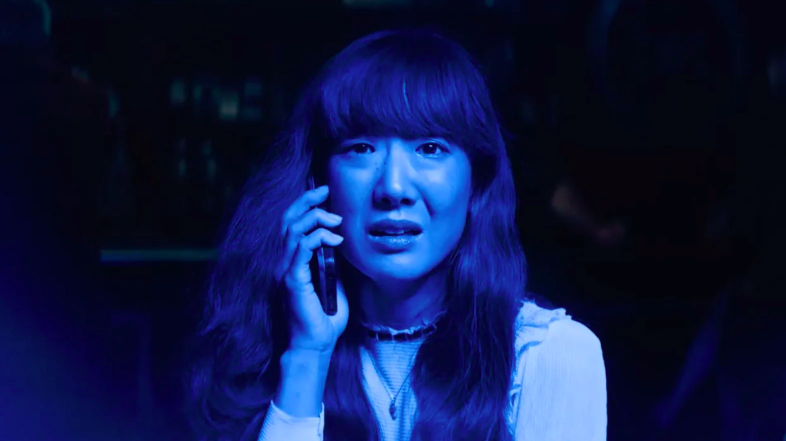
October 13, 2020
Could the release date of this film have been any more perceptive? Amy Seimetz’s existential horror, She Dies Tomorrow, centers on the universal fear of imminent death as an unexpected plague sweeps through a group of people. We are all going to die at some point, but if we knew exactly when, how would we live out the rest of our time? Seimetz, who also wrote the film, tackles this question in a way unlike anything I’ve seen.
Without much backstory for the characters or exposition for what is happening, the film is a totally immersive and sensory experience about contagious paranoia. The contagion begins with Amy (Kate Lyn Sheil), who is introduced in a dizzying state of dread. Wanting company, she calls her friend Jane (Jane Adams) in a quiet fright. When Jane arrives hours later, Amy tells her in utter seriousness that she is going to die tomorrow. Mustering an everyday sigh, Jane returns home…but she soon finds herself filled with the same unrelenting dread of knowing that she won’t live to see tomorrow either.
Not knowing where this plague is coming from, or how these characters are going to die, or what’s going to happen at any given moment makes this film incredibly intriguing to watch. The story is clouded in alluring mystery. Flashing lights that pull characters in are the only apparent indication that death is looming. Seimetz lingers on ambiguity for a while at first, to the point of being super close to testing my patience. But then she smartly shifts the focus on Jane, avoiding getting lost in the ambiguity. Given the clarity that something is in fact spreading, the film really starts to soar when the plague follows Jane home, due in part to a spectacular performance from Jane Adams. Her lived-in dread spreads like wildfire. Much like what I can imagine is a common response to impending doom, she doesn’t want to be alone when it happens. So she decides to visit her brother Jason (Chris Messina) on the eve of his wife Susan (Katie Aselton)’s birthday party at their home, where they’re hosting another couple.
Fitting the film like a glove, Jane Adams delivers a performance built on the senses and you absolutely never know what she’s going to do next. Her brother turning off the lights to bring out a birthday cake is enough to make her gasp in utter fear, as if she thought she just took her last breath. Another layer Adams plays to perfection is the truthfulness that comes to light when death is around, as she won't have another chance to say what’s on her mind.
The sense of dread in this film never lets up, as all the people at that birthday party are now filled with this plague Jane leaves behind. Tilly (Jennifer Kim), who’s been dating her boyfriend Brian (Tunde Adebimpe) well past the relationship’s expiry date, tells him her deepest thoughts about their partnership not going anywhere. Jason and Susan rush upstairs to their daughter’s room, waking her up with worrisome cries they blame on alcohol. We are all going to die at some point, but if we knew exactly when, who (if anyone) would we choose to spend the rest of our time with? Who would we choose to stop seeing? She Dies Tomorrow is an unexpectedly compelling film that evokes constant anxiety for what will happen to the characters and utilizes every second on screen to build visually on the senses.

‘Evil Eye’ Review

October 14, 2020
“I guess it’s hard to really know someone, right?”
Evil Eye has an intriguing supernatural premise, women leading the story, and refreshing cultural specificity. But the potential on the page never really clicks on screen in an effective way. The film is a sporadically fun watch led by Sarita Choudhury’s strong performance, which is unfortunately weighed down by Elan and Rajeev Dassani’s lackluster set up. The filmmakers adapted the story from an Audible Original by playwright Madhuri Shekar. Evil Eye could’ve been a great supernatural thriller, but it’s a film that reveals all its tricks early on and then slow burns in circles to reach an inevitable confrontation.
The highlight is Choudhury, who gives it her absolute all to evoke a constant feeling of anxiety on a level that the film surrounding her can’t reach. She plays Usha, a traditional Indian mother who is convinced that her daughter’s new boyfriend is the reincarnation of a man who tried to kill her 30 years ago. Usha’s belief in reincarnation and curses are rooted from her personal experiences that still feel fresh with the passing of time. The filmmakers makes it very clear that her growing suspicions will align with the introduction of this new boyfriend, which leaves no room for surprises and instead starts the countdown to when this man will reveal his true intentions. In the meantime, Usha’s relationship with her daughter Pallavi (Sunita Mani) takes center stage. The two are very close from the beginning, constantly on the phone to each other. The majority of the film plays out through phone calls, as Usha lives with her husband in India while Pallavi lives in the U.S.
Pallavi, nearing 30 without a husband, spends a lot of time fielding her mother’s concerns about finding a partner. It’s a universal talking point that grounds the film, especially considering Mani and Choudhury have wonderful chemistry that never wavers. But there is more on Usha’s mind, and because of the abusive experience she had as a young woman, she is an especially protective parent determined to get rid of a curse. She believes in the evil eye and that it (in the form of a bracelet) will protect Pallavi from harm. When Pallavi runs into a handsome man named Sandeep (Omar Maskati) at a coffee shop and the two begin dating, her excitement at everything going so well is met with Usha’s immediate suspicions that this is all too good to be true.
To show where the suspicions are coming from, the filmmakers use flashbacks from Usha’s painful experience with an abusive ex-boyfriend who wouldn’t leave her alone. Each flashback is aligned with a present-day sign Usha recognizes in Sandeep’s behaviour. She grows more and more convinced that he’s the reincarnation of the man who abused her. Her concerned husband tries to reassure her she has nothing to fear, to no avail. Pallavi laughs off her mother's threats, all the while there are red flags galore at the one-month point of their relationship. The expensive gifts, Sandeep wanting her to quit her job and move in together, swooping in “for her own good”. The character of Sandeep has all the ingredients of an obvious villain exposed as potentially sinister from the very beginning. While Maskati is fine in the role, he’s playing someone who never deviates from a literal path, and so much of the film is simply waiting for him to do exactly what Usha said would happen. The final act is a tense one, but also void of surprises and feels unfortunately rushed.
Evil Eye tries to build suspense in a slow-burning way to reach a showdown, losing energy in the process. The film works best as a mother-daughter drama about emotional recovery that dictates the fear of history repeating itself generationally. The chemistry between Sarita Choudhury and Sunita Mani totally carries the film, and proves to be far more interesting to watch unfold than the film's supernatural premise.
‘Save Yourselves!’ Review
October 17, 2020
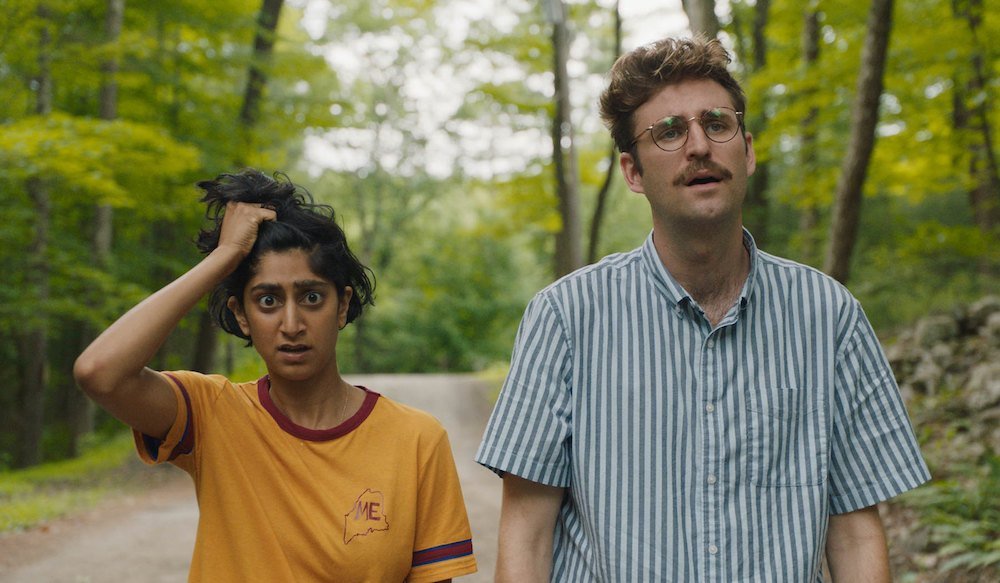
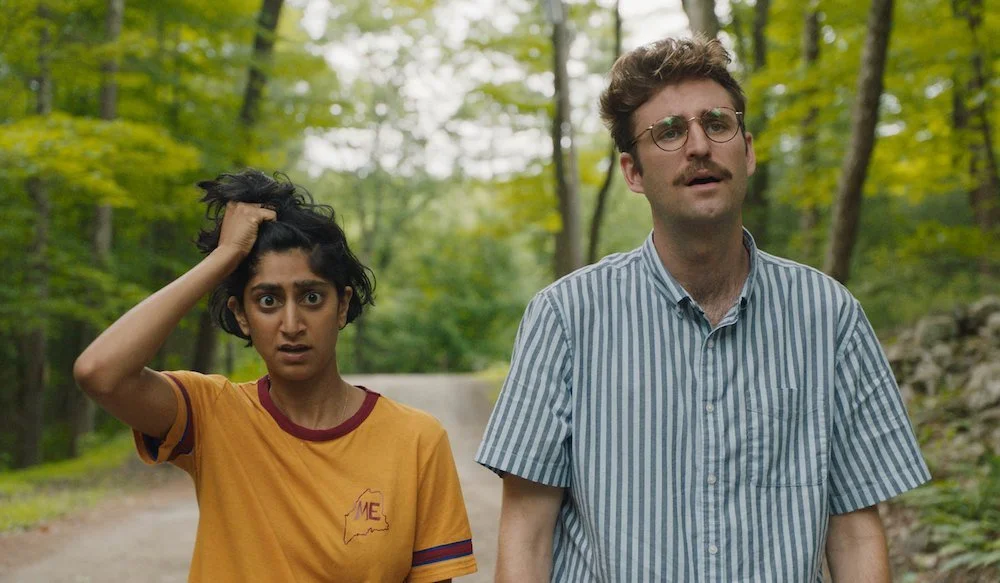
Our compulsion for social media has perhaps never been as potent as it is today. The increasing dependency on the internet, especially during a time of uncertainty, is a running theme in the apocalyptic horror-comedy Save Yourselves!. The film is about a young couple, Su and Jack, who pledge to disconnect from technology for a week in order to reconnect with each other. Cut off from all devices, they miss the news of fuzzy murderous aliens (also known as “poofs”) invading earth. Save Yourselves! is an enjoyable, funny look at a totally unassuming couple dealing with sudden chaos while learning more about who they are beyond a screen.
The most resonating aspect about the film is how Su (Sunita Mani) and Jack (John Paul Reynolds) try to position themselves in an unexpected situation. Both characters are anxious about getting older, and want to accomplish something in life beyond their typical daily schedules. They decide to stay at a remote cabin (belonging to a friend’s grandfather) not just to escape from the outside world, but also to let their brain chemistry sort itself out. They are being put to the test as they strive to be their authentic selves. Su and Jack essentially stumble their way through the apocalypse, making some questionable choices and some smart ones, trying to follow plans but mostly acting on a whim. It’s refreshing to watch more realistic characters in this threatening scenario, who admittedly don’t have the “real world” skills to know what they’re supposed to do at any given moment.
Writer-directors Eleanor Wilson and Alex Huston Fischer do a great job of introducing the threat, first playing as comical until we see just how scary and deadly these fuzzy poofs actually are. When a poof finds Su and Jack in the cabin, they are forced to fight back, and the chase leads them from one hiding spot to the next. Eventually they find themselves on the run in the woods, where they discover the terrifying way that the aliens claim victims. Stuck in a matter of life and death, the stakes are high for the characters and their relationship.
The film maintains a mostly entertaining energy throughout, and narrowly avoids overstaying its welcome in large part thanks to an incredibly strong lead. Sunita Mani’s performance as Su is one of the biggest highlights of the film. Her timing is spot on, her charisma is off the charts, and she has such wonderful screen presence that a series of her fighting off aliens would be a welcome idea. Her on-screen partner, John Paul Reynolds, is more erratic given his character, but he has great chemistry with Mani. Together they (more so Mani) elevate a story that relies on the company it keeps in the two lead characters. The film stumbles a bit in the final act, with an ending that doesn’t click as much as desired, but Save Yourselves! is certainly a refreshing addition to the horror-comedy genre.
‘Definition Please’ Review
October 20, 2020
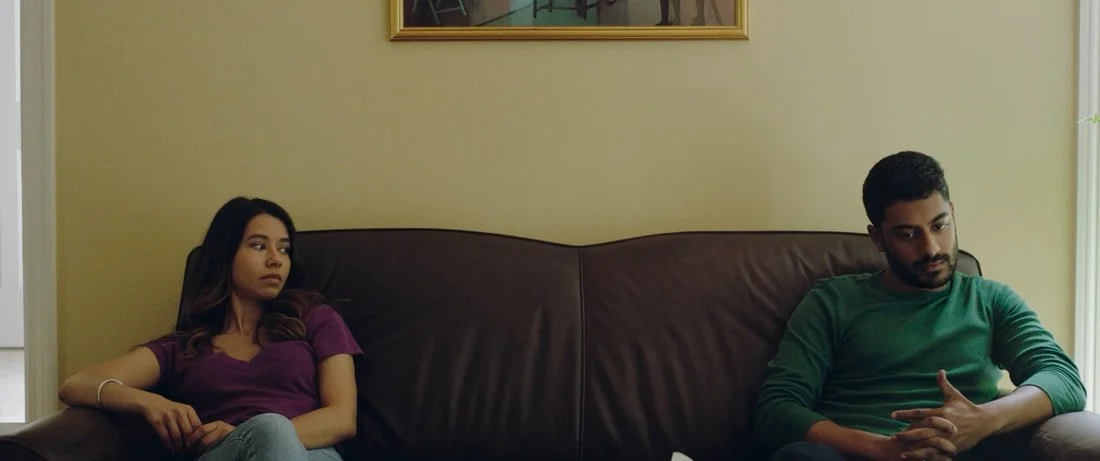
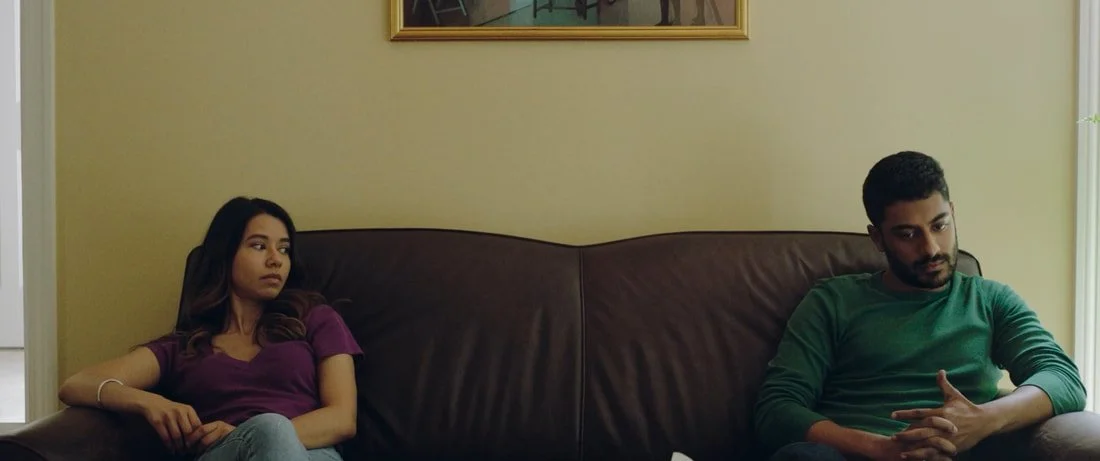
Writer, producer, and director Sujata Day tells an incredibly charming story in her debut feature film, Definition Please. Her debut excels as a comedic and dramatic character study that comes from a place of authenticity. Day, who also stars in the film as Monica Chowdry, flexes her many talents both in front of and behind the screen. With love, she highlights family ties and bottled up conflicts that arise, which gives all the characters a sense of urgency.
There’s so much to love about this story of the Chowdry family, starting from the beginning. The film follows Monica (Day), a Scribbs National Spelling Bee champion who won her accolade in 2005 and was poised to move onto bigger, better things. Day introduces the character in her moments of young glory with a time capsule of starry news footage. Fast forward to: adult Monica, 15 years after her win and still living at home in sleepy Greensburg, Pennsylvania. She lives with her mom Jaya (Anna Khaja) and is a tutor to young Spelling Bee hopefuls. Monica leads life with a resistance to change. She gets an exciting job offer that would take her to a new setting, but she lets the opportunity collect some dust, pending a response. Close friend Krista (Lalaine), who works at the town bar, urges Monica to climb the ladder to greatness, but family obligations keep Monica at home a while longer.
Her estranged older brother Sonny (Ritesh Rajan) returns home to help take care of their mom, who we learn is living with an illness. Monica and Sonny don’t get along, and there is an urgency for them to reconnect as they help their mom prepare for the anniversary of their dad’s death. Jaya won’t be able to leave this earth in peace knowing that her children are having trouble bonding. But the more the siblings try to patch things up, in an effort to lift their mom’s spirits, the more their personal struggles rise to the surface.
Day touches on many universally resonating themes from her perspective within the South Asian-American community. The story seamlessly balances heartfelt portrayals of family obligations, different coping mechanisms, the rocky road to adulthood, and chronic sickness. Day also makes a powerful connection between the characters and the stigma surrounding invisible diseases. Sonny, who appears to be bubbly and has a zest for life, is coming to terms with his bipolar disorder diagnosis. We see light switch moments where his mood suddenly turns angry or violent. Monica doesn’t want him in her life if he’s not on medication, but when he is on medication, he doesn’t feel like himself. The film has a refreshing representation of mental health. Day engages in open conversation about characters in healing and the sense of wishing away conflict, hoping it would magically disappear by pretending long enough.
Definition Please is made more resonating through the performances. Each and every cast member shine in their roles, especially the family trio of Day, Khaja, and Rajan. They share such heartwarming chemistry full of humour and depth, bringing well written characters onto the screen. The film also has strong visuals, sometimes evoking memories from Monica’s childhood that give insight to her feelings of comfort as well as getting to the root of some traumas. Another great layer is the way Day includes Spelling Bee influences, through Monica often using complex words that her friends need simplified, or through fun visuals where a word and definition will appear on screen when an attractive-looking man walks into frame.
In her film, Day plays on the expectations and pressures of what success looks like as an adult. The pressure starts from an early age; there’s a strong moment in the film in which one of Monica’s students decides she doesn’t want to be part of the Spelling Bee anymore. The student’s mom projects fears of failure onto Monica and her situation of still living at home. It’s a great scene that speaks to the amount of detail Sujata Day brings to telling a story that she wants to see up on screen. Her debut is one of the most heartfelt films of the year.
‘Rebecca’ Review
October 23, 2020
What makes Daphne du Maurier’s novel ‘Rebecca’ intriguing is that even after death, the titular character’s haunting presence is felt deeply. Whether it be through the behaviours of all those who played a role in her life, or through the walls of Manderley, the moody estate she left behind physically, Rebecca’s impact endures.
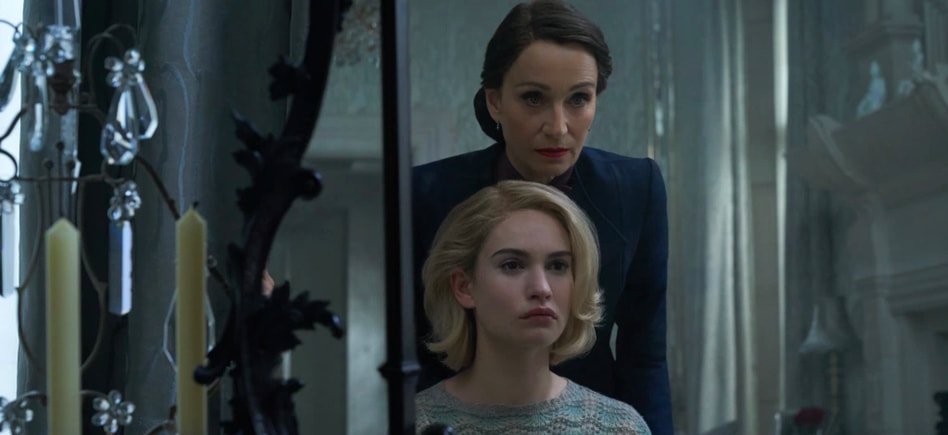
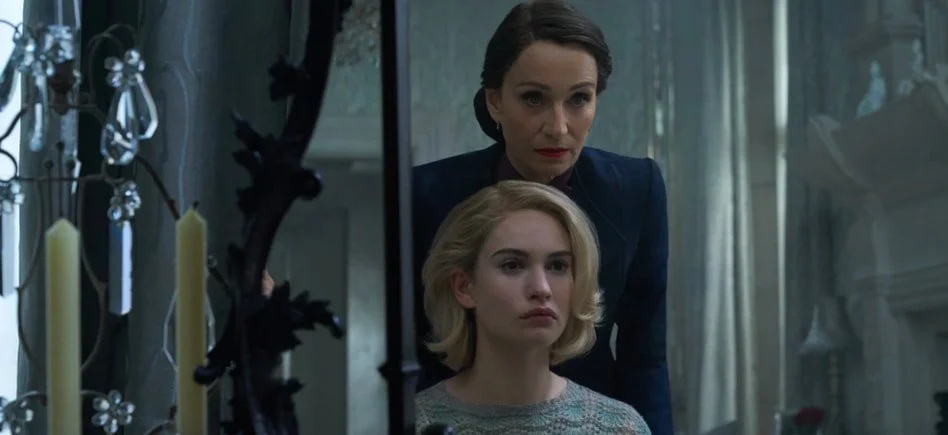
Rebecca is the story of an unnamed woman who marries a wealthy widower and moves to his estate, where the haunting shadow of his late wife still lives. Haunting is not the best word to describe Ben Wheatley’s flat adaptation of the gothic tale. In his reimagining of events, there is hardly any sense of dread or intrigue conjured by the character of Rebecca. She is certainly explained to be the driving force behind many of the other characters’ actions, but at no point in the film is her impact strongly felt.
Wheatley brings increasing focus to the whirlwind romance angle between the wealthy widower Maxim de Winter (Armie Hammer) and the new Mrs. de Winter (Lily James). The decision to go down this route takes a lot of tension and mystery out of the film’s source material. To make matters worse, the romance is sorely lacking in the passion that would fuel a whirlwind, as the lead roles range from okay to blatantly miscast. Armie Hammer could have been asleep in every lush frame and it would not have made any difference to the film. James tries, but ultimately struggles to delve into the psyche of her character.
Even Kristin Scott Thomas, the only person in this film who seems to have a strong grip on the character she plays, is not given very much to do. Mrs. Danvers, the head housekeeper at Manderley, has a deep love for Rebecca, and remains adamant about keeping her presence alive in the estate. In Mrs. Danvers eyes, the home belongs to Rebecca, and absolutely no one can nor would even be worthy of filling those shoes. Introducing a new Mrs. de Winter into this picture creates a dynamic between these women that is interesting on the page, but lifeless on screen. The scenes between Thomas and James hint at potential but feel terribly one-sided, as the former performance digs deeper than the latter. All of the performances are let down by weak direction and writing. But Thomas’s work in particular feels the most disappointing, because she evokes the most intriguing spark, and is the only performer who can really channel Rebecca’s impact through strong reminiscing. She establishes a mysterious subtext with her presence and expressions, but never fully gets to soar, even with a more dramatic ending for her character.
Wheatley also tries and fails to infuse haunted elements into the film. Mrs. Danvers has a brief moment of explaining to Mrs. de Winter that Rebecca’s presence is still felt in the estate, but this character affirmation adds nothing to the story. The biggest problem with this film is that Wheatley progresses without having a strong grasp on Rebecca’s impact. There are numerous moments of obvious insistence, such as Mrs. de Winter finding hair in Rebecca’s brush, or all of the characters watching a body being carried from a shipwreck. Another scene in particular sees a room full of house guests circling a downcast Mrs. de Winter while chanting the name ‘Rebecca’. Wheatley just cannot evoke the mystery of that character in an impactful way, having to shout her name aloud in a feverish and choppily edited ballroom sequence instead.
The editing in this film is erratic to say the least. For some reason, there’s a fast forwarding technique sometimes used on characters’ thoughts, placing them in scenes that they are going to appear in very soon, then moving backwards to where they are in the story’s progression, then moving forward again. It’s odd, and adds to the overall disappointing experience of watching this film, especially given the adapted text. Rebecca skips mindlessly around the source material, lacks any sense of suspense, and fails to evoke the elements that make its titular character so mysterious in the first place.
‘The Witches’ Review
October 25, 2020
The Witches, the latest reimagining of Roald Dahl’s 1983 book of the same name, boasts plenty of talent in front of and behind the camera. Alfonso Cuarón and Guillermo del Toro both have producing credits, and the latter co-wrote the screenplay with Black-ish writer Kenya Barris. Robert Zemeckis has directed many special effect vehicles throughout his career, sometimes to the detriment of a story. Funnily enough, the more advanced technology has become, the more distracting the effects in his work appear to be. Earlier films such as the Back to the Future trilogy and Death Becomes Her incorporate practical visuals that fit well with the imaginative stories. But in more recent years, his over-reliance on effects has become a distraction, as is the case with his adaptation of The Witches.
Following in the footsteps of Nicolas Roeg’s 1990 film adaptation starring Anjelica Huston, this new version does not deviate very far from the book. In some ways it sticks even closer to the source material, while also bringing in new perspectives. This story is set in 1960s Alabama, where a young boy (Jahzir Bruno) goes to live with his grandma (Octavia Spencer) after his parents’ death. The beginning focuses intently on the aftermath of loss, exploring the young boy’s emotions with a level of patience that helps establish the bond between him and his grandma. With love and care, his grandma slowly brings him out of his grief, and the two become more closely knit. But another shadow is cast upon them, from evil forces his grandma evidently knows a lot about…witches. As she says to her grandson, once a witch enters your life, you can never truly escape them. This sentiment is put to the test during a trip to the grocery store, where the young boy encounters a witch. When the grandma realizes what he saw in detail, the two hurriedly leave home to stay in a hotel. The grandma explains the hotel is a safe place as the only guests are wealthy white people, and the witches don’t go after the rich. Themes of class and discourse on how children are valued differently are some of the ways this new adaptation brings a different perspective to a classic story for a new generation.
During their hotel stay, they stumble across a conference of witches led by the Grand High Witch (Anne Hathaway). The witches’ introduction plays for comical and witty effects, with clear alluding to their ominous intentions. The Grand High Witch asks the hotel concierge, Mr. Stringer (Stanley Tucci), if he’d call an exterminator should there happen to be any mice infestation. Rest assured, this hotel doesn’t have a mouse problem…not yet. While wandering around, the young boy finds himself in a conference room where the witches are set to meet. This setting is where the familiar reveal takes place; the witches can remove their shoes, gloves, and wigs, all the items that hide their characteristically witchy features. They revel in the clock ticking, as they’ve asked a kid named Bruno (Codie-Lei Eastick) to meet them under the promise of him getting more chocolate. Unraveling as the original story does, the Grand High Witch transforms the young boy and his new friend Bruno into mice. The duo, along with a new character of a pet mouse Daisy (Kristin Chenoweth), must find a way to change themselves back and stop the witches from turning more children into mice. This adventurous side to the story is one of the few highlights of the film, largely thanks to good voice work as well as the strong bond that has been established between the young boy and his grandma.
Comparisons to the 1990 adaptation of The Witches are inevitable. Zemeckis's version is slightly different with the inclusion of new perspectives, an ending that stays closer to the source material, and a much more resonating Hero Boy character. Jahzir’s wonderfully endearing performance as the young boy is delightful to watch. In the young actor’s feature film debut, he carries the story with so much energy and charm. He also has magical chemistry with the great Octavia Spencer, and of the cast the two of them give the most consistently strong performances in the film. That cast includes Anne Hathaway, having a great time playing the Grand High Witch, who turns out to be the most disappointing character. The let down doesn’t necessarily come from Hathaway, whose immersive commitment to a deranged and totally campy performance is fun to watch unravel. It’s the visual creation of her character that is underwhelming, which puts a bit of a damper on all the fun she’s having.
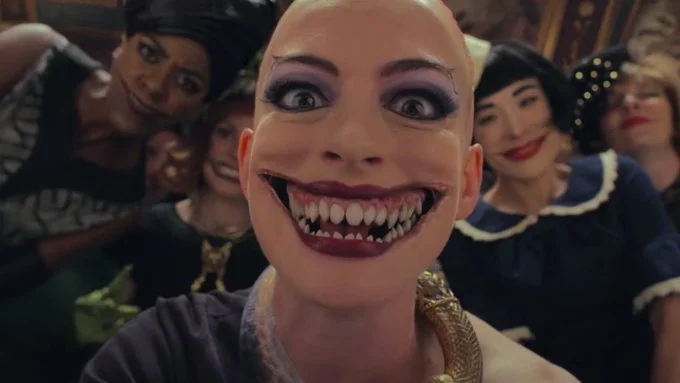
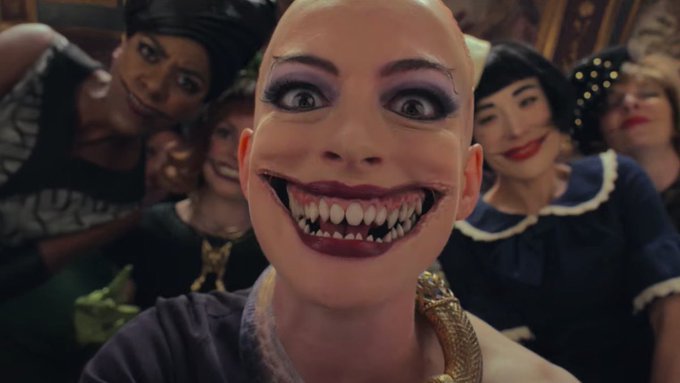
In reference to the 90s adaptation, the biggest draw of that film was Anjelica Huston in the same role, making wickedness look effortless. It’s an absolutely iconic performance with the added layer of creepy, and practical, makeup. The reality-based visuals from what the camera could do, rather than what could be added in post-production, made the Grand High Witch look genuinely creepy. In the new version, CGI takes the place of practical prosthetics, and there aren’t many characteristic effects added in the first place. During the big reveal scene, it turns out that the Grand High Witch looks a lot like the other witches in that conference room: bald with a big carved out smile. She has some new features, like the ability to levitate and stretch her arms to never-ending lengths. But her reveal is underwhelming, mainly because Zemeckis relies so heavily on digital makeup trying to make the character scary-looking. Her capabilities are much more disturbing than her appearance, as seen in an earlier flashback part of the film where she turns a young girl into a chicken. The film expands a bit more on the history between the Grand High Witch and the grandma, as the latter’s past friendship with that little girl explains why she has so much knowledge about witches in general. Hathaway and Spencer also get to share some moments of recognition, and the two play off each other well.
The Witches does just enough to stand on its own with some good performances, beautiful set designs, and newly incorporated themes. But the storytelling gets lost in an over-reliance on visual effects and a brew of distracting elements (including unnecessary narration by Chris Rock and a very odd montage at the end).
‘The Life Ahead’ Review
November 3, 2020
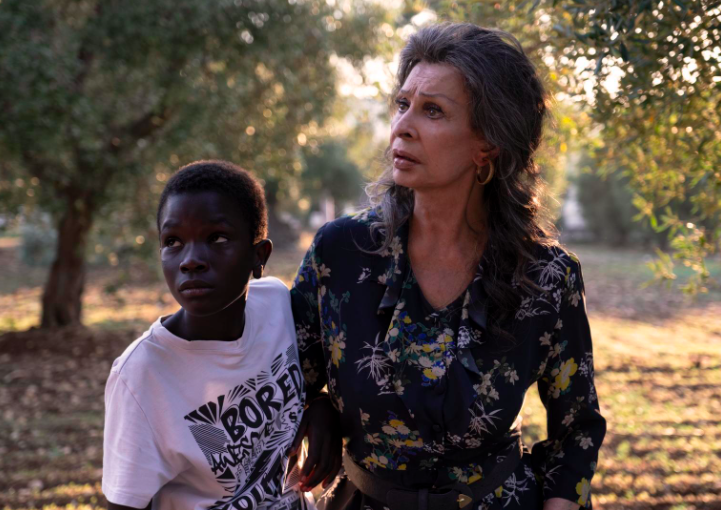
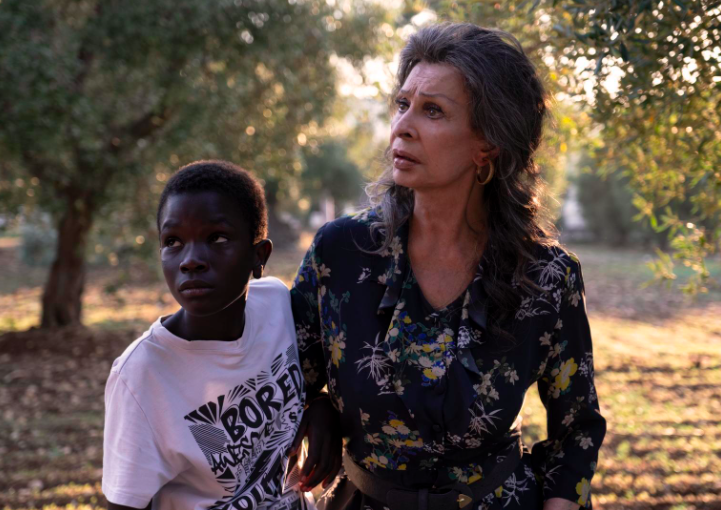
Sophia Loren returns to the screen with a spellbinding performance in The Life Ahead, a resonating film about trauma, acceptance, and the need for formative teachers in life. This is a performance of vitality and fragility that is so breathtakingly lived-in. Her face is a canvas of the life her character has lived. Her expressions are a stunning portal to emotional moments that come and go in waves, as her character’s health sees a slow decline. It’s not hard to savour every moment of Loren’s work as she plays her first role in decades, and a leading one at that. Given the combined tenacity and compassion of her character, it’s a treasure that this was the role to lure her back onto the screen. The camera is magnetically drawn to her majestic presence, to no surprise and to compelling delight.
The Life Ahead marks the third collaboration between Loren and her son, director Edoardo Ponti (first the feature Between Strangers in 2002, followed by the short film Human Voice in 2014). Set in seaside Italy, Ponti brings a devoted lens to the story of Holocaust survivor and former sex worker, Madame Rosa (Loren), as she reluctantly takes in an ambitious 12-year-old Senegalese boy, Momo (Ibrahima Gueye), who is just as reluctant to be placed under her care. The two have a shared unfortunate history that harks back to the beginning of the film. Momo, studying a crowd of people shopping at a street market, fixates on an elderly woman carrying a bag full of antiques. Not just any antiques…she intends to sell them in exchange for rent. Spotting her vulnerability, he steals her bag and stores it away. The doctor he lives with discovers the bag and brings Momo to Madame Rosa’s apartment, a refuge for children of sex workers. Momo is made to return the bag and apologize to Rosa. But the underlying reason for this visit would soon change the course of the characters’ lives ahead.
Doctor Coen (Renato Carpentieri) pleads with an insulted Rosa that she do him a favour and care for the boy, just for a few weeks. Otherwise he’ll be placed with child services. She agrees after much convincing, and Momo joins two children of immigrant women. Friendly neighbor Lola (Abril Zamora), mom to one of the two children, stops by on occasion to check in. Zamora is trans and plays a trans woman, which is refreshing for that reason (especially given very troubling Hollywood representations) in addition to the fact that her being trans doesn’t become a talking point in the narrative. She just is.
The first bit of the film sees Rosa and Momo keeping to themselves, each harboring the residue of their pasts and resisting opportunities to bond. Momo keeps busy mostly outside trying to make a living from dealing drugs, while Rosa has her hands full trying to make a living by raising three children. Rosa’s firmness and Momo’s stubbornness clash, but what begins as an antagonistic relationship develops into a friendship, as the two lonely souls discover through unexpected bonding that they are kindred spirits. Their shared connection peels back the layers of the characters’ life stories and gives the film wings. Edoardo Ponti adapted the story from Romain Gary’s best-selling novel, and one of the most well-known in French literature, The Life Before Us. Ponti changes the original setting of Paris to the Italian port city of Bari, translating themes about who and what gives life meaning.
The evolving definitions of home and family are explored through internal observations and reflections from the film’s protagonist, Momo. The story is told from his perspective in the heart of Bari, where he tries to find a sense of place among a labyrinth of unwelcoming settings. One of the reasons Doctor Coen persuades Madame Rosa to take Momo in is because the boy, who we learn is an orphan, doesn’t have a nurturing figure in his life. His childhood is quickly maturing from his surroundings and circumstances. In the place of his mother, who died when he was 6, he has visions of a protective lioness that he conjures up when he feels the most vulnerable. The lioness appears at two key moments in the film - once in close proximity and again from a distance, evoking the growth of his character.
In his first feature film role, actor Ibrahima Gueye has the task of going toe-to-toe with the legendary Sophia Loren, and he’s remarkably nuanced. He has winning chemistry with Loren and carries the film with an instinctive expression, fulfilling a crucial nucleus for the story as his character is at the heart of it (particularly in the second half). Momo’s protective lioness bears strong parallels to Madame Rosa’s secret den, a hidden safe space in her building that she retreats to when she feels overwhelmed by growing PTSD from her experiences in Auschwitz. She also suffers from early dementia, which freezes her in paralyzing spells. Rosa has a strong determination to keep these experiences to herself, even though on more than one occasion Momo and the other children discover her in a worrying state.
The film is a powerful exploration of two people carrying a lot of emotional weight and, through a strongly shared kinship, learn to open their hearts. The director has an acute understanding of the level of patience needed to bring this bond onto the screen in a way that feels inherent rather than rushed or forced. The final result is helped by stunning work from Loren and Gueye, plus their remarkable chemistry that makes the destiny of their characters especially moving to watch.
The Life Ahead is releasing November 13th exclusively on Netflix.

‘Pressure Play’ Review

November 9, 2020
Writer, producer and director Eric Bizzarri brings a strong subject matter onto the screen with the short film Pressure Play. The story follows Fraser (Emidio Lopes), an introverted teenager playing on his school basketball team. He and his teammates are subject to a toxic sports culture perpetuated by their abusive Coach Riggs (Andrew Bee). Emidio’s concerned mother Julia (Rachel Peters) notices changes in her son’s behaviour and demands the school take action.
Pressure Play is solid as an exploration of how young men are pressured to act a certain way, and how such expectations put a barrier on safe spaces for communication. The film works best when examining how this all plays out in the school environment versus at home from the protagonist's perspective. There is a clear sense that something is going on behind closed doors, and the film does a good job of creating that atmosphere. The character work is not quite as consistent. There is a strong sense of subtext with the coach’s introduction and how it affects the team. As soon as he walks into the auditorium during a practice one day, the young men go quiet and continue playing. That moment alone says a lot about who the coach is. His presence encourages silence, further bringing to light the lack of avenues people have to discuss his behavior openly and make him accountable. It’s a clear and effective establishment of character, so the added scenes of him using some despicable language feel unnecessary in the film.
The story focuses intently on Fraser’s point of view as a young man experiencing inner conflict, as he tends to keep his emotions withdrawn. While his exploration of the character would be more intriguing to watch in feature length, Emidio Lopes has such promising talent and gives a great performance as Fraser. Another resonating feature about the film is the use of sound. There’s a great dialogue-driven scene that incorporates practical sound effects (i.e. a phone ringing) to create score. Other moments have an interesting manipulation of sound and music that puts you further into Fraser’s introverted mind. While there is some untapped potential in Pressure Play, the director has a resonating voice and his film is certainly a promising one that sparks absolutely necessary discussion.
‘The Dark and the Wicked’ Review
November 9, 2020
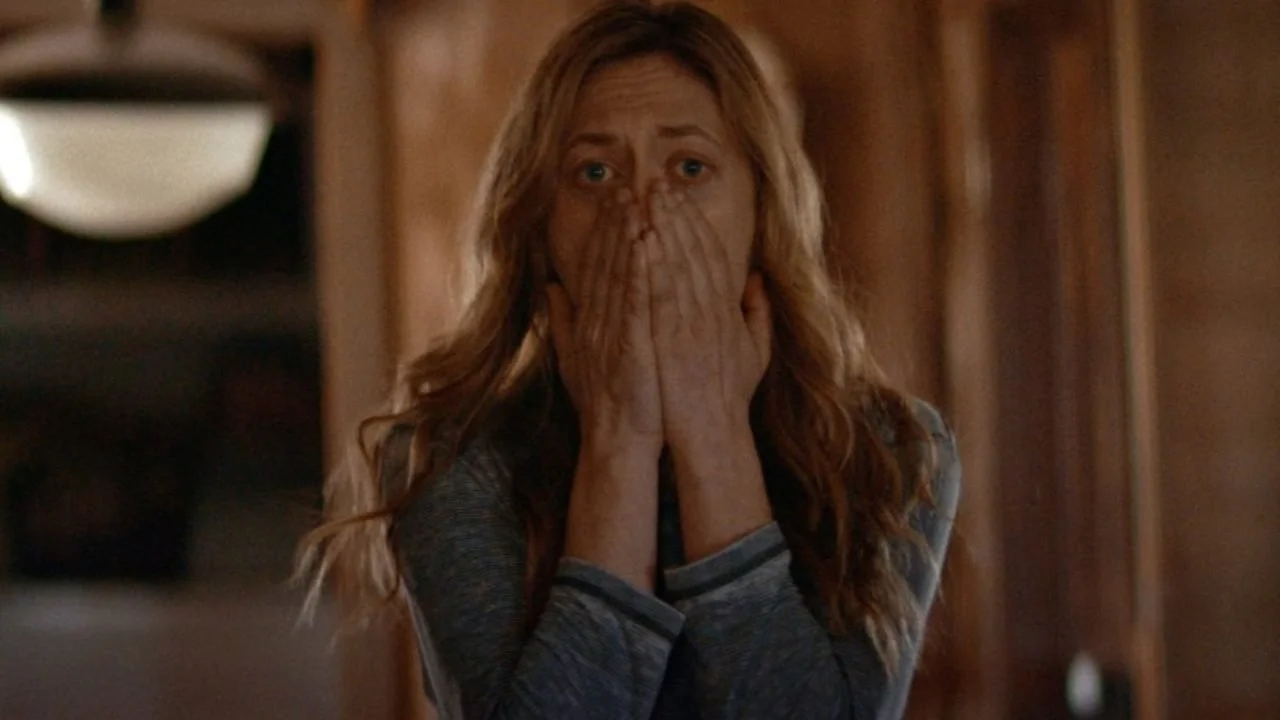
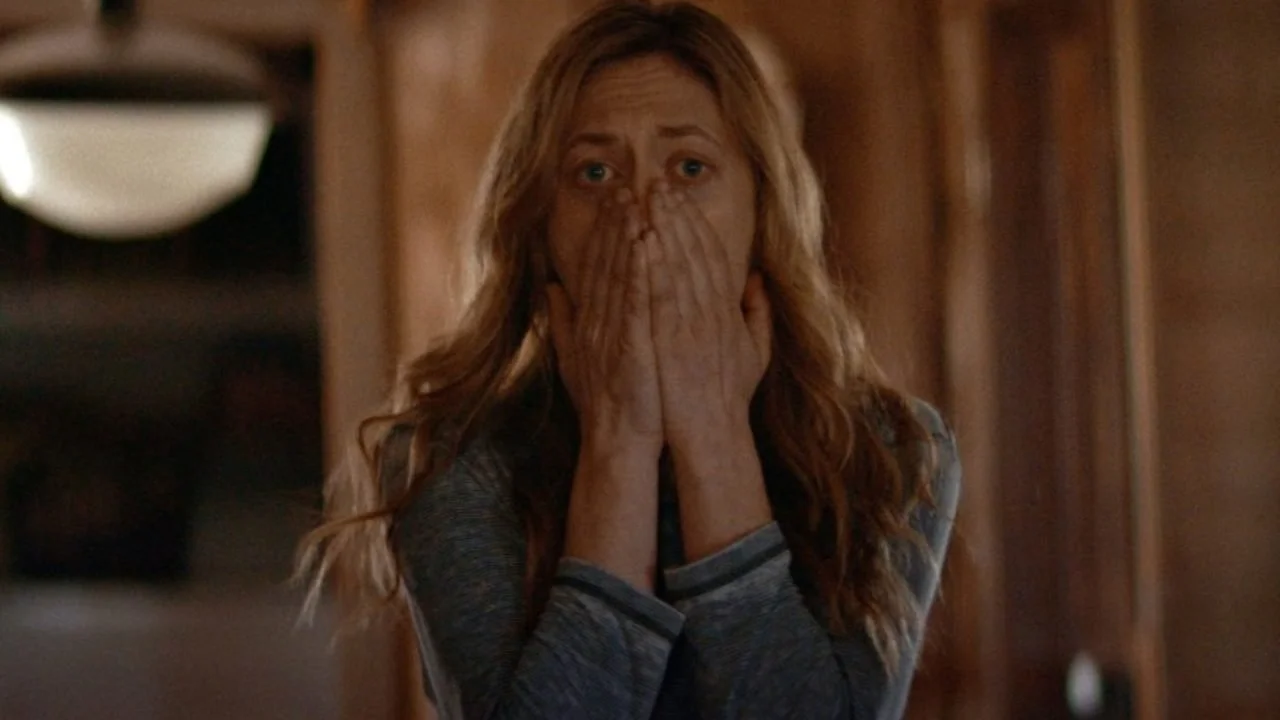
Chopping carrots hits differently now. The latest horror film from Bryan Bertino of The Strangers fame lives up to its title. The Dark and the Wicked is a deeply unsettling story whereby the home intruder is a demonic spirit that whispers unspeakable things into people’s minds. The story takes place on a secluded farm inhabited by a family who come together to care for a dying member. Death is near, but not in the way that they expect. The darkness that grabs hold of this family is a constant presence made clear from the beginning of the film, and it’s a presence that mutates on different levels as the story progresses. The spirit latches onto a particular vulnerability that each character possesses.
Disturbing occurrences happen in the span of one week, with title cards displayed for each day, and the madness gets wilder deeper into the week. On the worst Monday of their lives, siblings Louise (Marin Ireland) and Michael (Michael Abbott Jr.) arrive at the family farm to assist their mother and be there for their father (Michael Zagst) on his deathbed. Tense family dynamics are palpable right through the door. Their mother (Julie Oliver-Touchstone) gives them a frosty welcome. She is grieving her husband slipping away, and neither sibling knows how to approach the subject with her. But there is a lot more to Mother (Julie Oliver-Touchstone) than meets the eye, as her ominous diary entry would prove, and each passing day is more revealing. She’s been suffering another loss, that of her mind, to something or someone in the house that is dead set on infesting her husband's soul.
The director lingers heavily on characters from behind, as if someone is watching them. The camerawork makes for a completely nerve-wracking experience of waiting to see or trying to prepare for what’s on the other side of the room. It’s an interesting choice because as the camera lingers on the characters, and sometimes on objects, threatening shadowy figures show up matter-of-factly. Sometimes it takes away from the threatening tone being established, and sometimes it works wonders. One chilling scene early on shows a shadow simply stood in a darkened hallway as a character walks by without noticing. Objects are also given focus, as if a spirit is lurking inside. There’s a stunning, eerie shot of Louise and Michael standing still in a room full of mannequins.
There is an unrelenting sense of dread that washes over all the characters, one by one. The film builds on each of their personal fears slowly being manipulated. Some characters fall immediately into the spirit’s grasp while others can fight off the fear a little longer. In any case, there is no hiding place good enough to conceal the fear that lives within. For the protagonists, the fear of losing their parents is immense. Louise feels the added terror of being alone should something happen to her estranged brother. All of this fear manifests through spine-chilling imagery, specific to each character, that gets the scare job done to say the absolute least.
The strong use of shadows, lighting, and haunting imagery bears a striking reminder of Ari Aster’s Hereditary. The two films are dramatically different on the whole, and this is not a quality comparison of the two, but there are some similarities in terms of using those features as effective reveal techniques and manipulating imagery to evoke emotion. A parallel can also be drawn thematically in that here is a dysfunctional family trying to grieve as a wicked force latches itself onto them, preying on vulnerability. Plenty of intriguing questions are raised about how quickly fear can spread over the psyche. Committed performances by a talented cast, with Marin Ireland being the MVP, bring an emotionally resonating layer to the afterthought of this nightmarish film. With the exception of some obvious-looking CGI in the final act, and an ineffective final scene, The Dark and the Wicked is like watching a waking nightmare unfold with no escape.
‘The Assistant’ Review
November 12, 2020
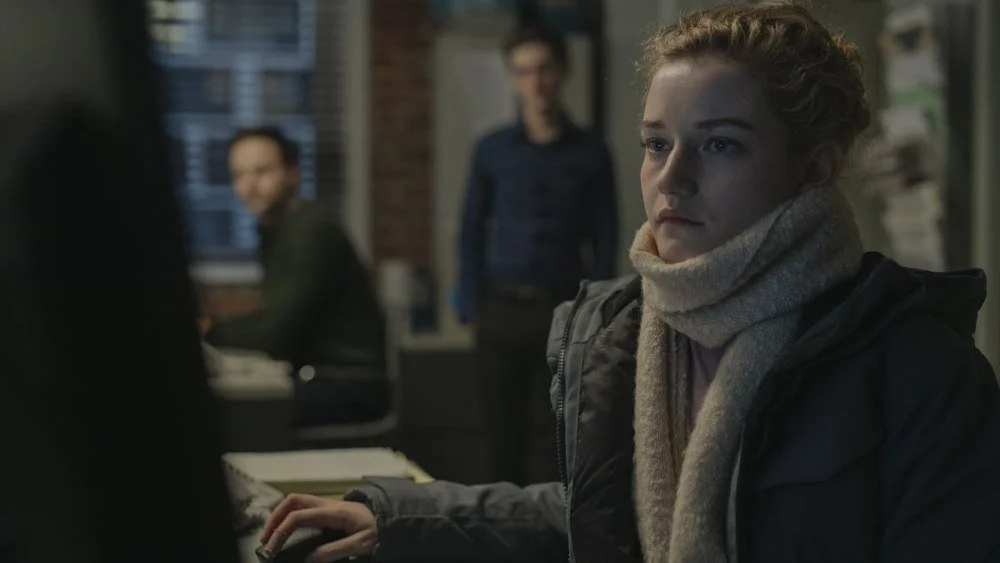
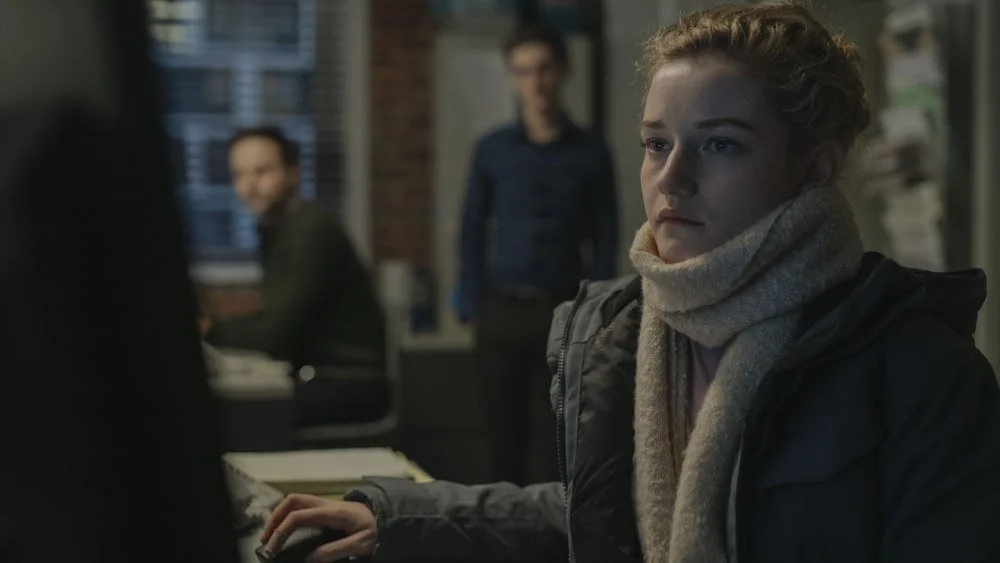
The passive complicity that has made space for monsters like Harvey Weinstein to be formed is explored quietly, with incredible tenacity, in The Assistant. Written and directed by Kitty Green, the movie focuses on a day in the life of an assistant to a powerful executive in the entertainment industry. Jane, played by Julia Garner, follows a mundane office routine. She makes the coffee, washes the dishes, answers the phone, grabs the lunches, stands by the printer, waits for the copies…
From the moment we are introduced to the office setting, the toxicity is engulfing. The office is gloomy and grey. There is no sense of healthy solidarity among the people who work there. Jane is engulfed by employees who mostly don’t even acknowledge her presence. The few who do are men sitting directly beside and across from her - and they ever so subtly exert a power that entitles them to watch over her shoulder and divert her attention towards things they don’t want to deal with.
As Jane gets through the day, with her unseen boss muffled in the background (either hidden in a room or over the phone), she becomes increasingly aware of the abuse taking place behind closed doors. Told completely from Jane’s point of view, we watch as she is conflicted with what to do and who she could turn to. Wrestling with how to act, she decides to visit the human resources department. The scene between Jane and the head of HR, played by Matthew Macfadyen, is devastating. A cold and blatant disregard for Jane’s concern puts her in a powerless position that men like Weinstein exploited. So much of the movie is centered on the tense urge to say something, do something, without a safe space to do so.
Julia Garner is easily one of the best actresses working today. Her performance as Jane is out of this world. So nuanced, detailed, and quietly devastating. She gets under your skin and stays there. One of the best acting moments of the movie is the writing of the apology emails. There are two instances in which Jane’s boss calls into the office and scolds her, through no fault of her own. As a response, she quickly starts on the apologies, while her two male co-workers stand behind her dictating what to write. These scenes really struck a chord with me personally. It is tough to watch Jane’s feelings brushed off and redirected towards how fortunate she should be for the opportunity she has.
To quote Kitty Green, “the complicated thing about this script is that people can be victims and victimizers at the same time […] they’re just trying to survive”. The movie is incredibly grounded in its depiction of culpability. Green is showing us a realistic approach here; we see just how easy it is for people to look the other way and knowingly contribute to an environment that allows women to be abused. There’s a moment towards the end of the movie that captures this all too well. Jane is leaving the office. Her boss’s door is closed; muffled sounds of him with a woman. On the elevator ride out, one of the employees says to Jane: “she’s getting a lot more out of it than he is”. The drowning of conscience in that moment is horrifying.
The absence of a score until the very end of the movie is a strong choice. The Assistant needs to be heard, loud and clear. This is an urgent post-Me Too depiction of human conflict and complicity, featuring incredible exposition and a stunning lead performance with real staying power.
‘His House’ Review
November 12, 2020
“Your ghosts follow you. They never leave you. They live with you. It’s when I let them in, I could start to face myself.”
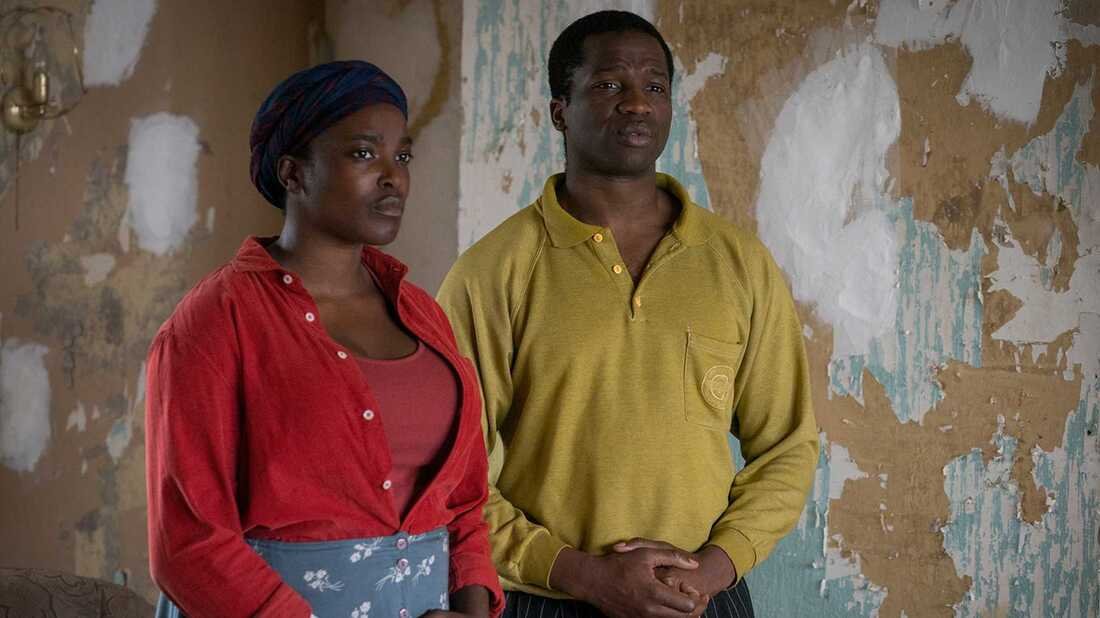
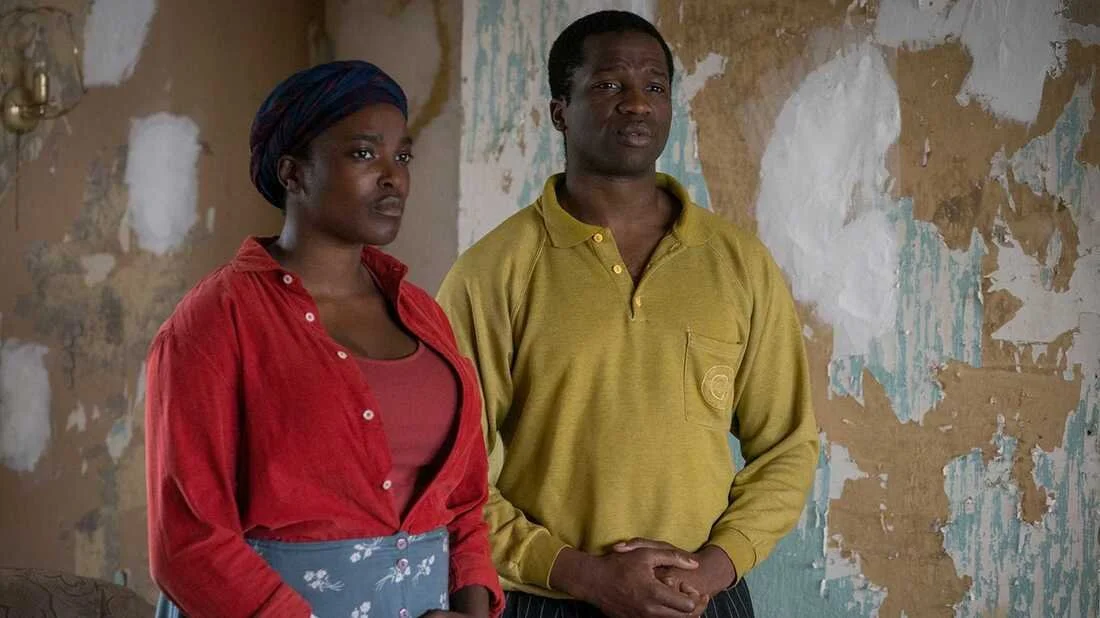
The horror of His House, the directorial debut feature by Remi Weekes, is deeply embedded in reality. The grief and fight for acceptance that the film’s protagonists experience bring a level of fear that can’t be shaken by a change of setting. After escaping from war-torn South Sudan and losing their daughter at sea, a young Black couple move to a new country in the hopes of being born again in a new life. Rial (Wunmi Mosaku) and Bol (Sope Dirisu) Majur are granted release from a detention center and are placed on bail in a small English town. A hasty social worker (Matt Smith) shows them around an address chosen for them, that they must not move from. “Make it easy for people…be one of the good ones,” he smirks. From the very beginning, the couple are made to feel they not only need to fit in and get along, but they must do so without challenging the hand that fed them. As the couple start to settle in at their new house, they soon discover a witchy unspeakable evil lurking behind the walls.
Weekes directs and writes a story so utterly terrifying in its humanity and in the notion that the ghosts residing within the Majurs are far more destructive than any haunted house could be. Trauma and grief manifest in different spaces and take on forms specific to the characters. On the couple’s first few nights at the new house, illuminated visions of the life they left behind are let in. Distant voices, rustling, loud thuds, and whispers from behind the walls create a constant feeling that the characters are never alone in any given moment. A particular voice whispers to Bol that he must repay what he owes, that he took what did not belong to him. The film plays with setting and time, weaving from memories to present day to manipulated horror-infused memories. There’s a stunning scene at the halfway point that places the couple’s dinner table in the middle of the sea, as ghosts rise from the water.
This sea scene is one of many examples of vivid imagery that shows how the horror elements are personally connected to Rial and Bol. Both characters experience different manifestations, and have different views on what they should do. Bol believes all the items they brought with them into the new home are cursed and must be destroyed. He is searching for a fresh start in a house that is rightfully his. Rial believes the story of the night witch, whereby an apeth has risen from the sea and followed them to the house. “It” speaks to her, saying they don’t belong at this house and she can get her daughter back if she fulfills a certain task. The couple’s contrasting views make the film intriguing to watch, bringing a strong sense of mystery as to how the rest of the story will play out. Mosaku and Dirisu are both fantastic in their roles, especially the former whose final act is among some of the best acting of the year.
His House is not simply a story of a haunted house with scary voices. The characters are haunted by ghosts of the past that invade their minds completely and relentlessly, following wherever their thoughts go. Manifestations of trauma engulf the house, challenging the characters to fight the past and adjust to the present day where not much has changed. Remi Weekes has an incredible voice, and His House is one of the best debuts in recent years.
‘Come Away’ Review
November 13, 2020
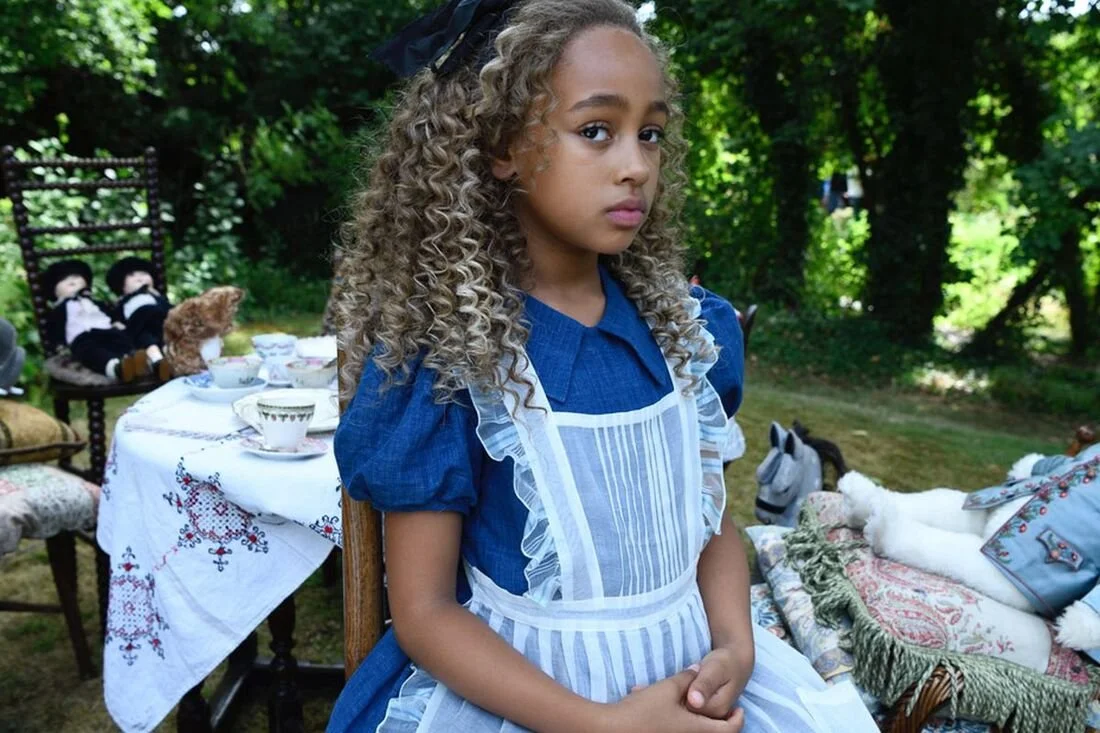
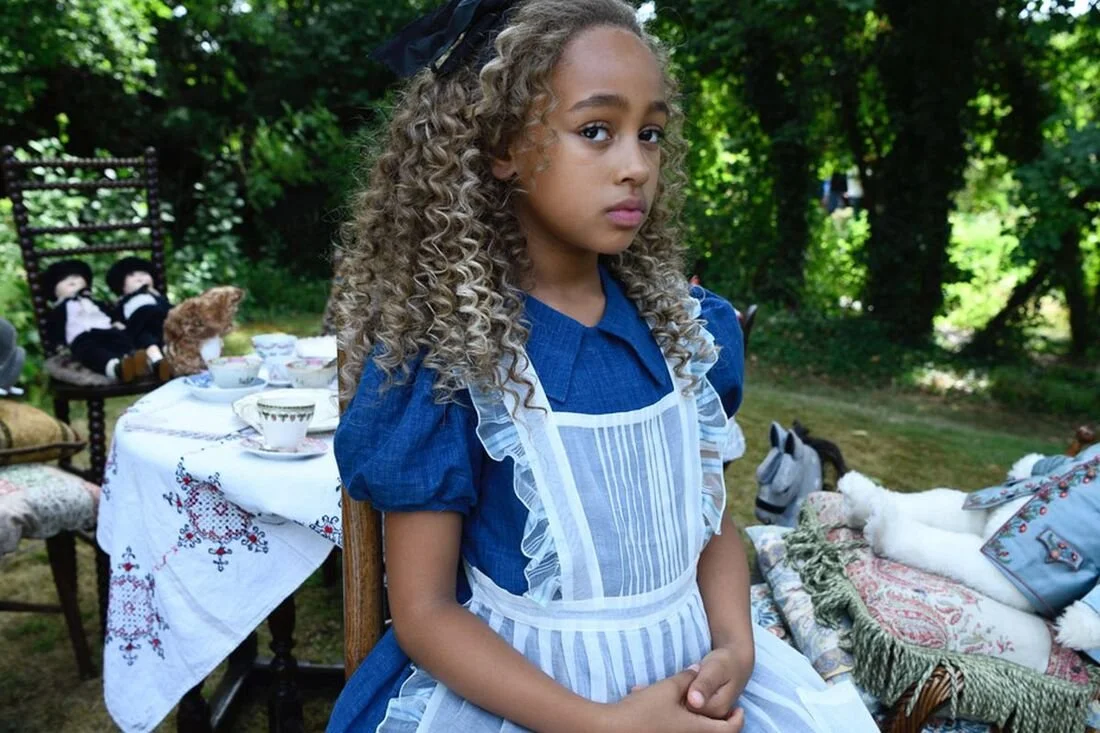
From the director of Brave, two of the most beloved fairytale characters in literature share the screen as brother and sister in Brenda Chapman’s adventure, Come Away. Before Alice goes to Wonderland and Peter becomes Pan, the siblings let their imaginations run wild in the English countryside, where they live with their older brother David (Reece Yates). The children are encouraged by their parents Jack and Rose (David Oyelowo and Angelina Jolie) to make-believe. But after a sudden family tragedy, grief takes over the characters and they each find a different avenue to cope. The film has a star-studded cast, creative production design, and an intriguing gem of a story idea commenting on the connection between grief and imagination. Marissa Kate Goodhill’s screenplay gives Alice (Keira Chansa) and Peter (Jordan A. Nash) in particular a strong arc of finding wondrous escapism in response to moments of loss. However the overall story has an odd, confusing, and inconsistent journey to the screen.
Come Away feels like multiple films in one, with no clear vision as to which path the narrative should follow. There are plenty of ideas thrown in, but the elements of emotional drama and magical fantasy rarely land on the same page in an organic way. As a result, multiple scenes that are set up as big heartfelt moments fall flat. The attempted blend of realism and dream-like sequences feel mostly out of place, especially when referencing bits from the source material. Multiple characters from the original fairytales are reimagined in strange and stilted ways. Characters such as The Lost Boys are included without real significance to the progression of Peter’s character, other than to give the audience a clear connection to Neverland. At one point they randomly stumble out from a tree to declare that Peter become their leader. While the reimagining of a familiar story gives context to certain scenes, the screenplay has an over reliance on the notability of literary characters to fill in the blanks during the film.
The Red Queen from the Wonderland universe also makes a few appearances from the perspective of young Alice’s imagination. Alice sees versions of the Queen in her mother Rose (Jolie) and aunt Eleanor (Anna Chancellor), both of whom want the polar opposite for Alice. While Rose encourages her daughter to play and be herself, Eleanor wants to make a proper lady out of her. High tea, beautiful gowns, and marrying well are on the checklist. As most of the story sees Alice in a vulnerable state, her aunt uses that grief as an opportunity to promise bigger and better things should Alice come live with her. The reimagining of the Red Queen represents two different paths to sanctuary and protection, each one appealing to Alice as she tries to figure out where her heart ultimately lies.
The film touches on a lot of mature themes, another being issues of class. Alice’s father Jack (Oyelowo) doesn’t come from wealth, and Aunt Eleanor sees this as an unsound environment for the children to live in. There is some mystery surrounding the life Jack had before having a family. During a meeting with a man named Charlie (Michael Caine), issues of debt come up and he is confronted by a group of men he owes a great deal of money to. As their threats grow more intense and follow him home, it’s clear that he must come up with the money. Alice and Peter, the latter eager to prove himself a hero, journey to London to sell a treasured heirloom to a pawnshop owner known as C.J. (David Gyasi). C.J. has family ties to Jack, and things soon become complicated. C.J. and the treasure hark back to elements of Pan and Captain Hook, but this subplot doesn’t add much weight to the film other than present a challenge to the protagonists.
As much as the story is about magic and fairytales, it also speaks to siblings wounded by the same hurt, soothed by the same lullabies, and who diverge on different paths. Golden dream dust takes Alice and Peter far, far away from home and from each other. The film is narrated by a grown up version of Alice (Gugu Mbatha-Raw), who gives some backstory to how Alice was a visitor in Wonderland while Peter was born to be Pan. Gugu Mbatha-Raw is by far one of the most talented actors working today. She has beautiful range; unfortunately she’s given a tiny amount of screen time in this film. The rest of the cast get the job done. While both Oyelowo and Jolie are solid, they are let down by incoherent writing and don’t get the chance to truly soar.
While the potential of the film is not fully realized, there is a lot to admire about Come Away, notably strong representation throughout the film. It matters that children will see themselves in the roles of Alice and Peter. The child actors, especially Keira Chansa who plays Alice, have some promising talent in bringing a sense of adventure and early maturity to their characters.
‘Kindred’ Review
November 14, 2020
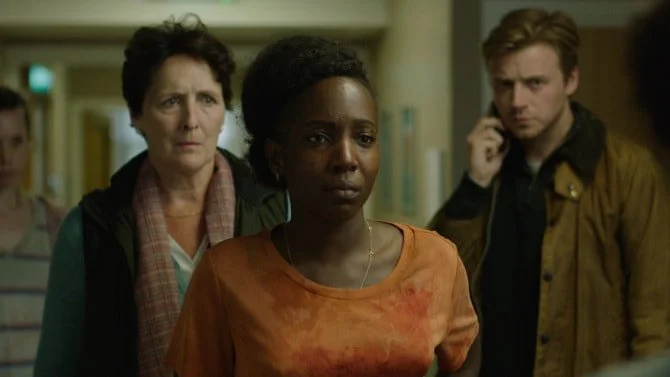
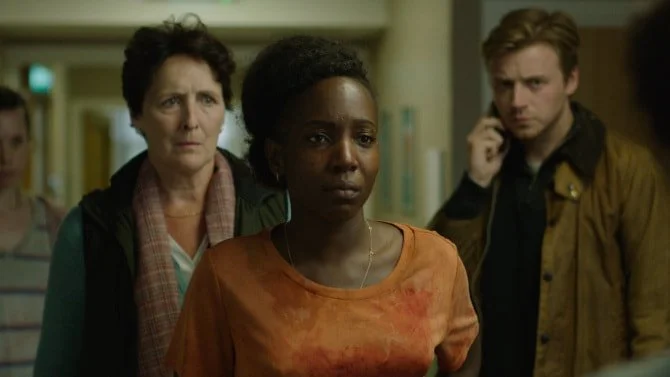
Joe Marcantonio’s feature debut, Kindred, is a psychological gas-lighting thriller dipped in a moody atmosphere. Inspired by Edgar Allan Poe’s The Raven, an ominous crow sits by the window of a grieving young woman and traces her descent into dizzying confusion. The story begins with Charlotte (Lawrance) and her boyfriend Ben (Edward Holcroft), who live together and are giddy with news. Upon a visit to Ben’s mother Margaret (Fiona Shaw), at the wealthy family’s manor, they brace themselves to tell her they’re moving to Australia. Margaret takes the news poorly…to say the least. What about his responsibilities? What about following in the footsteps of all the generations who have lived in the manor before him? The audacity that her son break tradition offends her deeply. Her guttural reaction originates an unspeakable wickedness that casts a cloud over the manor and all who step foot in it.
The film immediately lets on that all is not what it seems to be. An unsettling score accompanies the introduction to Margaret’s crumbling home, so grand and dilapidated that it challenges any visitor to feel truly welcome inside. But there is one other person who seems completely at home - Ben’s stepbrother Thomas (Jack Lowden), who follows Margaret around like a lost puppy and keeps his interactions with other characters as brief as possible. Charlotte has an inkling something is wrong, starting with the appearance of a crow that keeps meeting her glances out the window. After experiencing some nausea and dizziness for a few weeks, she checks in with a doctor who informs her she’s pregnant. The news is a complete shock, and she wants to know her options if she decides not to have the baby. Charlotte’s fear stems from a condition her mum had during and after pregnancy with her. Ben, on the other hand, is completely ecstatic and assures her she’s not her mum. The discourse surrounding Charlotte’s pregnancy is constant throughout the film, as it brings into question what exactly is causing her descent into dizzying confusion.
Charlotte’s early suspicions about Margaret and Thomas multiply after Ben suffers a tragic accident while looking after a horse. Upon hearing distressing news, she collapses and wakes up in the manor. She’s alone, in the middle of nowhere, with Ben’s controlling mother and stepbrother both determined to be her carers. Her personal belongings are conveniently brought over to the manor, where she’ll be resting until she feels better. But the film clearly gives off the false sense of illusion that she is in control. As the film progresses, she loses more and more agency. She becomes increasingly haunted by hallucinations, while Margaret and Thomas rip out every excuse in the book to prevent her from leaving the house. They have an answer for each and every one of Charlotte’s pleas to return home. The guise that she’s kept inside for her own good, and for the sake of her unborn child, begins to unravel.
There is something incredibly familiar about Kindred, in that it takes every twist and turn you expect from a story that hints and nudges from the very beginning. To make matters more clearly spelt out, the use of imagery is very on the nose. For nearly every moment of fright, an ominous bird arrives right on cue. But as derivative as the story can be, it’s a relief that intrigue emerges from the performances. Tamara Lawrance takes the audience on a distressing journey as her character becomes increasingly unkept, physically and emotionally. Charlotte feels stuck, and the more she reaches out to others, the more harshly she is disregarded. Lawrance is incredible at going way beyond the page and portraying Charlotte’s constantly shifting emotions on a deeply memorable and effective level. She carries the film on her shoulders.
Charlotte’s emotional turmoil is met with the quiet intentions and oddly airy demeanor of Thomas, played by Jack Lowden. His character initially pops in and out of scenes. When you think he’s gone, he’s looming in the background, and all that time spent sneaking a look at Charlotte materializes in the second half of the film. Lowden’s performance has a wonderful slow build, and while his character sometimes falls into the traps of a derivative screenplay, he maintains a strong sense of ambiguity from the start. There’s a compelling inquisitiveness about Lowden’s work that fits the story well. In addition to the increasingly claustrophobic presence of Thomas, Charlotte also has to deal with the matriarch of the family.
Given the look of Fiona Shaw in promotional material, it’s a bit surprising to learn that she has less to do than Lowden does, but that doesn’t stop her from also leaping beyond the page to add more layers to her character. In the hands of an inferior actor, Margaret could have easily been unambiguous and exaggerated. She also could have been typically quiet and cloaked in nuance. But Shaw’s performance brings an outwardly hurt and easily provoked quality to a character whose domineering anger stems from a place of indifference. She acts very much on her impulses, and unpredictably erupts into fits of anger just as suddenly as a balloon bursts. Shaw has a shattering monologue in the second half of the film, in which she traces her journey of depression, regret, and utter desperation. It’s an astonishing piece of acting, so good you can’t help but smile out of giddiness because she's that good. Her monologue makes the remainder of the film all the more disturbing to watch.
While Kindred is heavy on the imagery and goes down the route of conveniently placed plot points, plenty of intrigue can be found in the cast. An especially phenomenal performance by Tamara Lawrance grounds the story with gripping truthfulness. As so much of the story rests on her journey, the film simply would not work without her.
‘Happiest Season’ Review
November 27, 2020
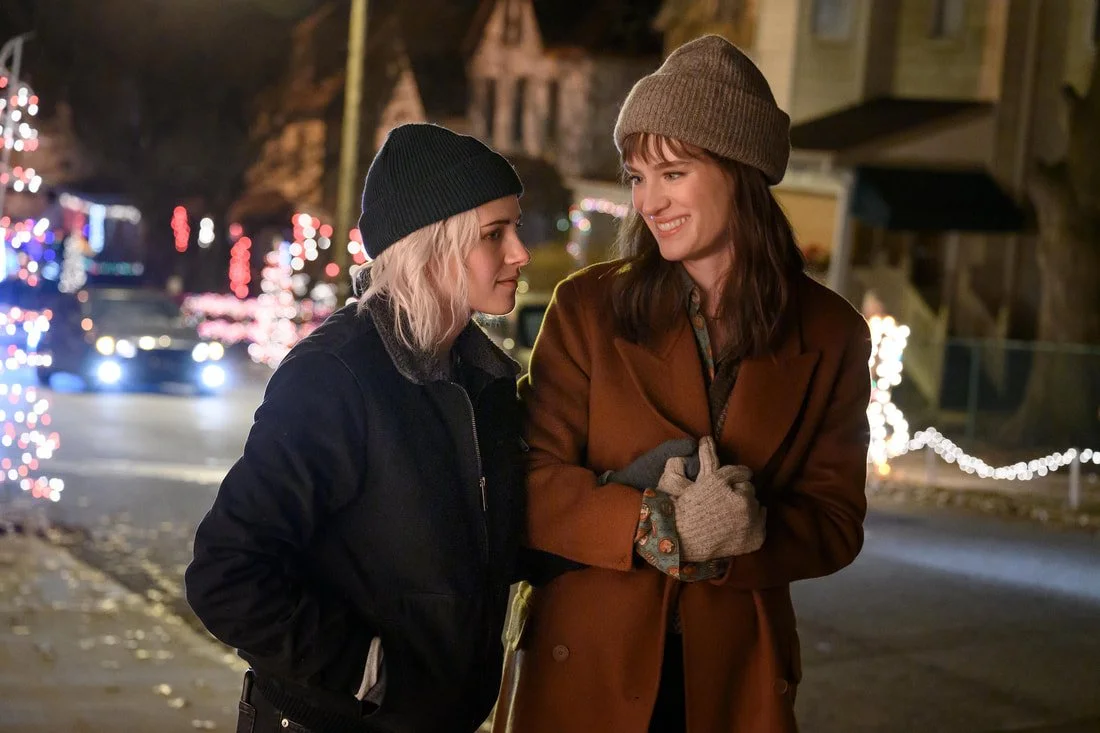
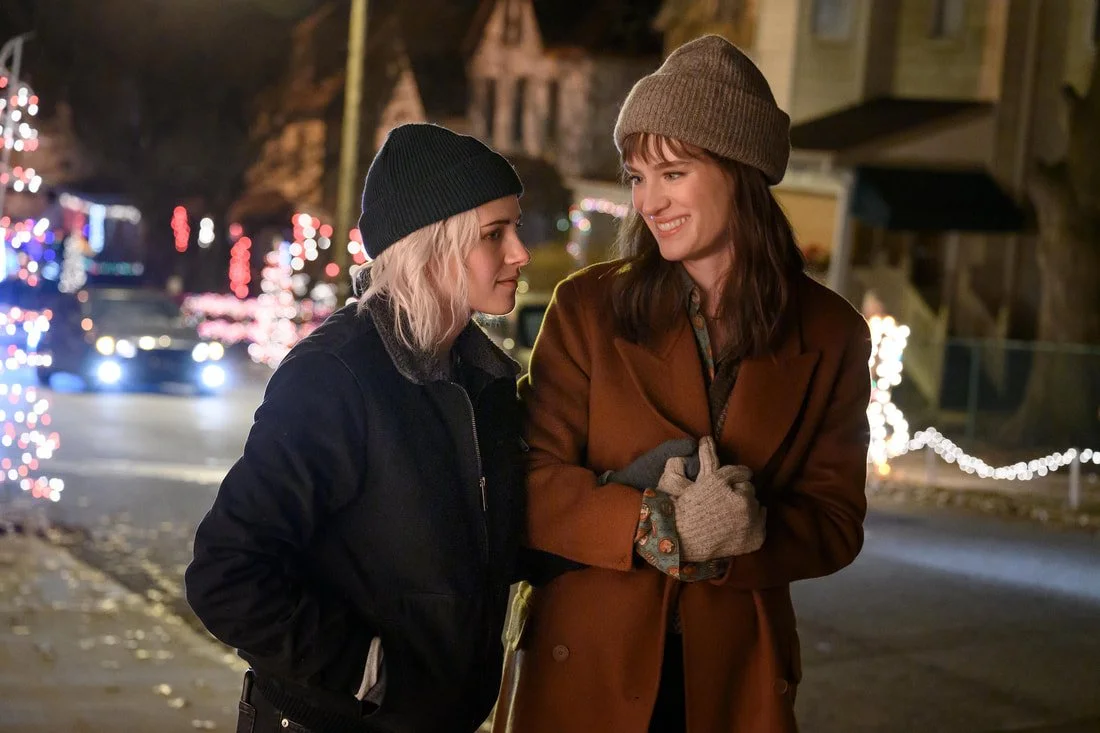
’Tis the season for Happiest Season! Clea DuVall’s queer holiday rom-com is a warm and bright story about two women falling in love around Christmastime. The story explores specific representation and a universal theme of being home for the holidays while trying to navigate family expectations and yearn for acceptance. This is a film that really feels like Christmas, in the sense that DuVall explores many different elements of visiting family during a time of year that stresses the importance of togetherness. As bouncy and funny as the film is, there are also incredibly moving moments that radiate from a place of authenticity and speak to how people have their own personal coming out stories unique to them. Happiest Season welcomes an all-star cast of characters who are each revolving around one woman’s journey of coming out.
The film follows the relationship between Harper (Mackenzie Davis) and her girlfriend Abby (Kristen Stewart) at a point when they are falling more and more in love with each other. Harper adores Christmastime; the lights, the ambience, all that jolly jazz. Abby is reluctant to celebrate; when she was 19, her parents died around the holidays, so each passing year she avoids getting involved in Christmasy activities. One twinkly night in a spur of the moment, Harper invites Abby to spend the holidays at her parents’ house. Abby gets over some hesitation and not only agrees but makes plans to propose on Christmas morning. She wants to declare her love for Harper to everyone, but her excitement is upended when she finds out Harper hasn't come out to her parents yet.
What follows is an awkward maneuvering around family members to maintain secrecy as Abby agrees to Harper’s proposal that the two hide their identities just for a few days. So, Abby is introduced as an ‘orphan friend’. This dilemma takes on a life of its own in the film. We see Abby play along for the sake of supporting the woman she loves, Harper, who is not yet ready to express her true self. The pressures of validation and expectation are especially heightened within Harper’s family. Her oblivious father Ted Caldwell (Victor Garber) is aspiring to become mayor, and her picture-ready mother Tipper Caldwell (Mary Steenburgen) documents their ‘perfect’ family life on social media to garner acceptance for political success. From Harper’s perspective, she fears coming out would turn the family dynamics upside down and interfere with what is expected of her.
DuVall perfectly captures the weight of feeling pressured to make your loved ones proud and feeling worried that you’ll lose their love if you let them down. It’s an ongoing theme that the other characters exhibit as well (in different ways), namely Harper’s sisters Jane (Mary Holland) and Sloane (Alison Brie). Jane, who’s great with routers and printers, brings an infectious bouncy energy to the family. Holland, who co-wrote the film with DuVall, plays Jane with such joyful brilliance. Her character has a deep level of self-acceptance, and it is this peace of self that makes her the family outcast as people hesitate to accept her. Meanwhile Sloane, along with her husband Eric (Burl Moseley), quit a fancy job to start a gift basket business. They have two kids and are altogether the picturesque family unit, but underneath her uptight demeanor she has a secret of her own.
All of these family dynamics play out as Abby tries to find her footing and stay true to herself in spite of the Caldwell game of charades. Her best friend and confidant John (Dan Levy), gives her moral support from the sidelines. Levy, hot off the heels of Schitt’s Creek success, brings his familiar wit and impeccable timing to the film. His character’s expert tracking skills eventually lead him to the Caldwell home in the final act, during which he and Stewart share a stunning scene. He personalizes a moving monologue about how everyone’s coming out story is different, and in that moment, the emotional core of the film pours out. As the narrative of Happiest Season surrounds Harper’s journey, characters from her past pop out of the woodwork and give some backstory to the hurdle she’s trying to jump over. Her ex girlfriend Riley (Aubrey Plaza), who has the best introduction in the film, strikes up a bond with Abby and through their interactions, we learn more about how Harper’s coming-out story affects those around her.
One of the most intelligent and engaging aspects of the film is how the writing validates Harper’s coming-out experience, even though on the surface her character makes some unfortunate decisions. DuVall also makes the good call of focusing on how the family dynamics affect Abby, because this experience does alter her perspective and naturally brings into question her feelings towards Harper. As a result, we see another avenue where the story could go with the inclusion of Plaza’s character. The more distant Abby feels from Harper, the more she feels drawn to Riley and we eventually learn why Riley can identify with Abby’s situation. The relationship dynamics are well written and brought to life with the performances. Davis is great, Plaza is a scene stealer, and Stewart truly anchors the film.
Happiest Season is genuinely funny and stands out in countless ways, most of all with a smart screenplay. The writing is heartfelt in portraying the complexities of self-acceptance and generous in bringing pure joy to the screen. The performances share a love and care for creating an enjoyable, sweet rom-com that will become a holiday classic.
‘On The Rocks’ Review
November 30, 2020
At the melancholy core of Sofia Coppola’s whimsical new film, On the Rocks, is a complex father-daughter bond that warms up the screen. It’s a great character study of two people in quick, reflective, and often disagreeing banter in service of a bigger mystery to be solved. Much like the rest of Coppola’s filmography, there’s a quiet control and charm to be found in this story. She enjoyably works through subjects of relationships, generational gaps, and the institution of marriage. On the surface, her spin on a screwball comedy with a simple plot point feels slight. But in sitting with the film, the qualities that make Sofia Coppola an intriguing filmmaker pour out.
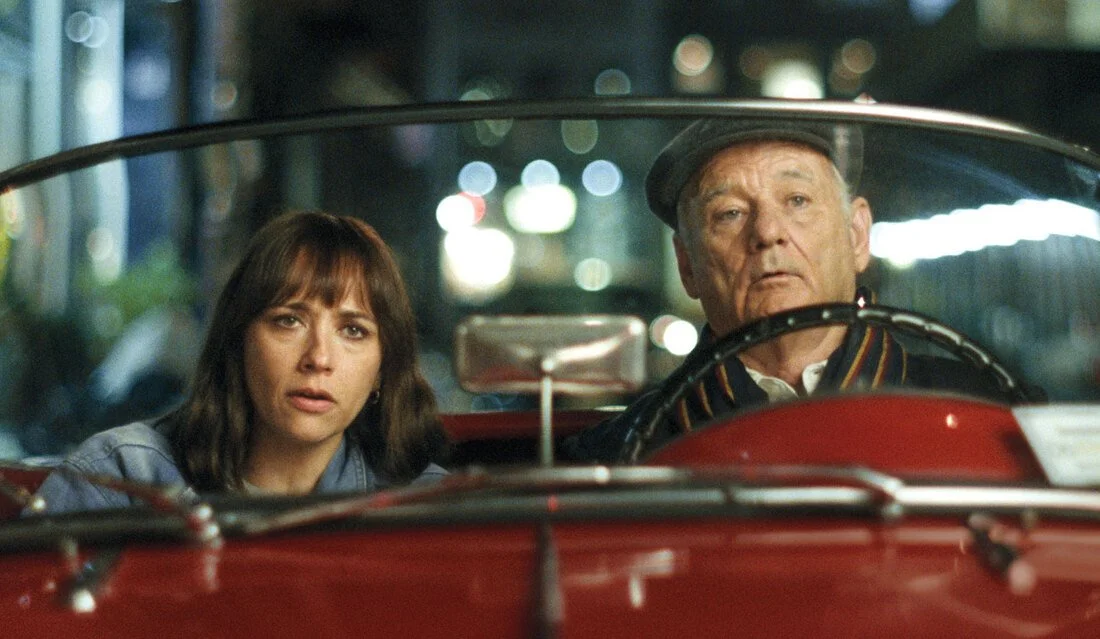
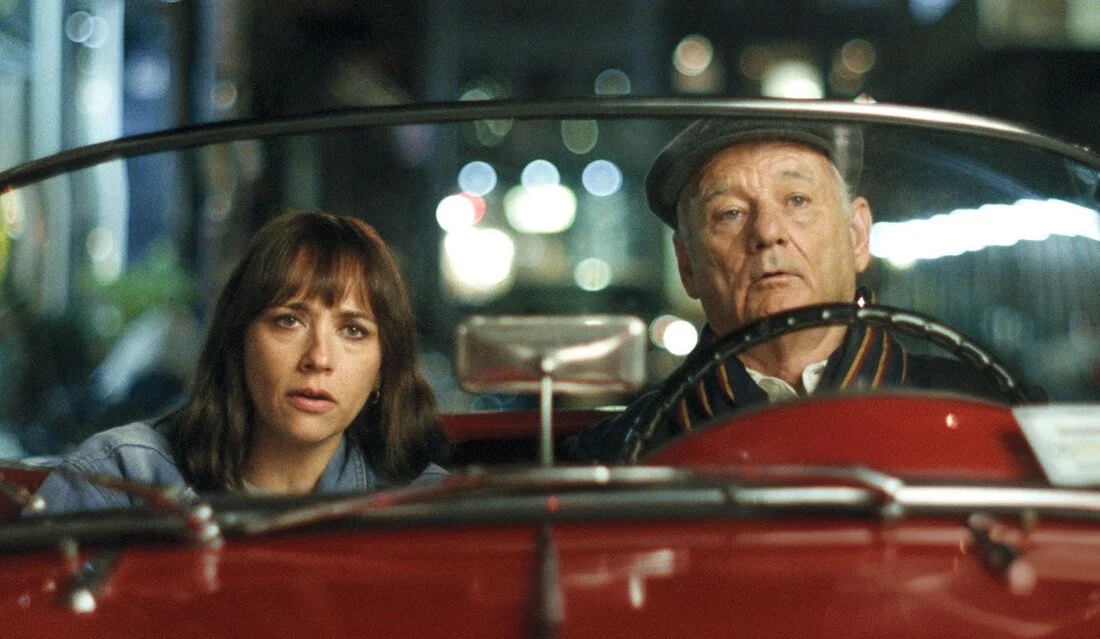
The story centers on Laura (Rashida Jones), a successful New York writer faced with a sudden suspicion that her husband Dean (Marlon Wayans) might be having an affair. She confides in her philandering, larger-than-life father Felix (Bill Murray), who tells her the words she doesn’t want to hear. Nearly certain that she’s being cheated on, he convinces her that in order to get ahead of the situation, spying on Dean is the best course of action. The film plays out as a father-daughter journey based around the two of them trying to justify their suspicions. But the more they focus on Dean, the more we see their own personal insecurities projected onto Laura’s marriage.
The infidelity plot point could have been resolved, or at the very least addressed, with a conversation early on. There are a few moments when Laura asks Dean a question or two, searching for some clarity, though never expanding into the question she really wants to ask. But the film identifies in the protagonists a deep level of uncertainty they carry about themselves, which pushes them further away from the truth. Laura is uncertain in who she is as a writer. As a mother of two young children, her parental responsibilities eat up her evenings. She spends a good chunk of time in her office during the day trying to write, but can’t break through the block. When faced with the possibility that her marriage is on the rocks, she puts writing on pause and calls her father to ask his opinion. While she remains doubtful, he automatically assumes Dean is cheating on her and is determined they get to the bottom of it. Felix flies from Paris to New York for the said purpose of dealing with this situation, but what he really wants is to spend quality time with his daughter. The idea that her marriage is in trouble gives him the opportunity to swoop in and relay all his archaic knowledge on relationships. Felix also comes from a place of anxiety within himself. His actions are very much driven by his own guilt; the pain he brought onto his family still lives within him, and he projects fears of repetitive behaviour onto Laura’s marriage.
By focusing on the complexities of this father-daughter relationship, Coppola brings an interesting character drama to life. So much of the film is about how relationships can be so reflective of the people in them, and how easily someone can misjudge their partner based on personal fears or insecurities. Rashida Jones does a wonderful job portraying the sincerity and trickiness of loving a complicated person in a complicated time. It’s clear as day that Laura and her father are not on the same page, and she loves him despite his shortcomings. Jones really brings you into the touch and go headspace of someone whose marriage and entire life as she knows it might completely fall apart. Her father Felix is so antiquated in his views, and spends most of his time indiscreetly trying to influence his daughter in all the wrong ways. He’s a philanderer of an old generation who thinks that all men are just like him. The film needed Bill Murray’s lightness and larger-than-life quality to bring an unlikeable role to life. Murray himself, an enigmatic force of nature with hearty charisma, fits Felix like a glove. His shorthand with Coppola also shows on the screen; as was the case of Lost in Translation, she brings out a side to him that other filmmakers can’t and it’s always a delight to watch.
The more conversations Laura and Felix share, the more he’s able to persuade her that her marriage is indeed on the rocks. His persuasion and her uncertainty take them all over New York to follow her husband, which puts them in some adventurous spur-of-the-moment scenarios including a fun “incognito” car chase. The chase scene is a perfect example of how Murray’s charm works his magic in this film. Coppola also establishes the New York setting in a great way. New York becomes a character in the film, and in her voyeuristic approach to the city, there are many “fly on the wall” moments where you feel like you’re zooming through the streets, following the characters. Accompanying the film is a beautiful jazz soundtrack that brings a lot of energy to the setting. A recurring Michael Nyman score in particular compliments the story really well and gives it an optimistic feeling.
While the film shines as a father-daughter story that explores all the generational complexities between them, the final act stumbles. Coppola finds something meaningful to say through all the intimate, reflective conversations but the focus always comes back to the audience guessing whether or not Dean cheated. There’s a far more interesting story in how marriages can lull after some time, and how reaching for success in a busy lifestyle can take a toll on relationships back home. These are elements Coppola touches on, but the building blocks of the story all lead to giving the audience an answer to the question of Dean's fidelity, and results in a totally flat ending. But in sitting with all the behavioral and generational themes that Coppola explores, there is something about On the Rocks that lingers. The charming chemistry between Murray and Jones brings a lot of life into the story, and makes the film resonate as a character study that reveals more than what the characters bargained for.
‘Ammonite’ Review
December 1, 2020
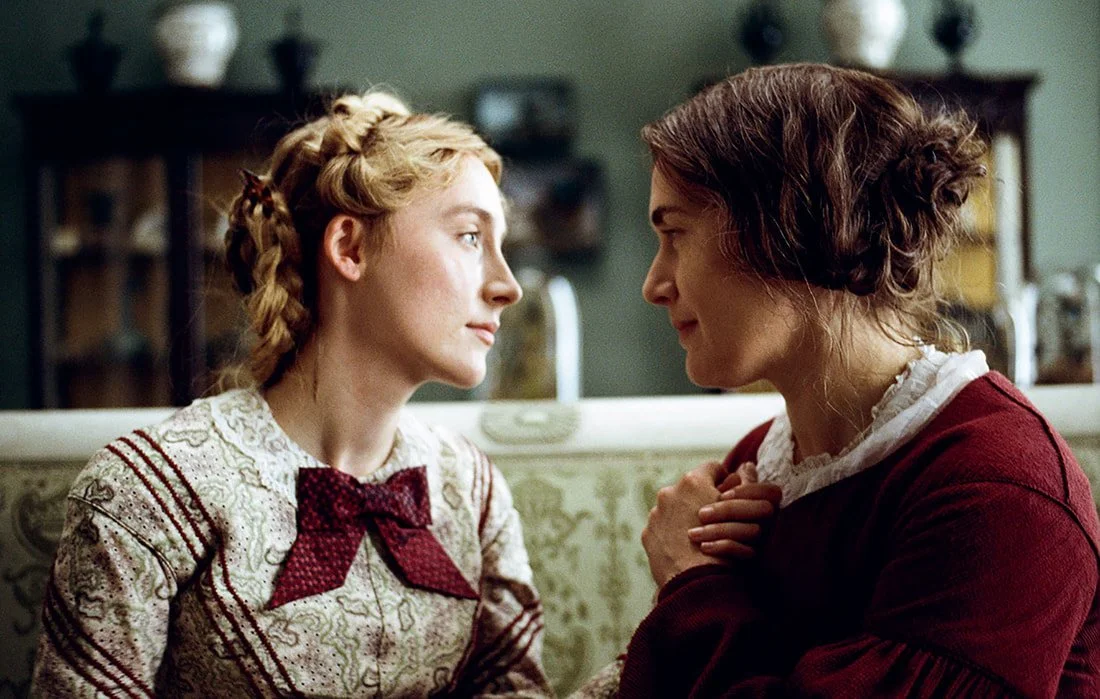
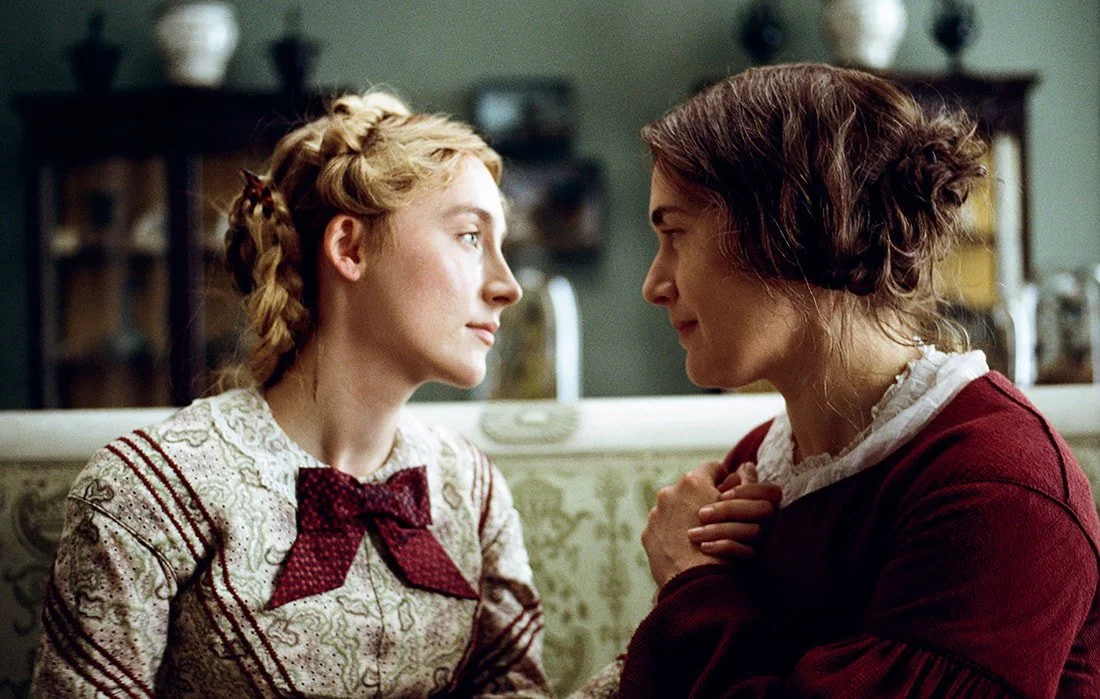
Writer-director Francis Lee cracks open a chilly exterior to find warmth in his latest film Ammonite, a beautifully delicate character drama about a woman who unearths passion through paleontology. The story is set in 1840s England and is loosely based on the real life of Mary Anning, a fossil hunter who was not recognized in her lifetime for the contributions she made to paleontology development. Ammonite follows Mary (Kate Winslet) late in life, when fossils have become unpopular but she still trudges through sand and operates a little shop by the sea. She lives with her mother Molly (Gemma Jones), who has suffered unspeakable loss and is dealing with a relentless illness. The two have a fractious relationship, but they have the best intentions for each other at heart. Mary's shop sees little action until she receives a visit one day from an upper class London couple, Roderick (James McArdle) and his wife Charlotte (Saoirse Ronan). Roderick, who takes interest in fossils, asks Mary if she’ll take Charlotte under her wing and teach her about fossil hunting in the hopes of lifting her out of grief. Having experienced a devastating loss, Charlotte is in a persistent state of melancholia.
The two women meet very early on; it’s not until halfway through the film that their relationship intensifies, which makes room for a crackling slow burn on course to an all-consuming romance. Charlotte is a broken character with great capacity to give love, and her outward display of affection unlocks something in Mary’s steely demeanor. With a glance here and a slight touch there, the characters’ interactions gradually build up to reveal glimmers of repressed emotion. Francis Lee works through the story by exploring with an intent focus on physical interactions. Every movement feels very character based and character driven. The film moves with a gradual melody that is both intimate and hypnotic. Mary and Charlotte slowly discover that they can both give each other the comfort in feeling understood and knowing they are not alone. The pacing of the story takes time and patience to delicately unearth their relationship and bring warmth to a chilly atmosphere.
One of the pitfalls of a quiet, slow burn approach is losing the momentum that simmers beneath the surface. But with Lee’s character building, the film seldom loses its passion no matter how tranquil. It’s still there, simmering on, which is also a testament to incredibly detailed performances. The way Mary exhibits such still energy in how she carries herself, both emotionally and physically, is very different to Kate Winslet’s previous work. She often plays characters who wear their heart on their sleeve and energize a room. While it’s not a surprise that she’s brilliant in this film, it’s intriguing at this stage in her long career to watch her play a person so composed and emotionally held. It’s interesting that she doesn’t have a big moment of completely unfolding and pouring her heart out. She comes close (for her at least) at times, but never does. Mary holds everything in, and in the few moments that she does express herself whether through joy or ache, she shows how the character comes to be unlocked by Charlotte. Winslet brings a fantastic level of restraint that sizzles not so much in words, but in glances and body language. The tiniest expressions carry so much weight thanks to the immaculate detail she infuses in one of the greatest performances of her career.
The realization of not being understood is one that aches deeply, and there is a point in this film where Mary has this fear during one of her and Charlotte’s most fervent interactions. Yes, Charlotte has an effect on her and unlocks something in her, but Mary still has her guard up. These are two characters who seem contrary in their energy, but they each possess qualities that keep them interconnected in the real world. Complementary to Winslet’s emotional labour is Saoirse Ronan, who infuses an infectiously giving nature into Charlotte. It’s easy to see why their bond doesn’t waver when reality kicks in; Ronan does a lovely job of portraying the interdependency Charlotte shares with Mary, as well as the manifestation of Charlotte’s own search for a loving connection at a most vulnerable time. There’s also a lightness and inviting energy to Ronan’s performance that gives rise to Winslet’s growing comfortability around her. It’s easy to see why Mary feels she can drop the weight of her experiences when spending time with Charlotte. When it’s just the two of them, the rest of the world melts away. There’s something incredibly moving about an emotional door being opened for Mary, as she’s given a moment to be understood. Charlotte unlocks something in her in a way that others could not, as Mary’s ex-lover Elizabeth (Fiona Shaw) muses. With the little screen time Shaw is given to establish her character, she has a wonderfully intriguing impact on the film and makes it quickly evident that the two characters have a history. Shaw and Winslet share a beautiful scene in the final act during which Elizabeth reflects on the pitfalls of their relationship.
Mary has an added layer of unfulfilled potential when the film addresses her name being erased from history. Part of the weight that she carries around stems from the fact that she was not properly acknowledged in her lifetime. She spends all this time digging and brushing fossils, an arduous task as Charlotte amusingly explains in one scene when she tells off a prospective buyer who visits Mary’s shop. Mary is deeply involved in her work, and not only is she overlooked, but her achievements are stolen from her. Men take all the credit for her discoveries, replacing her handwritten notes and signature with a standard description card. There’s a quietly moving scene of Mary wandering around a British history museum, seeing her work with somebody else’s name on it. In this moment comes the realization that Ammonite is not just about love between two women. It's also about Mary's unwavering love for her work, and the sense of responsibility she feels to give herself to it.
Much like the protagonist, Ammonite has a tough exterior that melts with the potentiality of a warm and loving embrace. The film is a thoughtful and studied look at a particularly emotional moment in Mary Anning’s life. Accompanied by a lovely Dustin O'Halloran & Volker Bertelmann score, gorgeous cinematography and costumes, the story unravels hypnotically with the perfect blend of drama and occasional humour. At the dormant heart of this story is a woman whose yearning to be understood unlocks the door to rediscovery and slow builds to an ending full of hope.
Ammonite releases on demand December 4th.
‘Black Bear’ Review
December 6, 2020
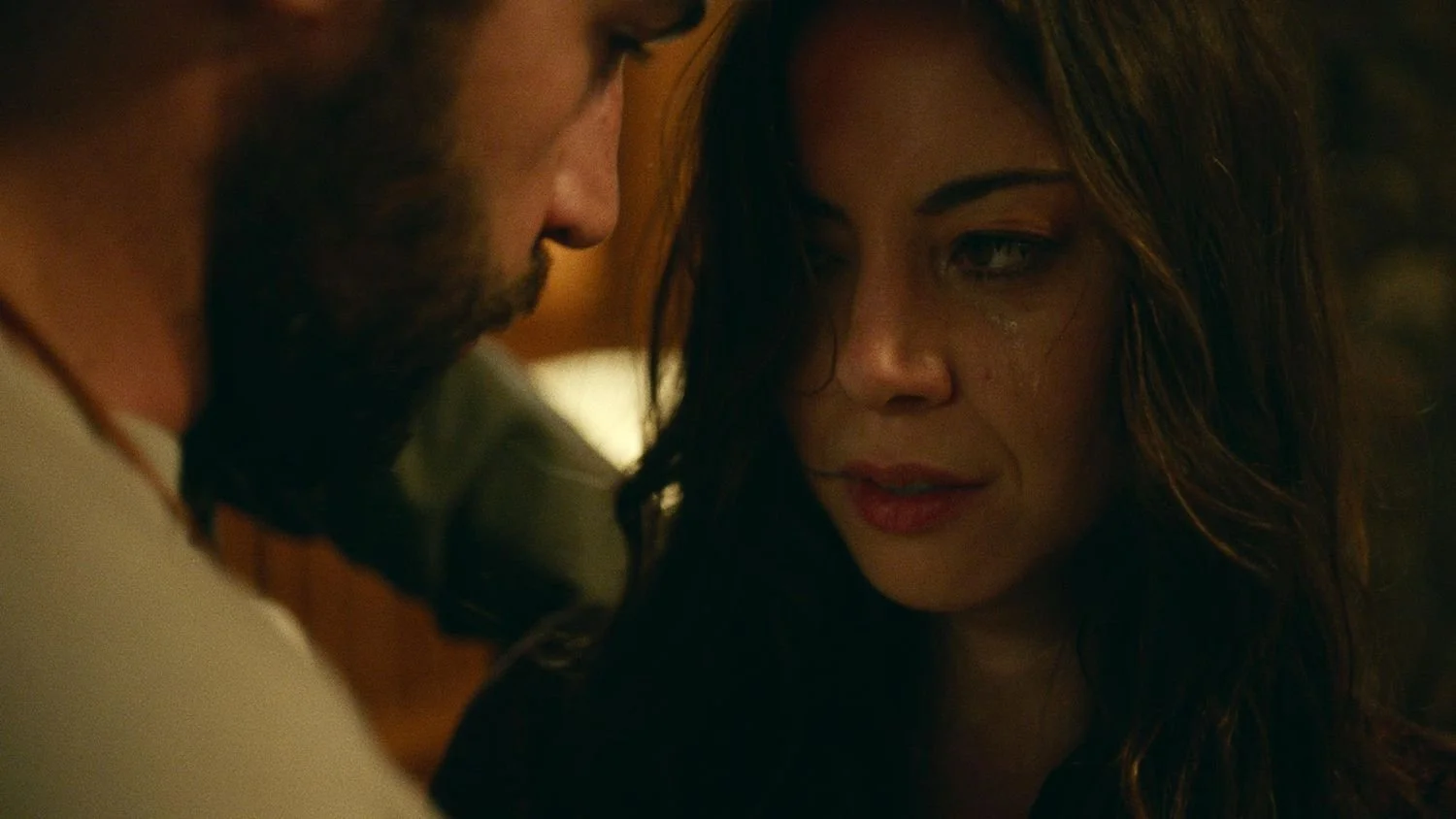
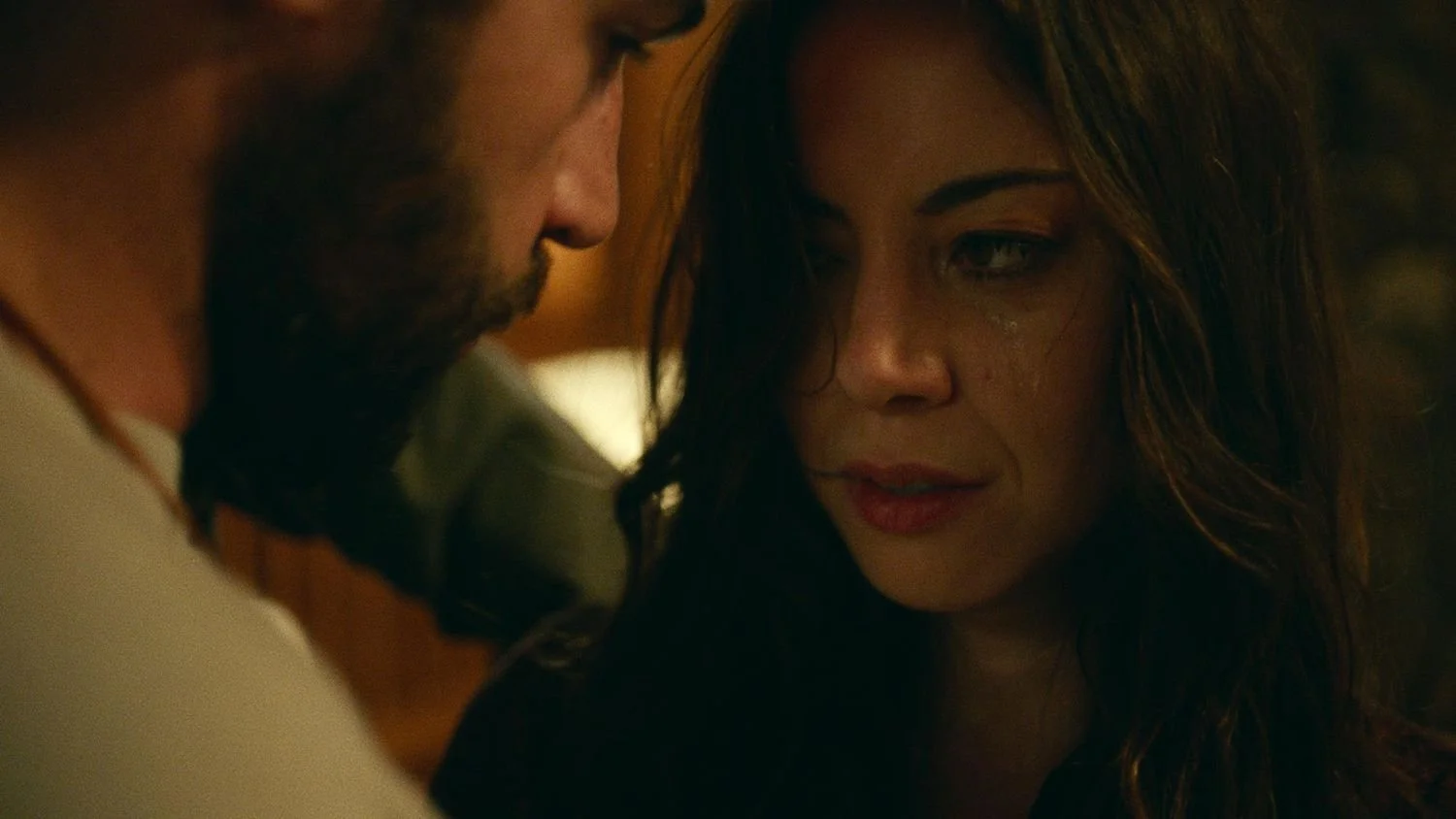
Cabin fever meets chaotic mind games in the wildly energetic film Black Bear, written and directed by Lawrence Michael Levine. This film ticks in mysterious ways…it maintains an erratic pulse that adds fuel to the disintegration of relationships. The story of Black Bear, much more puzzling and intricate than how it appears on the page, unravels in an insanely deconstructive way that sees characters in conflicting lights. Guiding the dense experimental nature of the film is a phenomenal performance by Aubrey Plaza. She takes you on a dysfunctional and intoxicating journey of a filmmaker who gathers influence from setting.
Black Bear follows Allison (Plaza), a filmmaker who seeks inspiration at a rural lake house, hoping an isolated setting would solve her writer’s block. But this remote retreat in the woods conjures up everything but peace of mind for her. Allison is a guest in these woods; Gabe (Christopher Abbott) and Blair (Sarah Gadon), the doomed couple who inherited the house, welcome her into their complex little world that Gabe especially manipulates. The film comes to life once the dynamics spark between the trio, particularly through snappy dialogue with a whole lot of subtext and even more shared tension. In the span of an evening, the characters are totally deconstructed as they each get confronted with truths about themselves. Given how quickly the tension rises, along with the heightened personal stakes each character has, one setback could set everything aflame. When we reach the breaking point, the film completely shifts gears and mutates into something else entirely. Levine breaks down these central characters and reveals them in a ‘behind the scenes’ light that is even more engaging than the first part of the film.
The story feels very much like a puzzle, with each piece fitting into a bigger picture. What is the bigger picture of Black Bear? At the core, it’s about the making of an independent film in the woods. It’s about nightmarish ideas swirling around in Allison’s head and spilling out…somewhere. Levine leaves behind a lot of questions to chew on in terms of locating the blurred line between reality and imagination. With so much up for interpretation, there’s a lot to unpack and piece together. There’s also a great deal of trust that Levine puts into the audience to fill in the blanks. What keeps the lines blurred is an impressive attention to detail and a seamless transition between two very different halves of one film. The entire energy and physicality of the second half is such a stark contrast to the first. This experimental nature of the film gives the actors an opportunity to flex new muscles, and they each do so brilliantly.
Aubrey Plaza is up for the challenge and gives one of the best performances of the year, by far. She fully commits to the reality of each moment, and given the meta aspect of this film, she also traces a subconscious thread (or thought process) within her character that ties her entire performance together. Allison is a character who longs for inner peace; during the second half in particular, her process is disrupted in a toxic environment which takes a devastating toll on her. Through her character, the film also explores the dangers of blending a personal relationship with a professional one. It’s such an intriguing role, like something born out of a fever dream, and Plaza absolutely nails it. With a performance of this magnitude existing at the center, the film maintains a great level of uncertainty for what will happen next.
Plaza shares electric chemistry with her co-stars Christopher Abbott and Sarah Gadon, who each fuel the story with their committed turns. Together they tread the waters of yearning for truth while also bearing witness to artistic collaborations at the expense of a disintegrating relationship. One of the themes Black Bear explores exceptionally well is the pitfalls of working with your partner on an artistic level. The relationship between director and muse takes center stage. Levine pulls this dynamic apart, piece by piece, to show an extreme version full of manipulation, neurosis, jealousy, and the mind games born from lust and desire. The artist-muse relationship is just one of many dynamics that Black Bear explores. What makes this film so engaging is how the story branches out in so many interesting directions without feeling totally disjointed on the whole. As insane and as puzzling as all the scenarios are, Black Bear finds a footing by staying close to the chaotic nature of independent filmmaking and going with the flow of each moment. The film ties together really well, which is largely thanks to a commendable performance by Aubrey Plaza gnawing at the heart of this nightmarish fever dream.
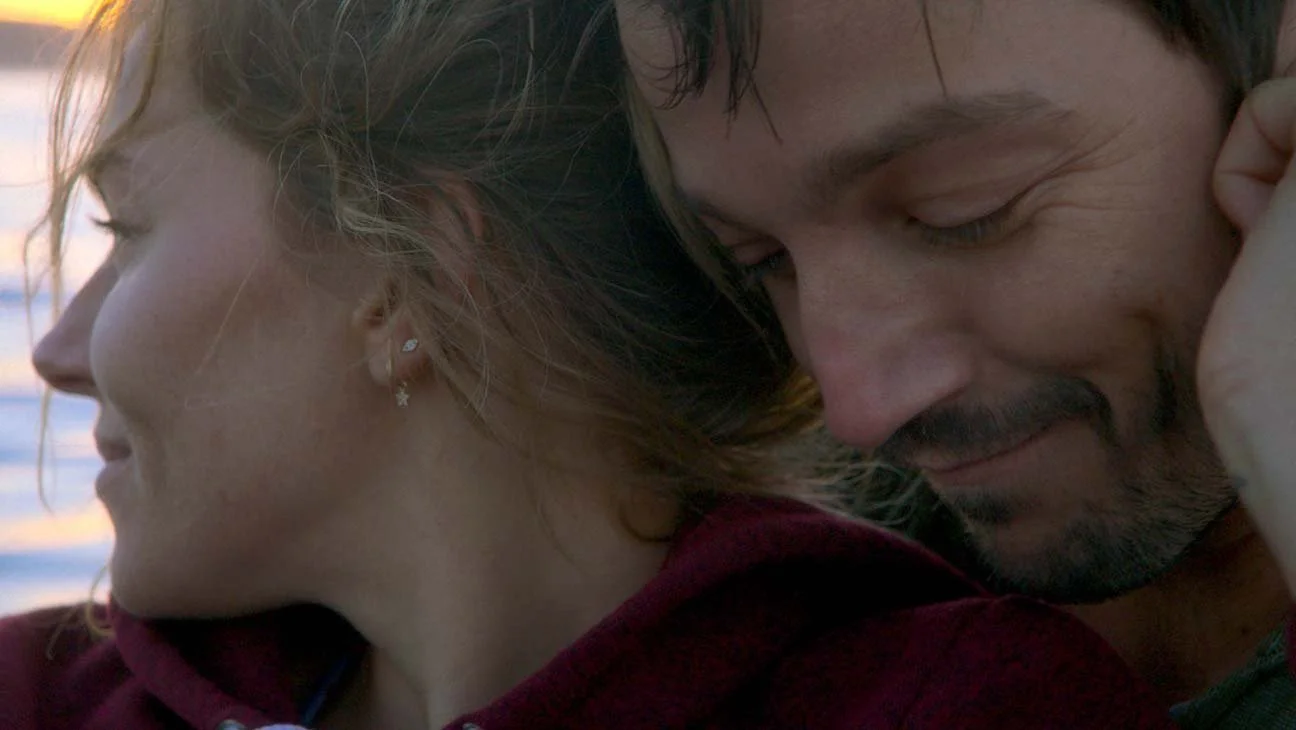
‘Wander Darkly’ Review
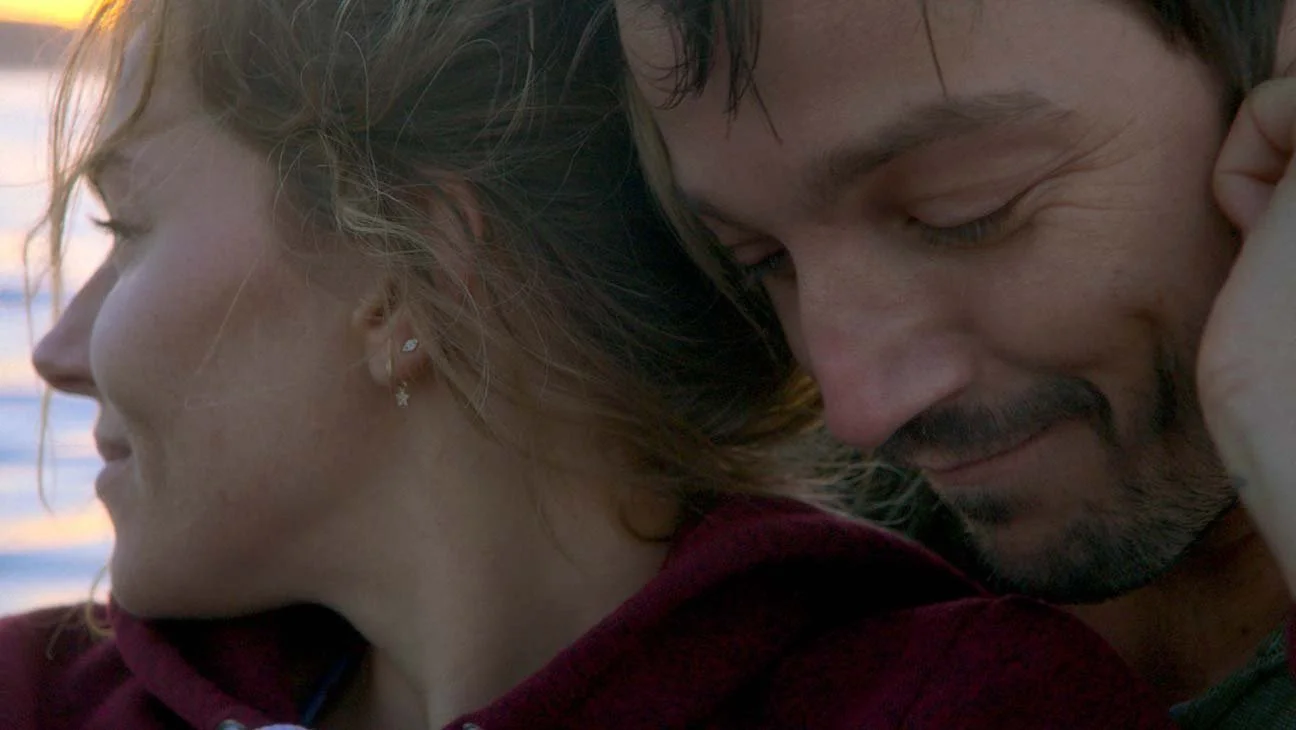
December 11, 2020
Wander Darkly is a disorienting rollercoaster of emotions that slips through time to explore interpretations of the truth in a couple’s relationship. Adrienne (Sienna Miller) and Matteo (Diego Luna) are getting through their first year as new parents. They have a baby girl, a new home, and their lives together seem full of possibility. But are they truly happy as a couple? During a rare date night, Adrienne reflects on her future in the passenger seat. They both deserve to be happy, she insists to Matteo. The two share a tense conversation full of nuances about stability, as Adrienne questions the point of them being together. Amidst the frustrations about their relationship, they are suddenly thrown into the aftermath of a traumatic event.
Adrienne wakes up from an accident in a jarring daze, watching in horror as her supposed death flashes before her eyes. Matteo talks her down a ledge and explains that she’s been in a puzzling trance, but she seems to think that she now exists in the afterlife. The film introduces an intriguing premise, and while there is an over-reliance on this nightmarish concept, the story finds some footing as an exploration of lost love. Writer-director Tara Miele is in search of truths, not just about what’s happening to the protagonist but also about why Adrienne and Matteo fell apart as a couple. At the fragmented heart of Wander Darkly is a love story. The film revisits the couple’s relationship from its shy and intimate blossoming to its emotional development. Echoing vibes of Eternal Sunshine of the Spotless Mind, Adrienne and Matteo retrace their memories and jump through time in search of what they lost. What remains a mystery, until the end, is which parts of the story are reality and which emerge out of imagination.
At a certain point comes the predictability of where the story is going, and the film loses some of its momentum going into the final act. But there is still plenty of intrigue to be found, particularly in Adrienne’s journey of regaining balance within herself. The film is told from her frame of mind, and her vulnerable adaptation to a completely new way of life is moving to watch. Sienna Miller is wonderful in this role; like a ghost finding purpose, she wanders in search of what happened to her and revisits the past to uncover a level of truthfulness she couldn't see at the time. Her performance is a beautiful portrayal of fragility and frightening uncertainty. Joined by a very charming performance by Diego Luna, the two elevate the material and create a believable portrait of a crumbling relationship that gives weight to the ending.
Wander Darkly takes a disorienting approach to a relationship and uses strong technicalities to follow a fragmented mind. The camera movements create some interesting illusions to portray the ups and downs of Adrienne and Matteo’s life together. The editing compliments the story quite well, avoiding a mess of confusion. What resonates most about Tara Miele’s feature is how personal and aspiring her perspective feels. She explores the interpretation of truth in a challenging way, puts an ambitious spin on a love story, and experiments with a concept that doesn’t always work in action but comes from a place of authenticity.
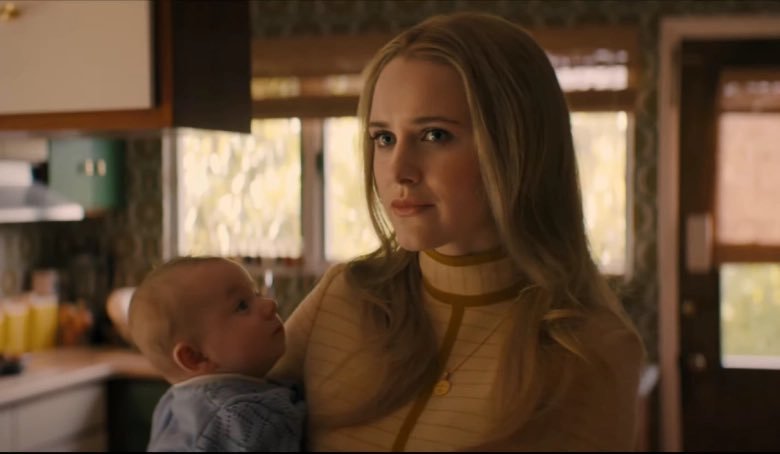
‘I’m Your Woman’ Review
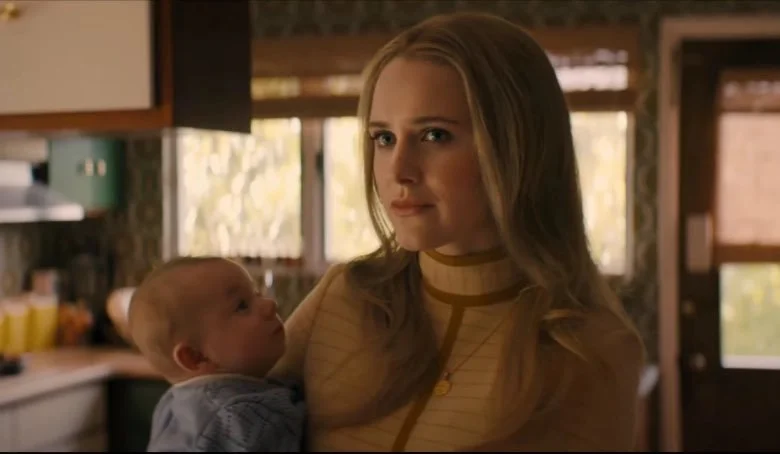
December 11, 2020
Julia Hart’s hypnotic new film, I’m Your Woman, brings a compelling character study to life in the 1970s world of crime. With an intriguing perspective and precise attention to detail, Hart explores themes of regaining identity and discovering newfound motherhood. The stylish opening sequence and simple recurring piano score lend sophisticated qualities to a story that stirs in moments of eerie stillness. Hart, who co-wrote and directed the film, gives each frame a beautifully controlled level of patience and care. I’m Your Woman adds a refreshing point of view to the crime boss genre and pairs Julia Hart’s directorial skill with a marvelous Rachel Brosnahan to craft a satisfying slow-burner.
The phone rings a lot in Eddie and Jean’s house. Off the hook, in fact. A smart little detail hints at the increasingly prying activity surrounding this household. We later learn Eddie (Bill Heck) lives a life of crime, but in his introduction, he’s a mysterious character who comes home one day holding a baby for Jean (Rachel Brosnahan). Without explanation, she now has a baby in her life, and she goes with it. To make matters more mysterious, one night Eddie doesn’t return home. Banging on the door startles Jean out of bed and ultimately, out of the life she knows. Handed big bags of cash and met with a man named Cal (Arinzé Kene), she’s suddenly starting over with a baby. Everyone’s looking for Eddie, and they’re looking for her too. Hart makes the refreshingly great choice not to delve into detail about who Eddie is, what he did, and why everyone is in danger. Instead, she stays with Jean every step of the way as the character is given a new home and is kept in the dark. The narrative focus on Jean gives the film an encompassing feeling that you’re on the journey with her, moving every inch with purpose and waiting every minute in stillness. In her newfound moments of quiet, she’s also coming to terms with newfound motherhood, and her instincts are swift.
The film moves slowly and surely with impeccable tension. The pacing evokes a constant fear that Jean will be found out at any given moment. Warned by Cal not to let anyone in (literally and figuratively), she lives in the shadows of ‘temporary home number one’ on a sleepy street, comforting her baby’s continuous cries through the night. It is at this home where the outside danger manifests in very different ways, starting with a seemingly well-meaning neighbour named Evelyn (Marceline Hugot), wanting to know who moved into her friends’ old place. The chill from seeing her calm, eager face appear at Jean’s front door in the dead of night is palpable, and her candygram visit takes an eerie turn when she asks where the restroom is. The direction and editing are particularly great in establishing moments of tense uncertainty. All of Jean’s suspicions are projected onto her surroundings, which creates an engaging experience of watching her encounters and keeping a closer eye on her settings.
As the film slow builds to ‘temporary home number two’ in the woods, the screenplay shines more light on Jean beyond the situation she’s in. Hart, who co-wrote the film with Jordan Horowitz, crafts an intriguing exploration of a character on a journey of self-discovery. The more Jean learns about Eddie and what could come next, the more empowered she feels to take matters into her own hands. Contrary to the title, she is not anyone’s woman but her own, and she proceeds to regain her sense of self. An unexpected visit from an unknown family of three at her new cabin presents some startling truths that prompt her to practice self-defense. The introduction of this family (Teri, Paul, and Art) raises the stakes up another level and gives a glimpse into the mess of a city they all left behind. Teri (Marsha Stephanie Blake) in particular is an enormous highlight to the story. Her character adds a resonating layer that strikes a chord with Jean personally. With a newfound bond, the two pair up to take matters into their own hands when they sense something is wrong back in the city, where the story startlingly quickens the pace.
I’m Your Woman excels as a quietly gripping slow-burner with great performances, beautiful cinematography, and a pitch perfect 70s soundtrack. An emotionally gratifying conclusion recalls a great monologue from Rachel Brosnahan halfway through the film. She tells Cal how she burned all her personal desires until there was nothing left but the fire, and then Eddie walked in with a baby. What she stopped wanting was suddenly in front of her, and their linked journey is a big part of the film’s core which makes its conclusion an incredibly resonating one.