
‘The Prom’ Review
December 14, 2020
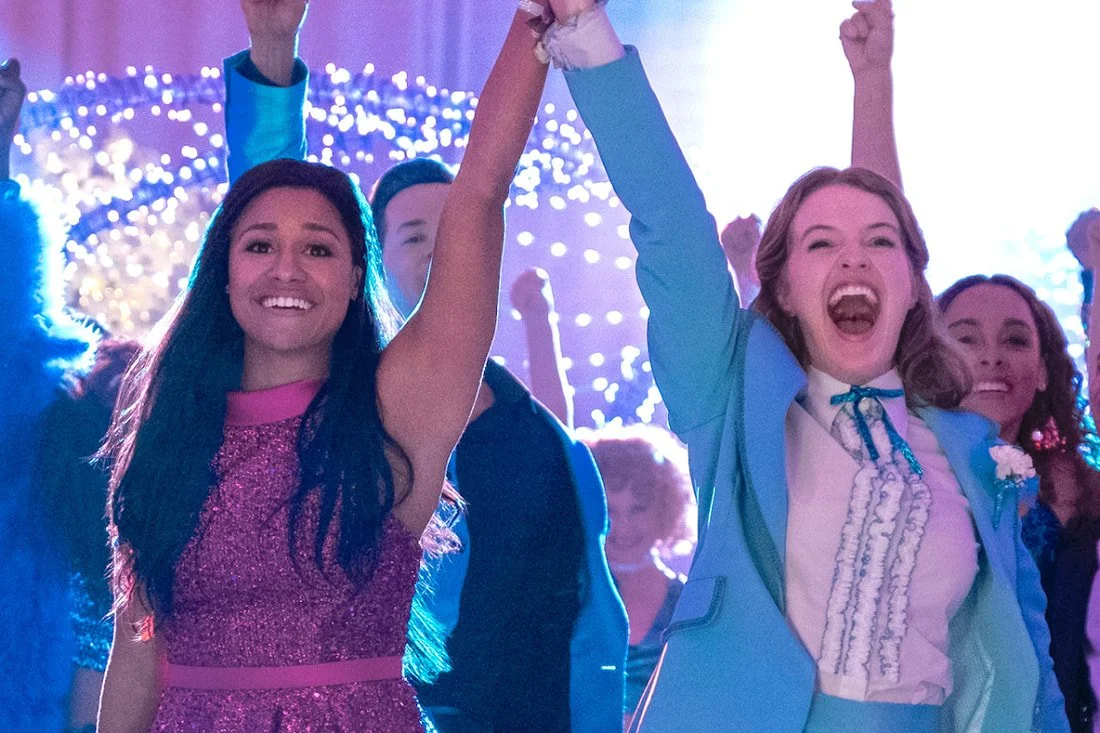
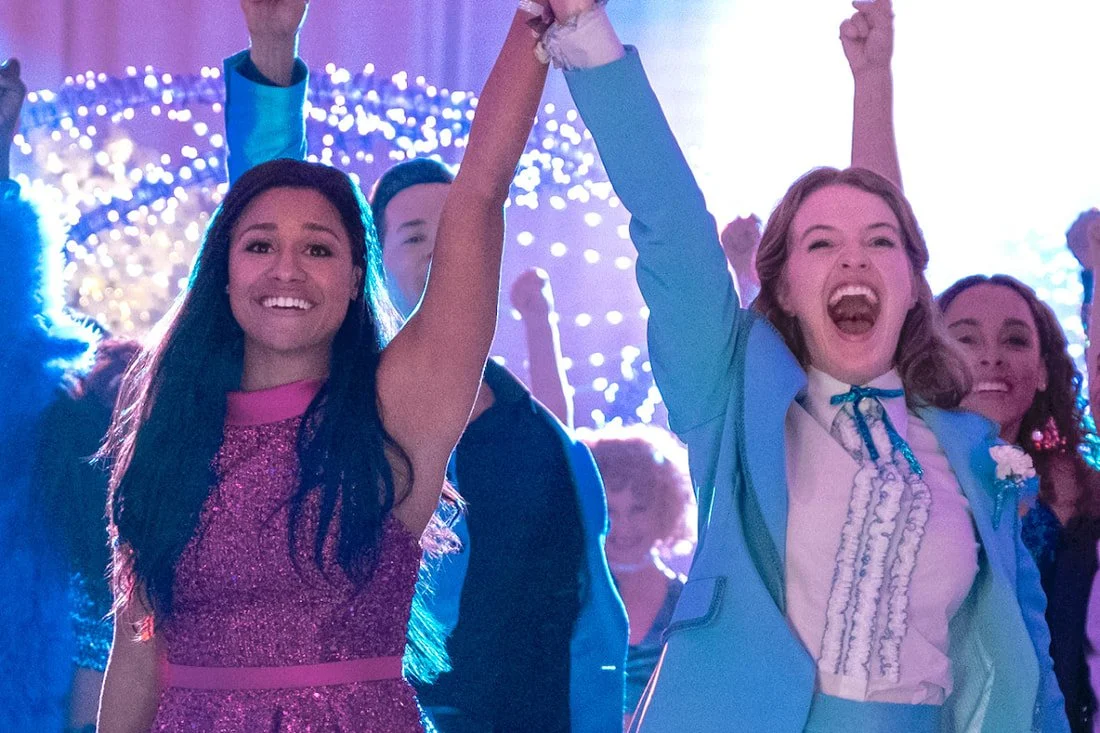
Ryan Murphy’s The Prom, adapted from the Broadway musical of the same name, is full of energy and has a heartfelt story. Sporadically endearing and fun moments show promise for what could have been the case as a whole. The gorgeous set design, glittery costumes, and some lovely performances from an all-star cast (Meryl Streep and Keegan-Michael Key especially) shine bright. Newcomer Jo Ellen Pellman and co-star Ariana DeBose are so charming to watch. At the core of this narrative, there are great essential messages of acceptance and finding your light. But the end result of The Prom doesn’t sparkle enough to maintain its lengthy runtime. Mostly forgettable musical numbers and an unfortunate casting decision distract from the resonating heart of the story.
The story follows a group of former Broadway stars who have lost their glitter, putting them in a professional rut. After receiving particularly harsh feedback from an Eleanor Roosevelt-inspired show that flops, Dee Dee Allen (Meryl Streep) and Barry Glickman (James Corden) wallow in defeat. They confide in fellow former stars around them, namely chorus girl Angie Dickinson (Nicole Kidman) and child actor/bartender Trent Oliver (Andrew Rannells). The glitter is fading; entering crisis mode, they desperately crave good PR that will wash them clean and get them back into good graces with the public again. Angie, wistful for Chicago’s leading role of Roxie Hart, suggests they need a cause to support. But their celebrity activism doesn’t go according to plan.
The film opens with PTA head Mrs. Greene (Kerry Washington) leading a ban on gay couples attending a high school prom in Indiana. News reaches the stars, and after a few Twitter scrolls, they find a headline about a high school girl named Emma (Jo Ellen Pellman) whose prom gets cancelled because she wants to take her girlfriend Alyssa (Ariana DeBose) as her date. Desperate to boost their public image and save the day, the starry troupe show up at the Indiana high school in support of Emma. Unbeknownst to them, Emma needs to tell her story in her own time, in her own way. Emma doesn’t wish to be a scapegoat, or a martyr, or a cautionary tale. She just wants to dance with her girlfriend at prom. Jo Ellen Pellman is a shining star; she’s a joy to watch and gives a resonating performance. She also shares delightful chemistry with Ariana DeBose, whose character is feeling the pressure and not ready to come out to her mother. It would have been great to see both characters explored in even greater detail as individuals and as a couple. Instead a lot of the focus is pulled back towards character arcs of the self-obsessed theater troupe, which has its pros and cons.
The troupe’s Indiana visit proves to be much more personal than they anticipated. Broadway star Dee Dee’s self-centered personality is challenged when she meets high school principal Tom Hawkins (Keegan-Michael Key), a passionate theatergoer enamored with her work. Dee Dee’s performances are an escape that help Tom heal. His pure love and admiration for her stage persona is put to the test the more they get to know each other. Their bond is incredibly endearing to watch unfold, in large part thanks to great performances by Meryl Streep and Keegan-Michael Key. They have lovely chemistry and the film soars up a notch whenever they appear on screen. In addition to sharing a charming bond with Key, Streep brings expected pathos and has fun with her musical numbers, particularly a great solo early on. Key also has a great number that speaks to the healing power of entertainment and particularly theater.
The rest of the cast are mostly fun but a bit wasted, particularly Nicole Kidman who shines brilliantly in every single brief moment but doesn’t have much to do apart from a fun little zazz number with Pellman’s character. It’s one of the few memorable numbers in the film. Andrew Rannells and Kerry Washington are good with the material given. The most unfortunate piece of acting comes from James Corden, who evidently tries hard but misses. Considering his character’s emotional journey and increasing screen time, his miscast performance takes center stage and brings down the energy of an otherwise fine film that works to celebrate an essential message.
‘Sylvie’s Love’ Review
December 16, 2020
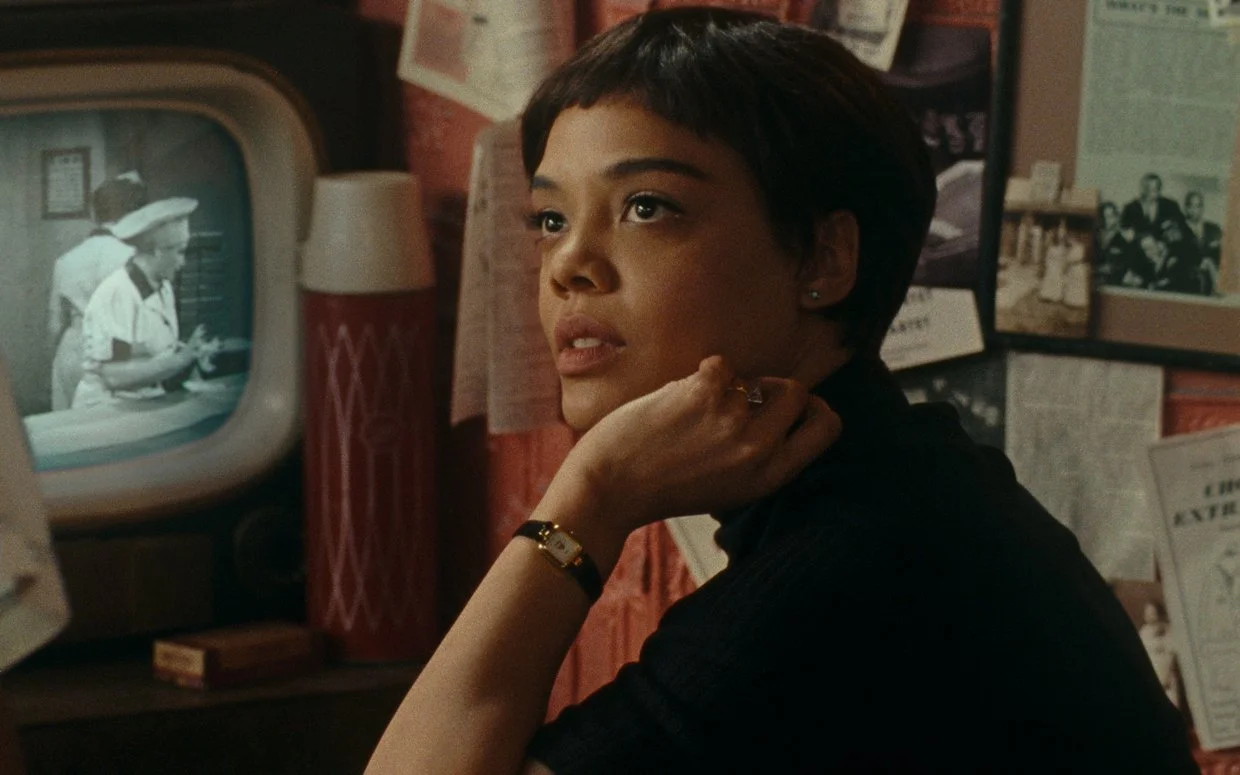
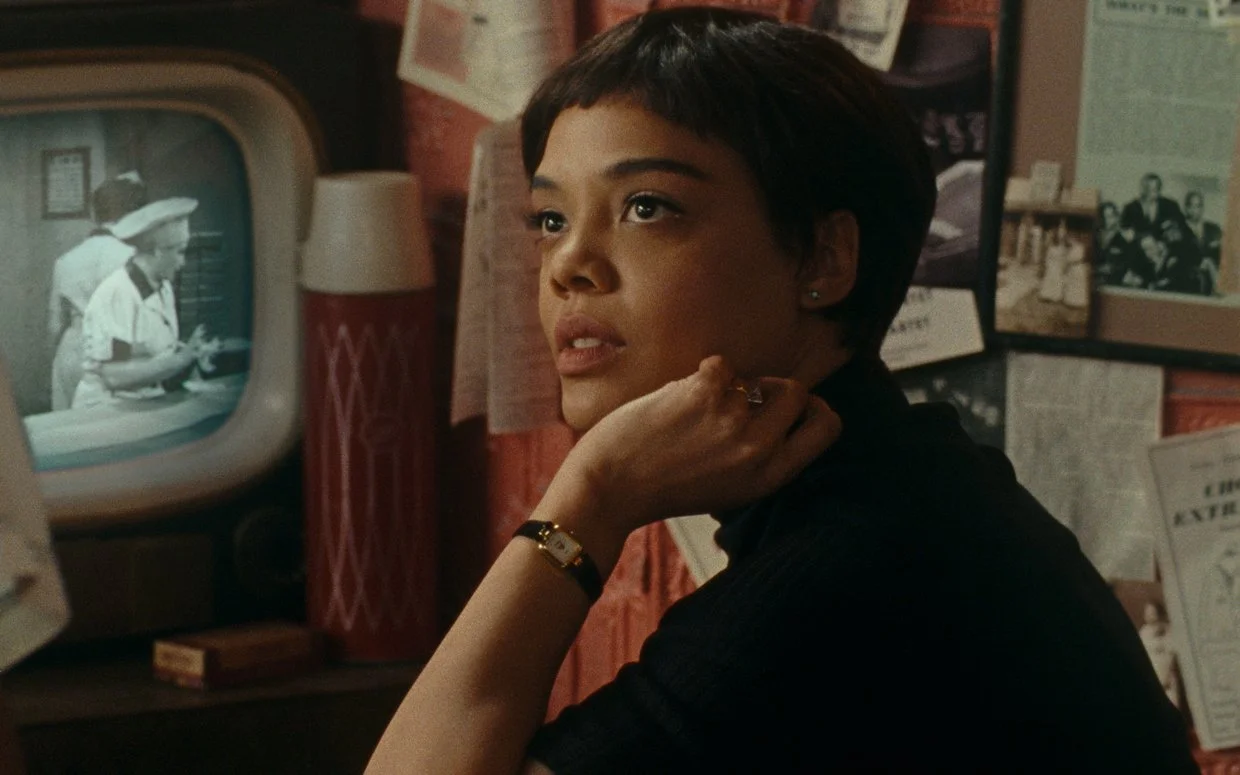
Writer-director Eugene Ashe stimulates love at first sight in Sylvie’s Love, a gorgeous sweeping romance that exudes charm in every frame. An incredibly talented cast, featuring Tessa Thompson and Nnamdi Asomugha in the two lead roles, soar at bringing a heartfelt narrative onto the screen with compelling fluency. Lush costumes and detailed cinematography, paired with dreamy music, depict a glamorous 50s/60s setting in Harlem. With passion, a rekindled love story is told through changing times and newfound professional heights.
The story begins with a chance meeting outside a theater. As Sylvie (Tessa Thompson) searches for a no-show guest, a familiar face passes by. Emotions rush in as her eyes meet Robert’s (Nnamdi Asomugha). The history they share sizzles back in time to one hot summer day five years earlier. Robert, an aspiring saxophonist playing for a jazz quartet, notices Sylvie through the window of her father’s record store. Aspirations of becoming a TV producer linger in her thoughts as she spends the summer indoors, waiting for her fiancé to return home. Her eyes are glued to the television as her future love walks through the door holding a Help Wanted sign. As the two slowly bond through music, her father takes notice and hires him on the spot. With the bloom of an unexpected romance, Sylvie finds herself at a crossroads between her fiancé and a new love that sparks fluttering emotions. Then life happens; Robert gets an exciting opportunity in Paris, and their paths diverge. But their spark never wavers as the years go by.
Eugene Ashe beautifully establishes the blossoming connection between both characters, while also exploring Sylvie’s hesitations about her overwhelming feelings for Robert. They fall deeply into each other’s hearts…perhaps too soon, as the ‘Fools Fall In Love’ melody goes. Tessa Thompson and Nnamdi Asomugha share such winning chemistry full of longing, meaningful moments left unshared, and the underlying fear of losing each other. Thompson plays a more fleshed out character, particularly in the second half of the film which sees a rise in Sylvie’s producing career and explores the aftermath of success in her family household. When her path crosses Robert’s again, harking back to the opening scene, their chance meeting takes on a whole new intriguing life. Just as Sylvie retreats from Robert when his career takes off in the first half of the film, he feels a similar urge not to hold her back when she achieves success in the second half.
Tessa Thompson has fantastic versatility. Her stunning work in films such as Little Woods, Creed, and Sorry to Bother You is now joined by another wonderful performance in Sylvie’s Love. Her screen presence is absolutely magnetic from start to finish, spanning a complex whirlwind of emotions as Sylvie’s devotions to her personal and career ambitions continue to rise. The film plays out as a grand love story at its core, but there are also interesting portrayals about the rollercoaster of pursuing career aspirations and how this clashes with expectations of creating a family. Sylvie’s fiancé Lacy (Alano Miller) in particular gets caught up in loving his antiquated idea of her. The second half of the film also sees strong dynamics within the television production industry. Sylvie lands the job of assistant to Kate (Ryan Michelle Bathe), the head producer of a 60s cooking show that stars TV personality Lucy (Wendi McLendon-Covey). During the job interview, much to Sylvie’s pleasant surprise, she discovers Kate is in fact the producer. It’s both a wonderful and sad scene touching on long overdue necessary industry shifts.
Sylvie's Love is a gorgeous romance that resonates beyond the blossoming love story at its core. The film is full of so much joy, which is also essential for Black representation on screen. The narrative portrays interesting explorations of career ambitions, self-love, and different relationship dynamics. Sylvie’s closest friend Mona (Aja Naomi King) has a small but recurring role throughout the story, and adds to a strong portrayal of friendship. Ashe’s direction and writing also infuse a passion for music that shines through the characters. Robert in particular is holding onto his love for jazz as its popularity starts to change from the late 50s to the 60s. An exquisite soundtrack gives so much emotional weight to certain scenes and the songs that accompany them. Musically, visually, and story-wise, this is a beautiful film. Eugene Ashe does a wonderful job of balancing all these elements together and bringing focus onto many of Sylvie’s loves in this story.

‘The Midnight Sky’ Review

December 23, 2020
The stakes feel incredibly low in The Midnight Sky a dull post-apocalyptic adventure story starring, produced, and directed by George Clooney. Clooney makes a cosmic return to the screen with a project that looks grand, but stumbles with the source material. Based on the 2016 book ‘Good Morning, Midnight’ by Lily Brooks-Dalton, the film follows scientist Augustine (Clooney) who discovers a young girl named Iris (Caoilinn Springall) left behind on his isolated observatory in the year 2049. As the two form an odd bond and find themselves weathering Arctic storms, a parallel thread follows a group of astronauts aboard the spacecraft Aether, headed home from a planet they hoped would be the future. But waiting for them on Earth is an ecological catastrophe threatening the livelihood of all inhabitants. Augustine tirelessly tries a poor radio connection to warn the Aether crew of the dangers ahead.
Lily Brooks-Dalton’s book has an intriguing premise dipped in loneliness and ambition. The story looks at the world’s end through the perspective of characters who are isolated, as their ambitions carry them to a life detached from Earth. Augustine is a celebrated astronomer who has given most of his life to observing the origins of the universe from remote outposts. The beginning of the film introduces him at his current posting, a snowy Barbeau Observatory in the Arctic Circle, of which he’s a terminal patient. Upon the news of a global catastrophe, while the other scientists evacuate, he stays behind in declining health and unrelenting dedication to his work. It’s an incessant ambition Augustine is evidently used to; in hazy flashback scenes of his younger self (Ethan Peck), his partner Jean (Sophie Rundle) urges that he take control of his life otherwise he will lose human connection. There are pangs of regret to Clooney’s character that the actor plays well; he doesn’t have to say much to get the feeling across, as his somber portrayal of Augustine has a lived-in quality to it.
The Midnight Sky has potential on the surface, particularly as a character portrait of loneliness and longing for universal truths through confessions of a lonely mind. But what makes the premise intriguing gets lost in muddled storytelling. Mark L. Smith’s adapted screenplay flickers through plot points without the patience to let them flourish. As a consequence, moments of heightened emotion and moving scenes between the characters fall flat. There are two main threads to this film, and the parallels are drawn poorly from inception all the way to a puzzling ending. Augustine and Iris have a mostly quiet relationship; her appearance in the film is a sudden revelation for him. A reminder of someone he loves dearly. The two eventually find a way of communicating that works. As they brace the blistering elements to find another radio connection, a parallel story follows the group of astronauts aboard the isolated Aether traveling back home. The Aether crew is played by a star-studded cast including Felicity Jones, David Oyelowo, Kyle Chandler, Tiffany Boone, and Demián Bichir. With this much talent in one setting, it is especially disappointing that the screenplay (mainly the character development) are what bring the film down several notches. Each have good little standout moments throughout, but the lack of focus in storytelling trickles down to their performances as they try to elevate above an incoherent screenplay.
Moments of emotional engagement feel few and far between in The Midnight Sky. Clooney’s direction is fine; there are some lovely celestial scenes that reflect and compliment Augustine’s frame of mind in particular. He establishes a strong setting of isolation in the Arctic; interrupting the quiet atmosphere are some messy action sequences that appear on screen in mostly jarring ways, and feel strategically placed simply to incorporate tension. Alexandre Desplat, who usually delivers, adds a super sentimental soundtrack to the story. There are also some jumpy musical notes that often don’t gel with certain moments. From a technical standpoint, the film is hit or miss throughout. For every moment of spectacle, there is one of distracting visual effects.
At the heart of The Midnight Sky is a group of isolated individuals trying to find their way home. There is potential for an emotional impact here but it never reaches the surface. Clooney brings ambition to the film by drawing parallels between the two storylines. By the end of its 2 hour runtime, however, it becomes clear that not enough patience was implemented along the way for all the threads to truly come together in a coherent or engaging way.
‘Ma Rainey’s Black Bottom’ Review
December 26, 2020
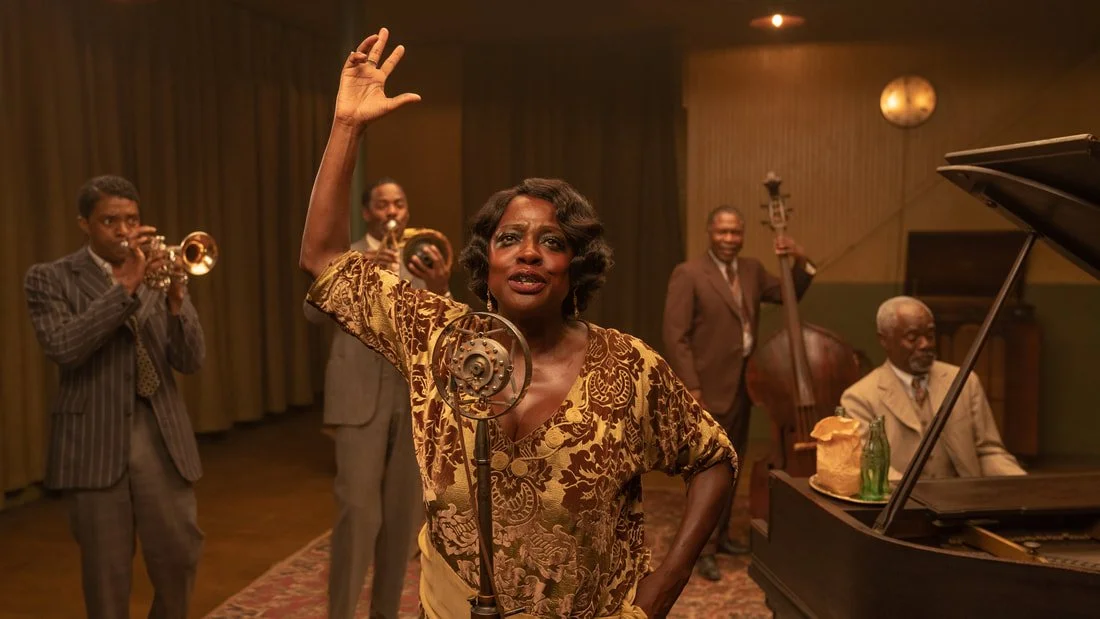
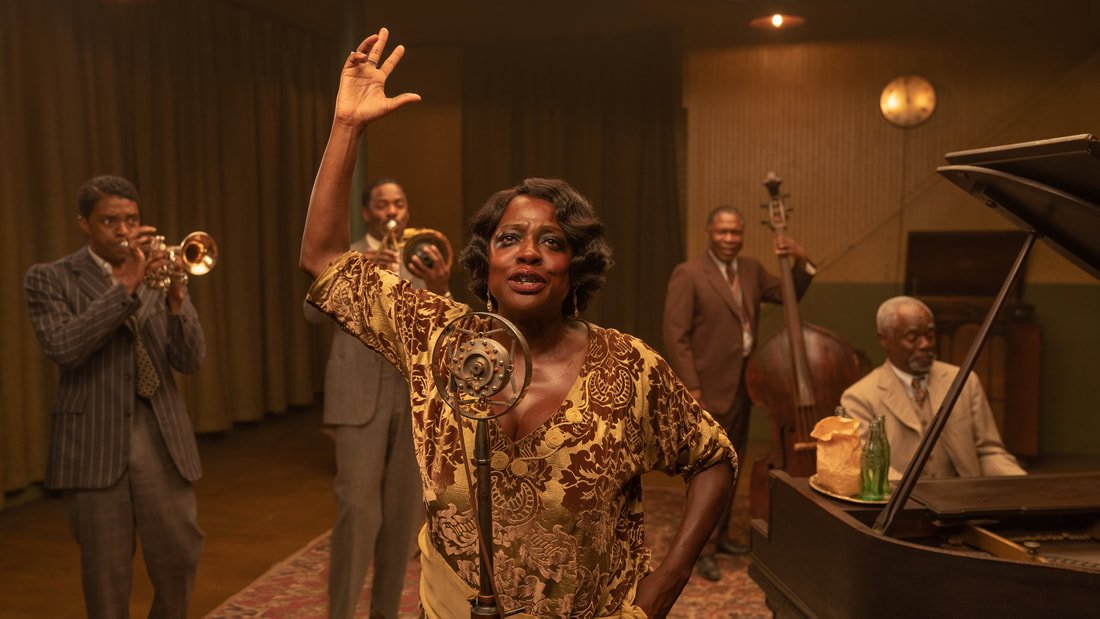
Creative tensions are rising at Hot Rhythm Recordings. This recording studio in 1920s Chicago is where the majority of Ma Rainey’s Black Bottom takes place. The film is directed by George C. Wolfe, written by Ruben Santiago-Hudson, and based on August Wilson’s Pulitzer Prize winning play of the same name. Wilson wrote his 1984 play after listening to Ma Rainey, known as Mother of the Blues, sing the titular song. Wolfe’s adaptation is an engaging portrayal of Black artistry and the economic exploitation of performing in an industry that centers white people (white men in particular). Ma Rainey’s Black Bottom has one of the best film ensembles in recent years and features a career-best performance by Chadwick Boseman, a remarkable talent gone far too soon.
The story begins with a lineup out the door of a show in Barnesville, Georgia. Ma Rainey (Viola Davis) is introduced mid performance. As Ma states later on in the film, what counts most for her is the voice inside, not what people think of her. It’s a great choice to establish this character on stage, focusing on the power of her voice, which Davis embodies so wonderfully. After getting a glimpse of Ma Rainey’s talents, the setting switches to Chicago where the four musicians in her band arrive at a recording studio and wait for her to join them. Irvin (Jeremy Shamos), who helps run the studio and constantly assures his co-worker Sturdyvant (Jonny Coyne) that everything is under control, leads the musicians to rehearse in a basement room until Ma arrives. A great deal of the film takes place in this room, and the dynamics that play out are nothing short of emotionally riveting. The framing and focus on the quartet create an all-encompassing feeling of being in that room, watching the actors from up close on a stage.
Accompanying Ma Rainey is the quartet of Levee (Chadwick Boseman), Cutler (Colman Domingo), Toledo (Glynn Turman), and Slow Drag (Michael Potts). As the youngest of the four, Levee is playing trumpet in the group until he can make his own way on his own terms. “I’m my own person,” Levee says. In a room full of veteran musicians who play their piece without showing critique despite all the exploitation, his rage and energetic ambition are on the rise. Levee is such a compelling character to watch; Chadwick Boseman brings an enormous spark to the film in his portrayal of ambition and trauma. In the actor’s last film, he delivers an absolutely magnificent performance showcasing his uniquely compelling talent. Boseman elevates a great film into something even greater with his extraordinary screen presence. He works beautifully with the other actors, especially when his character is in conflict with Domingo and Turman (both also excellent in this film). It’s one of the most riveting performances in some time, another example of how the legacy Boseman left behind in film (among so many more spaces) will live on forever.
The dynamics beyond the basement of this recording studio are not as engaging to watch unfold. This has more to do with the pacing and screenplay than the acting, as Viola Davis gives a brilliantly complex performance. Easily one of the most talented actors working today, Davis pours her heart into Ma Rainey and delivers with such fascinating embodiment. It would have been interesting to spend more time with her character on a deeper level; the film feels a bit fragmented when the focus switches to Ma and her relationships, not only with her band and the studio but also with Dussie Mae (Taylour Paige). Davis still opens a window to all of these dynamics and brings an immaculate level of detail to exploring her character.
With the limited number of sets and framing, Ma Rainey’s Black Bottom shines as a character-based story with an incredibly talented ensemble. The actors guide the way through stunning monologues and compelling interactions, revealing more about who their characters are as individuals and in relation to the world they are living in. George C. Wolfe does a wonderful job establishing the sets and adapting the stage material in a way that feels invigorating instead of strained. Each of the performances soar in their own way and add many resonating layers to a story that explores ambition and artistic erasure.

Best Films Of 2020

January 1, 2021
During a year of heightened isolation, it’s no surprise that stories of empathy and hope had the most resonating impact on me. So many of these films feature people who want to see change, people who look at the world around them with hope for something better around the corner, people who are discovering or regaining identity. Smaller films and debut features shone bright in 2020; with the shutdown of theaters, it’s been great to see a lot of these gems find an audience during festival rounds and in virtual cinemas. Here are my top favourites!
Nomadland
Nomadland is a stunning character study and a moving portrait of learning to live with grief. Writer-director Chloé Zhao and Frances McDormand are a match made in heaven as they explore the healing power of nature in gorgeous American landscapes. The beautiful score by Ludovico Einaudi gives melodic reminders that underneath the protagonist’s stoic exterior is a search of life after loss among a community of grieving people. Zhao tells a timeless story about self-sufficiency, unshared emotions, and the lonely ache in finding a sense of belonging during times of isolation.
Minari
Lee Isaac Chung writes and directs a deeply personal love letter in Minari, a beautifully told story about a Korean-American family of immigrants on the move in search of a fresh start in the 1980s. Chung’s storytelling is a remarkable reflection of the entire family unit at the heart of this film. Everyone’s perspectives are seen and heard with such clarity. They instantly feel like a family from the very beginning, which also speaks to an absolutely beautiful ensemble of actors. The performances gel like magic, and make it so easy to get completely lost in this story where intricate family dynamics play at the core.
Shiva Baby
Emma Seligman’s stunning debut feature Shiva Baby is a funny, invigorating, fully realized pressure cooker. Seligman blends comedy with drama and hints of horror, while exploring a woman coming-of-age, self-worth, anxiety, interfering family dynamics, conflicting pressures, power shifts in relationships, and traditions. The characterization is outstanding. The screenplay is quick witted. The sense of humour is a delight, providing constant laughs and lines so great you must keep up because you won’t want to miss them.
Wolfwalkers
Wolfwalkers is a magical Irish saga of love, friendship, and women empowerment. Directors Tomm Moore and Ross Stewart's mature storytelling bring environmental and philosophical themes to a beautiful fairytale adventure. The delicate watercolour animation and intricate swirling lines are gorgeous. Characters flow into and out of frames like magic. There’s a beautiful fluidity to movement and a fantastic embrace of seeing the world from the wolves’ eyes, through scent. With gorgeous animation, heartfelt voice work, and a resonating story, Wolfwalkers is the best animated film of 2020.
The Forty Year Old Version
The Forty-Year-Old Version is a funny and passionate film about a playwright at a mid-life point where she’s being “rediscovered,” even though she’s been here all this time, working and writing. Writer-director Radha Blank, who also stars in the film, is an incredible storyteller with a clear vision about artistic expression. At the heart of this story, beautifully directed in black and white, is an authentic voice who needs to be heard. The 40-Year-Old Version is a compelling film with a brilliant lead performance by Blank and a pitch perfect supporting cast, who altogether make a memorable mark.
Never Rarely Sometimes Always
Often times it’s the smallest everyday interactions between people that leave the greatest impact. Never Rarely Sometimes Always, the latest film by writer-director Eliza Hittman, evokes so much power and empathy in the quietest of moments. The story follows a few days in the life of two teenage girls who seek out medical help after an unintended pregnancy. At the heart of the film is a remarkable debut performance by Sidney Flanigan as Autumn, a realistically portrayed teenager who finds herself in a worrying situation.
Sound of Metal
Riz Ahmed delivers an astonishing performance as a drummer who begins to lose his hearing in Darius Marder’s film Sound of Metal. What makes this story so beautifully resonating is that it’s not about fixing hearing loss or portraying deafness as a weakness. The film addresses an abundance of love and acceptance within the deaf community. We see Ahmed’s character Ruben adapting to a new way of life with the guidance of community leader Joe (the great Paul Raci). The talented cast, also including Olivia Cooke as Ruben’s girlfriend Lou, bring so much empathy to this story of hope and understanding. Sound of Metal is a powerful and emotionally absorbing film to discover.
One Night in Miami
The love and care that director Regina King brings to her film, One Night in Miami, is riveting to watch. This is an outstanding stage-to-screen adaptation led by vulnerable, brilliant performances that take a leap of imagination. Screenwriter Kemp Powers brings his original stage play to the screen with depth, humour, and urgency. Kingsley Ben-Adir (Malcolm X), Aldis Hodge (Jim Brown), Leslie Odom Jr. (Sam Cooke) and Eli Goree (Cassius Clay, who’d soon take the name Muhammad Ali) each step into iconic roles of cultural significance with career defining performances. The film is dialogue-driven and shines when the four men are brought together for one night, where layered conversations of inner conflicts carry the pace.
The Assistant
Written and directed by Kitty Green, The Assistant needs to be heard loud and clear. This is an urgent depiction of human conflict and complicity, featuring incredible exposition and a stunning lead performance by Julia Garner. So much of the story is centered on the tense urge to say something, do something, without a safe space to do so. The film is incredibly grounded in its depiction of culpability. Green is showing us a realistic approach; we see just how easy it is for people to look the other way and knowingly contribute to a toxic environment that protects abusers.
Another Round
Another Round leaves a lasting impression about the lengths that people dare go in order to pull themselves out of a midlife crisis and feel something again. Mads Mikkelsen gives a remarkable lead performance in a thoughtful film that follows four high school teachers who start a drinking experiment to liven up their lives. As much as the film plays out its dramatic beats, it’s also a celebration of life, which lays the foundation for a totally joyous ending sequence that comes out of nowhere but still feels completely in place.
The Donut King
Alice Gu’s fascinating documentary The Donut King incorporates one intriguing perspective after another in its blend of historical and economic threads. The documentary follows how Ted Ngoy built a multi-million dollar donut empire. Ngoy, a refugee who escaped Cambodia in 1975, sponsored hundreds of refugees coming to America and gave them opportunities by teaching them how to run a donut business. By the late 70s, Cambodian-owned small donut shops cornered the pastry market in Southern California. This is a heartfelt story about survival, success, and the rise and fall of a mogul.
I’m Your Woman
Julia Hart’s hypnotic new film, I’m Your Woman, brings a compelling character study to life in the 1970s world of crime. With an intriguing perspective and precise attention to detail, Hart explores themes of regaining identity and discovering newfound motherhood. The stylish opening sequence and simple recurring piano score lend sophisticated qualities to a story that stirs in moments of eerie stillness. I’m Your Woman adds a refreshing point of view to the crime boss genre and pairs Julia Hart’s directorial skill with a marvelous Rachel Brosnahan to craft a satisfying slow-burner.
On the Record
The devastating story of music executive Drew Dixon is the subject of On the Record, a gripping documentary directed by Amy Ziering and Kirby Dick. In the wake of the Me Too movement founded by Tarana Burke, often missing from all discourse were (and are) Black women’s experiences which are necessary to be heard. This documentary follows Drew in the moments leading up to her decision to come forward and accuse Russell Simmons of sexual misconduct. With focus on Drew and her story, we see the emotional toll on her as well as what was lost over the course of several years.
The Invisible Man
Tense storytelling and a fully committed performance by Elisabeth Moss make The Invisible Man an anxiety-inducing experience from start to finish. Writer-director Leigh Whannell combines fantastic elements of horror, thriller, sci-fi, and drama. Through lingering camerawork and a mesmerizing lead performance, there’s a constant feeling of dread that fills empty spaces and follows the protagonist Cecilia everywhere she goes. Where the horror comes from (her frustration and hopelessness that she’s not being believed) is what resonates most.
First Cow
Writer-director Kelly Reichardt has a knack for telling such quietly resounding stories. Hypnotic from the first frame, First Cow captures the tenderness and simplicity of two people who find a strong connection in unexpected ways. The story is a melancholy look at a skillful cook and a Chinese immigrant who collaborate on a business, the success of which relies on a wealthy landowner’s milking cow. Their newfound bond is brought to life with great performances by John Magaro and Orion Lee as two characters in search of fortune in life.
Definition Please
Writer, producer, and director Sujata Day tells an incredibly charming story in her debut feature film Definition Please. Her debut excels as a comedic and dramatic character study that comes from a place of authenticity. Day, who also stars in the film as Monica Chowdry, flexes her many talents both in front of and behind the screen. With love, she highlights family ties and bottled up conflicts that arise, which gives all the characters a sense of urgency. The film also has a refreshing representation of mental health, as Day engages in open conversation about characters in healing.
Sylvie’s Love
Writer-director Eugene Ashe stimulates love at first sight in Sylvie’s Love, a gorgeous sweeping romance that exudes charm in every frame. An incredibly talented cast, featuring Tessa Thompson and Nnamdi Asomugha in the two lead roles, soar at bringing a heartfelt narrative onto the screen with compelling fluency. Lush costumes and detailed cinematography, paired with dreamy music, depict a glamorous 50s/60s setting in Harlem. With passion, a rekindled love story is told through changing times and newfound professional heights.

‘Herself’ Review

January 4, 2021
Home is a place of inspiration and community in Phyllida Lloyd’s emotional new film, Herself. The story follows Sandra (Clare Dunne) in search of a new place to live, having just escaped from her abusive partner Gary (Ian Lloyd Anderson) with her two young daughters Molly (Molly McCann) and Emma (Ruby Rose O’Hara). Fighting against the housing crisis in Dublin, she stumbles onto the inexpensive idea of building her own home. Determined to prevail, Sandra sets her mind to rebuilding a new life for herself and her children, while reliving the long term trauma of past incidents. The story originated from one of the film’s co-writers and stars, Clare Dunne, who gives a stunning performance of resilience and pours her heart into bringing a meaningful journey onto the screen.
The effective little universe that Sandra has created between her children is clear from the first scene of this film. As a self-protective mechanism in a toxic environment of domestic abuse, the three of them live in their own bubble of love, trust, code words, and secrets that Sandra teaches them to keep. After she and the girls escape from a violent incident, she finds a temporary home with Peggy (the great Harriet Walter), a doctor she cleans for. Peggy had formed a strong friendship with Sandra’s late mother, and this bond leads to a generous offer of land for Sandra to build her home on. Along the way, Sandra runs into and enlists help from Aido (Conleth Hill), a building contractor who agrees to supervise and then brings a group of volunteers on board. It’s heartwarming to watch these characters rally around Sandra and lift her spirits with a powerful sense of community. But while Sandra is rebuilding her life, she’s also having to deal with challenges brought upon by her possessive ex, who insists he’s getting help and wants them to be a family again.
What resonates most about Herself is that the screenplay transcends in portraying Sandra as a woman who determines her own fate as a survivor. The film addresses the aftermath of escaping an abusive partner and how Sandra is left to essentially put her life back together, piece by piece. The power of teamwork and resilience shine through the screen, particularly in the second half of the film which lays the foundation for a reaffirming chapter in Sandra’s life. Dunne and co-writer Malcolm Campbell bring such care and thoughtful focus to the character of Sandra. The film shines an introspective light on the strength she is rebuilding within herself; after each setback she experiences, there’s an immediate feeling of hopefulness for her to rise again. Phyllida Lloyd’s strong direction compliments a heartbreaking performance by Clare Dunne at the center. As much as Sandra pushes forward, what resides within her are painful flashbacks to a particularly brutal moment that happens early on in the story. It’s an emotional rollercoaster to watch this character regain her sense of self and shield her children from increasingly challenging moments, one of which sees Sandra at a hearing where custody of her children is under review. The judge asks why she didn’t leave her ex, never asking why he didn’t stop. Dunne’s performance reaches new heights in this devastating moment and leaves such a lasting impact.
The protagonist’s grounded journey in Herself speaks to the experiences of so many women who are affected by domestic abuse and its long term effects, in addition to the housing crisis and looking for stable environments to live safely in. Universal themes of hope, resilience, and community adorn the structure of this heartfelt story. Accompanying the film is a soundtrack of uplifting pop songs, which become a little too frequently placed in getting the message across but have an understandable intention. What shines above all else is a resonating protagonist and stunning performance by Clare Dunne, whose journey is both heartbreaking and uplifting to watch unfold.
Herself releases January 8th on Amazon Prime Video.
‘Promising Young Woman’ Review
January 11, 2021
This review contains spoilers.
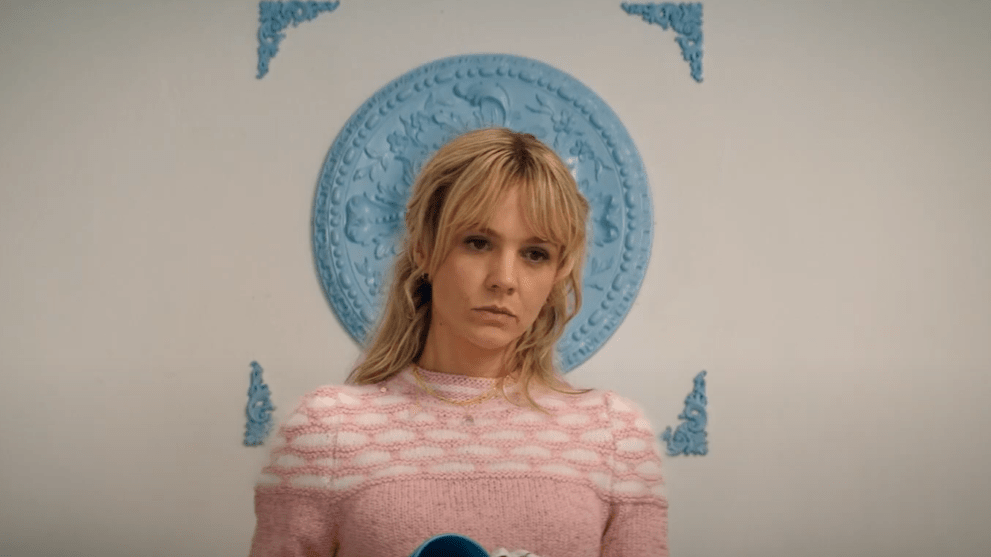
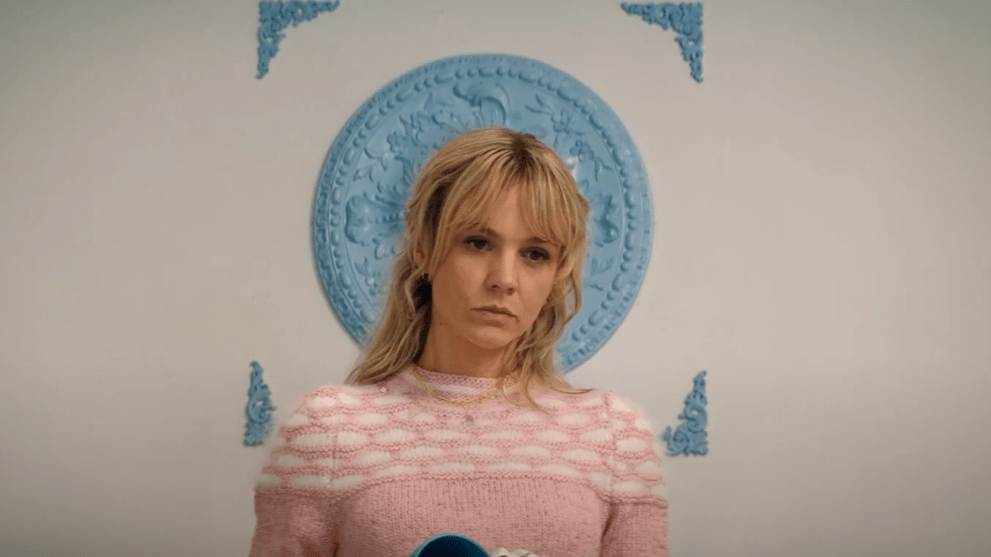
The trailer and premise of Promising Young Woman tell a story of revenge. Righting wrongs, giving people a taste of their own medicine, making them pay. While these elements are very much incorporated in writer-director Emerald Fennell’s startling debut feature, what ruminates most about this film are a severe lack of justice and the aftermath of derailed grief. The tragedy that the story goes where it does, that toxic masculinity is perpetuated constantly, is what Fennell sits with…to an engaging and devastating extent. Promising Young Woman turns the tables on the men and women who are complicit in rape culture, while also exploring through the story's protagonist a woman so utterly consumed by grief and the frequent memories of who she lost.
Cassandra “Cassie” Thomas (Carey Mulligan) feels distant from the world she lives in, understandably so. Everyone said she had promise; with a bright future ahead, she was on course to becoming a doctor until an incident derailed the course of her life. Having dropped out of med school, Cassie now works at a coffee shop by day. She also lives with her parents (Jennifer Coolidge and Clancy Brown), which causes them much worry. One morning she sees a gift in the family room, forgetting that the occasion is her 30th birthday. As she unwraps a large pink suitcase, her mother wonders why her daughter is still under their roof. If Cassie wanted a house/marriage/kids, she’d have done it, she assures her friend and boss Gail (Laverne Cox). What consumes Cassie so intensely, to the point where it interferes with her everyday life, is complicated grief. She carries the pain of what happened to her best friend, Nina Fisher. She is consumed by grief at every waking moment, which sees her not only heartbreakingly demand justice from ghosts of the past but also step into dangerous scenarios. By night, Cassie goes to different clubs and acts like she’s too drunk to stand. Every night, a “nice guy” goes over to see if she’s okay. They take her to their homes, where she reveals her soberness when they force themselves onto her. Cassie confronts their behaviour by inflicting the absolute truth upon them, fueled by a persistent yearning for them to actually see the error of their ways.
Emerald Fennell has an incredibly clear vision from the start, opening her film with an energetic pop song in contrast to the disturbing “nice guy” encounter that follows. Fennell has a confident level of storytelling that raises challenging conversations in the form of a pastel aesthetic and a pop soundtrack on surface level. The film is an engaging blend of genres and subverts expectations from one moment to the next. It’s astonishing how these contrasting elements are handled in the film to reflect the protagonist, who is sorting through grief as a shadow of who she once was. When Cassie meets Ryan (Bo Burnham) at her coffee shop, and he recognizes her from med school, the two seem to match each other’s forthright energy. For a tiny moment, a sugar rush of potential romance opens up. The film morphs with elements of romance genre, complete with a pop song sing-along and couples' montage, while also addressing Cassie’s hesitance to start a relationship when all her energy is put towards the case of Nina.
Throughout the film, Cassie confronts people of the past in relation to her best friend, from school friend Madison (Alison Brie) to former dean Walker (Connie Britton) to case lawyer Jordan (Alfred Molina), all of whom are complicit and meet the anger of a woman who wants justice served. One of the most remarkable scenes in the film sees Walker, far more concerned with a man’s reputation and giving him “the benefit of the doubt,” met with the power of perspective that Cassie wields in front of her. The film feels incredibly honest in its depiction of culpability and the toxic environments that continuously protect sinister behaviour.
While it is captivating to watch Cassie serve the truth in obliteration of those who are complicit, what resonates beyond these moments is the devastating grief that sees her fight for justice on behalf of Nina, partly in response to a grossly unjust system that allows rapists like Al Monroe (Chris Lowell) to move on without a care in the world. In a powerfully revealing scene where Cassie visits Nina’s mom Mrs. Fisher (Molly Shannon), the two discuss Cassie’s regrets and Mrs. Fisher urges her to finally move on with her life. She tries to put the past behind her, and is met with yet another example of ingrained toxic misogyny which catapults the film into its fourth chapter. What makes this chapter of Promising Young Woman so devastating is its conversations around justice and remorse (specifically the lack thereof). The truth with which the protagonist confronts everyone in her path is met with the sinister reality of the world she distanced herself from. That the emotional, mental, and physical ripples of distress are unwavering is a tragic watch that has opened so many necessary conversations. Perhaps this is the direction Fennell intends to go in, encompassing feelings of rage and portraying it on screen to show a harsh reality. Her storytelling in this moment has such an emotional, angering, and wincing effect.
On board with the writer-director every step of the way is the film’s star Carey Mulligan, who delivers a tour de force that will continue to resonate for years to come. She’s outstanding in an immersive and harrowing way, as she portrays Cassie with a haunting truthfulness that broke me. Her acute ability to embody all the candy coated tonal shifts and also maintain a grounded approach is truly remarkable to watch. She carries the film powerfully, and shares compelling screen time with a supporting cast of characters who mostly represent a societal smoke screen of sinister behaviour and toxic misogyny. During an interview Emerald Fennell gave at the 2020 Sundance Film Festival, she commented on how evasive these topics are culturally and how so much is sugarcoated to be made “tolerable”. She turns this on its head in her devastatingly compelling debut feature, making a crystal clear stance in challenging toxicity and never wavering from her ambitious approach.
Promising Young Woman releases on demand January 15th.
‘Minari’ Review
January 13, 2021
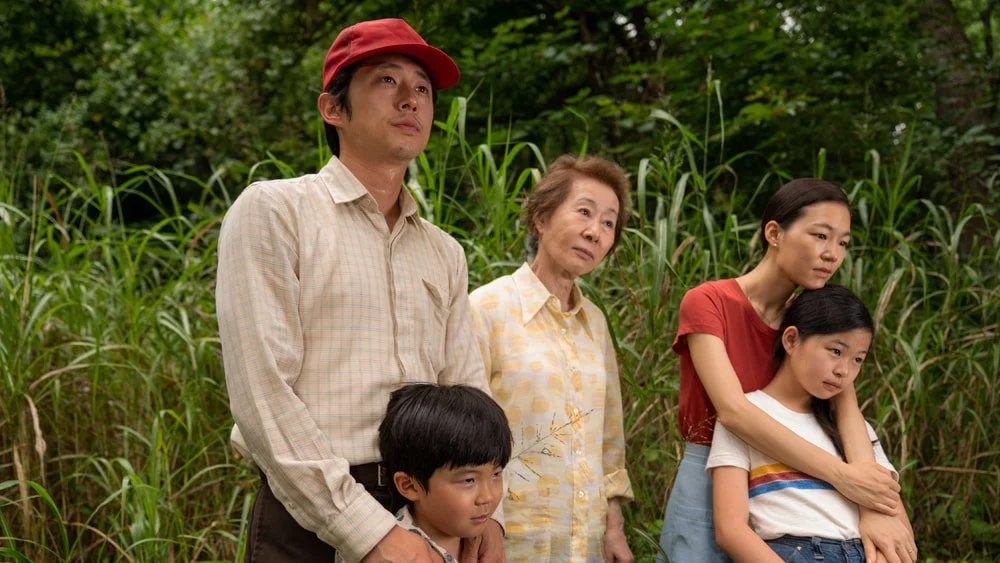
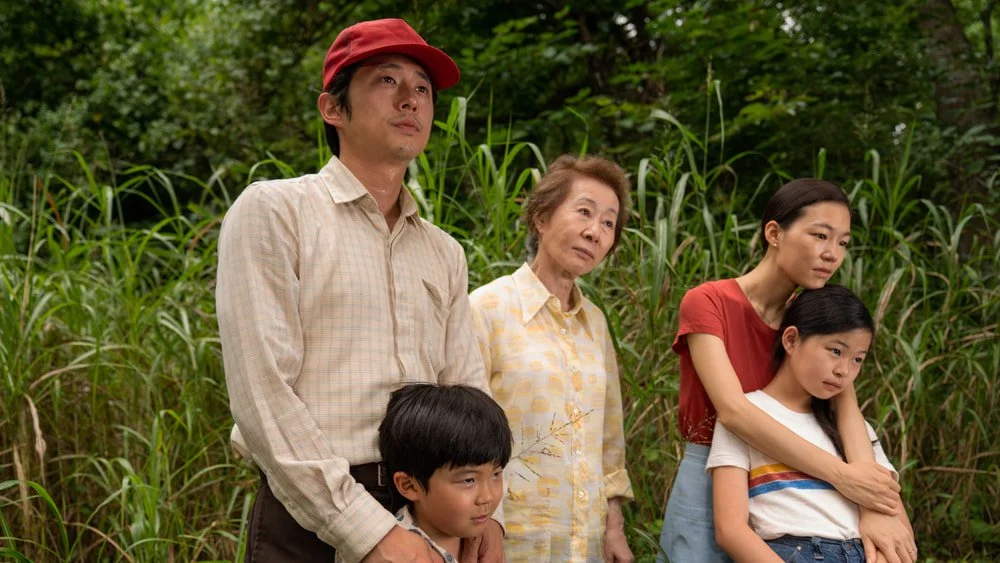
Written and directed by Lee Isaac Chung, Minari is a beautifully told story about a Korean-American family of immigrants on the move in search of a fresh start in the 1980s. For Jacob (Steven Yeun), a fresh start means turning his dream of 50 acres into a reality. “Daddy’s going to make a garden,” he promises his seven-year-old son David (Alan S. Kim). In pursuit of the American dream, he moves their family from California to a house on wheels in rural Arkansas. Monica (Yeri Han), mom to David and his sister Anne (Noel Cho), has doubts living in the middle of nowhere. “Now we have a lot of land…isn’t that good? Tell mommy you like it,” Jacob urges to their son, hoping to win her over. But she’ll need a little more than complimentary words to smoothen the move. When the children’s grandma Soonja (Youn Yuh-jung) arrives from Korea to lend support, David’s curiosity is awakened by her personality, and the two slowly bond through stealthy playfulness. In the bigger picture of this film, Jacob’s garden dream becomes an active goal of starting a farm, for which his unwavering dedication puts the family’s future prospects on shaky ground.
For his fourth feature film to date, Chung shaped the narrative around his own memories as a kid growing up on a farm in America. The weight of memories shine particularly through the character of David, whose perspective full of wonder and curiosity feels like a docent for the story at times. Though even with a guiding character, Chung’s storytelling is a remarkable reflection of the entire family unit at the heart of this film. Everyone’s perspectives are seen and heard with such clarity. The performances gel like magic, and make it so easy to get completely lost in this story where intricate family dynamics play at the core.
The entire cast of Minari are brilliant to watch. They each play such fully realized characters and interact with each other in the most mesmerizing of ways. One of the most heartfelt dynamics is the relationship between David and his grandma Soonja. These two characters have remarkable arcs that play out powerfully. The majority of their interactions are playfully fractious; David’s clever pranks and inquisitiveness competes with his grandma's quick witted humour and fiercely protective nature. David has a heart that could stop at any moment, and when faced with the fear of death in one of the best scenes of the film, his grandma advises him what to say. “No thank you, heaven,” she tells him wholeheartedly. Youn Yuh-jung gives a stunning performance as Soonja; she is a force of nature to watch. Her comedic timing is wonderful, her lines are gold, and she has such a tenderhearted journey in the film’s emotional last act. David’s arc is also moving to watch, and Alan S. Kim’s remarkably perceptive screen presence gives so much heart to the story.
Adding to this gentle story of relationship dynamics are wonderful performances by Steven Yeun and Yeri Han, playing partners and parents who have conflicting hopes for their family. Jacob and Monica work in a factory as chicken sexers, which sees them separate male chicks from female chicks. Jacob in particular is known for being fast; he made a lot of money in California before moving his family to a house on wheels in Arkansas, a decision that understandably left Monica with a lot of hesitations. “We’re not staying long,” she tells her children when the family first sets eyes on their new home. The longer they adapt to their surroundings, the more cracks appear in Monica and Jacob’s marriage. They have their own dreams for the future of this family, particularly when it comes to doing what’s best for David and giving him an environment good for his heart. It’s moving to watch their arguments, especially from the children’s point of view.
Chung does a wonderful job of showing how one aspect of the family affects everyone; he holds up a mirror to family members as well, as they look to themselves for answers. “All we did was fight…is that why [David’s] sick?” Monica asks Jacob. Yeri Han beautifully portrays her character’s uncertainty, hopefulness, and thwarted inner dreams of her own. She also shares perfect chemistry with Steven Yeun, who gives a vividly lived-in performance as Jacob. Yeun brings to life his character’s contemplative nature and incredibly strong will in such a hypnotizing way. Jacob wants the absolute best for his family, and at the same time, is determined to carry the weight of this responsibility entirely on his shoulders. It’s something he feels he has to do, and this firm will trickles down to his family.
Beyond the outstanding ensemble, direction, and writing are beautiful technical marvels complimenting the film. Emile Mosseri, who composed the impeccable score for The Last Black Man in San Francisco, adds another jewel to his career with a dreamy score for Minari that echoes the tenderhearted quality of this story. Harry Yoon’s editing moves the film along at an incredibly tranquil and dreamy pace. Lachlan Milne’s cinematography captures such a specific setting and gives gorgeous weight to the simplest of moments. There are so many scenes that appear simple on the surface while, underneath, carry meaning for the characters and add layers to their identities.
Minari is a deeply resonating American story that portrays the hopes and dreams of a family at its core. Jacob works tirelessly to build his family a thriving future among American culture (which we see welcoming and non-welcoming sides of in the film). Throughout the story, Jacob feels a mounting responsibility to be a provider, and in many ways the farm becomes tied to his measure of personal success. Working outdoors makes him feel alive, a sentiment he shares with his children especially. Underneath this work is a desire for new familial beginnings where his children see him succeed and where everyone can thrive.
‘Love Sarah’ Review
January 13, 2021
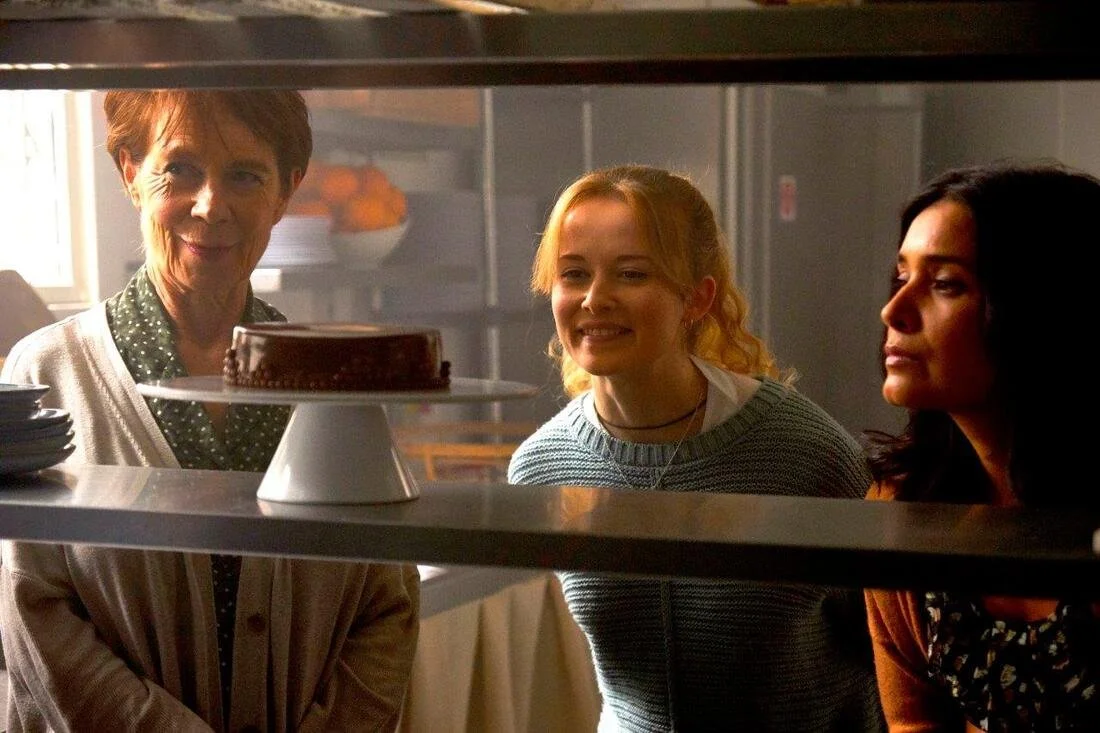
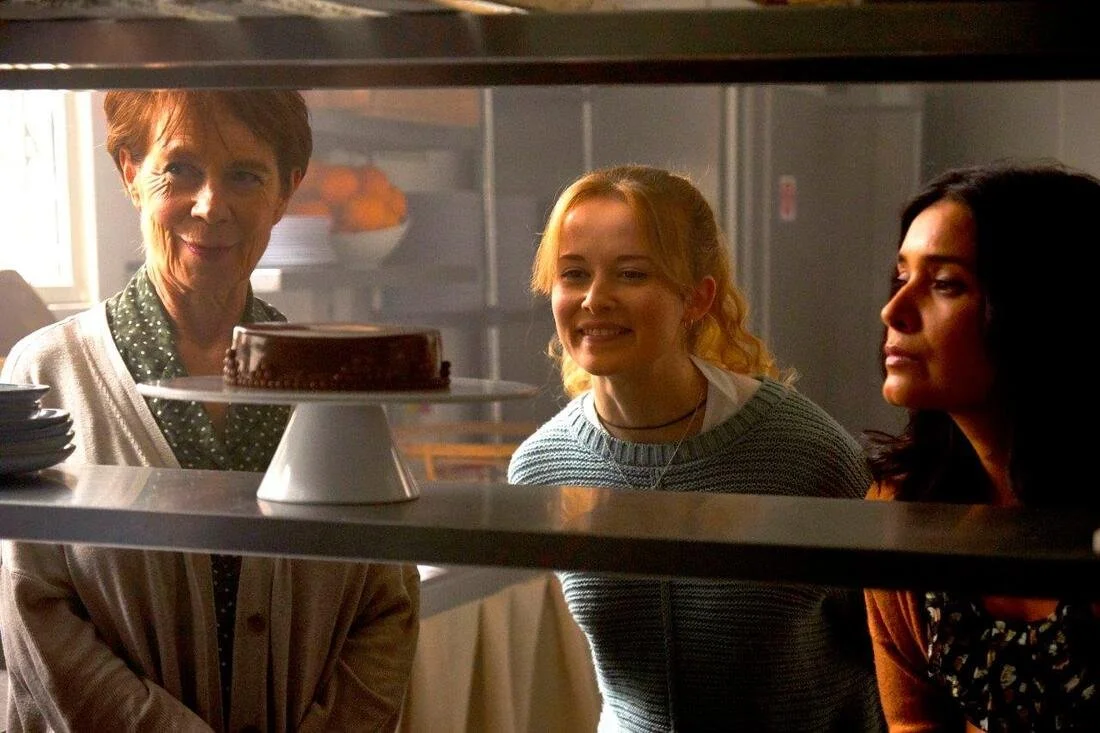
Writer-director Eliza Schroeder’s debut feature, Love Sarah, has flickers of potential that shine sporadically through its central characters. The story brings together three women sifting through the grief of losing someone they all loved. Clarissa (Shannon Tarbet) wants to fulfill her mom’s dream of opening a bakery in Notting Hill; needing help, she asks her grandma Mimi (Celia Imrie) and old friend Isabella (Shelley Conn) to pitch in. The prospect of this bakery gives each of them the opportunity to patch up strained relationships and make up for lost time. Their dynamics give the story warmth, but the film as a whole goes in the route of uninspired and questionable choices. With resonating moments few and far between, Love Sarah feels like a slight slice of life with not very much to say.
The film opens with the aftermath of losing its title character. Sarah was the star chef of a once-popular bakery; now that she’s gone, investors have pulled out, the place is sitting empty, and her close friend Isabella is unable to get out of a lease agreement the two of them signed. Meanwhile, Sarah’s daughter Clarissa has just gotten out of a relationship; with nowhere else to go, she breaks into her mom’s bakery to sleep and shows up at her grandma Mimi’s house the next day. Mimi, who hadn’t seen her granddaughter in some time, questions this unannounced visit. As it turns out, Clarissa proposes opening up the bakery again in honour of Sarah. Mimi would pitch in financially, and Isabella would bake. By working together, they gain a newfound opportunity to reignite their relationships and do what they feel Sarah would have wanted.
Love Sarah tries to capture moments of triumph and finding a sense of purpose by way of reconnecting with people. The relationship dynamics between Isabella, Clarissa, and Mimi give the film some heart, but the characterization is not there. Without really scratching the surface of who these characters are, it’s a stretch to feel connected to them. The film misses an opportunity to explore how their relationships came to be undone, and how their experiences of loss bring them to the point that they’re introduced in the story. The bakery itself is plugged in as the glue that holds them all together, and as the film goes on, more time is spent on how the shop is to succeed.
After a series of failed interviews conducted to fill Sarah’s baker position, a guy named Mathew (Rupert Penry-Jones) walks into the shop having heard about the job. Tension is immediately noticed between him and Isabella, who have baking history as they used to train together. The introduction to this character feels completely sudden and as it turns out, he becomes an unnecessary addition to the story. The love interest angle is one of a few uninspired and questionable choices in the film, another being desserts of different cultures. After a quiet first week of the family’s bakery opening, Mimi gets the idea to start making desserts that apparently cannot be found anywhere else in London. She asks everyone she meets where they are from and what dessert they love, intending to cater for people from around the world. Intended as a reflection of multiculturalism, the portrayal feels like a missed opportunity with questionable focus on this bakery shop being the only place in London to provide treats from different parts of the world.
For Eliza Schroeder’s debut feature, what resonates most albeit sporadically is an optimistic response to the aftermath of grief. It is sweet that the central characters find a new way of bonding and learn more about their strengths in the process of losing a loved one. The performances are also charming enough to carry the film throughout, particularly Shelley Conn as Isabella. But the growing bond between the characters is sugarcoated by slight characterization and a series of uninspired plot points scattered along the way, holding back what makes Love Sarah work.
‘One Night In Miami…’ Review
January 14, 2021
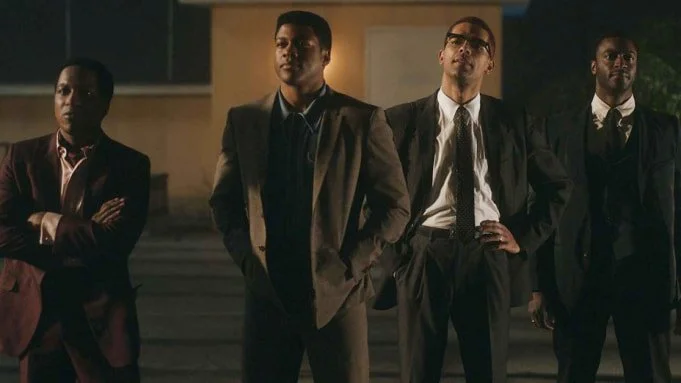
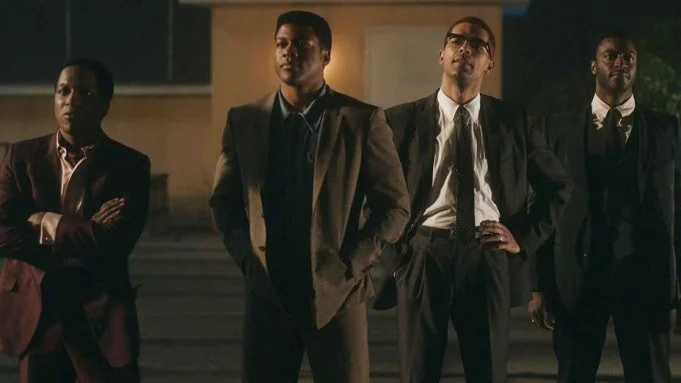
Based on Kemp Powers’ award winning play of the same name, One Night in Miami is an outstanding stage-to-screen adaptation brilliantly directed by Regina King. The clarity and attention to detail King brings to her film gives an immensely talented ensemble cast wonderful moments to shine. Kingsley Ben-Adir (Malcolm X), Aldis Hodge (Jim Brown), Leslie Odom Jr. (Sam Cooke), and Eli Goree (Cassius Clay, who’d soon take the name Muhammad Ali) each step into iconic roles of cultural significance and take a grounded leap of inspiration. They deliver such remarkable performances and together help create an immersive ‘fly on the wall’ experience. King’s directorial debut is incredibly dialogue-driven with a focus on inner personal conflicts and the heightened responsibilities each of these men feel in representing Black voices. Kemp Powers brings his original stage play onto the screen through compelling conversations and urgency.
One Night in Miami is a fictionalized account inspired by a night in 1964 where Malcolm X, Jim Brown, Sam Cooke, and Cassius Clay gather in a hotel room after Clay’s championship win over Sonny Liston. While the city of Miami celebrates, the four men are in deep discussion with each other. Working with a limited number of sets as the majority of the film takes place in one room, Regina King does a phenomenal job establishing a sense of place. Her direction is seamless and works wonders with the pacing of this story. There is so much room for the performances and the words to truly soar through how the actors play off each other. The film shines as a dialogue-based story, and the conversations are absolutely riveting to watch from start to finish.
Prior to bringing the men together, King and Powers first establish where they are in terms of setting and timeline. The early moments in the story are so insightful to each of the men’s lives beyond being historical figures, and what we see at the beginning of the film plays out through their conversations in the hotel room (particularly with Malcolm and Sam Cooke). All four men have contrasting positions regarding their power and the weight of the responsibilities that come with it. One of the most engaging relationships in the film is between Malcolm and Sam Cooke; their electric conversations set the stage for two particularly remarkable moments, a flashback to Cooke’s impromptu performance and the stunning ending sequence.
Regina King’s seamless direction, in collaboration with a talented ensemble cast and Kemp Powers’ compelling screenplay, give One Night in Miami a continuous energy. The film takes a little while at first to gain traction, but King’s storytelling at the beginning adds another layer to the hotel room setting that follows. The actors carry the conversation forward with remarkable fluidity, each working so well together and delivering what are easily some of the most resounding performances of recent years.
One Night in Miami releases January 15th on Amazon Prime Video.
‘White Lie’ Review
January 20, 2021
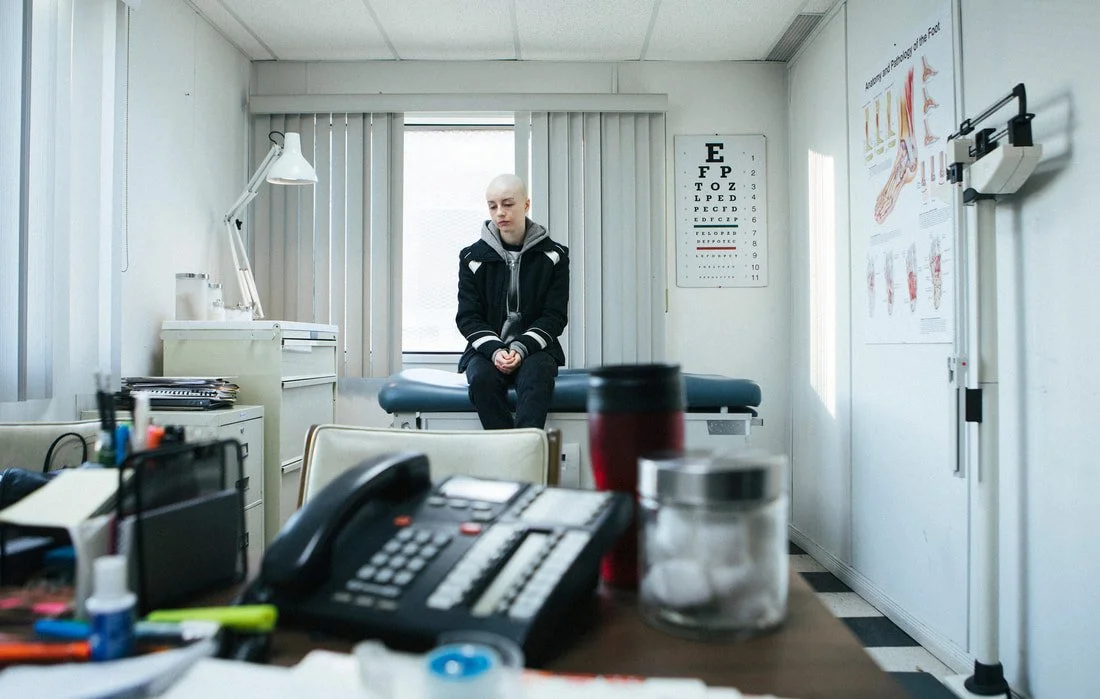
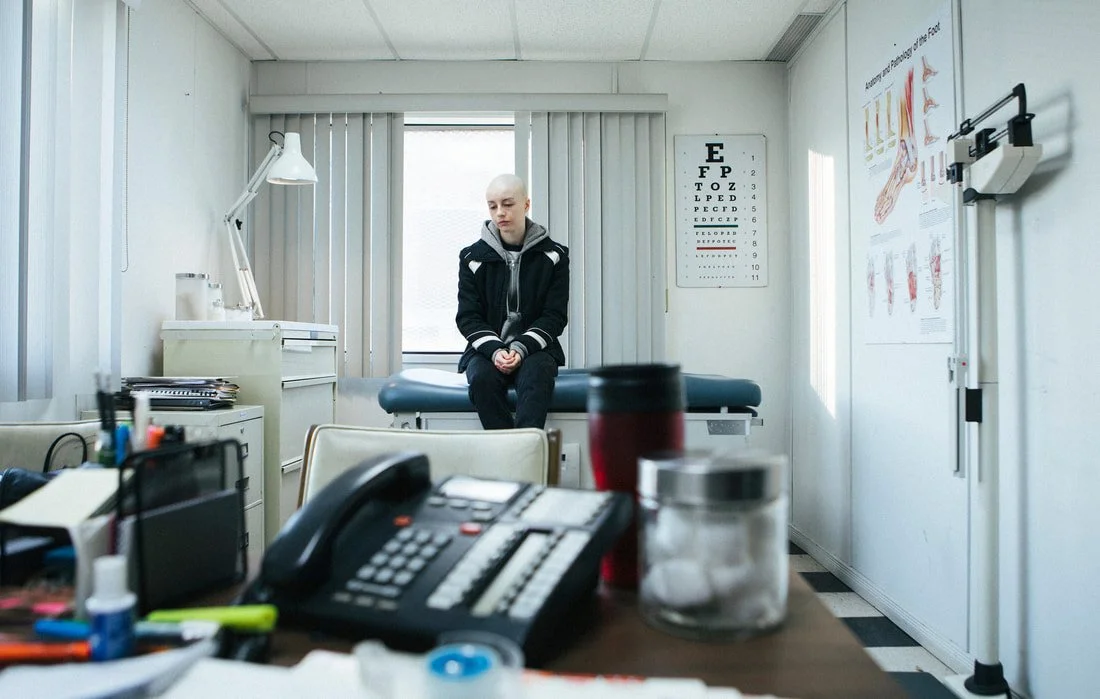
White Lie is an unsettling and disturbing portrait of a persona built on dishonesty. Filmmakers Yonah Lewis and Calvin Thomas craft a claustrophobic story based around the idea of a lie spiraling out of measured control. The story follows Katie Arneson (Kacey Rohl), an undergrad who fakes having cancer and takes advantage of a supportive community which includes her caring girlfriend Jennifer (Amber Anderson). On the verge of exposure after forging medical records to receive academic bursary, Katie sinks deeper and deeper into the world of lies she created. She has an exhausting commitment to maintaining this fake persona, which gives the film a sinking feeling at every turn. An eerie opening sequence immediately lets in on the protagonist’s delusion and the fact that she does not believe she’ll face repercussions for her actions.
From the moment Katie is introduced, shaving her head before showing up at a small school fundraising event held in her name, she is completely immersed in maintaining a charade to the point of no return. The more she faces questioning and potential accountability, the more she fuels a self-portrait of dishonesty. For Katie, the backbone of her persona is a lie. She would rather build lie upon lie than express any semblance of wrongdoing and untangle the brazenly deceptive role she created for herself. Insight into what lies beneath this persona isn’t explored fully in the film. There are hints to a traumatic experience Katie went through with her parents some years prior. The film often works in interpretive spaces and avoids explanations as to why she continues down this disastrous path.
A tremendous performance by Kacey Rohl carries the powerful intensity of this film. The detailed commitment she brings to her character gives the story a lingering gravitational pull. She does a wonderful job playing Katie’s disturbing sense of entitlement and determination to live a lie. This character is completely consumed by a self-made falsehood, and Rohl is an enigma to watch as her performance descends with a lack of awareness for how much harm she is causing. For Katie, a world without lies is distant; she feels an unwavering urge to continuously manipulate everyone around her in order to get what she wants.
The supporting cast of characters each represent various perspectives on Katie’s actions. When she visits her father Doug (Martin Donovan) in need of money, he shows an instant apprehension and ultimately claims not to believe she’s ill. When she’s put in touch with Dr. Jabari Jordan (Thomas Olajide) to forge medical documents and he sets his boundaries, she retaliates. Each time Katie is met with doubt, she pushes back in a manner of hurt and betrayal. The one relationship she is determined to keep is with her girlfriend Jennifer. Katie and Jennifer met when the former started this charade; there is a connection Katie makes between maintaining the lie and keeping the relationship. If she’s not ill, she fears Jennifer will leave her. Katie’s unwavering ability to keep secrets from the person she loves most drives the film to a searing final act that tests Jennifer’s trust and patience in who she thought she knew.
White Lie is a solid drama that explores the mental exhaustion of maintaining a charade for personal comfort and gratification. The story maintains an incredibly tense pulse and invests a lot of time in showing how the protagonist is living in two different worlds: reality, and a warped version of it that she controls. While the story is planted in her perspective, there is still a lot of unexplored potential for a deeper character study, which ultimately hinders the final act. But it is Kacey Rohl who elevates the material and maintains a constant feeling of dread. One of the most startling lines in the film happens when Katie insists that she “won’t be sick anymore,” as if she can evaporate the rippling effect of her actions at the drop of a hat. It’s a deeply unsettling moment that speaks to Rohl’s steadfast commitment in bringing this character to a point of no return.
White Lie is now streaming on Amazon Prime
‘The Mauritanian’ Review
January 26, 2021
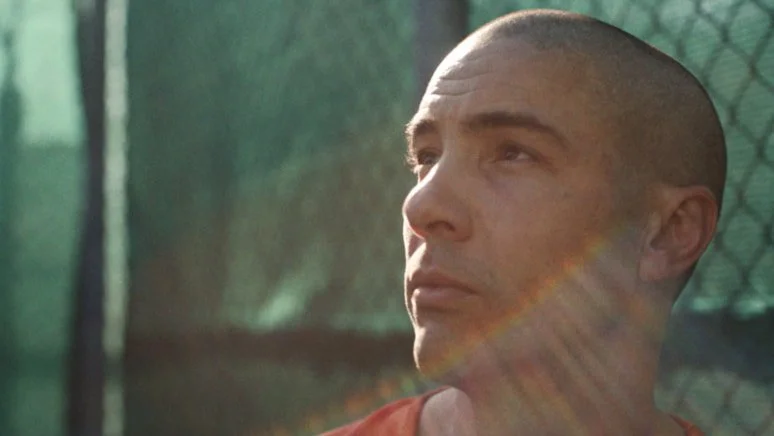
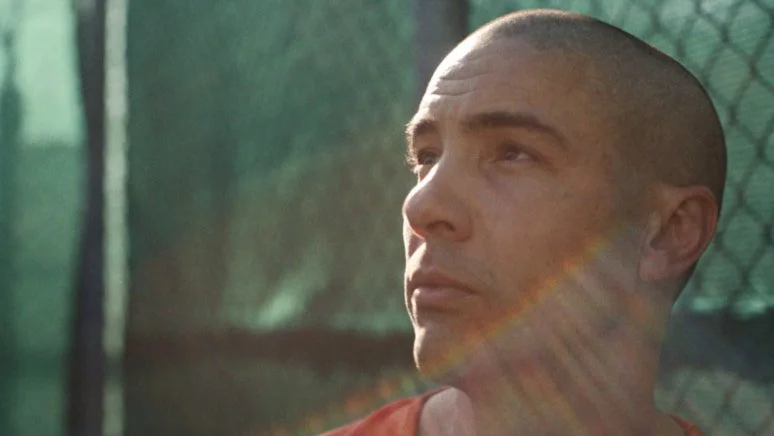
Based on the best-selling memoir Guantánamo Diary, The Mauritanian tells the devastating true story of Mohamedou Ould Slahi. During a horrific chapter of his life, he was detained without charges at the US military’s Guantánamo Bay detention center. Director Kevin Macdonald brings forth his experience as a documentarian to portray what Guantánamo looked like to Mohamedou. The US government spent millions of dollars keeping the realities of this center a secret. For those who have not heard Mohamedou’s story, the film tells terrifying truths that play out with a mystery/thriller structure which then morphs into greater focus on Mohamedou himself. Echoing at the heart of The Mauritanian is Tahar Rahim’s absolutely phenomenal performance as a man forced to endure such harrowing psychological and physical mistreatment.
The direction and screenplay go for a balancing act, interweaving Mohamedou’s experiences and memories with the exposé that unravels after his situation gets more attention. The key players involved in his case include his defense attorney Nancy Hollander (Jodie Foster) fighting for his release and prosecutor Stuart Couch (Benedict Cumberbatch) on a crusade against him. Mohamedou puts his trust into Nancy the moment he signs on the dotted line in acceptance of her defense, and the two share some emotionally intense scenes that rightfully question the legitimacy of the corrupt legal system that would decide his fate. With the depictions of characters surrounding Mohamedou, The Mauritanian looks through the lens of America’s relationship to him.
The film broadens his story to portray the contrasting attitudes working for and against his rights. Several scenes show characters operating on the right and wrong side of history, sparring with words in the fight towards different meanings of justice. During one of very few scenes between Nancy and Stuart in particular, they share a conversation after which she realizes she needs to change the narrative. People need to hear Mohamedou's story directly from him. The mystery/thriller trope that questions whether he is guilty or innocent morphs into a character study that uncovers the brutality of how he was treated in prison. Through Mohamedou's written testimony, the film depicts his trauma which includes some moments that are horrific to watch on screen. The film is a powerful depiction of the terrifying embedded realities hidden away at a place that was built outside of court reach.
The decision to balance an intense character study with so many other moving parts is not one that pays off. When operating as a character study, The Mauritanian resonates. The story follows Mohamedou from the moment he is detained to the rulings on his case, while also intertwining some of his childhood memories in Mauritania. “You are our hope,” a family member once told him after learning he received a scholarship to study in Germany. The film provides glimpses into his life outside of prison, further stressing the time he lost and the relationships he missed. The majority of Mohamedou’s story is told during his imprisonment, which depicts not only the mistreatment he’s forced to endure but also the love and humanity that exists within him. The role is played by one of the most gifted actors of his generation, Tahar Rahim, who gives a spirited performance that works absolute wonders for the film. In the face of fear and terror he brings moments of warmth and energy, a work of humanity that is heartbreaking to watch.
When operating as a thriller and courtroom drama, The Mauritanian stumbles through questionable dialogue and distracting roles. The film shows the legal side to Mohamedou’s case by introducing defense and prosecution characters. While it’s somewhat understandable to incorporate Stuart Couch in exploration of such blatant corruption and a haunted conscience, not only is the role itself by far the least interesting but it’s also poorly written. To worsen matters, Cumberbatch and his sour accent go in the opposite direction of elevating the material. Another role falling flat is that of Teri Duncan (Shailene Woodley), an amalgamation of two lawyers who worked with Nancy on the case at different times. Woodley is a fine actor and brings a short-lived intrigue to a character that exists in tiny glimpses. Teri is more openly caring, which Mohamedou picks up on and gravitates towards in their brief meetings. But her hesitance wins out when she realizes the perceived possibility of him being guilty, whereas Nancy is more seasoned and lacks the patience for such indecisiveness. The star in this stumbling side of the operation is undoubtedly Jodie Foster, who delivers a truly great performance that portrays a strong determination not to allow distractions get in the way of her job. Foster brings plenty of vigor to her role and shares such compelling scenes with Rahim, the star performer of the film.
The Mauritanian makes the most resonating impact when focused intently on Mohamedou’s perspective. This is a necessary film in that this story needs to be told, both in relation to him and to the corruption embedded in the legal system. While the interweaving technique works when balancing Mohamedou’s life in and out of prison, the narratives that emerge from the legal portion are not nearly as well written nor well balanced. At the heart of this film is a powerful character study led by Tahar Rahim’s incredible performance and incorporated with moving real-life footage of the real Mohamedou Ould Slahi.
‘Preparations to Be Together for an Unknown Period of Time’ Review
January 31, 2021
Dreaming Under the Influence with Márta…
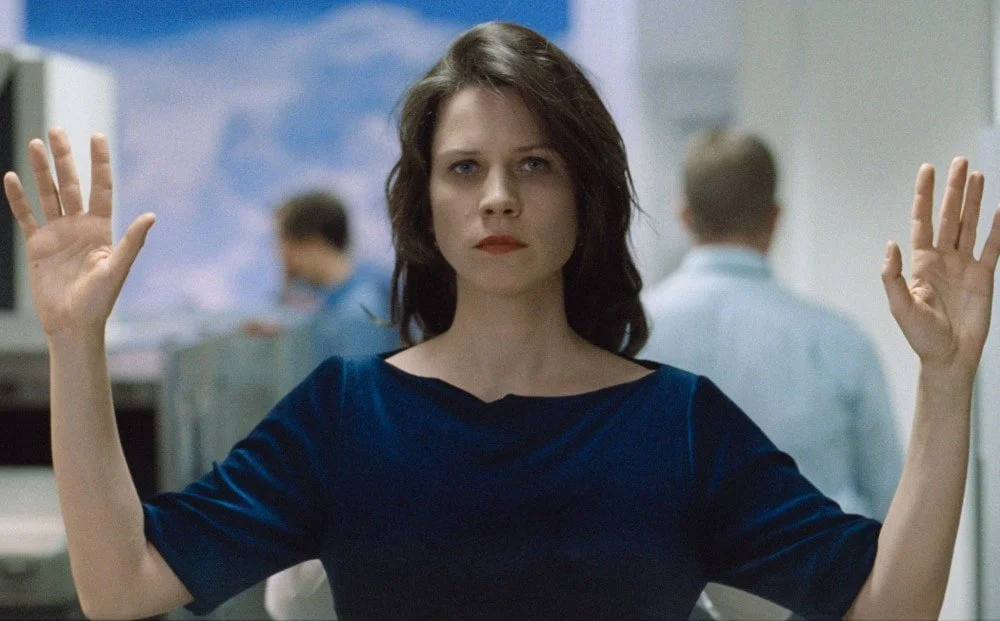
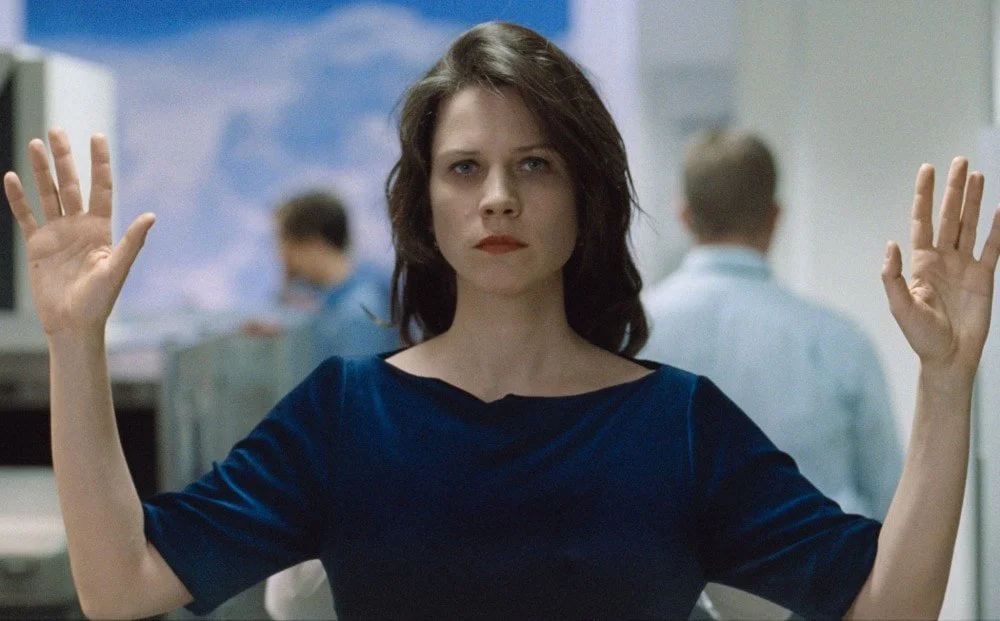
In the perfectly titled Preparations to Be Together for an Unknown Period of Time, writer-director Lili Horvát tells a fascinating love story about the power of the unknown. To satisfy the unknown would mean to determine or clarify answers. How can one really ascertain as such when met with love at first sight? Love that exists under the influence of some abstraction? Márta (Natasa Stork) is a brilliant neurosurgeon who leaves her American career behind and returns to Budapest “for personal reasons.” She’s in love. The love of her life is János (Viktor Bodó), a man she met once at a medical convention in New Jersey, who agreed they shall meet again exactly one month later at 5pm on the Liberty Bridge in Budapest. He doesn’t keep his promise. Having not exchanged numbers, she tracks him down in search of an explanation and he claims the two have never met in the first place.
Márta is abstracted from the reality of who she fell in love with, which puts her in a constant haze…dreaming while awake. She lives distractedly under the influence of love and the mystifying aftermath of not knowing the other person’s feelings. When she first met fellow Hungarian doctor János, she knew in that moment he was exactly who she’s been looking for, and so the loss of a promised meeting between the two of them perplexes her to the point of self-doubt. She worries that she filled in the blanks of her desires; “I wanted something so bad that I dreamed up the whole thing and I lost myself in it,” she tells her case worker during a session, giving him an inquisitive dose of self-reflection.
This film tells a story of enormous potency. From the camera’s close-up depictions of Márta to the frequent use of reflections and mirror images, ‘Preparations’ has an incredibly introspective quality. This is also a story that studies the power of a gaze and its many interpretations. One of the most startling scenes in the film shows Márta studying a photo from the New Jersey convention that shows her looking over intensely at a completely unaware János. Filmmaker Lili Horvát creates such a powerfully inward-looking portrait of a woman, and gives energy to Márta’s moments of loss which come with the pursuit of what love can satisfy. Natasa Stork’s all-encompassing performance as Márta gives the film such hypnotizing energy, like being in a trance. The film leaves behind a lingering afterthought: that sometimes what becomes lost through love is a part of yourself.
After Márta’s first confrontation with János, where he reacts with complete indifference upon missing the bridge meet, the two unexpectedly find themselves working together in an operation room. Márta had taken a job at a hospital in Budapest; working among misogynistic colleagues, her talent shines and she expertly handles a procedure during which János walks in and oversees. Afterwards the two “officially” meet; he recognizes her from that first confrontation, but she dismisses this and claims she confused him for someone else. Lili Horvát plants the seeds for a fascinating shift that starts to take over, whereby the moment Márta assures János she was mistaken and formally introduces herself, the more he begins to gravitate towards her. Viktor Bodó plays exceptionally into the mystery of János and the ambiguity of his feelings when Márta approaches him.
The film is a fascinating look at characters under the influence of not only falling in love, but also running away from it. “Sometimes I see someone on the street and feel I know them, like a long-dead patient,” János tells the audience (while catching a glance towards Márta) at his book launch when asked if he believes in ghosts. There’s a haunting quality that Lili Horvát explores so well throughout the film, in that sometimes a missed opportunity or brief encounter can in fact be haunting. The more time that passes after a powerful first encounter, the more time one has to sit with the ‘what if?’ factor. The film is very much about the power of love at first sight, and the power of lost time. Moments left unsaid between two people make room for mentally filling in the blanks of what could have been, while also opening the door to abstracting one’s self from another person’s reality. The brain is indeed like a city, as János explains, sacrificing one room to save the frontal castle. In many ways, Márta gives a part of herself to a brief encounter, and it’s a part that exists entirely in a world where love rules above all else.
The more Márta and János show remnants of recognition, the more Horvát’s film morphs into a dance of the rekindled connection that was once buried. The final chapter of this story is a strange one; what the characters gain in a semblance of certainty, the film loses in intriguing ambiguity. Preparations to Be Together for an Unknown Period of Time unexpectedly feels a lot more disjointed in its conclusion than it does during all the moments preceding. What remains is the persisting abstraction of Márta as she dreams under the influence of love at first sight. Maybe it is the instant feeling of knowing, when you first lock eyes with someone, that holds all the answers.

2021 Documentary Spotlight

“Garrett Bradley’s incredible documentary, Time, is a moving portrait of love that spans over two decades.”
February 2, 2021
Looking to catch up with the world of documentaries? Here are some of the most powerful and inspiring stories to keep your eyes on in this retrospective of the past year.
On the Record (dir. Amy Ziering and Kirby Dick)
The devastating story of music executive Drew Dixon is the subject of On the Record, a gripping documentary directed by Amy Ziering and Kirby Dick. In the wake of the Me Too movement founded by Tarana Burke, often missing from all discourse were (and are) Black women’s experiences which are necessary to be heard. This documentary follows Drew in the moments leading up to her decision to come forward and accuse Russell Simmons of sexual misconduct. With focus on Drew and her story, we see the emotional toll on her as well as what was lost over the course of several years.
Where to watch: Crave CA
Time (dir. Garrett Bradley)
Garrett Bradley’s incredible documentary, Time, is a moving portrait of love that spans over two decades. The story follows Fox Rich: an entrepreneur, abolitionist, and mom to 6 boys, trying to keep her family together while fighting for the release of her incarcerated husband. The documentary is told primarily through resonating home video diaries recorded by Fox over the years. Bradley weaves the footage together in a truly unforgettable way that shows Fox’s resilience within the ripple effects of America’s flawed prison system. This is one of the most intimate and emotional documentaries in years.
Where to watch: Prime Video CA
The Donut King (dir. Alice Gu)
Alice Gu’s fascinating documentary The Donut King incorporates one intriguing perspective after another in its blend of historical and economic threads. The documentary follows how Ted Ngoy built a multi-million dollar donut empire. Ngoy, a refugee who escaped Cambodia in 1975, sponsored hundreds of refugees coming to America and gave them opportunities by teaching them how to run a donut business. By the late 70s, Cambodian-owned small donut shops cornered the pastry market in Southern California. This is a heartfelt story about survival, success, and the rise and fall of a mogul.
Where to watch: Eventive CA
Dick Johnson Is Dead (dir. Kirsten Johnson)
Told in one of the most creative ways imaginable, director Kirsten Johnson tries to get ahead of her 86-year-old father’s inevitable death in the documentary Dick Johnson Is Dead. Operating from the fear of losing a loved one, she prepares for the worst by confronting mortality and staging different ways he could die. This documentary is a fascinating, funny, and moving exploration of an incredible father-daughter relationship that has seen a rollercoaster of emotions. Dick Johnson Is Dead tells a heartfelt story of how powerful memories are, and how devastating it is to lose them.
Where to watch: Netflix CA
The Bee Gees: How Can You Mend A Broken Heart (dir. Frank Marshall)
Frank Marshall’s musical documentary soars through the triumphs and losses of brothers Barry, Robin, and Maurice Gibb, known as the Bee Gees. The trio had a unique quality that set their voices apart from the rest: brotherhood. The Bee Gees: How Can You Mend A Broken Heart tells a resonating tale of the trio’s tight knit childhood, meteoric rise to fame, and rollercoaster to fortune. Having gone into this documentary not knowing much about their history, it was a treat to discover just how many ballads they wrote, and to see how the band adapted to different genres of music during their later years. This documentary will make your heart sing.
Where to watch: Crave CA
Disclosure (dir. Sam Feder)
Disclosure is an absolute must-see. This documentary by Sam Feder unravels Hollywood stories that have influenced and harmed the transgender community. For decades, representation on screen has affected how transgender people are seen by themselves and by others. Through exploring the history of trans images in film and television, the importance of truthful narratives shine. It is crucial to note that while representation is improving, there is still a long way to go, and the work continues beyond the educational points brought up in this eye-opening documentary.
Where to watch: Netflix CA
Mucho Mucho Amor (dir. Kareem Tabsch and Cristina Costantini)
Walter Mercado - the iconic, gender non-conforming astrologer - mesmerized 120 million Latino viewers with his extravagance and positivity for decades until he mysteriously disappeared. Directed by Kareem Tabsch and Cristina Costantini, this beautiful documentary explores the events leading up to Walter’s disappearance from television, as well as the inspirational legacy he leaves behind. Archival footage, insightful interviews, and one-on-one moments with Walter paint a loving portrait of a legendary person who embodied joy. Mucho Mucho Amor is made with a lot of admiration and celebration of Walter’s life and the journey that brought him back into the limelight.
Where to watch: Netflix CA
The Mole Agent (dir. Maite Alberdi)
Director Maite Alberdi brings an intriguing spy drama perspective to The Mole Agent, a charming documentary about loneliness and togetherness. Told mostly from inside a nursing home, private detective Romulo hires an 83-year old man named Sergio to pose as a resident and look for signs of abuse towards a client’s mother. This observational documentary tells a moving and endearing story about Sergio’s increasing personal ties as he befriends the other residents. The closer he feels to them, the more distracted he is to find evidence and report back to Romulo. The Mole Agent makes compelling observations about the power of friendship, and the emotions residents go through while living in isolation from the outside world.
Where to watch: YouTube CA
Collective (dir. Alexander Nanau)
After a tragic fire in a Romanian club, several victims transported to hospitals began dying with non-life threatening injuries. Collective is a startling example of investigative journalism that uncovers the corruption of the Romanian healthcare system and governmental negligence. That a lot of the whistleblowing emerged from a sports journalist watching the story unfold from the sidelines is indicative of a flawed, horrifying system. Collective immerses itself into the world of journalists and survivors in a fight for truth, justice, and transparency.
Where to watch: iTunes CA
Crip Camp: A Disability Revolution (dir. Nicole Newnham and James LeBrecht)
Crip Camp tells an inspirational story of revolution, resilience, and togetherness. Down the road from Woodstock in the early 1970s, history was in the making. Camp Jened, a summer camp located in the Catskills, created a safe space for a diverse community of disabled teenagers to be themselves. Jened was a summertime oasis where people with disabilities were accepted. Directed by Nicole Newnham and former camper James LeBrecht, this resonating documentary explores the heartwarming power of community and the spark that led to the Americans with Disabilities Act.
Where to watch: Netflix CA
‘Little Fish’ Review
February 6, 2021
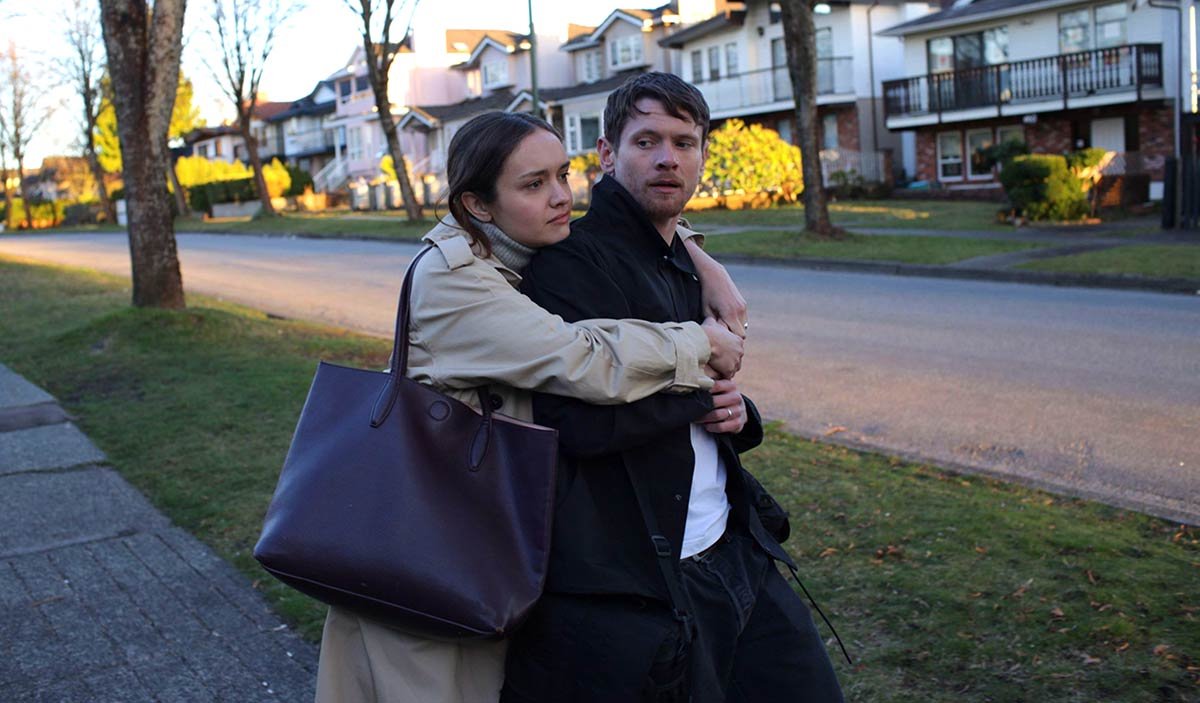
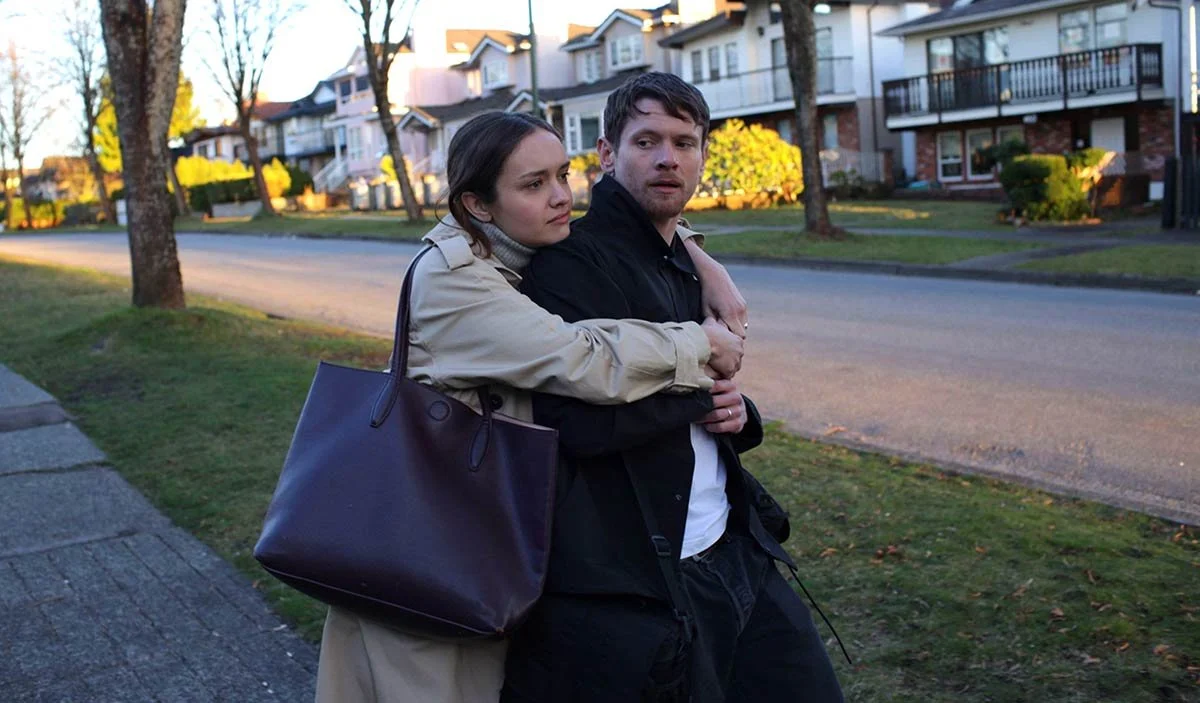
Imagine waking up and not remembering the person you love. The thought of having to piece back together a meaningful relationship, and rebuild precious memories you once held so dear, is a process explored thoughtfully in Little Fish. The film, directed by Chad Hartigan and based on Aja Gabel’s short story of the same title, is a romance set in a society teetering on the brink of massive loss. While not specifically set in a post-COVID world, and in fact made prior to the pandemic, Little Fish echoes eerie similarities to a forever changed planet. The love story at its dreamy center unfolds in the midst of a mysterious virus outbreak, which causes its victims to lose their memories. Without warning or reasoning, the pandemic erases minds and there is no telling who will be affected (nor is there a cure). Some people will snap all at once. Some will slowly fade away. Little Fish tells this story through two main characters, Emma (Olivia Cooke) and Jude (Jack O’Connell), a newlywed couple holding onto each other for dear life as the pandemic blurs lines between truth and fiction. Little Fish is a poetic, grounded portrait of unforgettable love that resonates most through devastating depictions of memory loss.
Little Fish unfolds in a daze. The film plays out like multiple threads tied to one long memory. Non-linear storytelling introduces two people meeting for the first time, flows into a whirlwind snapshot of them falling in love, and traces back to the beginning of their relationship. Within the first few minutes of the film, it’s unclear what exactly is the past and present. “It was hard to believe that was only the beginning,” says Emma during the character’s opening narration. As an audience member, the feeling is shared. Little Fish works in mysterious ways. The director (Hartigan) and screenplay writer (Mattson Tomlin) create a dream-like atmosphere, which makes you question the film’s timeline and what the central focus of the story will become. Grounding the film with heartfelt commitment, a talented ensemble of actors indicate where you are in their characters’ journeys, and give clues for where the pandemic-set story is headed.
One of the most terrifying aspects about Neuroinflammatory Affliction (NIA), the virus causing this pandemic, is its symptoms. At what point does common forgetfulness become a warning sign? Emma narrates stories she had heard…like the one about a woman found running alone at night, having forgotten to stop at the finish line of a race. Given the alarming rate at which the virus is spreading, there’s also the inevitable: witnessing situations firsthand, like Emma and Jude’s bus ride home, during which the driver suddenly stops and walks out into the street. Knowing that severe cases such as this can occur, Emma’s relationship to the forgetfulness she sees in others is understandably analytical. The immediate worry is: this is a warning sign. It could be the most seemingly innocent moments…like Emma at her vet job encountering a distracted delivery driver, Emma’s mum forgetting Jude’s name during a phone call, Jude turning up late to photograph a wedding. In any case, Emma’s guard is up. The more these symptoms appear (particularly as Jude’s forgetfulness worsens), the more eager Emma is to get ahead of the situation and the more inclined Jude feels to keep his memory loss a secret.
Little Fish is framed in such a way that the pandemic is written more as a backdrop than a plot device pushing the story along. At the core of this film is an emotional love story between two people, dealing with the slow drip of memory loss and its ripple effect on their future as a couple. The film not only jumps through their past and present, but also a simulation of time…showing moments Emma and Jude recall based on how they remember, which may or may not be reality. The film is a fascinating depiction of love in that it questions whether this couple can weather losing the building blocks of their relationship, and what this means for their longevity when they attempt to rebuild from crumbling memories. An added fascination is the role photography plays in the story, particularly with Jude as photographer and Emma as subject. The emphasis on using photos as memories is a moving reminder of the power photography has to capture the feeling of a special moment.
Olivia Cooke and Jack O’Connell work together like a dream. Cooke’s performance in particular is exemplary, and her chemistry with O’Connell gives ample weight to this love story as the driving force of the film. Most impressive about Cooke is her ability to detail a relationship in its genesis, honeymoon, and steady decline, while also grounding the director’s free flowing storytelling. What never becomes ambiguous is the love between these two characters, above all finding some footing amidst shared grief. The supporting characters, mainly the couple’s friends Ben (Raúl Castillo) and Samantha (Soko), show a frightening and distressing version of dealing with memory loss in a relationship. Castillo and Soko both give a resonating layer of perspective to the story.
The setting to this story is eerie, not just on the level of living in a pandemic but also the parallel to Alzheimer’s and the devastation of fading away, whether suddenly or slowly. With so many lines blurred between reality and pretense, watching Little Fish unfold is like watching one train of thought. Sometimes the film relies a little too much on the lines being blurred; at a certain point, weaving through time frames loses its impact and emotional investment. But what echoes in its conclusion is the urge to hold onto memories near and dear. Little Fish is an intriguing love story about the building blocks that make a relationship, and how emotions between two people can linger even as memories fade.

‘Identifying Features’ Review

February 17, 2021
At the core of Identifying Features, the haunting feature directorial debut by Fernanda Valadez, is a woman named Magdalena (Mercedes Hernández) who takes matters into her own hands after the disappearance of her son Jesús (Juan Jesús Varela). Amidst the horrifying realities of immigration, and the many families searching for loved ones who have disappeared crossing the Mexican border, the story centers on one woman’s experience of not accepting the word of authorities who presume her son is dead. Determined not to return home until she finds her son, Magdalena travels where the truth takes her. The film plays out as a slow-burning drama that unravels in hypnotic, quiet pursuit of telling a truthful story. By staying close to Magdalena while also exploring the interconnectedness of her experience, Identifying Features makes an emotionally stunning impact that builds to an utterly devastating conclusion.
Stunning cinematography by Claudia Becerril Bulos shines through each frame, starting with the illuminating opening scene. A brief moment of Magdalena watching from a distance, as her son and another boy Rigo set out for the US, establishes a sense of loneliness that continues to grow from this moment forward. In the blink of an eye, her son disappears from her life, and authorities presume the worst after his companion Rigo’s body is identified when the mothers of these two boys flip through photos. That families have to flip through distressing images of numerous people and discarded belongings in order to identify a loved one is one of the many painful realities brought to the forefront. What the film establishes so hauntingly is the troubling environment in which families are denied answers and pushed to accept that their loved ones are gone, despite not being able to identify their bodies. Co-written by Fernanda Valadez and Astrid Rondero, the story has an incredibly resonating character in Magdalena as well as in the supporting characters who influence her path towards closure. Another woman searching for her missing son Diego, who disappeared 4 years ago, believed everyone when they told her he was dead. In a moving scene where she and Magdalena meet by chance, she urges Magdalena not to make the same mistake, not to accept what the authorities say.
As she moves forward with inner strength and determination, Magdalena sees first-hand a labyrinth of life threatening corruption, throwing roadblocks on her path. She meets various people along the way; such as the woman who secretly advises her through a bathroom stall to visit a migrant’s shelter. More notably, the film weaves in the experience of a young man named Miguel (David Illescas), who returns to Mexico from US deportation and is fortuitously traveling in Magdalena’s direction. The two of them meet by chance, at a point where the film delves into a terrifying final chapter. Identifying Features strongly explores the interconnectedness of the characters and how they each cross paths (fortuitous or not) in Magdalena’s journey, which leaves behind a reverberating thought on how there are so many similar stories that go unnoticed.
Much like the progression of this film, Mercedes Hernández gives a remarkable slow-burning performance that unravels with horror. This is a performance that absolutely commands the screen in a visceral way. Her character’s determination to travel farther away from home, experiencing increasingly dangerous scenarios, is so deeply felt throughout the film. As a contrast to the painful realities happening on screen, there is an ethereal quality to some moments, most memorably in the opening scene which appears to be dream-like. From the direction and writing to the ensemble of actors, it’s remarkable to watch this collaboration of talent. With an emotionally resonating performance and story at the core, Identifying Features is a powerful feature directorial debut that will hopefully lead to more projects with Fernanda Valadez behind the camera.
‘The World To Come’ Review
February 20, 2021
O sick and miserable heart be still. Katherine Waterston and Vanessa Kirby weather the storm in Mona Fastvold’s The World to Come, a nineteenth-century frontier romance of quiet passion and debilitating tragedy. So much of Fastvold’s strength as a storyteller exists in the way she establishes mood through imagery. A chilly opening scene on an isolated farm introduces Abigail (Waterston), who writes beautiful thoughts and narrates her inner turmoil while keeping up with all the responsibilities assumed of her. Having recently lost their daughter to diphtheria, Abigail and her husband Dyer (Casey Affleck, who frustratingly still gets employed) lead separate lives. While he works on their farm, she keeps the household together and finds no source of calm in imagining a better world to come. Her daughter was a light in her life; there is a visible warmness on screen when the mother-daughter memories are depicted. Abigail has become her grief, a portrait of loneliness that doesn’t see the light of day until the arrival of a new possibility…another way of life that enchants Abigail at first sight. Tallie (Kirby) and her farmer husband Finney (Christopher Abbott) move into a neighboring farm, opening Abigail’s mind to a place where she can imagine a better existence.
One afternoon, Tallie takes a hilly walk towards Abigail’s farm and makes a neighborly introduction. Meeting her makes Abigail’s day, and the rest is history. One visit turns into many, where the two simply talk and learn more intimate details about each other. Over the course of changing seasons, they discover how little time they wish to spend apart as their romance blossoms, but all is not well on the frontier. Co-written by Ron Hansen and Jim Shepard, based upon Shepard’s original story titled as the film is, the screenplay often moves in circles following the protagonists’ increasing despair as the men in their lives annoyingly get in the way. Seeing their wives out for hours at a time, not keeping up with household and marital responsibilities, Dyer and (to a more angering extent) Finney consider Abigail and Tallie’s relationship a threat.
While admirably poetic and mostly well acted, The World to Come falls flat more often than not. With two intriguing characters at the center and a variety of arcs to explore within them, not to mention two supremely talented actresses playing the parts, it is disappointing that the screenplay focuses so intently on the woefulness surrounding them. An arc seen often in lesbian romance films, where the love story builds up to crumble in heartache, shifts focus away from fully exploring the intimacy between the protagonists. Short but quietly resonating moments, like Tallie bringing Abigail a birthday basket of sentimental gifts, are just that. A fleeting depiction of a meaningful relationship in favor of servicing a familiar arc. The story feels more complete showing the weight of their love in the final few scenes alone than during the entire course of the film. This is to no fault of the performances, but rather the narrative focus on the tragedy that their bond crumbles towards.
Waterston and Kirby shine wonderfully together; Abigail’s inward tendencies and Tallie’s more quickened, spirited manner are an intriguing dynamic. Both of these characters are working through the emotional and physical challenges of loneliness, which are depressing to watch unfold amongst the intimate world they have cultivated for themselves. The film also touches on some resonating themes including the notion around ‘the best is yet to come.’ When the protagonists meet, it’s as if the world opens up again. Abigail’s yearning for a more interesting life than the one she leads, and her surprise at life being more ordinary than she imagined, gives a strong window into her character. It’s a treat to watch how Tallie recognizes this desire so lovingly, and encourages imagination. But these insights into the characters are few and far between, not enough to carry this film while a far less interesting (and far more tragic) narrative gets in the way.
While the story leaves a lot to be desired, there are some strong elements to admire in addition to great central performances. In her second directorial feature to date, Mona Fastvold shows plenty of promise particularly through establishing the mood of a scene and expressing emotion through imagery. One of the most memorable moments in the film sees Abigail in an almost euphoric state, leaning back onto a table and relishing a moment she had shared with Tallie earlier. Unfortunately such resonating scenes exist in bits and pieces. Weathering the harsh winter, blossoming spring and summer are two protagonists whose relationship feels incredibly true, but exists in an incomplete story with a tiring arc. While The World to Come shines through strong central performances and stunning cinematography, the progression of Fastvold’s nineteenth-century love story falls flat with only glimmers of promise moving the film along.
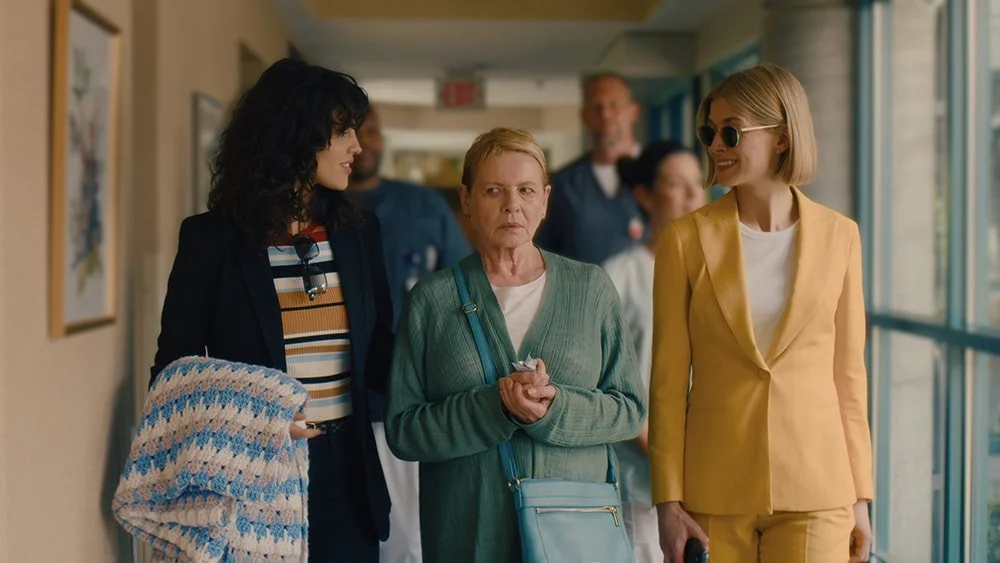
‘I Care A Lot’ Review
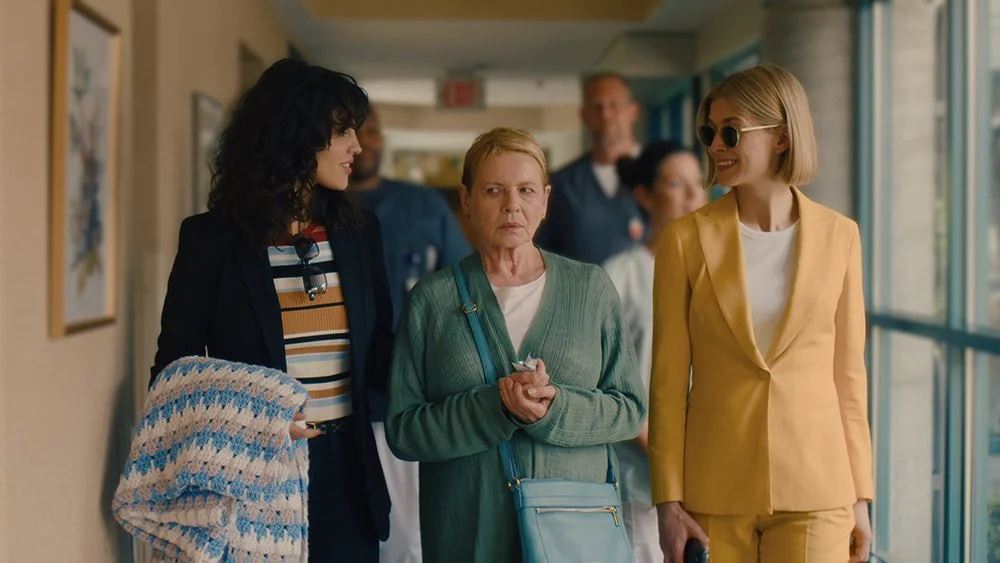
February 24, 2021
“This is my job. This is what I do all day, every day. I care.”
In the film I Care A Lot, Marla Grayson (Rosamund Pike) knows how to manipulate everyone in her court. She swindles for a living, preying on the vulnerable for profit and power. On her meteoric rise to power as a legal guardian who drains the savings of elderly people, there is no line Marla won’t cross to make money. Capitalizing on her privilege and leaving her morals at the door, she cheats the legal system in a disturbing game she created within the rise of senior care homes. Writer-director J Blakeson’s twisted spiderweb of a story unfolds as a cheeky crime drama that sees how far characters will go to get what they want. Pike commands the screen with a firecracker performance that makes the film engaging to watch unfold.
Marla is a complex anti-hero who does despicable things, is incredibly easy to root against at any given moment, and the filmmakers present her as she is. A character playing a character, to convince people she cares. A super-achieving woman who makes horrible choices and maintains investment, as countless male protagonists in films have done over the years. Discarded on the path of destruction Marla leaves behind are the people she traps under her guardianship. Grounded in the unfortunate reality that the elderly are systemically taken advantage of, this subject matter resonates in the film, despite getting lost sometimes in the mafia/crime boss structure. I Care A Lot is a fun bona fide ride that channels compromising ambition and anger at the world into brazen entertainment.
To stay technically within the law, Marla convinces Judge Lomax (Isiah Whitlock Jr.) that her targeted victims are no longer able to care for themselves. She then shows up at their homes with a court order appointing her full conservatorship, and immediately escorts them to a care facility. When a vacancy pops up on her elderly ward, Marla and her partner Fran (Eiza González) seize a golden goose of an opportunity. Their new “cherry” to pick is Jennifer Peterson (Dianne Wiest), a wealthy retiree with early signs of memory loss and no heirs or family. But Jennifer is more than who she appears to be, and Marla meets a dangerous new player in her game. The characters in this film epitomize multiple themes, from dark ambition and moral compromise to conservatorship and the weaponized power of authority. Marla follows in the crooked footsteps of those with the most power, laughing off the notion that anyone who reached success did so without bending the rules. She scoffs at the idea that people have to lead with honesty and work hard for their money. In her eyes, she deserves success and believes there is no such thing as good people, which gives her even more fuel to leave damage in her wake.
To the detriment of the film, so much is going on without a real clinch on it all. The screenplay goes off the rails at times, particularly with the mafia plot and drawn out introductions to characters of that world including a crooked lawyer (Chris Messina in great suits), some henchmen, and the boss himself Roman Lunyov (Peter Dinklage). Though while not nearly as resonating as the characters in Marla's personal orbit, there is a cleverness in matching Lunyov with Marla and seeing just how far she’s willing to go in the face of the Russian mob. So much of the relationship between these two characters speaks to what the filmmaker presents about Marla’s fearlessness, tenacity, and ambition.
To quote Rosamund Pike, “Marla was everything [she’s] wanted to see in a woman on screen, someone allowed to be all the things that men have always been allowed to be — ruthless, ambitious, striving for what she wants shamelessly — unambiguously.” Pike’s wicked charisma and no-nonsense laser focus bring this character to life in an engaging way. The performances particularly by the women in this film play a massive part in maintaining the energy and intrigue. Another super-achieving character is Marla’s business partner and lover Fran, who operates behind the scenes and pulls a lot of the strings that make it possible for Marla’s scams to fall in place. González is a bona fide star; she is totally compelling to watch. She plays this character in a loving way that also gives insight into how Fran works and the self-awareness she has, sometimes seeing the red flags that Marla doesn’t. They’re interesting characters who can share their vulnerabilities with each other; González and Pike share great chemistry and no matter how despicable their actions, they maintain investment through the commitment of their portrayals.
Everyone caught in Marla’s spiderweb has a story. I Care A Lot briefly portrays the disbelief and horror of being on the other side of her con. Resonating the most is Dianne Wiest, the divine secret ingredient of this film. Her presence is sorely missed in the second half, which fully embraces the twisty crime thriller structure. In some ways Jennifer Peterson embodies the dream; as heard through Fran’s first impression of her, “[Jennifer is] rich, independent…that lady right there, she’s my hero.” Wiest’s gift of storytelling inhabits her character’s history that is seen and heard not through flashbacks, but on her face and in her voice, existing entirely in the moment. Albeit brief in screen time, her performance truly embodies peeling off the layer of a person and presenting a so-called “typical old lady” in a completely new light. She becomes the most unexpected and sadly the most underutilized character. There is a missed opportunity in not staying with her more; her first meeting with Marla and the sequence of being brought to the care facility are incredibly depressing to watch. She’s brilliant at the pathos and just as capable at channeling the lioness Marla speaks of. Their scenes together are among the best in the film. Wiest glides through with tricks up her sleeve and, in retrospect, feels like the secret key who ties the emotional experience together.
Marla cares a lot about her success. This is what she does all day, every day. Who or what will she manipulate next in order to get what she wants? I Care A Lot introduces and signs off with the reminder of not only the lines Marla crosses to succeed, but also the people whose lives were affected by her decisions. J Blakeson’s twisted spiderweb of a story shows the absurdity of how far people such as Marla will go, and how frustratingly easy it is for her to build up the trust of those trying to do good in order to manipulate those who are vulnerable. While there are some missed opportunities to delve deeper into the subject matter that resonates the most, I Care A Lot is a wild rollercoaster with a fabulous cast led by the great Rosamund Pike and a divine secret ingredient at the core.
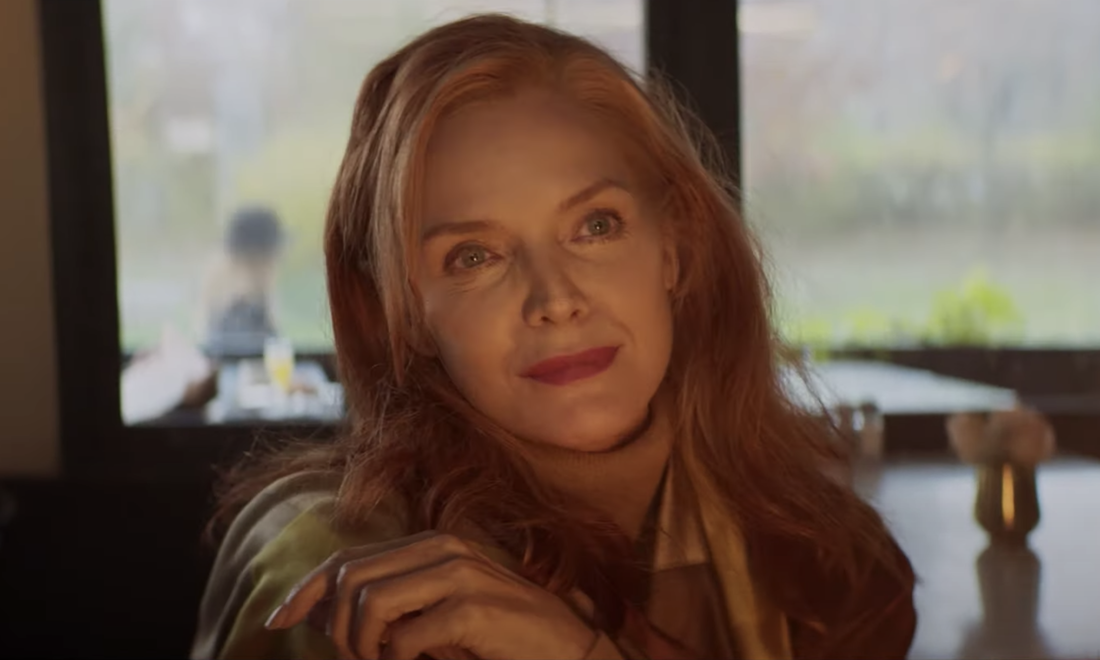
‘French Exit’ Review
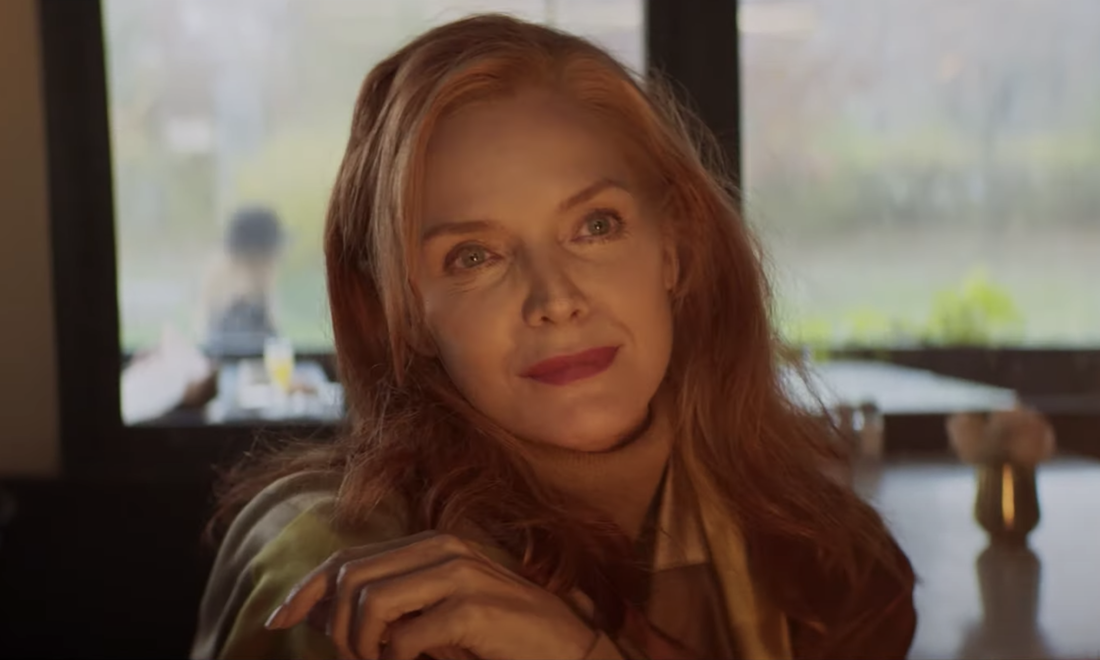
March 13, 2021
French Exit is a surreal film to watch unfold. Directed by Azazel Jacobs and based on the book by Patrick DeWitt, the story subverts expectations at any given moment. Weaving through humour and tragedy, the film takes wild turns as a comedy of errors pushing towards unpredictability. While not always easy to jump on board and embrace the ridiculousness of it all, Michelle Pfeiffer proves to be the perfect anchor. She plays Frances Price, a Manhattan socialite whose life is on the verge of falling to pieces. Faced with major financial troubles as her inheritance is running out, she takes up a friend’s offer to move into a small apartment in Paris with her son Malcolm (Lucas Hedges) and their cat. While there, we are introduced to loose acquaintances and loved ones, as they start scratching the surface of an enigmatic, larger-than-life protagonist who plays her cards close to her chest. So much of this film is about what isn’t said between people, which brings up an intriguing question of what the characters are choosing not to reveal. French Exit is full of eccentric characters interacting in a world where nothing is as it seems. DeWitt’s story gives the supremely talented Michelle Pfeiffer, along with a strong supporting cast, an interesting chaotic canvas to work with.
Frances is the star of her own show. Every move she makes is followed by a spotlight, as she performs center stage of her own life to the point where her character feels theatrical. It’s a larger-than-life role that Pfeiffer plays the absurdity of to entertaining degrees, from her zinging line deliveries to the way she carries herself. She keeps the laughs coming, that is until her circumstances become more and more reflective of the distress she feels (particularly towards herself). Pfeiffer balances on a fine line between portraying someone who lives such a narcissistic existence and who is also haunted by her past choices. Having remained absent from her son’s life for most of his childhood, her decision to pick him up from school out of the blue one day (as shown in a flashback scene) rejoins the two but can’t make up for lost time. For most of the film, Frances and Malcolm speak to each other matter-of-factly in brief moments. Their relationship is a reflection of things that never really get to be said, particularly between a parent and child. Only until Frances realizes the substantial passing of time, and how much she loves her son, are they able to have a more revealing conversation addressing why she left in the first place. Pfeiffer and Hedges share an interesting monologue where these two characters are faced with her reasoning. It’s one of the few moments in the film that provides a clearer window into the vulnerability of Frances especially, who carries herself with all-encompassing grandeur.
The story of French Exit, which Patrick DeWitt adapted for the screen, builds structure around characters who exist often in their own worlds. With an increased focus on Frances as the protagonist, everyone in her orbit seems to exist based on what they mean to her (and her son) and how they fit specifically in her world. Everyone in her orbit (whether related by blood or by fantasized friendship) is vying for something to say, without really knowing how best to say it. Their dynamics raise an interesting train of thought about the influence Frances has on others, and about what people project onto her. After the move to Paris, Frances and Malcolm get invited to a party, which she expects to be a glitzy high society gathering. But when they arrive, they realize it’s a party of three with Mme. Reynard (Valerie Mahaffey), one of Frances’ long-time admirers from New York who thinks they ought to be friends. This “party” sequence is a fabulous example of how much acting relies on reacting.
Mme. Reynard is a lonely widow who sees an opportunity for kinship with Frances; they’re just about the same age and presumably ran in the same socialite circles back in New York. She misses the Manhattan socializing, and so discovering Frances’ move to Paris opens up a world of possibilities for her to live again. Pfeiffer and Mahaffey play off each other so brilliantly; their scene is one of many moments in the film that is full of disengagement, curiosity and eccentricity as these characters find each other under odd circumstances. The disengagement in particular is so extreme throughout the film that even when otherworldly elements are introduced later on in the story, the characters are completely unfazed.
In addition to the strained mother-son relationship, there’s an underlying resonating theme of craving for connection without knowing how best to achieve it. The characters in this film interact and are brought together in such an unusual way. The story sprawls into a big ensemble piece halfway through where everyone vies to make sense of their circumstances and determine where they fit. It’s an ensemble of great actors including Imogen Poots, Danielle Macdonald, Susan Coyne, Isaach De Bankolé, and Tracy Letts. Among the cast, the supporting star of the show is indeed Valerie Mahaffey who steals every scene. Mme. Reynard is a great supporting role that pushes for authenticity and sincerity in the most absurd of moments. She so badly wants a connection to Frances and as the film progresses, makes herself at home in Frances’ apartment, a setting that becomes almost like a magical realm in which everyone who enters seems to stumble upon some insight about themselves.
While the absurdity of the story makes for some fun exploration of where these characters will end up, it is sometimes a chore to find an emotional connection beyond Pfeiffer and (to a lesser extent by way of screen time) Mahaffey. French Exit is a strange melancholic journey, one that entices yet pushes away as circumstances grow more absurd. The story takes a big turn halfway through, and nothing is what it seems especially from that point forward. But the consistent anchor is Michelle Pfeiffer’s performance, an entertaining concoction of emotions that play humorously until the mask is off and Frances’ ghosts come back to haunt her. French Exit is an interesting rollercoaster of absurdism about larger-than-life characters who are searching for real connections to each other.
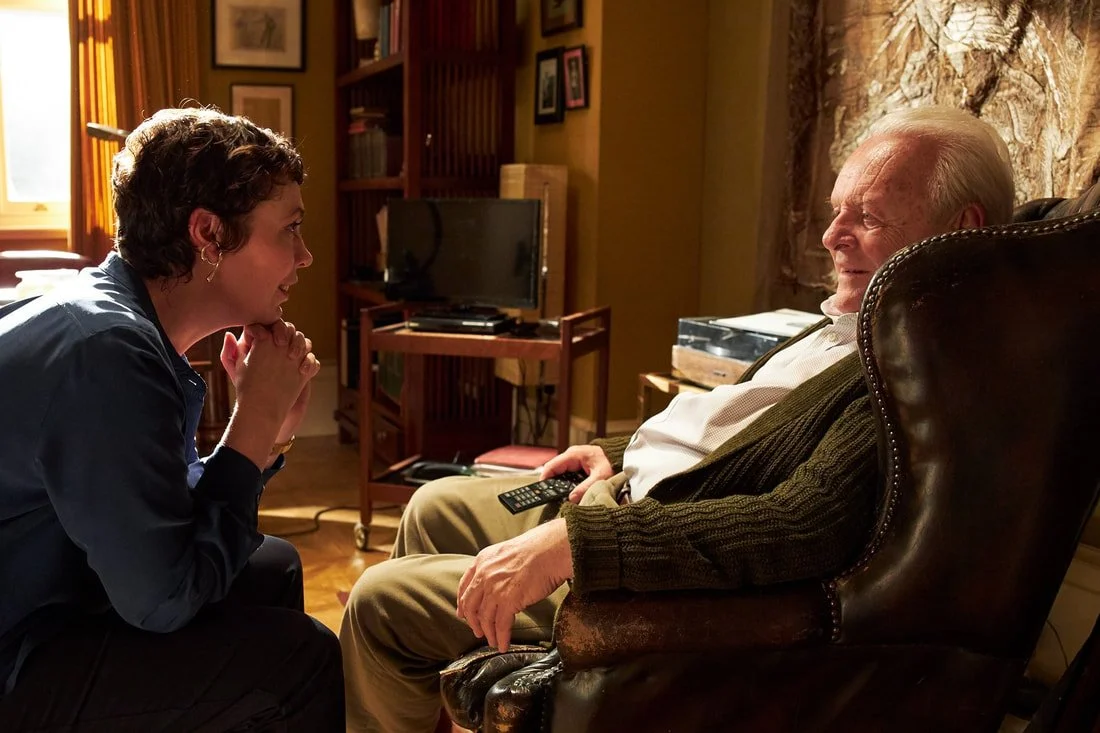
‘The Father’ Review
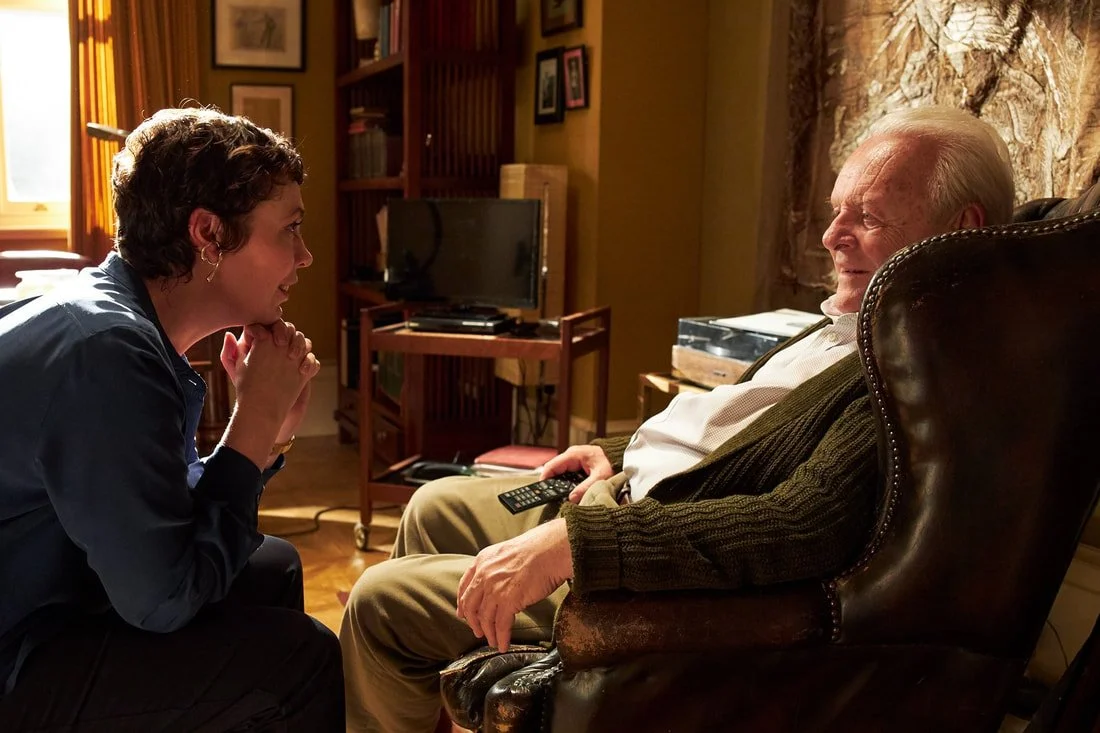
March 18, 2021
Perspective plays a compelling role in The Father, the debut feature by writer-director Florian Zeller. Adapted from Zeller’s 2012 stage play, this film tells a sensitive and terrifying story about Anthony (Anthony Hopkins), who refuses assistance from his daughter Anne (Olivia Colman) and numerous carers as the fabric of his mind rapidly changes. Suffering from dementia, Anthony tries to make sense of his circumstances and begins to doubt his loved ones in the process. Zeller’s direction holds a mirror reflection to Anthony’s loss of memory, communication, and thinking. The film evokes a strong feeling of disorientation, like being in one place and somewhere else at the same time. Rather than focusing on an outsider’s point of view, the effects of dementia are conveyed directly from Anthony’s perspective. How does this character feel about what’s happening to him? How does his illness change the way he looks at his family? How does he navigate other people’s perceptions of him? How does he react to the constant changes in space and time? Zeller tackles all of these questions and then some, which makes the experience of watching The Father feel so heartbreakingly real.
The story takes place primarily in one setting: a small North London flat that becomes another character in the film. Through the use of furniture, proportions, and lighting, Zeller is able to create a place that feels familiar and different at the same time. After a while of seeing the same knick knacks and corridors, there is a feeling that something has changed at some point without knowing exactly what. Peter Francis’ production design on this film is absolutely stellar, as is Cathy Featherstone’s set decoration. Over the course of the story, subtle differences are made to the positioning of objects and the location of rooms. The metamorphosis of Anthony’s flat is a striking example of how the film holds a mirror to his frame of mind from a technical standpoint. The editing by Yorgos Lamprinos is also completely in tune with Zeller’s vision.
One of the reasons for The Father’s journey being so emotionally resonating is the structure, which strives for a truthful depiction of Anthony’s point of view in each and every moment. For example, when the film first introduces Anthony in his flat, there is no doubt that this place is his. The pacing of the film has a slow start but in retrospect, Zeller is laying out a truthfully inventive foundation for the maze of contradictions that follows. Situations arise and Anthony begins to question himself. He realizes just how far away he is from the fabric of his own reality. He realizes just how quickly time slips away. The film incorporates a resonating symbol into this story, a recurring moment between Anthony and his watch. Believing that his watch was stolen, every now and then he will recall that he needs to look for it. The watch is an interesting symbol of time disappearing…one can’t make more of it, nor can one control it. To watch Anthony's shock and confusion by the passing of time is devastating.
In addition to the structure and technical details, the film brings together a remarkable group of actors (especially Hopkins and Colman) who create magic on screen. Florian Zeller initially wrote The Father with Anthony Hopkins in mind, hence the character’s name Anthony. To see Hopkins bring this character to life, with the screenplay by Zeller and co-writer Christopher Hampton as a springboard, is an astonishing experience. He completely embodies the role and gives the best performance of his career. Anthony’s fear, heartbreak, confusion, loneliness, and moments of vicious spite are a tough watch. This is a character crumbling in real-time, losing his bearings from one moment to the next. Hopkins commands the screen with an instinctive, profoundly moving performance that gets inside the headspace of a person living with dementia.
Another example of pitch perfect casting is Olivia Colman as Anthony’s daughter. Anne is a character one can immediately empathize with; she’s in a tough spot of answering the question of what to do when someone you love is suffering from dementia. The responsibility falls on her to make decisions on her father’s behalf, and at the same time, she tries so desperately to make him understand the reality of what’s going on but she can’t get through to him. Colman has such an exquisite talent, and once again shows her ability to convey such complex emotions in the blink of an eye. Anne’s dedication, vulnerability, sadness, and pure love for her father are written across her face. So many of her interactions with Anthony are devastating to watch, particularly when a third character is involved and she’s trying to make peace with everyone. Committed performances by Olivia Williams, Imogen Poots, Mark Gatiss, and Rufus Sewell further perpetuate an atmosphere of paranoia. Their characters are also seen from Anthony’s perspective and thus take on a different meaning throughout the film.
From the outside looking into this depiction of dementia, one can never truly know what it’s like to live with this illness. What makes Florian Zeller’s debut feature so compelling is his decision to tell the story from Anthony’s perspective, following so closely alongside his frame of mind throughout the film. Zeller introduces a strong narrative and presents reality as Anthony knows it, which shows the day-to-day effects that dementia has on this character. It’s a story told from the inside out, creating the experience of being inside Anthony’s head and feeling a part of something much bigger than him. The film shares universal topics of living with dementia, along with being a family member of someone who has this illness, in an up-close and personal kind of way. The Father is a phenomenal achievement, a stunning balance of drama and psychological horror that leads with big-hearted sensitivity.