
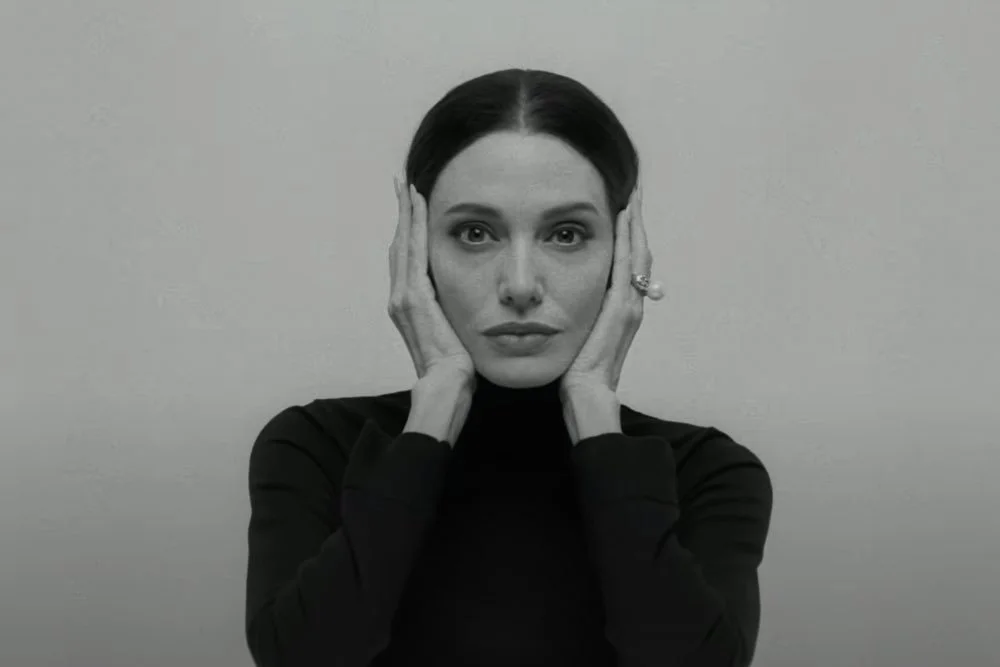
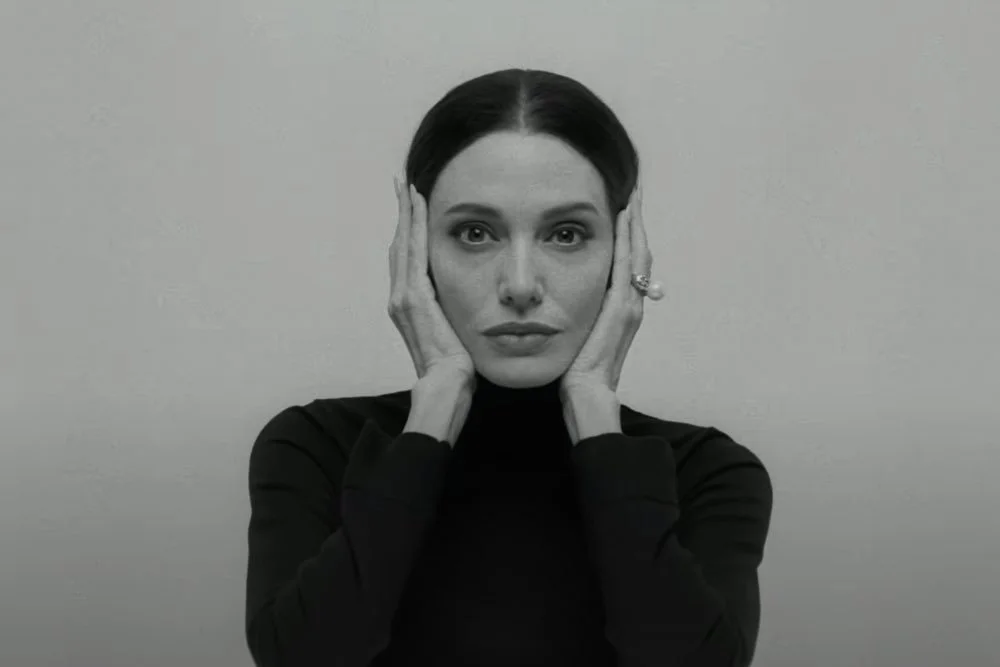
‘Maria’ Review
November 26, 2024
From exploring the myth of Jackie Kennedy with Natalie Portman in Jackie (2016) to experimenting with Kristen Stewart on surrealism for Princess Diana in Spencer (2021), Chilean filmmaker Pablo Larraín has been building towards an unofficial trilogy about iconic twentieth century women during specific moments in history. He completes the trifecta this year with a sumptuous glimpse into the life of Maria Callas in Maria. Told with immense curiosity and a dreamlike sensibility, Maria follows the legendary opera singer as she rediscovers her voice during a fragile moment in time. Larraín’s introspective storytelling is a poetic fit for the transcendent journey of his subject. He finds a remarkable leading lady in Angelina Jolie, whose movie star charisma adds dimension to this operatic tale of a woman’s phenomenal legacy. Soon to be released by MUBI, Maria brings Larraín’s trilogy to an achingly beautiful close.
Continuing in the vein of Jackie and Spencer, Maria plays in the orchestra of rewriting an icon’s history. All three of these legendary women shared the unique experience in which people lived vicariously through them, defined them, spoke on their behalf, to the extent that they became larger than life representations of something much bigger than them. The public, not to mention the media, felt that they were owed something. There’s a powerful scene in Maria in which Maria encounters a bothered fan who had paid for tickets to a concert she cancelled due to an illness. His intonation suggests the illness was an excuse taken to wriggle out of the show. She gives him a fierce and rightful reality check: he has no idea what performing takes out of her. Maria starts in a dreamy haze, but in time Larraín’s mysterious direction becomes clearer. The fan encounter scene is a small but mighty cue of humanity.
The film calls attention to the haunting dichotomy between public and private personas. Ever since Maria was a young girl living in Greece, she had been singing for everyone but herself. Fast-forward to 1970s Paris, where Maria lives out her final act discreetly in her apartment, having spent years in the public eye. Behind closed doors, she finds herself in a perpetual state of reckoning. Her talent feels out of reach. Her identity feels faded into unrecognizable territory. Her apartment is full of reminders; pieces of music, glamorous wardrobe, a grand piano. But the piano never seems to be in the right spot. For a place called home, Maria’s apartment resembles more of a waiting room, in which she can’t fully be free. There’s a disconnect between the soprano and her work, which gives the film dramatic tension. By spending time with the character in such close proximity, enhanced with several stunning close-ups, Larraín gives a window into Maria’s humanity beyond her “Las Callas” stage presence. The film defines her not by a chronicle of greatest hits, but by the memories that left a lasting impression on her, moments that she will carry inside forever.
For Jackie and Spencer, the focus on specific moments in history helped shaped the narrative structures of those films. Maria sings to a much more fluid and arbitrary tune. Screenwriter Steven Knight navigates the days leading up to Maria’s death. The dialogue can be heavy-handed at times, which creates moments of stagy character interactions and overdrawn impositions. A prime example is the inclusion of Mandrax (Kodi Smit-McPhee), a journalist who follows Maria around Paris with a television crew. While clear in its hallucinatory effect, the dynamic lacks emotional impact. Thankfully, these moments are sporadic as the film prioritizes other supporting characters, who evoke a more compelling reaction. One of the most powerful scenes in the film features a conversation between Maria and her sister Yakinthi (Valeria Golino). Yakinthi essentially encourages Maria to leave the past behind and move forward, but it’s not that simple. This moment gives us a glimpse of the sisters’ emotionally charged past, and conveys the weight of Maria’s life experiences on her shoulders.
Larraín takes empathetic creative liberties to shape the narrative of Maria around her close proximity to death. The character transcends time and space, as though yearning for freedom outside of herself. In her apartment, she hides pills and avoids doctor visits. Her voice carries through the grand, exquisitely lit halls only for her butler Ferruccio (Pierfrancesco Favino), maid Bruna (Alba Rohrwacher), and poodles to hear. Spells of loneliness and misunderstanding reach her in open spaces, too; whether sitting in a cafe that assumedly plays her music (she does not listen to herself), or warming up her vocals in an empty opera house (she struggles to channel the Las Callas voice her pianist wants). Autumnal walks in the park turn into theatrical hallucinations of big vocal performances. Maria’s life is a stage, and the film guides her from the shadows to the spotlight through gorgeous visual interpretation.
Angelina Jolie personifies Maria Callas’s vulnerable, messy, mysterious journey with a soul-stirring performance. Simply put, the film would not work without her. The elegant hallways of Maria’s apartment would be cold and empty without Jolie’s astonishing commitment to getting under the character’s skin. Not only does she embody the physicality and stage presence of Callas in her prime, but Jolie also captures the fragmented mind of a woman on the verge of losing her voice years later. Maria’s glory days are conveyed through stunning black-and-white imagery and the use of Callas’ real voice. Jolie herself has an incredibly alluring presence, and she channels that energy into portraying Callas at the top of her game. These flashback scenes add context to the Maria we meet in 1970s Parisian isolation; we come to know from her relationship with admirer Aristotle Onassis (Haluk Bilginer) that she had so long been singing for the pleasure of others. In Paris, Jolie channels a more fragile energy as she floats across rooms, yet she also possesses a fierce inner power. While the flashbacks present Maria through the lens of an outsider, the Paris timeline gets up close and personal into the character's soul, and Jolie excels at drawing out these layers.
In addition to Jolie’s tremendous work, cinematographer Edward Lachman deserves some time in the spotlight for crafting one of the most beautiful-looking films of the year. Known for his frequent collaborations with Todd Haynes on such films as Carol (2015) and Far From Heaven (2002), Lachman may have found another dream pairing in Larraín. The two worked together previously on El Conde (2023), which earned Lachman his third Oscar nomination. Each and every frame of Maria looks sumptuous and comes alive like a moving painting. Lachman aligns with Larraín’s evocative, dreamlike sensibilities as a director. The warm color palettes and textures of Callas’ apartment convey a world within a world, a life outside the limelight. The striking black-and-white images only amplify the impressive level of detail, from the production design to the costume design. The film has a disciplined visual language, much like an opera itself which combines so many different art forms and training techniques to convey emotion. The opening montage, in which Maria sings directly into the camera, sets the tone for how much discipline goes into creating such transformative art.
One could never truly know what went on inside Maria Callas’ apartment, or inside her head, except La Callas herself. While the dialogue of Maria can be heavy-handed in attempting to fill in her history, Larraín and Jolie operate in the same melodic rhythm to capture an essence of what made this woman so iconic. By the end of the film, the subject remains a mystery, and her impact reverberates nonetheless.
Maria arrives in theatres on November 27 and on MUBI's streaming platform on December 11.
‘The Gutter’ Review
December 3, 2024
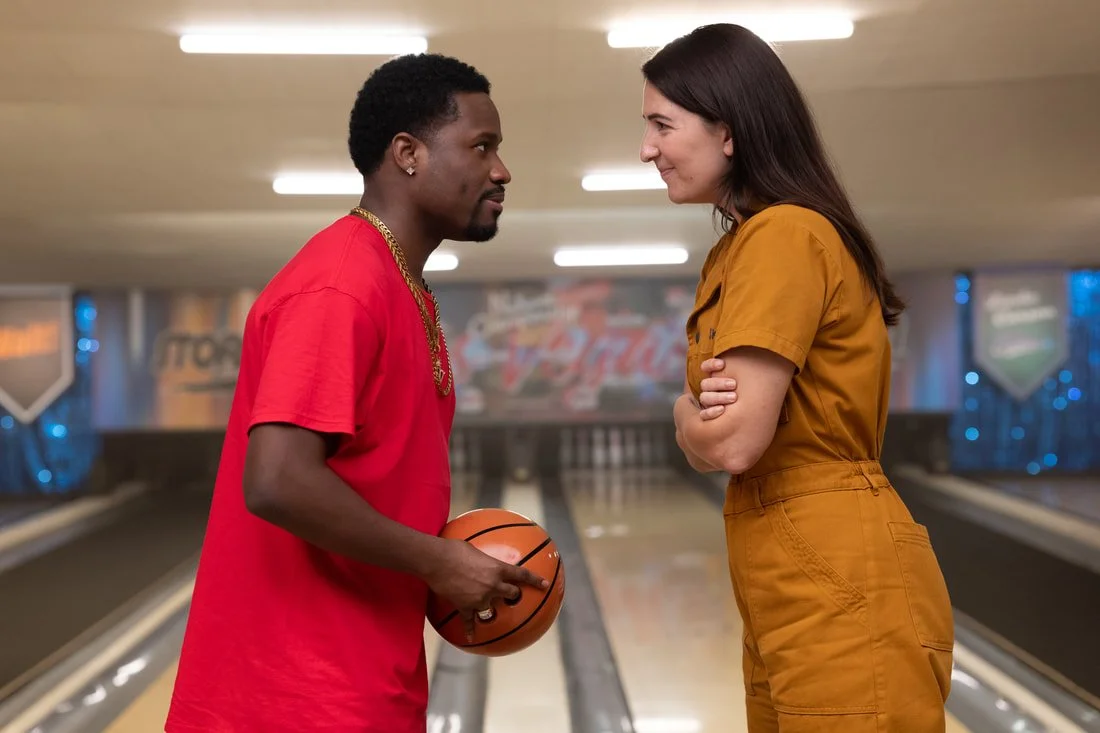
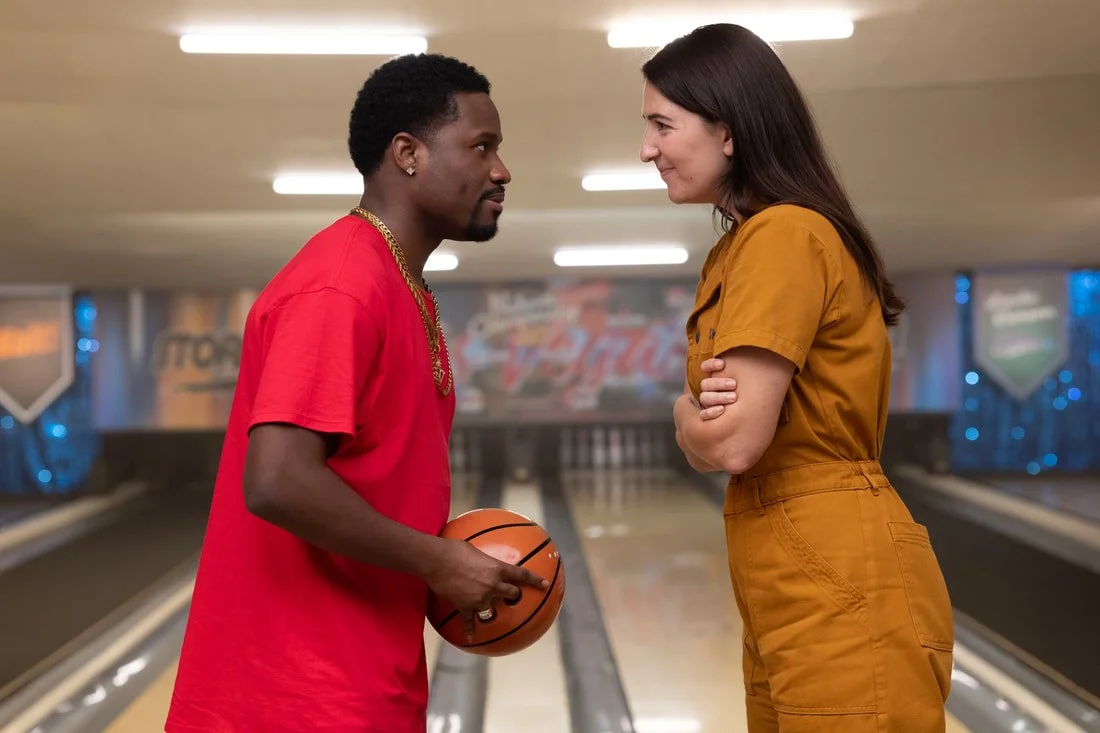
One would be hard pressed to find a sports film this year sillier than The Gutter. Directed by brothers Isaiah Lester and Yassir Lester, the film tells the story of an unlikely hero who saves a bowling alley from closing its doors forever. It’s easy to root for the underdog, and The Gutter finds strength in that inclination. With absurd energy, bizarre humor, and a committed group of actors, the film stands out as an oddball in the sports sub-genre. Not all of the silly swings lead to a strike, but the shamelessness of The Gutter is something to be admired.
The film follows unlikely hero Walt (Shameik Moore), an underachiever whose resume leaves a lot to be desired. He has a hard time holding onto basic jobs, and has no shame in explaining the reasons behind each termination, as shown in amusing flashbacks. Walt’s upfront behavior perplexes Mozell (Jackée Harry), who runs the deserted bowling alley called AlleyCatz, where he hopes to land his new job at. While Mozell deems him unqualified to run the alley bar, she desperately hires him anyway. She needs someone, and he’s willing.
Walt soon meets Skunk (D’Arcy Carden), a former bowling pro turned has-been who drinks her sorrows away at AlleyCatz. One random conversation leads to another until Walt accidentally discovers a newfound talent for bowling at an intermediate level. Skunk clocks an opportunity to get him into the professional bowling league. She thinks he can beat the record-breaking statistics held by legendary player Linda “The Crusher” Curson (Susan Sarandon). If Walt strikes big and wins enough cash, he can help save Mozell’s bowling alley from foreclosure.
With a genre-bending story that spans from slapstick to satire, The Gutter has a unique and eccentric tone. Whether it’s exaggerated emotional stakes, or ridiculous characterizations (such as Walt’s refusal to wear a shirt whenever possible), Yassir Lester’s screenplay unapologetically stretches the silliness as far as it can go. Additionally, Lester sprinkles in some familiar beats of the sports sub-genre. Underdogs are pulled from the gutter and given a chance to reach their potential. At this film’s core is the relationship between Walt and Skunk; they meet each other at a crossroads where the only way forward is through. As their quirky personalities quickly align, they play an integral role helping each other overcome personal obstacles. Skunk in particular lives in the shadows of a legend, and the film prolongs her dynamic with Linda Curson's character to throw a fun curveball.
The sense of humor in The Gutter can be incredibly tedious, and the awkward jokes don’t always land. In not taking the execution so seriously, the film struggles to make a lasting impact once the credits roll. However, there is plenty to admire in what the entertaining ensemble of actors bring to their roles. Shameik Moore has an endearing energy, and while his character is over-the-top, Moore still manages to make him feel believable in this absurd world. The same sentiment extends to D’Arcy Carden, whose wholehearted commitment to playing a character called Skunk elevates everyone around her. She has the comedic talent and sharp timing to make the most ridiculous line deliveries work. Adding to the fun and games, Susan Sarandon relishes as a nonchalant bowling legend who oozes confidence and style at every turn.
Repetitive in comedy and storytelling as The Gutter may be, the underdog narrative of Isaiah and Yassir Lester’s feature directorial debut has a lot to root for. The oddball characters, satirical lens, and singular energy make for a breezy escape into an absurdist world where bowling saves the day.
The Gutter opens on VOD December 6.
‘The Girl With The Needle’ Review
December 4, 2024
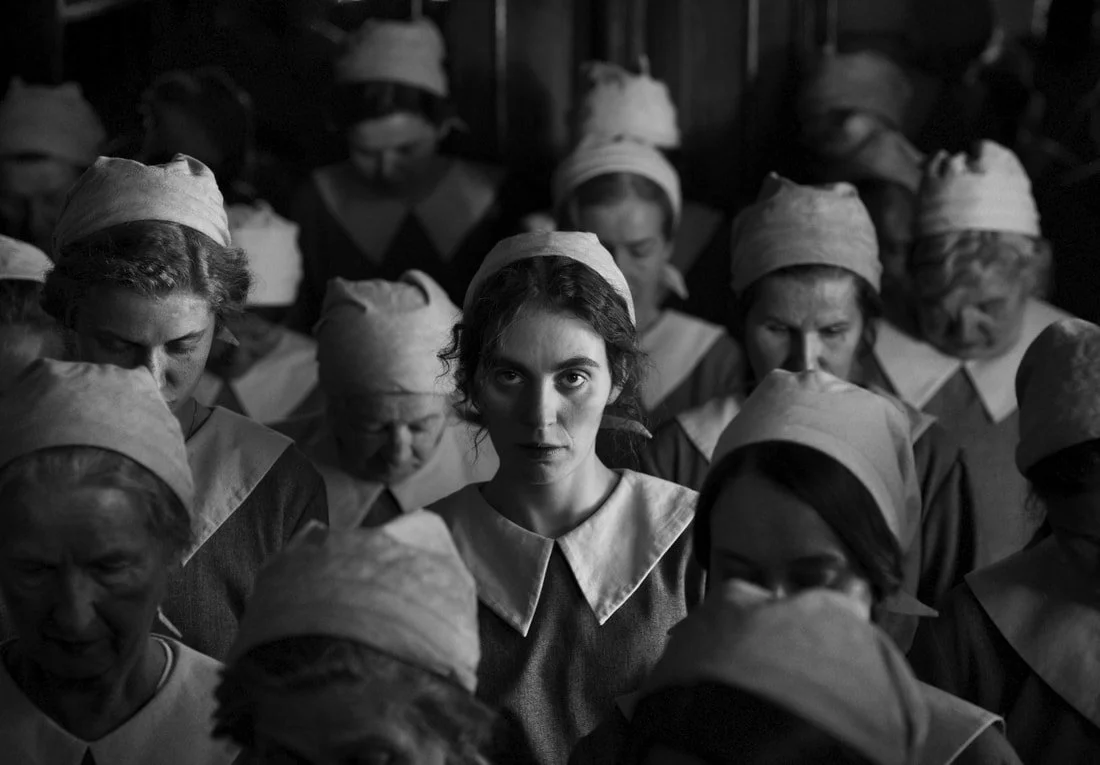
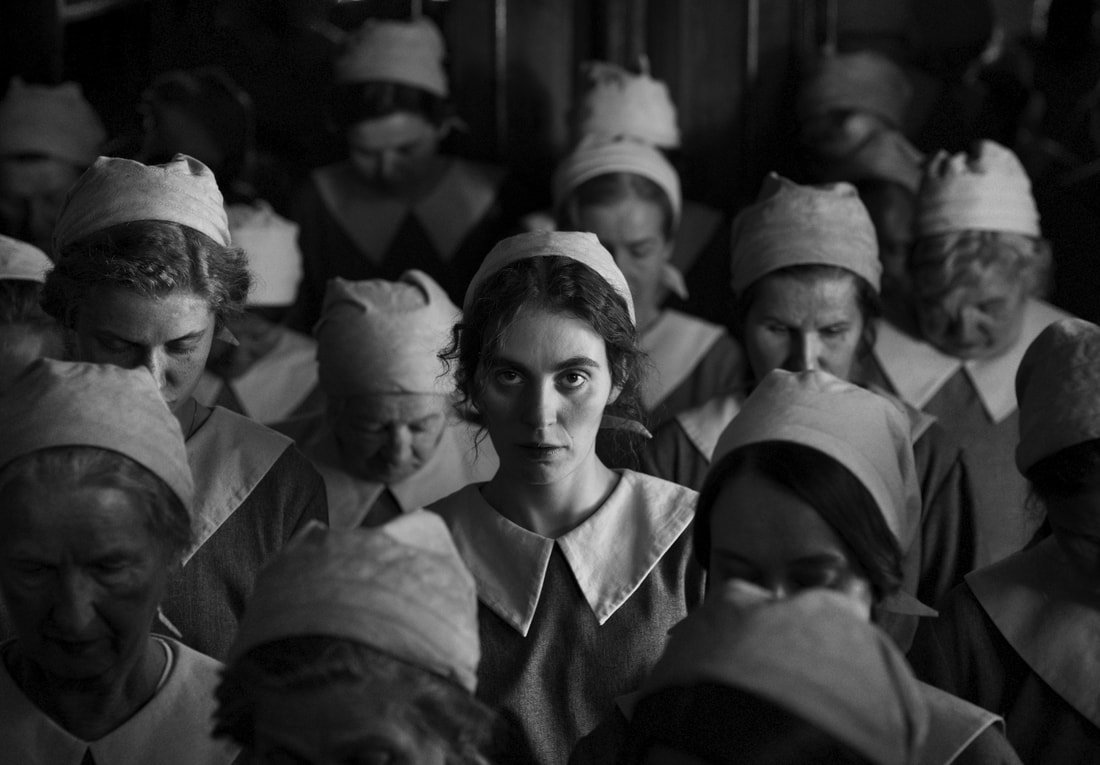
Expressionist horror and realism collide to eerie effect in Magnus von Horn’s The Girl with the Needle, a devastating gothic tale that looks into the faces of pain. The chilling distorted images in the film’s first few minutes set a bleak tone for the moral darkness we’re about to be immersed into. While based on Danish criminal activity from the 1910s and 20s, the story does not play out as a biopic by any means. Magnus von Horn follows the disintegrating threads of an unemployed, pregnant woman abandoned by patriarchal upholding in post-WWI Copenhagen. Isolated and left to her own devices, her hope fades in the shadows of unrelenting desperation. She finds herself under the wing of someone who will do anything not to believe the world is a horrible place, even if it means creating a distorted reality of buried morals. From the immersive setting to the haunting characters, the film confronts narrow paths of survival for women living on society’s fringes.
The central story follows Karoline (Vic Carmen Sonne), a young seamstress navigating loneliness and isolation as her husband Peter (Besir Zeciri) has been declared missing on the frontlines. She finds a spark of relief in Jørgen (Joachim Fjelstrup), a wealthy gentleman who owns the textiles factory she works at. As this new relationship unfolds, Peter returns from the war with a severely disfigured face. Despite not answering any of her letters, he expects his marriage to Karoline is still intact. But she rejects him, an act made even colder by the knowledge that society too will reject him. “Look at what the war spat out.” He’ll be reduced to a freak show in a carnival act, faded in the hands of a cruel world.
When Karoline becomes pregnant, she and Jørgen plan to marry. They pay a visit to his mother, who completely disapproves of the relationship due to their disparity in social class. The cowardly Jørgen obeys, and to make matters worse, Karoline is fired from the factory. In a matter of minutes, the gentle protection Karoline once felt in Jørgen’s arms is disillusioned. The heartbreaking misfortune leaves her in a harsh reality: she has a baby on the way, and does not have a home nor a job to speak of. She barely has enough money to afford rent.
Evil preys on vulnerability such as this. What sorts of atrocities are human beings capable of when they succumb to desperation? How far will the innocent fall to escape poverty? Karoline’s bleak future leads her to a bathhouse, where she attempts to terminate the pregnancy. This puts her in the path of Dagmar (Trine Dyrholm) and her daughter Erena (Avo Knox Martin). Dagmar is a candy shop owner who uses the storefront to run a secret adoption agency, offering foster homes for mothers’ unwanted infants. To make ends meet, Karoline gives up her baby and becomes a wet nurse for Dagmar.
A seemingly innocent arrangement grows sinister as Karoline becomes privy to disturbing acts of violence. The once-empowering bond between two women fighting for survival collapses before our very eyes. Their characters depict two different explorations of self-determination and independence in a patriarchal world. Set in the horrific aftermath of war, the film unfolds around uncomfortable everyday decisions women make out of necessity. They believe they are doing the right thing, not just for themselves but for their children’s futures. To watch the diminishing of such futures in this film is an unsettling experience that haunts you and shakes you to the core.
Magnus von Horn has made a true-crime nightmare. While set decades into the past, his layered gothic vision echoes with modern resonance. With bold and empathetic direction, he confronts themes of morality, survival, and reproductive rights from the perspective of a woman essentially left to die. Karoline represents the plight of so many women whose unjust communities continuously fail them, and who are then punished for taking matters drastically into their own hands. The character’s hardship becomes our anchor into the mind of a serial killer, which adds powerful layers of guilt and innocence to the storytelling. Karoline personifies the women Dagmar believes she is saving. The restrained direction by von Horn makes time for you to really grasp how the characters’ moralities twist out of shape.
In this shadowy blend of horror and realism, the tremendous performances by Vic Carmen Sonne and Trine Dyrholm shine. Sonne’s bold facial expressions and vulnerability hypnotize you into her character’s inner turmoil. She balances the harshness with glimmers of hope, which the film masterfully maps out and ends on for her. Dyrholm has a more ambiguous role to play in the narrative, as her intentions are not clearly laid out but rather stumbled upon. To convey the despicable, the unthinkable, the unfathomable, on screen and still retain some semblance of humanity is a tall order. Dyrholm’s commanding presence instills you with security and solidarity before turning her back on both of those safety blankets, conveying disturbing motivations underneath.
The visuals also play an integral part in creating a sense of perpetual moral doom. Cinematographer Michal Dymek shoots distorted expressionist faces and isolated figures cloaked in shadows. He excels at framing interiors and capturing stark lighting through a black-and-white lens. The black-and-white imagery is an effective choice that makes the story feel all the more bleak, contrasting the disturbing grey areas of humanity. Each and every frame of The Girl with the Needle builds dread, as do the reverberating notes of Frederikke Hoffmeier’s score, the stark details of Jagna Dobesz’s production design, and the measured patience of Agnieszka Glinska’s editing.
From the eerie atmosphere and haunting performances to the thematic resonance and subjective perspective, The Girl with the Needle has the hallmarks of both a gothic fable and a true-crime story. With such unforgettable subject matter and artistic expression, it would be a surprise not to see Denmark’s Oscar selection in the race for Best International Feature. Each and every element of this film looks unflinchingly into the face of pain and questions its origins, while remembering that even in the face of cruelty from a ground level, there is still hope in this world.
The Girl with the Needle is a MUBI release and will be in select theaters on December 6.

‘Mufasa: The Lion King’ Review

December 20, 2024
When Disney churned out the soulless, lifeless photorealistic remake of The Lion King in 2019, all hope for the inevitable prequel was lost. The remake took beloved characters from the original Oscar-winning 1994 film and drained them of their personality. Director Jon Favreau and screenwriter Jeff Nathanson stuck closely to the visual language and narrative structure of the original, often recreating scenes shot-for-shot. Making matters worse, the film’s photorealistic art form created an impersonal experience in which the lions looked lifelike, but evoked absolutely no emotion at all. When a colorful classic such as 1994’s The Lion King exists, why embark on the endeavor to remake it, if not to push the creative boundaries and offer something new?
Working with the property of an enormous money-making franchise comes with its own set of expectations, and reinventing the wheel isn’t one of them. But a creative voice should still have a firm place in this circle of life. The misguided, glassy-eyed spectacle of 2019’s The Lion King sunk so low into unimaginative territory, it left no room for creativity to grow and thrive. So, when the prequel was announced, the idea of another director stepping into this world felt depressing, even more so because that director was the visionary Barry Jenkins. One of the most passionate storytellers of our time working in the hollow space of photorealism seemed limiting. Luckily, with Jenkins’ bright talent, Mufasa: The Lion King has enough direction to evoke real emotion from a somewhat engaging story. While the director’s vision doesn’t get a full embrace, as his voice feels consistently at odds with corporate meddling, he manages to make this prequel at least worth watching.
Mufasa: The Lion King tells the origin story of how Mufasa found his destiny and became King of the Pride Lands. The journey follows him as a young cub (Braelyn Rankins) who gets separated from his father Simba (Donald Glover) and mother Nala (Beyoncé Knowles Carter) due to a flooding. Mufasa finds himself in uncharted waters when he encounters Taka (Theo Somolu), a young lion cub from a different pride. The two cubs get a mixed welcome from Taka’s compassionate mother Eshe (Thandiwe Newton) and intolerant father Obasi (Lennie James). Obasi views Mufasa as a stray, an outsider who must earn a place in this pride. He pits Mufasa against Taka in a life-or-death race, but Taka has a secret: he’s always wanted a brother.
By letting Mufasa win, Taka gives the fellow cub a sense of belonging. But Mufasa has a heightened sense of feeling things from far away, which makes him destined for something greater. When a grown Mufasa (Aaron Pierre) saves the pride from a group of white lions, led by the relentlessly spiteful Kiros (Mads Mikkelsen), Obasi orders Mufasa to flee with Taka for safety. While on the run, the brotherly lions meet princess Sarabi (Tiffany Boone), her flighty protector Zazu (Preston Nyman), and young Rafiki (Kagiso Lediga). The group heads for Milele, the lush grasslands Mufasa’s parents promised him they would visit, while Kiros’ vengeful pack trail close behind.
Audiences familiar with Mufasa will anticipate certain character developments, specifically in his relationship with Taka, which the film smartly focuses on. While the writing of their individual motivations fall flat, the lions’ bond gives the film a somewhat engaging emotional core. Since the film isn’t a direct remake, Jenkins has more flexibility to explore these characters beyond what we’ve already seen. He and screenwriter Jeff Nathanson specifically draw upon how Mufasa and Taka’s upbringings shape two different meanings of leadership; one marked by selflessness, the other by betrayal.
Mufasa finds a chosen family both in Eshe, who encourages him to hone his sensory talents, and in Obasi, who gains respect for his heroic act of saving the pride from Kiros. The family seems to accept him more than they do Taka, who inherits toxic values from Obasi and is taught to use deceit as a leadership tool. While Mufasa seamlessly steps into the role he was born to play, Taka wrestles with desires and false destiny. The voice acting by Aaron Pierre and especially Kelvin Harrison Jr. bring energy to these roles that elevate the material. Their performances stand out in a collection of mostly forgettable voice acting, despite the talented cast. Though, of the supporting characters, Mads Mikkelsen makes a distinctive mark as the villainous Kiros.
Through the brothers’ journey towards Milele, the film engages in some compelling messages of standing strong together and making room for every vulnerable being in the circle of life. Not to mention, themes of inherited family values, wrestling with where you belong, and navigating manipulative rulers in a broken system. It’s understandable that Jenkins would be drawn to the material, and there are moments where his direction does pull you in and feel some of the stakes. However, his vision gets undermined at several turns, whether it’s the constricting photorealism or the narrative framing.
The story of Mufasa gets passed down from a grown Rafiki (John Kani) to Mufasa’s granddaughter Kiara (Blue Ivy Carter) as a distraction from Nala going into labour. For some reason, the presence of Timon (Billy Eichner) and Pumbaa (Seth Rogen) in this narrative framing was considered a good idea. The pair’s comedy stylings fall completely flat and disrupt the momentum. Their misguided winks and nods about knowing what happens to the characters are clear examples of Jenkins' voice feeling at odds with higher-up obligations to make a broad appeal. Plus, the recurring Timon and Pumbaa scenes leave little room for Kiara’s character to stand out in any way.
The biggest emotional disconnect of the film comes from one of the most passionate filmmakers working in the very limiting playground of photorealism. The attempts to replicate real emotion, without actually emoting, makes for a jarring experience. While the visuals of Mufasa: The Lion King technically look lifelike, and the characters show more emotion in comparison to the 2019 film, this art form still creates a barrier to authenticity. There is less room for imagination and liveliness, which also impacts the use of visuals for the film’s soundtrack.
The original songs written by Lin-Manuel Miranda range from underwhelming (“Brother Betrayed”; “Milele”) to catchy (“I Always Wanted A Brother”; “Bye Bye”), but even the catchy songs are let down by forgettable choreography in the film. As well, Dave Metzger’s original score gets lost in the shadows of a far more iconic one that lingers to this day. The brief use of “Under the Stars” and “King of Pride Rock,” two tracks from Hans Zimmer’s score for the 1994 animation, still manage to reverberate over Metzger’s score.
Mufasa: The Lion King tumbles in its narrative framing, rushed pacing, and underwhelming visuals. While disappointing that it doesn’t fully work on an emotional and visual level, Barry Jenkins deserves credit for adding some personality to this prequel. Certain scenes evoke Jenkins’ distinctive visual style, such as the shots of characters looking almost directly into the camera. He puts the viewer into the animals’ perspectives quite well, and captures the epic scope of the first half to push Mufasa and Taka into their journey of brotherhood. The end result lacks staying power, but hopefully the closing of this big-budget chapter will lead to more personal, intimate films from Jenkins where his voice can be embraced fully.
‘Wallace & Gromit: Vengeance Most Fowl’ Review
January 2, 2025
Aardman Animation never disappoints with the beloved claymation duo Wallace & Gromit. The pair’s latest adventure, Wallace & Gromit: Vengeance Most Fowl, boasts another great day of inventing, complete with modern thematic urgency and a film noir twist. That Vengeance Most Fowl slides perfectly into a fun double feature with 2023’s Mission: Impossible Dead Reckoning — Part One speaks to how widespread the dangers of artificial intelligence are, both in life and the art it inspires. Co-directors Nick Park and Merlin Crossingham find sweet spots in a genre-hopping story that remind audiences of Wallace and Gromit’s endearing charm. The cheese-loving inventor and his gently devoted dog are given a fresh spin in a masterful balance of tension and British humor. The astounding puppetry, lovable characters, and villainous return of a fan favorite make Vengeance Most Fowl a most comforting ode to imagination.
Gnomes have always been interwoven into the fabric of Wallace and Gromit’s world, whether as lawn ornaments or extensions of Gromit’s love for gardening. Four-time Oscar winning filmmaker Nick Park, the co-director and co-writer of 2005’s Wallace & Gromit: The Curse of the Were-Rabbit, returns with a clever gnome-centric tale that plops Wallace and Gromit on a much grander scale. Though, the advancements in technology since Wallace and Gromit’s first feature are met with the upmost caution. Anne King’s puppet design and Matt Perry’s production design help retain the crafty, thumbprint charm of what makes the characters so distinctive. Whether it’s the flawed ambition of Wallace, or the quiet heroism and gentle impatience of Gromit, their classic personalities shine in an exploration of modern themes.
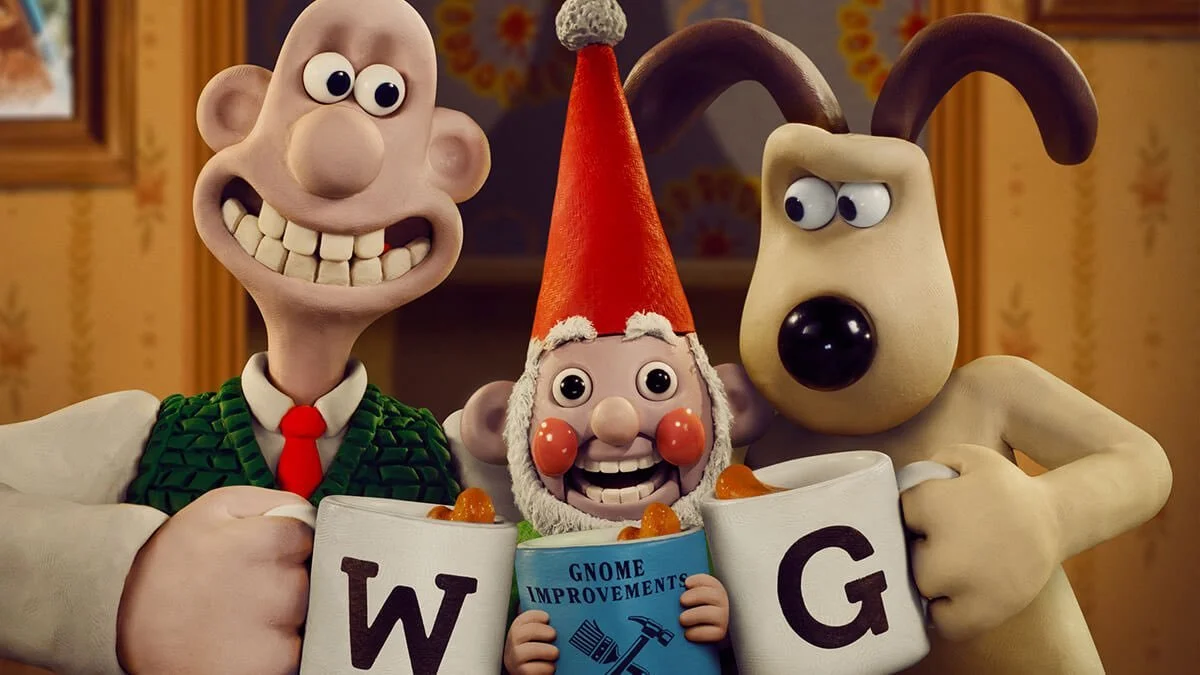
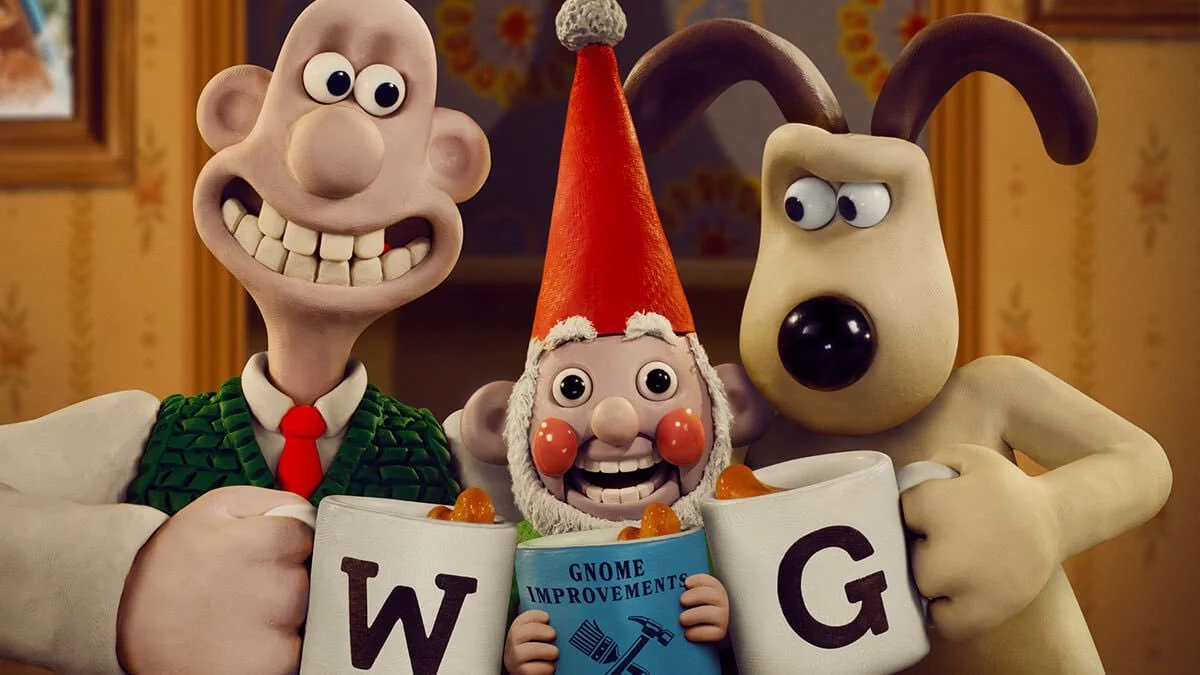
The use of gnomes is a neat vehicle for the dangers of artificial intelligence and over-reliance on technology. In Vengeance Most Fowl, Wallace (Ben Whitehead) introduces his latest cheery invention: Norbot (Reece Shearsmith). This nifty voice-activated “smart” gnome is pre-programmed to do all the gardening and various “tedious” maintenance jobs. Norbot’s completion of tasks in neat and tidy fashion attracts Wallace and Gromit’s neighbors, prompting the cheesed inventor to create “Gnome Improvements” from his West Wallaby Street home. But when the robot’s fixed smile is hacked by a masterminding force, Gromit must swoop in to save the day as an army of Norbots wreak havoc.
The core failing of Wallace’s new invention is that he considers Norbot progressive; the “smart” gnome is the inventor’s proof of how embracing technology makes life easier, because it allows him to sit back and let machines do all the work. This mentality extends even to the tiniest of actions in Wallace and Gromit’s household. Much to Gromit’s chagrin, the old teapot hasn’t been used in ages. Wallace even has an invention for giving Gromit a good ole pat on the head. But technology could never match a cozy hot cup of tea from a whistling kettle, or the warmth of a loving embrace.
We live in an age where technological innovations have gone too far, and as Mark Burton’s screenplay so deftly captures, such advancements can be catastrophic when fallen in the wrong hands. With fun echoes of Tom Cruise’s Ethan Hunt confronting an enemy of artificial intelligence in Dead Reckoning, Vengeance Most Fowl shines in its savvy script, which makes way for some smashing action sequences. The hacked gnome plot also provides a terrific opportunity for Aardman to bring back the mysterious Feathers McGraw, famously a silent menace of previous Wallace and Gromit adventures. With his red rubber glove hat and beady little eyes, his character serves as the motivation behind Norbot going rogue.
Feathers McGraw proves to be one of the most effective cinematic villains, animated or not. You constantly anticipate his next conniving move, each one adding irresistible layers to the character’s capabilities and under-the-surface personality. Feathers’s scenes bring elements of Hitchcockain suspense, film noir, and the prison heist sub-genre to Vengeance Most Fowl. His vengeance is clear as crystal and not to be underestimated, which adds real stakes to the story. It’s incredible how the simplicity of Feathers’s subtle animation style speaks volumes. The tiniest of details expose his intentions.
As is the case with every Aardman Animation production, the beauty is in the details. Beady eyes catching the light in a particular way can make a character appear evil inside. Silent shrugs and raised eyebrows can convey a world of frustration. Billboards and books are the perfect backdrops for cheeky local gags and cheesy literary puns. Most impressive about the visual language of Vengeance Most Fowl is that, while it looks slightly more elevated than previous Wallace & Gromit works, the animation never appears glossy. The action sequences and intricate villainous lairs call for bigger scopes, but the intimacy of the characters never get lost. The film still has that textured, rough-around-the-edges charm, which puts the animation team’s work on full display and keeps the makeup of this endearing world intact.
The film’s spectacular voice-work and music also play an integral part in retaining Wallace & Gromit’s DNA. Following the legendary original voice of Wallace, Peter Sallis, who passed away in 2017, Ben Whitehead proves worthy of maintaining the musicality in Wallace's voice. His performance is both an incredible mimic and a moving ode to the character fans fell in love with. Additional cast standouts include returning talent Peter Kay as Chief Inspector Mackintosh (who first appeared as a police constable in The Curse of the Were-Rabbit), and new talent Lauren Patel as P.C Mukherjee, an instinctive recruit determined to prove herself on her first day. Plus, the super cheerful Reece Shearsmith brings Norbot the “smart” gnome to life with lovable energy, successfully avoiding what could have been a monotone robotic voice.
Adding more music to the ears is Lorne Balfe and Julian Nott’s original score. Before we get the classic Wallace & Gromit theme, we get a taste of the suspenseful notes that convey Feathers McGraw’s villainy. Balfe and Nott keep up this musical range throughout. They heighten the dramatic stakes, enhance the humor, and maintain the whimsical eccentricity of Wallace and Gromit’s world. In listening to the evolution of each track, it feels like being guided on a journey of several genres packed seamlessly into one film.
With the many creatively told Wallace & Gromit stories out there, from The Curse of the Were-Rabbit to the delightful short films (the first being 1989’s A Grand Day Out), Vengeance Most Fowl might not top everyone’s list. Regardless, it’s an absolutely charming adventure, a memorable addition to this beloved world of a good-natured inventor and his intelligent dog.
Catch Wallace & Gromit: Vengeance Most Fowl on Netflix on January 3, 2025.
‘I’m Still Here’ Review
January 31, 2025
In order to understand the generational impact of tragedies, and to prevent history from repeating itself, we must confront the past. We must give voice to the lost, the erased, the vulnerable, the forcibly disappeared. Art holds the power to reflect the times. Many of us go to the cinema not only for an escape into someplace new, but for a mirror-effect of what’s happening on the ground. Many of us approach the medium of film with a yearning to see ourselves and learn about each other’s experiences. Walter Salles’ I’m Still Here, his first Brazilian feature film in 16 years, is both a time capsule and a transient experience. It will have remarkable staying power in the retelling of a very personal story born from a dark past. Salles, known for 1998’s Central Station and 2004’s The Motorcycle Diaries, brings to the screen an urgent reminder of a country’s disturbing history.
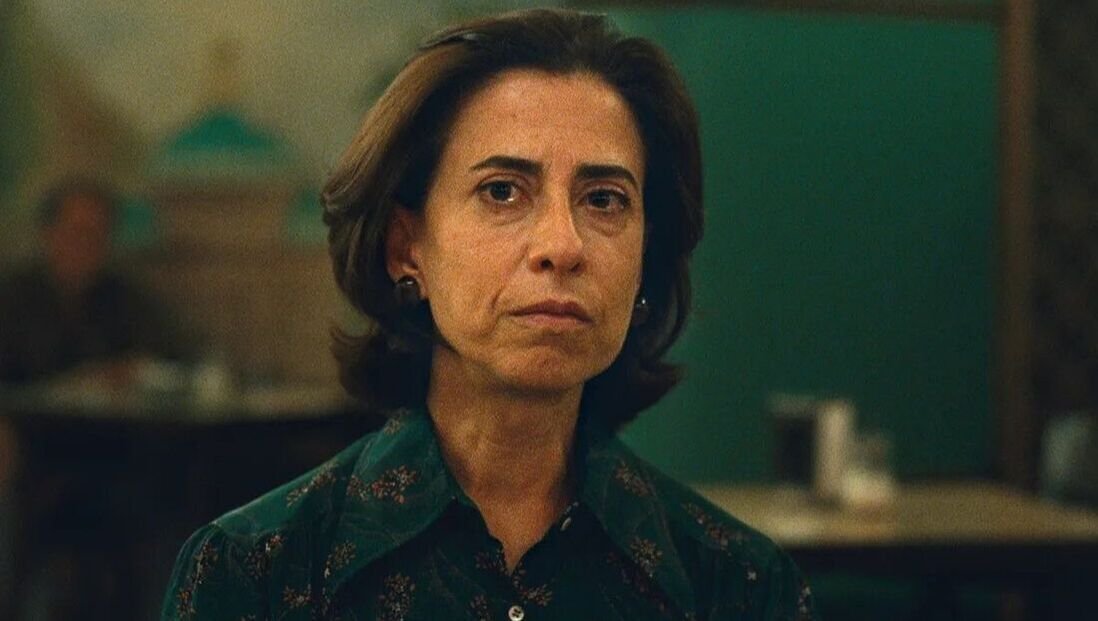
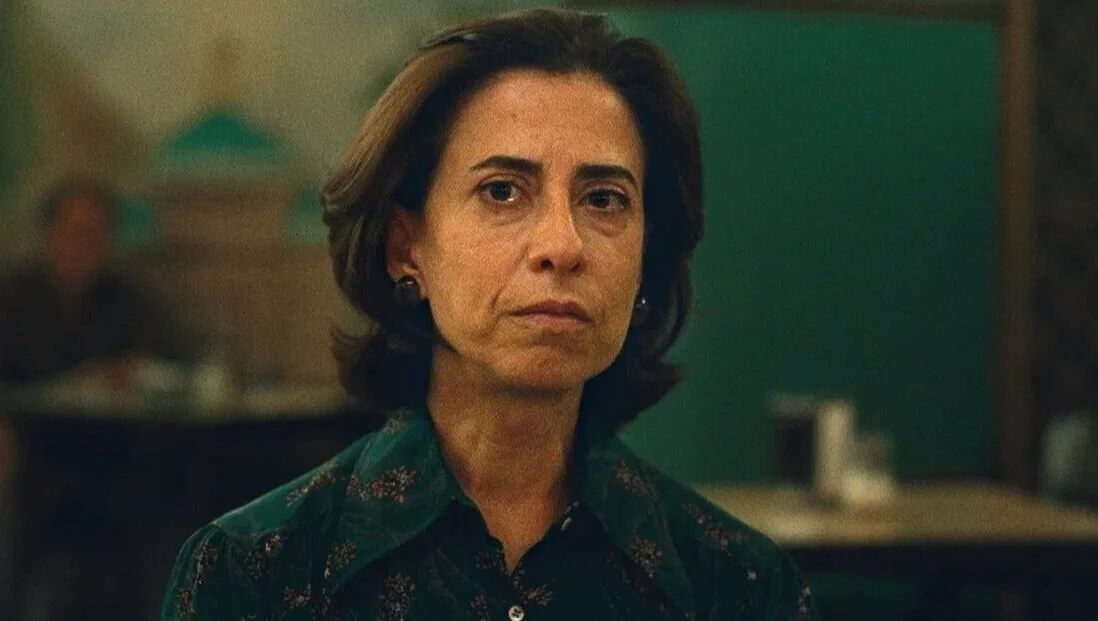
Thousands of families were torn apart by Brazil’s military dictatorship between 1964 and 1985. In 1971, engineer and former congressman Rubens Paiva was arrested and forcibly disappeared. His wife, Eunice Paiva, and their five children suddenly had the ground pulled from beneath them. From that moment onwards, Eunice made it a point to keep the family resilient, whether taking her children out to ice cream or asking them to smile in press photos (despite being told to act more serious and sad, given the circumstances). Eunice, who became an activist and human rights lawyer, led a decades-long fight for justice. Without her courage and strength, without her memories, we wouldn’t have her son’s 2015 memoir Ainda Estou Aqui (I’m Still Here), which he wrote in light of her Alzheimer’s diagnosis. Without the Paiva family, we wouldn’t have Salles’ film adaptation of the memoir. I’m Still Here, and an absolutely extraordinary performance by Fernanda Torres as Eunice, is a moving reminder not to allow the past to be forgotten. It’s not only about holding onto faded memories, but actively sharing them so that they can continue to live, as Salles’ film powerfully does.
The film’s opening song, É Preciso Dar Um Jeito, Meu Amigo (We Must Find a Way, My Friend) by Erasmo Carlos, sets a fitting tone as it accompanies footage of an idyllic family life. Ipanema beach in early 1970’s Rio de Janeiro looks serene, but Brazil’s military police presence in the background is anything but. Convoys and helicopters interrupt simple everyday joys, such as the Paiva family’s beach outing. Eunice (Fernanda Torres) looks beyond the shore to the harsh realities that unfold in broad daylight. However, Eunice and her husband Rubens (Selton Mello) make life feel relatively normal for their children — Veroca (Valentina Herszage), Eliana (Luiza Kosovski), Nalu (Barbara Luz), Marcelo (Guilherme Silveira), and Maria Beatriz Facciolla (Cora Mora). They fill the family home with warmth and togetherness. Eunice’s put-together demeanor is helped by Rubens, who assures her that the military tension will pass.
Any conversations having to do with political unrest are held in hushed tones, behind closed doors, so as not to disrupt the children’s sense of safety. But it’s gotten too dangerous in Rio de Janeiro, and one day, that danger arrives at the family’s doorstep. A group of men arrest Rubens for his suspected associations with resistance groups, and Rubens disappears from the family picture, never to be seen or heard from again. Eunice, who faces further injustice when she is taken in for questioning and kept in a cell for several days, fights back. She spends years investigating for proof of Rubens’ arrest, detainment, and disappearance. Through unwavering resilience, speaking out to her friends in power, and taking matters into her own hands, she will not rest until the Brazilian government are held accountable for cruel acts of the regime.
In conventional political thrillers, narrative focus often gets placed onto the investigation itself, drawing action from the threats behind enemy lines. In I’m Still Here, history is reconstructed through a familial and deeply personal lens. With Marcelo Rubens Paiva's book as an incredibly moving guideline, Salles’ film stresses how every day is a fight for Eunice to keep her family together. The smallest moments carry emotional resonance, especially when Eunice sees reminders of loss in her lively surroundings. One of the most quietly devastating scenes in the film is when she takes her children out to ice cream, shortly after their father is arrested. As she sits in her own familial disruption, she observes happy families around her, several reminders of uninterrupted love. The devastation rests on Eunice’s face, a composed and silent cry out, which Torres plays brilliantly.
As the story unfolds, primarily through Eunice's perspective, the film rests on Torres’ shoulders to communicate the character’s internal conflict. Eunice puts on an incredibly disciplined front. While experiencing loss, she reinvents herself and rebuilds hope for her children’s futures. Torres commands the screen with tremendous control. She builds onto tension, anger, fear, and resilience with subtle observations. Her remarkable performance not only heightens the intensity of her character’s surroundings, but also reinforces how life goes on in the midst of such turmoil. Whether it’s convoys passing while she swims in the ocean, or an ominous car parked across the street of her home, these threats are gradual, and she pushes through them to continue living. Torres finds strength in fleeting moments, where Eunice recognizes her waves of sadness, and chooses to internalize each crashing impact.
It is in such fleeting moments, such as Eunice taking her children out for ice cream (an exquisite scene), that serve as reminders of what was lost. By immersing the audience into the Paiva family's home from the beginning, Salles immerses you into lived-in dynamics. We observe joyous environments and safe spaces, open for family and friends at any time. When these spaces are disrupted, often without any hint or warning at all, the tension feels even more palpable. Salles makes a point to incorporate home video footage throughout the film, stressing not only personal connections to this story but also calms before the storm, pieces of history that have been washed away.
Art can hold a mirror to the times we live in, and shed light on largely forgotten parts of history. I’m Still Here does both tremendously well. Salles creates a piece of film history that says, all those affected are still here. They live on through generations of families that come after them. For this particular reason, the film’s time jump to 2014 reverberates. 85-year-old Eunice (played by Fernanda Torres’ mother, Fernanda Montenegro) reflects as best she can on the past. Even though she lives with Alzheimer’s, Eunice still recognizes history, however fleeting the memory. I’m Still Here feels like an ode to Eunice, and to the thousands of people who faced the cruelties and injustices of Brazil’s dictatorship, who continued to live in the shadows of horror and must never be forgotten.
I’m Still Here is now playing at TIFF Lightbox.
‘The Monkey’ Review
February 21, 2025
If you can hop aboard the twisted wavelength of The Monkey, you are in for a devilishly fun time. But if Osgood Perkins’ looney adaptation of the 1980s Stephen King short story is not your cup of tea, the dark humor and repeatedly nonsensical kills can quickly grow tiresome. In either case, Perkins continues to roll up his sleeves in the horror genre with another stylized vision, one that pivots from the creepy procedural he serves in Longlegs. Written and directed by Perkins, The Monkey takes a cartoonish approach to the senselessness of death. The film toys with tragedy through a disturbingly sarcastic tone, a drum-banging allegory of trauma, and a self-aware protagonist who becomes increasingly less bewildered by the gruesomeness of an ‘Itchy and Scratchy’ kind of world. Beyond the exploding bodies, there is an intriguing redemptive story about accepting the finality of death, finding levity in loss, and choosing to move forward with the itch of trauma on your back.
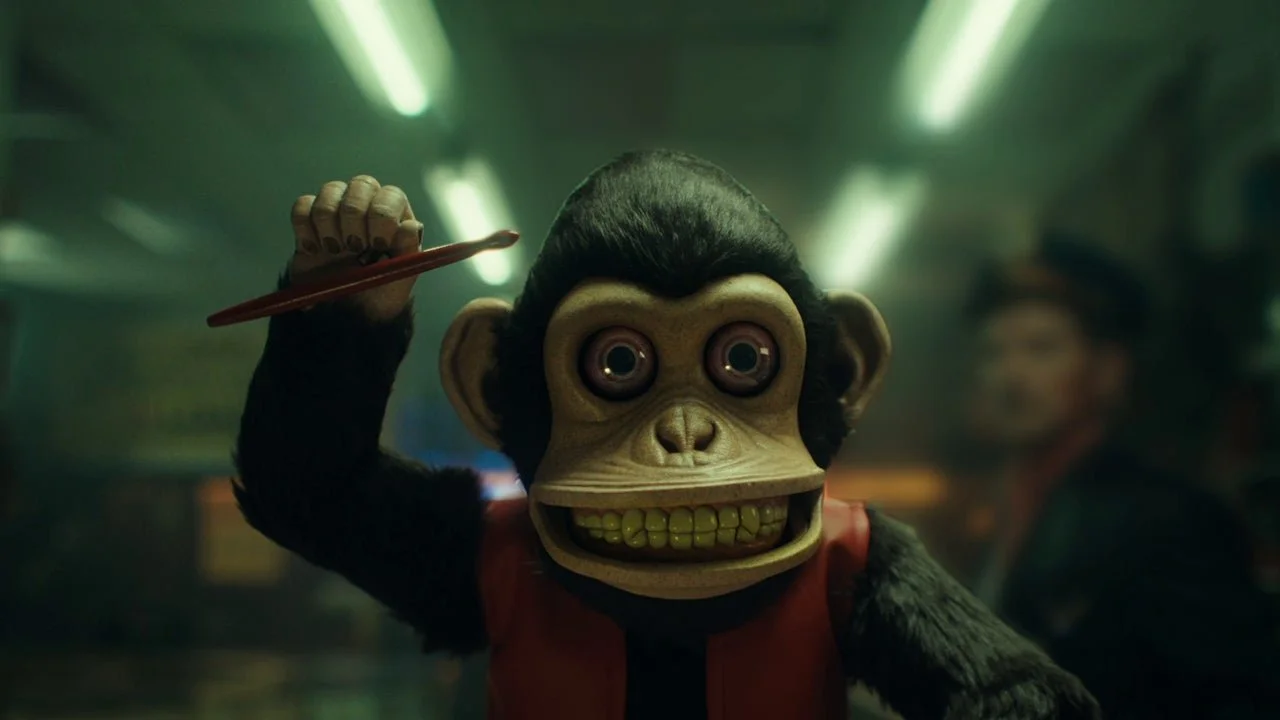
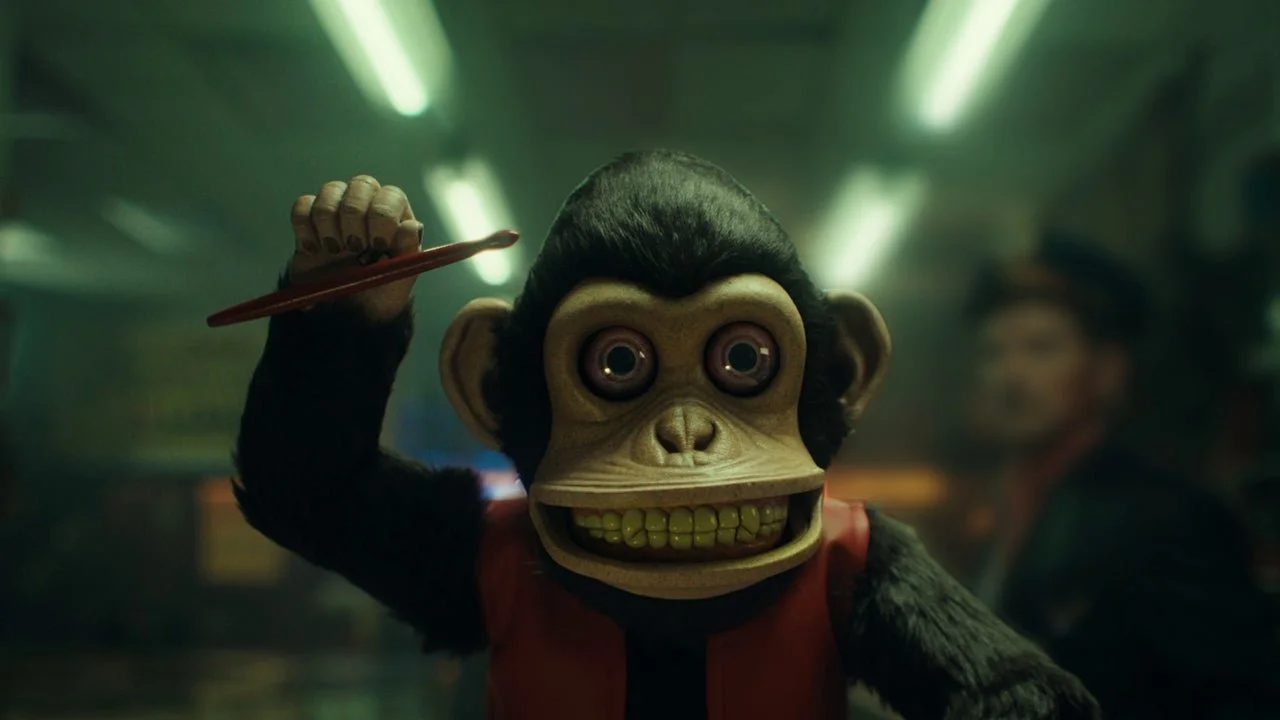
No matter how deep you bury trauma, it will resurface sooner or later. Twin brothers Hal and Bill learn this lesson the hard way. As children (both played by Christian Convery), they find their absent father’s old toy monkey in the attic. Despite its ominous supernatural energy, something about it calls out to the twins. The toy is a secret their father kept from them, and perhaps by winding it up, it will conjure some level of family reconciliation. Instead, the monkey causes sudden death and destruction. In the heat of the moment, this cursed toy simply wreaks morbidly entertaining havoc. In the bigger picture, it’s a blunt visual of life and death. The monkey observes as life does, and strikes as death does, without rhyme or reason. Those on the receiving end of the toy’s deadly drumroll have no choice but to face the music, and no amount of running can stop it. For the cursed childhood toy reemerges years later, forcing the estranged twins (both played by Theo James) to reexamine the way they process immeasurable tragedy.
What The Monkey conveys quite well is how members of the same family household can share the same loss, but fall down a totally different rabbit hole of grief over time. Hal shuffles through life as a haunted everyman who avoids spending time with his son Petey (Colin O’Brien), fearing the repeat of generational trauma. Bill hides maniacally in pitfalls of shame and blame, waiting for the precise moment to execute personal revenge. The villainy of Bill’s character gives Theo James an opportunity to chew the scenery, which he excels at. But because he is depicted through a zany lens, it’s a little tiring to take him seriously when the film frames him as a threatening presence. As a result, the story starts to fall apart in the film’s second half when Bill guides most of the action, and when the intense sarcasm starts to feel too repetitive.
One of the few things we know about life is that the end is inevitable. As the film’s rookie priest (Nicco Del Rio) says during one of several funerals, “It is what it is, the word to the Lord.” Perkins leans into this sentiment thematically and visually. He processes the immovability of grief with dark comedy, and uses blunt force to drive home the message of “It is what it is” with insane imagery. The supernatural power of the toy monkey is never explained. It doesn’t move around, or speak, or stab characters with drum sticks. It appears out of thin air. It simply exists. Wind up the toy, choose to control its presence, and the most intensely gory deaths will follow. No amount of explaining can make sense of it, which is why the monkey works as an allegory of loss.
People die around us, and we can spend the rest of our lives wrestling with the question of why. Why this person, at this particular time? The lack of control feels akin to a curse that follows you through life, “A monkey on your back.” Perkins wisely embraces the uncertainty, the relentlessness, the absurdity, adding fun tension to the monkey’s presence. As well, Disney’s ownership of the monkey with cymbals (as seen in the Toy Story franchise) gives Perkins a more fitting accessory of drums. The film literally drums up anticipation for the next ridiculous kill, moving to an unsettling rhythm. The monkey’s design also speaks to the creepiness of old toys, or even toy commercials, that often carry a sinister tone whether intentional or not. Beyond the concept of the toy itself, the world-building also fits neatly into Perkins’ vision. And whether intended or not, some of the film’s set design echoes faint slices of Psycho.
Some comparisons have been drawn between The Monkey and the Final Destination franchise, as both follow a morbid death pattern. Both utilize the act of ominously showing us what’s going to kill the characters before they die. While both feature extremely gory sequences, Final Destination instills more fear around the subject of death, evoking nerves around everyday objects and even causing one to avoid certain things (tanning beds, personally). The Monkey plays in the vein of pure absurdity, quite literally adopting the message of “Everybody dies, and it is what it is,” which creates more thematic resonance around the subject. The ridiculously brutal sequence of the motel swimmer, as an intense phone call transpires between adult Hal and Bill, best exemplifies the tone Perkins goes for. He excels at establishing this tone, and crafting a buildup in the first half, but lacks the power of consistency. While a lot of the freak accidents are fun to watch, the pointing and laughing at death eventually becomes redundant and lapses in tension.
Despite the inconsistent tonal effect, the film has a formidable star in Theo James, who balances the sardonic personality of Hal with the maniacal desperation of Bill. Between the two characters, James conveys more layers of his talent and charisma. He also conveys an impactful wink and nudge to the audience, as Hal gets progressively more accepting of the messed up scenarios happening around him. James locks into the absurd tone and believably carries the redemptive character arcs of both twins. While the film lends James a decent showcase, the same cannot be said for Tatiana Maslany and especially Elijah Wood, whose talents feel wasted and far too fleeting in the overall story. As Hal and Bill’s mother Lois, Maslany shows an incredibly acute understanding of the film’s tone; she balances the sarcastic, silly, and ominous elements of Perkins’ strangely crafted world. Sadly her character leaves a lot to be desired, and her presence is under-utilized. Meanwhile, the buildup to Wood as Petey’s holier-than-thou stepdad Ted amounts to a glorified cameo. Rounding out the supporting cast, Osgood Perkins makes a humorous appearance as Hal and Bill’s uncle Chip, the first to admit he probably wouldn’t do a good job at raising the twins. Sarah Levy (a standout on Schitt’s Creek) shows a new side to her talent as the twins’ aunt Ida, who gets nothing to do other than follow the ride and exemplify how gory the film can get.
While not without its faults, the idea of characters dying around a toy monkey in ridiculous ways is met with fitting sardonic absurdity in The Monkey. Perkins’ cartoonish, Looney Tunes-style of storytelling draws out the nonsensical side of mortality and grief. Does it all make sense? Not quite, but there is something refreshing about a film of this genre that avoids explaining the whys and hows of an evil presence or entity. In The Monkey, it carries enough weight simply by existing.
The Monkey is now playing in theaters across Canada.
‘Black Bag’ Review
March 12, 2025
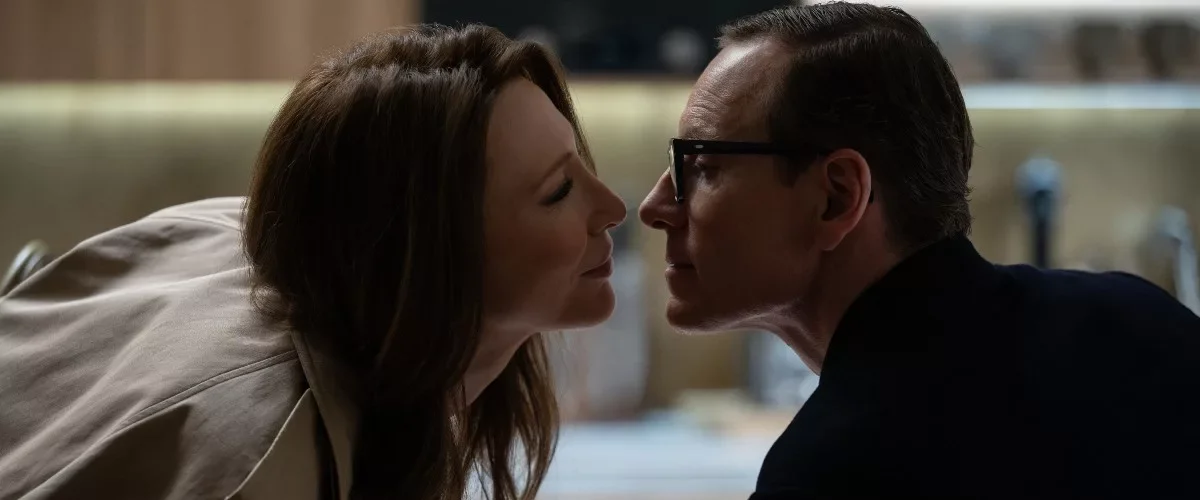
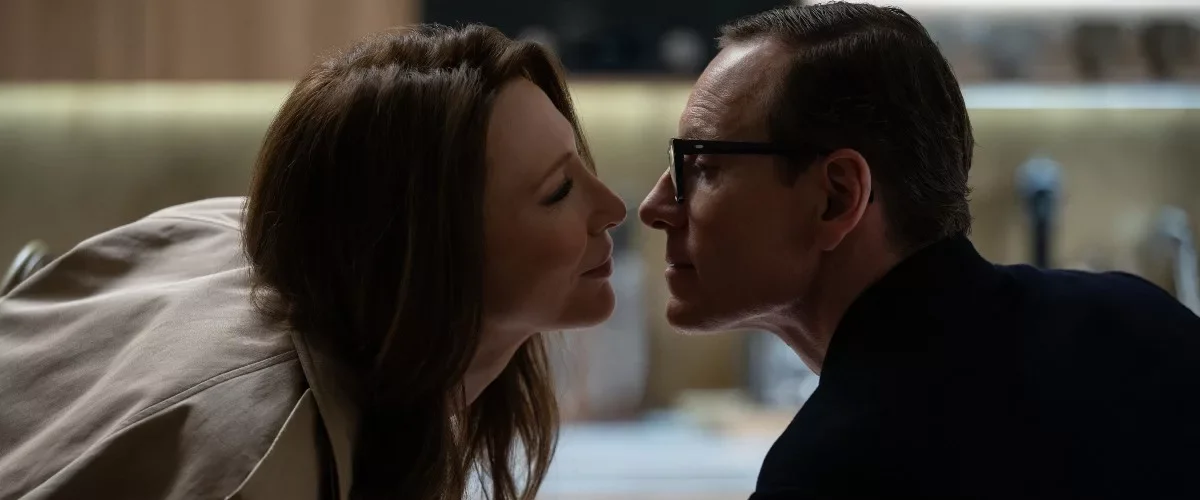
Sex, lies, and espionage. Count on the great Steven Soderbergh to deliver deliciously on all three. He infuses his panache into the familiar spy genre with Black Bag, an intensely romantic thriller that makes no compromises on trusting the audience. With echoes of James Bond, Mission: Impossible, and Who’s Afraid of Virginia Woolf?, Soderbergh and three-time collaborator David Koepp find an alluring marital drama in the throes of a British intelligence crisis. The elegant married couple at the center of Black Bag would kill for each other, and that makes for an alluring story, especially in the context of top secret professions forcing them to withhold intelligence. Soderbergh’s exacting style, Koepp’s clever script, and a brilliant ensemble of actors play into the ambiguity and tension. A bewitching puzzle box of style and substance, Black Bag shines as one of the year’s most fun psychological studies.
Everything’s ambiguous in a world of cloaks and daggers. Thanks to the sensibilities of Soderbergh and Koepp, everyone and everything in Black Bag glides with the utmost precision. Intention can be felt reverberating behind each frame, whether tensely capturing a character on the move or pursuing an atmospheric angle. The story doesn’t lean too far into vagueness, nor does it overcompensate with bursts of action-packed fillers. It falls into the Goldilocks principle of “just right.” It’s a compelling story of outsiders and the games they play whilst in a state of constant paranoia. The idea of a married couple who happen to be spies offers just as compelling a narrative, since betrayal doesn’t impact them in the way that it would for ordinary people. The espionage of it all gives the marriage a level of protection where anything can be hidden under the guile that it’s confidential.
The film follows George Woodhouse (Michael Fassbender), an elite intelligence officer at London’s National Cyber Security Centre (NCSC). George faces the ultimate loyalty test when a security breach forces him to find a mole in the agency before they can activate Severus, a destructive software that has the power to destabilize a nuclear facility. Five names make the suspect list of being a traitor. Four are friends and colleagues: Freddie (Tom Burke), Clarissa (Marisa Abela), Zoe (Naomie Harris), James (Regé-Jean Page). The fifth is George’s wife Kathryn (Cate Blanchett), one of the organization’s most powerful and valuable agents. Who has the knowledge and clearance to reach Severus? A carefully spun web of secrets and lies casts doubt on George’s loyalty, leading him down a path of potentially risky devotion.
Black Bag poses the question, “When you can lie about everything, how do you tell the truth about anything?” David Koepp’s script takes this idea and glides with it, particularly through exploring the devotion between George and Kathryn. The couple’s professional loyalty calls upon them to mask the political turbulence that surrounds them. They are experts at not letting their emotions leave a facial trace. George and Kathryn’s achingly cool exterior raises envious eyebrows from their surroundings: how can two people in this line of espionage possibly operate on a romantic wavelength? How can they sustain a real relationship built on trust and communication? The trick lies in the “black bag,” their code for where to put information they can’t share. Koepp achieves the marvelous feat of centering the story using this portrait of a marriage, while also keeping ambiguity between the couple. More often than not, the film teases out details about George and Kathryn respectfully through other characters and/or scenarios.
The couple’s fabulous-looking home doesn’t reveal a lot of personal secrets about them in particular, but does invite the lives of others onto an exquisitely lit table. The film features not one, but two absolutely riveting dinner sequences, feasting with layered narratives and visual treats. The mind games Kathryn and especially George play with their guests echo bits of Who’s Afraid of Virginia Woolf?. It’s a serious game of truth and dare, where characters chew up and spit out information about each other, secretly hoping they can dare certain crucial truths to come out. These sequences are tons of fun to watch unravel. The biting dialogue keeps you hooked on every word, as do the brilliant cast, who keep you guessing on what the characters’ intentions are.
Whilst everyone at the table has a clear job of pulling intelligence from technology, they reveal themselves as much more concerned with pulling from each other’s humanity. The character of Clarissa (Abela) brings forth an intriguing observation. She pushes George (Fassbender) on his emotionality, questioning why he can’t have a normal conversation or express his feelings in a way that doesn’t sound so…operative. Clarissa’s self-awareness (played with great charisma by Abela) breaks up some of the tension, and speaks to a through-line of sophisticated humor in the film. The stakes are high, but so is the playfulness, and one can feel the satisfaction everyone’s having in devouring their characters. Michael Fassbender in particular brings magnificent control to George’s interior conflict, whether it’s his calm demeanor or minimalistic line deliveries. He has an alluring counterpart in his wife Kathryn, played with a delicious mix of vulnerability and expressiveness by Cate Blanchett. Blanchett brings a hypnotic old-school glamour to her role that aligns with Fassbender’s classic portrayal of George, making them a perfect match. Fassbender and Blanchett are also joined by a tremendous ensemble, from Naomie Harris and Regé-Jean Page to a small yet impactful appearance by Pierce Brosnan.
The ensemble of gorgeous spies, and the particular casting of Brosnan and Harris, sprinkles a bit of James Bond energy to the story. Additinally, the themes built on espionage, technology, and loyalty echo some quintessential Bond storytelling. These echoes enhance the cinematic feeling Black Bag carries, and Steven Soderbergh makes it all look so easy. Through lean and exacting direction, Soderbergh shows the beauty of efficient filmmaking. He strives to make one lean picture after another, and in the last few years alone, continued to prove his remarkable range; from 2017’s Logan Lucky and 2018’s Unsane, to 2022’s Kimi and 2024’s Presence. Black Bag is by no means a “welcome back” for Soderbergh, but rather a testament to the consistency he’s demonstrated throughout his career. He is simply one of the greats, with an envious ability to visualize such captivating stories in swift runtimes. Throughout Black Bag, Soderbergh draws tension and mystery from achingly beautiful and precise angles, full of narrative intention.
The film’s exquisite crafts also speak to the strength of Soderbergh’s vision. From the director’s own cinematography (the fog on George’s glasses while cooking!) and Ellen Mirojnick’s costume design, to David Holmes’s score and Philip Messina’s production design (George and Kathryn’s house!), the visual language beams with 1970s London glam. The characters’ luxurious, sophisticated costumes are never compromised. There is a consistent level of detail to each one, whether Kathryn’s sleek fabrics she can easily slip in and out of, or George’s perfectly tailored suits and matching glasses. All the locations feel fully realized and evoke the feeling of watching a 60s or 70s film in a contemporary vein, which can also be said for how the characters operate. Fassbender’s George in particular reminds me of Michael Caine in Sleuth and Richard Burton in Who’s Afraid of Virginia Woolf?, especially in the sophisticated mental gymnastics and controlled playfulness of those characters.
Some settings can be described as having “a quietly noisy relaxed intensity,” to quote Burton in Virginia Woolf?. Black Bag operates in that vein of intensity from beginning to end. A sleek and precise surface masks a whole lot of messy turbulence. What can’t be masked, no matter how much expertise these spies have in cloaking their intentions, is how sexy intelligence and romantic loyalty are. This story works just as much magic as a relationship drama than it does as a spy thriller.
Black Bag arrives in theaters on March 14.
‘Snow White’ Review
March 21, 2025
Once upon a time, anticipating a new Disney film didn’t come with grumpiness around which animated classic from an 87-year-old vault the studio would remake next. But ever since the massive success of Disney’s live-action Oscar-winning Alice in Wonderland in 2010, the studio quickly jumped on a moneymaking train, and it seemed no stone would go unturned. Then came the live-action Disney princess trend, from 2015’s Cinderella and 2017’s Beauty and the Beast to 2020’s Mulan and 2023’s The Little Mermaid. The latest addition to this trend goes back 87 years to the vault’s first animated film entry: Snow White. Director Marc Webb and writer Erin Cressida Wilson adapt the Grimm’s Fairy Tale to give the story a new spin for modern audiences. Snow White shows promise in attempting to refresh dated source material and give the titular princess a lot more to dream about than Prince Charming. But there are too many rotten apples that spoil this fairy tale adaptation.
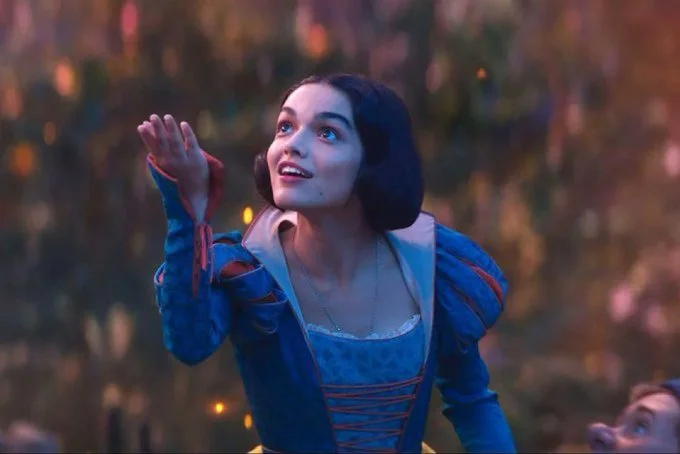
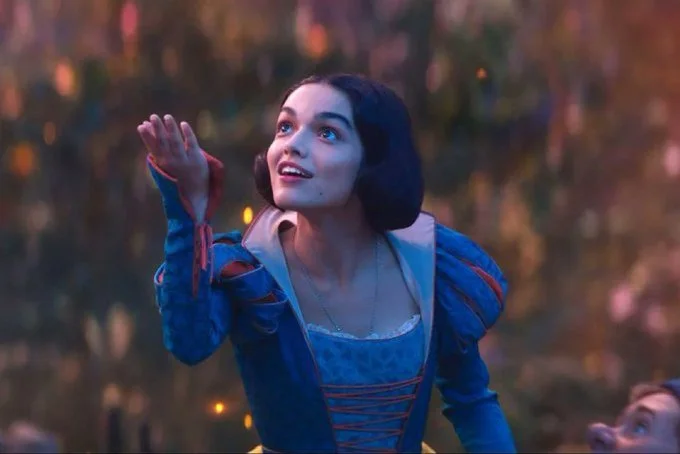
Snow White follows the same skeleton as the 1939 story. The princess (Rachel Zegler) is exiled from her kingdom by her cruel stepmother the Evil Queen (Gal Gadot). Fueled by jealousy and vanity, the Queen recites to her Magic Mirror, “who is the fairest of them all?” As long as the Mirror replies in good standing with the Queen, Snow White is safe from harm, however the truth eventually finds its way to a broken reflection. Snow White is a threat to the throne, so the Queen orders the Huntsman (Ansu Kabia) to take her into the forest and kill her. But Snow White’s capacity for kindness far overpowers the ruling. The Huntsman spares the princess’s life, and she flees into a magical forest, where her kind-hearted soul leads the forest animals to help her find shelter. This brings them to the Seven Dwarfs’ cottage, where Snow White joins forces with the diamond miners to reclaim the kingdom from tyranny.
Snow White also reimagines some tunes from the 1939 film, namely ‘Waiting On a Wish’ (originally ‘I’m Wishing’). The lyrics work to establish new desires and motivations for Snow White. Rather than wishing for love to find her, she wishes to become a leader of change. She wants to live up to the values her father instilled in her, carry on her parents’ legacy, and do right not only by them but the people of this kingdom. Core messages of bravery, leadership, and kindness resonate in Snow White’s journey, especially when she stands up to the Queen and confronts her guards in the film’s final act. By refocusing what Snow White wishes for, the film finds a way to offer something new that can strike a contemporary chord.
Unfortunately, Snow White’s characterization is one of few strengths in Wilson’s screenplay. Among the few, the seven dwarfs are surprisingly spirited, given their awfully distracting CGI appearances. Dopey (Andrew Barth Feldman) in particular, who finds comfort in meeting Snow White as she helps find his voice, becomes the film’s best supporting character. Doc (Jeremy Swift) and Grumpy (Martin Klebba) also get moments to shine. Most impressively, the dwarfs’ ‘Heigh-Ho’ musical number (derived from the original film) pleasantly stands out with the vocals, choreography, and production design (especially for the mines). The dwarfs themselves, however, speak to one of the most misguided decisions in the film. The combination of CGI and motion capture give them a distracting, uninspired appearance. It feels especially odd when these characters are sharing scenes alongside George Appleby, an actor with dwarfism, who plays an on-screen bandit named Quigg. While it’s great that Appleby plays a character not defined by height, the approach to the dwarfs (which featured the voice of one actor with dwarfism, Martin Klebba) leaves behind a conflicting message.
The screenplay overall lacks consistency and clarity, ultimately failing to give the story a sense of urgency. The attempts to create a modern retelling pays off in some ways (Snow White) and falls flat in others (Prince Charming, who is transformed into a town thief named Jonathan). Jonathan (Andrew Burnap) makes it clear that he’s not the romantic knight in shining armor, and the film makes it clear that Snow White doesn’t need a Prince to save her. But the notions still manage to come up, whether in scenes that lead up to a potential romance, or in Jonathan literally saving Snow White’s life. The writing shows an attempt to balance Snow White’s wishes for leadership with her romantic desires, as it’s okay to want both, but it lacks the precision and nuance. There’s also a lot of uncertainty around who Jonathan’s character ought to be, and the script does no favors for Burnap, who tries his best to add some personality but ends up becoming a monotonous presence.
Thankfully, the film has a compelling lead in Rachel Zegler, who portrays her best version of this character. She absolutely carries this film on her shoulders. Whether it’s her magical renditions of old and new songs, or the movie star energy she radiates, Zegler shows a keen understanding of the material she’s working with and commits to rising above it. One of her most impressive moments is featured in the film’s final act, when Snow White finds her leadership and reignites the entire kingdom to fight for fairness and truth. Zegler’s strong sense of conviction lends perfectly to this moment, infusing much-needed emotionality into hollow storytelling and making up for a weak antagonist opposite her.
The poison apple of Snow White is unfortunately Gal Gadot, whose Evil Queen feels woefully out of place in Marc Webb’s adaptation. As the primary source of conflict in this story, Gadot falls short of emoting a threatening presence, causing one to question how any character can take her seriously at all. Gadot makes an attempt to go the campy route, by way of exaggerated mannerisms and line deliveries. You can almost sense that Webb encourages her to keep trying. But she leans too far into one note, and plays that note repeatedly, without really exploring the villainy of her character beyond “looking” evil through icy glares. A good Disney villain, despite their antagonistic qualities, still has charm and a conviction that they are in the right. Gadot lacks the range to pull it off, and her scenes rob the film of its momentum.
Disney’s track record continues to disappoint with Snow White. The studio’s dollar-sign eyes behind flipping animated films into live-action commodities can’t help but make one weary for whenever the next one will arrive. Though, while Snow White may not be the fairest Disney remake of them all, it’s also not the bad apple of the bunch. Rachel Zegler does her best to infuse genuine commitment and life into this adaptation, making it far at least an occasionally enjoyable endeavor. If anything, Snow White further solidifies Zegler as a movie star who continues to show her strengths in carrying a film, and a movie star who deserves better.
Canadian Film Festival (CFF) Capsule Reviews
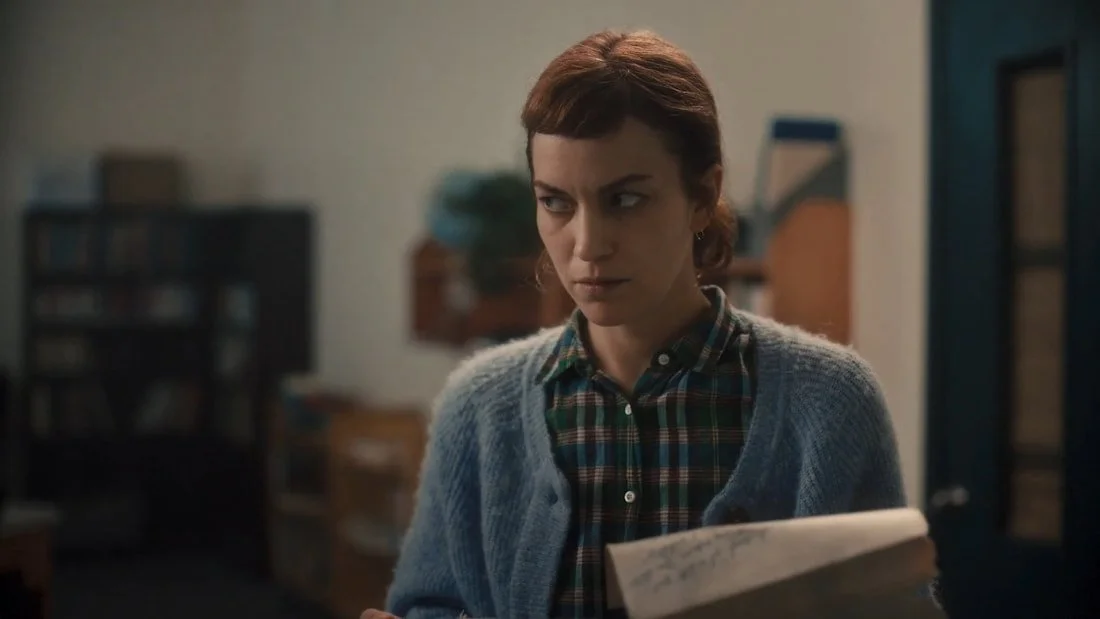
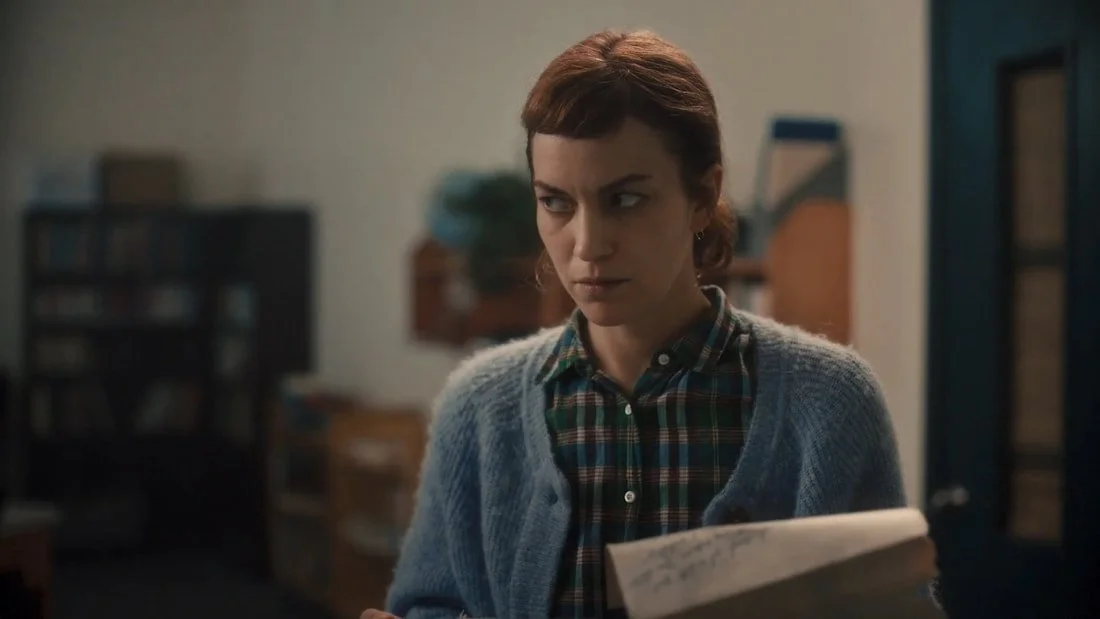
“Executive produced by Charlie Kaufman and based on Martha Baillie’s 2009 novel The Incident Report, Darkest Miriam plays in a darkly humorous and deeply fragmented wheelhouse.”
March 29, 2025
Sarah Galea-Davis’s feature directorial debut The Players tells a universal story of power dynamics and gender roles through an avant-garde lens. Set in Ontario in the summer of 1994, the film follows aspiring young actor Emily (Stefani Kimber), whose dream comes true when she gets cast in a local production of Hamlet. Emily begins to feel seen and heard by the group of actors, as though she’s found her family through experimental expression. But in her naivete, she trusts that her aspirations will be nurtured and not taken advantage of. She trusts that putting herself in pain is “necessary” in the name of art. The company director, Reinhardt (Eric Johnson), operates his theatre like a cult, blurring lines between personal and creative relationships to feed his ego and toxic behavior. Written and directed by Davis, the film resonates as a coming-of-age story and a cautionary tale for young women who wish to get into the industry. Davis deftly captures the 90s mentality around what behaviors were tolerated. Additionally, Davis points out how this pre-#MeToo era made it more difficult for women to speak up about exploitation and abuse, not to mention the lack of safe spaces for women to discuss their experiences with one another. Led by an impressive performance from Stefani Kimber, The Players strikes a reverberating chord.
The Players premieres on Saturday, March 29 at 6:30 pm and will be preceded by Dan Abramovici’s short film Spaceman.
March 28, 2025
Closing out this year’s Canadian Film Fest (CFF), Lunatic: The Luna Vachon Story steps into the ring of pro-wrestler Luna “The Lunatic” as she wrestles between personal and professional demons. The documentary paints a troubling portrait of an intimidating stage persona of the World Wrestling Federation (WWF), particularly when so few women were embraced or taken seriously in the sport. From hyper-sexualization and stereotypical expectations to sexual assault and gender inequity, the documentary explores a challenging landscape through which Luna navigated. Directed, written, and produced by pro-wrestler Kate Kroll, Lunatic delves less into wrestling narratives and more into observations on Luna’s identity and how she was perceived by her surroundings, whether family and friends or former colleagues and fellow female wrestlers. Kroll attempts to infuse in-depth perspective with a mix of archival footage and floating head interviews, however, the material feels redundant and the focus is scattered. Additionally, repetitive storytelling techniques and shaky editing rob the documentary of its potential emotionality and staying power. Despite such shortcomings, Lunatic raises some intrigue about Luna Vachon’s uniquely carved legacy.
Lunatic: The Luna Vachon Story premieres on Saturday, March 29 at 9:00 pm and will be preceded by Michelle D’Alessandro Hatt’s short film Brave Rebel Army.
March 26, 2025
Meelad Moaphi’s feature debut His Father’s Son shines as one of the most intriguing stories in this year’s Canadian Film Fest (CFF) lineup. Written and directed by Moaphi, the film explores an Iranian-Canadian family through lived-in character dynamics and layered performances. Struggling chef Amir (Alireza Shojaei) and his seemingly more successful younger brother Mahyar (Parham Rownaghi) face daily expectations from their parents, Farhad (Gus Tayari) and Arezou (Mitra Lohrasb). When the family receive news that an unexpected inheritance has been left to Mahyar, the gift cracks open revelations that will shape the family’s future. The film balances strong portrayals of each character’s perspective and finds strength in establishing how they relate to one another Amir and his father Farhad in particular share an ambiguously tense dynamic. Amir tries to make a name for himself through cooking, which Farhad does not consider a feasible career path. While the film attempts to earn an emotionally satisfying ending using this narrative father + son conflict, Moaphi’s writing lacks the depth and precision to pull it off. Additionally, the female supporting characters are not given much nuance outside of playing “the girlfriend” role. However, compelling performances elevate the material and help craft a memorable story.
His Father’s Son premieres on Thursday, March 27 at 6:00 pm and will be preceded by Aisha Evelyna and Natalie Novak Remplakowski’s short film, Nola.
March 25, 2025
This year’s Canadian Film Fest (CFF) kicked off with Naomi Jaye’s eccentric sophomore directorial feature, Darkest Miriam. The film stars Britt Lower (known for her role as Helly R. in Severance) as Miriam Gordon, a Toronto librarian who lives a relatively strange and quiet life. Haunted by the death of her father, Miriam navigates enigmatic waves of grief while dealing with the everyday oddities of library patrons. No matter how many incident reports she files away, the patrons (Fainting Man and Unusually Pale Female Patron, to name a few) persist. So too does Miriam’s mysterious interior world, as it flows eloquently into frame, whether through Lower’s majestic performance or Jaye’s poetic use of imagery. Executive produced by Charlie Kaufman and based on Martha Baillie’s 2009 novel The Incident Report, Darkest Miriam plays in a darkly humorous and deeply fragmented wheelhouse. While the film often gets lost in Miriam’s trailing memories, and feels much longer than its runtime, there’s an enticing quality to the puzzling narrative and wry tone. Featuring an incredibly understated performance by Lower, who wisely lets the viewer put pieces of her character together, the film is full of little discoveries that speak volumes.
Darkest Miriam will be available digitally on April 15.
Canadian Film Festival (CFF) runs from March 24-29, 2025 at Cineplex’s Scotiabank Theatre in Toronto.

Celebrate Canadian Voices With CFF 2025

March 23, 2025
Now in its 19th year, Canadian Film Festival (CFF) returns today with another stellar lineup of Canadian stories. CFF celebrates creative voices from across the country, including British Columbia, Quebec, Ontario, Newfoundland, and Nova Scotia. This year, the festival will be showcasing 16 features and 50 shorts at Cineplex’s Scotiabank Theatre in Toronto from March 24-29, 2025. Tickets can be purchased at www.canfilmfest.ca. From the impressive lineup, 53% of films are by female/non-binary filmmakers, and 44% are from BIPOC filmmakers.
The opening night film, Naomi Jaye’s Darkest Miriam, stars Britt Lower (known for her role as Helly R. in Severance) as Miriam Gordon, a sheltered librarian faced with grief as she navigates her job at the Toronto Public Library. Miriam’s existence cracks open when she receives a series of threatening letters addressed to her. The film marks Naomi Jaye’s sophomore directorial feature following 2013’s The Pin, a love story set during WWII. Darkest Miriam (based in Ontario) premieres Monday, March 24 at 7:00 pm, and will be sure to spark buzz amongst Severance fans.
The closing night film, Kate Kroll’s Lunatic: The Luna Vachon Story, shines a light on WWF villain Luna Vachon. The documentary follows Vachon through the peak of her 90’s fame, her hidden battle with mental health, and how she challenged mainstream expectations of women in the wrestling industry. The film marks Kroll’s third directorial feature following 2010’s No Fun City and 2014’s Path of Pilgrims. Lunatic: The Luna Vachon Story (based in British Columbia) premieres March 29 at 9:00 pm.
Among the festival highlights, Catherine Legault’s LARRY (they/them) spotlights Laurence Philomène, a non-binary trans photographer based in Montreal. This intimate documentary explores Laurence’s inspired work through their empowering Non-Binary Portrait Series and ongoing autobiographical book called Puberty. The book features colorful, detailed self-portraits of Laurence in domestic spaces, as they undergo testosterone shots during their transition. LARRY (they/them) excels at amplifying the autonomy of non-binary storytelling and the power of unlearning what society has taught about gender and bodies. Legault infuses her second feature with a candid approach and crafts a tender experience. Her direction and writing create a safe space for honest expression, turning the lens inward to reflect Laurence’s self-care. LARRY (they/them) radiates a powerful sense of community. Given the intimacy of Legault’s filmmaking and Laurence’s candor, you feel completely present, as though you’re in the room with them. LARRY (they/them) uplifts one of the most inspiring voices of their generation as they find personal joy amidst hardships. The documentary premieres Tuesday, March 25 at 1:00 pm and will be preceded by Laura King's short film, Paper Lanterns.
Continuing Canadian Film Fest’s showcase of diverse perspectives, Tarique Qayumi’s Conceiving Clara explores the resonant subjects of midwifery and IVF treatment. The film follows Clara (Tajana Susanna Prka), a midwife who helps women give birth but cannot bear a child. Facing constant pressure from her mother-in-law, Clara decides to undergo IVF treatment and experiences complications that lead to desperate measures. Directed by Qayumi, and co-written by Qayumi and Prka, the story puts you under a spell of frustration and uncertainty as Clara searches for answers. The film leans heavily into ambiguous storytelling and features some disjointed editing. As a result, the story loses momentum and focus in its overall message. However, the thematic urgency around this narrative stands out, from protecting midwifery practices to increasing awareness and support for the commonality of infertility. In addition, Tajana Susanna Prka’s performance holds the film together with strong emotionality. Conceiving Clara premieres Wednesday, March 26 at 6:30 pm and will be preceded by Luvleen Hunjan’s short film, Whispering in the Leaves.
Also featured at CFF this year, Meelad Moaphi’s brilliant family drama His Father’s Son and Sarah Galea-Davis’s avant-garde The Players each represent Ontario-based productions that explore complex character dynamics, whether between fellow relatives or fellow actors. His Father’s Son, premiering Thursday, March 27 at 6:00 pm, centers on an Iranian-Canadian family whose collective history unravels unexpected truths. The Players, premiering Saturday, March 29 at 6:30 pm, follows a young actor who finds a surrogate family when she joins an exciting theatre production.
Spanning a variety of genres, themes, and cultures, CFF continues to bring original and inspiring Canadian stories to Canadian audiences. Celebrate the art of cinema with CFF from March 24-29 at Cineplex’s Scotiabank Theatre in Toronto. To purchase tickets and view the complete festival schedule, visit www.canfilmfest.ca/films-2025. For more information on CFF, stay updated through the channels below:
#CanFilmFest
Twitter / X: @CanFilmFest
Instagram: @CanFilmFest
Facebook: facebook.com/CanFilmFest
Youtube: Canadian Film Fest
‘Thunderbolts*’ Review
April 30, 2025
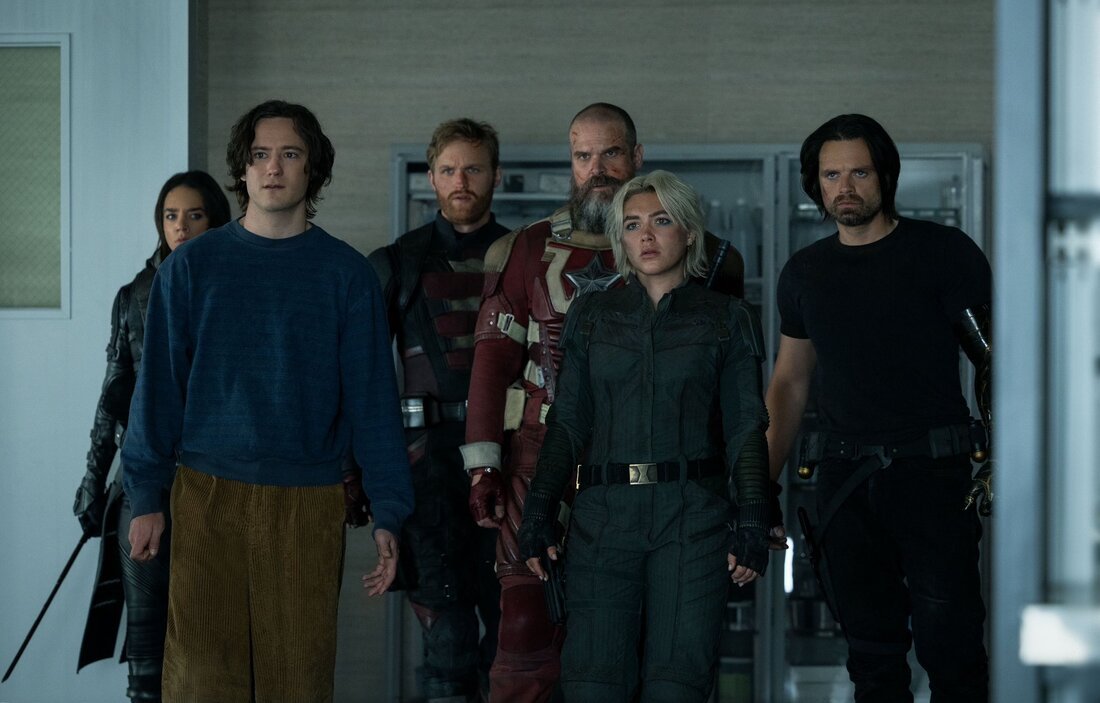
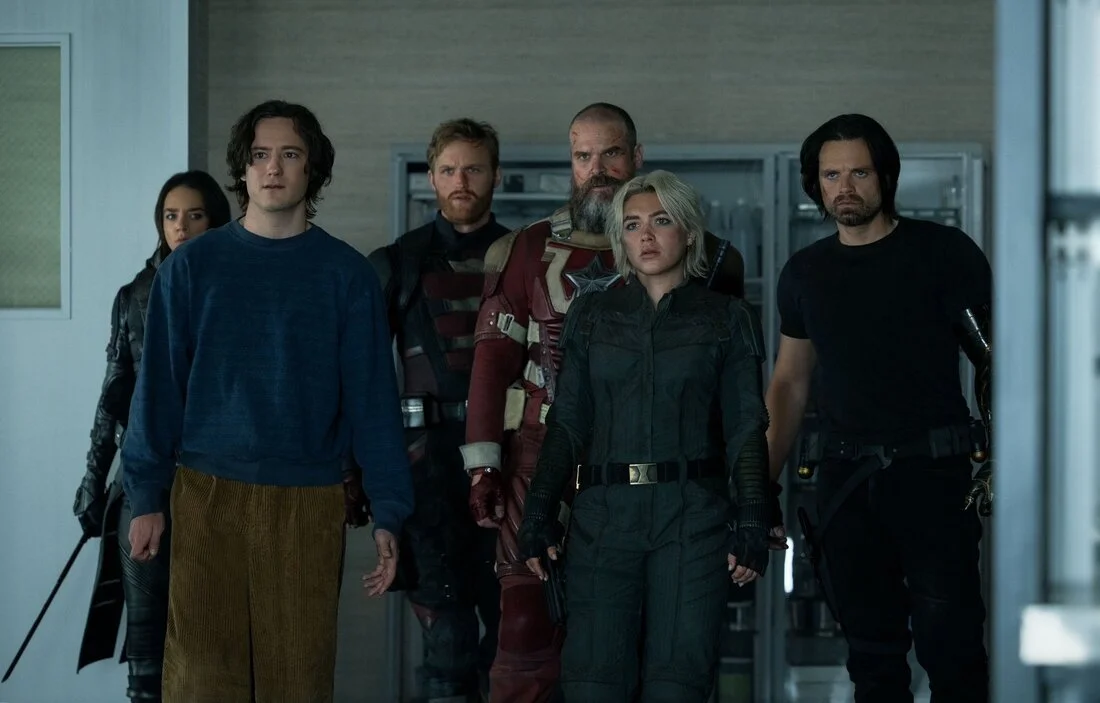
What better way to awaken the Marvel Cinematic Universe fatigue than getting a group of anti-heroes together? After years of formulaic action, underwhelming character introductions, and redundant revivals across the past few phases, Thunderbolts* has closed out Phase 5 with a level of optimism that reminds audiences how much dramatic strength these ensembles can hold. Much like The Avengers, which closed out Phase One, Thunderbolts* excels through character dynamics that let personalities shine, and action sequences that actually have real stakes. Each and every misfit, normally cast aside and left to their own devices, becomes part of a fluid collective. They get to know one another as a means of survival, and learn the power they have within themselves to push through the irredeemable bits of their past that have held them to solitude. Thunderbolts* turns the idea of an emulative superhero on its head. The film resonates by looking inward to figure out who these characters are, beyond playing connect-the-dots in the Marvel universe, and impressively navigates mental health without compromising the seriousness of the subject. Led by the magnificent Florence Pugh, and featuring a charismatic Lewis Pullman as a fresh-faced addition to the MCU, Thunderbolts* steers the future of Marvel Studios onto an excitedly different path.
Finding strength and heroism in antagonistic Marvel characters, Thunderbolts* has assembled a fitting creative team to balance heightened stakes with entertaining personalities. Director Jake Schreier (co-director of the Emmy-winning Netflix series Beef) reimagines what makes a superhero and leans into moral ambiguity to create a grounded environment where he can explore darker subjects like mental health, and emphasize those narrative elements visually. His ability to also incorporate comedy into poignancy, as exemplified throughout Beef, helps the oddball team of MCU loners in Thunderbolts* stand out in their respective internal battles, while also being universal and fun to watch. Schreier’s tonal balance complements the work of co-writers Eric Pearson (who previously wrote Black Widow) and Joanna Calo (the Emmy-winning writer behind hit shows The Bear, Hacks, and BoJack Horseman), both of whom can easily spot the grey areas of a character and find intrigue in the shadows. Their screenplay grounds the story with a humanistic focus, startling with our dynamic central character.
Picking up from Cate Shortland’s Black Widow, Russian Red Room-trained assassin Yelena Belova (Florence Pugh) now freelances for OXE Group chairman Valentina Allegra de Fontaine (Julia Louis-Dreyfus). While Valentina has Yelena’s next rogue move lined up, Yelena feels empty and directionless. Deeply impacted by the loss of her sister, Natasha Romanoff (Scarlett Johansson), and vulnerable to emotional manipulation, Yelena’s motivation to go through countless missions comes from a heavy void. The film opens with a face of loneliness and isolation, a close-up of Yelena’s vulnerability (and Pugh’s fearlessness), as she leaps off one of the tallest skyscrapers in the world. When she lands, she breaks new ground within herself and reluctantly agrees to do one last mission before calling it quits on assassin work. But that mountainous trap of a mission has a lot more in store for Yelena’s fate.
Valentina, under impeachment from the U.S. government, orders her assistant Mel (Geraldine Viswanathan) to scrub all OXE Group assets from history, including mercenaries — Yelena, John Walker (Wyatt Russell), Ghost (Hannah John-Kamen), and Taskmaster (Olga Kurylenko). The disillusioned misfits are lured into a fortress to kill each other, and in eventually seeing through the faux mission, they realize they must work together to survive an explosion of betrayal. Making matters more complicated, the mercenaries are joined by a civilian named Bob (Lewis Pullman), who cannot remember why or how he’s in the room with them.
The emotional anchors of Thunderbolts* ride on character arcs, especially for Yelena and Bob. She feels a strong connection to his energy, and the two share an intriguing conversation in the mountainous fortress that foreshadows the narrative directions to come. There’s a reason why Yelena is drawn to Bob, a mentally troubled young man whose dark side is being exploited. Through their interconnectedness, the film explores resonant themes of mental health, depression, and fighting inner demons. The characters’ internal conflicts carry the story forward, letting Thunderbolts* work its magic as a relationship-building film. It’s not about connecting dots within the Marvel universe, nor discerning Easter eggs from interactions, nor fighting for the greater good of mankind. It’s very much about the individual growing pains of misfits who are figuring out their humanistic superpowers and, for the most part, get moments to shine.
Since her standout performance in Black Widow, Florence Pugh’s Yelena has become a fan favourite. Pugh brought incredible depth, charm, and humour to her character. Her talent elevated the film and ultimately inspired an exciting new direction for the MCU to go in; it felt a no-brainer that she would go on to lead a franchise project. Thunderbolts* meets Yelena at a vulnerable point where she has sharpened her skills and learnt so much from her sister, but lost a sense of purpose. Haunted by the deepest, darkest rooms of her past, Yelena’s inner struggle is compelling material for Pugh to sink into, and she does so beautifully. One can immediately identify with her isolation, recognize the qualities that make Yelena who she is, and discover the character’s growth. Yelena’s attentiveness towards Bob’s vulnerability, and her willingness to take him under her wing, emphasize an exploration of mental health through the superhero genre.
The film is not immune to some of the MCU’s repeat storytelling offences such as clunky pacing and, in more recent years, unfunny marketing-driven banter. The actors’ sensibilities and wit are more than enough to interject levity without forced, cheesy comedic timing. Additionally, the writing structure can be redundant and surface-level in how messages around mental health are presented. However, this does not diminish the sincerity of wanting to include such messages and tell a more human story than what audiences expect from a Marvel blockbuster. Thunderbolts* has the endearing ensemble and thoughtful writing to pull off character and story developments that genuinely do stir emotion. That a major MCU franchise film pushes for more mature subject matter feels incredibly refreshing, and does not underestimate the universality of a topic like depression, nor does it undermine the seriousness of it.
Of the ensemble, Lewis Pullman has the most delicate role to play, calling on him to be vulnerable and intimidating at the switch of a hat. As a new addition to the MCU, he makes an engaging first impression and creates someone you immediately feel drawn to, as there is more to Bob than meets the eye. Pullman brings an endearing charisma to this seemingly innocent civilian, and the film’s first act smartly keeps his full abilities shrouded. Each layer of the character builds onto a compelling backstory and gives him a motivating factor, while also shedding light on Val’s shady intentions.
When Bob volunteers to participate in a lab test, under the guise that it will take his pain away, Val has him injected with a DNA-altering serum to create Sentry, “Earth’s Mightiest Hero.” The superhuman’s powers are designed to rival all of the Avengers rolled into one. In exploiting Bob’s trauma, she unwittingly creates The Void, an entity that heightens his dark side to an all-consuming level. The Void keeps Bob stuck in a shadowy maze of his traumatic past, unable to fight against the emptiness and loneliness. Pullman, no pun intended, pulls off an incredibly multi-faceted role, from Void’s darkness and Sentry’s intimidation to Bob’s vulnerability. He navigates disorientating compartments of the character’s mind and, in a particularly moving sequence, shows Bob’s inner strength of realizing he’s not alone in the world.
Sentry’s arc speaks to how depression doesn’t simply go away with a masked front, and how even the people one may perceive as superheroes can also struggle on the inside. Sentry also proves to be a far more intriguing character than expected; beyond a superhuman silhouette who can fight off any misfit without so much as flinching, he has enough self-awareness to question why he needs to follow Val’s orders. If he is so almighty, why would he answer to anyone? Through this character, the film finds emotionally resonating ways of communicating something that so many of us need to hear: you are not alone.
The Void’s visualization also makes for some of the most engaging action sequences the MCU has ever produced. From turning civilians into shadows, to the misfits fighting their way through Bob’s psychological maze of dark rooms, to Bob fighting his inner self, the action derives from character development. It helps that much of the choreography we see is also from a ground-level perspective, which feels more tangible and creates a realistic set of stakes. Additionally, the brilliant score by Son Lux highlights the oddities of these characters and the tension of their heightened circumstances, while keeping humanity at the core.
The level of tact involved in Yelena and Bob’s character arcs extends, for the most part, to all the misfits in this ensemble. The film gives familiar faces such as Walker (Russell) and Ghost (John-Kamen) more material than they’ve had across the entirety of the MCU. While this still leaves more to be desired, particularly from Ghost who disappears from the frame far too often, the time spent on their characters reveals a unique edge. Thunderbolts* excels at focusing on how to approach the misfits as an ensemble. It’s not so much about the group seeking revenge, but rather learning how to work together, and how to address their own pasts out of a need to keep surviving. The film’s second half also smartly gives each character a moment of saving bystanders not for the greater good, nor for any reason other than lending a helping hand, just as Yelena extends to Bob.
This sentiment of helping hands also extends to characters such as Yelena’s father, Alexei (David Harbour), who not only provides comic relief but a voice of poignancy. During the film’s second half, Harbour and Pugh share an incredibly moving moment in a conversation of purpose and healing. With both actors so present in this moment, their conversation truly echoes and gives weight to Yelena’s character development. The presence of another familiar face, Bucky Barnes (Sebastian Stan), also emphasizes the film’s recurring theme of finding your community. While the character doesn’t get much to do, he still manages to resonate in identifying with the misfits, and at least makes an appearance as the Winter Soldier. As a former assassin, he has been in their position, and has the foresight to guide them towards pushing through complicated pasts.
The battle between good and evil has long been the structure of superhero films. Thunderbolts* stands out by taking this approach to explore the interior conflicts within characters. The wrestling of good and bad elements exists within them, and watching those psychological battles play out is far more emotionally involving than much of what the MCU franchise has offered in recent years. With resonating subjects, a tremendous cast, and enough heart to feel purposeful, Thunderbolts* signifies that Marvel creatives still have the capacity to tell interesting stories within the superhero genre.

‘Mission: Impossible - The Final Reckoning’ Review

May 23, 2025
*This review contains spoilers for Mission: Impossible - The Final Reckoning.
“We live and die in the shadows, for those we hold close, and for those we never meet.”
Ethan Hunt (Tom Cruise) refuses to sacrifice the people he holds close. No matter how complex his missions, he goes above and beyond to take care of his team. It is precisely this level of dedication, along with the team’s camaraderie, that makes each globe-trotting Mission: Impossible so uniquely thrilling and enduring. The franchise earned its thirty-year legacy with stunt-forward action sequences, heightened emotional stakes, and intricate plots that captured the urgency of topical subjects. Recurring themes of loyalty, betrayal, and government accountability added layers to Ethan Hunt’s journey as a disillusioned solo act turned team leader. The subject matter also evolved over time, with a rogue AI program in particular driving the plot of the final two instalments — Dead Reckoning and The Final Reckoning.
In the opening heist sequence alone, Dead Reckoning established the threat of the Entity so well that The Final Reckoning feels less urgent in comparison, even with a literal nuclear war imminent. Technically, the stakes of The Final Reckoning are astronomically higher than previous instalments. Ethan and the IMF gang must work against the clock to save humanity from an apocalypse. The key they obtained from Gabriel (Esai Morales) in “Dead Reckoning” unlocks a chamber inside the sunken Russian submarine, The Sevastopol, which holds the Entity’s source code. The team accept their mission to determine the coordinates of The Sevastopol, and retrieve the source code to inject it with a poison pill that would shut down the Entity for good. The scope of this mission requires Ethan to ask President Erika Sloane (Angela Bassett) for resources, and time. Meanwhile, an outcasted Gabriel seeks to thwart Ethan’s plan and gain control of the Entity.
Splitting the Entity across two instalments ultimately robs The Final Reckoning of an emotionally satisfying narrative. The story begins two months after the events of Dead Reckoning, and the AI threat has escalated into Armageddon territory without a proper buildup. Before setting the flimsy objective in motion, The Final Reckoning indulges in a series of montages and narrative callbacks mainly from the one that started it all: Brian De Palma’s 1996 original. The stunt-driven montages are easier to get behind; it’s understandable to jump into a final film off the energy of Cruise’s remarkable showmanship and everything he has accomplished for audiences to enjoy at the movies. It’s a giant thank you to Tom the movie star, whose current reputation as “movie saviour” is on full display here.
Director and co-writer Christopher McQuarrie adheres to the unspoken rules of a final franchise film: callbacks and casualties. The callbacks to previous characters and plot points feel unnecessary here, and creates a disjointed experience in attempting to engage with multiple threads at once. It’s a surprising, disappointing route to watch McQuarrie go in, considering the superb structures of Fallout, Rogue Nation, and Dead Reckoning. Perhaps the weight of having one last chance to explore Ethan’s world brought upon the pressure to include more references. Or, the inclusion of excessive callbacks were a way to emphasize that this franchise is indeed over. Whatever the intention, the first half of The Final Reckoning stumbles over a whole lot of flashbacks, and one particular narrative tie-in to Mission: Impossible III that carries no weight whatsoever.
McQuarrie keeps the casualties to a minimum, assuming the death of one legacy character in the first half will raise enough stakes to expect more loss. However, the lack of emotionality leads to one of the most disappointing, weightless sequences of the franchise. From this point on, the film wrestles between moments of finality where you are led to believe Ethan might genuinely be in trouble, and moments of perseverance where you know he’ll save the day. The previous films found a neat balance of danger v. endurance, but because the stakes in “The Final Reckoning” feel unearned, the film struggles to find that equilibrium.
It’s in true Mission: Impossible fashion for characters to talk through their plans amongst themselves, and for the films to provide visuals on how the plans ought to unfold. This franchise has taken liberties to over-explain intricate details of plots, but the explanations in The Final Reckoning do reach a point of exhaustion. The film buries a great premise under exposition, missing the opportunity to show instead of tell, as Dead Reckoning did with its elaborate airport heist to introduce key players, threats, and objectives. Ethan spends a lot of time asking for permission to use resources for his mission, highlighting the impossibility and seriousness of it all. While the franchise generally has doses of self-awareness, and characters often know what they’re doing is absolutely insane, The Final Reckoning does take its mission very seriously, and that makes for some very contrived dialogue where Ethan needs to convince everyone to trust him one last time.
Buried underneath the exposition, McQuarrie and Cruise engage with intriguing text about the ways in which AI can mirror human behaviours and thought patterns, but cannot fully anticipate the choices humans make. As Luther (Ving Rhames) states in his moving speech during the film’s second half, nothing is written. We are masters of our own fate, and our fate is the sum of our infinite choices. Luther never had any doubt that Ethan would find a way to save the world. We know going into these films, even the final one, that no matter how seemingly impossible the mission, Ethan will prevail. And he will perform the most exhilarating stunts along the way.
From scaling a skyscraper in Ghost Protocol and jumping between high-rises in Fallout to motor biking off a cliff in Dead Reckoning, Tom Cruise has given us some of the most spectacular, death-defying action sequences in film history. The Final Reckoning builds onto Cruise’s repertoire with two stunt-forward set pieces that utilize the elements in vastly different ways. Ethan’s awe-inspiring descent into the ocean to enter the submerged Sevastopol excels in restraint and a slow-build of suspense. From the initial dive, the sequence intensifies as Ethan navigates floating missiles, torpedo chambers, and the nightmare fuel of deceased crew members, not to mention a surprise turn of events that leads him to abandon his suit.
The submarine sequence also gets a boost of anticipation from compelling storytelling beforehand, when Ethan boards the USS Ohio and meets captain Jack Bledsoe (an outstanding Tramell Tillman). It’s the most spellbinding element of the entire film, thanks to the absolutely magnetic charm and nuance Tillman brings to his role. Every instance that Bledsoe calls Ethan “Mister” evokes a deep curiosity and pushes you to lean in, eager for what the character will do next. Plus, the USS Ohio team includes a totally magnetic Katy O’Brian who, dare I say, has more chemistry with Tom Cruise than Hayley Atwell does.
While the submarine elements unfold, the film cuts to Ethan’s team huddled inside a log cabin in the Arctic where they must work with William Donloe (Rolf Saxon), a character from the first Mission: Impossible to find the Sevastopol coordinates. The spirited dynamic between Benji (Simon Pegg), Grace (Hayley Atwell), Paris (Pom Klementieff), and Degas (Greg Tarzan Davis) emphasizes how much the film overall misses that team camaraderie. While perfectly understandable that the team needs to split up for the intricate plan to work, their separation comes at a cost. The film loses out on some of its emotional resonance, narrative tension, and playful banter. That lack of team connection adds salt to the wound of Ilsa Faust (Rebecca Ferguson), by far one of the greatest characters to ever appear in the franchise, getting killed off in Dead Reckoning.
When Ethan and the gang do eventually find their way back to one another, at a bunker in South Africa that contains the archive of human knowledge, the team faces another split, but this time around, it works to craft tension. Ethan chases Gabriel (who has the poison pill) by plane, while an injured Benji guides Grace and Paris on next steps to execute the plan’s final piece, while Donloe works to diffuse a bomb. The quick cuts between these events, and the remarkable plane sequence that holds the final act together, give the Entity storyline a satisfying finality. But as far as Ethan’s future goes, the door is still open for potentially more missions.
Cruise and McQuarrie may have accepted The Final Reckoning as their last instalment together in the Mission: Impossible franchise, but the film doesn’t fully reckon with the finality. McQuarrie holds onto the legacy for dear life, from incorporating montages and flashbacks, to developing shared histories between characters that offer nothing particularly noteworthy. Even the final scene, faintly reminiscent of Christopher Nolan’s “Inception,” feels more like a ‘see you around.’ But perhaps that’s as close as one can get to wrapping up the cinematic lifespans of these characters. As Luther’s self-destructing message echoes, the world still needs Ethan Hunt, should he choose to accept it.
Mission: Impossible - The Final Reckoning is now playing across Canada.
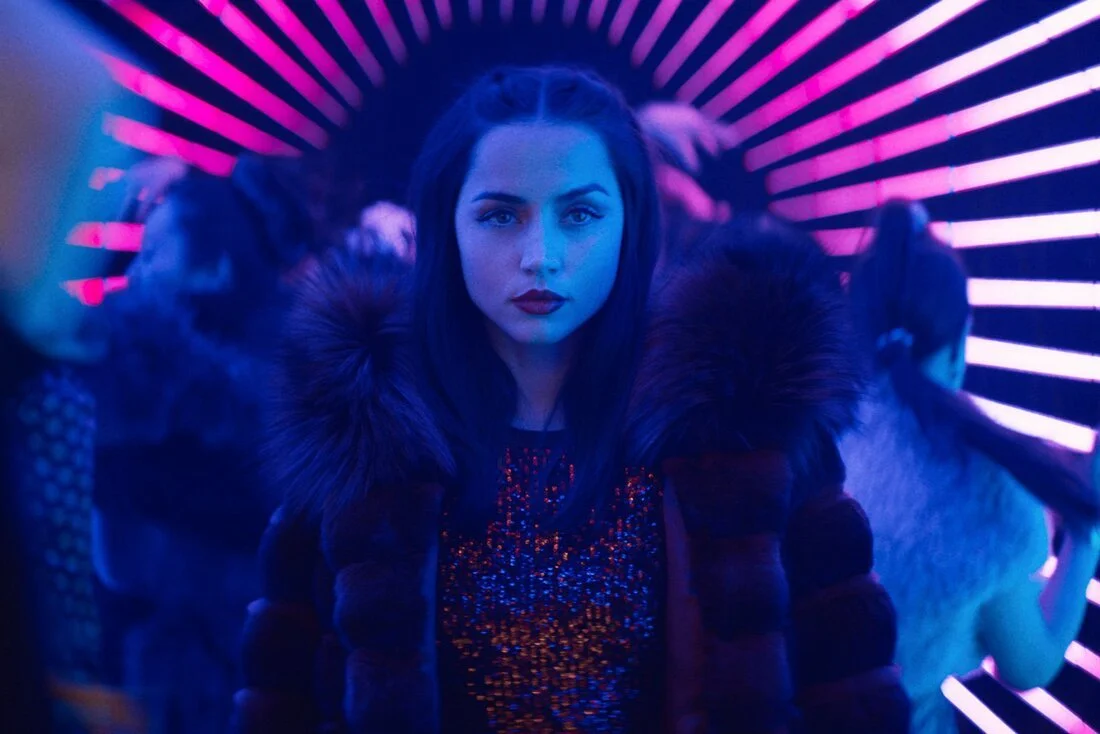
‘Ballerina’ Review
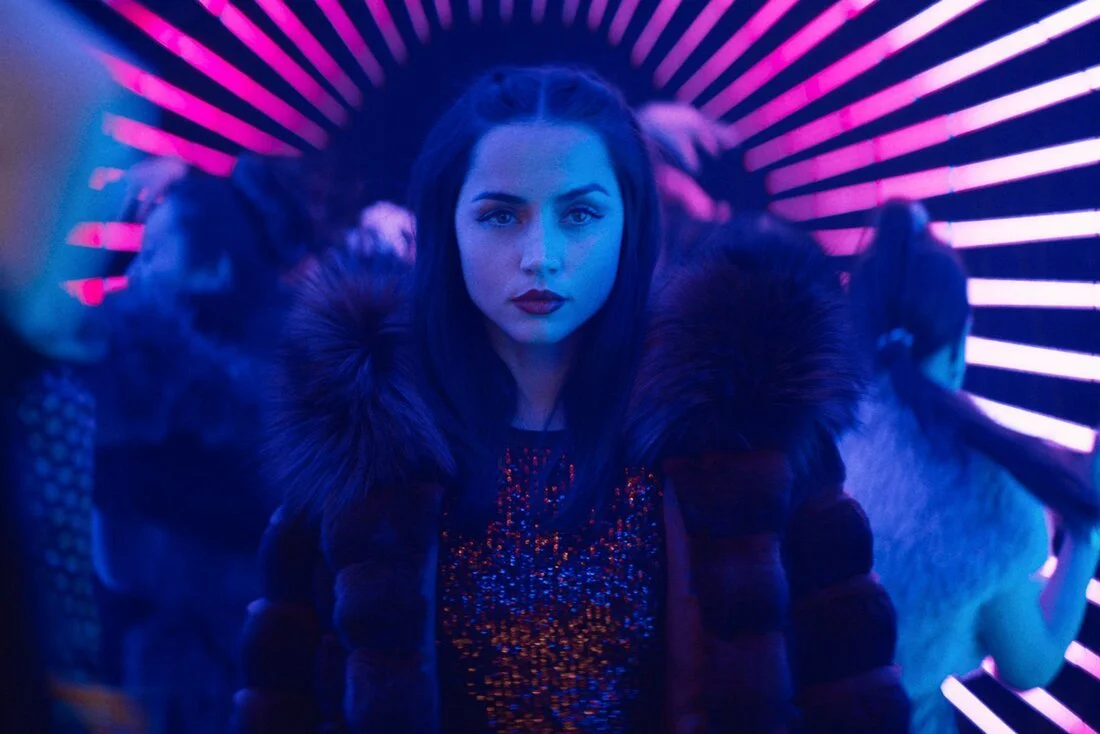
June 4, 2025
What does it mean to “fight like a girl?” For generations, this phrase always carried negative connotations. Fighting like a girl implied weakness, inadequacy, and humiliation. From the world of John Wick, Ballerina stands out by challenging this stereotype and reframing the phrase with an empowering embrace. Led by a compelling new character named Eve (played by a badass Ana de Armas), the film echoes a resonating lesson about leaning into your own strength, rather than letting your opponent dictate the fight. This film puts up a fight to prove worthy as a successful addition to Wick’s world, and hits almost every mark. While the story follows a bare bones structure, and some of the key characters feel wasted, the visual world-building and Eve’s origin story shine. In a bloody fun battle of fire and ice, Ballerina maintains core themes of the franchise and expands on action-packed lore with plenty of creative kills.
Taking place during the events of John Wick: Chapter 3 - Parabellum, Ballerina introduces us to Eve Macarro (de Armas) and establishes a fresh perspective at a time when John Wick has nearly reached the end of his road. When Eve was a child, she witnessed the murder of her father, and has been training in the assassin traditions of the Ruska Roma ever since. Under strict guidance from the Director (Anjelica Huston) and with insightful training from Nogi (Sharon Duncan-Brewster), Eve learns to become a more motivated fighter. Most importantly, she figures out how to “fight like a girl,” which simply means how to discover her personal strengths. Knowing she is at a disadvantage given her size, she realizes she can focus not only on what makes her strong, but what she can use around her. In the John Wick world, everything can become a weapon, whether a TV remote or pair of ice skates.
Ballerina takes a refreshing approach by subverting action tropes and keeping Eve’s journey as realistic as possible. She’s not a superhuman who can suddenly take on the strength of several men. She makes mistakes and still has much to learn about how to weaponize her rage and determination for vengeance. As demonstrated in her first scene with the Director, Eve takes several falls as a ballerina on stage before standing her ground in reality. The character’s inner journey gives Ballerina a distinctive story. Eve’s growing motivation continues to propel the action forward, which gives weight and emotionality to every piece of choreography.
From an icy, neon-soaked nightclub to a snowy village labyrinth, Ballerina makes tremendous use of settings. Production designer Philip Ivey and cinematographer Romain Lacourbas, both newbies to the John Wick world of creatives, maintain the franchise aesthetic with a sleek and vibrant visual language. Part of the fun is also in watching how environments inspire choreography, and Ballerina has several standout moments in which creative kills are drawn from location features. The film’s second act in particular turns the action up several notches, where Eve brings grenades and flame throwers out to play. The choreography team deliver thrilling sequences, very much on par with the action we have seen throughout the John Wick films. These moments will remind you of why this franchise works so well.
Outside of Eve’s rocky road to revenge, Ballerina falls short of balancing new and returning characters. Familiar faces Winston (Ian McShane), Charon (the late Lance Reddick), and of course John Wick (Keanu Reeves) himself don’t need further exploration. They also earn applause on sight alone here. Reeves also has a fight sequence with de Armas that is entertaining enough to justify his appearance in her story. The Ruska Roma Director (Huston) gets more screen time compared to Parabellum and becomes entangled in Eve’s vengeful path. The majority of her scenes demonstrate some neatly crafted continuity that ties the Ballerina timeline to the third chapter of John Wick. Huston continues to nail her character’s blend of intimidation and dry humor.
The new characters, however, pop in and out of the story like cardboard silhouettes. Their underdeveloped motivations and personalities leave a lot to be desired, especially when played by talent such as Norman Reedus, Catalina Sandino Moreno, and Gabriel Byrne. Byrne’s character in particular has the most disappointing arc as the film’s villain. This comes as a surprise for an origin story, where one would expect fresh faces to make a memorable mark and create intrigue for future films. Thankfully, Ballerina has a bonafide action star in the wonderful Ana de Armas. She high kicks into this world in a magnificent dance of charisma and discipline. From physicality to emotionality, de Armas brings Eve’s character to life, and establishes a strong connection to the pure revenge that drives her.
Len Wiseman is no Chad Stahelski, but Ballerina retains enough storytelling influence from the latter to work wonders as an entertaining extension of the John Wick franchise. Energetic choreography, stylish world-building, and a dynamic lead character have defined these films with Keanu Reeves at the core. Ana de Armas brilliantly follows in his footsteps while bringing a unique energy of her own into this world. Ballerina earns a place at the High Table, and indeed warrants a sequel.
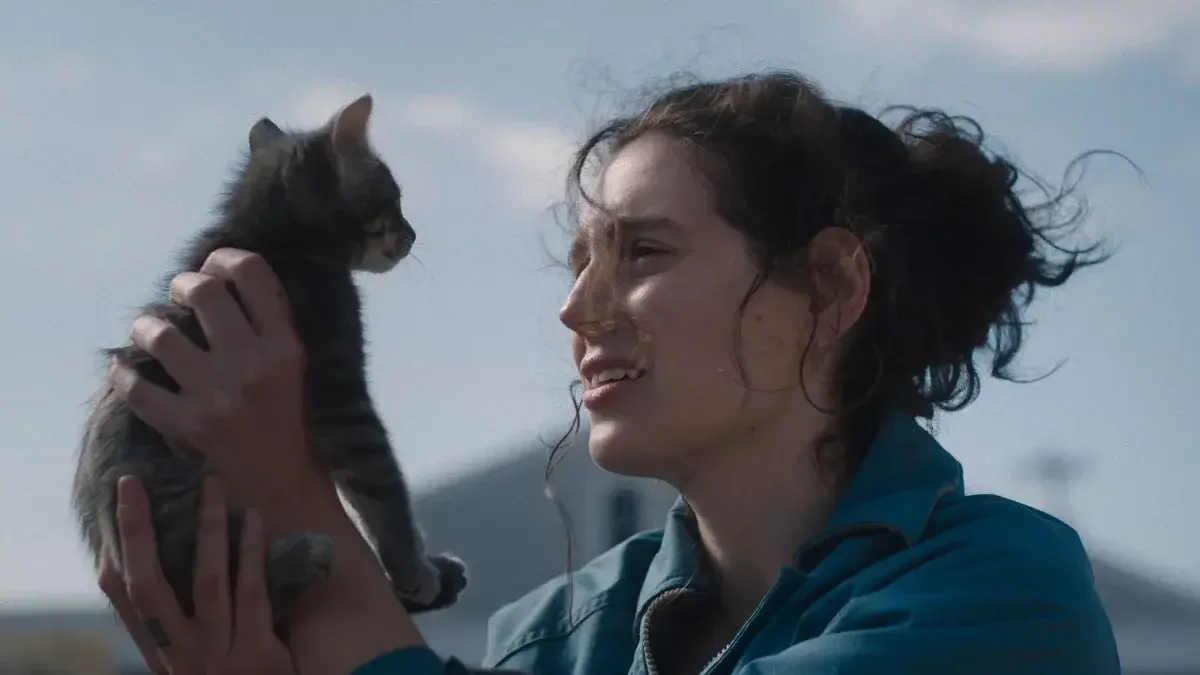
‘Sorry, Baby’ Review
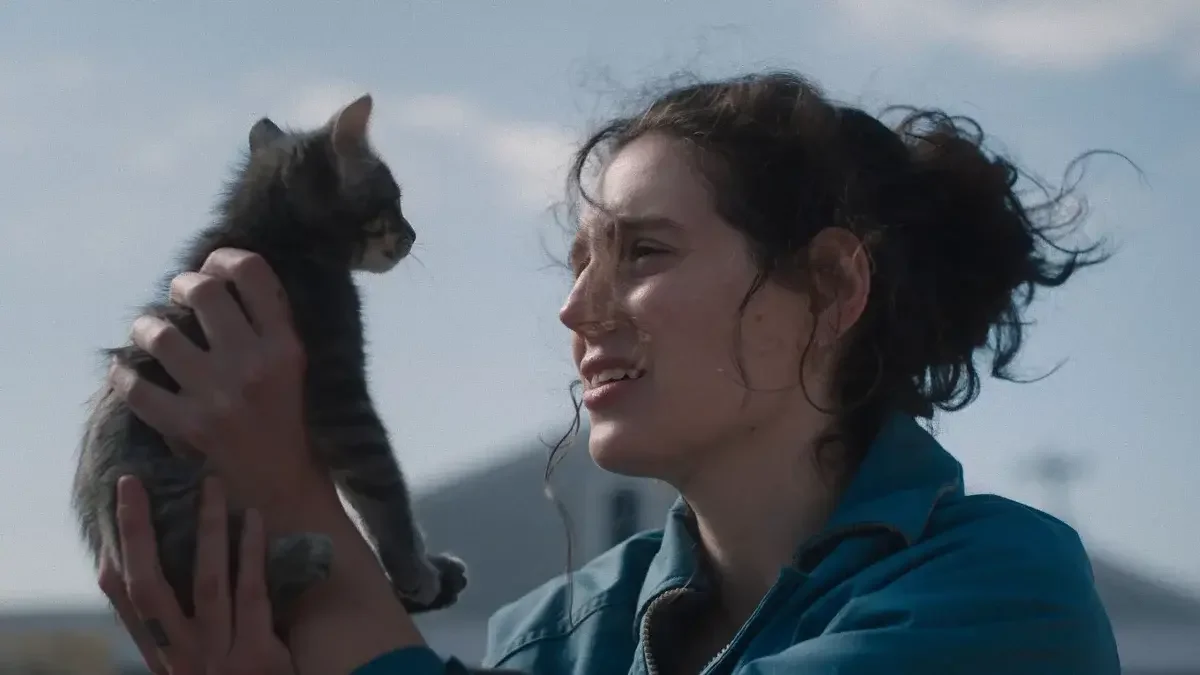
July 14, 2025
The hardest and most tragic experiences in life are marked by small moments of spontaneous joy. Tiny interactions, whether befriending a cat, eating a good sandwich, or sharing a laugh with your best friend, can carry a lost soul towards a safer path. In Sorry, Baby, these vignettes define years of surviving and healing from sexual assault. Cinematic representations of this subject tend to centre the assault itself, whether explicitly showing how the violence happened or exploiting immediate reactions. Sorry, Baby resonates in the long-term aftermath, when time slows and the outside world melts away. Writer and director Eva Victor brings their singular vision to confront non-linear trauma with humanity and wit. One would be hard pressed to find a more compelling and confident feature debut this year.
Something bad happened to Agnes (Eva Victor). The “bad thing” unfolds through chapters of her life, told out of chronological order, starting with a glowing friendship in “The Year With The Baby.” Agnes, now an English literature professor, lives in a New England cottage full of unspoken memories and lifelong bonds. She and her close friend Lydie (Naomi Ackie) used to live here together when they were grad students. Lydie, now living in New York and expecting a baby, reunites with Agnes back in New England after years apart. Lydie’s presence instantly transforms the cottage from a place of isolation to one of comfort and familiarity.
It’s implied that Agnes teaching at the same school she once attended might be uncomfortable. It’s implied why Agnes and Lydie’s joyous connection carries undertones of emotional heaviness, as though Agnes is frozen in time, and Lydie is moving forward. Victor sits in this fogginess with astounding clarity and a deep understanding of how to balance various tones, from series and somber to humorous and intimate. Victor takes a viscerally bittersweet approach to painful subject matter without ever trivializing the weight of Agnes’s trauma. The film emphasizes a journey of healing marked by the sort of comedy that happens effortlessly and derives from Agnes’s personality.
The film delicately protects Agnes’s comedic bedrock, using humour not only as a coping mechanism but a prism through which she connects with the world. Whether it’s making a fool out of her inconsiderate doctor who questions why she didn’t go directly to the hospital after the assault, or questioning a pair of school administrators who claim to know what she’s going through simply because they’re women, Victor’s witty sense of humour shines bright. Additionally, Victor delivers one of the most exquisite and exceptionally human performances (and screenplays) of the year. Each and every nuance speaks to a fully realized character and story that quietly confronts the hypocrisy of systems that are heralded as supportive, but are in reality just diligently self-serving.
Victor’s writing works to dismantle rules and regulations that don’t make sense; rules such as “your body is your body,” which calls into question, what happens when your body no longer feels like your body? The film’s academic setting also brilliantly juxtaposes how archaic educational institutions can be romanticized with the idea of being surrounded by inspiring literature, but are actually designed to systematically shut Agnes down at every plea for action. Darkly humorous as the scene between Agnes and the two school administrators is, the uneasiness and hopelessness in that room reverberate.
Each and every frame of Sorry, Baby demonstrates Victor’s thoughtful directorial sensibility. They bring a deep understanding of how a single image — notably the exterior shot of a house as time passes from day to night —can vividly communicate how Agnes feels. Four years prior to “The Year With The Baby,” “The Year With The Bad Thing” chronicles Agnes’s grad-school chapter, when she is sexually assaulted by her student advisor Preston Decker (Louis Cancelmi). In choosing not to show the assault itself, instead placing the camera outside of Preston’s house through a passage of time, Victor maintains Agnes’s emotionality.
It is crucial to believe Agnes without seeing what happens. Her words are enough, and she shares on her own terms - in the safety of her friend Lydie’s presence in one heartbreaking scene. This is the only time the viewer hears about what happened, and it is directly from Agnes. Reminiscent of a similar approach by Sarah Polley in 2022’s “Women Talking,” sexual assault does not need to be explicitly shown on screen to understand how the violence was committed, or that it happened in the first place. In “Sorry, Baby,” the viewer is frozen in time alongside Agnes as she leaves the house and drives home, illustrated in one of the year’s most powerful sequences.
As much as Sorry, Baby explores the devastation of trauma, Victor also takes gentle care of the friendship between Agnes and Lydie. The film excels at depicting how an intimately powerful connection can bring so much safety to someone recovering from trauma in body and spirit. Sharing warm and inviting chemistry, Victor and Ackie chronicle an absolute gem of a friendship. They navigate emotional highs and lows, humour and sorrow, with the same level of care and conviction. From their first scene together, one can immediately sense that the two characters have gone through pivotal moments and share a deeply unwavering bond. In many ways, Agnes and Lydie’s friendship anchors the film and emphasizes the recurring themes Victor engages with, whether it’s unspoken connections or the long-term aftermath of healing.
Every little detail, down to the inclusion of the cat, exemplifies Victor’s singular vision at play. In observing Agnes with her new feline friend, the film shows how intimate conversations can take place without a voice; she senses what the cat needs, and the cat senses emotions in her. Agnes’s moments with the cat define the few moments where she exists outside of herself, and begins to feel more attuned to her surroundings. A similar moment of exterior reflection arrives at the end of the film, in a deeply honest confessional that bad things will happen, and that Agnes can’t protect herself nor others from bad things happening. Sorry, Baby punctuates Agnes’s journey with an extensive vocabulary that lets healing take on many shapes - whether befriending a cat, eating a good sandwich, or sharing a laugh with your best friend.
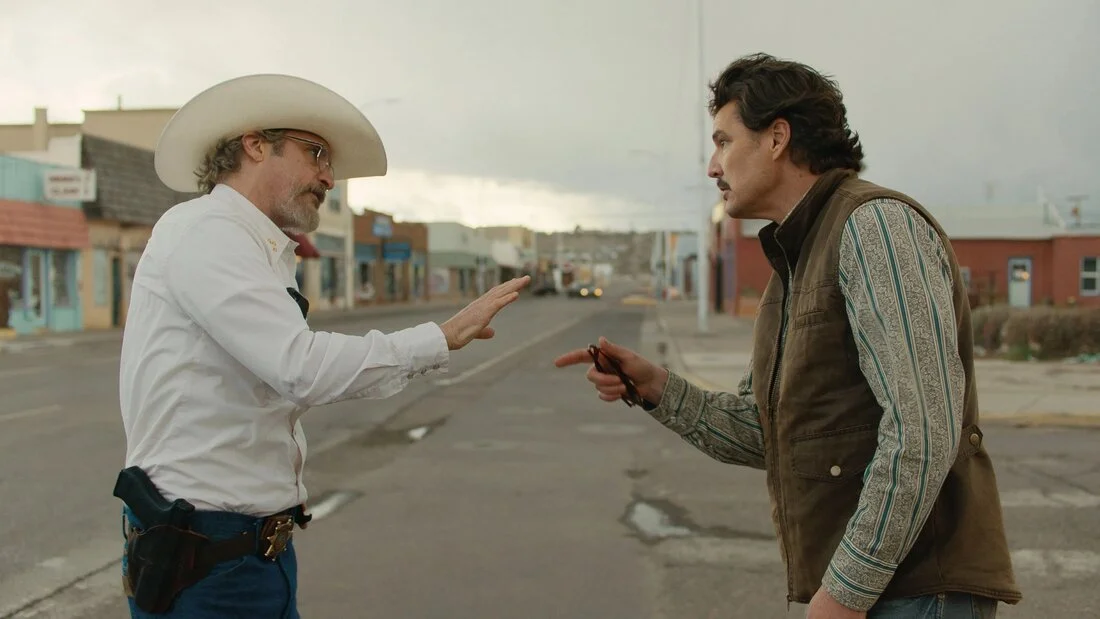
‘Eddington’ Review
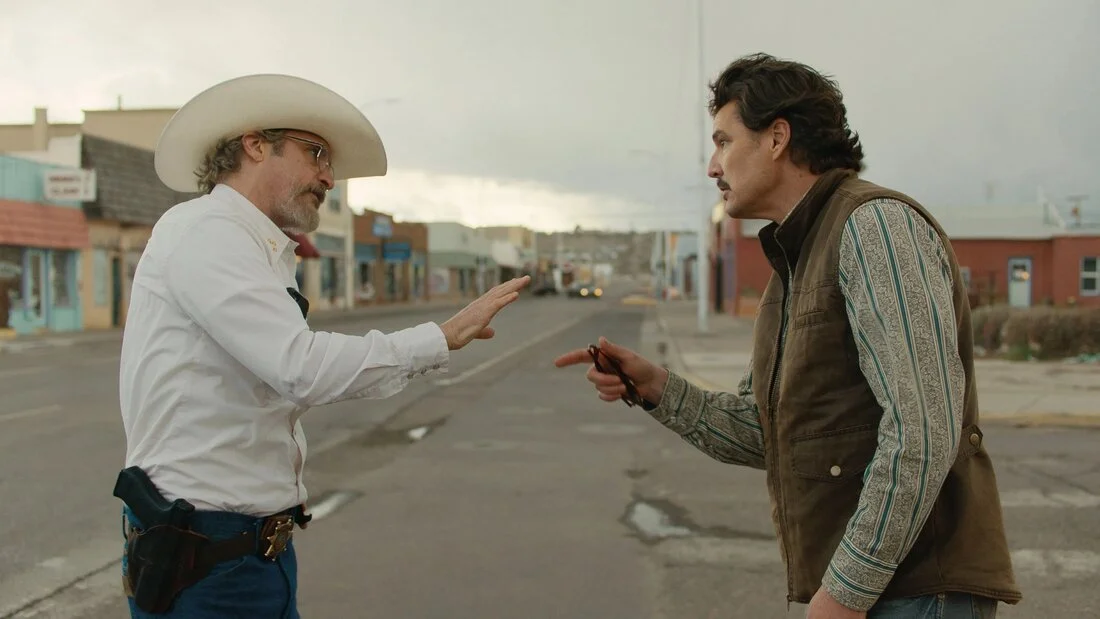
July 14, 2025
If you thought Beau Is Afraid was divisive, Ari Aster has outdone himself with the anxiety-inducing Eddington, a political satire and contemporary Western set during the COVID-19 outbreak. Aster, who made his startling debut with Hereditary and mind-melting sophomore feature with Midsommar, has injected new energy not only into the horror genre, but the film industry at large. His genre-bending sensibilities contort what one would traditionally expect from, and perceive as, a horror piece. He finds fascinating creative avenues for exploring universal themes, from family dysfunction (Hereditary) and mental illness (Midsommar) to guilt-ridden generational trauma (Beau Is Afraid). The bizarre, sprawling odyssey of “Beau” in particular marked a bold change for Aster, compared to the more contained storytelling of his first two films. While Aster’s experimental ambition didn’t fully land with Beau, at least his choices exemplified bold filmmaking.
Eddington takes big swings not necessarily with boldness, but reckless audacity. Aster meticulously stays put in the chaos, nihilism, and uncertainty of when the pandemic first erupted. He reflects the environment - corrupt state politics, Black Lives Matter protests, police brutality, white supremacy, misinformation bubbles, unruly mask mandates, living on the Internet, performative allyship, and much more —at first with intriguing observation. The film begins with a compelling focus on how disconnected human beings have become, worsened through distorted social media platforms, and how individual perceptions can influence entire communities that are already on the brink of completely boiling over.
But the more overarching ideas and character arcs Aster stirs into the pot, the more control he loses over where this film and its point are ultimately headed. The half-baked writing reveals a perplexing lack of engagement towards unpacking several themes. While clearly detailed and thoroughly researched in terms of portraying a very specific period of time, Aster stands too far back from the unfiltered lens. Dynamic as the performances are, compelling as the visual language is, and effective as the narrative buildup of tension may be, Eddington struggles to resonate beyond the point of spectacle. What the film does excel at, however, is provoke from all angles to depict how an entire society runs on completely separate belief systems, feeding into a shared nightmare that no amount of individual nostalgia can repair. Aster holds a funhouse mirror to today’s society with a satirical confrontation of contemporary hell.
In the fictional town of Eddington, New Mexico during May of 2020, sheriff Joe Cross (an excellent Joaquin Phoenix) lives with his wife, Louise (Emma Stone) and her mother, Dawn (Deirdre O’Connell), whose conspiracy theories have created a sense of dread in their own home. Such was the case for several households in the early days (and the lingering aftermath) of the pandemic; misinformation not only caused extreme paranoia, but amplified some of the most dangerous platforms and gave permission to preach alternate realities. This dichotomy of connection and isolation is rampant throughout the film, kickstarting with Joe (Phoenix) in a battle against the town mayor, Ted Garcia (Pedro Pascal) about wearing masks in a pharmacy. Their early scenes together suggest unfinished business, along with a real “this town isn’t big enough for the two of us” Western energy, which Phoenix and Pascal play brilliantly.
The film quickly branches into a broader scope of systemic issues including police brutality and racism, the police murder of George Floyd, and widespread protests among the Black community, as well as white fragility and reckoning from the perspective of privileged white kids. When the protests reach Joe’s front door, the film begins to unpack how his department — including officers Guy (Luke Grimes) and Mike (Michael Ward) — responds to Floyd’s death and the community’s protesting. There is a missed opportunity here in not engaging with this perspective on a more nuanced level. Aster leans heavily into satire and dark humour, which works fine for Facebook rabbit holes and benign political campaign ads. But the film uses far too many subjects as clumsy ways to push a story forward, especially one plot with a Black police officer that feels hollow, without making any insightful commentary or thematic exploration.
The film works best when locked into the characters’ bottled emotions and how they each form individual pressure cookers. Joaquin Phoenix is an absolute wildcard of an actor, which makes him perfectly cast as sheriff Joe, as he has precisely the sort of energy that feeds into the character’s hidden rage. You truly never know what you’re going to get out of him, which Aster sharply emphasizes in a standout sequence of the mayor (Pascal) blasting Katy Perry’s Firework at a party, another pop icon feature in an Aster film. While not as strange as Mariah Carey’s Always Be My Baby needle drop in Beau Is Afraid, it’s certainly more intense, mainly thanks to Phoenix’s fascinating unpredictability as he navigates the character’s increasingly irrational and desperate behaviour.
However inconsistently Aster’s ambitions translate onto the screen, he has crafted a compellingly and wildly imperfect film that depicts the horrors of humanity, a common thread in his work. While Hereditary and Midsommar live within the horror genre, the terrors of those stories lie in human conflict — in not having a support system for grief nor mental health, and how quickly those vulnerabilities become manipulated and twisted beyond repair. Eddington echoes a similar vibration with the scary fragility of the mind. All it takes is a single click for people to lose all sense of decency and rationale, whether it’s Louise (Stone) falling under the spell of a self-appointed saviour/cult leader (Austin Butler), or a white kid who fights for justice to impress a girl and quite literally overnight, morphs into a celebrity antithesis of the persona he once adopted.
Aster also puts considerable care into the overall production of Eddington. Cinematographer Darius Khondji balances barren landscapes and phone screens with a sharp, revealing eye. Composer Daniel Pemberton finds an incredibly provocative rhythm, and his score is used at precisely the right times to emphasize tension. Aster’s visceral, atmospheric direction lends to the gradual build of suspense and paranoia, especially in a well-orchestrated shootout sequence in the final act. The sense of dread is absolutely palpable from the start, and only intensifies as Aster explores far more sinister and disturbing plot points, adding to the inescapable horrors that unfold.
Eddington will absolutely divide audiences in a way that feels both ambitious and reckless. Aster locks the viewer into overwhelming dread, societal unrest, and moral chaos, all through an uncompromising lens. For better or worse, he meticulously puts his vision onto the screen. But his thematic approach becomes far too repetitive to fully land as a satire or at least a thoughtful commentary. Eventually the film reaches a breaking point and poses the question, what is this all for? Eddington provides no solutions, only a tedious reflection with flashes of brilliance.
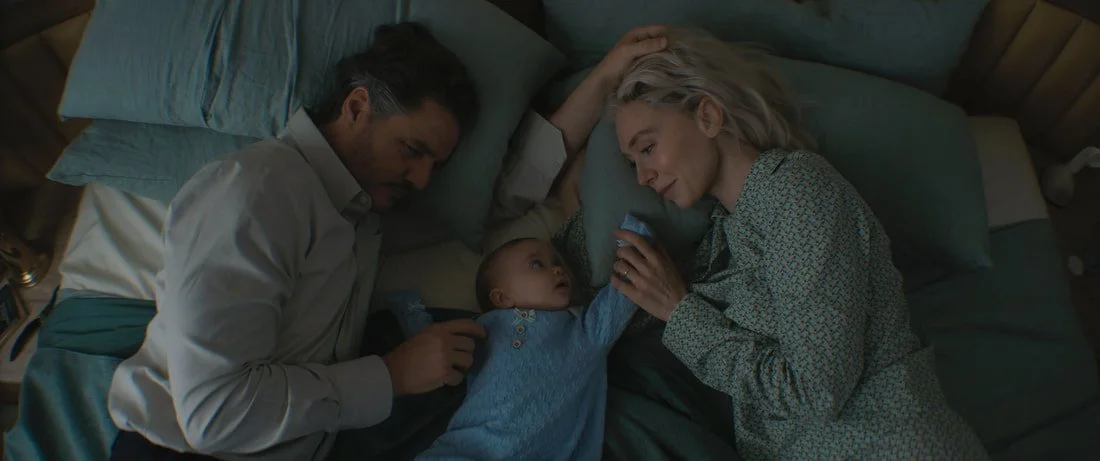
‘The Fantastic Four: First Steps’ Review
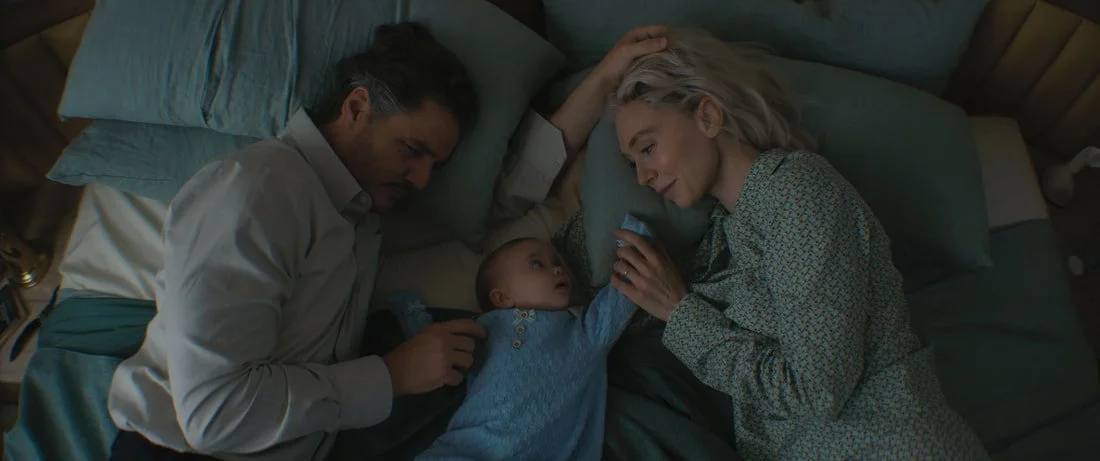
July 25, 2025
Since the 2005 release of Tim Story’s messy sitcom-centric Fantastic Four, adaptations of Marvel’s first family never quite cracked the code for the superhero quartet. It took several decades, but director Matt Shakman (known for the MCU’s WandaVision television series) finally gives the Fantastic Four a cinematic journey with real stakes and an enthusiastic cast. Reed Richards/Mr. Fantastic (Pedro Pascal), Sue Storm/The Invisible Woman (Vanessa Kirby), Johnny Storm/The Human Torch (Joseph Quinn), and Ben Grimm/The Thing (Ebon Moss-Bachrach) get a retro-style spin in The Fantastic Four: First Steps, a giant leap towards a fresh start in the superhero world. The MCU pressed the creative refresh button at an incredibly opportune time. Having closed out Phase Five with surprisingly mature and emotional storytelling in Jake Schreier’s Thunderbolts*, the studio begins Phase Six on an optimistic back-to-basics note.
The Fantastic Four: First Steps doesn’t require baseball knowledge of a convoluted multiverse, nor does it indulge in the characters stumbling upon their superpowers. Set in 1960s New York and dipped in a futuristic palette, the film begins four years after the Fantastic Four embarked on their fated mission and became celebrities. Early scenes, such as the variety show sizzle reel celebrating the Fantastic Four’s accomplishments, indicate a seasoned team who have gotten used to all the attention. They also understand their unique abilities, from elasticity and force fields to super strength and pyrokinesis. But with great power comes great responsibility.
The general public are head over heels for their heroes. The Fantastic Four are Earth’s only peacekeepers, and as astronauts, they represent a symbol of American heroism that was especially prevalent in the 60s. The film excels at conveying a sense of pride and propaganda around how the Fantastic Four are perceived. The group have managed to uphold an image of safety and security, presumably without missing a beat, over the course of four years. But the all-consuming space god Galactus (Ralph Ineson) and his Herald, Silver Surfer (Julia Garner) threaten to disrupt these godly pedestals, posing the question: what do heroes owe to the citizens of Earth?
The Fantastic Four: First Steps approaches these questions with the subject of parenthood - how it changes the fabric of an entire being and alters the weight of the world. When Sue (Kirby) discovers she’s pregnant, the news adds worry and stress to her husband Reed (Pascal), who immediately begins to calculate whether the baby will be born with cosmic powers. His anxiety is balanced by Sue’s calm in the eye of the storm, which Kirby and Pascal play brilliantly in the film’s domestic-focused scenes. Pascal makes for a charismatic, sensitive, and conflicted Reed Richards; he carries a sense of guilt in not wanting his child to be like him. He always thinks of the worst case scenario for every problem, and it’s Sue who helps him through the moral crossroads. The two complement each other’s sensibilities to the point where a single look can drive the energy of a conversation. One particularly compelling scene - a discussion about Reed and Sue’s newborn child Franklin being the target of conflict - shows how Sue can quickly spot the analytical part of Reed’s brain and identify his train of thought. She swiftly shuts down an idea that at first upsets her, but ultimately places her into the heart and soul of this film.
Those who have seen Kornél Mundruczó’s Pieces of a Woman will know that the birthing scene in First Steps is not Kirby’s first time playing a woman giving birth, but it is the first time in space. The zero gravity logistics of the sequence are visually engaging and immersive. But it’s the maternal fierceness in Kirby’s performance that elevates this moment into one of real humanity and poignancy. Rarely do we get such a primal moment depicted onscreen in a big studio piece to begin with, let alone in a Marvel superhero film. The scene pushes First Steps on a path of exploring weighty topics through a family-friendly superhero lens. Kirby’s performance also keeps the character grounded and avoids underlining familiar tropes where strong female leads are portrayed without the capacity for softness or vulnerability.
The birth of Sue and Reed’s child explores how parenthood intersects with the pressures of being a superhero. The drive to protect baby Franklin, and the determination not to give up on society as a whole, balances everyday family scenarios with a genuinely threatening intergalactic force. The sheer scale and the deep, menacing voice of Galactus (Ineson) make him one of the more effective Marvel villains. He wants to devour the entire planet in ways that get personal for the Fantastic Four family. He goes after innocence, shown effectively with the character of Silver Surfer, also known as Shalla-Bal (Garner). She follows his every command and acts as a spokesperson for Earth’s demise, traveling to Times Square to deliver the ominous message. But there is more to Shalla-Bal than meets the eye, and Johnny (Quinn) finds a way to communicate with her for answers. Their dynamic adds some flirtatious banter and speaks to Johnny’s character: he’s a little naughty, insecure, and will do anything to protect his family.
The retro-futurism world building, familial themes, and character-driven conflict set The Fantastic Four: First Steps apart as a contained story in a convoluted multiverse of superhero interconnectedness. The stylish production design captures a vibrant 60s Manhattan, from the presence of robot assistant H.E.R.B.I.E. to the mid-century inspired architecture and the flying Fantasticar. Additionally, Michael Giacchino’s stellar score gives dimension and personality to the story. Certain narrative explorations do feel incomplete — such as the lack of character development for Ben/The Thing (Bachrach). While Bachrach delivers a standout performance and shares fun banter with the cast, his scenes suggest a lot of material left on the cutting room floor. As well, when the general public start to turn against the Fantastic Four in the final act, the shift in devotion unravels far too suddenly and collectively to feel believable.
When it comes to production value and emotional resonance, The Fantastic Four: First Steps never quite reaches the heights of the zero gravity birth scene. But the film wisely centres Sue Storm’s character throughout, which elevates a poignant emotional through line far more resonating than any CGI spectacle. At the core of First Steps is a family working together to stay connected to one another for a brighter future. Supported by the talented trio of Pascal, Quinn, and Bachrach, Vanessa Kirby shines as the heart and soul of this story.
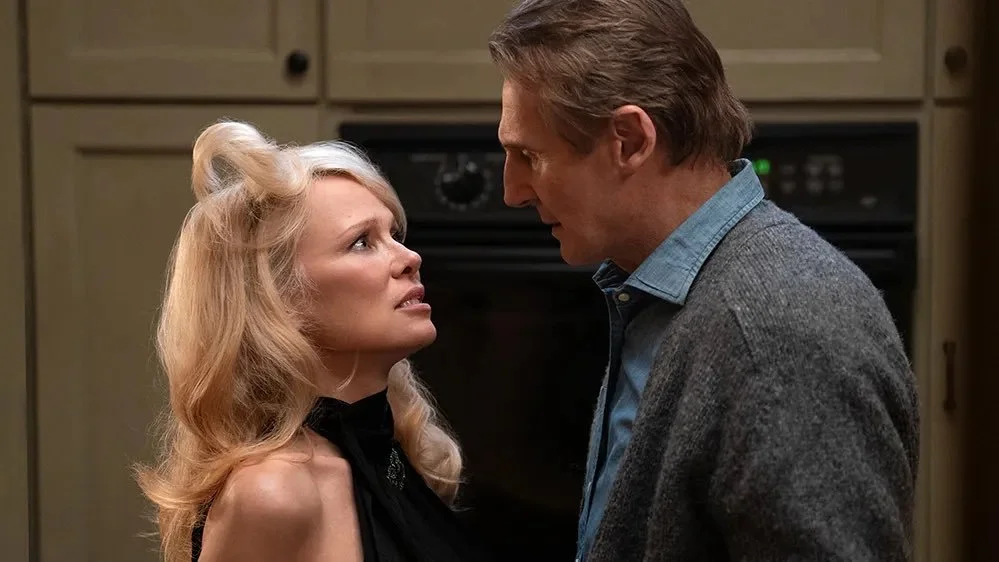
‘The Naked Gun’ Review
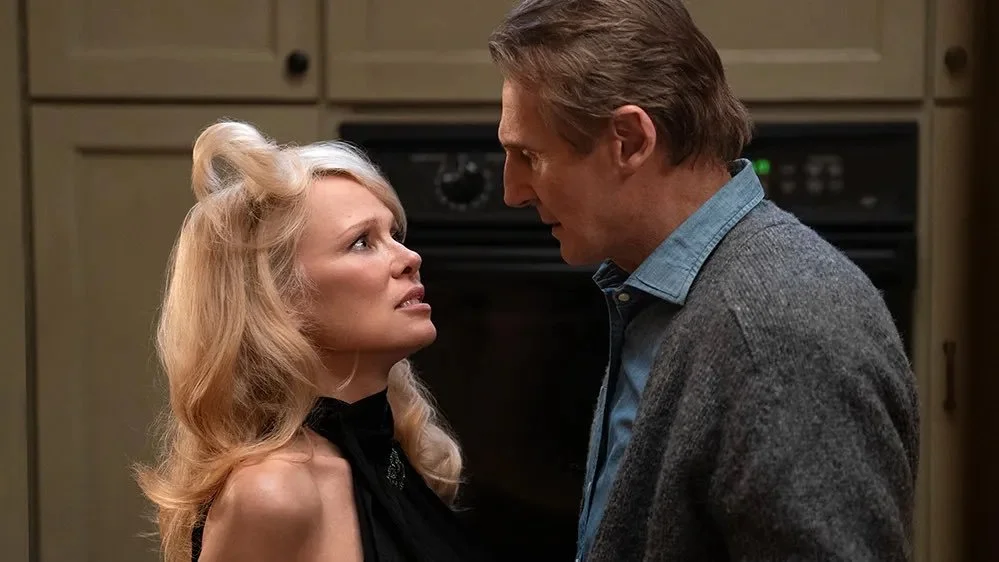
August 1, 2025
Laugh-a-minute comedies are rare gems these days, and Akiya Schaffer’s The Naked Gun shines as one of the rarest of them all, joining the original Police Squad crew. This legacy sequel pays homage to the classic Leslie Nielsen pictures, harkens back to the goofy mind of Mel Brooks, evokes major 90s nostalgia, and stands out with a contemporary spin. It’s been decades since a film has elicited so much hysterics - not just chuckles, but tears of laughter - and it’s a soothing balm for the soul. With the perfect casting of Liam Neeson and Pamela Anderson, whose on-screen chemistry sizzles in every frame, The Naked Gun is a comedy goldmine. From deadpan deliveries and silly visuals to an absurdist courtship montage, the slapstick humour brings much-needed spoof energy back onto our screens.
The story opens with a pre-credits bank robbery sequence that mirrors the tensity of any decent bank robbery in any film. It’s a fitting start for The Naked Gun, as this is a film that takes silliness seriously and commits to the bit with a deadpan slant. The jokes are marvellously crafted, the visual gags are appropriately goofy, and the wordplay inspires straightforward delivery. The opening sequence parodies the tone of films like The Dark Knight (pulling from the robbery heist) and the Mission: Impossible franchise (using a silly mask reveal to introduce Neeson). Driving the plot here is a piece of machinery literally called a P.L.O.T. Device. It’s sought after by tech billionaire Richard Cane (Danny Huston) to set humanity back by manually turning everyone into angry bots who want to fight one another.
Only one man can save the world from evil billionaires - the world’s silliest crime fighter, Lieutenant Frank Drebin Jr. (Neeson). He’s the fumbling son of, you guessed it, the original detective made famous by Nielsen’s genius performance. When Drebin Jr. and his partner, Captain Ed Hocken Jr. (a scene stealing Paul Walter Hauser), stumble onto a car crash, the crime scene reveals a connection to Cane’s evil billionaire scheme. Meanwhile, a side plot introduces the luminous Beth Davenport (Pamela Anderson), a true-crime novelist who seeks Drebin Jr.’s help in finding her brother’s murderer. The moment Neeson and Anderson first appear on screen together, a new Hollywood power couple is born. They complement each other with a warm, endearing energy and ride the wavelength of poker-faced comedic timing. Anderson has several standout moments including a jazzy stage number, a clever bit about a detective’s chair, and an Austin Powers-style shadow innuendo.
Neeson’s capacity for deadpan comedy can be traced back to the 2011 British mockumentary Life’s Too Short, created and written by Ricky Gervais and Stephen Merchant. Neeson plays himself in a cameo appearance that involves him demanding to do improvisational comedy alongside Gervais, Merchant, and Warwick Davis (Davis plays a fictional version of himself as the series protagonist). It would come as no surprise if Neeson’s cameo had anything to do with getting cast in The Naked Gun, as he nails the serious aloofness that makes for an entertaining spoof. The film makes it clear that Neeson is no Nielsen; there’s a bit of dialogue about the character wanting to follow in his father’s footsteps, but to be unique at the same time, and Neeson delivers on both tall orders. He may not possess the utter cluelessness of not even knowing a gag is happening in the first place, a magical quality of Nielsen’s work. But Neeson, who brilliantly plays the role straight, brings a slant of intensity that makes the character feel like his own iteration.
Director and co-writer Akiva Schaffer (the filmmaker behind Popstar: Never Stop Never Stopping, Chip ‘n Dale: Rescue Rangers, and the iconic Lonely Island music videos) strikes a fun balance between acknowledging how ditzy the humour is, and letting that humour breathe without it feeling overtly self-aware or forced. Not every single joke lands. Some, notably a car sequence involving sandwiches and bowel movements, are stretched far too thin. But with several jokes on offer, plus hidden gems in the background that will resurface upon re-watches, the comedy is fiercely consistent.
The film finds a sweet spot between recurring jokes and throwaways; a standout repeat gag involves a revolving handout of coffee cups given to Neeson and Hauser at increasingly absurd times. Additionally, the dialogue showcases an amusing range from quick wordplay (“UCLA?” “I see it every day. I live here.”) to impassioned pleas about how good The Black Eyed Peas (especially Fergie) and Buffy the Vampire Slayer are. Co-written by Schaffer, Dan Gregor, and Doug Mand, the screenplay shows a strong attention to detail in the foreground and background; clever visual gags, genre-bending set pieces, and an absolutely hilarious romantic montage-turned-evil Jack Frost horror sequence.
The 80s and 90s nostalgia of The Naked Gun — perfectly distilled into a needle drop of Starship’s Nothing’s Gonna Stop Us Now and a random cameo by the animated paperclip guide named Clippy (created by Microsoft Office 97) — thankfully isn’t heavily relied upon. The film leans into several modern critiques, whether playing on the dangers of technology or making clowns out of toxic masculinity. But there’s also just enough nostalgic energy to evoke a yearning for more dumb comedies that take the craft seriously and fully embrace silliness. The Naked Gun is the exact dose of goofiness the genre needs more of. While the film excels as a legacy sequel, the biggest lesson studios ought to take from its success is to give original comedies the green light. We’ve gotten a few gems in film and television this year, from Lawrence Lamont’s One of Them Days to Apple TV+’s The Studio. The Naked Gun serves as a reminder that its very brilliant existence comes from an original creation.
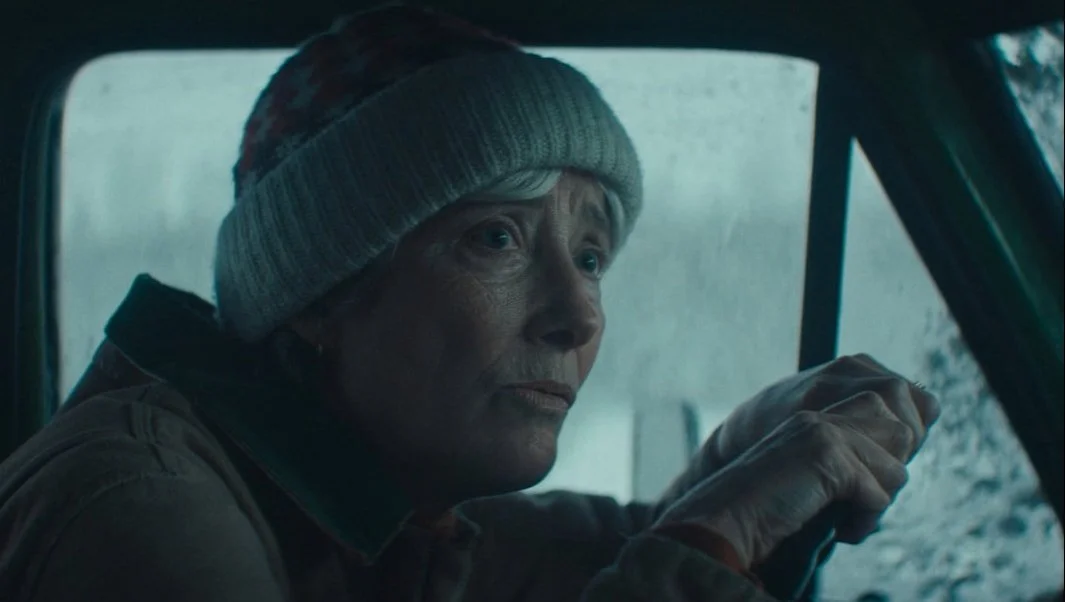
‘Dead of Winter’ Review
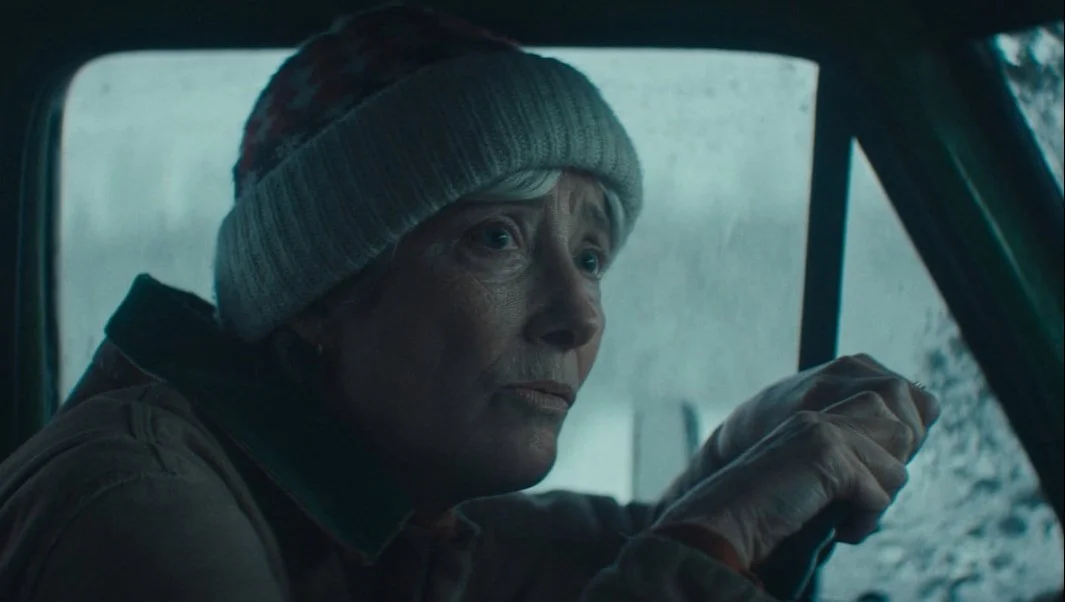
September 25, 2025
If the idea of Emma Thompson channeling Frances McDormand’s Marge Gunderson from Fargo sounds intriguing, the action thriller Dead of Winter will satisfy your curiosity. Thompson, one of our greatest acting treasures, plays a badass lone traveller who fights against harsh elements to save a life. Slipping into character and embracing the setting, she echoes McDormand’s “Oh yah?” through an endearing “Oh all heck,” complete with the Minnesota accent and all. Thompson’s wit and authenticity bring warm layers to an icy survival thriller that stumbles through cliches, but reaches a surprisingly heartfelt ending. In between tidying up violent messes, Barb reminisces about love and loss, acting as the film’s memorable core.
Set in a snow capped northern Minnesota, Dead of Winter follows a widow named Barb (Thompson), as she travels to her favourite lake for an ice fishing trip. This lake, a gem of the natural world, holds a special place in her heart; she had spent a lot of time there with her late husband, Karl (Paul Hamilton). While en route, Barb gets lost among the backroads and stumbles upon a remote cabin in the woods. She asks an incognito man for help. He begrudgingly gives out directions, while she catches a blood-splattered patch of snow in the corner of her eye. Barb continues on her journey and reaches the lake, but the audience quickly gets wind that trouble is afoot. It’s just a matter of when the danger will strike, and director Brian Kirk wastes no time getting the bloody snowball rolling.
While on the icy lake, Barb witnesses a teenage girl named Leah (Laurel Marsden) running for her life from a gun-wielding kidnapper nicknamed Camo Jacket (Marc Menchaca). Isolated and without cell service, Barb draws on instinct and resilience, realizing that she is the girl’s only hope for survival. After rushing back to the cabin, Barb discovers a new threat — the kidnapper’s wife nicknamed Purple Lady (an excellent Judy Greer), is the mastermind. Greer’s character is a former medical worker who is desperate to have a surgical procedure done, and plans on using Leah as her patient. Armed and murderous, Purple Lady goes on a relentless hunt to eliminate her new target: Barb.
If these nicknames elicit some chuckles, there’s a bit more humour where that came from. First-time screenwriters Nicholas Jacobson-Larson and Dalton Leeb find darkly comic veins in a tensely wrapped high-stress environment. Whether it’s Barb cracking jokes to herself while sewing up a gunshot wound, or Purple Lady (Greer) and Camo Jacket (Menchaca) veering towards a comedy of errors with their clumsiness, Dead of Winter plays lighter than expected. It certainly breathes glimmers of personality into the film’s generic plot and pedestrian direction. But the humour ultimately becomes more of a hindrance than a gift. It often clashes with the dramatic elements, creating an odd mishmash of tones and undermining tense standoffs between characters.
The film attempts to balance the kidnapping plot with a character study of Barb. Flashbacks to young Barb (played by Thompson’s real-life daughter, Gaia Wise) and young Karl (Cúan Hosty-Blaney) paint a sweet portrait of a blossoming romance. The flashbacks add context for Barb’s everlasting love, making her journey all the more poignant. Her interiority is far more compelling than the cold-hearted patch of violence she runs into, though Greer injects stirring intensity and genuine intimidation into the picture. But the film plays to the melody of Thompson’s screen presence, through and through.
Thompson’s emotionality as a performer is a major source of comfort for the audience. She devotes as much attention to the physicality of her character as she does the essence. The end result is a nuanced, assured portrayal of a woman whose intentions are crystal clear, and whose open heart travels beyond fear and directly into the eye of conflict. However difficult it is for her to fight against harsh elements and murderous plots, she doesn’t quit. It’s refreshing to also consider that Barb is not portrayed as miraculously invincible. She stumbles and panics her way through, which helps to ground her character’s scenarios.
While Thompson has a strong grasp on Barb, Dead of Winter as a whole feels half-realized. The character study, the kidnapping of Leah, and the medical motivations behind Purple Lady’s actions fall short of a thrilling blend. But at the very least, the film finds strength in the motto Barb lives by: we don’t quit. However underwhelming the plot devices and uneven the tone, the story builds onto real stakes for the character. In this chilly, choppy action piece, Barb is given a surprising and memorable ending, made all the more impactful by one of our greatest performers.
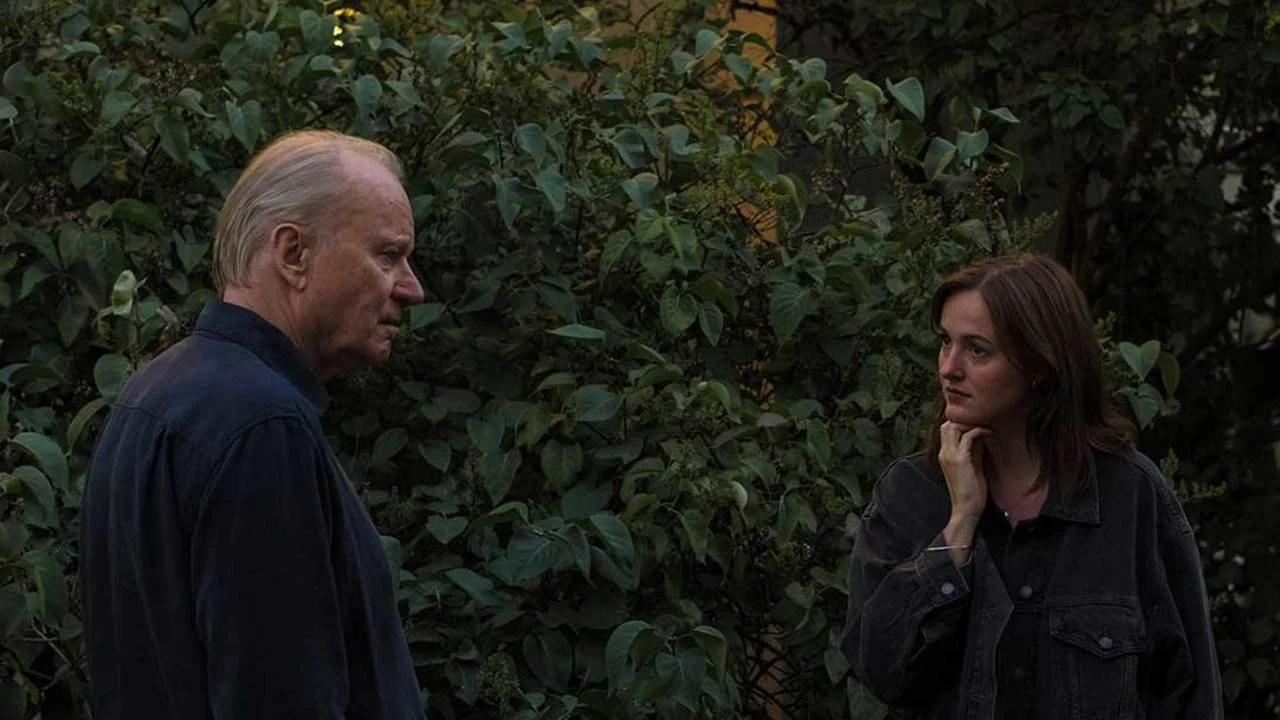
TIFF 2025: ‘Sentimental Value’ Review
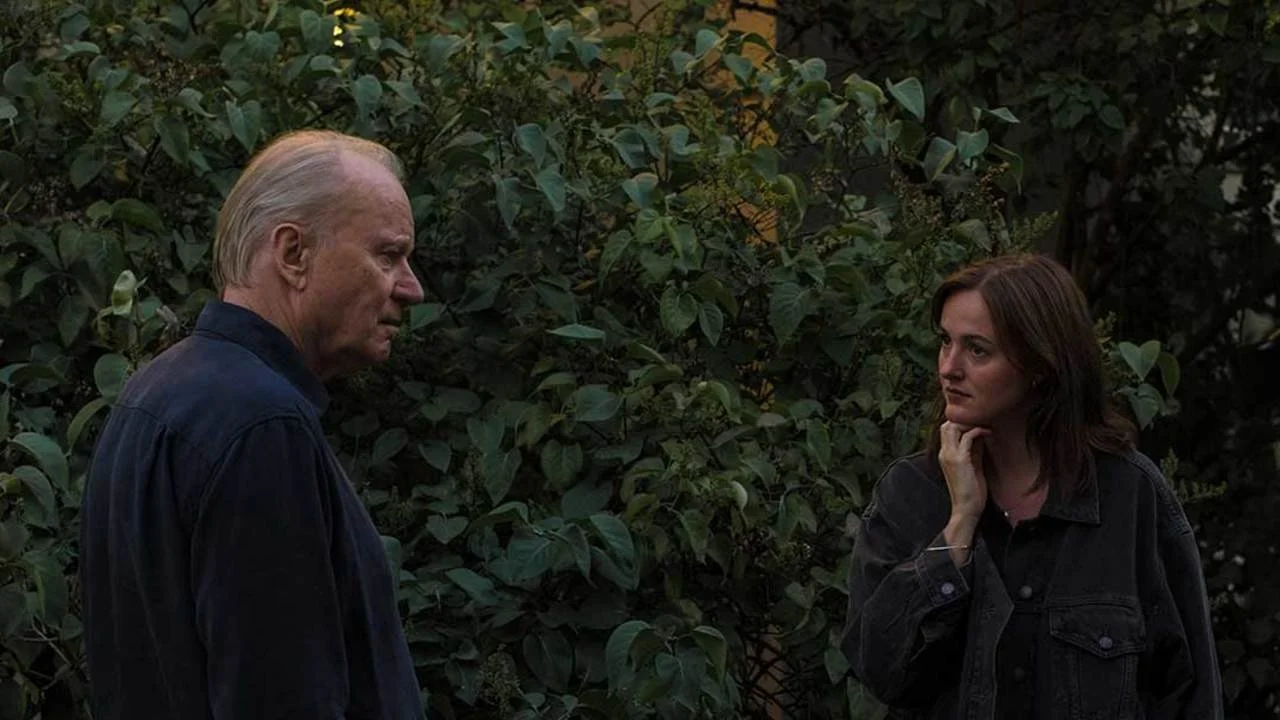
September 4, 2025
When Joachim Trier made The Worst Person in the World, he captured the intricacies of life in just over two hours of screen time. On every rewatch, the film feels like a miraculous discovery all over again. Trier is so deeply present with the story, and so specific in conveying one woman’s experience as she searches for meaning, that he manages to reflect “The Worst Person in the World” back onto the viewer in a universally warm embrace. Whether you’re in your twenties or not, whether you’re navigating romantic relationships or career paths, forks in the road of adult life are achingly relatable. Trier’s grounded approach keeps his characters in constant motion. There are no neat and tidy resolutions to conflict. The emotionality sneaks up on you, which carries over into Sentimental Value, his latest film co-written by Eskil Vogt. It’s a tender, witty chronicle of a family brought closer together by art, history, and a house full of painful memories.
For years, filmmaker Gustav Borg (Stellan Skarsgård) has been estranged from his daughters Nora (Renate Reinsve) and Agnes (Inga Ibsdotter Lilleaas). Nora is an actress who suffers from anxiety attacks before going on stage to perform. She has her methods for getting through the nerves, like asking one of the stagehands (played by Anders Danielsen Lie) to slap her. While Nora eventually finds her mark on stage, and her performance is met with rapturous applause, her personal life feels adrift. She carries a palpable sadness with her, which turns into anger when on the subject of her father. Nora’s sister Agnes, who as a child starred in one of their father’s most acclaimed movies, leads a more grounded life. Agnes has a family of her own and appears more level-headed. While they have a shared childhood experience, the two sisters have different relationships to their father, who had abandoned them when they were kids. Years later, at their mother’s wake, Gustav walks back into their lives as though no time has passed. This bleak setting brings the family together by way of reckoning, with Gustav returning to the damage not to resolve, but to understand.
Making matters more depressing, Gustav reconnects with Nora in the hope that she’ll agree to star in his next film, which is based on a Borg family tragedy. He makes it clear that she’s the only one who can play the role. She refuses to read the script, wanting no part in the project. Casting takes an unexpected turn when Gustav attends a festival screening for one of his movies. Sat in the audience is Hollywood movie star Rachel Kemp (Elle Fanning), who connects with him and accepts the role Nora had turned down. Gustav encourages Rachel to dye her hair brown and use a Norwegian accent. Studious and talented as Rachel may be, her performance by admission feels stilted. Unable to get a proper read on the character, she seeks answers from Nora on the art of being.
When art is made personal, it can hold a very powerful mirror to the people whose lives are being reflected. For the characters of Sentimental Value, art evokes reconciliation and becomes the foreground for healing. In one of the most exquisite scenes, Agnes urges Nora to read an excerpt from their father’s script that he’s shooting. Agnes knows that the words on the page will resonate with Nora far more than any conversation with Gustav would (Nora and Gustav have difficulty communicating, and artistic expression is their bridge). The scene is a gut punch of self-reflection, and an intimate glimpse into the bond between two sisters. Nora questions how Agnes managed to turn out fine, having grown up in the same painful household. Agnes felt protected and safe because she had Nora. But who did Nora have? Renate Reinsve and Inga Ibsdotter Lilleaas play out the scene tremendously, as they transport you back in time to their layered childhood perspectives. This moment reinforces what the film is truly about: the ghosts that children inherit from their parents. The movie within a movie is a remarkable framework for the characters to reevaluate what they all mean to each other, and lift some of those invisible weights.
The film also travels through time with the Borg family home in Olso. This beautiful home of bright red accents, surrounded by trees, looks like a picturesque fairytale. Trier makes the house a narrative focal point, using voiceover narration to unearth the history within its walls. You could feel the weight of the past in its architecture. The house reflects generations of life; no matter how many renovations are made, it will forever carry the memories of the people who once lived there. And when a house no longer feels like a home, it will lose its sentimental value. The belongings become objects, and the rooms become confines. There’s a fascinating dynamic at play between the characters and this house. Gustav walks in like a friendly ghost, passing through with unintentional harm and unaware of his haunting impact. Nora walks into her past, frozen in time. Agnes hovers someplace between attached and detached; she has made a new home for herself, but there are certain things that still carry sentimental value.
Sentimental Value is home to such lived-in characters, giving the actors an incredible framework to fill in their own portrayals. Trier crafts a true ensemble here; this is every bit Skarsgård’s film as it is Reinsve’s and Lilleaas’. From their interior conflicts to their messy shared path towards forgiveness, their relationship dynamics define the heart of the story. Reinsve is a brilliant performer who makes acting look effortless on screen. Since reaching international stardom with The Worst Person in the World, followed by compelling roles in A Different Man and Armand, Reinsve is one of the most exciting actors working today. As Nora in “Sentimental Value,” she runs the gamut of a fully realized character whose knack for acting stems from a desire to escape. Reinsve has an especially vulnerable moment at the beginning of the film, when Nora experiences a breakdown backstage just minutes before a performance.
Playing her sister Agnes, Lilleaas too makes acting look effortless. You simply cannot take your eyes off her character, as she carries her childhood experiences in a different way compared to Nora. Agnes is often the picture of composure and brings a grounded quality to the family dynamics, as the keen observer of Nora and Gustav’s artistic expressions. Lilleaas delivers a quietly impactful performance that builds to a moment of boundaries drawn with her father, when he expresses wanting the young version of himself in his movie to be played by Agnes’ son Erik. It’s an outstanding moment that invites curiosity as to how Agnes feels about having starred in one of her father’s movies many years ago, and the lingering impact of that experience. Adding to the brilliant ensemble, Elle Fanning shines as the celebrity outsider to the Borg family. It’s also refreshing to discover the depth of Rachel’s character as she navigates the challenge of taking part in such a personal project, while wanting to be seen and heard for her talent.
Skarsgård delivers a career-best performance as Gustav, walking a fine line of contradictions to bring remarkable realism into the role. He’s not a villain for his past, nor is he a hero for being a changed man in the present. His character speaks to a thoughtful mediation on how art can help process emotions and reflect the truth back onto oneself. With Gustav being a filmmaker, wanting to cast his daughter as the lead of his new movie, Trier finds a creative way to depict a parent setting the stage for their child to follow. Additionally, through Gustav’s character, the film engages in some pointed criticism of how audiences engage with art today. From prickly press junkets and “Tik-Tok trolls” to the pressure of making a relevant movie, Skarsgård relishes in those moments of frustration.
It’s not uncommon to want something as soon as someone else wants it, especially in a sibling dynamic. The feeling is captured in a moment shared between Agnes and Nora, as they go through family belongings, eventually reaching a vase. Nora appears disinterested in the vase at first, until Agnes expresses wanting to keep it. Sentimental Value so profoundly communicates the fear of losing something, or someone, that you didn’t think mattered so dearly or that you wanted so much. When Nora does grab the vase — in a rush on her way out of the house, knowing that Gustav is about to enter — it’s as though she still needs that piece of her family to hold onto, as she heads on a spirited path of figuring out life.