
TIFF 2025: ‘Swiped’ Review
September 17, 2025
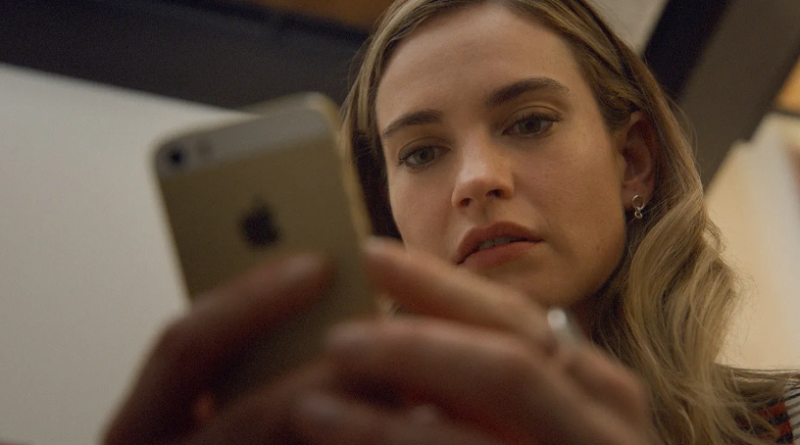
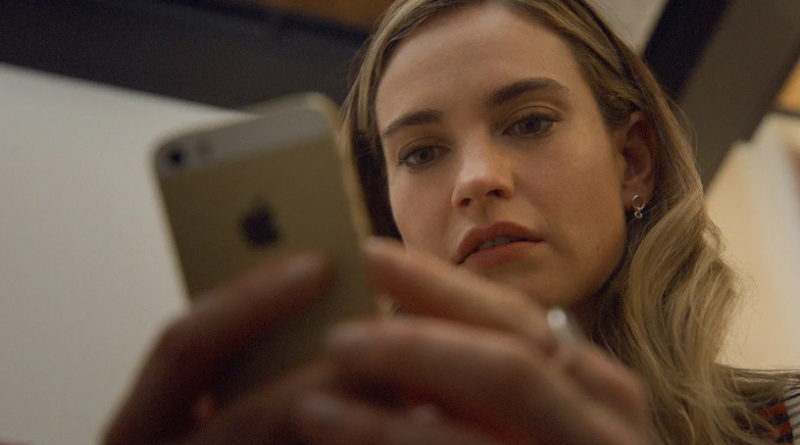
The online experience is absolutely horrific for women. Sexual harassment, death threats, cyber bullying, body dysmorphia, hate speech, and more denigrating content have fed into an incessantly dangerous environment. It’s not just the perpetrators and their deceptive personas causing harm. Online platforms and apps are also complicit in breeding misogyny and toxic masculinity, whether by design (in a male-dominated tech industry), or by practice. Social media has completely changed the way we interact with one another, and it has made dating in this digital age all the more precarious. Bumble CEO Whitney Wolfe Herd aimed to rewrite outdated gender roles with a female-empowered dating app - on Bumble, women make the first move. Her rise to billionaire status is depicted in Rachel Lee Goldenberg’s Swiped, a film that too often swipes left on what makes its subject so interesting.
Whitney (Lily James) wanted to make the world a better place. Her first business venture was selling bamboo tote bags to areas affected by the Deepwater Horizon oil spill. She also volunteered at orphanages around Southeast Asia, where she got the idea to create a program that connects likeminded people together. Ready to make her mark in the tech industry, and eager to meet potential investors, she runs into Sean Rad (Ben Schnetzer), the co-founder of a startup company that throws ideas to the wall in the hope that one of them will stick. Sean immediately hires Whitney as the company’s marketing director for a new dating app, which Whitney would go on to name Tinder. After months of market research and pitching to universities, she helps turn the app into a worldwide success.
With her professional and personal life soaring, Whitney seems on top of the world. She starts dating one of her colleagues, Justin (Jackson White), who can’t contain his jealously when Whitney officially becomes a Tinder co-founder alongside him. Justin’s mean-spirited behaviour takes an even darker turn when they break up, and his harassment starts to affect her work environment. When she does speak up, she is bullied into silence, further illustrating why women don’t feel comfortable standing up for themselves. One of the film’s biggest strengths is the depiction of toxic masculinity, particularly in the pre-#MeToo era, that has poisoned the corporate culture and forced women out of the decision-making rooms. This will strike a chord not only relative to the tech industry, but across all industries where women are harassed and undermined at every turn. As the only woman in the room at Tinder, Whitney feels pressure not to cause any trouble, adhering to the expectation that women ought to be grateful for holding high-ranking positions, and that putting up with harmful behaviours is “part of the job.”
The story of Swiped may be based on noteworthy subject matter, but the film falls flat in its execution. The writing glosses over nuanced conversations in favour of a by-the-numbers biopic approach that cherry picks the highlights of Tinder’s success, Whitney’s downfall, and the creation of Bumble. The film takes an incredibly rushed, straightforward path in depicting her accomplishments and shortcomings. While she created Bumble to foster an environment where women support each other, she herself liked being the only woman invited to the table at Tinder. In contributing to the toxicity to feel like “one of the guys,” she neglects the work of her friend and colleague (a very underwritten role played by Myha’la). The film does very little to challenge Whitney’s lack of support for women during the Tinder chapter, and inexplicably rushes through her development of Bumble, which leaves behind an underwhelming conclusion.
The strongest element of Swiped is Lily James’s performance as Whitney. James brings compelling charm and gravitas to the role. She excels at conveying both the ambition and vulnerability that the tech industry, and specifically her male colleagues, feed off. From workplace misogyny and corporate greed to targeted harassment, James navigates the film’s thematic foreground while also creating a grounded person to root for. James also does not shy away from Whitney’s contradictions; a particularly effective scene reveals that she chose to climb the corporate ladder at Tinder without bringing other women alongside her. But her talents are ultimately wasted in a limited character study. The real Whitney had no involvement in the film due to an NDA agreement that prevents her from discussing anything pertaining to Tinder. As a result, the film continuously defines her by the corporate role she plays, falling short of grasping the nuances of who this woman is.
While James turns in a reliable performance, and the themes reverberate with a greater reach than the tech and dating spaces, Swiped stumbles as both an effective character study and biopic. Goldenberg’s generic direction and a cliched screenplay approach Whitney Wolfe Herd’s legacy with half-hearted curiosity. By cherry picking her greatest achievements and lowest moments on a strictly professional level, the film limits its narrative and creative scope. Wolfe Herd’s character becomes neglected outside of her involvement in the apps that are, ironically, designed for people to understand each other on a more personal level.
‘Anemone’ Review
September 28, 2025
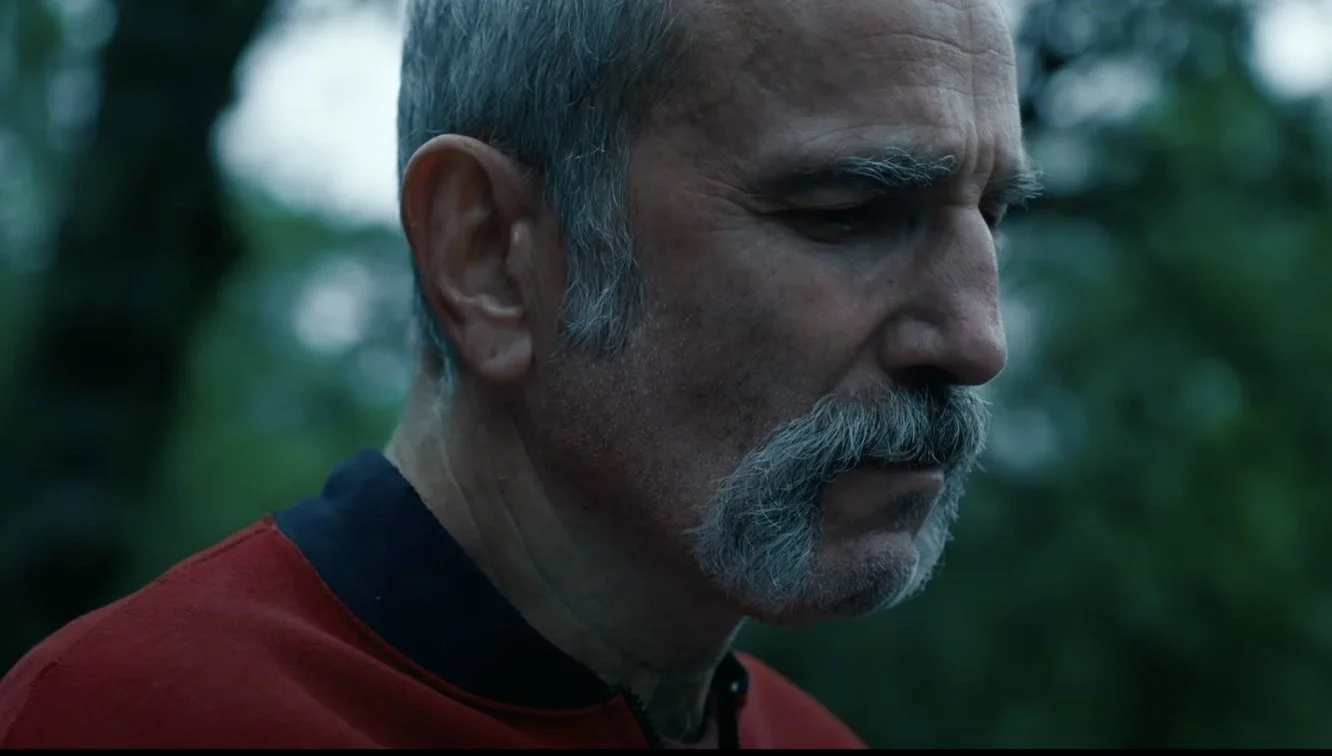
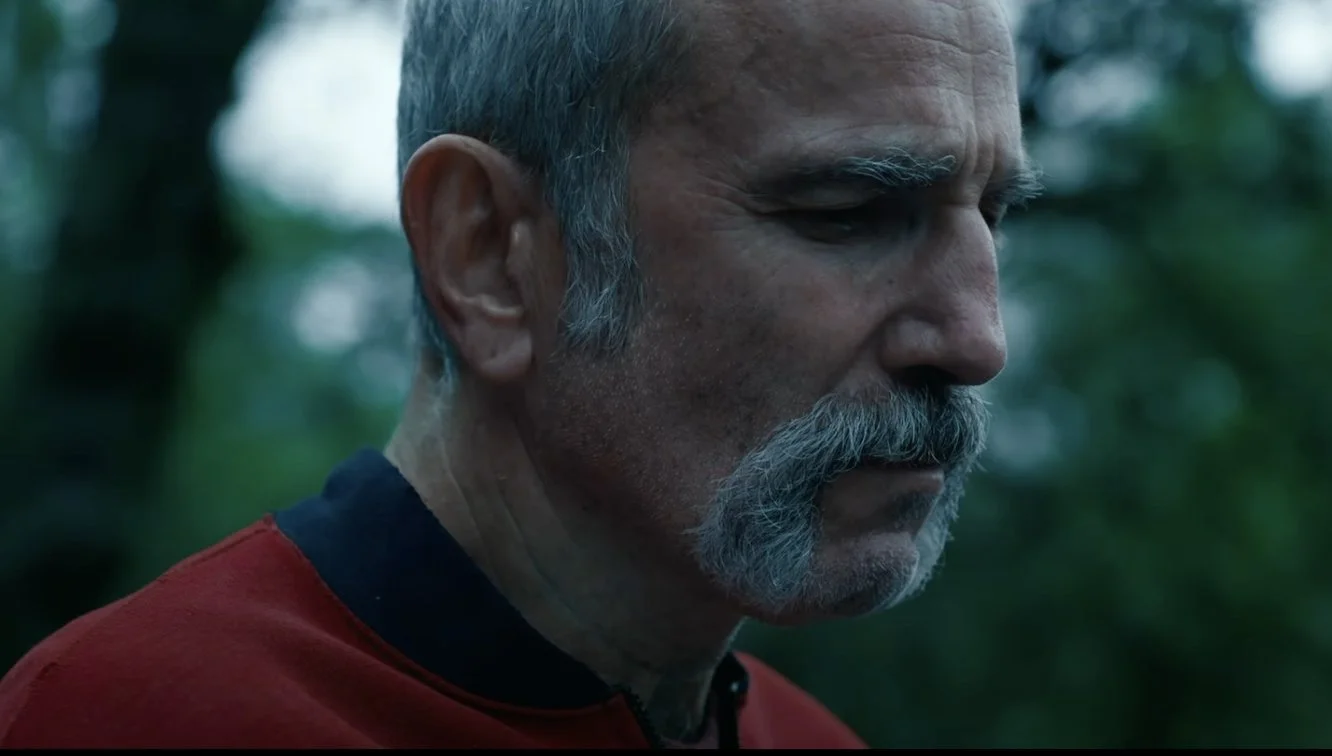
Eight years ago, Daniel Day-Lewis starred as Reynolds Woodcock in Paul Thomas Anderson’s Phantom Thread, a playfully stitched disruption of polite society…among many other elements (PTA is a consistently proven master of interconnected storytelling). Day-Lewis’s presence on screen has been deeply missed since then. While rumblings of retirement had emerged around the time Phantom Thread was released, it was only a matter of time before a new role tempted him back into the craft. A truly enticing role can bring nearly any actor out of hiatus. Anemone is indeed for the hungry boy. It’s a monologue-heavy drama without the excessive wordiness, relying more on the actor’s facial expressions and body language to convey his reclusive character’s interiority. Day-Lewis, who has blessed us with one acting masterclass after another, is back with something more personal, by nature and design. Not only is he the star, executive producer, and co-writer on Anemone; the film marks the feature directorial and screenwriting debut of his son, Ronan Day-Lewis. The pair navigate experimental terrain as they weather emotionally gruelling familial storms in Northern England. While the story buckles under the weight of heavy symbolism, there’s a great deal of compelling narrative tension bubbling underneath.
Anemone begins with a brace for impact. Jem (Sean Bean) says a prayer to himself and briefly comforts his wife, Nessa (Samantha Morton), before venturing out into the woods to reconnect with his estranged brother, Ray (Day-Lewis). It’s not exactly a reconciliation, but a reawakening on the horizon when Jem ruggedly appears at Ray’s doorstep, and is simply let in. For a while, both brothers sit in silence, drifting towards a haunted past, where Ray begins his first of a few killer monologues. He recites as though performing a soliloquy under a spotlight on stage, and Jem listens as though sitting front row in the dark. The dialogue is transporting. The creaking and crackling of Ray’s cabin, enveloped by violent winds, ground them in the present. Yet, there is something otherworldly about the location; it’s prone to the most vivid apparitions, as Ronan Day-Lewis would go on to explore.
Back in civilization, Nessa (Morton) and her teenage son Brian (Samuel Bottomley) sit in a similarly loud silence of unspoken trauma. While often isolated from each other, they share the thundering storm of Ray’s past hanging above them. Years ago, Ray had left his family behind. Now, Jem has gone to lure him out of the woods and back home to confront personal demons head on. Unraveling at a slow burn, the film sits in discomforting environments and bleak atmospheres. The direction and writing excel at emphasizing that there is no easy way out here. Rocky roads and punishing weather have stirred a storm in Ray, and Daniel Day-Lewis immerses himself into the character’s deeply wounded frame of mind.
The film’s official premise — an exploration of complex ties between brothers, fathers, and sons — acts as a loose framework for director Day-Lewis to experiment. He goes for a shrouded character study in a fight against nature and its harsh elements. And of course, his vision is in excellent hands. Naturally, the actor’s return builds more than enough anticipation to pique curiosity. Day-Lewis keeps the momentum going as he devours a handful of monologues, making each line feel as though it’s just come to him, right then and there. The introductory monologue in Ray’s cabin sets a painful tone, as he draws from a devastating memory of abuse. With remarkable control, Day-Lewis brings the character’s emotionality and interiority to the surface, while holding space for his co-star to react.
Jem’s character is the break in the storm. He’s not necessarily there to verbally or physically engage, but his presence attracts the attention of his brother’s pain. Like moths to a flame, as the saying goes. The narrative setup initially suggests that this story will follow two brothers patching up their grievances with each other. But Jem’s character feels written as the ignition for Ray to restart. Jem is the catalyst for a turning point for how Ray has dealt with severe guilt and shame all these years. In a standout scene of Ray punching Jem, the violence feels random at first, until the realization that Ray’s anger is pointed towards being made to confront the contemporary.
The film is a double-edged sword in its use of imagery and symbolism. On the one side, Anemone excels at making you feel the environment on a visceral level, from the vivid cinematography to the impactful sound design. On the other hand, the film relies heavily on symbolism and stormy weather to evoke a level of tension that Daniel Day-Lewis’s performance already does, just in physicality alone. Notably, the film’s second half features a glowing apparition that leans slightly frustrating in its ambiguity. Additionally, whereas Ray’s character unravels with a thoughtful slow burn, the writing of Nessa and Brian’s characters back home is more repetitive in the themes they convey.
Anemone hinges on the brilliance of Daniel Day-Lewis to communicate a world of pain from the get-go. The film’s opening minutes speak volumes about Ray’s shielded wounds, bottled frustration, and decades worth of distance from his family. And in the shrouds, it’s not the imagery that provides clarity, but Day-Lewis’s performance. Not only does he masterfully illuminate Ray’s trauma, but he conveys the character’s newfound path to healing in real-time, bringing raw pain to light. With each new monologue comes another personal revelation, and his work gives the story new texture. While Anemone takes wobbly turns, in its experimental nature of figuring out what works and what doesn’t, the astonishing acting masterclass at its core paves a reliable path to follow.
Focus Features and Universal Pictures Canada will release Anemone nationwide on October 3.
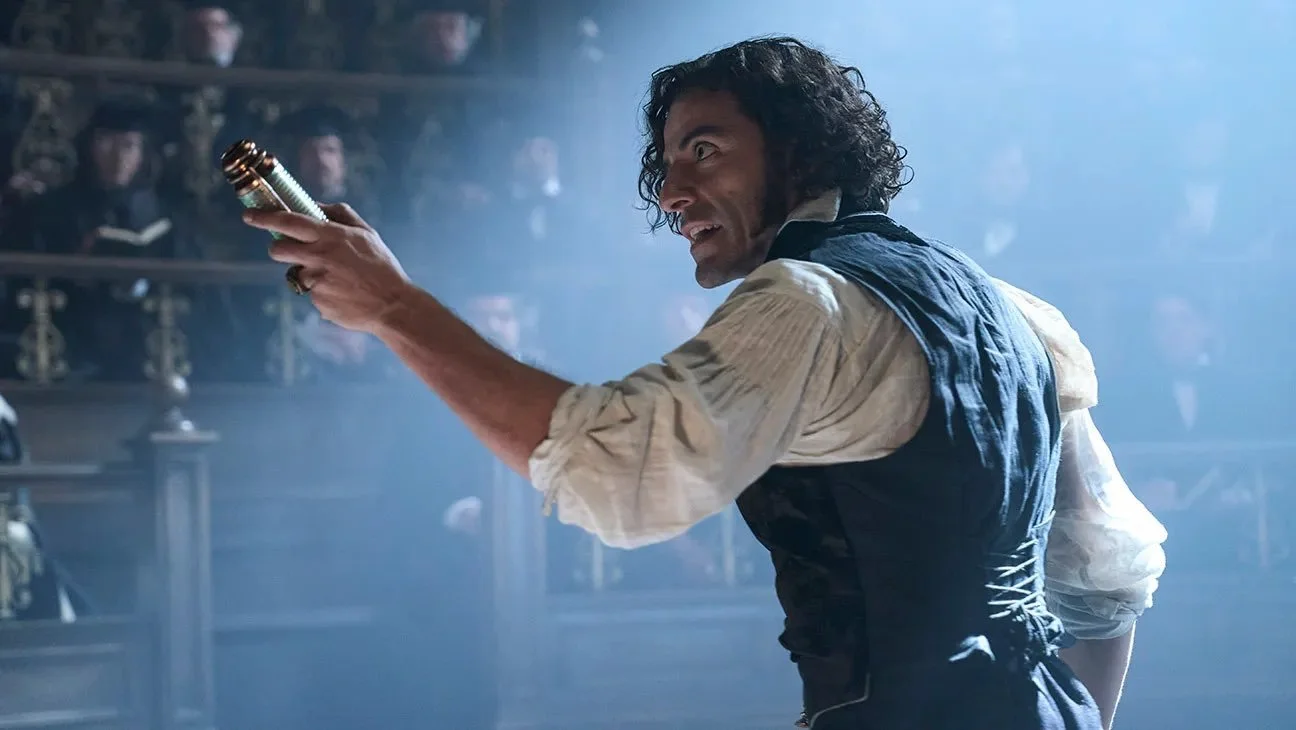
TIFF 2025: ‘Frankenstein’ Review
October 16, 2025
“My person was hideous and my stature gigantic. What did this mean? Who was I? What was I? Whence did I come? What was my destination? These questions continually recurred, but I was unable to solve them.”
It is hard to overstate the impact of Mary Shelley’s gothic literary masterpiece, Frankenstein (The Modern Prometheus), which she completed writing at just eighteen years old. Referred to as the birth of science fiction, Frankenstein was written at a time of social change. Thinkers of the Romanticism movement, which peaked in the 19th century when Frankenstein was first published, embraced the emotional depth of humanity. In challenging Enlightenment notions that the universe was controllable, the Romantics underlined the beauty in the unknowable. Such ideals can be found in Victor Frankenstein’s obsessive pursuit of scientific discovery, and in his creature’s intense expression of individuality. Shelley’s timeless tale of creation and abandonment has seen several adaptations, but none as all-embracing of its layers than Guillermo del Toro’s Frankenstein.
It felt written in the stars that del Toro, who has always approached monsters with an empathy to understand them, would make Frankenstein’s creature feel truly alive in the modern sense. Echoing themes of fatherhood and belonging, del Toro stitches together an adaptation from deeply personal threads. Beneath the nightmarish imagery, at the heart of Frankenstein is a drama about a misunderstood being in search of a companion. Shelley’s sensibilities can be found in del Toro’s gorgeously crafted vision; he challenges you to confront the unknown, the psychological torment of abandonment, the refusal to appreciate what you have created, all through a lens of compassion and forgiveness.
As the film’s tagline goes, there are two sides to every story. Frankenstein explores the central characters, Victor Frankenstein (Oscar Isaac) and The Creature (Jacob Elordi), as two sides of the same coin, both representing the complexities of humanity. Split between ‘Victor’s Tale’ and ‘The Creature’s Tale,’ the film underlines a mirror dynamic of love and loathing, speaking to a father and son dynamic as the connective tissue between them. Tormented by the loss of his mother Claire (a truly unrecognizable Mia Goth), Victor wishes to conquer nature by reanimating the dead. His all-consuming ambition freaks out the medical science community, but intrigues Henrich Harlander (Christoph Waltz), a rich dealer who finances Victor’s experiments, including that of animating The Creature. It’s not that Victor has created an otherworldly monster, but rather an extension of his monstrous and manic arrogance. Thinking he can play God and govern the will of another being, Victor refuses to acknowledge the humanity of his own creation. He abandons “it” out of horror and disgust, putting The Creature on a painful path of isolation.
The tenderness of Frankenstein lies in The Creature’s chapter. He embodies conflicting emotions of love and loathing towards his creator, who has given him both life and unspeakable torment. But he cannot live, not truly. The Creature’s aliveness — his initial childlike needs, his development of emotional intelligence, his desire for companionship — is met with rejection. Victor refuses to create a companion that would make the journey more tolerable, and The Creature spirals out of control to exact revenge. It’s easy to identify with The Creature’s vulnerability and yearning to find out what he’s made of, thanks to a magnificent collaboration between del Toro and Elordi. With del Toro’s earnest interpretation of monsters as outsiders, and Elordi’s transcendent performance as a lost soul, the Creature’s tangled emotions come alive.
The DNA of Frankenstein echoes throughout del Toro’s past work, in which he often explored how real monstrosity is not of the physical kind, but of an inhumane soul. Remnants of The Creature and Victor’s relationship can be found from such contrasts between The Pale Man and Captain Vidal in Pan’s Labyrinth, and The Amphibian Man and Colonel Strickland in The Shape of Water. In del Toro’s Frankenstein, it’s not just the fear of the unknown that drives Victor’s cruelty, but the refusal to accept responsibility for what he has brought into the world. Del Toro leans into a compelling father and son dynamic, best conveyed in the film’s closing scenes, when The Creature’s vengeful hunt for Victor reaches some emotional closure. Their conversations aboard an Arctic ship play out as a family drama full of pain and forgiveness. Isolated from the environments that shaped them, all that’s left is the complex humanity of both characters, which Isaac and Elordi devour.
Isaac’s Victor has a manic rock star energy, as though the laboratory is his stage to create a legacy. One can feel the blind ambition pouring out of his character; even the assembling of The Creature, typically painted in a menacing and fearful light from previous adaptations, is given more exuberance with Alexandre Desplat’s vibrant score. There are glimmers of hopefulness in bringing life into the world that are immediately stamped out by Victor’s cruel disdain for his creation. Isaac creates a humanity-centred portrayal that adds layers to the “mad scientist” persona often attributed to Victor Frankenstein. A testament to Isaac’s charisma, he can make the most propagating speeches feel genuinely groundbreaking, and brings an electric energy through his character’s movement. It’s a stark contrast to the moments of Victor in the Arctic, at the hands of The Creature’s suffering. He’s a withering, disillusioned shell of the egotistical man he once was. Isaac perfectly captures Victor’s haunted, reflective body and soul in those moments.
Jacob Elordi personalizes a classic role in the most vulnerable and tender of ways. Frankenstein’s monster is a character many think they know; for starters, he is often mistakenly referred to as the titular role. In del Toro’s Frankenstein, he is emphasized as the abandoned outsider who yearns to belong. He is the newborn learning the ways of the world. He also embodies horror through acts of violence, as he kills innocent beings in a vengeful hunt for Victor. The Creature’s Gothic tragedy is brought to life by an extraordinary Elordi, whose portrayal is both threatening in stature and gentle in spirit. His vulnerability, voice work, and movement add a tremendous emotional through line to The Creature’s chapter. Among his most impressive moments are when The Creature befriends a blind man (David Bradley) at a cottage in the forest, and learns of human nature by observing the family that lives there. There’s immense comfort and heartbreak from Elordi’s “Friend” line delivery, and on top of the emotionality of this character, the actor creates a sensory experience using his physicality.
The most widely known image of Frankenstein’s monster, flat-headed and bolt-necked, can be traced to Boris Karloff’s portrayal in 1931’s Frankenstein (followed by 1935’s Bride of Frankenstein and 1939’s Son of Frankenstein). Del Toro’s vision, brought to life by Kate Hawley’s unique costumes and Mike Hill’s creature design, stays truer to the book. The Creature’s stringy hair and mummy-like appearance, in addition to Elordi’s soulful eyes, also evoke comic artist Bernie Wrightson’s gorgeous illustrations for the 1980s novel edition of Frankenstein. Wrightson’s influence can be spotted throughout del Toro’s film, from the layered costuming to the detailed production design by Tamara Deverell (Nightmare Alley).
As can be expected from any del Toro production, he has a brilliant eye for visuals. He also has a team of frequent collaborators, like composer Alexandre Desplat, who understands his aesthetic. Desplat’s sweeping score breathes life into the film, and sometimes subverts expectations of a scene (such as Victor’s assembly of The Creature). Cinematographer Dan Laustsen (The Shape of Water; Crimson Peak; Nightmare Alley) brings out the realism and emotional focal points in grand set pieces. Victor’s towering laboratory, complete with an elaborate round window, feels handcrafted from top to bottom and all corners. The laboratory is a neat example of how well Laustsen plays with sun light against shadows. Using a lot of practical lighting, he gives the film a modern feeling, underlining the contemporary themes of this story.
The film also highlights effective colour palettes attributed to each character, such as The Creature’s cool blue tones and Victor’s bright red accents. An especially striking pop of colour is Claire (Goth) in a bright red gown as she descends the stairs of an ominous castle. Goth, who also plays Elizabeth Lavenza (a romantic fixation of Victor and The Creature), is the picture of gothic horror elegance in this film. The gowns accentuate Goth’s ethereal presence throughout, as a character of empathetic curiosity and transparency towards The Creature. While Goth has a fleeting dual presence in the film, she moves like smoke. She has a lingering impression that carries when she’s not on screen, in part because she embodies the film’s heart, treating The Creature with the care that Victor was responsible for.
Not all of the ambitious imagery lands. The film’s Arctic opening sequence has an oddly artificial look. The special effects and fight choreography put the film’s visual language off to a distracting start. The glossy sheen disappears once Victor’s chapter begins, however, the recounting of his story brings up issues of pacing and an overstuffed plot. Not only does Victor’s perspective become slightly reiterative, but his interactions with Harlander (Waltz) are simplistic and dull. Thankfully, the film picks up steam with The Creature’s chapter - this is where the adaptation feels most alive. As Shelley does for the reader, del Toro encourages the viewer to question perspectives, and recognize moral ambiguity as opposed to good versus evil.
Guillermo del Toro’s Frankenstein reimagines the novel in a both literal and imaginative sense. It’s straightforward in its themes and characters. It’s indebted to Shelley’s world-building, occasionally to a fault when certain inclusions go under explored. By embracing a multi-layered narrative structure, which humanizes The Creature, del Toro keeps a fire burning for profound questions that the novel proposed, particularly around the responsibility of a creator, and the consequences that stem from such abandonment on an emotional and societal level. Above all, Frankenstein radiates earnestness. Victor and The Creature, personalized through a father and son dynamic, echo the film’s core theme of atonement. With deep respect for the source material and an understanding of its timelessness, del Toro brings his passion project to life by wearing his heart on his signature sleeve.
Guillermo del Toro’s Frankenstein arrives in select theatres on October 17, followed by a Netflix release on November 7.
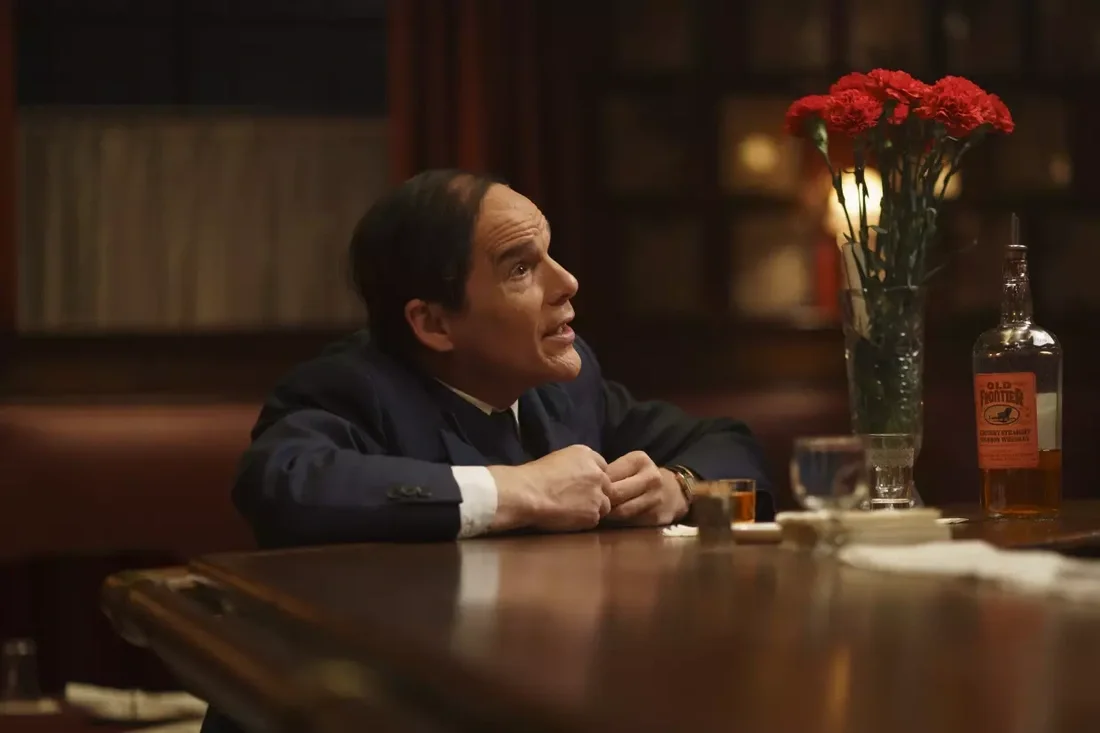
‘Blue Moon’ Review
October 31, 2025
If any creative duo could interpret a 20th-century lyricist’s legacy as a hangout film and a breakup film, it’s Ethan Hawke and Richard Linklater. From the achingly romantic Before trilogy and the coming-of-age epic Boyhood, to the surreal Waking Life and claustrophobic Tape, Hawke and Linklater have leapt through time in search of purpose and meaning. They’ve perfected the walk and talk. They’ve captured the highs and lows of long-term relationships, making deeply conversational imprints in cinematic history. They understand the beauty of a good hangout and the heartbreak of a faded connection. When you know what it’s like to be in a thriving relationship, whether it’s romantic or artistic, the thought of losing that connection is haunting. Hawke and Linklater’s own creative partnership makes them the perfect storytellers to find the nostalgia and the heartache in songwriter Lorenz Hart (Hawke), whose creative partner of 25 years, Richard Rodgers (Andrew Scott), left him for Oscar Hammerstein II (Simon Delaney). Adding salt to the wound, Rodgers and Hammerstein went on to make the Broadway smash hit, Oklahoma!.
Blue Moon, Hawke’s ninth collaboration with Linklater, is a wistful chamber piece about artistic betrayal. Written by Robert Kaplow (who previously penned Linklater’s Me and Orson Welles), the dialogue echoes tragic sounds from an artist who “went directly from childhood to washed up” and is now past his prime. Hart, having just left the Broadway premiere of Oklahoma!, arrives at Sardi’s in New York City for the after-party and beelines to the bar. He complains to the sympathetic bartender, Eddie (Bobby Cannavale), that the show is terribly sentimental. Hart insists it’s not jealousy speaking, but his body language and facial expressions suggest otherwise. Hart’s forthcoming thoughts would go on to reveal deep layers of bitterness and sadness about the fact that Oklahoma! — about to become Rodgers’s greatest success — was accomplished without him.
The film takes liberties to convey a painfully vulnerable period in an artist’s life, where Hart has been defined by a decades-long partnership and must now rediscover himself as a storyteller. His outward personality makes him seem alert, dynamic, and fun to be around for his witty anecdotes and snappy remarks like “Who wants inoffensive art?”. When Hart looks inward, however, he doesn’t like what he sees: a bitter alcoholic and an insecure, self-loathing, diminishing talent who feels useless creatively. Hart’s beloved musical hits like “My Funny Valentine,” “Where or When” (covered notably by Harry Connick Jr. for When Harry Met Sally), and the titular “Blue Moon” have kept his talent immortal to this day. But on March 31, 1943, eight months before Hart’s death, American theatre was changing in real time. And he was getting left behind.
Lorenz Hart is not a typical leading role, which makes the spotlight on him all the more enigmatic. His work is heard and not seen, and he’s a complicated personality to follow. Blue Moon finds a compelling perspective by looking at the character’s downward spiral as a creative eulogy. When Rodgers and Hammerstein walk into the bar, they seem to view him in a translucent light, as though he’s digging his own grave and fading before their eyes. To mask the melancholy, Hart saves face and puts on a happy smile. With one foot still in the door, he tries to sell Rodgers on the idea that they could do something more emotionally complex and unsentimental than Oklahoma!. Their conversation, beautifully acted by Ethan Hawke and Andrew Scott, captures the daunting energy of putting yourself out there, and shows us just how strongly attached Hart’s own artistic identity is to Rodgers’s.
Blue Moon thrives from its dialogue-heavy script and real-time structure thanks to a towering Ethan Hawke, whose own dedication to his craft pours out of this character. Hawke has given us plenty of remarkable performances over the years, but nothing quite as physically and emotionally transformative as Lorenz Hart. Starring in every frame, Hawke moves between refusing to face the changing times and chasing after the ticking clock. He finds a magnificent balance between Hart’s charismatic, self-deprecating, and self-destructive qualities. All the while, he is struggling with his sexuality. He is struggling with his depression, with his alcoholism, with the loud silence of being alone. There’s a powerful through line of heartache and vulnerability in Hawke’s work, which you can feel down to the way he moves through space.
It’s not just the visual trickery that makes Hawke look smaller than he really is; it’s how Hawke can carry himself, as though he’s whittling away in real time, and the state of musical theatre moves like a rug getting pulled from underneath him. He also commands the screen with hearty soliloquies. Even in moments where the story feels repetitive and indulgent, Hawke creates such an irresistible portrait that you feel drawn to his energy. Even though Hart’s presence at the bar feels so tragically transient, especially given the context that the film takes place so closely before his death, he leaves a reverberating impression.
There’s a special intimacy to this character study that speaks to some of Linklater’s signature strengths: he makes the simplicity of walking and talking feel incredibly cinematic, and he lets the actors truly explore their environments. From the globe-trotting romance of Before Sunrise, Before Sunset, and Before Midnight to a bunch of college teammates coming-of-age in Everybody Wants Some!!!, Linklater excels at these stories centred around hangouts. Blue Moon plays out as one long, collaborative conversation and Linklater finds narrative tension in the seesaw rhythms of Kaplow’s script. A single exchange between characters — notably an in-depth conversation between Hart and his muse, Yale student Elizabeth Weiland (Margaret Qualley) — can be humorous one minute in an anecdote Elizabeth shares, and tragic the next in Hart’s unrequited love. While Qualley seems a bit out of her depth opposite Hawke, the two still share one of the film’s most impactful scenes here. We get tremendous insight into how Hart navigates through the world, and we’re watching another relationship of his begin to change dramatically in real-time.
Blue Moon maintains a lot of intimacy from taking place mostly in one location. The characters move through Sardi’s like it’s a stage, and they bottle the tension from various small interactions. The tension is palpable when Hart swallows his pride before greeting his longtime creative partner Rodgers’s arrival at the afterparty. Andrew Scott works wonders with short bursts of screen time; he gets under the skin of someone who knows he has just created something major, and every step he takes feels like he’s ascending from Hart. When Hart and Rodgers are huddled in the corner of a staircase, and Hart’s true feelings about Oklahoma! are aired out, Rodgers is always a step higher, while Hart is on a downward spiral. It’s a neat moment that makes excellent use of the location.
While it’s quite premature to consider Blue Moon a deep cut in Hawke and Linklater’s careers, there’s something about this film that feels headed in that direction. There’s a level of lore, and layers of references, that feel out of reach as someone who doesn’t have extensive musical theatre knowledge. But as a testament to how Hawke and Linklater have approached Hart’s character, Blue Moon strikes a universal chord. It’s not at all contingent on what theatre knowledge someone may or may not have. It’s a thoughtful depiction of lost friendship, loneliness, and a long-gone artist whose work so vividly lives on. Since seeing this film, I haven’t been able to get the titular song out of my head. Much like that beautiful melody, echoing through time, Blue Moon carries a special timelessness. And a very long time from now, when we look back on all the cinematic beauty Hawke and Linklater have found in reflections of real life, perhaps Blue Moon will stand out as the deepest cut of their collaborations. It’s the most vulnerable love letter to creative partnerships and the eternal joys and sorrows that they can imprint on who we are.
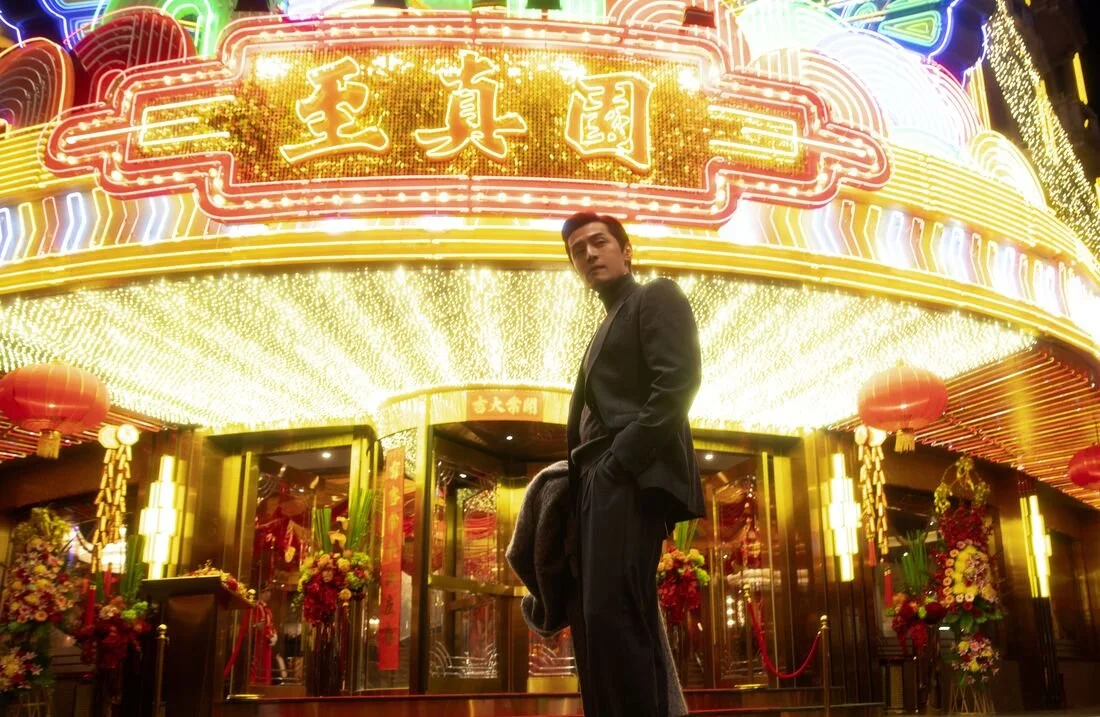
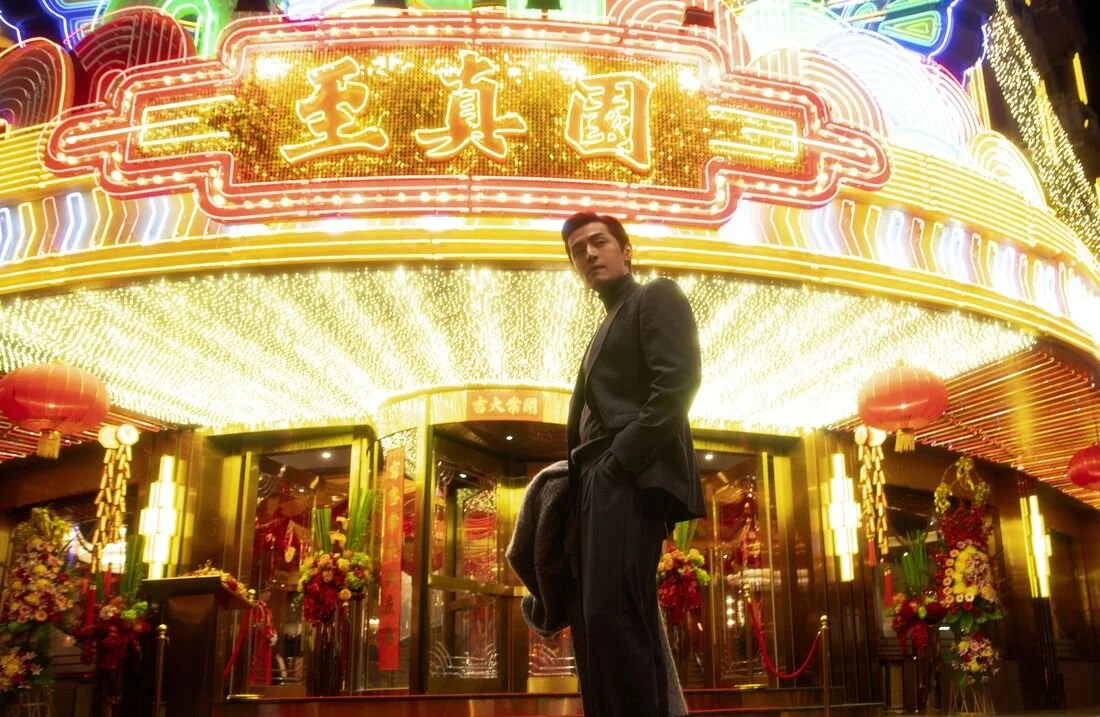
November Exclusive: The North American Premiere of Wong Kar Wai’s ‘BLOSSOMS SHANGHAI’ Will Debut on The Criterion Channel
November 3, 2025
Visionary director Wong Kar Wai has blessed our theatre screens for decades with classics like Chungking Express, Fallen Angels, Happy Together, and In the Mood for Love. Audiences can revisit these cinematic gems in state-of-the-art restorations thanks to The Criterion Collection, which has been dedicated to publishing films from around the world through physical media and an extensive streaming channel. The Criterion Channel, which features the stunning DIRECTED BY WONG KAR WAI collection, will soon be home to another swoon-worthy Wong Kar Wai production: his first-ever television series.
Directed and produced by Wong Kar Wai, the long-awaited Blossoms Shanghai is already a massively popular hit in China. The series originally aired on the Chinese video streaming website Tencent Video in 2023, when it became the most streamed television series nationwide. The story follows young entrepreneur Ah Bao (Hu Ge), a risk-taking businessman (compared to a Chinese Jay Gatsby) looking to make his fortune in 1990s Shanghai. As China’s economy goes into overdrive, the Shanghai Stock Exchange reopening attracts a sprawling group of entrepreneurs, stockbrokers, bureaucrats, schemers, and dreamers, all in pursuit of wealth.
Adapted from the award-winning 2013 novel of the same title by Shanghai author Jin Yucheng, Blossoms Shanghai stars Shanghainese actors including Hu Ge, Ma Yili (as Mr. Bao’s partner, Ling Zi), Tang Yan (as Mr. Bao’s import-export liaison), and Xin Zhilei (as the glamorous femme fatale Li Li). Considering the intrigue of Yucheng’s story and the romanticism of Wong Kar Wai’s vision, it seems this series will give its cast plenty of opportunities to bloom. The Criterion Channel will also provide an exciting launchpad for more North American audiences to discover Shanghainese talent and hopefully spark greater explorations of both classic and contemporary works from different parts of the world.
Per the director’s statement to The Criterion Channel: “Blossoms Shanghai will bring you to Shanghai in the nineties, when the city was redefining itself. It is as much about looking forward as looking back. At its heart, the series is about universal human drives: the pursuit of reinvention, the intoxications of opportunity, and the tension between ambition and love.” Exuberant and intoxicating are just a few signature elements to expect from Wong Kar Wai’s work. In Blossoms Shanghai, audiences can anticipate these elements to shine across 30 episodes of rich world building, community-driven plot development, and resonant themes of idealism, reinvention, and destiny. More on Wong Kar Wai's words about the series's upcoming premiere can be enjoyed here: https://www.youtube.com/watch?v=i-sJDo7H1zM
Beginning November 24, three new episodes of Blossoms Shanghai will be released every Monday at 8 p.m. until January 26, exclusively on the Criterion Channel:
https://www.criterionchannel.com/blossoms-shanghai
Mark November 24 on your calendars and tune in to the official Blossoms Shanghai trailer below:
https://www.criterionchannel.com/videos/blossoms-shanghai-trailer
‘Die My Love’ Review
November 14, 2025
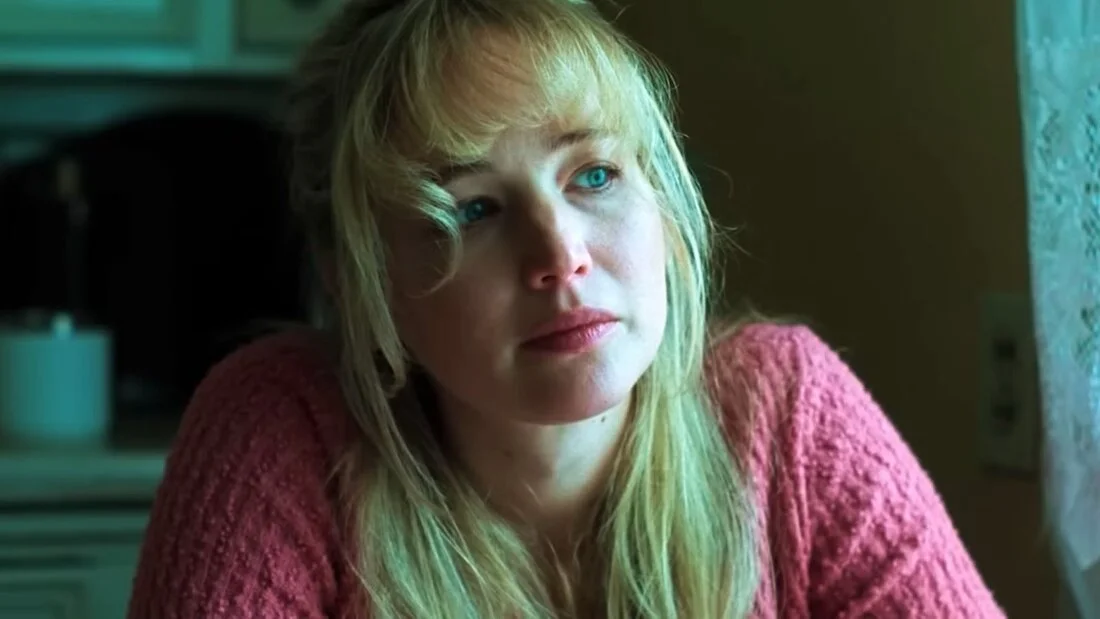
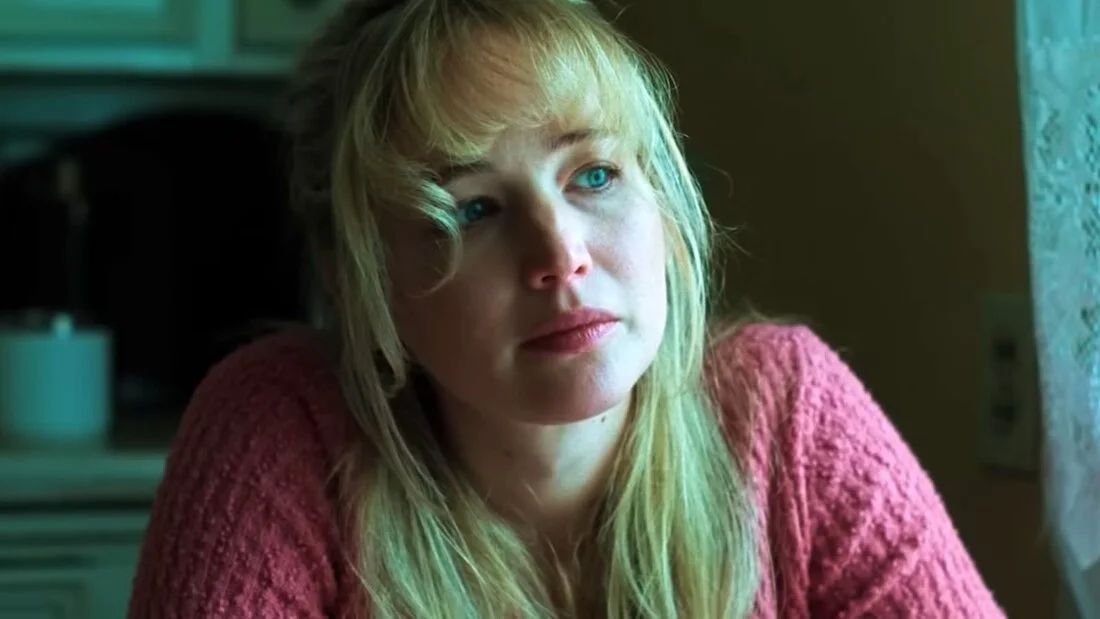
Lynne Ramsay’s Die My Love, her first film in eight years since You Were Never Really Here, roars with a restless energy. It’s an all-consuming journey that demands your undivided attention. The story unfolds in a trance, peering through a woman’s soul and taking shape from inside her head. Playing in between realism and imagination, the auteur puts up a cinematic fight against the societal norms of domesticity. She turns up the volume (with exquisite needle drops) on a suffocating rural existence where unmet desires, a strained marriage, and a terrifying loss of self live.
Things weren’t always this nightmarish. Ramsay opens the film with hopes and dreams; a young couple expecting a baby move into a rundown, but promising, new house. We get an intoxicating montage of Grace (Jennifer Lawrence) and her husband Jackson (Robert Pattinson) dancing up a storm in their new kitchen, boogieing into parenthood. The couple are surrounded by seemingly infinite space to grow, but Ramsay lets us dance in that daydream only for a brief moment. Once the baby is born, the Montana landscape, even with all its vastness, can’t contain Grace’s inner wild child. Nor can this new environment give her the creative spark she needs to continue writing. Fearing becoming invisible, she tries to regain her identity while engulfed in a psychological void. As echoed in the film’s most poignant line, Grace is stuck between wanting to do something, and not wanting to do anything at all.
Based on Ariana Harwicz’s 2012 novel of the same name, Die My Love visualizes a woman’s transformative relationship to herself and her surroundings. Grace has no problem attaching to her son. “He’s perfect,” she explains to a doctor. “It’s everything else that’s fucked.” The confines of polite society, and the expectations of motherhood, close in on her, and there’s nowhere to run. Tension manifests in her body as she crawls her way around, ready to pounce at any moment. Grace’s animalistic impulses, portrayed by a transcendent Jennifer Lawrence, make for an unpredictable environment. It’s through these small, seemingly insignificant moments of spontaneity that we get the most insight about her interior world. The isolating landscape might be limiting for Grace, but Ramsay uses every inch of it to give Lawrence ample room for psychological exploration. As a result, we get stellar moments like Grace’s boredom sequence (set to the poppy Toni Basil song ‘Mickey’), as well as Grace and Jackson’s feverish wedding party, where she unleashes her truest self.
Even though Grace’s perception of reality might be unreliable, and she might be hallucinating certain moments, Ramsay and Lawrence take the character seriously in a tender embrace. They approach her from an unflinching point of view, unapologetically living inside her brain and letting all the emotions run wild. There’s never any doubt that what she’s feeling is real. Every primal expression is rooted in Grace’s perpetual search for her identity back — whether she’s rolling through the fields with a knife, licking and banging on the windows, scratching her nails against the bathroom wallpaper, or barking back at a pet dog (which Jackson randomly brings home without talking to her first). With an intimate aspect ratio, the film lives and breathes Grace’s impulses, giving us the feeling of discovering newly awakened emotions alongside her.
Ramsay knows exactly how to set a mood and capture a vivid atmosphere, especially through the use of sound and music. Working with her longtime sound design collaborator Paul Davies, Ramsay pinpoints several places (namely an incessantly barking dog) to heighten the emotions of a scene and signify a page turning in Grace’s mind. When Grace hears a motorcycle revving outside her house, for instance, there’s a moment of escapism in Lawrence’s reaction that ultimately draws her closer to a motorcycle rider named Karl (Lakeith Stanfield). Though, the depiction of their relationship speaks to the rare occasion in this film where Ramsay’s vision loses focus. Karl’s characterization, and the extent to which he’s meant to be a figment of Grace’s imagination, becomes too much of an enigma.
Ramsay’s balance between realism and imagination shines best in the depiction of Grace’s fragmented, free flowing self. Jennifer Lawrence unlocks a fascinating character study with this character and delivers career-best work. She keeps us on the edge of our seats, and lives in compelling spontaneity. The role plays to Lawrence’s strengths in many ways — she’s funny, goofy, instinctive, and a truly natural performer. Lawrence also gets the opportunity to take an enormous creative swing, by immersing herself into the deep end of primal impulses and self-destructive tendencies. She embraces the nonlinear, unfiltered structure and takes this role beyond definitions of a postpartum experience. It’s through her raw and real portrayal that we can gather so much more, whether it’s the major creative block she’s facing or the pressures to exemplify a “good wife.” Die My Love also plays in the vein of Darren Aronofsky’s Mother! when it comes to Lawrence’s risk taking. She’s explored the indie world with Lila Neugebauer’s Causeway, the raunchy comedy with Gene Stupnitsky’s No Hard Feelings, and following up with Die My Love gives us an adrenaline rush of anticipation for what’s to come in her career. Lawrence continues to show why she’s one of the most invigorating and intuitive talents.
The way Lawrence has defied expectations and transcended beyond her most widely known roles, namely The Hunger Games franchise and her Oscar-winning turn in Silver Linings Playbook, is very reminiscent of her Die My Love co-star Robert Pattinson’s acting journey. Since exploding onto the scene with the Twilight films, Pattinson has found an individualistic path onto becoming the actor he is today. In the span of ten years, he’s starred in films by David Cronenberg, Josh & Benny Safdie, Claire Denis, Robert Eggers, Christopher Nolan, Hayao Miyazaki, and Bong Joon Ho. Plus, he gave us a great new Batman. In Die My Love, Pattinson delivers some of his most alive and electric work. He both matches and pulls away from Lawrence’s energy, in equal measure, speaking to a transformative love story at the film’s core. Jackson and Grace are experiencing intense shifts in their relationship, and he’s bewildered at not being able to recognize her. He’s more concerned with fitting into societal moulds and satisfying his own needs than he is with attempting to understand Grace’s perspective. And yet, Pattinson doesn’t let us forget that there’s still love in their relationship, expressed most freely in the quieter moments between them.
So much of this film depicts Grace’s search for identity in a distorted reflection, where she no longer recognizes herself outside of being a mother and a wife. From the outside looking in, her mother-in-law Pam (Sissy Spacek) seems to be the only person who truly acknowledges and recognizes what’s going on. When Grace and the baby make a surprise visit to Pam’s house one day, we get a stunning conversational moment of generational resilience and survival. Pam reassures Grace that after having a baby, “everybody goes a little loopy the first year, but [she’ll] come back.” Pam identifies with the primal void and truly sees Grace, which adds incredible warmth to all of their scenes together. It’s no surprise that Sissy Spacek, personally on my Mount Rushmore of greatest actors, is absolutely phenomenal here. What strikes a radical chord is how Pam transcends what could have been a two-dimensional role, and becomes a powerful generational voice in the film. She’s a woman who has come out the other side and can impart words of wisdom. And she’s a woman who sleepwalks with a shotgun, cackling across the rural nighttime roads.
There’s a grounding energy to Grace and Pam’s scenes that speaks to how well Ramsay keeps Die My Love firmly planted in human nature, even when visually it feels otherworldly at times. When Grace takes the baby and disappears into a forest for hours, while the song ‘Little April Shower’ from Disney’s Bambi plays, Ramsay evokes a dark fairytale. The forest seems so far away, like another dimension where she could escape. The thematic resonance of this setting would become crucial to the film’s ending, which leaves us on a question mark of where Grace has gone, exactly. Is she setting fire to her life to start anew? Perhaps a fiery flicker will light a path pack towards the parts of her that she lost after having a baby? Is she embracing the raging fire within, and never going back? Whatever the case may be, ultimately Die My Love resonates as an unapologetic love story where our relationships to ourselves, and to others, can change so radically over time.
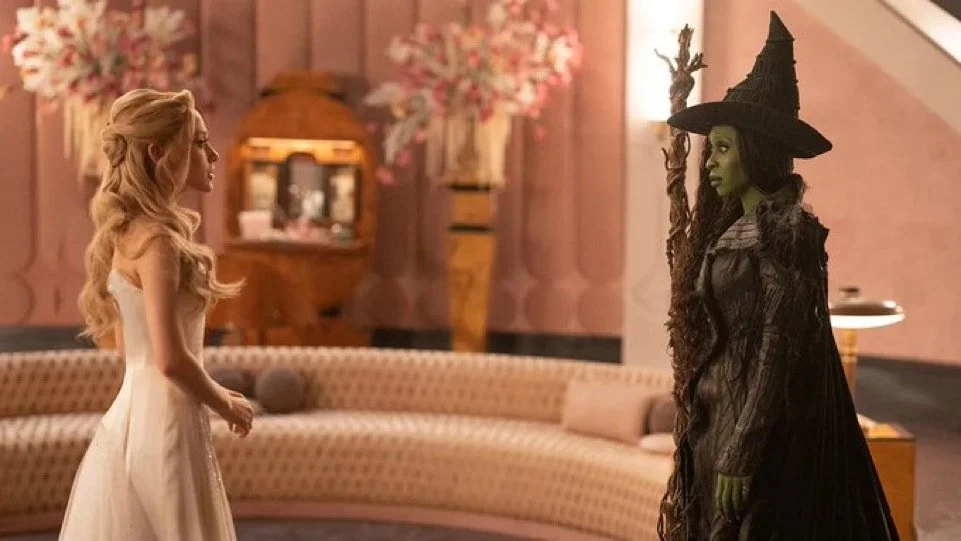
‘Wicked: For Good’ Review
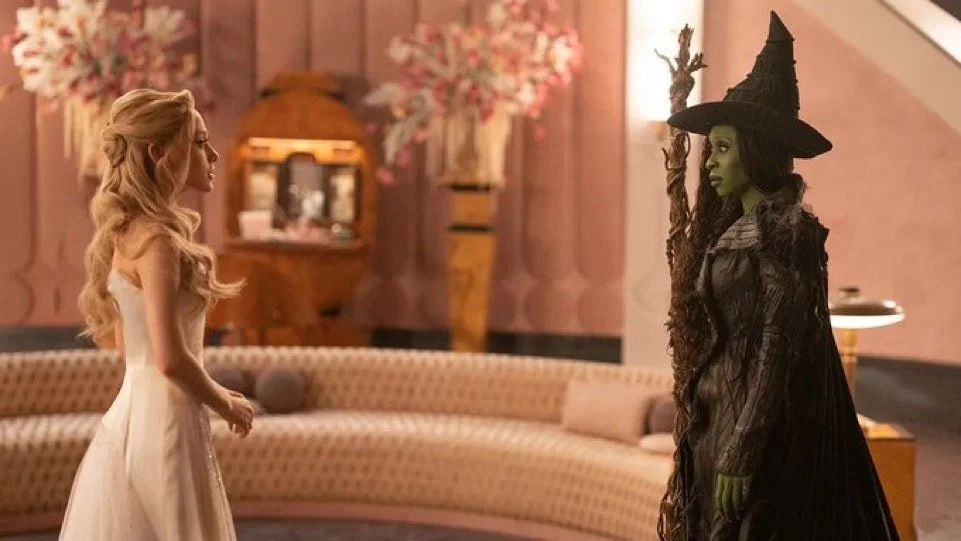
November 19, 2025
When director Jon M. Chu lived up to expectations and delivered a “thrillifying” Wicked: Part One, he also set the bar incredibly high for audiences, not to mention himself. Chu partly succeeded in adapting a long-running musical phenomenon into a cinematic phenomenon. He told a beautiful love story about a female friendship, one with the power to change Elphaba (Cynthia Erivo) and Glinda (Ariana Grande) for good. Wicked: Part One took the world by storm, winning two Academy Awards and outshining Mamma Mia! to become the highest-grossing Broadway musical film adaptation. The film’s cultural impact embedded the pink and green color palette into our consciousness. Most notably, the film showcased spectacular performances by Erivo and Grande, each of whom brought deep respect, passion, and understanding to the material. Together, they built the foundation for us to feel emotionally invested in a second act, eager to follow Elphaba and Glinda down the yellow brick road. When reunited in Wicked: For Good, the best friends are divided. They fight against all odds, reckoning with the reality of their shared world melting away. This journey poses challenges for the beloved characters, and for Chu, who attempts to balance a clumsily written screenplay with new original songs and an old Kansas tale. While part two lands with an emotional goodbye that will win hearts, certain narrative and visual choices put up several roadblocks along the way.
Wicked: For Good returns to Oz on a bleaker note. The Wizard (Jeff Goldblum) is no longer an emblem of endless possibilities, but rather of limiting views and manipulative rhetoric. The stakes are higher, the tone is darker, and the political elements are more deeply woven. And the film excels at setting a shadowy mood for a changed Oz. The illusionary bubble of this world has been popped. Elphaba and Glinda are on opposing sides of public perception; the former leans into an antagonized Wicked Witch of the West after failed attempts to expose The Wizard’s lies, and the latter can’t resist waving the wand of goodness until realizing that with great power comes great responsibility. The dynamic duo have several moments to shine throughout, and they shine bright. But overall, there isn’t enough compelling material to justify this second part as a full-length feature. Co-writing duo Winnie Holzman and Dana Fox can’t quite find a consistent rhythm as they deepen some elements and gloss over others, stumbling through connections to The Wizard ofOz along the way. And Chu’s oddly distant direction feels as though he’s waving a nostalgic wand, hoping to recreate magic and not finding a spell that works.
Wicked: For Good picks up twelve tide turns after Elphaba defied gravity and left Glinda behind. Shiz headmistress Madame Morrible (Michelle Yeoh) continues to tarnish Elphaba’s name, and The Wizard continues to let it happen. In an abuse of power, they label Elphaba as The Wicked Witch of the West, and the Ozians live in that bubble of hate-filled propaganda while she remains ostracized. Elphaba finds solace alone in the Enchanted Forest, where many of the animals have gone into hiding, and makes it her mission to expose The Wizard’s lies. Meanwhile in the Emerald City, Glinda has half-heartedly embraced the role of the Good Witch. She’s conflicted about her position; echoed in the lyrics of ‘Thank Goodness,’ she knows that change is necessary, but she’s not ready to defy the powers that be. Glinda can’t resist seeking validation from her fellow Ozians as they look to her for goodness, nor can she contain her excitement about getting her own bubble, designed with a secret button that charms everyone into believing she has powers. Glinda also charms her way to Fiyero (Jonathan Bailey), catching him off guard by announcing their engagement. But Fiyero has stepped into a new role of his own, as the newly appointed captain of the Gale Force, and he intends to use his power for good.
Glinda and Elphaba’s internal conflicts drive this story to a tearful conclusion, once again speaking to the casting of Erivo and Grande as the beating hearts of this adaptation. However, the two-act structure around them doesn’t feel fully formed in the hands of Chu and writers Holzman and Fox. Several story developments, namely the dynamic between Nessarose (Marissa Bode) and Boq (Ethan Slater), feel rushed and riddled with plot holes. The underlying tensity in their relationship is given no room to breathe and take shape, which leads to an underwhelming transformation into the Tin Man, whose impressive makeup is diminished by subpar cinematography. Awkward character interactions, like Glinda and Elphaba’s post-tornado fight, disrupt the momentum with strange tonal shifts. The love triangle that emerges between Elphaba, Fiyero, and Glinda also causes a ripple effect of underwhelming storytelling. Erivo and Bailey sadly lack the chemistry to convey their characters’s romance in full bloom, though they still soar in their duet, ‘As Long as You’re Mine.’ Fiyero’s love for Elphaba creates an internal conflict in Glinda, and Grande plays this penny drop moment of realization brilliantly. Out of hurt, Glinda makes a decision that leads to a whirlwind of consequences. When Elphaba gets lured to Munchkinland, the film inexplicably rushes through two pivotal moments: one involving Nessarose’s fate, and the other an introduction to beloved characters from The Wizard of Oz.
Part one’s introductory buildup to ‘No One Mourns the Wicked’ gave us teensy glimpses of Dorothy, the Scarecrow, the Tin Man, and the Cowardly Lion on their way to see The Wizard. With a single image, we knew their place in the story. In part two, Chu attempts a similar level of subtlety with the clear intention of not wanting to distract from the film’s central story. However, Chu reserves that elusiveness only for Dorothy and the Scarecrow, while indulging in more backstory for the Tin Man and the Cowardly Lion’s connections to Elphaba. The film wants it both ways, and as a consequence, the inclusion of The Wizard of Oz characters feels like an experimental workshop. Chu’s noticeable uncertainty around who, when, and how much to show creates a mishmash of confusing camerawork. Some characters are forced into frame (like the Tin Man transformation), while others are forced out of frame (most egregiously, Dorothy), seemingly without rhyme or reason. While it’s an entirely understandable decision not to reveal Dorothy’s face, Chu keeps such a dramatic distance from this reimagined character that her presence becomes a distraction.
Additionally, part two is inherently at a disadvantage on the musical number front, as the majority of Wicked’s most rousing songs (‘Defying Gravity’; ‘Popular’; ‘No One Mourns the Wicked’) originate in part one. While Wicked: For Good includes gems like the poignant ‘Thank Goodness / I Couldn’t Be Happier’, the vulnerable ‘No Good Deed,’ the lovely reprise of ‘I’m Not That Girl,’ and the titular tearjerker ‘For Good,’ these numbers resonate far more as vocal showcases than as inspired visual achievements. The exception is ‘For Good,’ a stunning duet that makes excellent use of split-screen techniques to heighten the emotional parallels between Elphaba and Glinda. The new songs, ‘No Place Like Home’ and ‘The Girl in the Bubble’ have a far more subdued impact in how they are incorporated into the film. Despite carrying some thematic resonance, both numbers feel tacked on rather than thoughtfully intertwined into the story. In any case, Erivo and Grande rise above pedestrian direction and inconsistent camerawork to convey the emotional depths of their character arcs.
‘The Girl in the Bubble’’s childhood flashback reinforces Glinda as the anchor of Wicked: For Good, in the way that Elphaba anchored part one. The screenplay works best when expanding on Glinda’s motivations, and Grande soars with the added material. She conveys a powerhouse emotional arc as we watch Glinda experience difficulty in facing herself, and gradually accept that she’s been changed for the better. She bursts the bubble of people-pleasing, allowing her to clearly address childhood insecurities and connect with Elphaba on a much deeper level. Erivo also reaches incredible new depths as Elphaba. She has so lovingly crafted the definitive version of this character, and her nuanced performance resonates across several registers, from the soul-stirring energy of ‘No Good Deed’ to the melancholy of ‘For Good.’ She delivers absolutely show stopping moments that will invite several rounds of audience applause.
Together, Erivo and Grande vocalize a powerful friendship that knows no limits, and a vulnerable journey in which they both feel truly seen by each other, in a world that has become increasingly cruel. Much of what makes part one soar — from the heart-swelling central performances to the gorgeously immersive crafts (including Academy Award winning costume design by Paul Tazewell and production design by Nathan Crowley) continues in part two. And the emotional goodbye to Elphaba and Glinda’s characters finds a smooth landing. Though, while there’s still magic to be found in spite of the film’s flaws, Wicked: For Good fails to take flight as a whole.
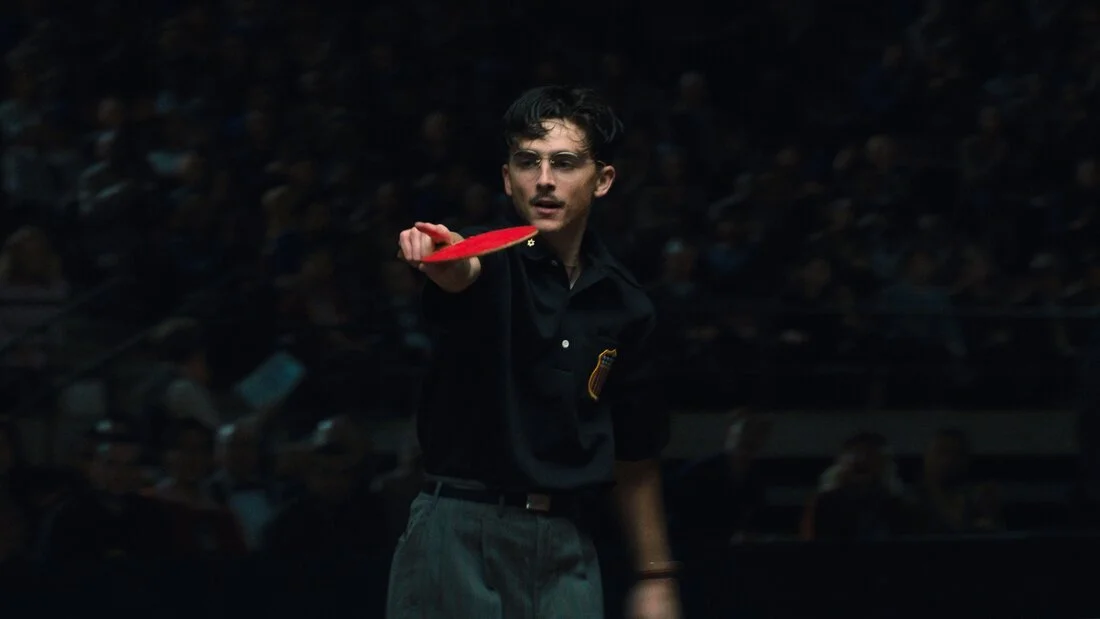
‘Marty Supreme’ Review
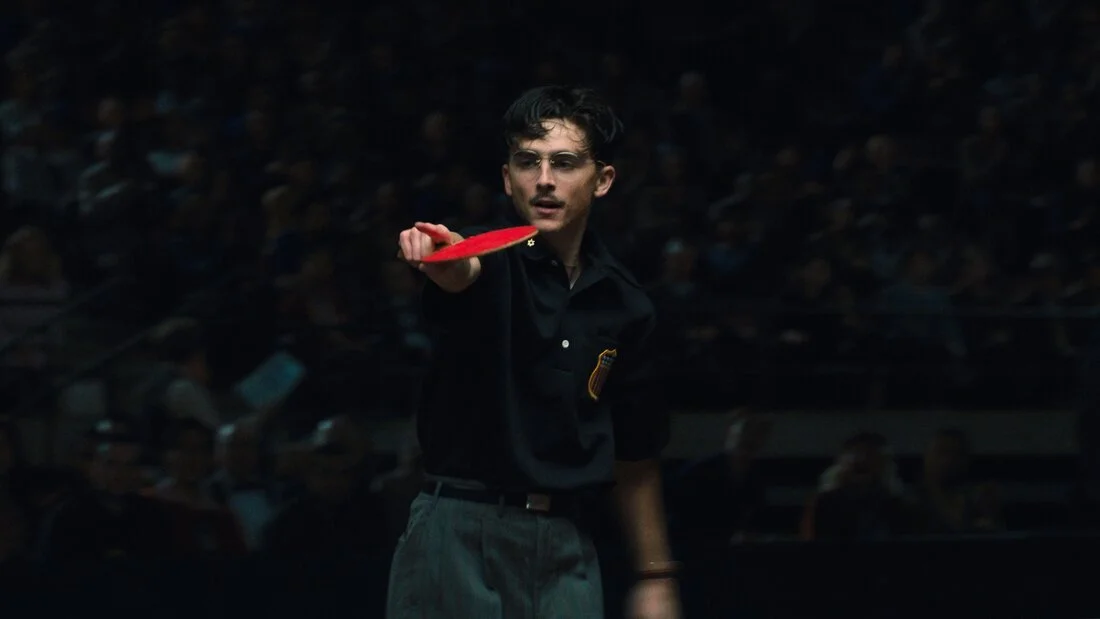
December 10, 2025
In Josh Safdie’s Marty Supreme, Marty Mauser (played by an astounding Timothée Chalamet) wants to rule the world. Marty’s New York City dream is to become the greatest table tennis player of all time. With a relentless optimism and uncompromising attitude, he sets off on a gripping journey in pursuit of greatness. He goes to hell and back on a globe-trotting high horse. He’s bratty, arrogant, and believes he has his dream all figured out. It’s this romantic belief that leads Marty to true perspective in the real world, where every setback serves him one wake-up call after another. Chalamet bursts onto the screen like a wrecking ball, destroying anything and anyone that doesn’t serve a purpose on Marty’s ambitious path. And yet, you can’t help but respect the hustle, especially in a film that builds towards a fully earned emotional breakthrough for its titular player. As expected with Safdie’s signature frenetic style, Marty Supreme spikes your heart rate and fully delivers on an exhilarating adrenaline rush. Though, Safdie throws in a surprising curveball that softens the blows and paints Marty’s journey in a stunning new light. Putting full weight behind the tagline, “Dream big,” Marty Supreme inspires you to persevere.
We meet Marty in New York City in 1952, selling shoes at his uncle’s store on the Lower East Side. Marty has the confidence of a good salesman; to paraphrase a line of dialogue in the film, he could sell shoes to an amputee (a tame juvenile note compared to the abrasive comments he lets roll off the tongue later on). Marty knows his strengths, but an average managerial promotion is not his path. He won’t let his future be decided by a family business. Marty dreams big… “on the cover of a Wheaties box” kind of big. Stuck in a loop of unfulfilled desires and unmet expectations, he pitches his aspirations to everybody around him who will (often begrudgingly) listen. While no one takes him seriously, and they chuckle at the thought of ping-pong even being considered a real sport, Marty’s drive continues to ascend. Dodging his mother Rebecca (Fran Drescher) and his married girlfriend Rachel (Odessa A’zion), Marty jumps through one capitalist hoop after another as he lies his way to the big leagues.
This story of a young man chasing a thrill is right up Josh Safdie’s alley. From Connie Nikas (Robert Pattinson)’s neon-soaked scamming in Good Time, to young-at-heart Howard Ratner (Adam Sandler)’s deadly gambling in Uncut Gems, these characters are always one step ahead…in their minds. Marty Mauser operates in a similar lightning speed — we can’t catch up to him until his journey’s end, where the real world awaits with a hearty serving of humble pie. Though, Marty Supreme accelerates past the bleak conclusions of Safdie’s previous features and radiates the optimism of the American Dream. To reach that point, the film puts Marty through his own personal hell of failure and humiliation. Safdie and his longtime co-writer Ronald Bronstein find an electric narrative in the personal and professional costs of Marty’s conviction. Whenever an opportunity arises, like chance encounters with Hollywood star Kay Stone (a luminous Gwyneth Paltrow) and her wealthy jerk of a husband, Milton Rockwell (a suitably cast Kevin O’Leary), the question is always, what will Marty risk? How far is he willing to go? Playing ball with Marty’s forward-thinking attitude and youthful limitations, Safdie captures a futuristic nostalgia.
Marty Supreme layers a 1950s story with 1980s music, and casts 90s icons alongside the bright young stars of today, creating a timeless story. The titular role needed the energy of a dreamer ahead of his time. An actor fiercely committed to his work who can also pass for a punk kid figuring things out on the fly. Enter Timothée Chalamet, a generational talent whose career ambitions have been leading up to a character like Marty Mauser. He’s been carrying Marty energy in his bones for years, whether by practice (secretly playing table tennis on other film sets) or through his movie star presence (pursuing greatness in his SAG Award speech for A Complete Unknown). One can draw several parallels between Chalamet and Marty (Chalamet’s promotion for the film makes a lot more sense with this character as the context). They’re both ambitious at heart, and Marty Supreme seems a lot closer to home (Chalamet grew up in NYC), and yet, it’s every bit as transformative a role as his previous work.
When you want to be one of the greats, you draw inspiration from the greats. Chalamet followed up his brief role in Christopher Nolan’s Interstellar and his big break in Luca Guadagnino’s Call Me By Your Name with one prolific role after another: Laurie in Greta Gerwig’s Little Women, Paul Atreides in Denis Villeneuve’s Dune films, Bob Dylan in James Mangold’s A Complete Unknown. He wants to be viewed among the greatest actors in the world, standing alongside the legends who came before. Marty, meanwhile, uses himself as a sole reference point for greatness. He wants to become the greatest table tennis player in the world, full stop. This line drawn between the star and the character is what allows Chalamet to strike a believable chord as arrogant, yet humbled to be here.
It’s an isolating path to chase your dreams in tunnel vision and without a moral compass. When in London for a tournament, in which Marty competes against Koto Endo (played by real-life table tennis champion Koto Kawaguchi), Marty’s biggest concern is accommodations. He is so offended by sharing a room with other players and standing alongside them, that he convinces the tournament organizers to put him up in a fancy hotel instead. It’s this level of entitlement that propels Marty forward. A consummate conman, he lies and steals his way to raise flight money for the Japan Championships, burning just about every bridge along the way. In spite of the character’s unpleasantness, he is played with enough heart to keep you wholly invested in his future. Chalamet’s performance is an exhilarating celebration of excellence that builds to a surprisingly emotional conclusion. He hits his highest note when Marty’s entire world opens up, giving the film a neat full-circle moment and challenging Call Me By Your Name for the best final shot of a Chalamet performance.
The film’s kinetic, textured production matches Marty’s energy. Similar to how he’s so terrified of not being the greatest at any given moment, Safdie and Bronstein appear just as frightened not to bore us. They mine through the character’s highs and lows with electric writing and editing, filled with clashing personalities and ambitions. Composer Daniel Lopatin, who also worked on Uncut Gems and Good Time, crafts an ethereal and operatic score that feels ripped out of the 1980s. The production design by Jack Fisk and costume design by Miyako Bellizzi layer 1950s period details with an underlying futuristic tone. Darius Khondji’s cinematography captures a frenetic New York City where everyone knows each other’s business.
As Marty’s world expands across the globe, we see the magic of casting director Jennifer Venditti. She blends iconic stars and on-the-rise actors with real-life figures and first-timers who bring a unique essence. They’re an eclectic bunch who each share compelling chemistry with Chalamet and give us varying perspectives on Marty that layer his characterization. Some perspectives feel loosely drawn; there’s a hustling sequence involving Marty’s friend Wally (Tyler Okonma, known as Tyler, The Creator) that slows the momentum. Marty’s girlfriend Rachel (Odessa A’zion) makes an unforgettable mark, thanks to A’zion’s hypnotic screen presence. However, the writing for her character becomes repetitive to the point where you lose grasp of who this young woman is outside of her relationships.
Of the supporting cast, Paltrow’s Kay Stone best embodies the cinematic realism that Safdie is going for. She gives us a deeper insight into the woman behind the movie star persona, and what she’s given up to maintain not only a successful career but also a respected reputation. Kay has a level of class that Marty can’t reach, and his opportunistic intentions behind interacting with her ultimately backfire. Kay schools him in the most unassuming of ways: with life experience that he can’t even begin to level with. Paltrow excels at giving us both a seemingly inaccessible Hollywood star, and a relatable dreamer who feels the disappointment of not getting the recognition she had hoped for. There’s a moment when Kay walks onto the opening night stage of a play she’d been rehearsing and smiles in the glow of applause behind her. She lives for moments like this one; her sense of worth is carried by that applause, and it makes the impending critical reviews all the more devastating.
To quote the classic Tears for Fears song, Everybody Wants to Rule the World, “Welcome to your life…there’s no turning back.” These lyrics reverberate throughout Marty Supreme. Marty is so focused on living in the moment to fulfill his aspirations. He embodies the feeling of being forever young, chased by time, yet romantically thinking time will always be on his side. It’s not until the end of this character’s cinematic journey that he starts to realize the impact of his choices on other people. There’s no turning back from your decisions. It’s one hell of a responsibility, and if you’re a dreamer who wished you had or hadn’t made a move, it makes for an overwhelmingly emotional ending that inspires you to keep moving forward.
Marty Supreme arrives in theatres Christmas Day.

‘Send Help’ Review

January 26, 2026
When Sam Raimi signs on to make a film, he promises a devilishly fun time. From the universes of The Evil Dead and Spider-Man, to the gnarly hilarity of Drag Me to Hell, Raimi brings a pulpy inventiveness to the screen. Nobody does a comic thriller quite like him, and the proof is in the pudding with his blood-soaked return, Send Help. On paper, the idea of being stuck on a deserted island with Rachel McAdams and Dylan O’Brien sounds heavenly. Leave it to Raimi to twist this dream into a gory knot of psychological nightmares. Silly and unnerving in equal measure, Send Help is a wickedly enjoyable ride, with Raimi in full sicko mode at the wheel.
In the film’s opening scenes, a quirky and under-appreciated Linda Liddle (McAdams) navigates the toxic corporate environment at Preston Strategic Solutions. The company’s work culture involves men criticizing her appearance, taking full credit for her work, and undermining her capabilities. To make matters worse, Bradley Preston (O’Brien) has just been appointed the new CEO. Despite Linda’s seven years of employment and the goodwill of Bradley’s father, who promised she would be taken care of, she loses out on a big promotion. As a consolation, Bradley invites her on a business trip to Bangkok. The toxic work culture continues on board the flight, where Bradley and his like-minded male colleagues discover Linda’s audition tape for Survivor and ridicule her. As Linda’s resentment escalates, the plane malfunctions and crashes.
Linda and Bradley, the only survivors of the plane crash, become stranded on a deserted island. Without any corporate hierarchies to lean on, the power dynamics shift and real-world survival instincts (not to mention all of Linda’s Survivor training) kick in. The two colleagues must overcome their office grievances to stay alive, but the change of scenery unleashes an epic battle of wits and a never-ending string of competing interests. The characters’s emotional bandwidths are all over the map, and the story plays ball on both sides, leaving the viewer unsure of who to trust at any given moment. Raimi, along with screenwriters Damian Shannon and Mark Swift, flesh out a bare bones concept through increasingly unhinged scenarios. The island becomes a backdrop for insane plot developments, vivid obstacle courses, and a sadistic sense of humour.
Limited as the characterizations may be, Raimi stretches the imagination through his signature visual language and tone. The film plays out in a gleefully sophisticated manner, despite the story going bonkers and the characters flailing off the rails. Raimi crafts a carefully plotted adventure with exaggerated imagery and creative close-ups. His aesthetic heightens all the senses and helps immerse the viewer onto an unpredictable train of thought. Whether a delirious laughing fit, a quietly unnerving dramatic scene, or a violent splattering of blood, each element feels incredibly thoughtful in delivering on the promise of a fun time. Raimi is clearly having a blast behind the camera, and his infectious energy spills into every frame.
Everyone has an absolute ball on this island, most evidently the actors. Kathy Bates in Misery walked so that Rachel McAdams in Send Help could run. McAdams’s brilliant portrayal of Linda encompasses all the range we know she has, and then some. Linda’s character demands an awkward quirkiness, moral ambiguity, and psychological unraveling that McAdams excels at. She brings a wacky personality to life without ever undermining the darker, unnerving subject matter underneath. In one of her most impactful moments, her character shares an integral piece of her relationship history that pushes the viewer to re-examine what she is capable of. The scene speaks to McAdams’s consummate talent and knack for incredible emotional range. She flips from funny to menacing and back, complete with killer one-liners that bring back memories of her stellar performance in Game Night. Plus, Linda Liddle taps into the universal frustrations of working for a horrible boss, making it even more fun to identify the drive behind her actions.
McAdams also shares excellent chemistry with Dylan O’Brien, who has been on a hot streak as of late with standout performances in Saturday Night and especially Twinless. In Send Help, the writing of Bradley Preston falls into stereotypical trappings of the arrogant boss. However, O’Brien brings out compelling layers to a character that could have been painfully one-note. The characterization pales in comparison to Linda, but O’Brien delivers on all the emotional shifts and gets to explore some physical comedy along the way. He has that insufferable boss laugh down and makes it easy to root against Bradley, while occasionally tapping into a more vulnerable side of the character that brings him closer down to earth. O’Brien is also responsible for some of the film’s biggest laughs in how he reacts to Linda’s increasingly bonkers behavior. He and McAdams shine as a dream pairing who gleefully push each other’s buttons.
Outside of this dynamic duo and Raimi’s pulpy direction, there’s not an awful lot to run home about story-wise. Additionally, Linda and Bradley’s characterizations suffer in a clumsy final act when the momentum begins to wane. Raimi brings it back home with a bold swing, literally, and interjects a delightfully twisted turn of events to end on. Combined with brilliant performances, Send Help pushes the envelope to craft a truly fun time at the movies.
Send Help arrives in theatres on January 30, and it’s worth the price of a sick day.
‘Project Hail Mary’ Review
March 10, 2026
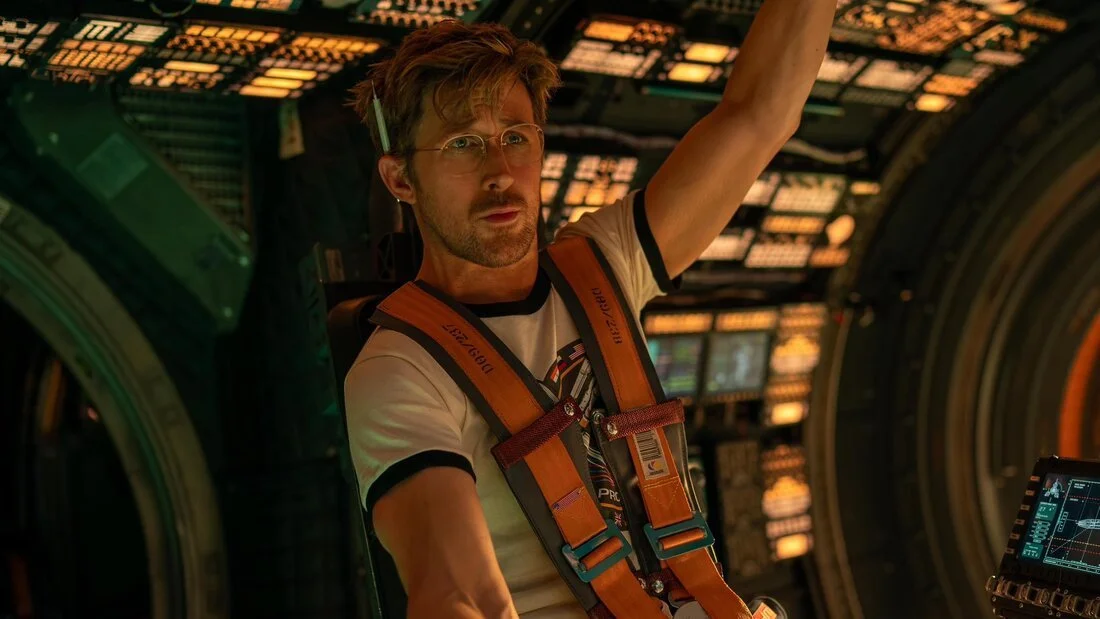
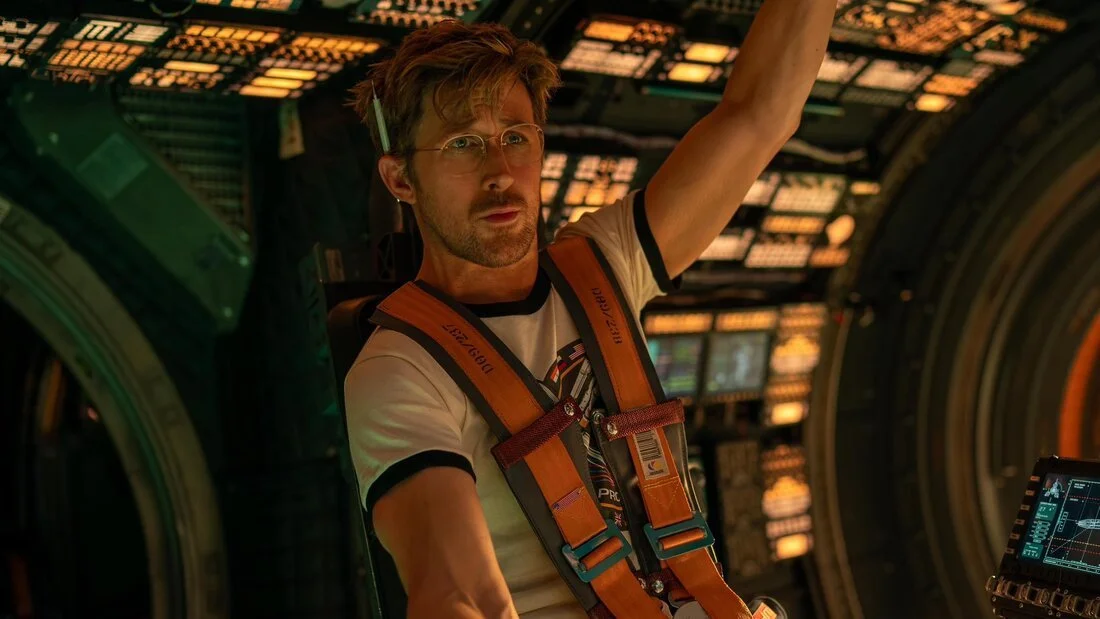
Christopher Miller and Phil Lord deliver Spielbergian levels of spectacle and wonder with their Project Hail Mary, a heartfelt space odyssey. The film radiates a warm sentiment throughout: it’s not about the destination, but the friends you meet along the way. While on a mysterious mission, Ryland Grace (Ryan Gosling) befriends a delightfully high-maintenance alien named Rocky. The two form a protective, transcendent bromance that comes out of shared isolation. By learning how to speak each other’s languages and work together, Grace and Rocky skyrocket towards saving the world. Miller and Lord visualize the possibilities we can achieve if we embrace the unknown with empathy. It’s a work of emotional sincerity that evokes the luminous empathy of Steven Spielberg’s E.T.: the Extra-Terrestrial. Covering familiar ground in the human and alien camaraderie, Lord and Miller show a clear understanding of how this dynamic truly goes a long way when prioritized over sci-fi elements. Project Hail Mary explores curiosity as a balm for isolation. When curious, Grace faces the unknown with an open heart and mind. He reaches out to his surroundings and finds love in an unexpected place. Through stunning visuals and charismatic star performers, the film signals that we are very much not alone.
With a screenplay by Drew Goddard, based on Andy Weir’s 2021 book of the same name, Project Hail Mary tells a classic story of person versus nature. The film’s opening moments introduce us to Ryland Grace, a science teacher suffering from amnesia while aboard a spaceship. He has no recollection of who he is, how he ended up light years from Earth, or where he’s headed. As Grace pieces his memory back together, he finds himself at the centre of a one-way mission to save all of humanity. In two interspersed timelines, the film clues us into how Grace’s backstory on Earth leads to his interstellar predicament. Flashbacks reveal an international task force, led by Eva Stratt (Sandra Hüller), who seek Grace’s molecular biology expertise to help thwart a mysterious substance from killing the Sun. The mission activates his reluctant heroism, but in space, an unexpected ally emerges. Rocky the alien, whose planet also faces extinction, gives Grace a solid common ground.
The narrative framing works wonders to build suspense around each new discovery that Grace uncovers about the mission. By having dual timelines at play simultaneously, the film avoids trappings of repetitiveness and stagnancy in one location. Interspersing the Earth characters with the space plot also underlines how everything Grace overcomes in the present day is much bigger than himself. At the film’s core is a story of several minds working together and embracing different languages towards a shared goal. Lord and Miller envision this core theme on a massive scale that also manages to feel very intimate and character-driven, thanks to their focus on Grace and Rocky’s friendship. Between practical effects, full-scale set pieces, and distinctive visuals for the two timelines, there’s plenty of immersive visuals to relish in. Daniel Pemberton’s spectacular score also delivers on the spectacle and realism.
We’ve been blessed with one of the brightest stars in the galaxy to navigate through Lord and Miller’s version of space. Between his roles in Ryan Fleck’s Half Nelson and Damien Chazelle’s First Man, Ryan Gosling is no stranger to teachers and spaceships. Gosling’s performance in Project Hail Mary delivers on a charming hybrid of both worlds. The film calls on Grace’s inner child for an abundance of curiosity and imagination. This sense of wonder pushes him towards exploring alien terrain. Given his background in education, Grace also sees a teachable moment in meeting Rocky. He shows his new friend how human communication works, underlining the film’s prominent theme of looking out for one another in support of something bigger than oneself. Gosling moves to an incredibly playful tempo and powers the story with career-best charisma. He balances humour and heartbreak, embracing the interior messiness of his character being at the helm of a space mission. While his doctorate roots him in science, Grace is simply an ordinary guy who is absolutely terrified of the position that he finds himself in. Gosling journeys through this hesitancy and fear with a grounded, heartfelt portrayal of inner strength and sacrifice.
It’s no easy task to elicit genuine emotion out of an alien rock without a face. Project Hail Mary has given us not just one of the most memorable movie aliens, but a friendship for the ages. Gosling shares screen time with the stellar achievements of James Ortiz, the lead puppeteer and English translation voice who brings Rocky to life. The characters’ relationship is jam-packed with funny camaraderie, heartfelt dialogue, and a sincere emotional through line that unites them. Ortiz’s high-energy performance adds multitudes of dimension to Rocky’s presence, and the practical effects help craft a tangible environment where Gosling can react to the immersive puppetry at work. We don’t get an extensive visual of Rocky’s planet, nor is it needed beyond a welcome glimpse into his spaceship. Rocky stands out plenty as a layered character, and his design showcases a wildly impressive range of expressions.
Whether through Lord and Miller’s dazzling direction or Greig Fraser’s beautiful cinematography, the film excels at getting key messages across without having characters over-explain the plot. The production shows an admirable level of trust in the audience to piece imagery together and feel the undercurrent of emotionality from magnetic character development. Eva, who leads the Hail Mary task force of scientists, is an insightful guide for what Grace is going through. She teaches us how to engage with the mission, while also grounding a science-heavy storyline in real emotion and matter-of-fact stakes. Deep down, she’s an empathetic leader who makes impossible decisions without centring herself in them, and Sandra Hüller does a brilliant job at conveying the motivations behind each one. Eva has a job to do, and it involves big-picture thinking that prioritizes being practical above all. There’s a coldness to her that Hüller never allows to become simplistic or repetitive. Instead, Hüller conveys nuanced shades of desperation in controlled self-expression. In a standout karaoke scene, she sings Harry Styles’ Sign of the Times, a song on its way to becoming the film’s anthem. It’s a quietly heartbreaking moment of comfort for everyone in the room, who are about to face what could be their final show on Earth.
While the film has one too many endings in its final act, which could have been more polished overall, the conclusion it ultimately lands on is an impactful one. Grace being humanity’s only hope for survival is a moving reminder that all it takes is one person’s shared perspective to make a difference in the world. The film speaks to a form of survival that involves finding the strength we carry deep within ourselves to persistently move forward. Project Hail Mary is a triumph that fills your heart with hope and excitement. However grand and overwhelming its interstellar scale, the empathetic approach makes this story feel intimate and personal.
Project Hail Mary skyrockets to theatres on March 20.
‘Hoppers’ Review
March 3, 2026
In Disney and Pixar’s delightfully bonkers film, Hoppers, the scientists who discovered they could hop human consciousness into lifelike robotic animals are quick to shut down parallels to Avatar. It’s an effective gag that winks and nods at inevitable comparisons between the two stories. Both imagine worlds where humans can transport themselves into different species to observe and understand their ecosystem. Both use this concept to highlight subjects of environmental justice and conservation as the species fight back against capitalistic threats. Avatar is one of many cinematic influences (alongside nods to Back to the Future, Mission: Impossible, and The Birds) that stand out in cleverness without overshadowing the unique charm Hoppers radiates. From the mind of Daniel Chong, creator of Cartoon Network’s television series We Bare Bears, comes a playful adventure where eccentric ideas and community-forward themes totally stick the landing. Jam-packed with weird science and lovable characters, Hoppers leaps its way to the pinnacle of Pixar animation.
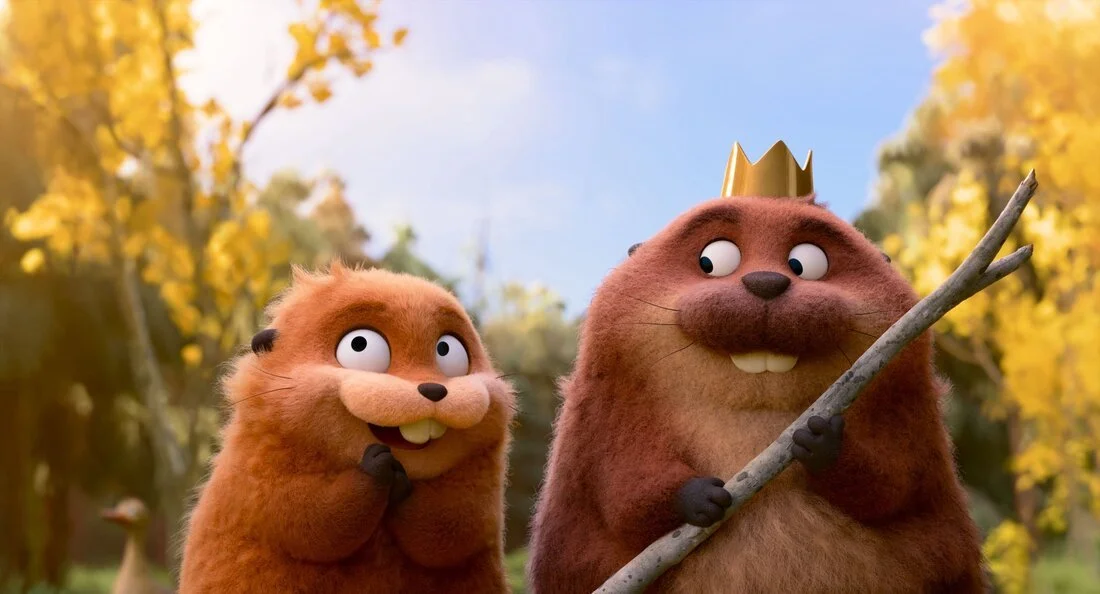
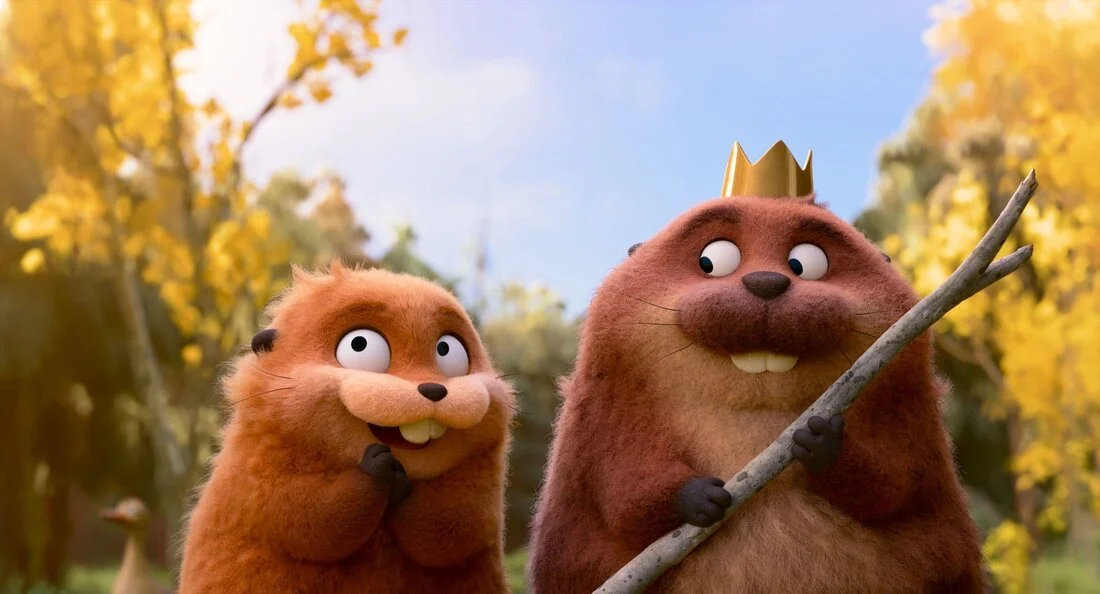
19-year-old environmentalist Mabel (Piper Curda) learned to calm her childhood anger by visiting a peaceful forest glade (the Everglades) with her grandma Tanaka (Karen Huie). Together, they would sit on a rock by the pond and ground themselves in nature. They would stop to hear the sounds of trees and furry creatures. For a moment, this place was a pristine sanctuary where humans and animals could co-exist in harmony. But there’s always a calm before a storm. Mayor Jerry (Jon Hamm), Mabel’s top nemesis, drives all the animals out of the glade so that he can demolish it and build a new expressway because capitalism. Racing against time, Mabel jumps into action and stumbles across a secret “Hoppers” technology system run by her college professors, Dr. Sam (Kathy Najimy) and Nisha (Aparna Nancherla). Mabel seizes the moment, hops her consciousness into a robotic beaver, and ends up in Beaverton. Her mission, which she so eagerly appoints, is to convince a real beaver into building a dam back at the Everglades pond. Mabel sets her plan on King George (Bobby Moynihan), a beaver monarch with the purest of hearts who helps rally the animal Kingdom in a fight against the Mayor’s infrastructure development. Essentially, Hoppers leaves it to beaver to save the day.
Director and writer Daniel Chong, alongside co-writer Jesse Andrews (whose previous credits include Pixar’s Luca and Elio), puts the “hopping” technology framework to excellent use. The science of it all is deliriously messy, and the conflict is explained at lightning speed, as Chong and Andrews waste no time getting down to animal kingdom business. The laugh-out-loud introduction to top beaver King George (who wears an adorable tiny crown) sets a precedent for the film’s visually-driven sense of humour. Clever puns, situational comedy, and silly character dynamics all mesh together to throw amusing curveballs onto Mabel’s mission. One of these curveballs takes the form of a bonkers chase sequence featuring a flying shark named Diane (Vanessa Bayer), as an amusing emoji text chain plays out simultaneously. It’s a brilliant testament to how well the animals bounce off one another to create a colourful community-driven ecosystem. The film packs several dynamic characters into this world. Mabel also meets Ellen the grizzly bear (Melissa Villaseñor), Loaf the beaver (Eduardo Franco), and Tom the lizard (Tom Law), who stand out with versatile textures and expressive animation.
Hoppers dials the absurdity up to eleven once the animal council are introduced. When Mabel and King George’s efforts to save the pond need a boost, they meet with fellow monarchs of the natural world. Insect Queen (Meryl Streep), Fish Queen (Ego Nwodim), Reptile Queens (Nichole Sakura), Amphibian King (Steve Purcell), Insect King (Dave Franco), and Bird King (Isiah Whitlock Jr.) land on the idea of squishing the mayoral threat, which leads to even more bonkers story developments. As tensions erupt in the animal world, Mayor Jerry intensifies his construction strategies, and Mabel’s professors try on different robotic rescue plans for size. The silly escapades are incredibly effective at twisting the story into unexpected directions.
The film conveys a witty balance between its chaotic humour and poignant emotional core through several relationship dynamics. Whether it’s between humans and animals, environmentalists and corporations, granddaughters and grandmothers, and so on, we are all facing a global crisis of disconnection from one another. At a time when natural habitats and lands are being destroyed, the words of Mabel’s grandma (“It’s hard to be angry when you feel like you’re part of something big”) echo beautifully. Hoppers leads with empathy and encourages us to do the same. Talking animals have become a staple of the animation medium, but this story playfully questions, “What if you could understand what animals are saying?”, and comes prepared with a sincere answer. The message that we are all part of something bigger, and that we all share the same planet, lands with genuine resonance. And with great power comes great responsibility. The film explores its animal technology through the lens that we are all responsible for protecting the future of this planet. When Mabel learns how the animals live and what they need to thrive, she accelerates in her determination to save the pond and stand up for what’s right.
Cute and cuddly as the animal characters may be, Mabel’s characterization is the heart and soul of Hoppers. Driven by the loss of Grandma Tanaka, Mabel will do absolutely anything to protect the glade because of what it represents. It’s a magnet for the wildlife she’s passionate about fighting for. Most of all, it’s the intergenerational connective tissue to her identity. It’s the place where she learned how to address her uncontrollable anger and communicate her rebellious energy in a calmer way. Piper Curda is an absolute star in the film. She voices Mabel’s character with compelling enthusiasm and urgency, radiating hope around the younger generation as the future is in their hands.
Voice performances too often go under-appreciated when it comes to recognizing the best acting of any given year. Additionally, plenty of animated films fall victim to celebrity stunt casting that values recognizability over nuanced transformation. Hoppers has its fair share of legends (the Meryl Streep, for starters), and everyone gets opportunities to stretch their talents through unique voices. Dave Franco stands out as a devilishly entertaining part of the story for how he voices Insect King with intense glee. Bobby Moynihan adds lovable, heartwarming dimension to King George and grounds the central environmental conflict in a warm glow. Jon Hamm rises to the occasion of complementing Chong’s eccentric direction.
The film’s painterly animation stands out amongst Pixar’s most gorgeous work yet. From the vibrant nature settings and wire-cluttered science lab to the textured character designs, there’s a neat visual balance between realistic and exaggerated. The most impressive animation work lies in the duality of the animals’ facial expressions. From the humans’ perspective, the animals are defined by beady black eyes and overall simpler hand-drawn features. In the animal world, their appearances are increasingly cartoonish and absurdist. It’s a brilliant creative choice that showcases various animation styles and communicates subtle distinctions between both worlds.
Hoppers leaps comedy-first into prominent environmental themes, which makes its resonant subject matter incredibly delightful to engage with. It’s a thoughtful intergenerational story and a quintessential example of family-friendly entertainment that people of all ages can enjoy. Packed with big swings and a totally bonkers sense of humour, it’s precisely the bold level of storytelling that Pixar needs more of.
Hoppers arrives in theatres on March 6.
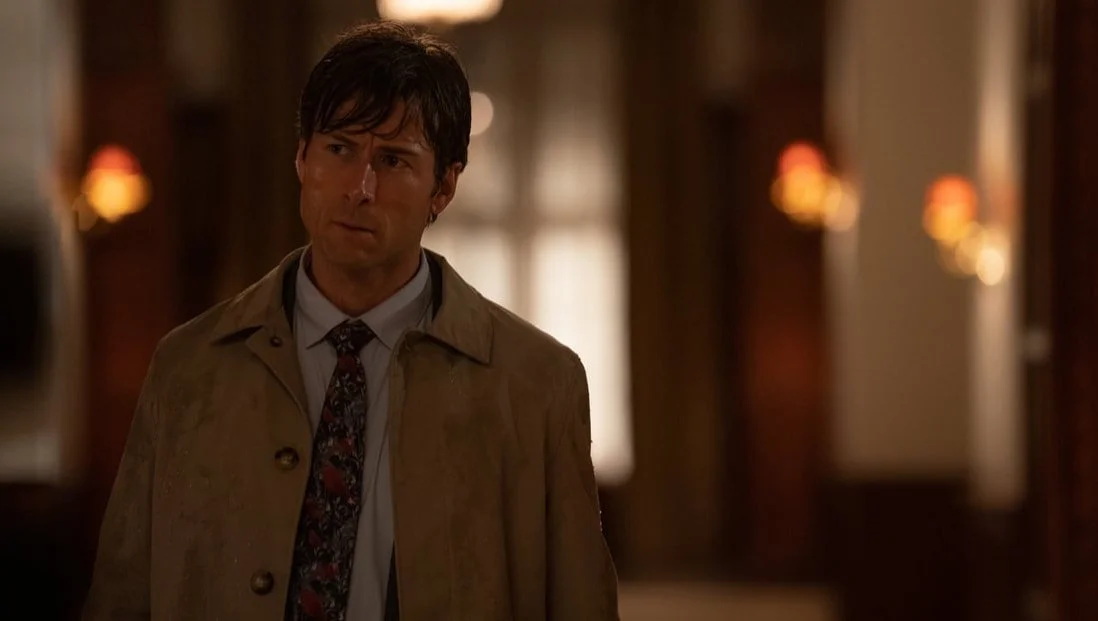
‘How to Make a Killing’ Review
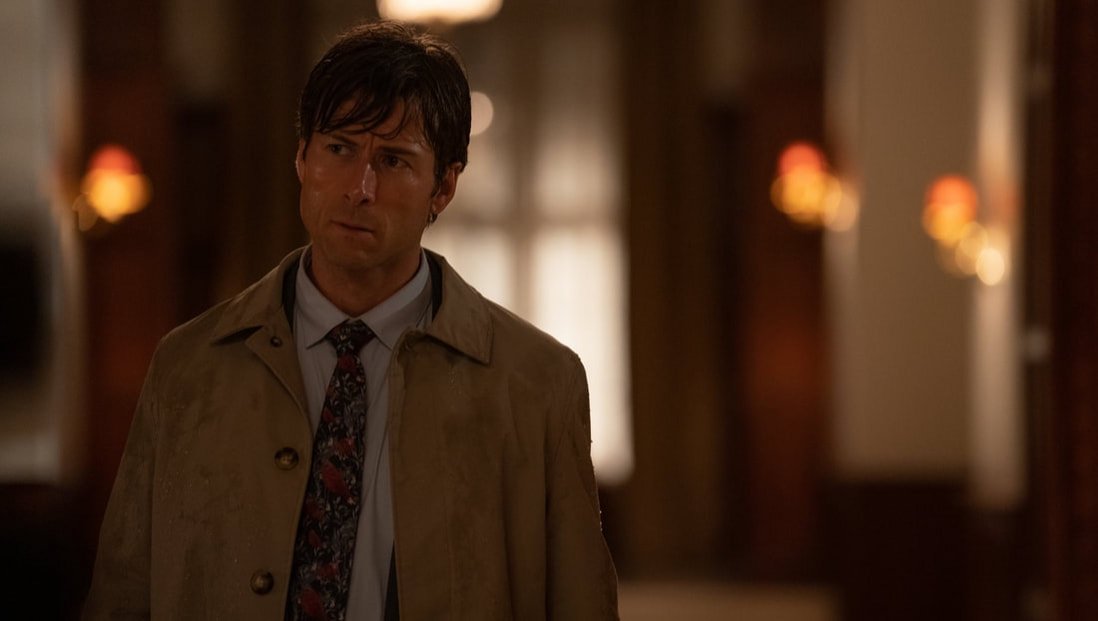
February 18, 2026
With enough charm to power an entire city, Glen Powell eats the rich and breaks bad in John Patton Ford’s How to Make a Killing. Ford follows up his feature film debut, Emily the Criminal, with a serial caper that leans on star wattage to test your complicity in a killer’s ambition. Powell plays a middle-class worker whose Everyman humility makes him a charismatic entry point into a subject that has gotten plenty of cinematic treatments: wealthy family trees full of bad apples. Aimed to satire the rich, How to Make a Killing is a who’s who of ridiculous characters and their out-of-touch lifestyles. It has the ingredients of a dark comedy, raising humorous stakes with each new blood feud introduced. The film also weaves between a corrupt family portrait and a character study, as it explores the downfall of becoming blinded by your own ambition and losing sight of humanity. At the hands of Powell’s charisma, all of this makes for a fairly entertaining journey. Ford’s screenplay, however, keeps a calculated distance from the Redfellow family and can’t quite muster up a thoughtful satire.
Inspired by Robert Hamer’s 1949 dark comedy, Kind Hearts and Coronets, How to Make a Killing begins at the end. A priest visits an imprisoned Becket Redfellow (Glen Powell) to minister last-minute confessions regarding the Redfellow family murders. What follows is an embittered saga of disillusion, betrayal, and bad romance. Laced with a little sarcasm and wit, Becket proceeds to narrate the story of his life, occasionally breaking the format to address the priest’s questions. The catalyst for Becket’s cruel intentions can be traced back to the treatment of his mother, Mary (Nell Williams), who got pregnant with him out of wedlock and was shunned from the entire Redfellow bloodline. The decision came directly from Mary’s father, Whitelaw (Ed Harris), who sits comfortably atop the family tree at his Gatsby-style mansion in Long Island.
In direct opposition to this imposing gothic mansion, Mary and Becket start their life in middle-class New Jersey. For as long as Mary is on earth, she makes a point of keeping Becket in the family’s wealthy circles, knowing that one day he could be next in line to inherit the fortune. Becket grows up with the mentality of dreaming big and chasing a life he feels is owed to him. Becoming more bitter by the day, however, disillusioned with the American dream and its destructive fantasy, Becket crosses the threshold from Everyman humility to moral rebellion. Infatuated with the idea of social ascension, Becket sets out to eliminate his relatives one by one and reclaim his inheritance.
There is plenty of fun to be had in watching insufferable rich people get what they deserve, though there is no real comeuppance for the wealthy group of misfits in How to Make a Killing. Only a smattering of conversations around how they each define power, until Becket kills them off (barring one who passes of natural causes). For Taylor Redfellow (Raff Law, son of Jude), who seems to have walked straight from the set of a Jordan Belfort party in Martin Scorsese’s The Wolf of Wall Street, it means throwing one-hundred-dollar bills onto his pool party guests and leaping into the water from a helicopter. For Noah Redfellow (an amusing Zach Woods), it means calling himself an artist without the capacity to know real art if it stared him in the face. For Warren Redfellow (Bill Camp, wonderful as always), it means building onto Redfellow Investments and producing more generational wealth through the family business. Warren, who takes Becket under his wing and secures him a job, feels like the most human of all the relatives. Though, this is more of a testament to Camp’s presence than to the writing. The film introduces the Redfellows inconsistently and lacks a clear handle on what to say about them. Some waltz in for lightweight hit-or-miss comic effect, while others barely make enough of an appearance to register as part of the story.
Becket’s morally grey character study is afforded more nuance. Being of the perspective that the Redfellows deserve everything coming to them, Becket maintains distance from the crimes. Each murder he commits is a deliberate act of fighting against capitalism and chasing after an inheritance with his mother’s rebellious spirit. While you never get a full grasp on his personhood outside of this ambition, his drive is unmistakable, as is his belief that each murder is completely justified. It is easy to go on this journey because of Powell’s entertaining charisma. He excels at playing odd, contradictory characters that call for a balance between arrogance and charm. Where the film nearly fails him is in the writing and overall story structure. By starting at the end, and having Becket circle back with his straightforward narration, the momentum ebbs and flows. The film often spells out emotional reactions and narrative purposes instead of simply letting a scene play out. As a consequence, the story feels less engaging and more manufactured, taking away from the character study at the film’s core.
Additionally, the parallel romances in How to Make a Killing speak to an imbalanced tone and structure. When Becket meets his cousin Noah’s girlfriend, Ruth (Jessica Henwick), love is in the air. There is a sparkling chemistry between Powell and Henwick that the camera catches onto and elevates. Their scenes are given the time to breathe and take shape. Both characters find something in each other that they had been missing: a genuine connection. The two seem to flourish together. Ruth also has a gradual evolution of maturity through her wardrobe, which transforms from casual to elegant. As the film’s beating heart, Henwick (who should be leading films) plays Ruth with a lively and grounded spirit.
Contrasting Becket’s relationship with Ruth is his situationship with Julia (Margaret Qualley), a woman from his past. Having known each other as kids, Becket and Julia share some unfinished business. She embodies a femme fatale energy and has Becket wrapped around her finger, dangling a path towards wealth that he so deeply desires. She floats in and out of the film with a mysterious aura that shifts from teasing to threatening. Where Ruth sees the kindness in Becket, Julia sees the darkness he is capable of. The film misses an opportunity to really dig into how Becket and Julia operate as two sides of the same coin, both valuing power and conniving to get what they feel is owed to them. Julia’s role also could have been more effectively interwoven into the story. Saving the role from becoming forgettable, Qualley infuses an unpredictable energy that works well for Julia’s character, and does a fine job of clouding her motivations. She and Powell also share fun chemistry, enhanced by the playful camera framing.
The film’s greatest strength, and loudest message, can be drawn from its final act. When Becket meets his grandfather, Whitelaw (Harris), their interaction twists the story into more intriguing territory and provides real dramatic stakes. With excellent narrative tension and great use of an atmospheric gothic mansion, the film builds anticipation for Becket approaching the final Redfellow standing in his way of the inheritance. While the two of them certainly go toe-to-toe, it’s Harris’s excellent monologue about moral dissonance and ignorance that steals the show. Whitelaw has reached an immense level of power because he let his conscience become a whisper, and his words haunt the conclusion that this film has in store for Becket. This final act is where John Patton Ford feels most attuned to the story he wants to tell. Part wry comedy, tragic character study, and realist crime drama, How to Make a Killing falls short of balancing these elements into one cohesive feature. The talented ensemble and standout final act make the film a worthwhile journey, but inconsistent storytelling choices undermine the film’s potential for a more in-depth narrative.
How to Make a Killing arrives in theatres on February 20.
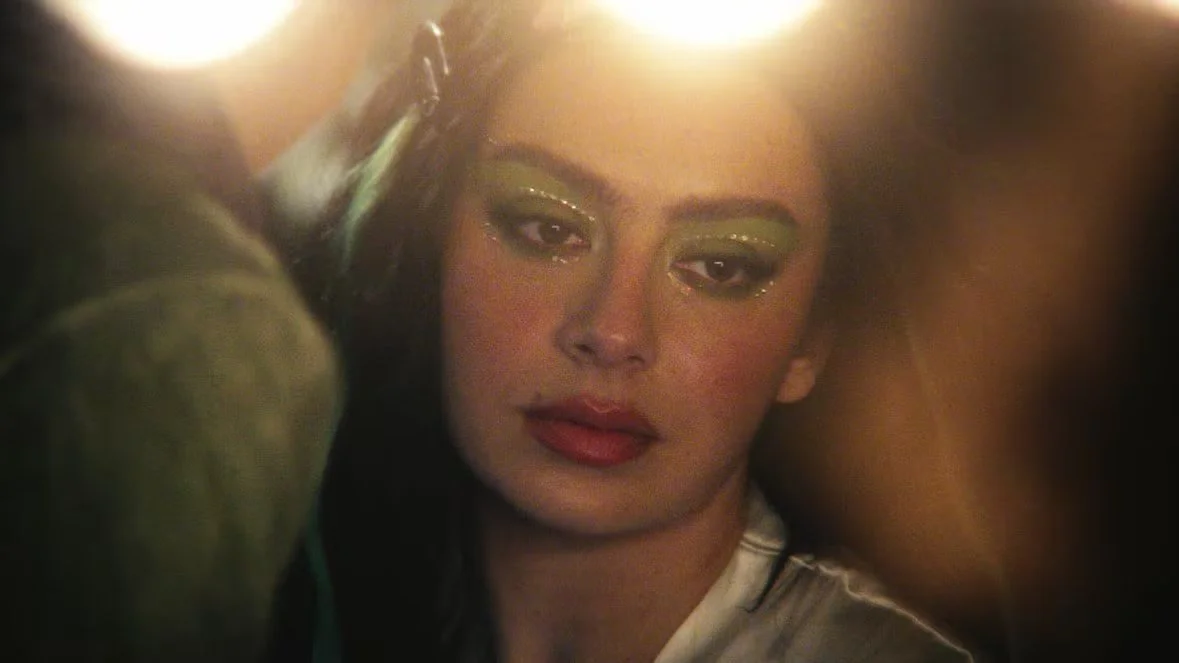
‘The Moment’ Review
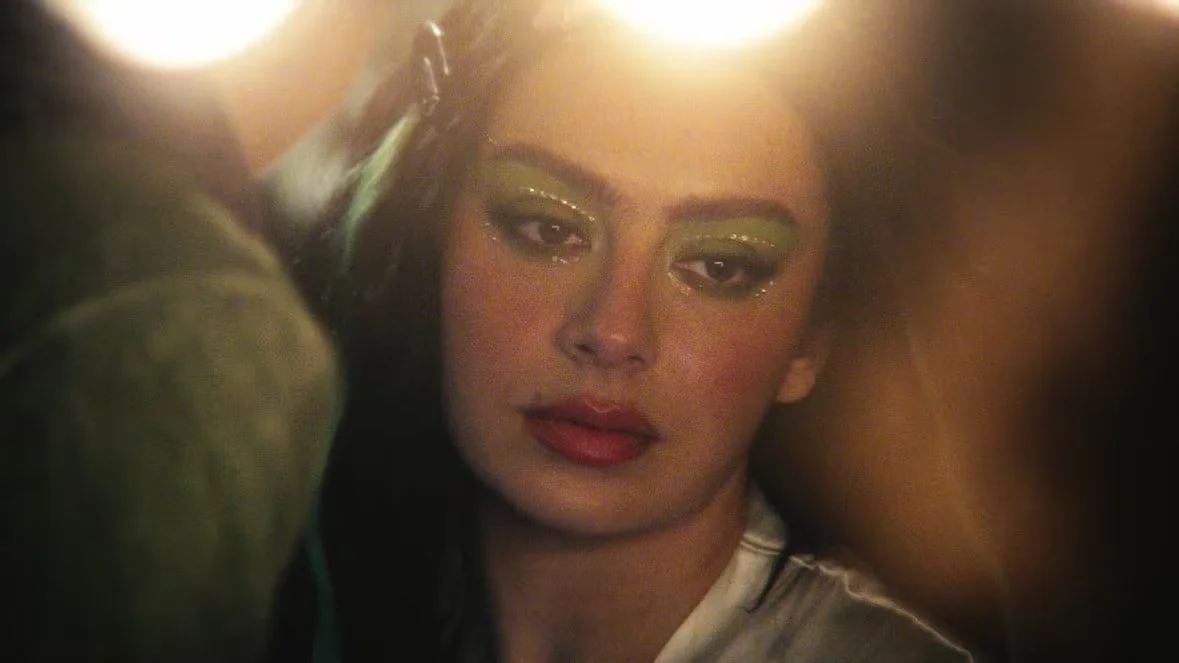
February 6, 2026
Following the green-coated cultural phenomenon of Brat Summer, which took 2024 summer by storm, pop star Charli xcx is having another moment. She created the soundtrack album for Emerald Fennel’s hotly anticipated Wuthering Heights adaptation, which releases in theatres on February 13. Pete Ohs’ sapphic romance, Erupcja, which had its world premiere at the 2025 Toronto International Film Festival and is led by a wonderful Charli performance, will be released in theatres later this year. But first, a mockumentary-style film that captures the Brat era, focusing on how the musician felt when her Brat album dominated pop culture. The Moment, from writer-director Aidan Zamiri and co-writer Bertie Brandes, morphs an original idea by Charli xcx into an absurd journey into fame, excess, and artistic integrity. Most impressively, the creative team distinguishes The Moment as a singular depiction of a pop star and avoids the trappings of a typical starry concert film. Whether you are familiar with Charli’s music or not, there is something incredibly intoxicating about how the film runs on pure emotion. While the satire doesn’t always bite, the story speaks effectively to losing sight of oneself in a dizzying celebrity machine. The Moment peels back the layers of a woman under the influence of capitalism to reach an introspective party girl at the core.
The flashy opening scenes of The Moment set an authentic precedent for what the film has in store: an up-close and personal sense of what it’s like to be Charli xcx. Charli is introduced in her element of pure artistic expression and escapism. She appears completely present in the moment. It’s when other voices chime in that the artist’s decisions on how to present herself become the subject of scrutiny, capitalization, and chaos. The Moment revolves around Charli, playing an exaggerated version of herself, in the lead up to her first arena tour. On the cusp of touring the world with Brat, Charli dissects the end of an era before it even begins. When the album cycle ends, does that mean Brat summer will be over forever? How can she keep it going? What does she want to do next? As Charli’s creative team throw ideas to the wall, she retreats from her celebrity.
The film excels at capturing how fans, labels, and brands interact with both Charli’s work and pop culture as a whole. There’s a rush to feel included in the momentum and have a say in what steps she ought to take for success. There’s an inclination from Charli’s team and show runners to be the “yes people” in her life and say what they think she wants to hear. Her manager, Tim (Jamie Demetriou) and social media manager Lloyd (Isaac Powell) keep their fingers on the pulse and navigate an upcoming Brat credit card launch, which highlights how companies capitalized on her album color and font. There’s constant pressure from her record label executive, Tammy (Rosanna Arquette), who swirls in and out of the film like a tornado consuming content. Then there’s Johannes Godwin (a hilarious Alexander Skarsgård), an intense director-for-hire whose arrival on the Brat tour disrupts Charli’s flow.
Charli’s creative director and friend, Celeste (an excellent Hailey Benton Gates), cuts through the noise with the most grounded approach out of everyone. She understands Charli and brings a sense of clarity to the chaos, even when Charli herself doesn’t know what she wants. As Celeste struggles to hold onto creative control, Johannes dominates artistic choices for the show, and Charli takes an impulsive trip to Ibiza, the lifespan of Brat feels entirely out of reach. While in Ibiza, Charli runs into an ethereal Kylie Jenner (playing a heightened version of herself). The impeccable lighting on Kylie, juxtaposed with a discomforting angle on Charli, amplifies just how exhausted Charli feels being present in the moment. At the same time, it’s a pointed satire on pop culture and the responsibilities often placed on celebrities to lead their lives as role models for the masses.
To a culture that sells fairytales with perfect lighting, The Moment works as a genius antithesis. By taking the concert documentary form and fictionalizing it, Charli successfully charts the ridiculousness of the music industry. By drawing self-deprecating humor from herself and exposing moments of vulnerability in her life, Charli effectively communicates how she sees the world. The entire film works as an inviting reflection of how she navigates fame and the music industry, and it builds towards a strong final act that sees her character face moral complexity. Additionally, Charli’s excellent performance resonates at the center. She brings compelling truthfulness to a heightened version of herself, and navigates peak levels of messy behavior to reach grounded moments. She also plays comedic moments brilliantly; part of the wry humor draws from simply watching her react to the most ridiculous scenarios. In a standout scene between her and Johannes, he suggests very questionable stage directions on how to engage with her audience. Charli and Skarsgård land on entertaining depictions of an astounding artistic disconnect.
Thankfully, Aidan Zamiri and Bertie Brandes are totally connected to Charli’s energy, moving in lockstep with her wavelength. The film has a fun, relentlessly chaotic energy as though you’re at a never-ending party. For every sequence that relies on the viewer already having a strong connection with Charli’s artistry, there is one that also challenges the viewer’s perception of her public image and invites you to be curious. The film stands out as a bittersweet symphony of how Charli relates to success, navigates artistic integrity, and connects with her own failings in the process. The journey is messy in focus, but it’s easy to admire how The Moment experiments with the documentary form to radiate something that feels singular and deeply authentic to its subject.
The Moment is now playing in theatres.