
‘Ma Belle, My Beauty’ Review
August 25, 2021
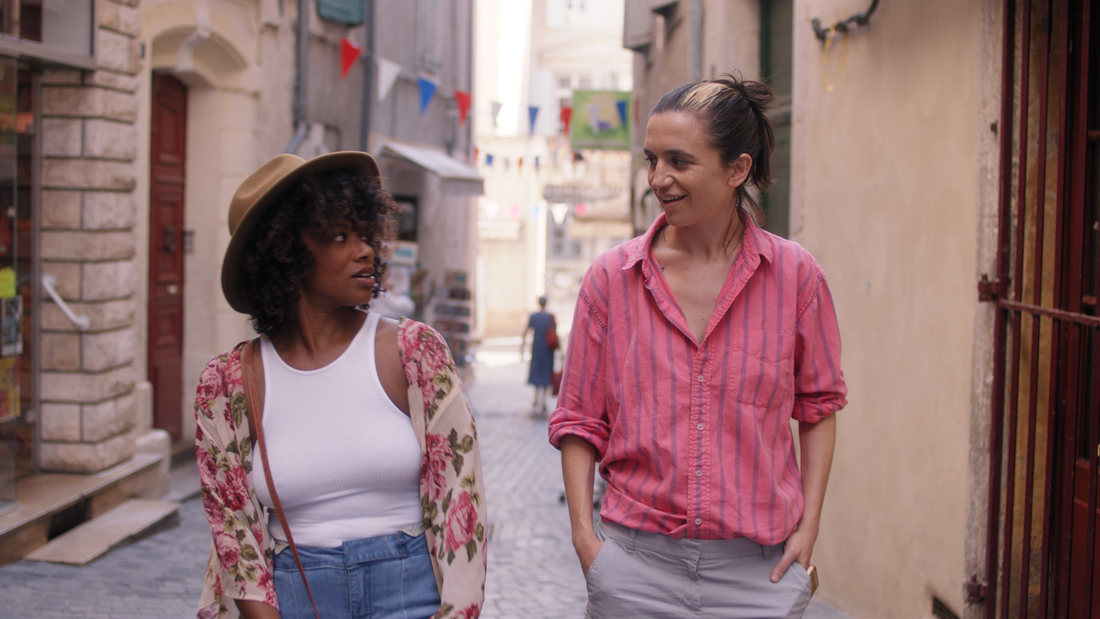
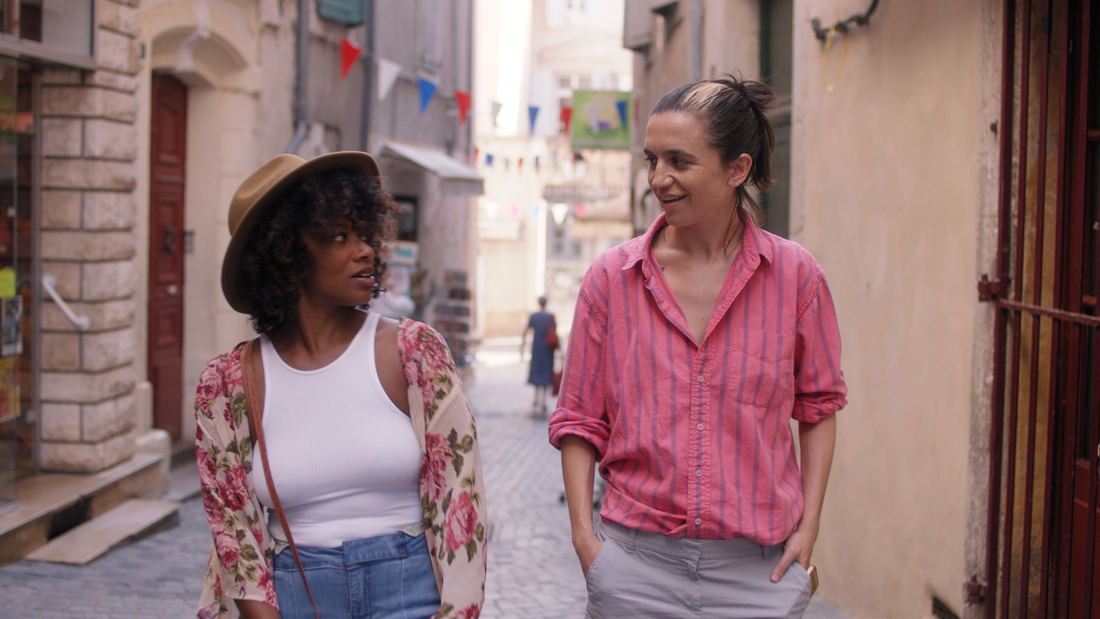
Time. It’s the one thing we can’t make more of. When the passing of time is truly felt, the response can be incredibly emotional…full of longing. Mourning missed opportunities. The longing for a meaningful, everlasting human connection takes on different manifestations in Ma Belle, My Beauty. The debut feature film, written and directed by New Orleans filmmaker Marion Hill, explores the residue of a break up in a queer polymerous relationship. Bertie (Idella Johnson) and Lane (Hannah Pepper) used to live together in New Orleans. After a falling out, Lane disappeared for two years. Bertie got married to their shared partner Fred (Lucien Guignard) and moved to the South of France, where the film is set. Out of the blue, upon Fred’s invite and unbeknownst to Bertie, Lane shows up at their beautiful villa with a front row view to the couple’s fancy new musical life. Bertie is in a rut, creatively and personally. Now with Lane back in the picture, Fred hopes the spark they once shared can reignite her passion as a performer.
Amidst the al fresco dinners and breezy summer vibes is a complicated surprise reunion. Marion Hill captures romantic tension well. She shows the ease with which passionate feelings can be reignited from a single look or a meeting. Ma Belle, My Beauty unearths the emotional baggage of a once hopeful, promising relationship. So much of the film is about yearning. Bertie and Lane, presently on two completely different tracks in life, navigate through the aftermath of a relationship. Pining glances, rekindled admiration, bottled up confusion, and tense conversations map out the fact that these characters have a history. But where the film loses its compelling ingredient is in actually creating and fleshing out a history for the characters. While there are intriguing themes at play about longing for what was lost, not enough time is given to establishing who Bertie and Lane are beyond the relationship that ties them together. Bertie in particular is often trying to carve out her own path, instead of being whoever everyone else wants her to be. Everyone around her seems to want a piece, and the film skirts over crafting a well developed character that shows more insight into her individuality. There are plenty of enigmatic glances with the promise of an elaboration that never really arrives.
The more Hill’s story stretches out, the more emotional investment wanes and the cracks in a promising foundation begin to appear. Longing manifests in different ways; there’s Bertie, who doesn’t feel happy in the situation she’s in. She carries understandable frustration from essentially being ghosted by her partner. She has an intriguing scene with Lane on the conversation of happiness not being tied to her, nor Fred. But there’s a missed opportunity in not delving further into Bertie’s point of view; wonderful as Idella Johnson is playing Bertie, both acting and singing-wise, her character feels underwritten and often in service of other characters. Then there’s Lane, single and reminiscing on the reasons why. She carries a pang of regret from leaving and not keeping in touch with Bertie, thus missing out on life events she otherwise would have been there for. A crucial space the film doesn’t fill is the exploration of Lane leaving; it becomes the source to which the protagonists often return when they find moments of connecting with their past. The film relies a lot on what’s left unsaid between two people, and how this often manifests through physical yearning. Though what’s left unsaid doesn’t always provide an insightful or compelling window into who the characters are. Johnson, along with Hannah Pepper who plays Lane, bring great subtlety and quiet moments of contemplation to life. But their performances ultimately feel inhibited by a screenplay working often on brisk presumptions.
The carefree quality that works to the film’s disadvantage is also what makes it refreshing in other respects. There’s a lightheartedness in Marion Hill’s approach to the story and atmosphere. Ma Belle, My Beauty captures the breezy feeling of summertime. Lauren Guiteras’ cinematography gives a beautiful glow to the film. The soundtrack evokes an easygoing atmosphere, perhaps a little too much in this direction given the dramatic climax that Hill tries to go for. While uneven in direction at times, Hill strongly conveys the feeling of throwing caution to the wind. So much of the film operates on physicality, whether it’s fleeting glances or moments of intimacy. A lot is happening on the surface, without really delving into detail about reasoning. Hill strikes a strong parallel to the character of Lane, described by Bertie as the type of person who will enter someone’s life, mess things up, and leave behind remnants of emotional baggage. Without worrying about the effects her leaving would have on Bertie’s wellbeing, Lane fuels a sense of tension. The space between them only intensifies with the passing of time, and what comes with it is the loss that they’ll never get that time back.
Ma Belle, My Beauty explores the ease with which two people can go in totally different directions when there’s been a distance between them, both physically and emotionally. There’s a refreshing aspect to the way Hill maps out the story, that she doesn’t provide a bowtie ending where all hope is restored and the stars align again. Instead, she poses the question of whether the stars were aligned in the first place. The protagonists can’t simply pick up where they left off, which makes for a potentially interesting narrative that doesn’t get to really soar. So much of the film is spent wondering about the characters’ intentions and finding a way to get to know them better. Left behind is the longing to spend more time with them.
‘Yakuza Princess’ Review
August 30, 2021
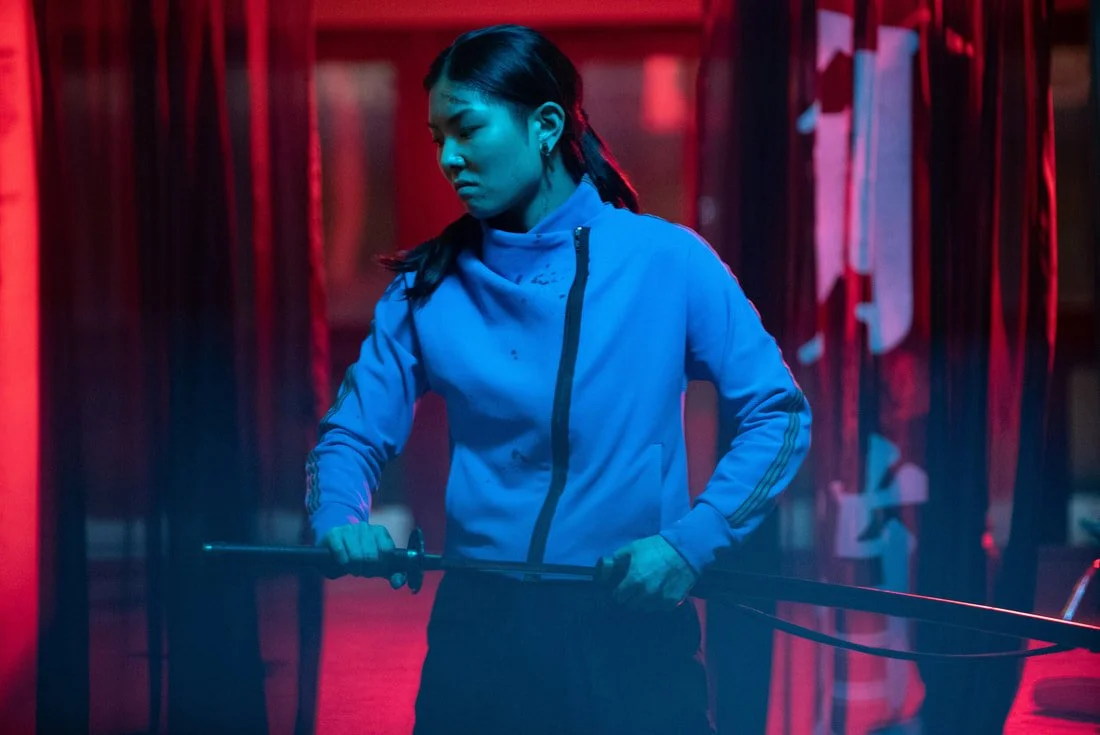
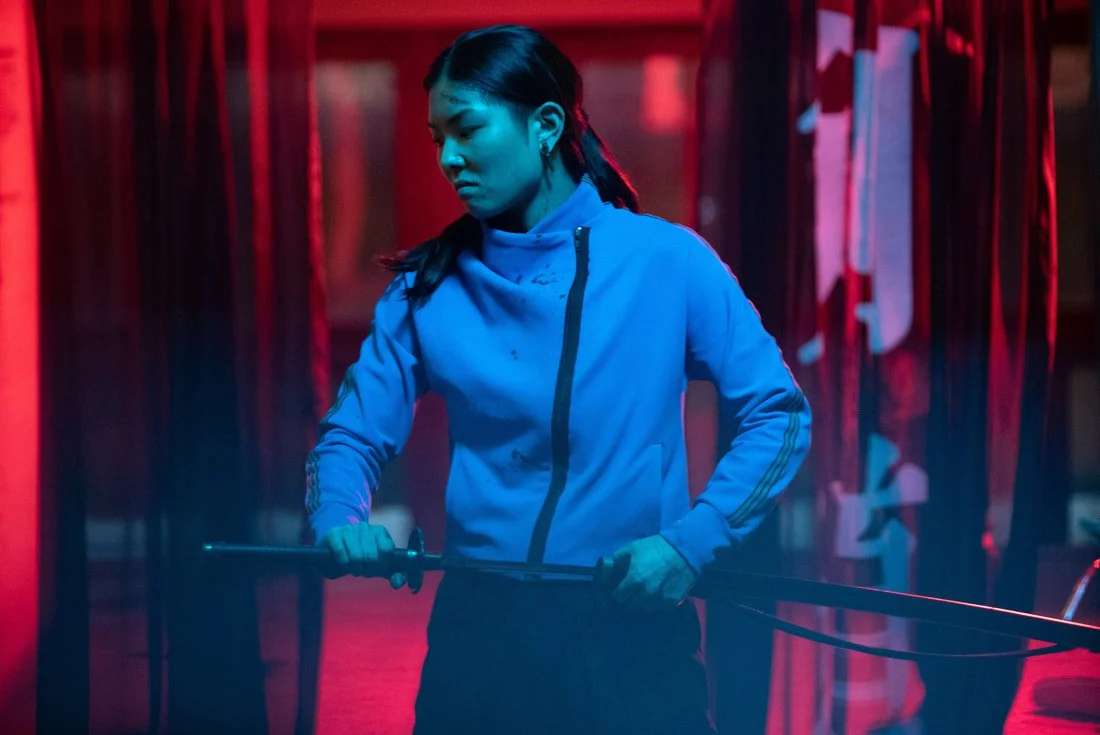
The Muramasa is a cursed, mysterious samurai sword. The spirits of all those slain by the Muramasa dwell in the weapon, waiting for the next victim to feast on their blood. When wielded, the sword transforms characters into killing machines. It’s an ancient rarity, a curse that imprisons souls and forges interconnected fates. As the tagline of Yakuza Princess goes, every sword has a story, and this film tells one of self-discovery in the hope of belonging somewhere. The film follows Akemi (MASUMI), who lives an unassuming life in São Paulo, Brazil. As the sole survivor of a family massacre in Osaka, in which she lost her grandfather, she finds protection in the form of martial arts training. Akemi’s teacher is a fatherly figure to her, parting words of wisdom to encourage her independence and growth. Suddenly, her world is thrown upside down when mysterious Japanese gangsters are out for her blood. In her search for why she’s being chased, Akemi uncovers a dark family secret and the power of Muramasa, which holds the key to illuminating answers about her grandfather’s death. The story is promising: in the protagonist’s journey through her family’s past, in the veiled intentions of mysterious characters, in the supernatural aura the sword carries, in the neon-lit visuals and action sequences. Yet, the experience of watching the film is surprisingly dull. Far duller than one can imagine from the potentiality of the story. Despite having a promising protagonist, Yakuza Princess is often weighed down by stiff character development, muddled storylines, and unfocused direction.
Directed by Vicente Amorim and based on the graphic novel Samurai Shirô by Danilo Beyrouth, Yakuza Princess has elements of fantasy weaved inside a neo-noir reality. The blend of genres is one of the more effective parts of the film. In the neighborhood of São Paulo, the largest Japanese diaspora in the world, Akemi settles temporarily. She works at a knick-knack store, longing for a change, pondering a move back to Japan, and thinking there has to be more out of life. A connection to the Yakuza crime syndicate and its relentless lieutenants is not what she had in mind. The presence of the Japanese mob, and the introduction to an amnesiac stranger Shirô (Jonathan Rhys Meyers) also tied to the Muramasa in another part of the neighborhood, carries the film down a violent rabbit hole of mysterious intentions and questionable loyalty.
Akemi stumbles on a dubious alliance with Shirô, who appears protective but he doesn’t remember who he is. All he’s told when he awakes from a hospital bed is he had been found with a sword. The meaning of the Muramasa sword drives both characters’ quests in different ways. But his quest is far less interesting, and the film spends a destructive amount of time with him. Not helping matters is a choppy performance by Rhys Meyers, who doesn’t bring much spark to his character. Far more compelling, though not without flaws, is Akemi's journey of self-discovery. The feeling of wanting to count for something and come from somewhere holds a universal power. Also interestingly at play is the role of destiny and its dark side. Caught up a nightmare of someone else’s doing, Akemi is living the consequences of a past that does not belong to her… a past she is being haunted by. The puzzle pieces of her grandfather’s death are imprinted within her. It is the sudden brush with the crime syndicate, led by lieutenant Takeshi (Tsuyoshi Ihara), that illuminates her search for answers.
In the switch between storylines, from Akemi to Shirô and the crime syndicate after them both, the film loses a clear focus and the emotional connection falls flat. The character development isn’t strong enough to weather the shifts from one perspective to another. The film has an intriguing protagonist at the center whose point of view gets sidetracked far too often. In a time when Akemi is searching for her purpose in life, she is caught in a dangerous web, through which she realizes the power within herself to break free from a path that is not hers and create a new path for herself. The film sets up for some emotional moments, but without the building blocks for strong characterization, these scenes deflate on impact. Left behind is a glimmer of promise for what could have been more resonating. One particular moment being the ending, a powerful badass moment for Akemi that should have packed a much bigger punch. While a lot of dialogue feels stilted, MASUMI still delivers a solid performance that helps carry along a film in which a lot of characters are putting on an act. Sometimes this works well, as in the case of Tsuyoshi Ihara’s performance, but for others such as Rhys Meyers, what is meant to be subtly hidden is confusing instead.
The consistency of Yakuza Princess is within the action choreography and neon visuals. The interplay of neon lights and darkness makes for some stunning scenes. Gustavo Hadba’s cinematography beautifully illuminates elements of a darkened frame. There’s also a great element of neo-noir manifested in the form of stylized sets; the film paints a moody setting and leads one down the path where danger is always felt from around the corner. Fast-moving and stylish, with a strong sense of setting, the fight sequences are the moments that inject spark back into an otherwise dull film. Vicente Amorim does not hold back on the violence and gore. These moments carry so much of the energy, leaving an imbalance with the dialogue and characterization. There’s a heaviness to the pacing of the story, and an inconsistency in the direction, that weighs the film down.
The majority of Akemi’s journey in Yakuza Princess sees her follow her grandfather’s footsteps. Who did he know? Which places did he visit before his death? As much as her grandfather wanted to bury his past, the past will still come knocking to the sole survivor of his immediate family. There is a missed opportunity in not establishing a clear focus with Akemi and staying with her perspective throughout the film. When she discovers the Muramasa, the power is literally back in her hands to break from a haunted past and forge a path of her own, separate from the dangerous ties that chase her. Yakuza Princess has promise in the protagonist’s journey and the connection it holds with the ancient sword, but ultimately gets lost in a collection of uninteresting characters and dull storytelling.
TIFF 2021: ‘Silent Land’ Review
September 10, 2021
This review contains spoilers.
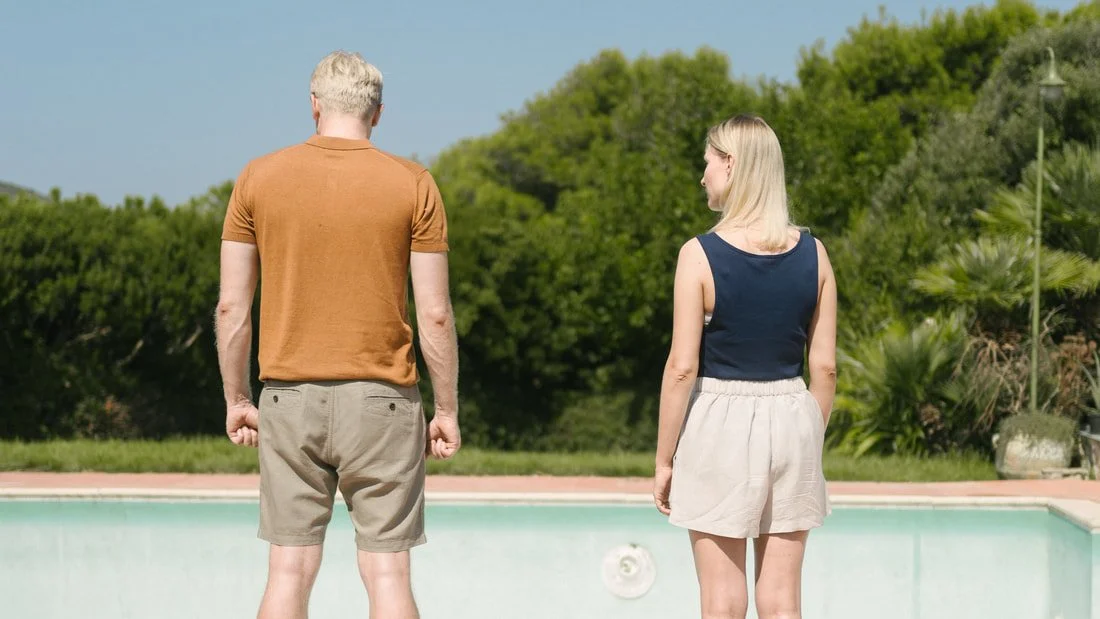
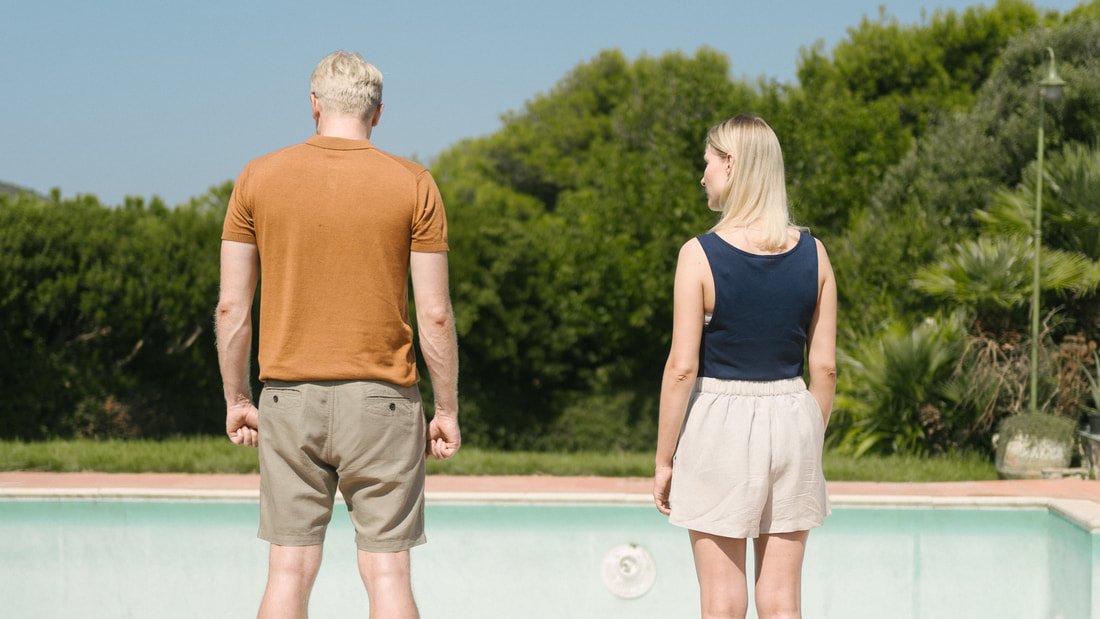
“It’s broken.” The first line uttered in Aga Woszczynska’s stirring feature debut, Silent Land, holds a clear mirror to a Polish couple’s disintegrating relationship. As the film opens, Anna (Agnieszka Zulewska) and Adam (Dobromir Dymecki) float into the frames of a beautiful holiday rental in Italy. They meddle with household fixtures that need repairing, as though these items have the audacity not to work perfectly for their idyllic vacation. Beyond their temporary interior villa is a bigger problem: the garden swimming pool is empty, and they’ve paid for a house with a pool. Despite the island struggling with drought, Anna and Adam insist their Italian host hire a worker to repair the situation. All the while, the sound of the sea and its picturesque setting fill a backdrop. With confident direction, Woszczynska paints a picture of eerie stillness. Quiet moments of the couple introduce a feeling of serenity, but the more Silent Land lingers on calmness, the clearer it becomes that Woszczynska is summoning a sense of dread. As Anna and Adam wait precisely for the pool repairman to fix a problem they’ve taken so personally, the waves of the sea crash in the distance. Silent Land is a powerfully observed drama of a relationship’s unpredictable nature and unsettling instincts.
The effectiveness of a steady buildup is on full force in Silent Land. Amidst the feeling that unpleasantness is around the corner, the story plays on ambiguity and strikes without heavy warning. But signs are stitched in the moments left unspoken. The quietest moments of Woszczynska’s feature debut are often the loudest, and the ones that leave the most behind to ruminate on. Silent Land exposes the worn out threads of a couple’s seemingly idyllic foundation, and how a single incident unravels their moral compasses. Anna and Adam paint an ambiguous picture of their intentionality from the start; it is through their interactions with others that the couple are faced with each other’s true colours. The most revealing of interactions lies between the two of them and the pool worker Rahim (Ibrahim Keshk). The way in which his character is treated on screen is an unsettling reflection of how the couple sees him: as a nuisance, a threat, a violation of their tranquility.
Though not outwardly spoken, the director and actors convey strong emotions in subtle moments. Whether it be Adam setting an alarm before leaving the house, or Anna making no effort to address the language barrier when Rahim is looking for a hose to fill the pool. There is no real introduction between these characters, just a silent expectation that he is there to do a job, and simply does not exist to them beyond that role. The overall dismissal of him simmers, and creates an emotional punch in the gut after watching him suffer from a poolside accident while the couple are nowhere to be seen. The suddenness of it, the wave of sadness from not getting a chance to know the character, and the anger from blatant nonchalance surrounding the entire incident is deeply unsettling. Dobromir Dymecki and Agnieszka Zulewska play the couple with such stacked layers of self-protectiveness and self-absorption, it’s a wonder if they are even aware of what has happened when the camera cuts to them post-incident. It’s a wonder if they are being honest about what they have seen or heard. Woszczynska maintains a well-paced buildup to this moment, and spends the rest of the film uncovering the fragility of their behaviours.
Interesting parallels between character psyches and settings are drawn in the screenplay, co-written by Woszczynska and Piotr Litwin. The house setting of Silent Land holds a compelling mirror to the couple’s emotional dysfunctions that dwell inside. The house falls apart in ways that appear mundane on the surface, but become almost fateful and betraying later on in the film. The recurring problem with closing the blinds to their windows is a neat parallel, particularly post-incident when the couple can’t shut out their consciences. Woszczynska plays broken house to dark humorous effect at times; as seen in a long sequence of the couple’s gate not opening/closing when they want it to. This house, tucked away and designed as a vacation from reality, isn’t the paradise they expect. Nor does it leave their personal dysfunctions and tensions outside the door. Most interesting about the house is what does end up working: the irony that once the pool is up and running, as per the couple’s request, neither of them step foot inside. Showing their unwillingness to immerse in the truth of their emotions, they would rather drop the entire incident out of veiled comfort and a false sense of security. The film makes strong use of setting as a way of mapping out how the protagonists process their irrational, often insanely unlikeable ways of thinking.
There is a precise look to every frame of this film; with pristine cinematography by Bartosz Swiniarski. So precise and cultivated to the point where all it takes is one single disturbance to shatter the foundation. From that point on, the house becomes unrecognizable in spirit. The characters’ perpetual interrupted bliss makes it so they can never go back to how they were. Woszczynska tells a stirring story of fragility…in relationships, in morality, in deciphering what courses of action to take when met with unpredictability. Much of the story’s conflict comes from watching Anna and Adam address each other’s instincts, with questions of why one said this and why the other said that. The frustration from not having an answer to give is palpable on screen, and drives both characters to a point of unexpected emotional release. Dymecki and Zulewska do a great job conveying how desperately their characters hold onto the idea of security as an outward display. One can cut the tension between them with a knife, but they push through. They drive each other away and make room to return, step and repeat. Regardless of what’s going on, until the bitter end, they consider it more important to act as a united front. It’s a way of thinking that absolves them from wrongdoing, which creates an unsettling experience watching them reassure their way to faux bliss.
In one of the moments where Adam storms off from Anna, he reaches a point of emotional release. Jumping into the sea, laughing his way through the tension that has enveloped their vacation in an ominous postcard. He returns home, wearing the debris of a rocky cliff. As a storm rages on outside the house, one is roaring just as loudly at their dinner table. They cut tension with a knife and wash down their guilt with a glass of red wine. As Aga Woszczynska has so precisely shown throughout her feature debut, the moments of silence speak the loudest volumes and leave behind the most to ruminate on. Making its case for one of the most haunting conclusions of a film this year, Silent Land offers the protagonists no true escape from the noise of their inner voices, no matter how united they appear for dinner.
Silent Land had its premiere on September 10th at the Toronto International Film Festival. TIFF21 runs September 9-18, 2021.
TIFF 2021: ‘Petite Maman’ Review
September 11, 2021
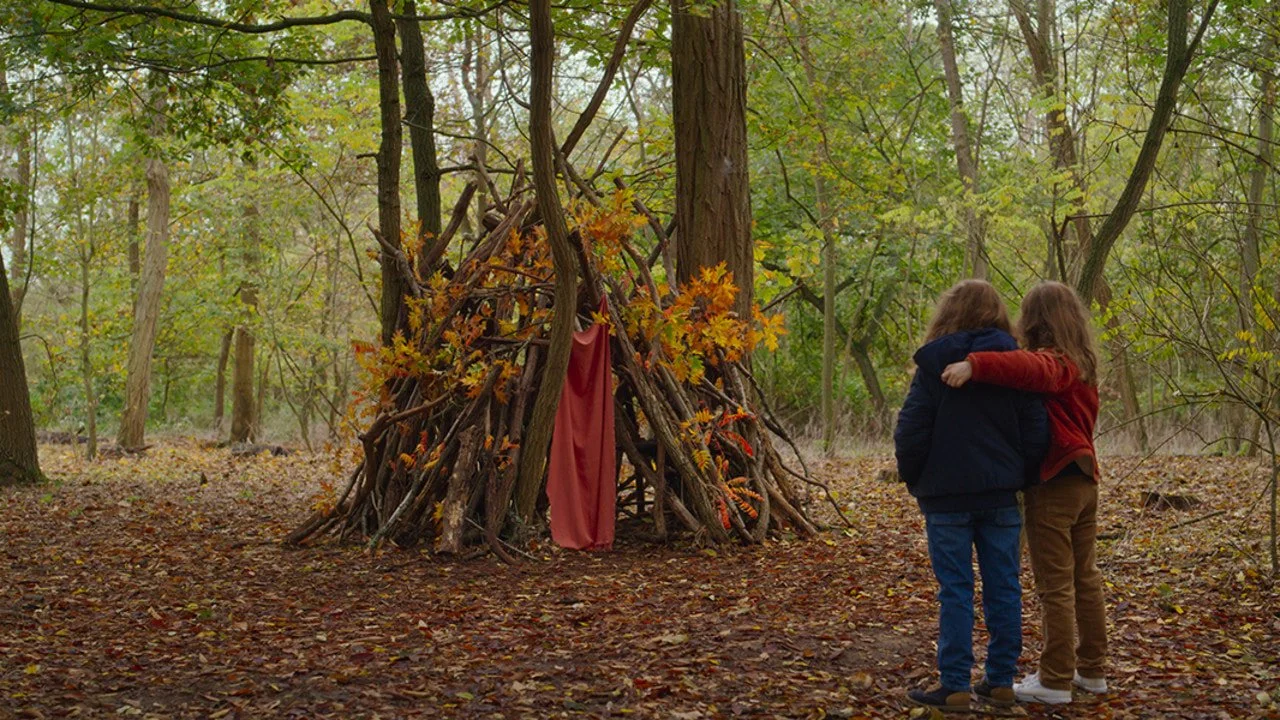
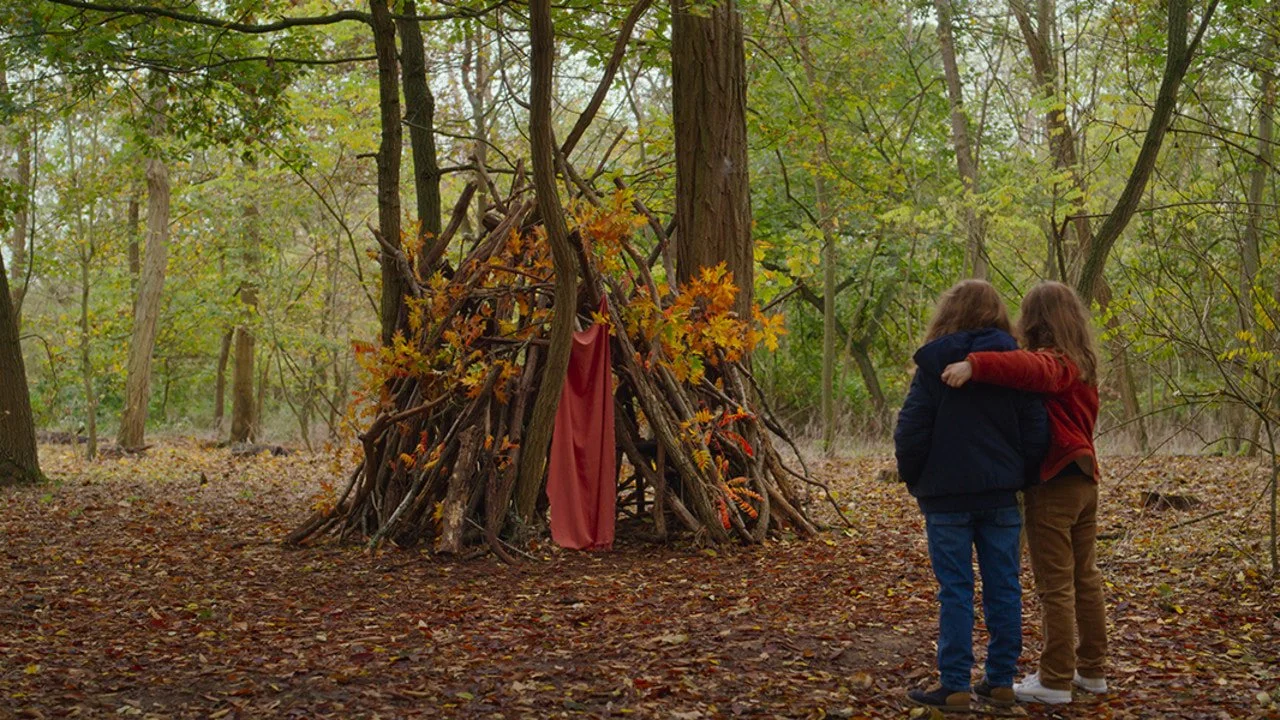
Céline Sciamma knows how to pack a punch of emotion in each and every frame. From her coming-of-age drama Girlhood to the hypnotic, smoldering Portrait of a Lady on Fire, Sciamma always finds a delicate way to leave a reverberating impression. Her latest film Petite Maman is a subdued gem of a story. Following a girl’s visit to her mother’s childhood home, the story is told from the perspective of Nelly (Joséphine Sanz). Having just lost her grandmother, and while her parents clear out the home, Nelly is often left to find engagement in her own little world. Therein lies an enchanting realm where she encounters Marion (Gabrielle Sanz), a girl her age and to whom she strongly resembles. A friendship is born as the two build a hut in the woods, play make-believe, and simply enjoy each other’s company. The more conversations they share, personal revelations begin to blur the lines between past and present tense. Packing a punch with a fleeting runtime, Petite Maman is a bittersweet experience in which every minute is precious for its characters. As magical as it is melancholy, Sciamma’s story speaks to the delicate threads embedded on the path from childhood to adulthood.
Petite Maman radiates warmth in a cool autumn breeze. In capturing the season and its simple pleasures, like the changing leaves or the comfort of a knit sweater, Sciamma beautifully conveys the emotion behind such pleasures. Autumn is a time of change; new beginnings are on the horizon, and stuff of the past get left behind. The emotional response to change can often be nostalgic, and Petite Maman has that wistful affection. Told from a child’s point of view, the film feels like a wondrous tale that speaks delicately about emotions that are difficult to put into words. Or magical trains of thought that a person may not have another soul to share with. One of the most resonating lines in the film talks of secrets; not all are deliberately hidden, there’s just no one to tell them to. The pang of loneliness that moves through each character manifests on such subtle levels elevated by remarkable performances. Joséphine Sanz and Gabrielle Sanz deliver such memorable, joyous work that lay at the core of the film. Lingering as well are the gorgeously detailed cinematography by Claire Mathon, and affecting music by Jean-Baptiste de Laubier that hits at all the best moments.
Sciamma’s talents are a perfect match for finding the sweet spot between joy and sadness. Nelly’s mother (Nina Meurisse) is going through a rough time, having just lost her mother/Nelly’s grandmother (Margot Abascal), which emotionally brings her back to when the two of them were distant. The act of clearing her house opens a window to the moments when those spaces were both empty and full. What this film does exceptionally well is convey the powerful sentiment of activities that seem so simple on the surface. Petite Maman is a treasure chest of memories old and new. Sciamma treads the line seamlessly between the past, the present, and the future. Nelly comes from the path behind Marion, and so forth, which the film conveys through minimal heartfelt dialogue. The story traces the beauty and loss of a mother-daughter relationship. Harkening to the wistfulness of wanting to know more about my own mother, and not being able to converse with my late grandmother. Suddenly, children get older, and with that comes wisdom but also a touch of sadness from not knowing then what you know now. Petite Maman takes a nostalgic path, where intergenerational pebbles are left behind as stepping stones for another family member to follow. This gentle tale of women’s connections, through the motions of time, is another absolute winner from Céline Sciamma.
Petite Maman had its premiere on September 9th at the Toronto International Film Festival. TIFF21 runs September 9-18, 2021.
TIFF 2021: ‘As In Heaven’ Review
September 12, 2021
When daring to envision a brighter future ahead, wishing and hoping for all the glorious things that could be, so often the response that brings one back down to earth is “it’s just a dream.” Is a dream really just a dream? Lise (Flora Ofelia Hofmann Lindahl) has an exciting prospect to look forward to: in a family of eight younger siblings, she will be the first to attend school. Lise has in front of her an image that she wants to create. On the verge of womanhood, she is starting to leave pieces of childhood behind for a brand new experience out in the world. That she’s facing such a big realm of possibility gives her the feeling of power, as though she can control anything that comes her way. But when her pregnant mother Anna (Ida Cæcilie Rasmussen) is in difficult labor and has a vivid vision that threatens livelihood, Lise discovers a much greater power in her path: fate. Inspired by Marie Bregendahl’s classic novel ‘A Night of Death’, writer-director Tea Lindeburg tells a resonating story of late-nineteenth-century superstition in the visually stunning debut feature As In Heaven.
Set on a wistful rural farm in Denmark over a century ago, the film moves poetically and rings with contemporary chimes. As In Heaven has the look of a whimsical classic period piece and the feel of a living nightmare. It’s a vivid, modern tale of a teenage girl experiencing budding sexuality, searching for autonomy, and pressured by a community enraptured in anti-science beliefs. In addition to a coming-of-age thread, Lindeburg explores the dangerous impact of letting a vision rule rather than guide. Many of the characters in this film believe in the power of visions and fate, that God has a plan for each and every person, that there is no real way of influencing an outcome when it’s already been decided. Such is the viewpoint taken when Lise’s mother Anna falls ill during childbirth. Having had a vision that the delivery of a boy would be difficult, and that she would die if anyone called for a doctor, Anna is determined to endure the pain. Even if it threatens her livelihood and that of her children. Lindeburg’s powerfully observed story about the horrors women faced in the nineteenth century ring eerily true in today’s age. The film explores the collective thoughts of a community and how they are ultimately detrimental to the protagonist’s future, specifically her independence. Should something happen to her mother, the responsibility to look after the family and tend to the farm will fall entirely onto Lise’s shoulders.
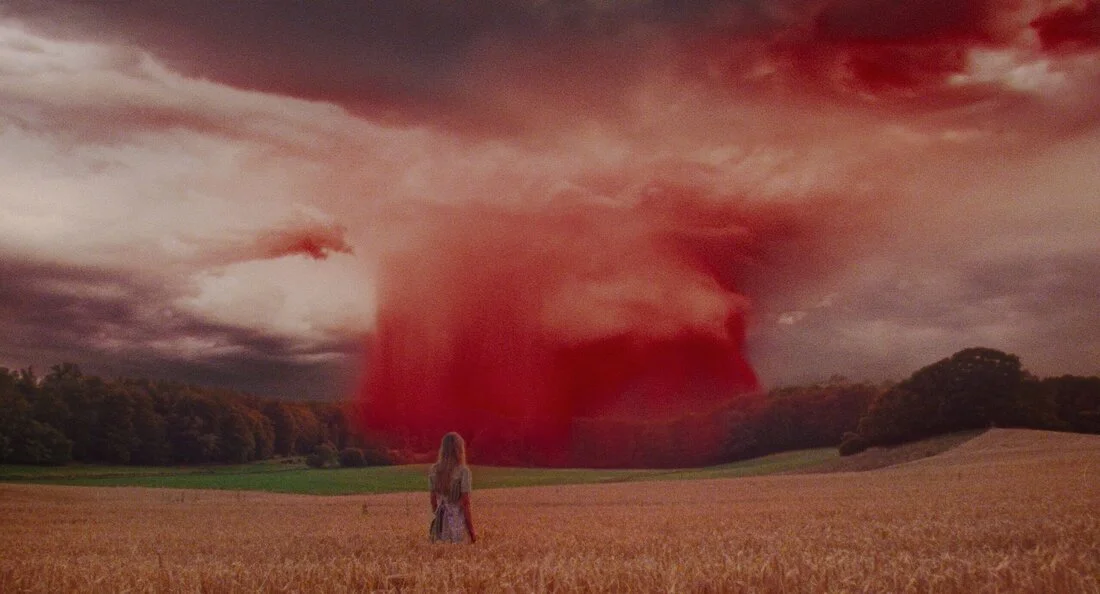
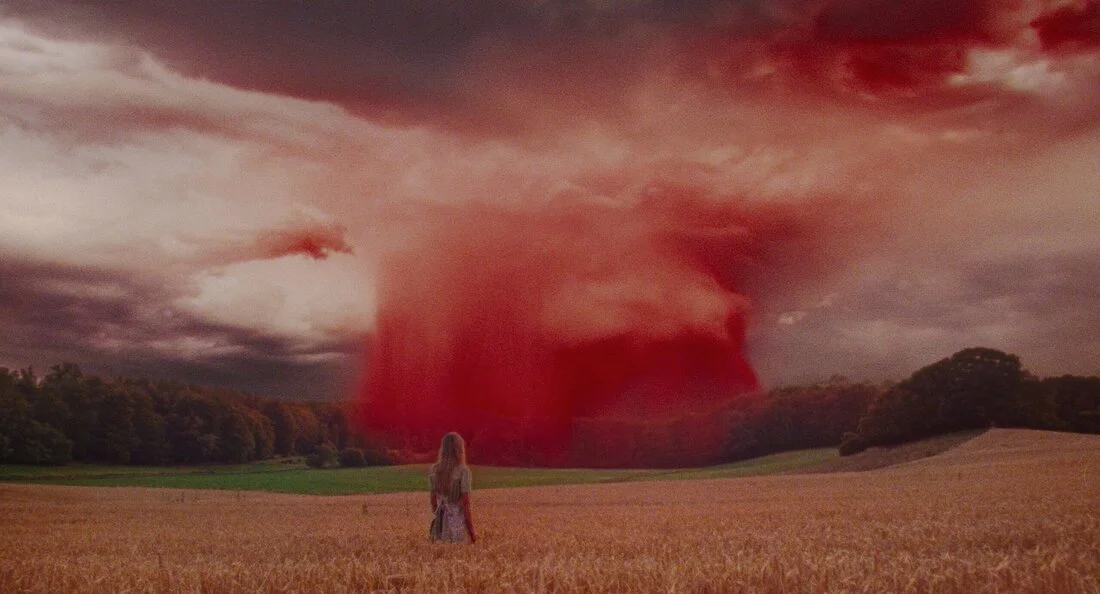
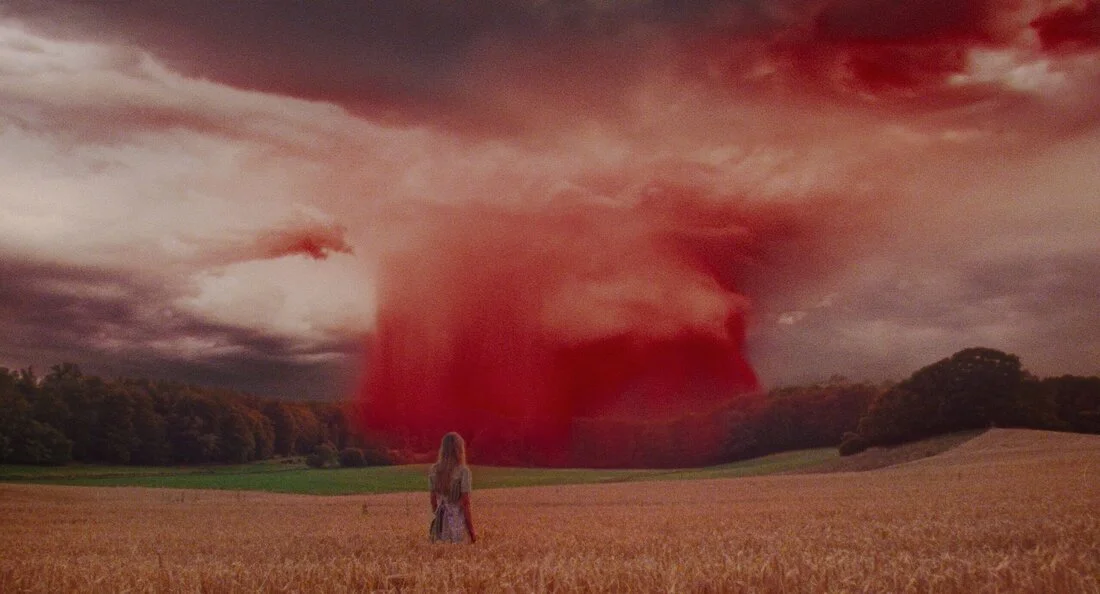
The ominous opening scene, one that showers Lise with a raging red storm, is among the most vivid film imagery in recent memory. The image, along with its contrast to the whimsical farmland, are an instant hook. As In Heaven moves in an assured, poetic way that creates an all-consuming atmosphere. Every little detail melts into each frame. From Marcel Zyskind’s cinematography and Nina Grønlund’s costume design, to Jesper Clausen’s production design, tremendously textured work brings the setting to life. Lindeburg does a wonderful job of establishing a sense of place, not just visually but also emotionally. Lise’s perspective is a guiding force in the story, through which all happenings are filtered as she grows more and more stunned by what she sees. One of the most resonating elements of the story is the expectation and societal pressure on women to follow in the footsteps of their mother, their grandmother, their great grandmother. To carry on their traditions and beliefs, no matter the cost.
The absorbing quality of As In Heaven is a fascinating parallel to how intently the character of Lise absorbs her surroundings. It’s almost as though she is the all-knowing one above, watching over everyone and everything, willing something to happen with all her might. Her hopelessness makes the unfolding of the film all the more tragic. Lise’s attempts to take control of her own life and its trajectory is a waking nightmare. The tremendous performance by Flora Ofelia Hofmann Lindahl is the compass that brings the film together. Lise goes on a compelling journey in the span of a fairly short runtime. The horror quality of the film sees her encounter moments of breathtaking fantasy. As In Heaven is an all-consuming, nightmarish turn of events that takes some time to find a footing but is helped by such haunting imagery. At the core is an intriguing tale about standing on the shoulders of the women who have come before.
As In Heaven had its premiere on September 9th at the Toronto International Film Festival. TIFF21 runs September 9-18, 2021.
TIFF 2021: ‘Aloners’ Review
September 12, 2021
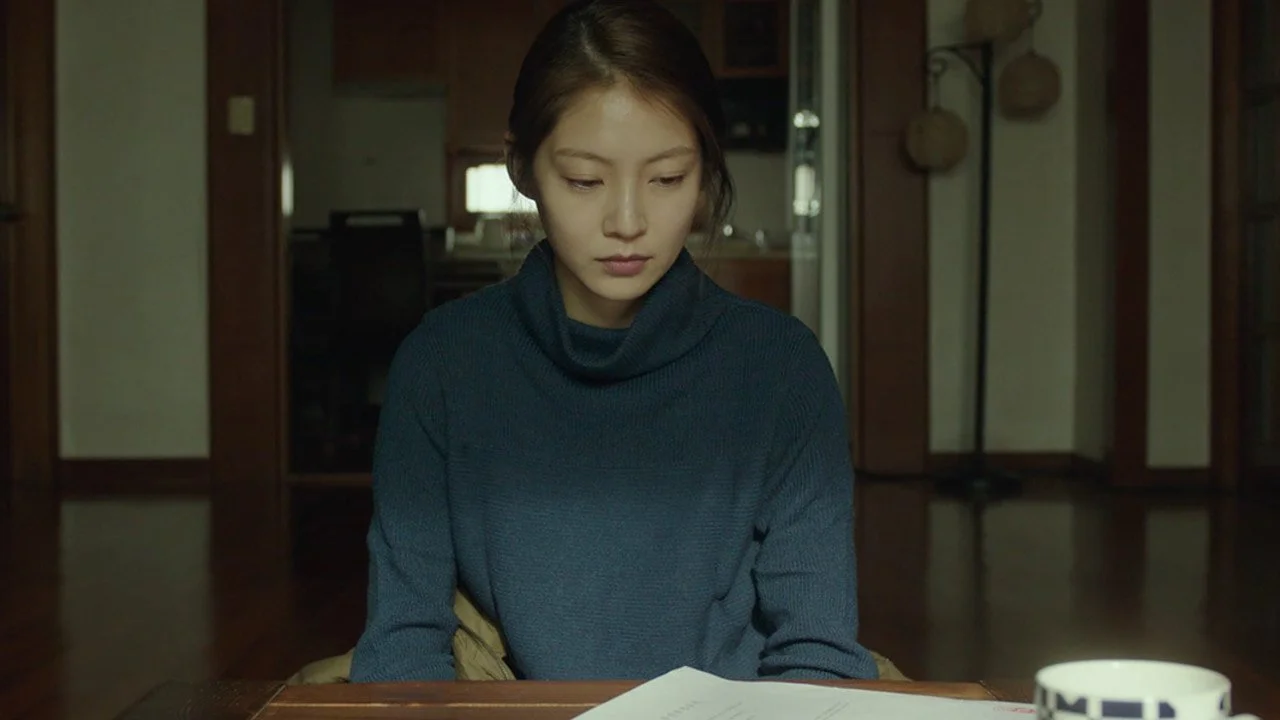
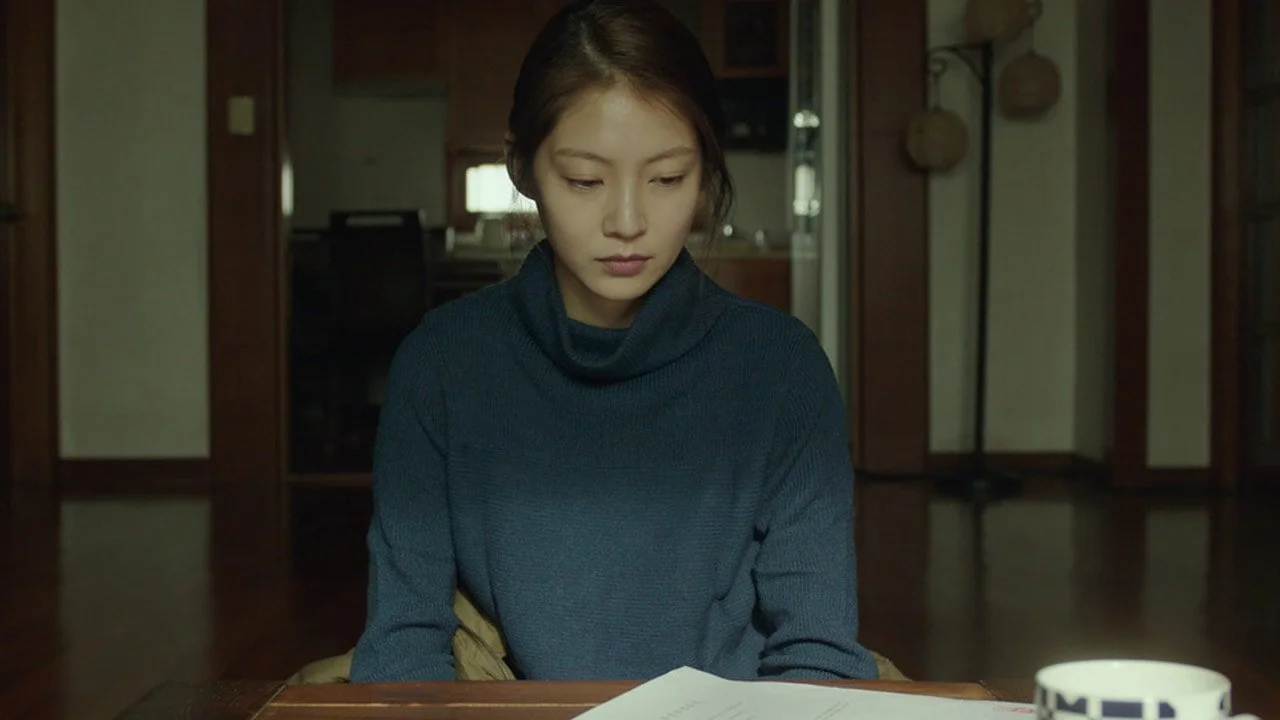
In her thoughtful debut feature Aloners, Hong Sung-eun muses on the question of how to live alone and not suffer from loneliness. While there is no definite key answer that applies to all, there is a reassurance to not knowing. There is a specificity to the story of Aloners that makes it resound so deeply on a universal level. In the most meditative and quiet of ways, Sung-eun tells an empathetic narrative of her protagonist’s loneliness. At the center of her film is an observational lived-in performance by Gong Seung-yeon as Jina, top employee at a credit card call center. The job requires practiced and reliable communication, without the need to build personal relationships beyond providing a service. It’s a job that feeds the way she self-isolates as a form of self-protection. The grief she suffers permeates on a daily basis, taking the shape of shutting out the world around her. Underneath the knee-jerk exterior she presents to the world of a person who prefers to be alone, is a person who isn’t so great on her own. The character study that unfolds is a compelling exploration of learning to face uncomfortable emotions. Aloners is a beautifully restrained, assured portrait of grieving the loss of human connection.
Jina’s job encourages her dependence on technology as communication. She constantly has a screen playing; whether it be the late-night bright static of her TV, or a rabbit hole of videos streaming on her phone. The most recent on her playlist is footage from a home camera installed at her late mother’s house, which her father (Park Jeong-bak) now occupies. Instead of visiting her father, she watches him from afar in real-time. Their relationship exists mostly on a digital platform where she can control how much access he has; brief phone calls and ignored messages sum up where the communication stands. Too afraid to admit the reality of her emotions and part ways with what no longer serves her, Jina avoids letting others in. In the process, the world becomes a blur. When she discovers one day that her next door neighbor has been dead inside his home for a week, she claims she could have sworn she saw him that very morning. Aloners conveys a mindset that is not often portrayed with such delicacy and empathy. The protagonist is so utterly relatable in the way her loneliness acts as both a problem and a solution. It’s a mentally draining cycle in which a breakthrough can be difficult to come by. Her days turn into night and back again in the blink of an eye, but upon the news of her neighbour, she begins to reflect on what she’s missing.
The beauty of life is in its unexpectedness, particularly in how a stranger can unassumingly walk into the picture and ever so slightly move the axis of another person’s world. Aloners has a subtle energy, a slow moving narrative that is deeply observational and hauntingly universal in its focus on a relatable subject. Sung-eun reaffirms the power of building relationships in real life. Once jumping over the hurdle of letting someone in, the hope that shines through is a sight to behold. The hope of being understood and heard, of being seen and comforted through your fears of rejection or getting hurt. Aloners is not just about the building blocks of how to get here, it’s not just about reaching out to people and spending time with people. The story also shines a light on the time and energy needed to cultivate a healthy relationship with yourself. Sung-eun makes strong narrative choices in the supporting characters with whom Jina encounters, notably her underperforming co-worker Sujin (Jung Da-eun) who is the opposite of Jina: always wanting to make friends, not wanting to be alone. When tasked with training this girl, Jina realizes first-hand how shutting people out has an effect on others. Their scenes unfold in such an interesting way that traces Jina’s fear of admitting parting moments, and also brilliantly analyzes capitalism. It’s rewarded behavior to reassure an irrational angry caller, for instance, while frowned upon to stand up for yourself and refuse being apologetic. The trajectory of their scenes lead to an emotional climax with understated power.
The fear of saying goodbyes is a mounting one for Jina; never given the courtesy of a farewell in the past, she finds immense challenge in extending the act to others. Met at a point where people had been blurs in the background of her life for so long, the realization she faces in the film is filled with hope. Through a wonderful performance by Gong Seung-yeon, who can speak a thousand words with a glance or a change in posture, Aloners hits close to home as a portrait of solitary existence. Hong Sung-eun has such a clear voice and brings comforting specificity to a subject that can often be intimidating to face alone.
TIFF 2021: ‘Ste. Anne’ Review
September 13, 2021
Manitoban filmmaker and visual artist Rhayne Vermette spends her phantasmic film, Ste. Anne, lost someplace between memory and present tense. She finds a way of capturing and evoking a daydream, feeling her way through which direction to take. Her narrative floats from one train of thought to another, all reaching for the key destination on Vermette’s map: following a woman’s journey from obscurity to home life. As an evening party journeys into late night, word spreads among a Métis community in Treaty 1 territory (Winnipeg today) about the return of Renée. After being inexplicably missing for four years, Renée returns to her daughter Athene - now living with Renée’s brother Modeste and his wife (who sees Athene as her own). Renée’s presence creates a ripple effect among her surroundings, both people and places, as she re-familiarizes herself with a community familiar and faraway. Flung out of a mysterious past, Renée goes on a fragmented journey of piecing back her life. As her memories unravel into fragments, so too does the film itself. Ste. Anne is a beautiful collage of belonging to places and people, all the while being haunted by a community that’s been lost.
Sometimes referred to as subminiature, 16mm film has a home movie-making quality that makes Ste. Anne feel like an intimate piece of art. With a knack for strong visual storytelling, Vermette takes characters and places on a dreamlike journey through space. Not set in space, but there is a planetary approach to the story in that the film moves like that of a planet. Constantly wandering and shifted. Renée appears as a nomadic character, always on the move even when returning to a life of traditional abode. In her return to the community she once left behind, there is a feeling of unease and unpredictability. Tensions arise between her brother Modeste, his concerns grown from Athene being without a mother, and wanting his sister’s presence to be constant. Vermette's hallucinatory approach poses the question of which narrative events are happening in real-time, and which are residue of a memory. Ste. Anne experiments with great ambiguity that puts the narrative off the map, becoming a puzzle to put together. It’s a great parallel to thinking back on a cherished time, conjuring visual bits and pieces with a strong undercurrent of how each one makes you feel.
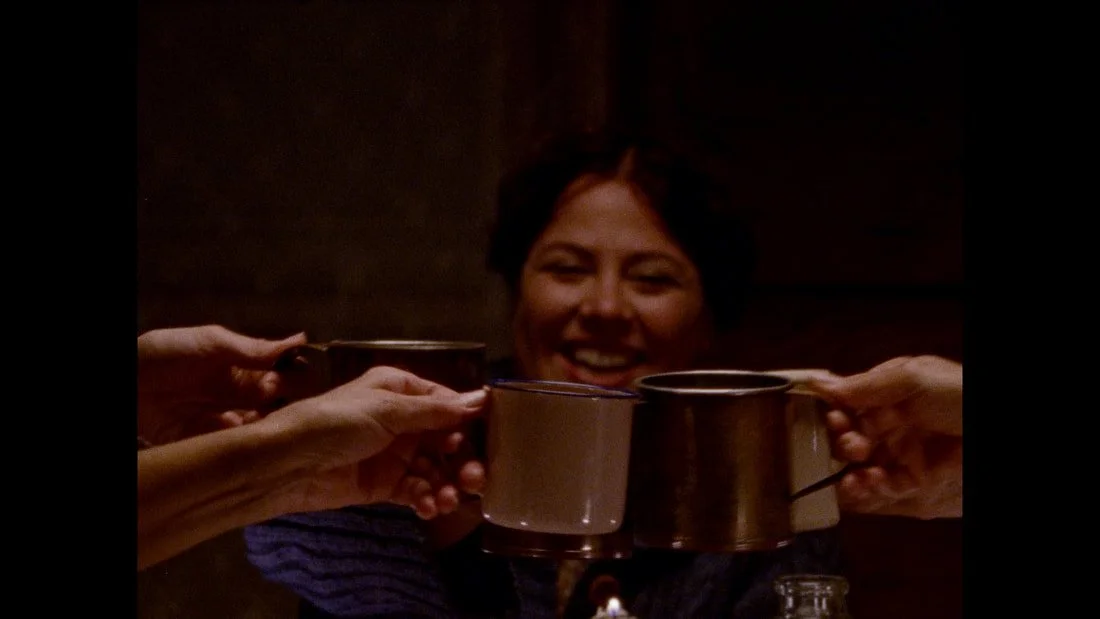
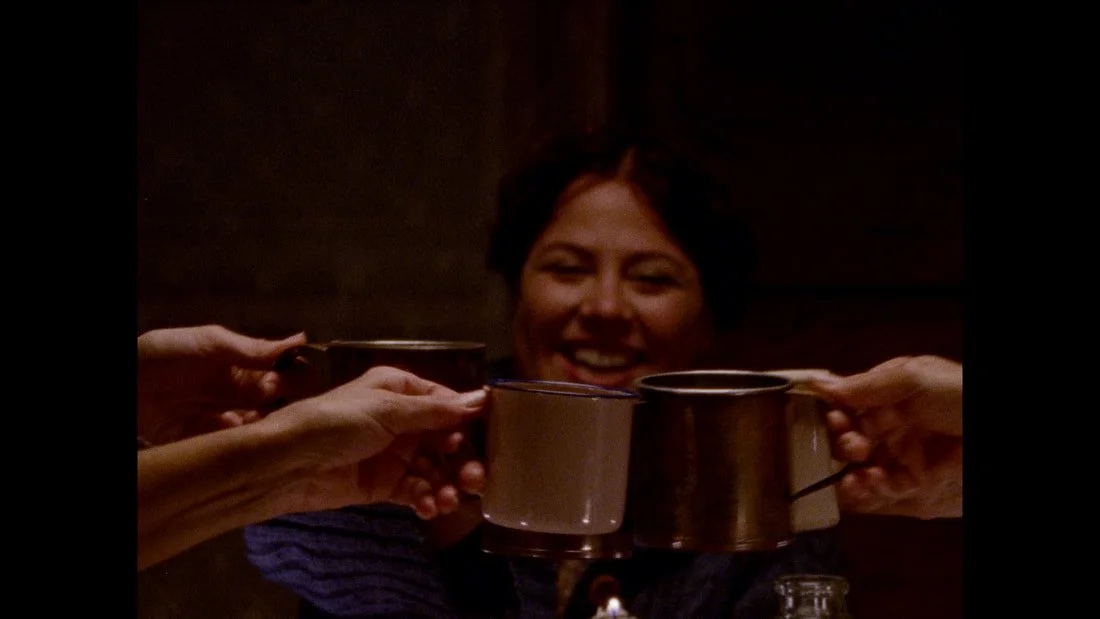
Ste. Anne has an intensity that comes in waves, from the use of blaring noise to some of the heightened emotional conversations between family members. For each of these moments, there is one of sombre serenity, and one of haunting apparitions. The film is presented in such a way that shows snapshots of a meaningful moment. Vermette's fragmented narrative is a powerful reflection of how memories float in and out of consciousness, often triggered in unexpected ways. Among the most visually striking are the ghostly elements of Ste. Anne. An unforgettable moment features a family sitting around a dinner table, while a lost loved one appears translucent in the background of a frame. One of the more resonating subjects the film tackles is the lingering power of belonging. The knowledge of loved ones gone but not forgotten, that their place is held close to the family’s heart. Vermette's use of a ghostly apparition is a brilliant way to show the reverberating power of a memory; the ease with which people depart, and the memories left behind in the spaces they once occupied so presently.
Vermette's recurring image of a prairie sky, which appears as the first shot of the film, sets a wistful and intense tone that the rest of the story maintains. Ste. Anne is full of snapshot evocative moments, each its own vignette. With a dreamlike setting, the film weaves through echoes of ideas pondering on belonging. Many of the scenes depicting Renée follow her character as she’s headed elsewhere. There’s a rarity to the scenes where she’s stagnant, as though time is precious and she may disappear at any given moment. There’s always a feeling that Renée has one foot outside the door, a sentiment conveyed strongly during the polaroid scene between her and Athene, in which Renée describes land she envisions returning to. So much of the film traces her character in motion, ready for the next step while also acknowledging and reclaiming moments from the past. Interjected throughout are conversations between family members that often start mid-sentence, like being a fly on the wall listening in on intimate connections.
Ste. Anne follows a thread of family matters, how a community are brought together by way of people and places. Sometimes, a moment as simple as sitting around a table and sharing a meal spills into something far more complex given the intimacy of being physically or emotionally at home. Home is a feeling. These emotions extend far beyond a structure to house them all, and Vermette is skillful at conveying how home travels…it’s in bits and pieces, existing not only in people and places but in the sentimental things. In a polaroid of land Renée envisions returning to. In hearing the name of a place alone, like a town in Manitoba called St. Anne. The narrative of the film has an ambitious sense of time, which gives it a blurry setting but it’s an approach that Vermette pulls off in a trance. She moves vividly through many fleeting moments on screen. But however fleeting they are, the film brings forth plenty to stop and ponder on, making the experience of Ste. Anne a mysteriously inviting one.
Ste. Anne had its world premiere September 13th at the Toronto International Film Festival. TIFF21 runs September 9-18, 2021.
TIFF 2021: ‘The Power of the Dog’ Review
September 14, 2021
Jane Campion is back. It’s been over a decade since her previous film Bright Star, a nineteenth-century romance of sensual proportions, where the stunning visuals trace the details of its story. Her latest is a slow-building queer Western thriller, simmering in personal aggression and defeat. As the filmmaker journeys through adapting Thomas Savage’s Western novel of the same name, she leaves so many haunting treasures along the way. Reverberating emotion is carefully packed in each and every frame. A moment between two characters sharing a cigarette, made exciting and unpredictable by the power of Campion’s eye. The richness of her storytelling is a feast with lingering leftovers. From the memorable Jonny Greenwood score to the startling accomplishments of brilliant casting, The Power of the Dog has the kind of staying power that warrants several revisits. Benedict Cumberbatch has never been better, Kodi Smit-McPhee commands his scenes, and Kirsten Dunst reminds why she’s one of the most compelling in the game. Campion’s tackling of toxic masculinity and lost souls is an unsettling piece of storytelling.
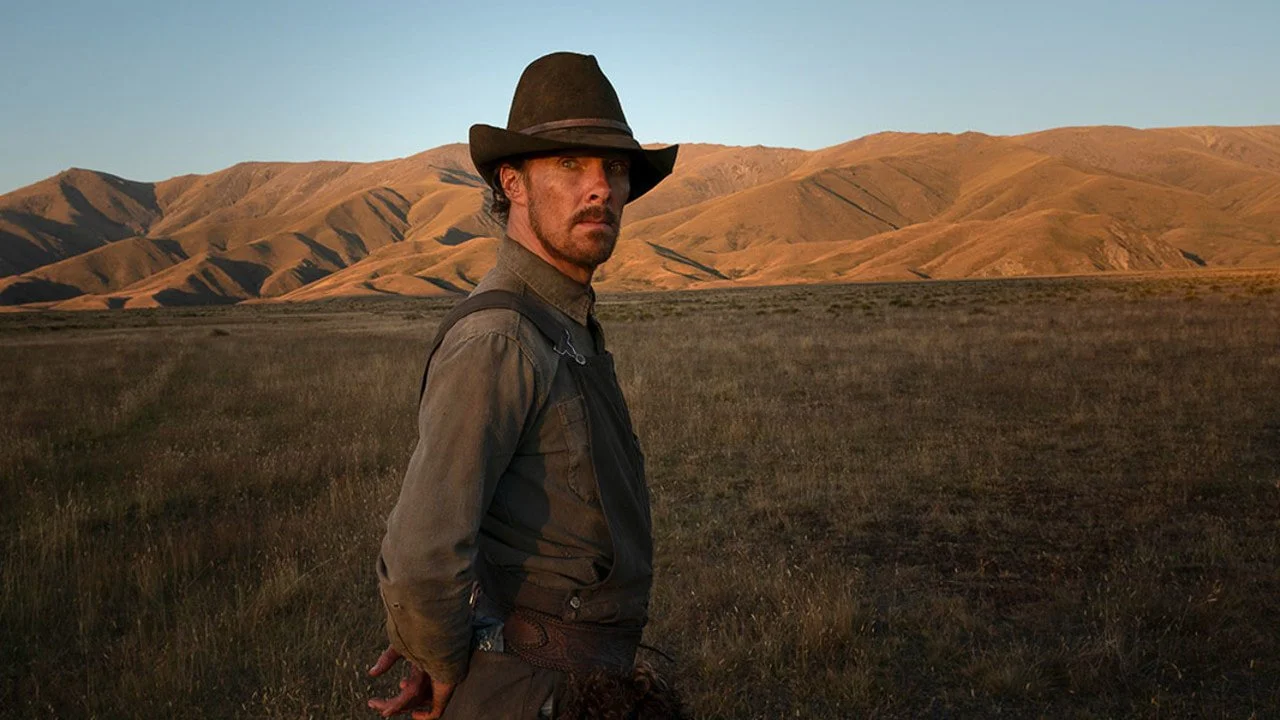
At the core of this film’s gripping power is the dialogue. In Campion’s adaptation of Savage’s novel, words roll off the tongue and lines are burned into memory. Tension hangs in the air as many of the conversations unfold. I find myself hanging onto every word, as though the source of its threads are being quickly pulled away. Campion amasses a remarkable group of actors to light a fire to each conversation, whether through words or flickers across faces. Take a scene of the character Rose (Kirsten Dunst) playing a newly brought in piano. As she practices one afternoon, she hears the distinct walk and whistle of Phil Burbank (Benedict Cumberbatch) entering a ranch, owned by Phil’s brother and Rose’s new husband George (Jesse Plemons). A little rusty, just as she starts relaxing into a melody, Phil interrupts with the strings of his banjo every time. No words spoken, but a clear and assured understanding that he doesn’t want her around. In fact her torments her, and her son Peter (Kodi Smit-McPhee) from a previous marriage. He’s had a bubbling resentment ever since George’s announcement of his and Rose’s elopement. The driving force of the film’s plot starts with their dynamic, an unpredictable tornado of fear and thunderstruck awe. Slowly and patiently, the story digs deeper into Phil’s repressed emotions.
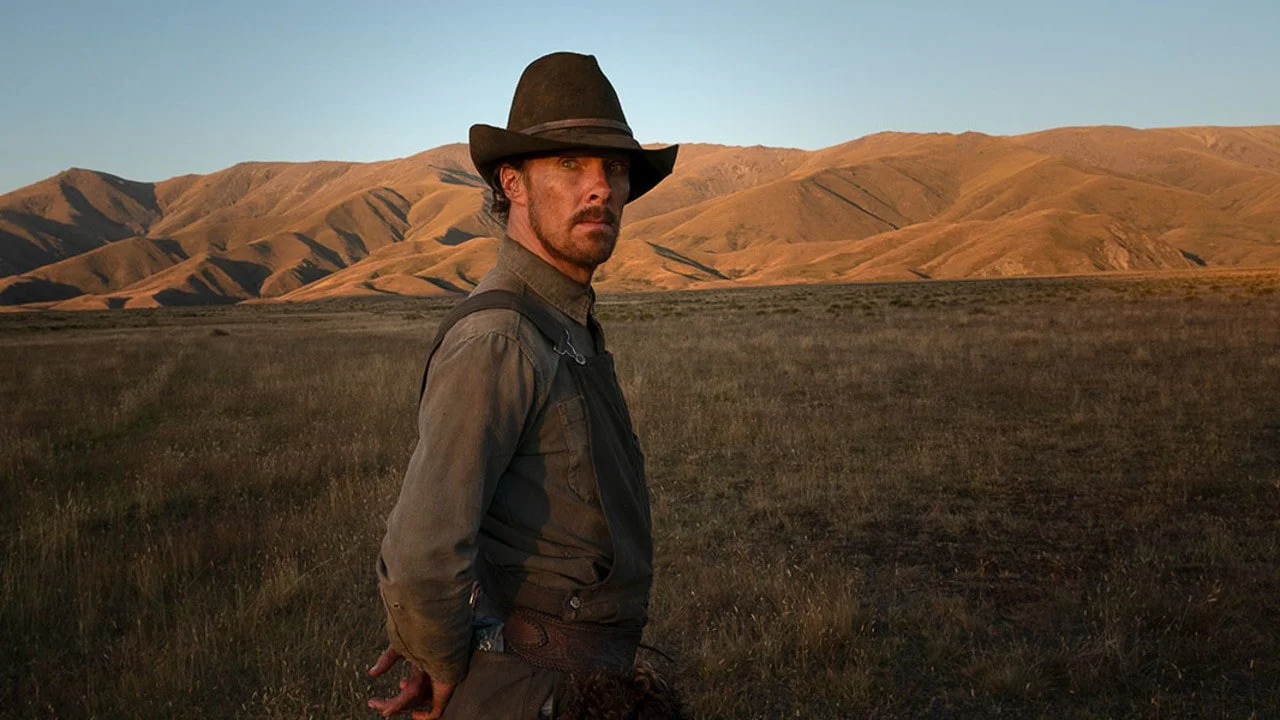
The Power of the Dog starts with a large canvas, a vast setting with land as far as the eye can see. But there is more to the story that Campion skillfully draws out with precision. Even with characters, they are introduced so quietly and unassumingly, yet carry a perceptive presence. The story unfolds in a puzzle, becoming more and more intimate when another piece is revealed. Campion brings so much attention to detail; the camera lingers on small moments and create an echo for you to follow later on. It’s an approach that maintains mystery in her storytelling and in the characters. Slowly and steadily, the performances add more pieces to the puzzle that start to crack the foundations they have internalized for themselves. In his best work to date, Cumberbatch carries an aggressive presence throughout. All the while, emotions inch nearer to the surface and he forcefully keeps them in check. It’s a truly fascinating portrayal of a lost soul, so far from that surface and deep within his internalized need to be “tough” all the time. Adhering to strict pressurized rules of behavior. Leading to toxic masculinity that manifests in different ways, as he torments those who are loving, those who are expressing truth in his wake.
Cumberbatch carries the film so strongly, though certainly is not the only performer who flourishes under Campion’s direction. Kirsten Dunst has a quiet staying power in the film. On the surface, not a character with “a lot to do” in the sense that her performance is not particularly action-based in obvious, outward ways. Rose has an internalized slow-build, a rollercoaster devoid of screams, and Dunst plays her exceptionally. Rose finds herself in the company of strangers, and while amongst her new husband George (cue adorable chemistry with Jesse Plemons), she’s not in the position of basking in a honeymoon. Grieving from a personal loss, struggling with her own inner battles, worried for her son (who is on the receiving end of upsetting taunts). Dunst conveys such wonderful range, with such subtly, and a truthfulness that she reveals under the influence. Just as accomplished is Kodi Smit-McPhee playing her son Peter. Also engaging in the sense of mystery around the plot and the trajectory of characters, he does a resonating job. He commands each of his scenes, and in a particularly exciting two-hander with Cumberbatch, makes the sharing of a cigarette all the more riveting to watch.
With a great many Valentines for a slow-building story, Jane Campion crafts a simmering mysterious drama with a precise vision and observing eye. As has become known and expected with her work over the years, The Power of the Dog looks stunning. The accomplished cinematography by Ari Wegner illuminates rich details. The visuals go hand in hand with the story, reflecting shifting perspectives and a setting that grows a little bit smaller as the story progresses. With more intimate scenes, a wonderful ensemble of actors work their magic alongside one another to keep the fires burning. Packed in each and every frame is a desire to revisit them, to bask in the clues Campion so richly shares. Here’s hoping another decade does not pass between her next film and The Power of the Dog.
The Power of the Dog premiered September 10th at the Toronto International Film Festival, and arrives on Netflix December 1st.
TIFF 2021: ‘Scarborough’ Review
September 19, 2021
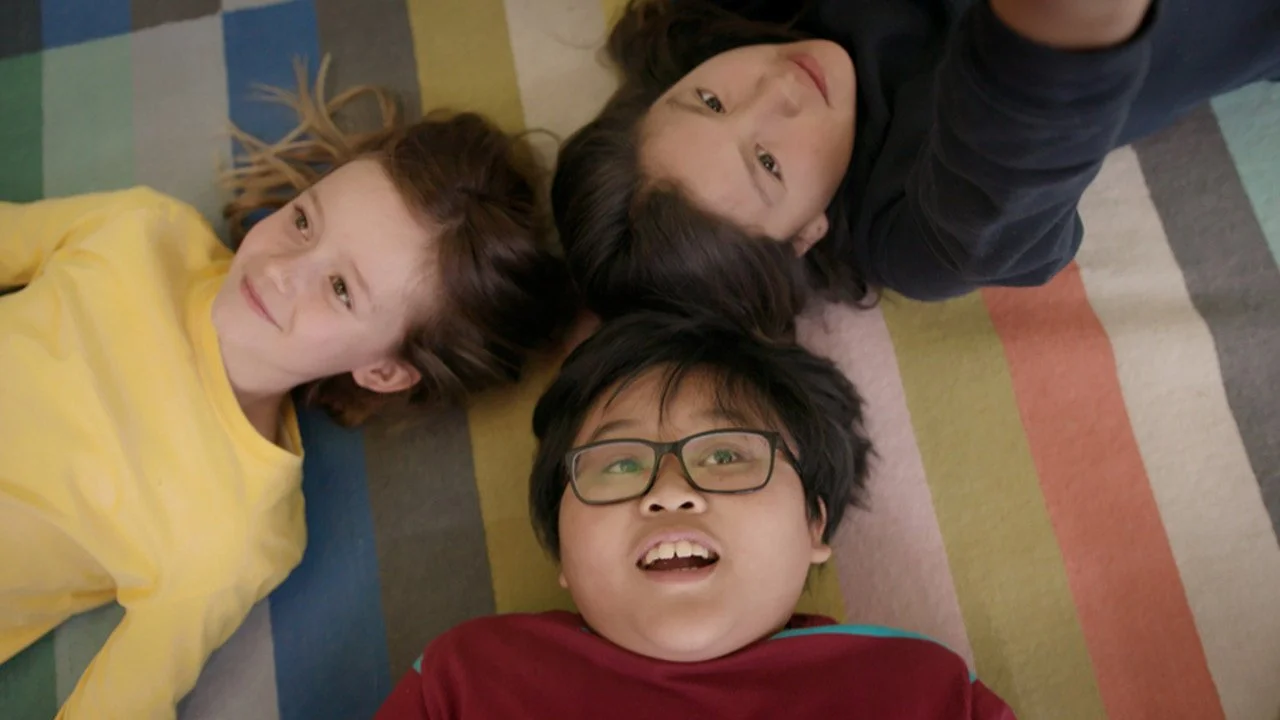
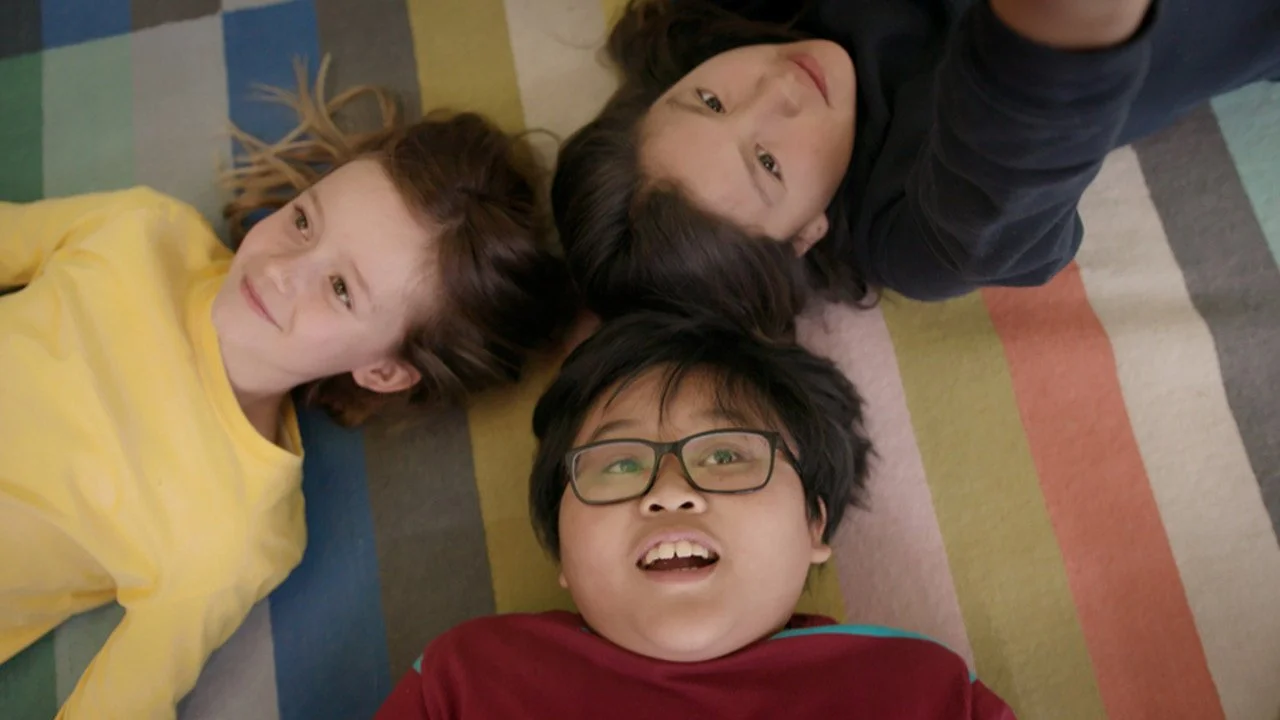
It’s easy to see why Shasha Nakhai and Rich Williamson’s Canadian film Scarborough was this year’s first runner-up for the TIFF People’s Choice. Adapted from Catherine Hernandez’s novel, the story is a compelling reflection of a community that is largely ignored. An interwoven story of family, neglect, hope, love, everyday acts of care. A story from which yearning for togetherness and understanding beams. Radiating with an open heart, Scarborough follows three children living in a low-income neighborhood who cross paths and become fast friends. Nakhai and Williamson bring an unmistakably empathetic approach to the community beating at the core of this story. With a lived-in observational quality, Scarborough takes a look at some of the people who make up the city of Scarborough in Ontario, Canada. The story paints a portrait of their everyday lives, all the ups and downs that occur at any given moment. It’s a community-driven film that finds focus in the perspectives of children, as they both absorb and endure their surroundings, which range from household to household. Led by remarkable child actors, Scarborough is one of the most vital films in recent memory.
Catherine Hernandez’s novel (sharing the film’s title) is a portrait of multiple voices in a tight-knit neighborhood whose needs are often neglected and pushed aside. Located east of Toronto, Scarborough buckles under the heaviness of low-income, racism, prejudice, and a system that constantly fails them. From the beginning of the film, Nakhai and Williamson establish a hurriedness to the story. The pacing is suitably frazzled as characters are on the move, in a rush to avoid potentially harmful situations approaching. The film introduces Edna (Ellie Posadas) as she wakes her son Bing (Liam Diaz) and gently instructs him in a panic to gather belongings, presumably before his father returns home. Elsewhere in another household, Jessica (Kristen MacCulloch) berates her daughter Laura (Anna Claire Beitel) to gather belongings, physically abusing her in the process. Hernandez, adapting her novel into the screenplay, opens this story in the thick of people’s lives, exploring what day-to-day looks like for them. Down to the finest details, the story gives so many layers to each character with remarkable subtlety. By bringing specificity to this community of people, with a focus on three households in particular, Scarborough feels far-reaching in its empathetic approach.
Among the people in this community are the families of Bing and Laura, as well as young Sylvie (Mekiya Fox) and her mother Marie (Cherish Violet Blood). Sylvie, Bing’s best friend, observes as her mother struggles to balance finding a permanent home and taking care of her autistic son Johnny (Felix Jedi Ingram Isaac). The children are brought together by a school program where families can drop in before classes, have access to free snacks, and simply have a safe space to be in. The literacy program is run by Ms Hina (Aliya Kanani), who cultivates a healthy and inclusive space for everyone to join in. She’s also witnessing first-hand the direct effects of low-income on educational resources. Her supervisor, who appears to mean well but really has no real grasp on the realities of this community, subtly discourages her from “running a soup kitchen”. In a stunning moment between the two characters late in the film, Hina makes her feelings known when her supervisor’s response to a sudden tragedy is all about “shock” and “I can’t imagine”. With faux pleasantries, she attempts to deny Hina the space to mourn. It’s one of the most quietly devastating moments in the film, to watch in real-time how a system has failed a child. The power of Hernandez’s writing is in making this community as multi-faceted and observational as possible. So much happens in between the lines, in the tiniest of gestures and actions, and the film soars by shining a light on those moments whether they are good, bad, or ugly.
The filmmakers exude a palpable love for the characters of Scarborough. It’s a marvel how the ensemble is filled with mostly first-time actors, delivering a level of performances one would find in the career of a seasoned performer with multiple credits to their name. Most impressive are child actors Liam Diaz, Anna Claire Beitel, and Mekiya Fox playing the three main kids Bing, Laura, and Sylvie. The many facets of this story are funneled through their perspectives, which are quite different from one another. The neglect Laura experiences is absolutely heartbreaking to watch, and Beitel is unforgettable in this role. Also wonderful are Fox and Diaz, who bring a wholehearted quality to their roles and just light up the screen. One of the most heartwarming moments arrives at the end with Diaz’s school talent show rendition of Whitney Houston’s ‘I Wanna Dance With Somebody,’ a balm for the soul. An instant crowd pleasing moment.
Told with care, Scarborough gives visibility and depth to a multi-faceted community of people in a combative environment. It’s a wholehearted look at how people in close proximity to each other come together, and shines a light on those who are contributing acts of goodness in this world while facing hardships of their own. Hard to watch at times, given the unflinching look at an abusive household. Also remarkably grounded, not exaggerated and played for dramatic effect. This is a story with a lot to love, and a lot of love to give. Scarborough shows the resilience of a community, with beautiful incorporation of children and adults’ perspectives.
2022-02-24
Editor's Note: The actress who played the character of Sylvie has since changed their name to Mekiya Fox.
TIFF 2021: ‘Spencer’ Review
September 23, 2021
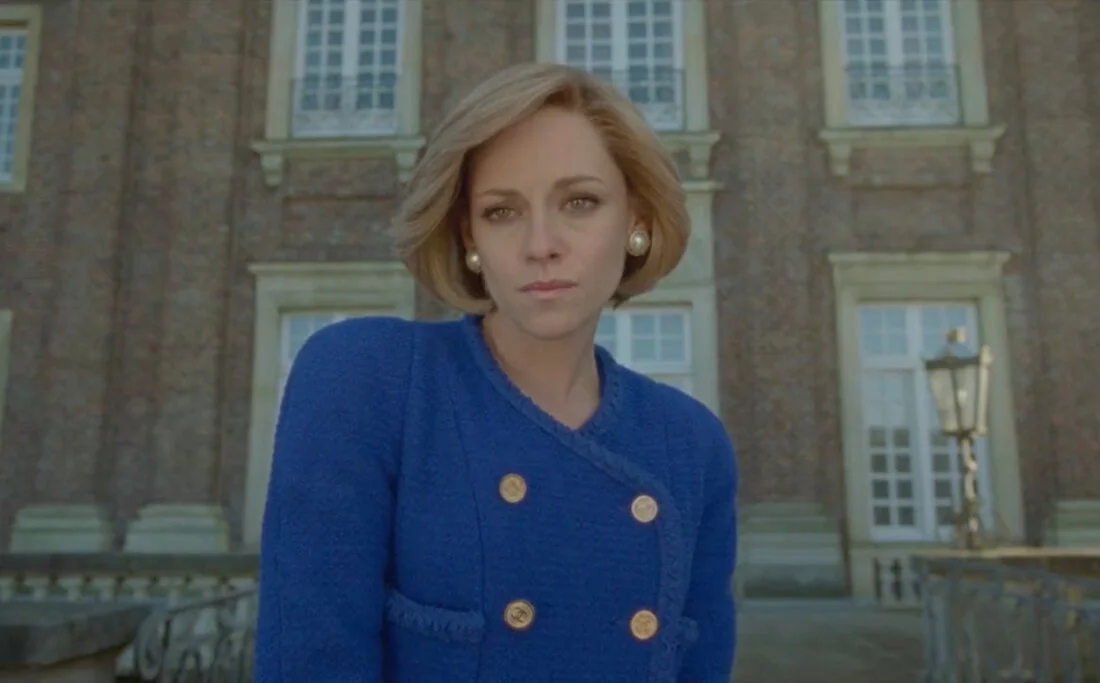
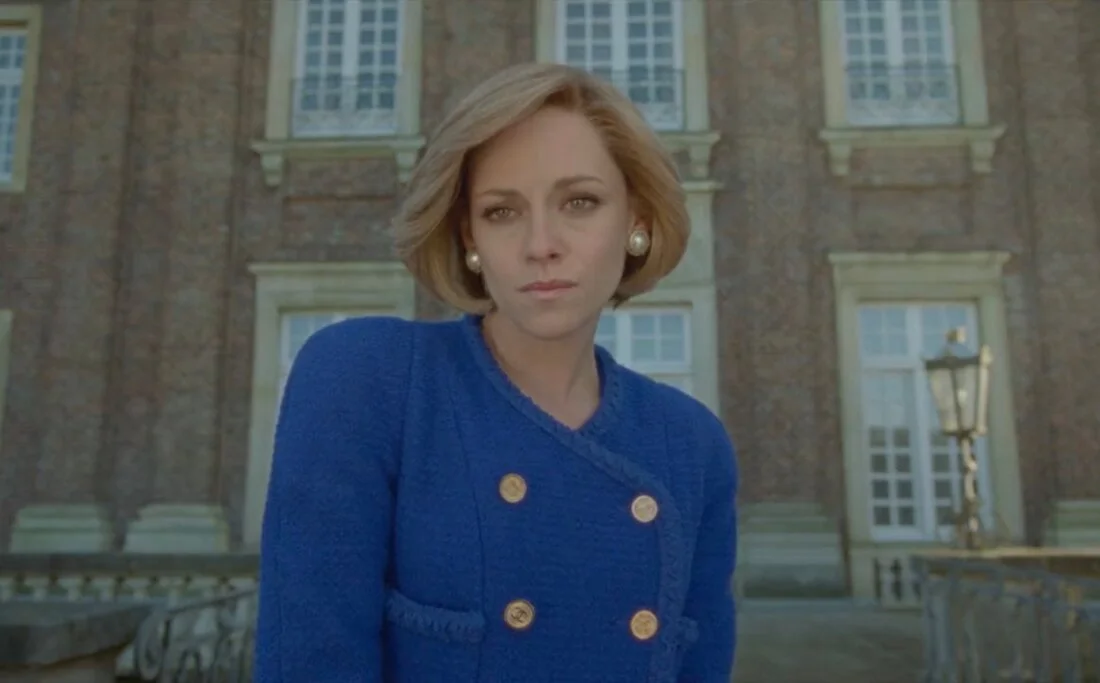
It’s Christmas Eve, and Diana is late to dinner. Punctual kitchen and house staff quietly await her arrival. The food is ready. Rooms and tables are set in pristine condition, not designed to be disturbed but to be followed. As pointed out by Major Alistar Gregory (Timothy Spall), hired to observe and report Diana’s every move, all those employed by the Queen have taken an oath. It’s a sense of responsibility they fall back on, becoming less like human beings and more like lines in a rulebook. Not at all keen to follow any sort of rulebook, Diana’s individuality is weighed down by the expectation to behave a certain way. Over the course of a Christmas weekend at the Sandringham estate in Norfolk, England, where Pablo Larraín’s Spencer is set, the qualities traditionally synonymous with the season such as togetherness and family time are capsuled in a world within a world. A world Diana shares only and understandably with a select few; her boys first and foremost, William and Harry. Her confidante, Maggie, as well. All the while, the chimes of tradition ring louder and louder, as she wrestles to break free. Standing out as a fable, Larraín brings a distinct perspective to Spencer that is so defiantly a unique story of character. Set apart from various portrayals of Princess Diana over the years, the film has an interesting ghostly element, as though being haunted by a previous life. Working wonders with Kristen Stewart as the beloved icon, Spencer is a stunning achievement.
A portrait of Princess Diana is painted in a thoughtful, curious, and surreal way. Rather than land on traditional points about a real-life figure and adhere to a typical biopic structure, Spencer experiments with style. The clarity in Larraín’s vision, coupled with Stewart’s laser focused performance as Diana, make for a resonating manic drama. The screenplay by Steven Knight finds strength in telling a story around a moment in time, exploring the finite details of a few days in her life. The story lives inside Diana’s mind, at a point where her marriage to Prince Charles is crumbling and the narrowing chilly world around her grows more watchful. During a weekend full of protocols, such as having a selection of outfits she must wear only at designated times, the film conveys how the overall environment affects Diana’s wellbeing. With a consistent and clear tone, Spencer takes on the form of a psychological drama operating from emotion, wearing its heart on its sleeve, portraying the sadness and loneliness of a woman who also has no one she can truly confide in at any given moment.
One of the more unique elements of Spencer is how magnificently the film plays on time. A weekend feels like a lifetime, capturing that distinct feeling around the holidays where time slows down. As though holding onto the idea of warmth and joy synonymous with the season. There is also a surreal feeling to the story, where the past and the present are the same. Diana has existed in this rigid setting and way of life for so long (nearly 10 years at the point the film is set), that her past becomes an evergreen ghost story. A previous life, one before Prince Charles, begins to haunt her and envelope her surroundings. Muted pastel palettes, hazy atmospheres with a coat of fog, the ominous figure of Anne Boleyn, nightmarish surrealist scenes like having pearl soup. With stunning cinematography by Claire Mathon, an often spooky-looking exterior creates vivid and dreamlike imagery that puts the story in an imaginative setting. Accompanied by Jonny Greenwood’s memorable score, Jacqueline Durran’s gorgeous costume design, and an accomplished hair and makeup team that make all the work look effortless, Spencer is beautiful to look at.
Beyond the visual artistry, the casting of Princess Diana is of course the most crucial for this film, and casting Kristen Stewart is genius. In her most accomplished work to date, Stewart absorbs the character and sinks into a personal interpretation. It’s an unexpected performance in that she keeps each and every moment interesting. She reveals layers of wit, poignancy, and delightful awkwardness as the film unravels alongside her. She conveys the spirit of a woman wanting to break free, whose personality sees the light of day in bursts. It’s a performance rich in detail, from the change of body language when she’s in public vs. private. The relief but sadness in the moments she keeps to herself just from not having another soul to share with. She’s playful and curious, moving and unforgettable. Alongside her, a strong ensemble including Sean Harris, Timothy Spall, and especially Sally Hawkins work like magic. Hawkins, who plays Diana’s confidante Maggie, is another example of spot on casting. The actor has an instant quality of trust and warmth. She has a perfect scene with Stewart that gives the film an emotional release, a reminder to Diana that she is so loved, and conveys the importance of sharing love.
There are two vivid moments in Spencer that encompass such love. One, an entrancing dance sequence, showing an activity intimate to Diana, a personal expression of self that is as heartbreaking as it is heartwarming to watch. The other, a carefree moment shared between Diana and her boys as they sing together in the wind. The film intelligently shows the essence of the person; how does she feel, how does she make others feel, how do others on the outside feel about her. The blend of realism with surrealism gives Spencer a distinct perspective that stands out as its own creation and speaks with its own rhythm. At its core, a woman pondering on what she hopes to leave behind on this earth. Pablo Larraín and Kristen Stewart work wonders to shine a light on her impact.
Debut Features Shine at the 2021 Toronto International Film Festival
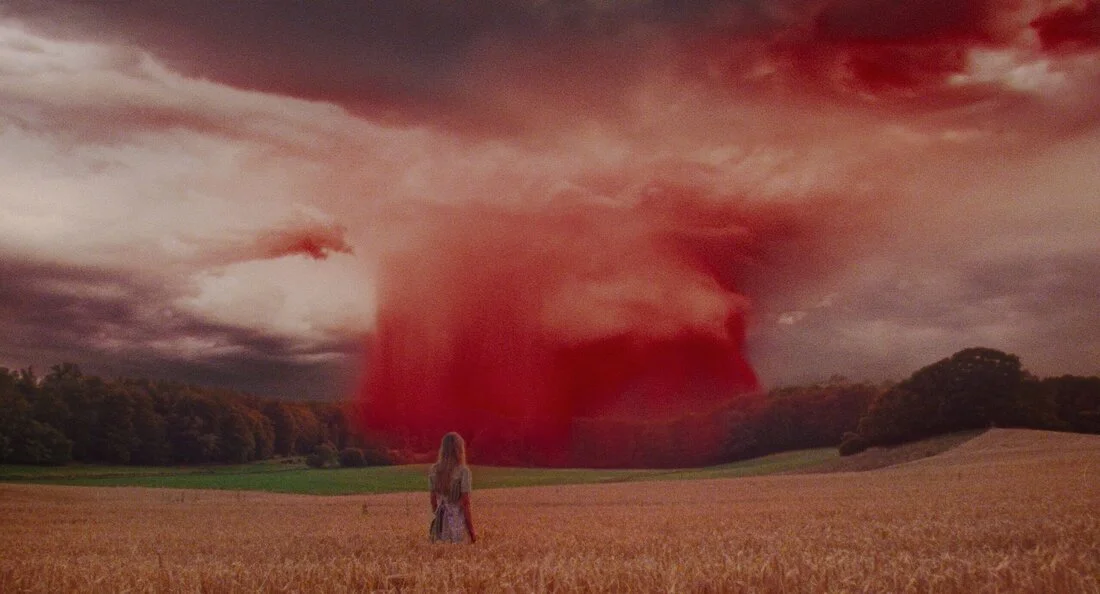
“Tea Lindeburg’s As In Heaven tackles the horrors women face about their health and autonomy.”
September 25, 2021
The 2021 Toronto International Film Festival welcomed back some familiar faces and long-awaited returns to their hybrid of in-person and digital screenings. TIFF Tribute Actor Award recipients Jessica Chastain (The Eyes of Tammy Faye; The Forgiven) and Benedict Cumberbatch (The Power of the Dog; The Electrical Life of Louis Wain) each had two films premiere at the festival. Speaking of The Power of the Dog, Jane Campion’s first feature film in over a decade (since Bright Star in 2009) premiered to enthusiastic praise. As did some of the major studio films including WB’s Dune (Denis Villeneuve) and, TIFF People’s Choice Award winner, Focus Features’ Belfast (Kenneth Branagh). With additional titles such as Focus’ Last Night in Soho (Edgar Wright) and NEON’s Spencer (Pablo Larraín), the festival boasted some of the most anticipated new releases.
As is the case every festival season, there are plenty more titles that tend to fly under the radar. I saw that many of this year’s hidden gems were in debut features, directed by and starring women. Promising talent, emerging vivid voices with a lot to say, and clear visions create a sense of disbelief that these incoming titles are the filmmakers’ first films. One of TIFF’s initiatives is the Share Her Journey campaign, supporting women’s paths to succeed as storytellers who help shape our cultural landscape (their words). While much progress still needs to be made, their words are ringing more true year by year. Of this year’s lineup, 46% of titles were directed, co-directed, or created by women. 19 of those titles were debut features directed by women.
Films such as Hong Sung-eun’s Aloners and Laura Samani’s Small Body explore the weight of isolation and solitary journeys. Also wandering in journeys of their own are Agustina San Martin’s To Kill the Beast and Rhayne Vermette’s Ste. Anne, which feel their way around which direction to take. A number of films feature protagonists following in the footsteps of women who have come before. Tea Lindeburg’s As In Heaven and Kate Dolan’s You Are Not My Mother, respectively set several decades apart, tackle the horrors women face about their health and autonomy. Part of what makes horror films (or ones that have elements of the genre) so appealing is how fear is elicited in different ways. Camille Griffin’s Silent Night raises an existentialist toast to the human spirit with dark comedy. Horror is also drawn from perceptive fears, and from real-life tragedies that reach through time and continue to haunt all those affected. Stanley Nelson’s documentary Attica, co-directed by Traci A. Curry in her first credited feature, gives harrowing insight to the rebellion of Black men and the horrific events that unraveled at the prison over the course of 5 days. Danis Goulet’s dystopian Night Raiders incorporates sci-fi and historical policies to show the harm inflicted on Indigenous people in Canada.
Watching these stories continues to amplify the voices of so many communities in front of and behind the camera. Stories of family and intimacy, ones of sticking together and growing apart, ones that carry universality by being so specific. Shasha Nakhai and Rich Williamson’s Canadian slice of life Scarborough, the first runner-up for the TIFF21 People’s Choice, follows three children in a low-income neighborhood who cross paths and become fast friends. It’s a story from which yearning for togetherness and understanding beams. Portrayals of day-to-day life gives a window to many of the protagonists in these debut features. Haya Waseem’s Quickening, Rebecca Huntt’s Beba, and Luàna Bajrami’s The Hill Where Lionesses Roar convey a fire within women drawing from personal experiences. Environment and setting play a heavy part in carrying the waves of emotions and circumstances. Antoneta Alamat Kusijanović’s Murina contrasts a beautiful oceanfront home with deep trouble in paradise. So too does Agnieszka Woszczynska’s Silent Land, a story that exposes the worn-out threads of a couple’s idyllic-looking foundation whilst on vacation. For many, there is no such thing as a place to run away from it all. For the family in Mounia Akl’s Costa Brava, Lebanon, who live isolated in the mountains to escape terrible pollution, the climate crisis catches up to their backyard.
While some ranging in quality and not always sticking the landing, these films have something to say, from a promising voice behind the camera. With TIFF pushing in a promising direction (and hopefully more to come), it would be interesting to see how many of these first-time feature directors become familiar faces during festival seasons years from now. Considering some of the spellbinding debuts that premiered at TIFF21, I look forward to the follow-ups.
Title synopses from tiffr:
Aloners (dir. Hong Sung-eun)
A solitary woman re-evaluates her isolated existence after her neighbour dies alone in his apartment, in Hong Sung-eun’s subtle debut feature.
Small Body (dir. Laura Samani)
Set in northeastern Italy in 1900, Laura Samani’s feature debut follows a grieving mother on a mythopoetic journey to give her stillborn child a name.
To Kill The Beast (dir. Agustina San Martin)
Agustina San Martín’s feature directorial debut is a bold piece of tropical gothic that puts young female desire at the centre of its loose narrative.
Ste. Anne (dir. Rhayne Vermette)
This stirring debut feature by Manitoban filmmaker and artist Rhayne Vermette is a formally alluring examination of home by way of places and people.
As In Heaven (dir. Tea Lindeburg)
Religious dogma and superstition threaten the dreams of a young 19th-century woman, in Tea Lindeburg’s period film that feels eerily contemporary.
You Are Not My Mother (Kate Dolan)
An eerie Irish folk horror wherein a teenage girl’s mother goes missing only to return with an increasingly uncanny change in personality.
Silent Night (dir. Camille Griffin)
Keira Knightley stars in Camille Griffin’s feature directorial debut, about a family’s eventful Christmas dinner in the country.
Night Raiders (dir. Danis Goulet)
Danis Goulet’s singular thriller draws on Canada’s ugly colonial legacy for a propulsive piece of genre cinema set in a dystopian postwar future.
Scarborough (dir. Shasta Nakhai & Rich Williamson)
Three kids in a low-income neighbourhood find friendship and community in an unlikely place, in this adaptation of Catherine Hernandez’s award-winning book.
Attica (dir. Traci A. Curry & Stanley Nelson)
Stanley Nelson examines the largest prison uprising in US history, conducting dozens of new interviews with inmates, journalists, and other witnesses.
Beba (dir. Rebecca Huntt)
A raw, poetic self-portrait in which young, NYC-born Afro-Latina Rebeca “Beba” Huntt stares down historical, societal, and generational trauma.
Costa Brava, Lebanon (dir. Mounia Akl)
Saleh Bakri and Nadine Labaki star in Mounia Akl’s impassioned debut, an eerie family drama set amid a raging climate crisis in near-future Lebanon.
Murina (dir. Antoneta Alamat Kusijanović)
The dynamic between a restless teenager and her oppressive father changes when a family friend arrives at their isolated Croatian home.
Silent Land (dir. Agnieszka Woszczynska)
A bourgeois Polish couple’s relationship disintegrates during a stressful Italian vacation, in Aga Woszczyńska’s richly observed feature debut.
Quickening (dir. Haya Waseem)
The debut feature from writer-director Haya Waseem explores the life of a young woman of colour navigating love, heartbreak, and family turmoil.
The Hill Where Lionesses Roar (Luàna Bajrami)
In a remote Kosovar village, three young women who feel their dreams have been stifled go on a quest for independence.
‘Summertime’ Review
September 29, 2021
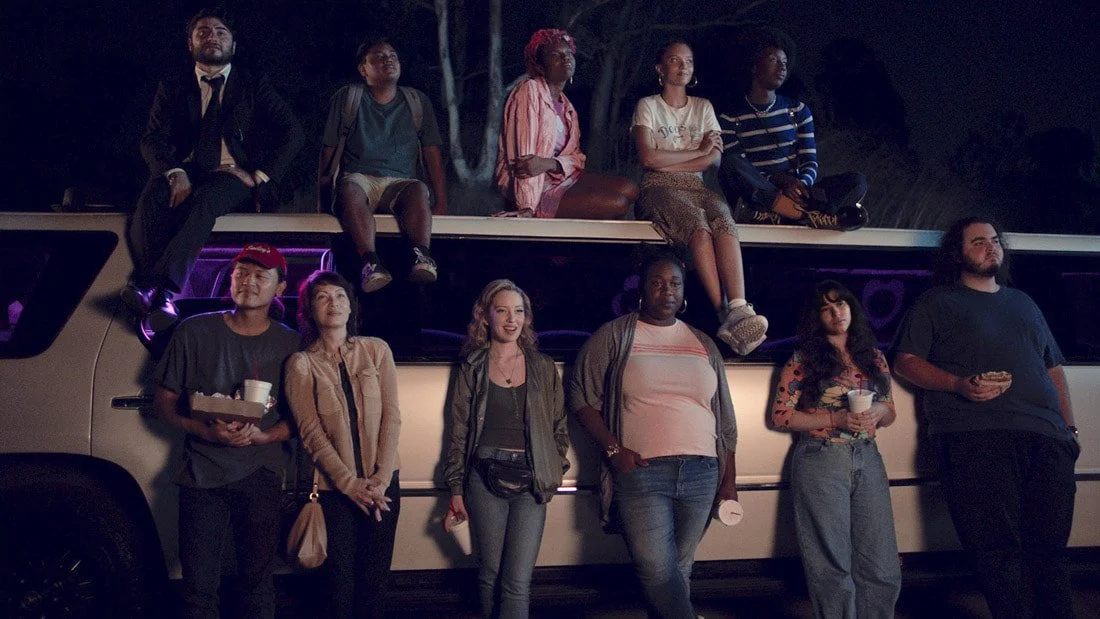
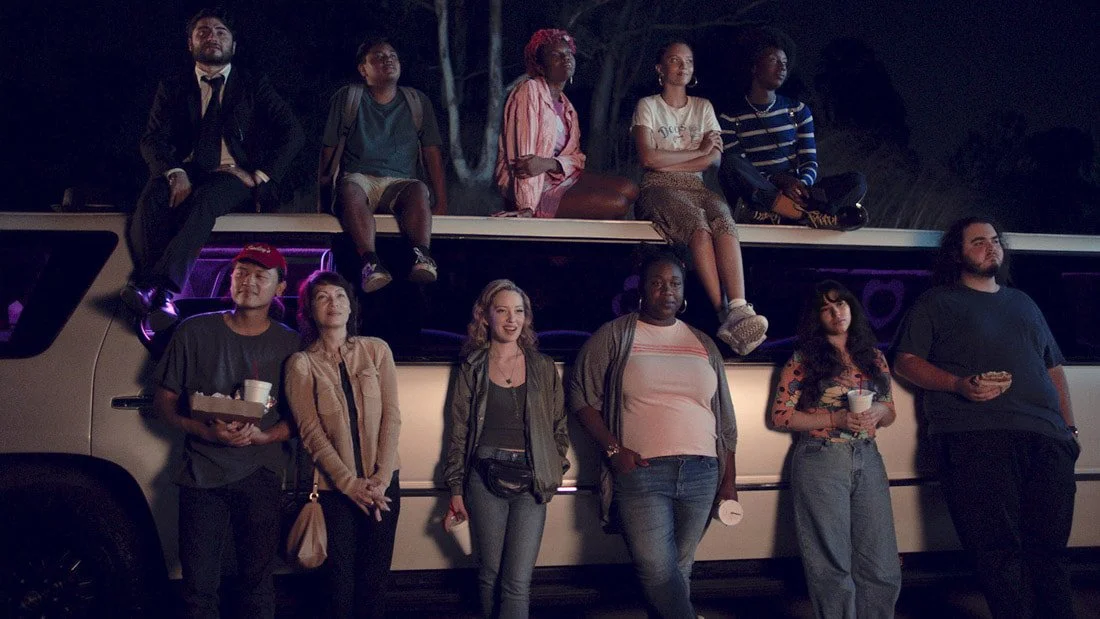
Infusing passionate heart and soul into every frame, director Carlos López Estrada masters the art of intersecting storylines in his lyrical film Summertime. Following his directorial debut Blindspotting, Estrada sets Summertime in Los Angeles and gives a voice to dozens of young Angelinos as their lives cross paths over the course of a single day. Through spoken word poetry, these young poets are the writers and stars of their own individual segments. They each have the space to move candidly and experiment in prose. An abundance of personalities share different expressions of love, fear, home, family, friendship, dreams, frustrations, powerlessness, capitalism, heartache. What do all of these words mean to them? Each segment demands attention, as the poets’ souls are laid bare. Estrada’s direction is so exuberant in celebrating community, showing the strengths of truthful expression, and seeks creativity in everyday moments. Summertime finds beautiful rhythm in the authenticity of uniquely talented performers.
With the blessing of a fluent narrative, the poets float in and out of each other’s stories. Summertime propels forward in a breeze. Estrada captures that feeling of life passing you by, of suddenly waking up one day and wondering where all the time has gone. As well, the film contrasts life’s chaotic haste with moments of creative pause. Each musical segment is a powerful rumination, pouring from the hearts of those performing them. While naturally some performers are stronger than others, it’s incredibly fulfilling to watch a community of talent brought together and sharing in their stories. Summertime feels like such an ode to the human spirit. Pulsating with energy at every turn while finding resonating, grounded moments to shine a light on harsh realities. Estrada lets this community and their surroundings guide the flow with a spring in their steps.
The intersecting storylines of Summertime give the film a wonderful ebb and flow, to the point where it feels like one big stream of consciousness with multiple little threads. Each individual segment is a strong creative burst of personality. Some shine stronger; the standout performer here goes to Marquesha Babers, whose incredible piece confronting her ex is a force of nature. A towering achievement where time stops, and this intimate moment Babers shares becomes all-absorbing. Another great standout is Gordon Ip’s piece as a fast-food worker fed up with a toxic environment and the entitlement of customers. His segment unites some of the poets seen throughout the film, and propels Summertime to a wonderful moonlit ending full of emotional (and literal) fireworks.
While there are dips in quality from one segment to the next, all the spoken word performances feel connected on the same wavelength and basking in the warmth that creative expression brings to the soul. Art brings people together. Music brings people together. The form of expression holds a mirror through which many can see themselves in, feeling seen and heard. The constant shifting from one segment to another in Summertime gets messy often, but speaks to the ups and downs of creating. By the end of the film, watching all the poets listen to the final piece together hits hard. The sense of unity and understanding in this moment, a piece about dreams and reclaiming power over time, has a resounding emotional core. The film takes control of time by giving each performer the opportunity to “fly like the ground is on fire.” Time does not fly. The poets do, and their varied forms of expression carry them to creative heights in Carlos López Estrada’s melodic work of art.
Watch Summertime on Apple TV/iTunes when it releases digitally October 5 in Canada.
TIFF 2021: ‘The Guilty’ Review
September 30, 2021
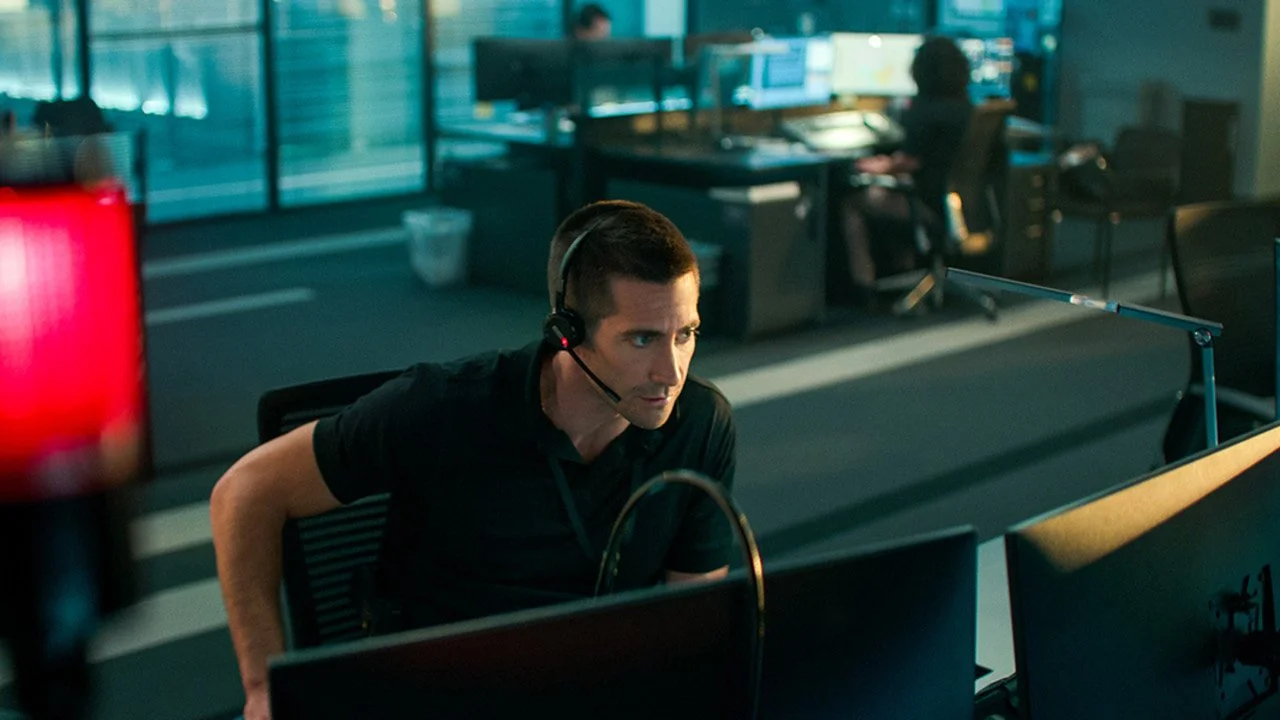
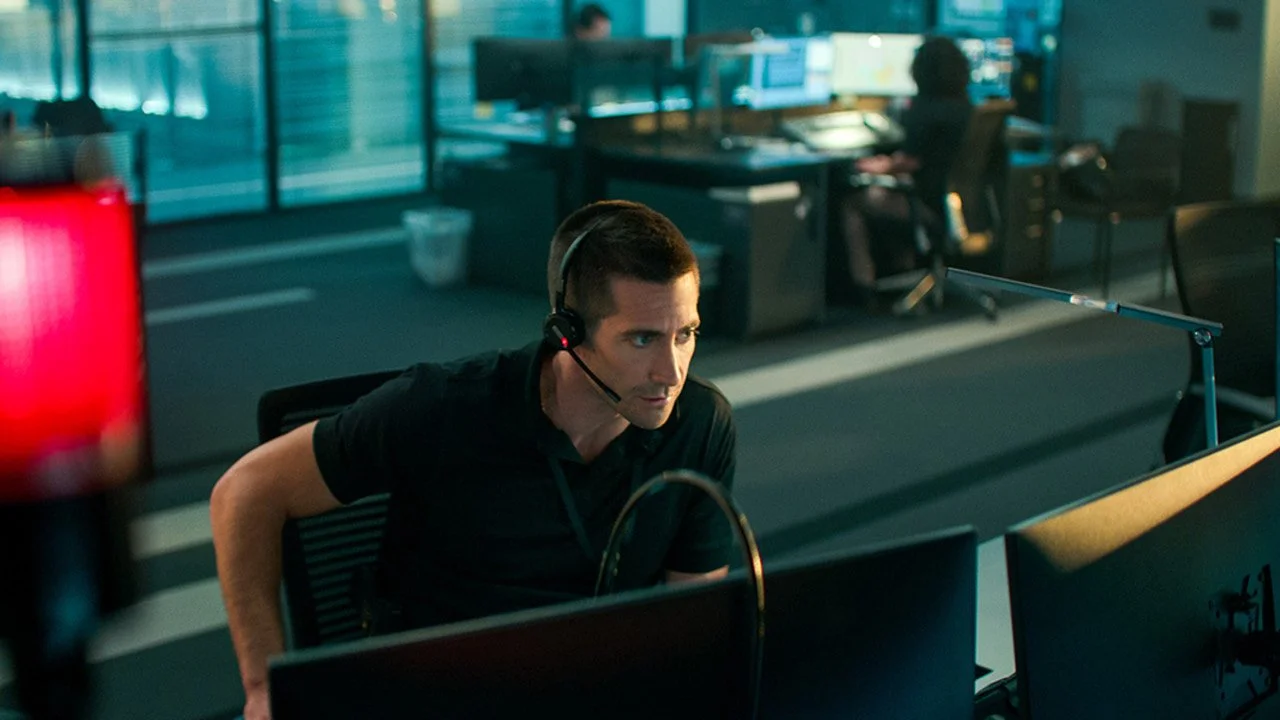
Following the 2015 release of Southpaw, Antoine Fuqua and Jake Gyllenhaal reunite for an American retelling of The Guilty, originally a Denmark film directed by Gustav Möller. Taking place over the course of a single morning, demoted police officer Joe Baylor (Gyllenhaal) answers calls at a 911 dispatch desk. A wildfire rages over Los Angeles as he settles into a repetitive shift. Then one call comes in from a woman in grave danger using cryptic messages. The chaotic events that transpire send Joe into a downward spiral, as he throws himself at this case and discovers nothing is as it seems. Communication is his only way out. Fuqua expertly keeps the camera close on Baylor, which heightens the tension and maintains frenetically high stakes in a contained setting. The alarming reports, the missed calls, the failed signals, all help build to thrilling sequences. Decades into his career, Fuqua continues to show how well he can craft a lean and absorbing thriller. With swift direction and a fantastic cast, The Guilty makes the most of a 90-minute runtime.
Having not seen the original film, The Guilty has plenty of surprises in store. Thanks to a contained setting, the reveals are in real-time which gives the opportunity to experience these moments along with the central character, as he frantically tries to determine next steps to take when time is of the essence. In spending this early morning with Joe Baylor, there are a lot of unpleasantries. He can be demeaning, he flies off the handle, he is snappish with his time. He is also experiencing anxiety ahead of his disciplinary court hearing. Allusions to misconduct surface in bits and pieces, gathered from Baylor’s various phone conversations with some of the people in his life. Gyllenhaal is the glue conveying a whirlwind of emotions, as we see Baylor’s head spin between personal and professional failings.
In the midst of this tornado is a 911 call from a kidnapped woman named Emily (Riley Keough). Sounding as though she’s speaking to her child, Emily cryptically reports her own abduction and Baylor catches on without missing a beat. With a ticking clock and limited information, Baylor puts everything into solving this case. From the moment she calls in, it’s as if his outside world stops and his other problems melt away. Nothing else matters except guaranteeing Emily’s safety. This dynamic between the two characters is what keeps The Guilty running. The film is an acting showcase for Jake Gyllenhaal, a consistently great actor who delivers yet another compelling performance. His exceptional work brings a pulsating energy to the story. Even more impressive is the performance by Riley Keough, stealing scenes from over the phone. Her voice work is astounding; the fear in her tone is unmistakable, and she takes the audience on an unexpected journey with an emotionally resonating undercurrent. Long after the film is over, it is her character who lingers in memory. Keough does such a great job creating a visual with her voice, imploring the power of imagination for what Emily is going through. Much of the film’s success is in the casting not just of Gyllenhaal, but the entire supporting cast. All the voice work is strong across the board, including an emotional Christiana Montoya as Emily’s daughter Abby and a great Da’Vine Joy Randolph as the CHP dispatcher Baylor often calls to help locate Emily.
The momentum of The Guilty ebbs and flows at times; but at its peak moments, which usually involve the calls shared between Baylor and Emily, it’s easy to feel glued to the screen. By staying up close and personal with Baylor, conveying his anxiety and subtly introducing people in his life (his daughter; his estranged wife), the film establishes a strong connection to him. The Guilty also delves into accountability; it’s unclear exactly why but Baylor is a guilty character, and the weight of his actions lay heavy on him throughout the film. With an important hearing coming up the following morning, he has the opportunity to hold himself accountable. For much of the film, Baylor channels this energy into Emily’s case. As though if he could make things right for her and bring her home safely, this would overshadow his previous wrongdoings. The film speaks to the incompetence of policing as well, as shown in the contrast of Baylor’s character. He is quick to follow clues and catch on to mixed signals, while allusions to his past show he’s taken part in corruption and misconduct.
The Guilty gets repetitive at times; the containment of one setting reaches tedious moments. There is also a missed opportunity not delving deeper into the subject of mental health. But Gyllenhaal’s engaging performance and the impressive supporting voice work command the screen. The cast help create a riveting environment where characters are relying on one another to figure out what decisions to make next in real-time. Fuqua’s direction keeps the stakes high and creates an energetic atmosphere with more weight than a by-the-numbers thriller.
‘You: Season 3’ Review
October 11, 2021
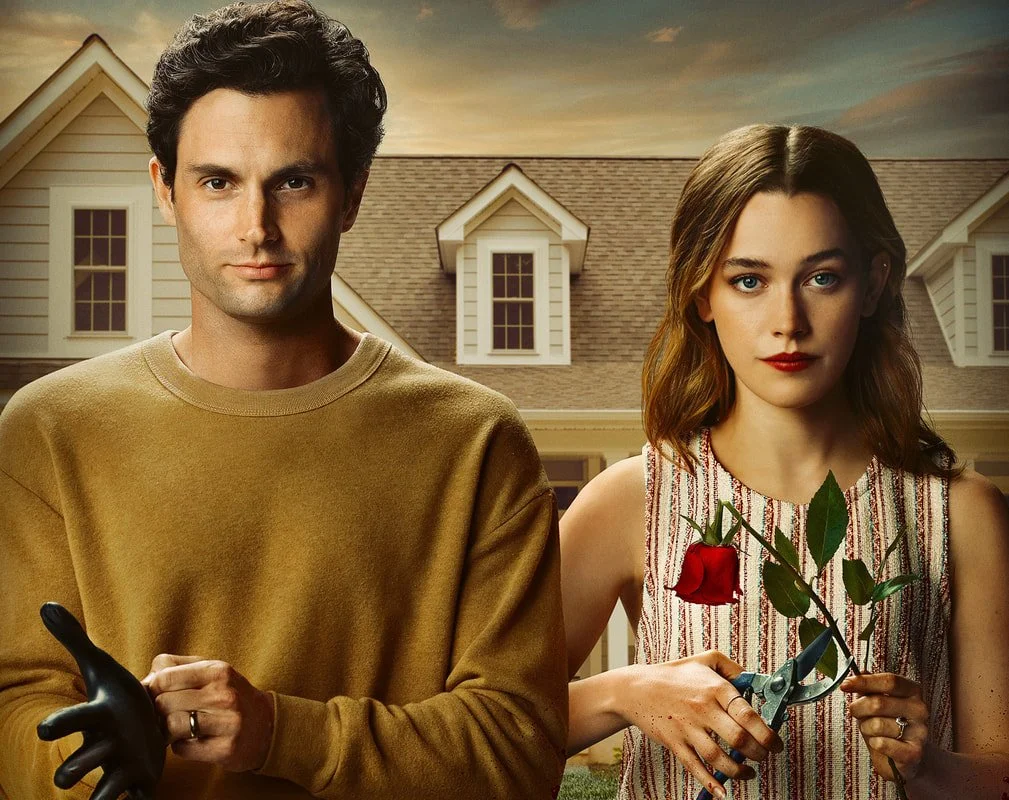
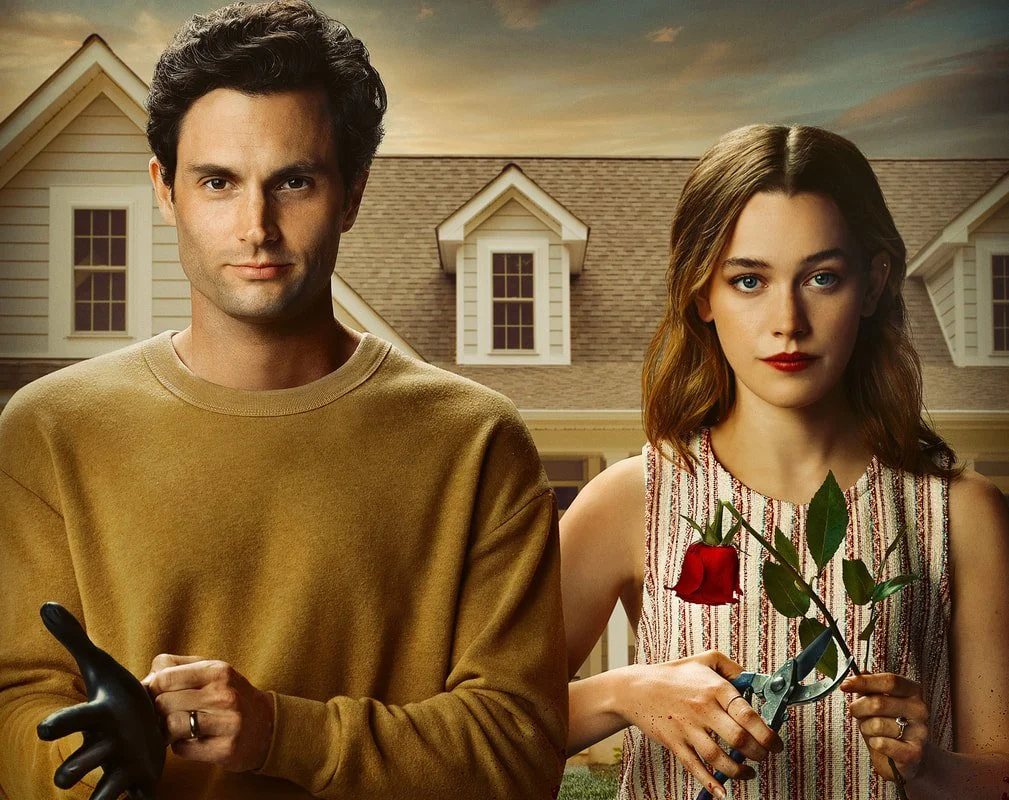
Based on Caroline Kepnes’ best-selling novel of the same name, the premise of Netflix thriller series You is the foundation for how obsessive killer Joe Goldberg (Penn Badgley) operates, all in the name of true romance. The past two seasons have seen his pattern play out, with enough twists and turns to keep things interesting. He becomes transfixed with a woman, goes down a rabbit hole to find out everything about her, and is determined to eliminate anyone standing in his way of finding love. Joe’s narration puts the story inside his head, charting his emotions and thought process for why he feels like he’s right. The series starts to find its stride in season two, avoiding repetitiveness by introducing a fresh start in Los Angeles with Love Quinn (Victoria Pedretti). Love’s complicated character proves to be a game-changer, equally psychotic as she turns the tables on Joe and leaves room for more. The writing team of You season 3 take advantage of an opportunity to explore Love’s murderous spree, showing how this affects her and Joe’s marriage and joint parenthood in a suburban setting. The couple learns surprising layers about each other, while also relying on patterns they’ve come to know from being together. Has Joe really met his true match, or is his only chance at a fresh start one without love? Couple’s therapy can only do so much…Behind the white picket fences of small-town living is You’s most thrilling season yet.
The biggest part of why You season 3 feels more fully realized than its predecessors is bringing the character of Love Quinn fully on board. Most of the unpredictability derives from her trajectory and the way she utilizes her surroundings, whereas Joe’s character has greater tendency to tread familiar/derivative territory. The two of them together, now married and raising their baby Henry in Northern California, raise the stakes under the roof of a new setting. The season makes a great decision in moving away from sprawling places like New York City and Los Angeles. The Quinn-Goldberg residence lies in the Northern California enclave of Madre Linda, a small suburban outskirt where a slowed-down lifestyle affords more time for the neighbors to know everyone’s business. There are only so many places to find solitude, a sentiment that Joe and Love’s next-door-neighbor Natalie (Michaela McManus) knows all too well. Getting to know her holds a mirror to Joe’s perpetual feeling of the grass being greener on the other side. The picture-perfect Quinn-Goldberg marriage is a suburban purgatory, and Joe’s loyalty to his own heart above all complicates their future.
Built on a foundation of secrets and lies, season 3 excels at lifting the facade of an idealized life. Having a perfect marriage and family are romanticized over everything else, to the detriment of what’s real. The suburban setting is the perfect playground for this story, where so much rides on keeping up appearances and ultimately lying to yourself in order to do so. Watching Joe and Love attempt a cookie cutter lifestyle is entertaining and disturbing in equal measure, especially with the purity of baby Henry in the background. The facade of Joe and Love’s marriage is also lifted; moving to a setting that sounds mundane and typical only intensifies their attempts to fit in and gain acceptance. Madre Linda is a place where any deviation from social acceptance would be cause for ruin, making everyone’s hidden truths valuable weapons for self-destruction. Joe and Love may know plenty of each other’s dark murderous secrets, but not everything. The more Joe wants to reign himself in for the sake of his son, the more unpredictable Love becomes.
Reprising their roles, Penn Badgley and Victoria Pedretti give their most impressive performances of the series as Joe and Love. Giving them more layers to work with, the new season draws parallels between the two characters and gives insight into why they are able to keep up with each other. Both are unraveling in self-sabotage, unhappiness, and issues with their parents. With flashbacks to Joe’s troubled childhood, and present-day scenes with Love’s mother Dottie (Saffron Burrows), family scars dictate much of the couple’s decision-making with Henry. Season 3 puts Joe and Love in some new lights, giving Badgley and especially Pedretti room to flex a wider range of muscles. Love’s rollercoaster character takes far more of a responsibility this season, which makes each episode more and more impulsive. Joe’s character maintains a steady soundboard of insightful narration, new obsessions, and themes of toxic masculinity.
The surrounding neighborhood of bloggers, entrepreneurs, and social media influencers is catnip for Joe’s taunting narration. You season 3 introduces a mostly new cast of supporting characters who complicate the leads’ decisions, cloud their judgement, and aren’t as unassuming as one would think. Mostly residents of Madre Linda, they have their own secrets and lies that can throw a wrench in even the most carefully planned situations. Among the standouts are Tati Gabrielle as Marienne and Dylan Arnold as Theo, each of whom have a bigger part to play in flipping the script as the season unravels. The season also introduces two of the most entertaining characters yet, Sherry and Cary Conrad. The Conrads, played by Shalita Grant and Travis Van Winkle, are the perfect playful anecdote to the Quinn-Goldbergs. Their performances play up the ridiculousness of social media obsession but neither of them, Grant especially, allow for their characters to become caricatures which makes their trajectory a lot more gratifying.
You season 3 pulls a dangerously addictive front row seat to crumbling relationships in a hellish cookie cutter suburbia. Old habits die hard, and this new chapter does its best to maintain surprising twists that push the narrative in new directions. Building on the psychological edges and satirical commentary of the first two seasons, there’s more to the revelations than throwing in bombshells for the sake of it. Season three excels in conveying dual roles between Love and Joe. Both manipulative in their own right, the game becomes who is playing who at any given moment. The Quinn-Goldberg duo, along with memorable supporting characters aiming to get one step ahead of them, have enough tricks up their sleeve to maintain binge-worthy chills and thrills.
You season 3 releases exclusively on Netflix October 15th.
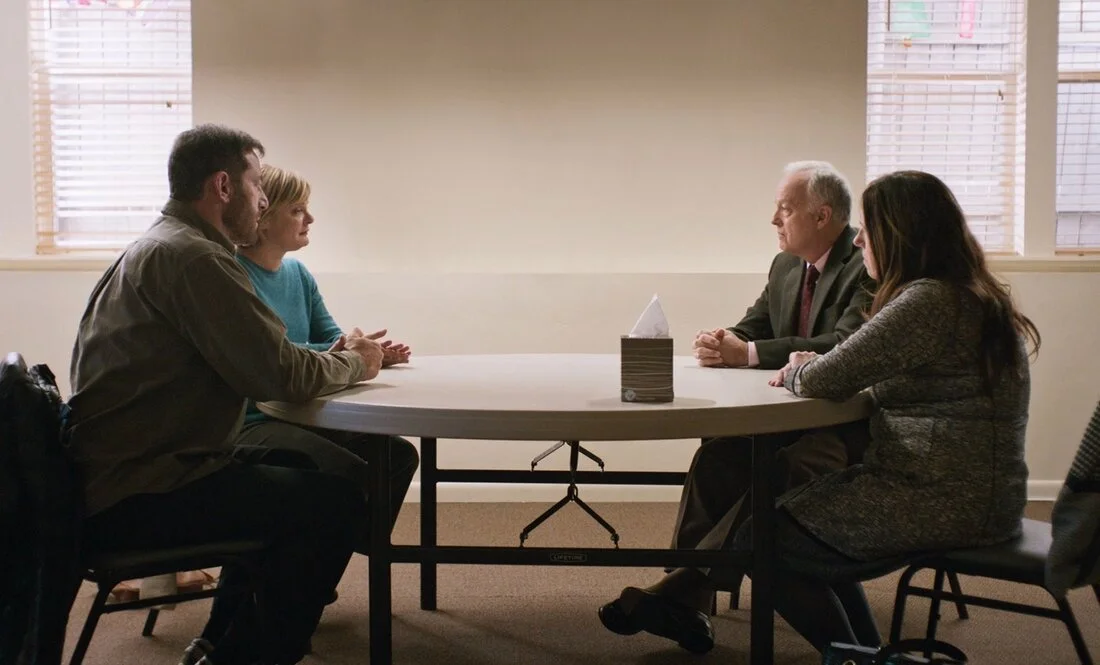
‘Mass’ Review
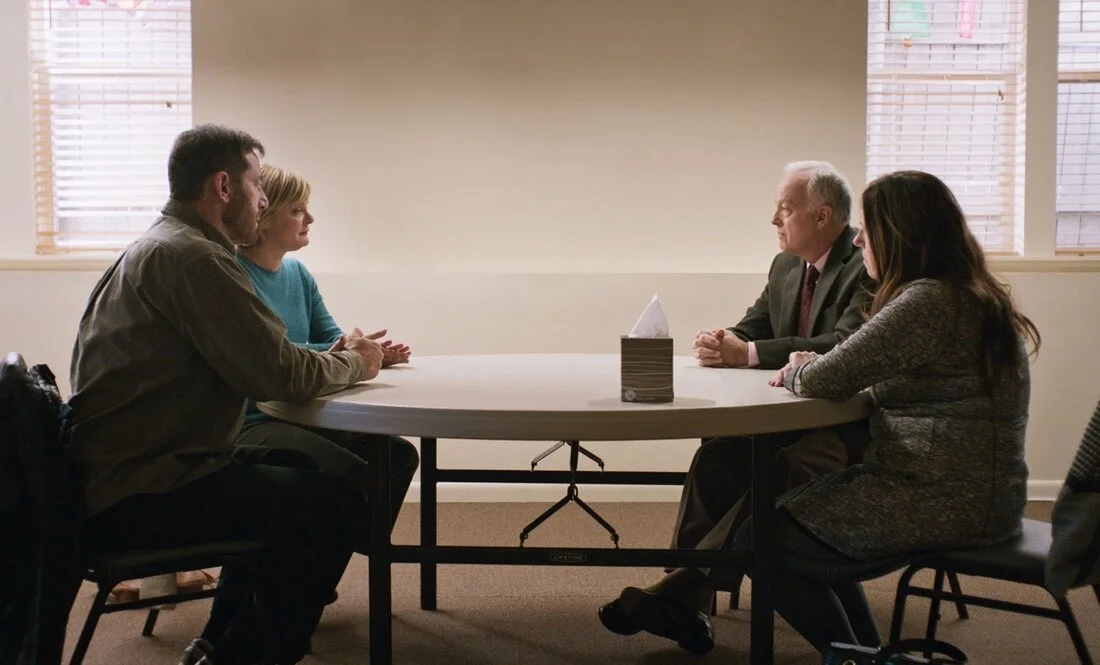
October 11, 2021
Fran Kranz’s searing directorial debut Mass explores the aftermath of a school shooting from the different perspectives of two couples in mourning. A conversation piece through and through, Mass is carried by four powerful performances of heart shattering magnitude. Set almost entirely in one room, the dialogue takes center stage with a fly-on-the-wall level of intimacy. Jay and Gail (played by Jason Isaacs and Martha Plimpton) agree to meet with Richard and Linda (played by Reed Birney and Ann Dowd) to gain a semblance of closure after a tragedy involving the sons of both sets of parents. Everyone wants to heal. Everyone wants to move forward with a cathartic release. Is this meeting how to go about it? The families’ stories play out in the vein of a stage production, with each actor ready to partake in the collaborative exercise. While the stagy directions interrupt the flow of conversation at times, the magnificently openhearted ensemble cast make Mass a resonating punch in the gut. It’s a moving story about grief, forgiveness, and the unflinching emotional journey towards acceptance.
The film opens with the interior of a church, a calm before the storm as a back room is being set up for what’s bound to be an emotional conversation. Judy (a totally endearing Breeda Wool) arranges for a table with some chairs in the center; coffee and snacks tucked away at another table in the corner. She constantly asks if this setup is ok, if they’ll need anything else. Kendra (Michelle N. Carter), a mediator for one of the families, rearranges the chairs so that two are on either side of the table. She places a tissue box in the center. There’s an air of uncertainty hanging over the room. The details in Mass say so much. The lived-in buildup to the main event of this film creates a lot of tension and nervous anticipation for four-way dialogue. There’s an awkwardness and hesitance when both couples walk into the room. While Mass is of course a dialogue-heavy piece, so much is said in what the characters are suppressing. It’s understandable for them to awkwardly step around the traumatic incident that has brought them together in the first place. Each of their grief manifests in different ways. How do they begin addressing the grief they have experienced for years?
The conversation takes shape in a way unbeknownst to everyone in the room. All they know is what happened, and how they feel about it. The characters are developed through the pieces of their lives that they choose to share with one another. Kranz trusts the actors entirely to carry a conversation with small details, silences and glances. Through their performances, the aftermath of the shooting are revealed. Public statements (and lack thereof), lawsuits, and letters fall under emotional scrutiny. One of the strongest features of this film is that it unfolds from a place where life has come to a halt. Mass is about four people in a room, each bringing their own perspective to the table which moves the conversation in often erratic ways. At its worst, the dialogue feels a little too staged and orchestrated. But ultimately the choreography of words falls in line with how each character walks into that room with some impulse to say their piece. Even if it may not come out the way they envision.
Jay and Gail walk in full of blame in their hearts. Ready to assign Richard and Linda with the burden of guilt. For years since the shooting, Jay and Gail have understandably vilified this other couple to the point of not considering them as capable of human emotion. Richard and Linda walk in with fear and uncertainty scattered in their eyes. It’s a compelling contrast to Jay and Gail who appear to have a more purposeful approach, wanting answers that Richard and Linda don’t have. All four performances excel at capturing the unspoken tension and differing manifestations of heartache. Jason Isaacs delivers far and away his best performance to date. A seething fissure of emotions that stuns when reaching the surface. Being less familiar with Martha Plimpton’s work, her fantastic performance is a great reminder of her talent. You can tell that when Gail walks into the room, she’s doing so with purpose in her eyes. But over the course of the conversation she loses grip on how she’s going to achieve any semblance of a satisfying outcome. It’s heartbreaking to watch. Reed Birney has the least showy role of the quartet, which makes his work even more impressive as his impact is quietly devastating. Then there’s the great Ann Dowd. A magnetic force of nature who somehow outdoes herself as Linda, revealing new depths of her talent especially when in one-on-one correspondence with Gail.
Fran Kranz’s direction lives in the moment and stays with the characters. There are no flashbacks to the past, a smart move on Kranz’s part. Once the conversation begins, the only break from the room is an occasional image of a mountain landscape; front and center, a ribbon tied to a fence is drifting in the wind. It appears and reappears in what feels like random moments. In retrospect, perhaps a ribbon of awareness, a symbol of love and support without uttering a word. Often with grief it is hard to find the words to explain its all-consuming nature. Mass excels at showing people from opposite sides of a tragedy come together for one moment in time when healing and forgiveness feel possible. There is no telling how their future correspondences will be, and while each individual has their own process, the power of seeing them hold onto one another’s words in the remnants of grief is so deeply moving. Driven by four tremendous performances, Mass is an urgent writing-directing debut sparking resonating conversation and empathy.
Mass releases theatrically across Canada on October 15th.
‘The Capote Tapes’ Review
October 25, 2021
When George Plimpton wrote his biography of American novelist Truman Capote, he collected hours of taped interviews with Capote himself, as well as “friends, enemies, acquaintances, and detractors.” The tapes feature a who’s who of literary and celebrity circles, the very company Capote both kept and critiqued. The fascinating life and career of Truman Capote gets the biographical doc treatment in The Capote Tapes, which for those such as myself who are mostly unfamiliar with his work, is an enjoyable scattering of memories. Using Plimpton’s never-before-heard audio footage as the backbone, filmmaker Ebs Burnough spans Capote’s tough beginnings, vulnerable circumstances, and meteoric rise to a world among gossiping socialites and literary influences. At the core is the subject’s influence and works, including his final unfinished novel Answered Prayers, widely considered a precursor to reality TV and pop culture gossip. The Capote Tapes is a well-made chronicle of a public figure that, while overwhelming with material, retains plenty of mystery about its subject.
The Capote Tapes weaves through the bustling New York social scene populated by some of America’s most influential public figures. Front and center is Capote: novelist, screenwriter, playwright, actor. His short stories, novels, and plays have seen screen adaptations including Breakfast at Tiffany’s (1958) and In Cold Blood (1966). The documentary glosses over the immersive research that went into building his novel In Cold Blood, focusing more on the manuscript that would never fully come. Only three chapters of Capote’s sought-after Answered Prayers were posthumously published…excepts of a novel nowhere to be found, or one that doesn’t exist? One of the brightest spots of The Capote Tapes is focusing on this enigmatic piece. Answered Prayers was seen as Truman biting the hand that fed him, but really he was immersed in high society as a writer. The humor in his writing spoke of being near them not because they led particularly interesting lives, but because he could write something from it. Contempt is said to bleed through when he writes about the unhappy rich and famous.
Answered Prayers becomes an interesting facet of this documentary. Capote’s former friends, who are heard earlier speaking very highly of him, then express disappointment and hatred at him because of how he writes about them. The broken trust and feelings of betrayal build to a point of exile in his life. From unraveling on national television, to drinking and drugs at Studio 54, the spectacle of Truman’s life is a subject often touched upon by Ebs Burnough. Even more so than the writer’s career and literary works. While featuring compelling tapes from former friends, high society members, admirers and observers alike, The Capote Tapes suffers from an overwhelming amount of material. The documentary is pulled in so many different directions, moving its center around and lacking a clear focus. The floating heads of family members and friends each have their own piece to say, but ultimately contribute to multiple threads that don’t fully come together. What the documentary does make clear is how enigmatic and interesting Truman Capote’s life was. Similar to his final novel Answered Prayers, The Capote Tapes has unfinished business. The missing pieces are found not from Ebs Burnough’s lens, but live on in the life Capote led, in the works he left behind.
The Capote Tapes opens on VOD/Digital in Canada on October 26 through levelFILM.
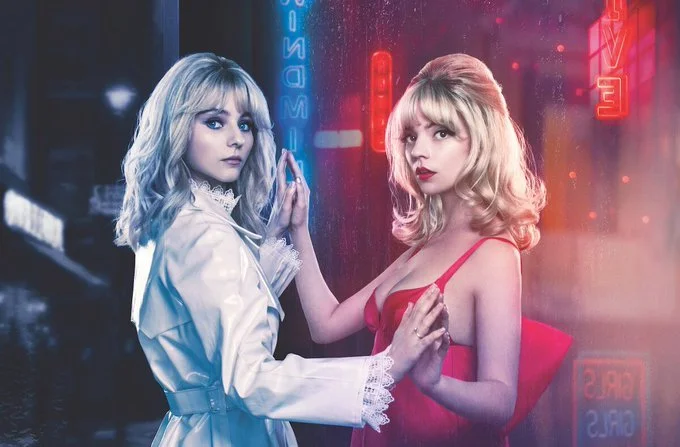
‘Last Night in Soho’ Review
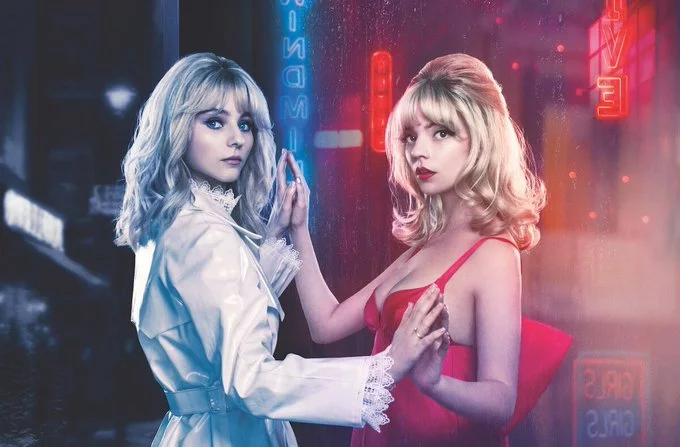
November 3, 2021
Things aren’t so great when you’re downtown in Last Night in Soho. Edgar Wright’s latest film is a mishmash of homages to eye-popping, twisted European horror-thrillers. Dario Argento’s Suspiria comes to mind with the vibrant colors, creepy exterior locations, and visual motifs of glamorous characters in dazzling settings. The story follows two young women from different eras of London whose lives collide like a nightmare come true. Aspiring fashion designer Ellie (Thomasin McKenzie) travels from the English countryside to attend a prestigious design school in present-day London. Feeling out of place among her dorm roommates, she rents a flat on her own. At nightfall in her new place, she is mysteriously able to enter the 1960s, where she meets a wannabe singer named Sandie (Anya Taylor-Joy). Through vivid visions, Ellie finds inspiration for her work in fashion. But the allure of 60s London is not what it appears to be. As the truth about Sandie comes out, Ellie is wanting desperately to save her from her troubles. Dangerous ideologies and years of patriarchal oppression cause a deeply unpleasant chain of events that haunt characters through the swinging 60s and contemporary gloom. But the clashing of worlds only accentuates Last Night in Soho’s lack of a coherent core to bring ideas together.
Edgar Wright blends exaggerated mystery with campy giallo horror, and uses interesting mirror imagery to show a seamless transition between two eras. The visual contrasts between present-day and 60s London are well-done. The former has a grey and gloomy atmosphere, while the latter turns on the bright lights and swirls of colorful backgrounds. Pops of color often dazzle the screen when the eras blend and nightmarish elements begin to haunt Ellie’s waking life. As for why Ellie is given a window into this period of time, that is a mystery. Ellie is on the brink of a new opportunity in fashion. She’s in a brand new city, and her visions of Sandie provide a muse for her sketches at school. But all goes horribly wrong when the visions become more grizzly and disturbing. Wright explores the seedy underground of a nightclub where young women are being exploited and mistreated by gross, violent men. Among them Jack (Matt Smith), who promises Sandie a successful stage career and watches callously as she falls into an upsetting and enraging series of incidents that the romanticized era sweeps into silence. Ellie’s visions pull back the curtain with troubling implications and circumstances. The more parallels she finds in the present-day, the more she latches onto Sandie, wanting so desperately to save this young girl from danger.
The mirroring identities of Ellie and Sandie feel like a half-realized idea that never truly reaches fruition. While the concept makes for strong visual sequences, there is a disconnect between the imagery and progression of the characters in this story. Wright’s over reliance on ambiguity encourages most of the characters to go in vague directions. By the end of the film, there is so much left unsaid about Ellie and Sandie beyond the plot devices they are more in service of. The disappointment in not getting to know more of Sandie in particular leads to a climax that falls flat in its impact. Though with talent such as Thomasin McKenzie and Anya Taylor-Joy, both do their absolute best to bring the characters to life in a memorable way. To a greater extent and with more to do, McKenzie continues to impress with another strong performance. Tayloy-Joy is a star channeling the mystique of old Hollywood glamour. Plus there’s a great overall ensemble, including the late Diana Rigg who shows what an effortlessly magnetic talent she was. The cast embrace the rollercoaster of Last Night in Soho, with far more lows than highs, and its final-act silliness.
The subjects of sexual exploitation and entertainment industry horrors are handled in a questionable way. There is a lot going on thematically that Wright addresses, but the messily handled story undercuts the weight of these subject matters. The story builds to an underwhelming turn of events, lacking the penny drop effect that Wright appears to be going for. The characters of Last Night in Soho become more and more like background pieces. The film misses the opportunity of spending more time with Ellie’s insights. What she’s going through mentally, particularly after the loss of her mother, is greatly overpowered by Wright’s stylized choices. While the style makes for some neat swinging 60s sequences, Last Night in Soho gets lost with how to tell a coherent story.
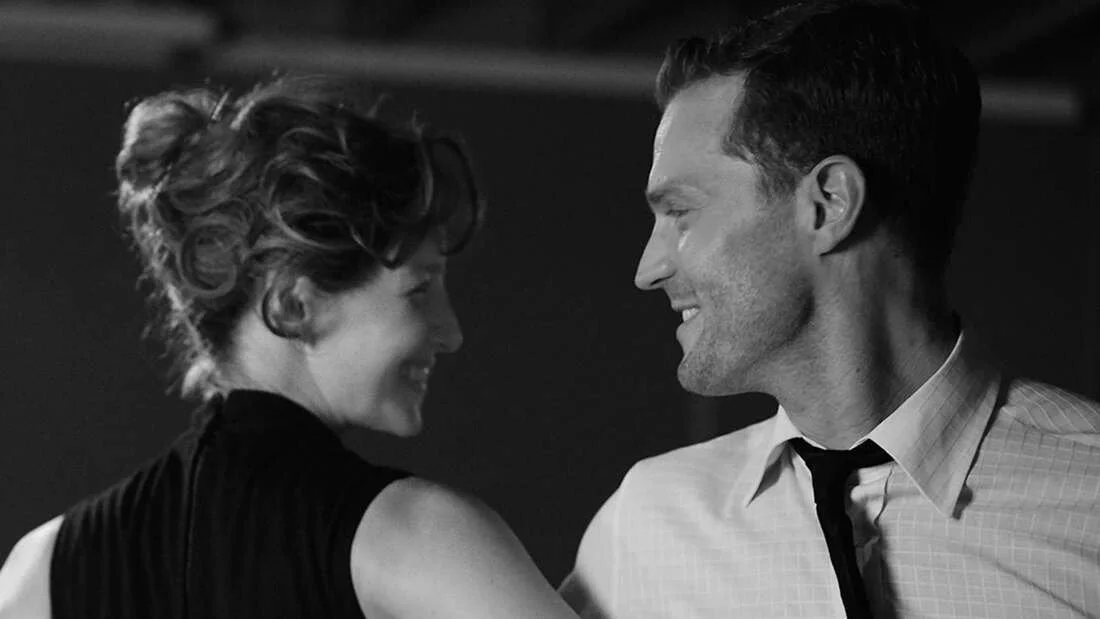
‘Belfast’ Review
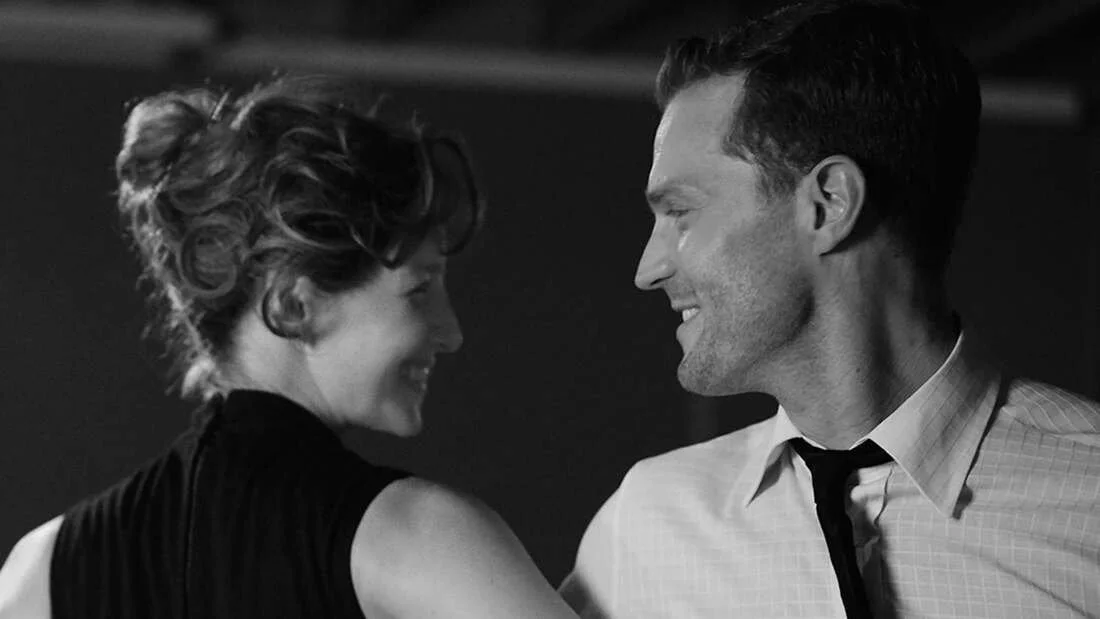
November 14, 2021
“No matter how far you go, you never forget where you came from.”
The 1969 riots in Northern Ireland saw an outbreak of the Troubles, a period of political and sectarian violence between Catholics and Protestants. Belfast was the scene of much conflict. During a week in August, the destruction of homes and businesses in the capital city led thousands of families to evacuate. In fear of what would become of their communities, in fear of losing their lives. What people left behind was not just violence, but also a sense of home. A place in which many laughs were shared and sweet memories were made. The people of Belfast left the only place they know. The experience of this conflict is told from a child’s perspective in the film Belfast, written and directed by Kenneth Branagh. By focusing the narrative on young Buddy (Jude Hill), Branagh draws from his own childhood in a loving way, full of a desire to understand what his parents went through. Belfast gives an ear to all the conversations and events surrounding Buddy that lead one family to make a huge sacrifice for a better life. Branagh’s bittersweet ode to family and belonging is heartwarming to watch. It's one of the most enjoyable films of the year that leaves you wanting more time with the characters.
Buddy (Jude Hill) lives with his working-class family - Ma (Caitriona Balfe), Pa (Jamie Dornan), brother Will (Lewis McAskie), Granny (Judi Dench), and Pop (Ciarán Hinds). Buddy lives in a place where everyone knows his name. That the brothers are given personalized names, while the adults have names the children would call them, is one of many details putting the viewer as a fly on the wall inside a family’s home from a child’s point of view. Branagh gives a lens to what makes their house a home, from the recurring moments Buddy watches Westerns on TV, to the intimate family conversations shared…the good, the bad, and the ugly. As Pa works in England, returning to visit every 2 weeks, Ma holds down the home front with support from Granny and Pop. The family do their best to keep an eye on the children, and also want to give them a normal childhood where they can run and play in the neighborhood without fear. But when violence breaks out at their front door, the reality of the Troubles is near inescapable.
Based on true events from Branagh’s childhood, the film is his most personal yet as he recreates vivid memories from an inward place of vulnerability. Branagh and the entire cast put their heart into crafting an intimate experience that is every bit hopeful in the face of conflict. The story has layered details that seem tiny and fleeting, but this is where life happens. From day-to-day conversations with Granny and Pop, to Buddy’s school crush, and magical wide-eyed nights out to the theatre. This is where comfortability and acceptance grow, making it all the more tough for Buddy’s family to decide leaving a place where everyone knows who they are. Pa’s urgency to move is met with Ma’s resistance to uproot the entire family and sacrifice the home they have built.
Amidst the religious and political tensions, this is a story about a family surviving. Part of that is how they find a source of joy in each day. The film has some cheerful sequences, from movie outings to a musical number of ‘Everlasting Love’ performed by Jamie Dornan. Belfast has a shorter runtime than expected, and it would have been great to see Branagh lean more into the musical aspects because ‘Everlasting Love’ is such a burst of warmth. It’s a reminder of unconditional love and how often the relationships between family members can be taken for granted. The music in this film is great all around, featuring songs from Belfast-born Van Morrison which adds to the atmosphere of childhood. The beautiful black and white cinematography by Haris Zambarloukos makes the film look like a nostalgic memory, and transitions to a few pops of colour in fitting moments.
The film’s depiction of a tumultuous time stretches beyond a single incident. Instead of writing a story that builds up to one climax, Belfast is about the range of memories made in all the moments between. Branagh does a great job building on what makes Belfast home to Buddy. Nine-year-old Jude Hill carries the film so well, with innocence and humor, and a moving outlook on wanting to keep his family together. The supporting cast are gems to watch, with standouts in the performances by Caitriona Balfe and Ciarán Hinds. Both take what could have been generic roles and bring so much detail to them, with a lived-in quality that makes them instantly feel like family. The entire cast share such genuine emotional chemistry and deep down convey that no matter what happens, no matter the hardships they go through, they will always be a family. As the character of Pop advises to Buddy, as long as he knows who he is, he will never forget where he comes from. Belfast is a love letter to the place where your heart lives, one that is unforgettable and true. Branagh’s film is for the ones who stayed, the ones who left, and the ones whose lives were lost.
Belfast is now playing in theaters across Canada.
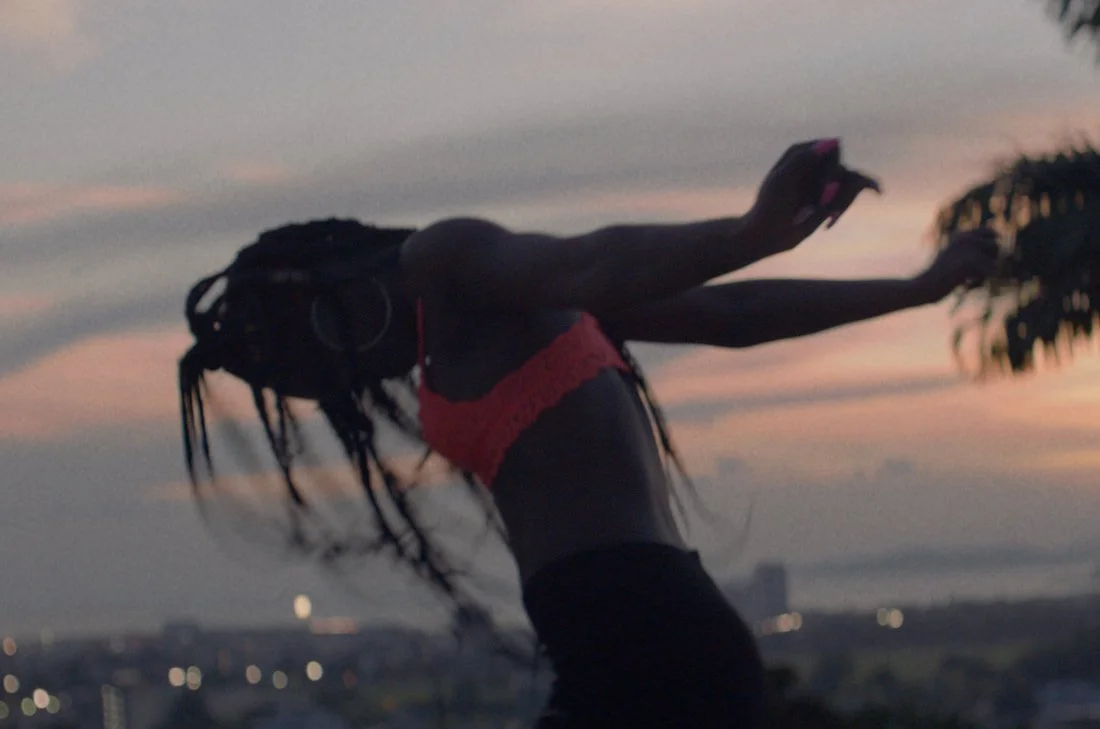
‘She Paradise’ Review
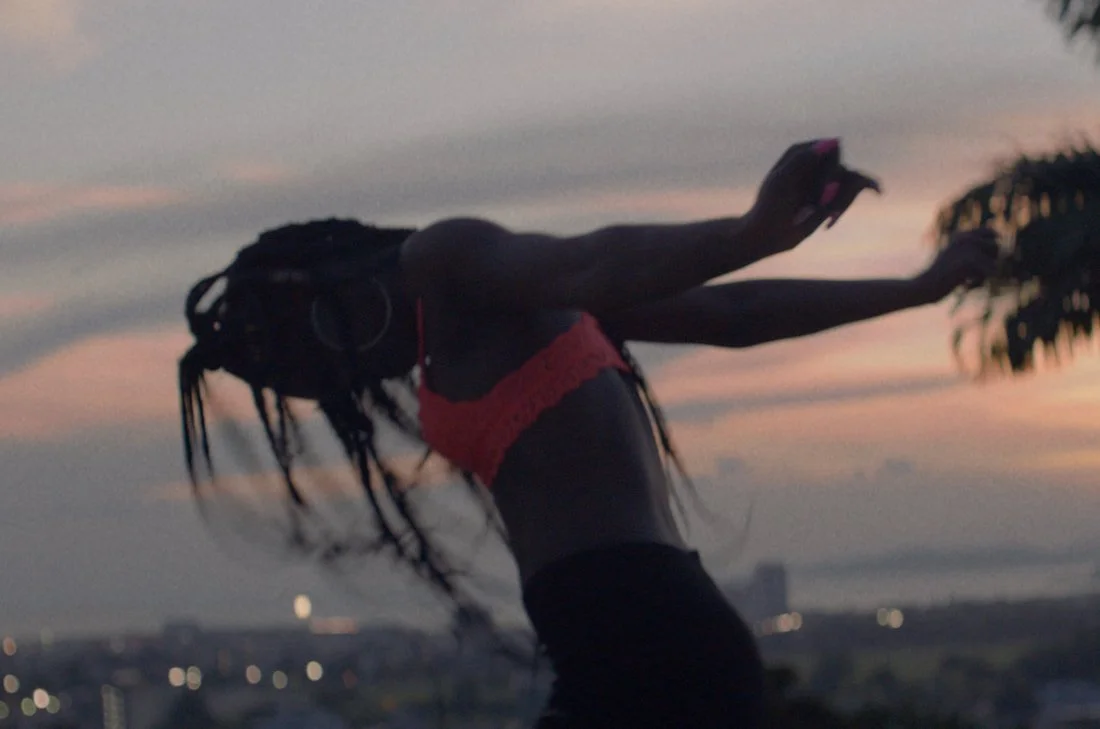
November 21, 2021
She Paradise is a coming-of-age story of new beginnings and unexpected encounters in the scene of soca-music dance. The film is the directorial feature debut of Maya Cozier, who follows up her short film of the same name and re-casts Onessa Nestor as the protagonist. Sparkle (Nestor) is a teenage girl who stumbles upon a free-spirited dance crew. Among the dancers are Diamond (Kimberly Crichton), Shan (Denisia Latchman), and Mica (Chelsey Rampersad). Altogether they step into the seemingly glamorous setting of music videos and nightlife. Keeping a watchful eye on Sparkle’s late nights and frequent time away from home, her Papa (Michael Cherrie) lets his frustration be known. The path to become a soca-music dancer is a lot harder than Sparkle first reckoned. Unsetting encounters with abuse and exploitation are at the core of Cozier’s film, which has a haunting message even though the runtime is far shorter than desired. She Paradise explores an intriguing set of dynamics shared between girls who are trying to follow their dreams and look out for one another at the same time.
Set in Trinidad, She Paradise is a story of personal discovery and growth. Sparkle is in a complete whirlwind from the moment she looks upon a group of dancers, wide-eyed and eager to join. Her character is intriguing to watch precisely because she steps into a new environment with confidence, and subverts other dancers’ expectations at every turn. The screenplay, co-written by Cozier and Melina Brown, makes a point to feature moments in which Sparkle surprises her surroundings. She makes decisions that reflect self-protection. She has a strong need to see her determination through in spite of what’s happening around her, in spite of how her actions can affect the other girls in the dance crew. The film introduces a complex character and interesting dynamics between the dancers, but doesn’t amount to a fully realized feature. Ideas spark on the surface and just when the story leans into the protagonist’s character development, the film ends. While there are plenty of benefits to watching films with a short runtime, and so much can be said within such time, She Paradise falls short by wrapping up the journey prematurely. On the one hand, reflecting on where Cozier ends her film stresses how refreshing it is that this coming of-age story has no resolution of any kind. The ending is the beginning.
The cookie-cutter narrative of coming-of-age films and their fairytale endings is not a path that She Paradise entertains. She Paradise walks a fine line between making friends and trying to survive in a ruthless reality. The group of girls at the center of this film find some comfort in sharing spaces. They are almost immediately connected and sense the dangers of what’s ahead. The film subverts expectations by leaning into the complicated dynamics between the female characters, teetering on jealousy but also wanting to shield one another. One of the disappointments from the film’s premature ending is not getting the opportunity to watch these relationships unfold in fuller capacity. The story is constantly moving in a flash, but She Paradise struggles to hold onto the urgency of its environment.
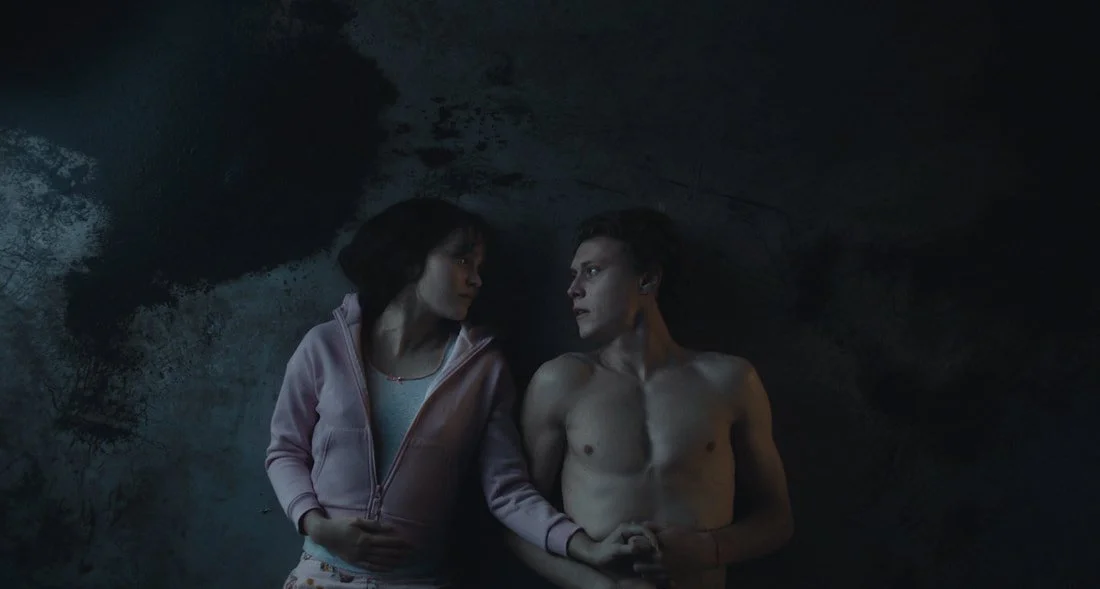
‘Wolf’ Review
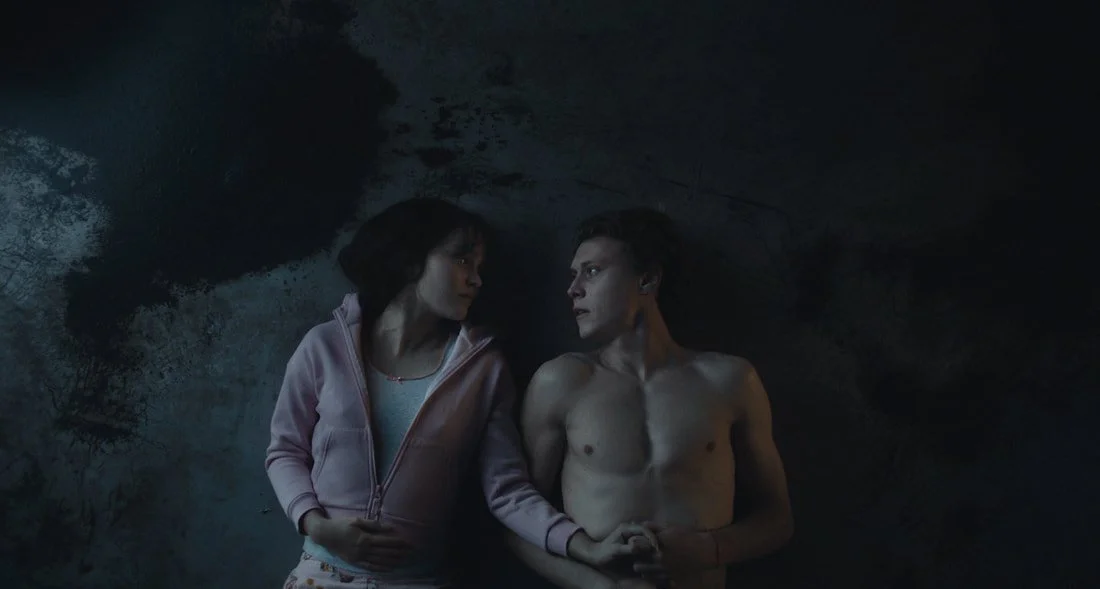
November 25, 2021
In the high-concept Irish drama Wolf, director and writer Nathalie Biancheri explores the subject of species dysphoria. The term references a psychological condition in which a person feels they are trapped in the body of the wrong species, generally an animal. Jacob (George MacKay) believes himself to be a wolf inside a human body. His family sends him to a clinic, where he is forced to undergo extreme “curative therapies” at the hands of The Zookeeper (Paddy Considine). As these so-called treatments grow more disturbing, the only solace Jacob finds is in the enigmatic Wildcat (Lily-Rose Depp), with whom he roams the clinic grounds in the dead of night. Cloaked in darkness and bellowing a resounding howl, this is the only time of day Jacob feels like his true self. Given the air of hopelessness in Jacob’s parents during a visit to the clinic, this place feels like a last resort to “correct” a disorder. The film presents this world in a serious way. The Zookeeper (a scary-good Considine) is free to do as he pleases, taking extreme measures in the name of “treatment”. Biancheri meets serious subject matter with a careful, no-nonsense approach. But perhaps a little too careful, given the more daring ideas she has at play that come and go. George MacKay’s totally fearless performance at the center of Wolf sets a bar the film can’t keep up with.
At the clinic, Jacob shares a communal space (designed like the interior of a prison) with a handful of patients who also have species dysphoria, each identifying as a different animal. There’s German Shepherd (Fionn O’Shea), Parrot (Lola Petticrew), Squirrel (Darragh Shannon), Horse (Elsa Fionuir), and Annalisa/Panda (Karise Yansen) to name a few. Wolf takes an empathetic approach in forgoing the need to explain why everyone is assuming their identities. The reality is that they simply are, and each has done something (unspecified in the film) that led their families to put them in the temporary care of The Zookeeper. He decides when each patient is ready to be released back into the world. Conflict arises whenever he and clinic staff (doctors, nurses, therapists) intervene, often to implement therapy designed to push patients to the absolute edge in order to achieve a breakthrough. In one instance, Parrot (Lola Petticrew)’s feet are held down atop a window ledge as The Zookeeper vehemently encourages her to jump out the window and fly. Using her refusal to jump as proof she’s a girl, not a parrot. The film has quite a few scenes such as this moment, ones where forced tactics are on display, and builds to a terrifying sequence of mockery.
Biancheri’s script tries to balance the patients’ identity journeys with the terror they’re experiencing, but feels aimless in deciding on what story to tell. Wolf lingers in memory as melodramatic, with some daring choices made along the way to subvert expectations. When all is said and done, it’s tricky to find a thread to really connect with outside of MacKay and Depp’s work in the film. One of the more consistent elements of Wolf is that the actors are on the same page with the director’s approach. The cast bring a grounded quality to the characters, and never veer into caricature territory. Most impressively George MacKay, who gives one of the best performances of the year. Jacob’s journey and bond with Wildcat grow as the core of this film, and MacKay commands the screen with startling physicality. He’s wrestling with an internal ferociousness, and his uncomfortableness is palpable. From the way he moves and contorts his body, to the sounds he makes, the actor reaches a level of commitment that sets the bar high for his screen partners. Depp gives a great performance as Wildcat but disappointingly, her character becomes more and more of a plot device. Considine’s character veers into similar territory as well with a more stereotypical character. The Zookeeper is a question mark, and Considine plays him to frightening effect.
Though uneven and a little too melodramatic for its own good, Nathalie Biancheri’s Wolf engages in some thought-provoking ideas when it comes to approaching species dysphoria. Subverting expectations of a YA genre film, she latches onto a psychological drama and brings a grounded perspective to telling the story. Instead of exaggerating the animal identities, there is a frankness and directness to the approach. The production design and cinematography have a cold, sterile look, mirroring how The Zookeeper and most of the clinic workers operate. There’s no warmth. All the uncertainty about the patients’ futures puts Jacob and Wildcat in conflict, butting heads about the meaning of survival. For Jacob, life is not just about surviving the day, but surviving authentically as he was born to be, and he is willing to jump into the deep end. While Wolf doesn’t reach its potential heights, the film has a strong backbone in George MacKay.
Wolf had its world premiere at the 2021 Toronto International Film Festival, and will arrive in theatres across Canada on December 3.