
‘Don’t Look Up’ Review
December 7, 2021
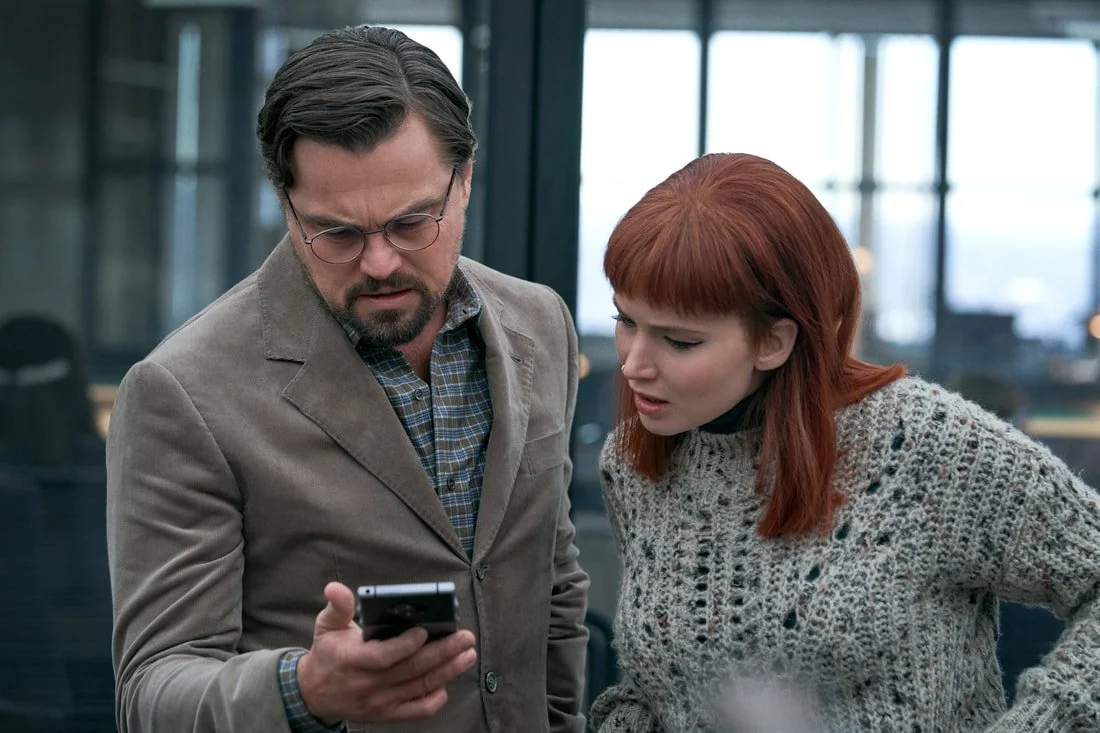
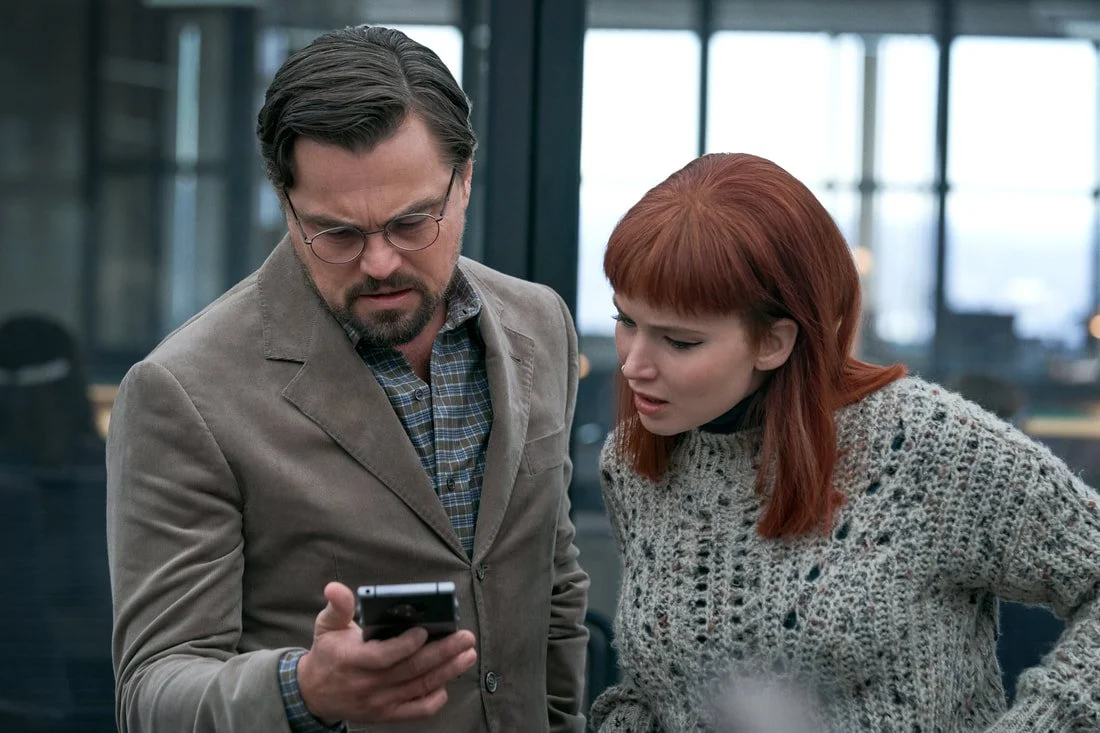
Don’t look away. Adam McKay has something big to say, or at least he thinks he does. His latest star-studded film Don’t Look Up is his most self-aware, and a step up from his most recent work. There are funny moments throughout, though the rhythm of his humour takes a hit from an overlong runtime and some truly tone-deaf moments. The film vibes best as an anxiety-inducing drama, about those who have reached a boiling point and those who think the water’s fine. McKay sets the story in the eye of a sprawling media storm. Upon the discovery of an approaching comet, two astronomers (played by Leonardo DiCaprio and Jennifer Lawrence) must weather an exaggerated publicity tour to warn humankind planet Earth will be destroyed. Despite the catastrophic consequences, the two are met with an unbelieving and dismissing attitude. Much to their bewilderment, and depressingly much to no surprise. McKay reiterates and mocks the real-world frustration of delusion drowning out science. The overwhelmingly passive response to urgent climate concerns becomes the running joke of Don’t Look Up. As entertaining as it can be to watch the satire play out, it’s more a chilling and terrifying film than anything else.
Don’t Look Up continues McKay’s foray into more dramatic narratives. It’s a bonkers satire and, in on-the-nose fashion, tries to challenge the question of what will it take to get the world to just look up. Do the repercussions need to be exhausted and blown to mega proportions? How much louder do scientists, astronomers and co. need to get? How long are they going to play the talk show game? McKay’s flashy cuts between a constellation of stars emphasize not only what’s at stake for humankind, but the blatant inaction from powers that be. The film opens with a discovery by grad student Kate Dibiasky (Lawrence): a comet is on a direct collision course with Earth, and there are six months until impact. She alerts her professor, an on-edge Dr. Randall Mindy (DiCaprio), and their next course of action is to tell everyone about it. Starting at NASA with the help of Dr. Oglethorpe (Rob Morgan), Kate and Randall embark on a media tour ready to share their findings with people who don’t want to hear it. They float nervously from the oval office of President Orlean (Meryl Streep) and her silly Chief of Staff/son Jason Orlean (Jonah Hill), to the chirpy morning show The Daily Rip with hosts Brie (Cate Blanchett) and Jack (Tyler Perry). Facing stiff competition such as an impromptu pop star engagement, Kate and Randall are swept under the 24-hour news cycle and struggle to gain the general public’s attention. The film plays out as expected; the more these astronomers stress how serious this comet is, the more frustrated they get, the more their pleas fall on deaf ears. What is McKay really accomplishing here? Besides repeating the obvious, he goes the satirical route and bombards the screen with enough not to look away for a second. What sticks? An entertaining cast that help carry a flawed story to a surprisingly heartfelt conclusion.
Don’t Look Up has more stars than the sky, and all of them deliver performances in ways ranging from grounded to outrageous. McKay’s biggest coup is getting Leonardo DiCaprio to co-star, alongside Jennifer Lawrence, as the anchor. DiCaprio’s performance as Dr. Randall Mindy features many of the qualities that make him one of the most talented actors. His physical comedy is delightfully coupled with an ability to fly off the handle in a feverish rage. He grounds the character amidst the surreal swirls of bullshit flying around him. Randall gets hit along the way, and DiCaprio conveys that ease of getting caught up in new experiences just for the sheer newness of it all. His performance gives a reliable anchor for the film. A lot of the characters are working against Randall’s current as outrageous obstacles.
One character on Randall’s wavelength of fed up and tired is Kate (Lawrence), whose frustration is palpable. Lawrence really doesn't get much to work with here, but she gives a enjoyable performance with a funny running joke that hits the mark every time. With an ensemble as massive as Don’t Look Up, there are bound to be actors you wish had more moments to keep shining. Two of them are Melanie Lynskey (playing Randall’s wife June) and Rob Morgan (playing Dr. Oglethorpe), both of whom have pitch perfect line delivery. They each have such an inviting screen presence that just lights up the screen. Lynskey has a great scene when June breaks down Randall’s ‘care package’ and throws it in his face. Then there's Cate Blanchett in a league of her own, her magically unhinged performance making every scene more exciting. Meryl Streep, Jonah Hill, and Mark Rylance are fun yet disturbing to watch. Their characters are truly frightening. Timothée Chalamet comes in at the right time to lift the film from dragging further. He brings great spontaneity and spirit to his small role. The film has a strong entertaining ensemble, it’s just that so many of the characters are moving in such unimaginative circles most of the time. The dinner table scene in the final act is such a big highlight of the film, because it gives a seat to real conversations and breaks up with McKay’s self-aware approach. Given the obvious direction he relishes in along the way, Don’t Look Up has a surprisingly poignant conclusion that engages in emotion that's lacking up until this point.
A balancing act of tones isn’t strong enough to maintain the film’s nearly two and a half hour runtime. The sprawling story feels rough around the edges and strangely incomplete. McKay exhausts his approach to the point where it feels like the film is going nowhere, despite a lot of character-driven absurdist action going on. But at the heart of Don’t Look Up is the horror of real life, that there is so much misinformation distorting truth, that the climate crisis is considered by so-called leaders as a “sit and assess” type of situation. Randall is the main catalyst character for which a collective simmering frustration reaches a boiling point, and DiCaprio has an enormous meltdown scene that he plays with frightening urgency. McKay hits or misses when juxtaposing the horror with the ridiculous; at times it feels tone-deaf and makes light of so much. But when it comes down to the despairing moments of watching characters express their frustration, that’s when the film feels most alive. Even more so whenever Nicholas Britell’s score kicks in. The jazzy, spirited music sounds like something born from a sparkling constellation. It is lovely, and so memorable.
When the shine of the film’s bright spots wear off, the aftermath of the film lingers more unfavorably. It’s bombastic, sometimes enjoyably, sometimes exhaustingly. As the stardust settles, it’s Dr. Randall Mindy, June Mindy, and their family who resonate most. Even though June and the kids don’t have much to do, it’s the genuine emotion and grounded nature they bring to the story that gives the film a foundation. Especially for what the story builds up towards, and how there needed to be that nucleus for characters to return to. Ultimately Don’t Look Up feels like a lot of conflicting juxtapositions in one film and can be exhausting, but there are some shining stars to be found in the performances, and in the way McKay channels the act of squeezing a stress ball onto the screen.
Don't Look Up lands on Netflix December 24th.
‘The Unforgivable’ Review
December 9, 2021
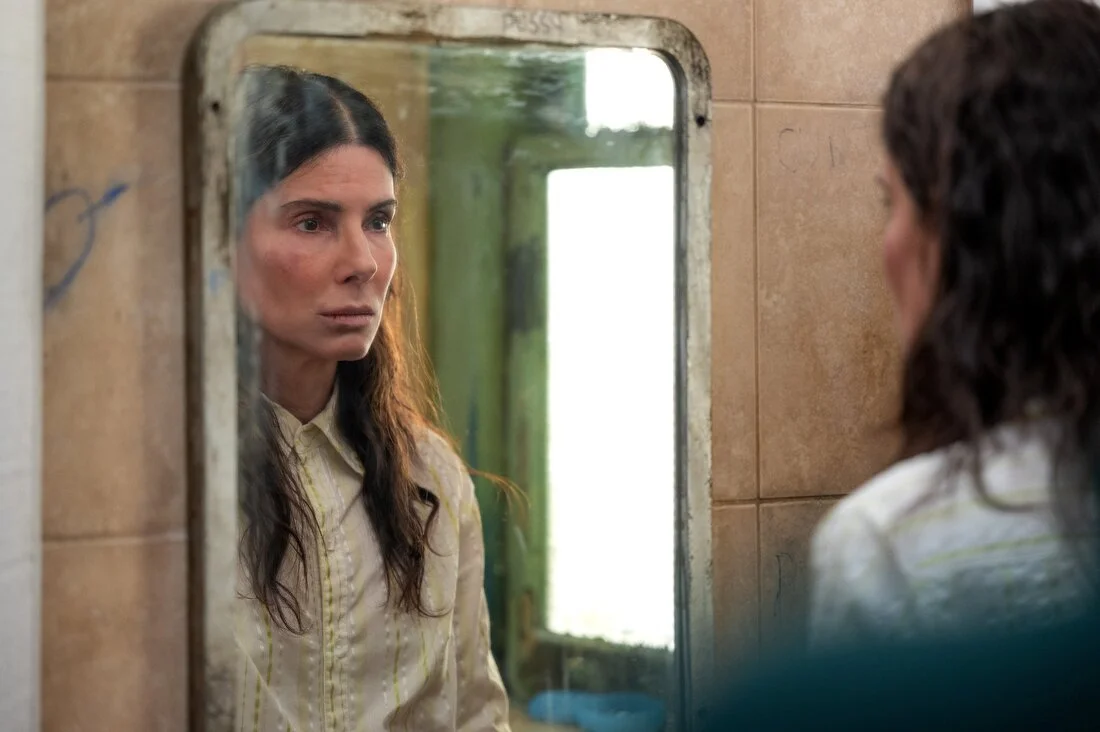
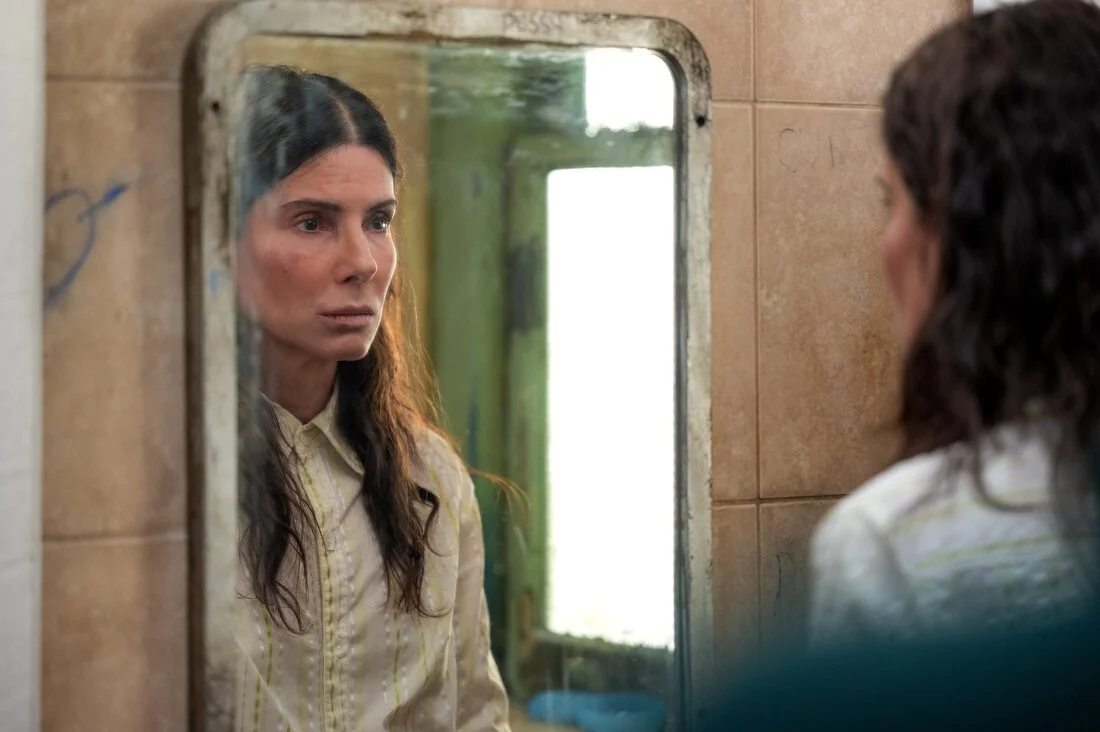
Nora Fingscheidt’s drama-thriller The Unforgivable tells an intriguing story of privilege and socioeconomic status. While focused on the story of one woman’s journey post-incarceration, the film weaves different perspectives from characters who each see this woman’s release from their own lens. Based on the 2009 British miniseries Unforgiven, The Unforgivable is about the pain of navigating the prison system and the outside world. Released from prison after serving a sentence for a violent crime, Ruth Slater (Sandra Bullock) re-enters a society that refuses to forgive her past. Facing severe judgment from the place she once called home, her only hope for redemption is finding the estranged younger sister she had to leave behind. In her efforts to reunite with Katie (Aisling Franciosi), Ruth faces one obstacle after another. Those whose lives were disrupted by the violent crime are now disrupted by her release into society.
The Unforgivable has a story of conveniently placed plots points to get characters from A to B. The story takes an interesting subject, a woman whose incarceration and release have a ripple effect on the only family she has left: her sister. Ruth is motivated by love; there is a push-pull between wanting to find her sister and not wanting to disrupt the life she now has with another family (having entered foster care system). Katie’s adoptive parents (played by Richard Thomas and Linda Emond) ensure she has a good life, but ultimately cannot erase the trauma Katie carries. She remembers the tragedy with Ruth in blurry bits and pieces; too young to fully comprehend at the time, but the experience has always been a part of her on a subconscious level. The film brings warmth to these flashbacks, a great detail that emphasizes how the love between two sisters carried on. If Ruth could just have Katie back, it would be like Ruth regaining a part of herself that’s been missing for 20 years. Carrying the weight of the protagonist’s history is Sandra Bullock, whose performance feels like a canvas of many women’s experiences.
Bullock goes on a journey of showing how incarceration affects Ruth, and utilizing the armor she has built around herself as a self-protective mechanism. Ruth’s steely demeanor is often contrasted with flashbacks of the events that led to her prison sentence. Films about ex-cons are so often centered on men; it’s refreshing to watch one led by a woman, and for Fingscheidt to explore some of the looming layers of the prison system that follow Ruth everywhere. Whether it’s a routinely check-in or a side-eye from a stranger, every moment carries an air of judgment. Bullock is great at conveying the deflection, tension, and solitude that has come to define Ruth’s new day-to-day. Given the powerful love she has for her sister, it’s clear what the driving force is behind her actions and this story. While compelling to watch Bullock play against type and exude a lived-in approach to her character, her commitment is let down by clunky writing and a jarring switch between story strands.
Somewhere in The Unforgivable is a potentially compelling story about systems, and the people who get lost in them. The prison system, the foster care system, the rehabilitation system. The pain of navigating them for women, and particularly women of color. The overwhelming expectation built within these systems that people are able to adapt between shifts. The ways in which not just women but women of color are affected by rules and regulations designed not to let them succeed. The film tries to balance how characters are impacted differently by these systems depending on privilege and upbringing. Scenes stressing Ruth has done her time and deserves another chance are juxtaposed with scenes that challenge it. Ruth’s path to re-entering society leads her to the scene of the crime: her home, which is now owned by the Ingram family - John (Vincent D’Onofrio), Liz (Viola Davis), and their two sons Ryan (Orlando Lucas) and Daniel (Jude Wilson). Unfortunately as is the case with many of the actors in this film, the talents of D’Onofrio and especially Davis are underused. John is a lawyer sympathetic to Ruth’s case and wants to help her situation, whereas Liz does not want Ruth anywhere near her family because of the woman’s past. Davis is fantastic as always but is let down by the screenplay. She and Bullock share a key scene that sheds light on the events leading to Ruth’s incarceration; the intended emotional impact falls flat. So much of the plot and Ruth’s character development had been rushed in order to reach this moment.
The Unforgivable has an over reliance on conveniency, an inexplicable stand-off, and a rushed twist that sends the story into lightning-mode frenzy to wrap up. The ending is one of the highlights of this film, but also feels like a missed opportunity in that it should have been far more emotionally resonating. The heart is there, and the consistency is there. Fingscheidt ties Ruth and Katie together often throughout the film by way of vivid and fragmented memories. But the story tries to pack too much in its runtime, and makes a panicky switch in the final act as though the filmmakers realized they had to find an ending. With enough material to stretch into a miniseries, a longer format may have done The Unforgivable more favours.
The Unforgivable is now available to watch on Netflix
‘The Boathouse’ Review
December 13, 2021
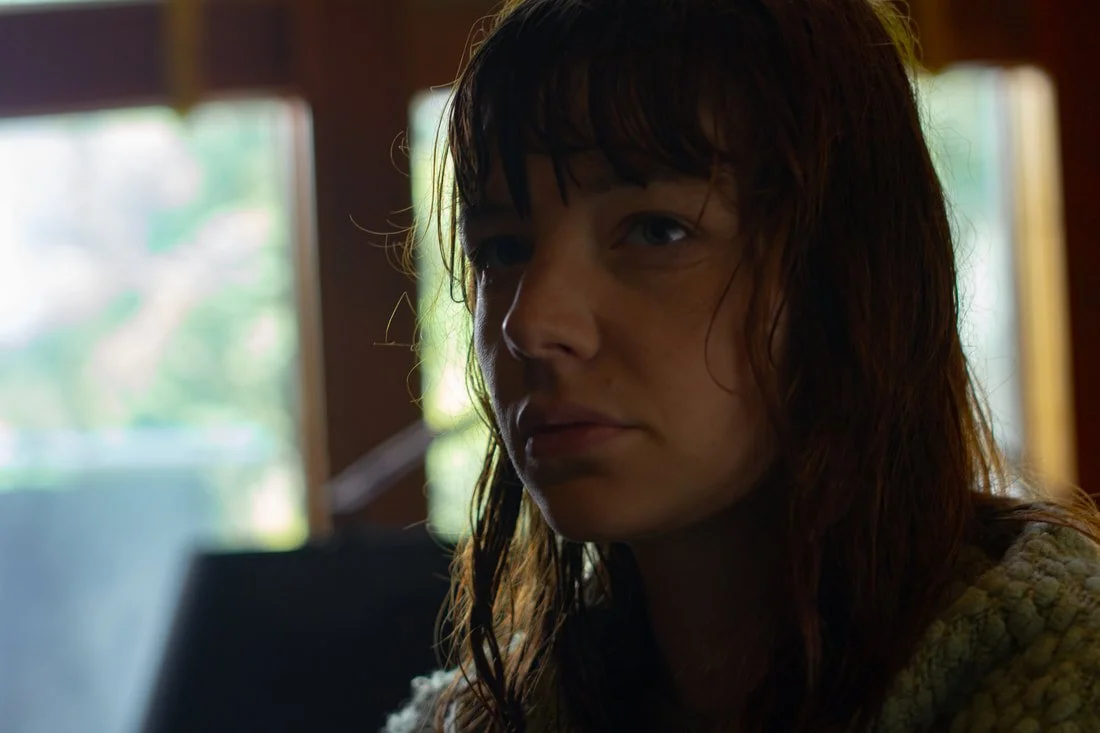
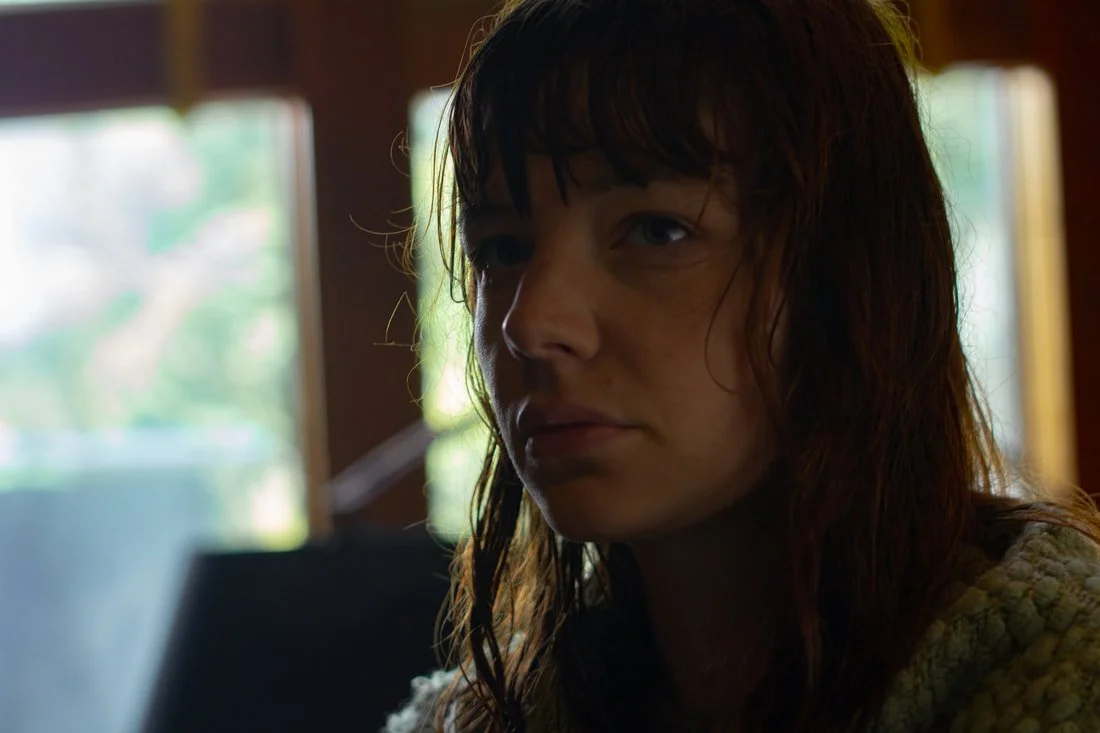
A remote summer cottage becomes the stuff of waking nightmares in Hannah Cheesman’s twisty drama The Boathouse. In this nightmare, a family’s dark history is awakened from slumber by suspicion. When music graduate student Anne (Michaela Kurimsky) takes a job as nanny to two children, she falls in love with the children’s father and becomes entangled in the disappearance of their estranged mother Natalia (Kelly Martin). As the summer progresses, Anne’s own history with Natalia resurfaces, and she begins to suspect that the family are hiding a dark secret. Who do you trust when you can’t trust yourself? The Boathouse exhausts the trope of using an unreliable protagonist to keep the viewer questioning what is true. Anne often struggles with sleep paralysis and sleepwalking. Fear and dread wash over her. She begins to hallucinate Natalia’s presence throughout the cottage. These scenes create a bit of tension in the air and establish a disheveled tone well. But the film goes for the most obvious directions to introduce a twist and wrap up the story. The Boathouse sadly loses its eerie, steady build and becomes an exaggerated mess.
Crucial to keeping the film together is Michaela Kurimsky’s performance as Anne. While her character is let down by a shoddily written screenplay, Kurimsky runs the gamut from inquisitiveness and anxiety to confidence and despair. Anne arrives at the summer cottage with a strong suspicion that something is wrong. The film starts promisingly enough to ignite interest, peeling back the layers of why Anne took the nanny job and the nature of her musical relationship with Natalia. The connection between the two characters makes for a potentially interesting story, yet the film avoids every opportunity to explore this in further depth. Their relationship is defined by moody imagery and a speckle of mysterious flashbacks, which doesn’t build a strong foundation to feel emotionally involved in how their relationship is revealed over time. Rather than explore the power dynamics between both characters, the film gets lost in a sea of exhausting tropes. One of which utilizes mental illness as a way of stressing that its protagonist cannot be trusted and/or shouldn’t be.
While Kurimsky fares well despite the messy plot development, the same cannot be said for her co-stars. It doesn’t help that Natalia’s husband Dominic (Alan Van Sprang) is an insanely underwritten character, but Sprang delivers in the most unsubtle of ways. The rest of the cast overact to distracting degrees. Though nothing is quite as disconcerting as the film’s soundtrack. Any intrigue scenes manage to conjure up is completely overpowered whenever accompanied by the high-strung, chaotic score. Beyond the elements that simply don’t work, what’s most disappointing about The Boathouse is its over reliance on outside influences. Echoes of Hitchcock’s Rebecca haunt the walls of the summer cottage. The film does a decent job creating an atmospheric environment, but struggles to carve out its own path. Instead, conveniently placed plot points and obvious choices of direction spell out where the story is going. Before The Boathouse has a chance to elaborate on an intriguing premise, a cliched screenplay takes the wind out of its sails. Thankfully the story has a strong anchor in Michaela Kurimsky, who is quickly made evident the prime reason to see this film for one’s self.
The Boathouse is now available on VOD/Digital platforms.
‘The Novice’ Review
December 15, 2021
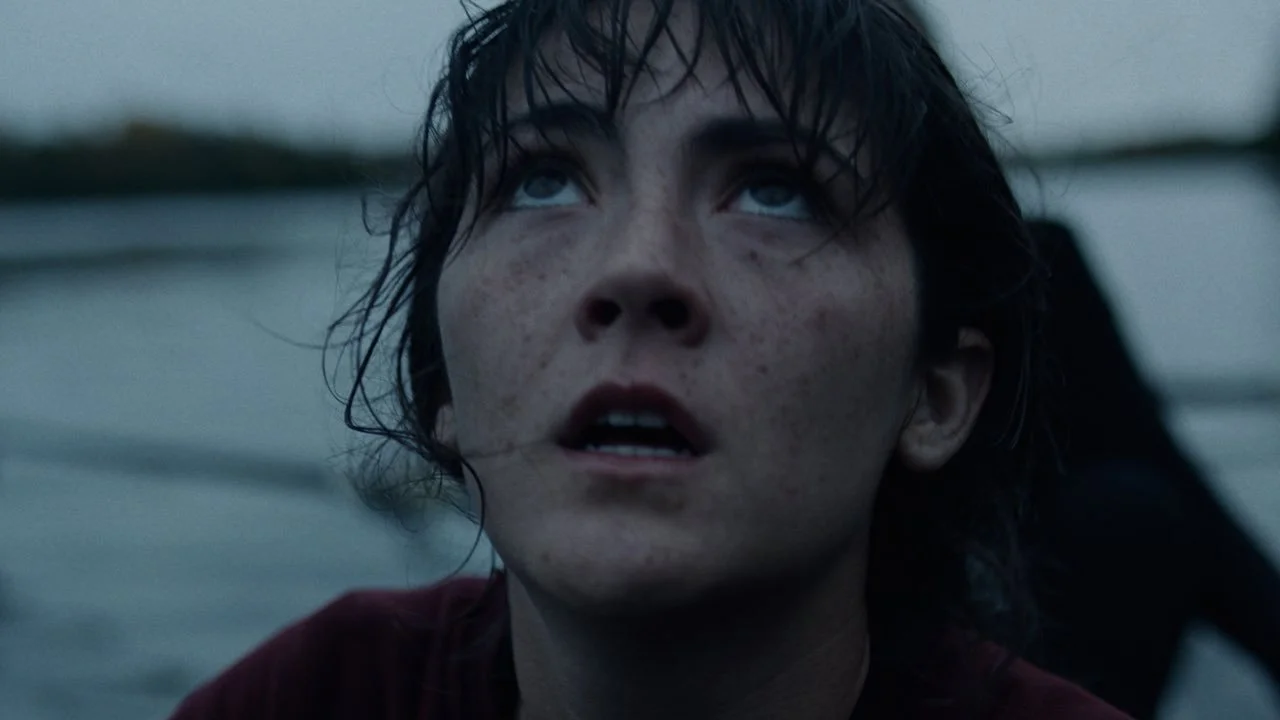
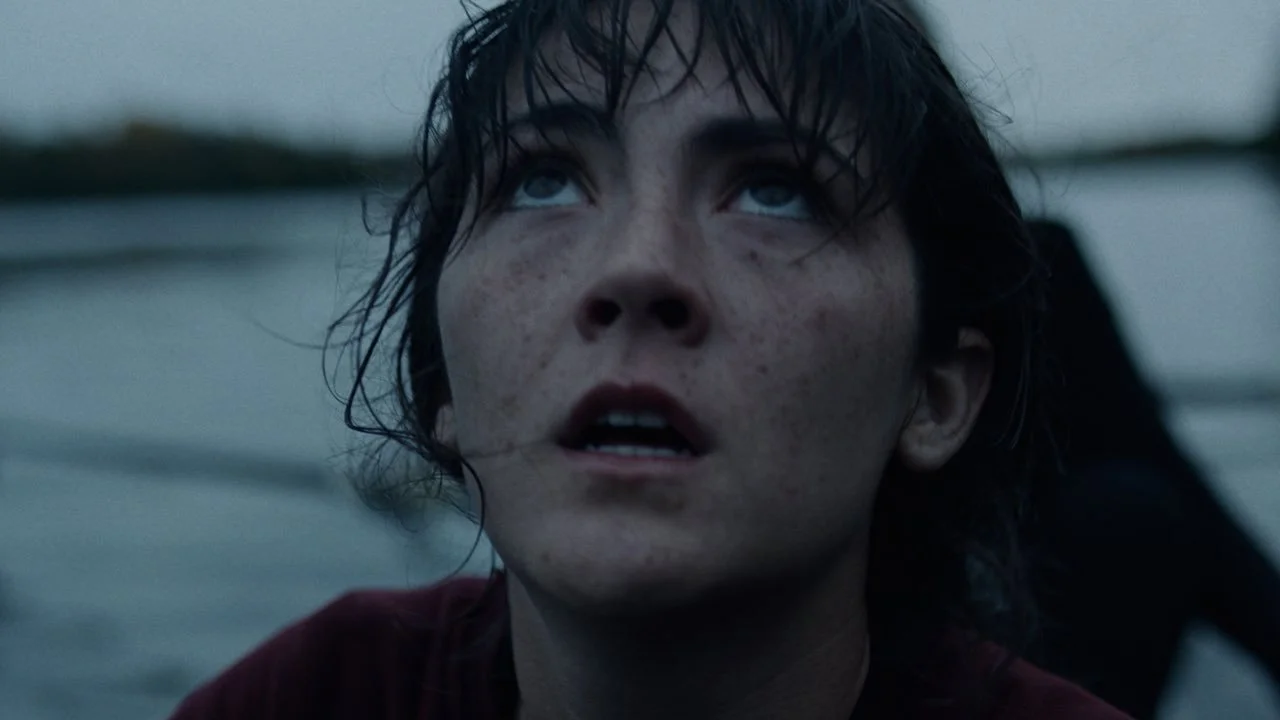
Writer/director Lauren Hadaway’s feature debut The Novice builds stamina from a powerhouse performance at the center. Isabelle Fuhrman plays Alex Dall, a college freshman who joins her university’s rowing team with the goal to make varsity in her first year. Alex will do whatever it takes to rise. Her determination reaches obsessive degrees as she pours her body and mind into competitive rowing. Her surroundings blur out of focus to make the sport center stage, and Hadaway wastes no time immersing into action as the camera chases Alex down a darkened hallway to an already-started rowing class. The words of Coach Pete (Jonathan Cherry) echo in her mind like study notes before a test: “legs, bodies, arms, arms, bodies, legs.” It’s clear from the start that Alex is ready to jump into the deep end, and that Lauren Hadaway has arrived as a filmmaker to watch. The Novice takes a remarkable ride on an obsessive psychological journey.
Hadaway crafts an intense character study and takes the plunge into experimental filmmaking to tell it. To feel Alex’s heart race, and to go on the journey with her like a fly on the wall, The Novice lets her emotions take control of the camera. From frantic classroom note-taking to early bird practices, the film moves to the rhythm of her drive. The imagery borrows from the characters’ lines to make words pop. The tense score boosts every heart-racing moment. The sound design is spectacular, turning a rowing practice into a dance of drive. The direction is sharp and sensory. Not a second goes to waste, which adds to the pulsating quality of the story. Alex doesn’t take a moment to rest, and neither does Hadaway. The camera movement is so laser focused on the protagonist, grabbing buzz words from background noise in the way that Alex picks up on them. She’s a note-taker, she’s a student, always striving for the right answers. While focused on the world of competitive rowing, the film does not neglect to show how Alex slips away from so many other facets of her world. One of which is a budding relationship with her class TA Dani (Dilone), and how the emotion of their love mirrors that of how rowing makes her feel. As a viewer, it feels like Hadaway dropped a camera on this character smack in the middle of navigating life. In this case, rowing is life.
By not knowing what exactly it is that’s driving Alex, the film constantly paddles from one unexpected gear to the next. It’s always a mystery what lies in store for her next, what motivates her to constantly feel the need to prove herself and be the best from the rest. While it’s clear rowing is Alex’s obsession, Hadaway’s screenplay is smart not to make this film a rowing film. It’s a character study, a multi-faceted look at how obsessive determination takes a toll on relationships; not just Alex’s relationship to her teammates and her girlfriend, but also to herself. The Novice is an experiment in pressing pause on self-care. It’s made clear from the start that while surrounded by many, Alex is the sole passenger. The film opens with a lone rowing boat in darkness; this is where Alex lives, and the film lives in her headspace. Alex leaves herself so far behind in a race to make varsity, a gentle expression of concern is enough to spark a staggering monologue (played brilliantly by Isabelle Fuhrman) that takes a peek into her need to be first. As she shouts “If everyone sat on their asses and did nothing, all of this would cease to exist,” it’s clear in this moment, the viewer doesn’t know very much about Alex Dall. But Fuhrman does, and her mystique as an actor is what makes her performance so constantly intriguing.
Fuhrman’s performance commands the screen down a feverish rabbit hole of tears, tension, charisma, and unwavering drive. Every moment of frustration, glee, disappointment, she runs the gamut and gives what is easily one of the best performances of the year. Fuhrman is in every scene, further cementing the staying power of the film. She channels obsession and hard work to carry an absorbing character study on her shoulders. Alex’s hunger to win is startling to watch, especially when the source of her determination is unknown. The unknowable is also a refreshing perspective to take. Hadaway does not need an explanation for the character’s desire, and Fuhrman compliments the sentiment perfectly with a performance that lives and breathes in the moment. Surrounding her is a great ensemble of actors including Amy Forsyth as friend/teammate Jamie Brill, who soon becomes competition. The film goes in a smart direction in exploring how Jamie and Alex naturally gravitate towards each other. They find a bond in that making varsity is a necessity, but it’s a necessity to them in completely different ways. A testament to the strength of imagery, Jamie is often surrounded by team players while Alex is totally in her head, in solitude, which makes the implosion of their relationship riveting.
The Novice moves at lightning speed and never fails to lose its grip. It’s a fully realized story reverberating with the confidence and passionate drive of its protagonist. The flow is masterful, each scene fueling from the previous to maintain energy. The story always feels electric and fresh, not offering a clear picture of what direction it’s going in. Isabelle Fuhrman is a force of nature, her commitment to Alex Dall a burst of energy, and a perfect source of stamina for Lauren Hadaway to work alongside. Together their collaboration makes The Novice not only one of the best films of the year, but one of the most memorable feature debuts in recent memory.
The Novice arrives December 17 on VOD.
‘The Tragedy of Macbeth’ Review
December 23, 2021
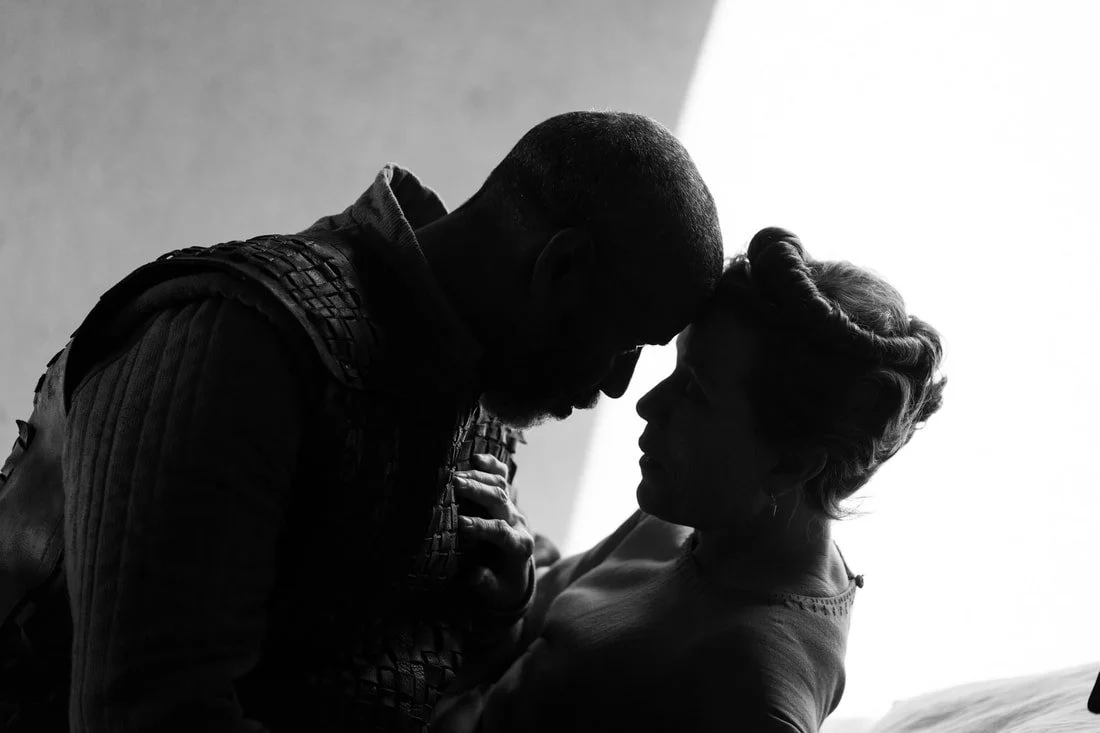
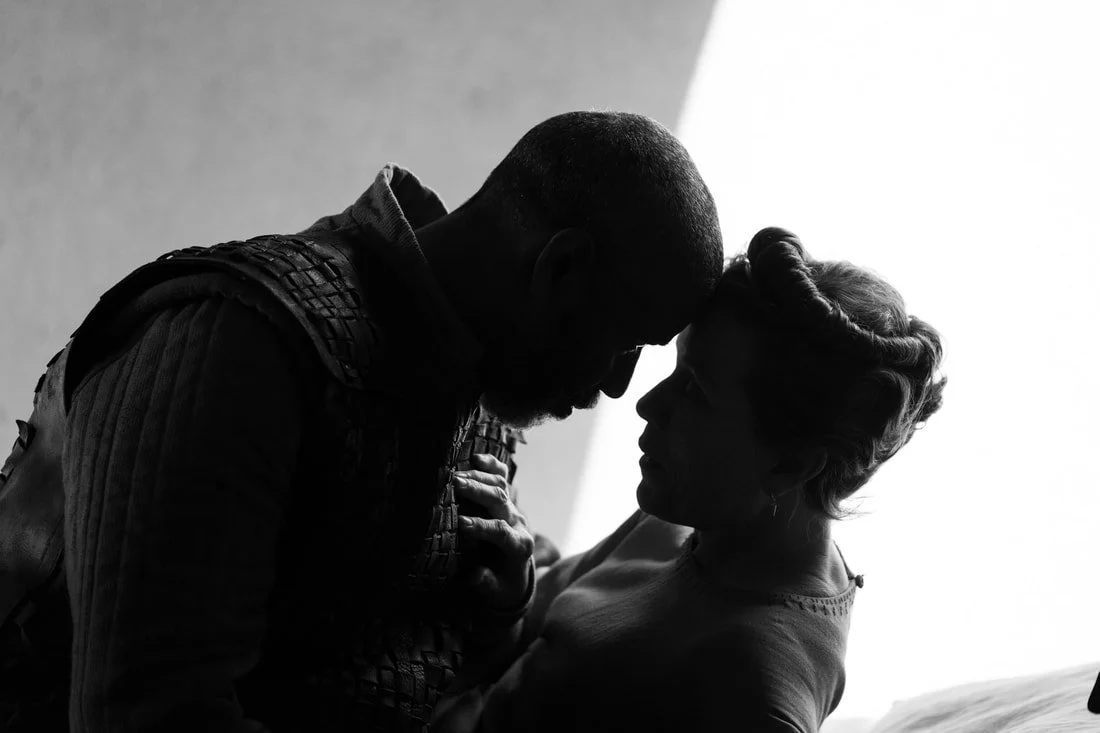
Something wicked this way comes…another reimagining of a Shakespeare play, with one of the Coen brothers at the helm. Joel Coen’s first solo directorial feature swerves the footsteps of countless Scottish Play adaptations and operates in a world of its own. For Coen’s vision is a precise reimagining that embraces its source material in a satisfying marriage of stage and screen. The writer-director finds cinematic weight in the Scottish Play, using minimalist sound stages as the canvas for this wrathful tale of ambition. Emotion takes center stage through the vessels of mighty performances, from Denzel Washington’s majestic Macbeth to Kathryn Turner’s frightening Three Witches. The actors bring commanding performances to surface, ready to play when the lights come on and giving their all before darkness falls. The Tragedy of Macbeth takes a long day’s journey into night in what feels like a continuous take, the transitions between scenes so seamless. It’s a bleak and witty adaptation, that may feel out of reach with heavy dialogue, but grows into an absorbing piece of visual storytelling.
The story begins with a foretelling. After receiving a prophecy from a trio of witches (Hunter), Macbeth (Washington) becomes convinced that he will soon become King of Scotland. He will make it so without a moment’s haste, as he doesn’t have much time. Consumed by ambition and encouraged by his wife Lady Macbeth (Frances McDormand), Macbeth plans precisely to take the throne for himself. The film opens to the cue of a beaming light switching on. A great sensory detail that automatically makes the viewer think of theatre. Characters are hatching plans and scurrying in what feels like a film noir rabbit hole, some otherworldly place where nothing else matters but action spurred by prophecy. Coen manages to capture the level of intimacy that can be felt watching a stage production, wherein magic comes from the performers being so present and in the moment. What he also does is capture the power of Shakespeare’s words, not by way of dramatic revision but by surrounding them with rich visual storytelling and a more-than-capable ensemble of mostly veteran actors.
Denzel Washington as Macbeth is remarkable casting. His charisma and presence are instant, a most compelling lead to carry this journey of ambitious cunning. Just by watching this character, it is crystal clear he carries the witches’ prophecy in his veins. Washington brings an all-knowing quality, a sense of being consumed by the power of fate. It’s a magnificent performance, one of his very best and among one of the most personalized Shakespearian portrayals. In the role of Lady Macbeth is another vet, Frances McDormand. She brings sparkling wit and shares in Washington’s all-knowing quality, which makes for another example of fine casting. Making it look easy, she traces her character’s intentions to a place of unraveling madness. Whenever McDormand and Washington share the screen, sparks fly watching two of the greatest living actors embody rich text in a way that looks effortless.
Though it’s expected McDormand gels with the direction of her partner, and it’s not surprising that the talent in this cast shine, it’s really a treat to watch how well everyone works with Coen’s vision. The Tragedy of Macbeth has a powerful ensemble, each actor shining regardless of how big or small the role. From Corey Hawkins (Macduff) and Alex Hassell (Ross) to Moses Ingram (Lady Macduff), there’s a sparkle in all their work here, and they leave anticipation for more greatness to come. Then there’s theatre veteran Kathryn Turner playing all three witches, otherwise known as The Weird Sisters. Turner’s performance is unlike anything I have seen on screen or anywhere. It’s such an immaculate and literally shapeshifting portrayal, from the depth’s of a nightmare. Her physicality is astounding and makes every contorting movement a marvel. Turner utilizes the quality of being all-knowing to a scary extent, pulling from a world known by no other. Coen’s visual storytelling compliments the entire cast as well. It’s so easy to feel absorbed by their actions and thoughts, of course a testament to their talent but also with the added weight of striking imagery.
The influence of 1940s movies is strong in Coen’s direction, especially given the ratio and transitioning between scenes as they bleed into one another. The Tragedy of Macbeth feels like a different, more experimental effort from the dark humor often found in Coen’s works. This is not to say his latest has none. He maintains a dash of silliness, not taking the Scottish play so completely seriously in every moment. In this story is the demise of fools, running to their prophetic futures as if there is no tomorrow. There is something about the setting of Coen’s production that makes it feel like an abyss, if you were to zoom out you’d see the characters scurrying for power in a grayish maze. With the use of minimal set design and lots of silhouettes, all the shadowing is gorgeous. Bruno Delbonnel’s cinematography gives a visual to night and morning being at odds. The score by Carter Burwell is brilliant; meshing with the sounds of footsteps, drops of water and blood, mirroring actions so well.
The Tragedy of Macbeth is told with such persuasion it’s easy to be swept away by Coen’s reimagining of the text. It’s a compelling adaptation with majestic performances, and remarkably minimal set design contrasting the weight piled onto characters’ shoulders. There’s enough material to feel totally consumed by their actions and thoughts as they scheme for political gain. It’s a stunning achievement that manages to tread a fine line between a stage production and screen adaptation, finding its own space for the performers to play. And play they do. When the light switches off and a flock of ominous crows take flight, comes the sudden realization that The Tragedy of Macbeth pulls off an impressive feat.
The Tragedy of Macbeth arrives in theaters December 25 and on Apple TV January 14.
TIFF 2020: ‘Shiva Baby’ Review
September 10, 2020
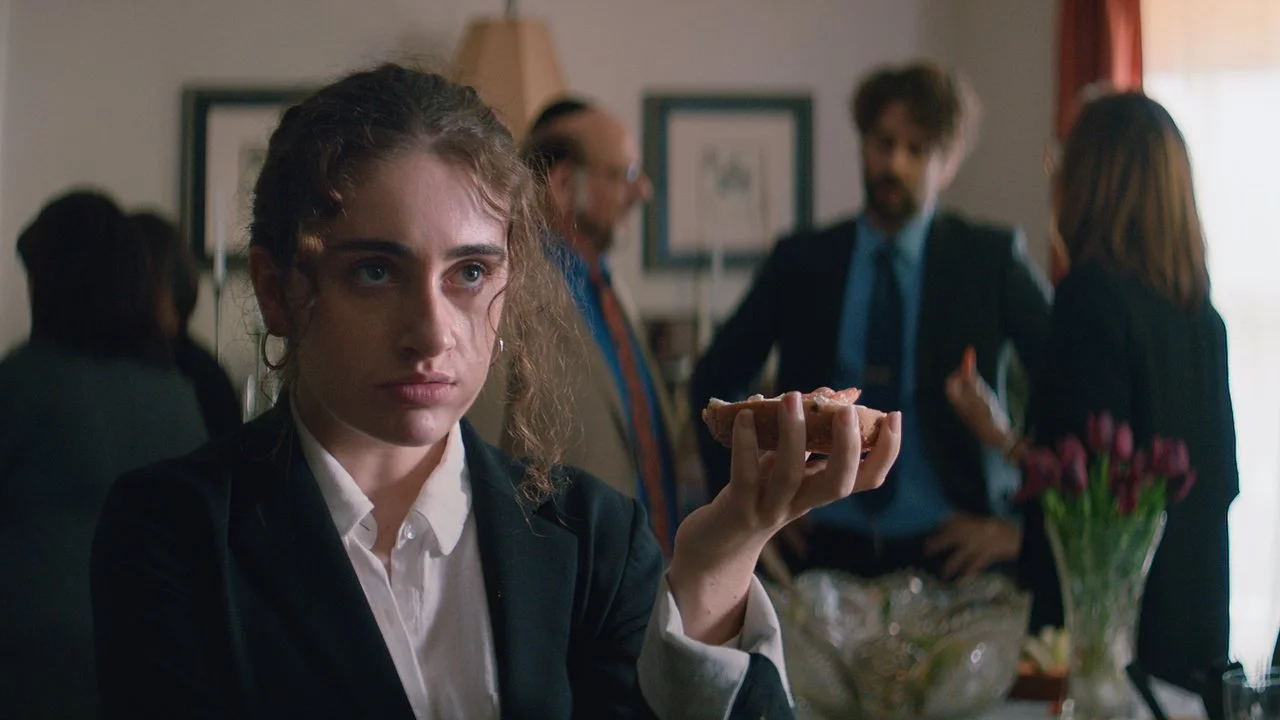
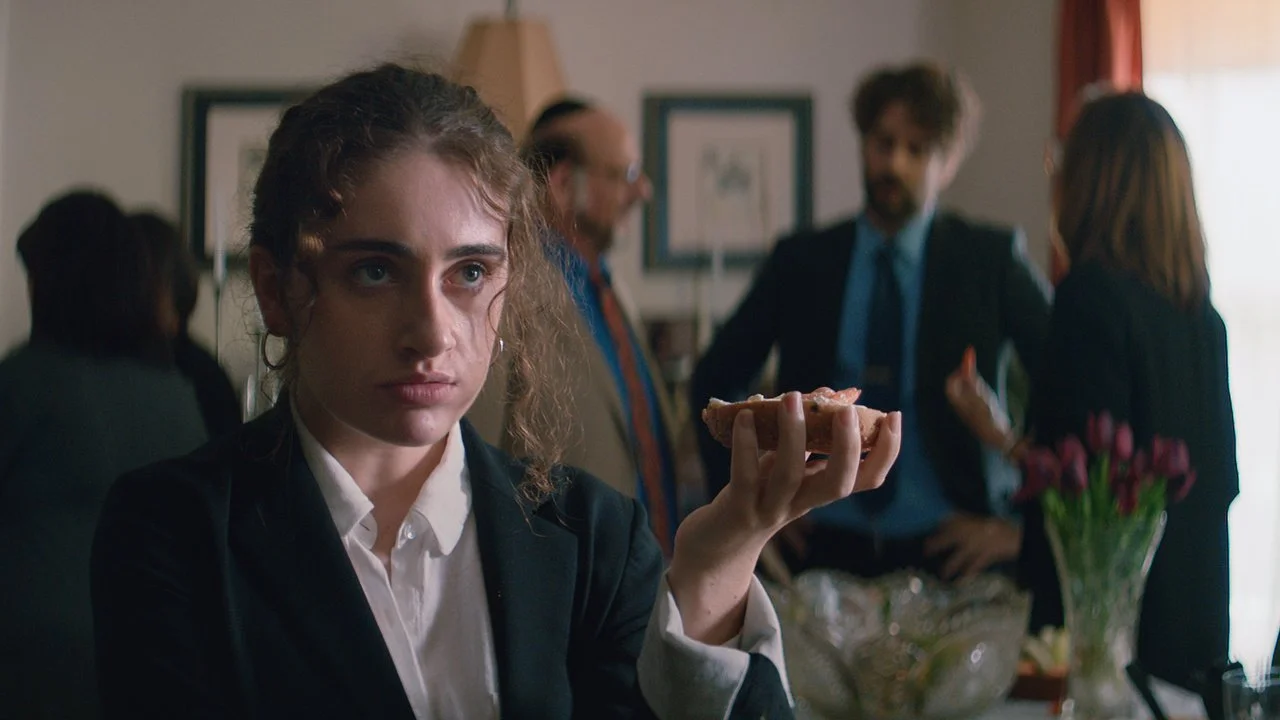
Emma Seligman’s stunning debut feature Shiva Baby is a funny, invigorating, fully realized pressure cooker. Expanding on her short film of the same name, Seligman creates an anxiety-inducing experience in the most compelling of ways. She explores a young woman coming of age while facing family dynamics, traditions, sexuality, post-college pressure, and power shifts in relationships. The story is a day in the life of Danielle (Rachel Sennott), who attends a shiva (a mourning tradition in the Jewish community), where she runs into her sugar daddy Max (Danny Deferrari) and her ex-girlfriend Maya (Molly Gordon). Danielle’s hovering parents are also present, whisking her to meet so-and-so who can help her with such-and-such. Seligman tells an incredibly grounded and authentic story rooted in universal themes that resonate down to the tiniest details. Shiva Baby is a remarkable blend of comedy and drama, with hints of horror that add a layer of tension to the story.
Shiva Baby takes place in one day, in real time, as Danielle swerves from one interrogative family encounter to another inside a crowded house. Her career path is in limbo. She is anxious about her future. She is unemployed and unmarried, at a family gathering, which immediately brings forth a relatable feeling. Figuring out who you are, while presenting another version of yourself to family members who have expectations of who you ought to be, is so easy to identify with as a young woman. There is an instantly relatable aspect in watching family members sink their teeth into a young woman’s future prospects and who she should become in their world. At the heart of this story is a multi-layered protagonist with an array of identities that are at odds with one another. With no escape from an endless line of questioning that follows Danielle nonstop, emotions build and her feverish anxiety rises. The drama and tension are conveyed to perfection by Rachel Sennott. In a brilliant performance so completely in tune with her character, Sennott gives a masterclass on how to embrace complexities, vulnerability, and lean into truthfulness.
Danielle has a fascinating journey throughout the film; the power dynamics shift constantly as she tries to find her footing with certain characters. Maya and Max have a history with Danielle; the former knows her but hasn’t seen her in a long time, and the latter unexpectedly runs into her having just spent the morning with her. Seligman brilliantly maps out how all these characters discover where they stand with one another, and the answers change all the time depending on who has control. Shiva Baby has a fantastic balance of tone channeled through the extraordinary cast Seligman assembled. Sennott is surrounded by a pitch perfect ensemble, and everyone plays off one another so well with compelling chemistry. Polly Draper and Fred Melamed (who play Danielle’s parents) shine bright, as do Dianna Agron (who plays Max’s wife) and total scene-stealer Molly Gordon. The characterization is outstanding, and the quick witted screenplay gives the actors golden material to play with. The sense of humour is a delight, providing constant laughs and lines so great you must keep up because you won’t want to miss them.
Shiva Baby infuses cool inspiration from the horror genre, through the use of playful jump scares and Ariel Marx’s wonderful horror score. These elements emphasize the panic swirling in Danielle’s mind as everyone closes in on her in a frenetic way. The music tracks the tension and anxiety so well, which constantly makes one question if any given moment will be the one where Danielle reveals what she’s been holding in. There are brilliant pressure cooker moments sprinkled throughout, with one particularly feverish scene towards the end that feels like being inside Danielle’s racing heartbeat. Emma Seligman has a deeply resonating and lovable debut feature under her belt. Shiva Baby fires on all cylinders and leaves behind a lot of anticipation for Seligman’s next project.
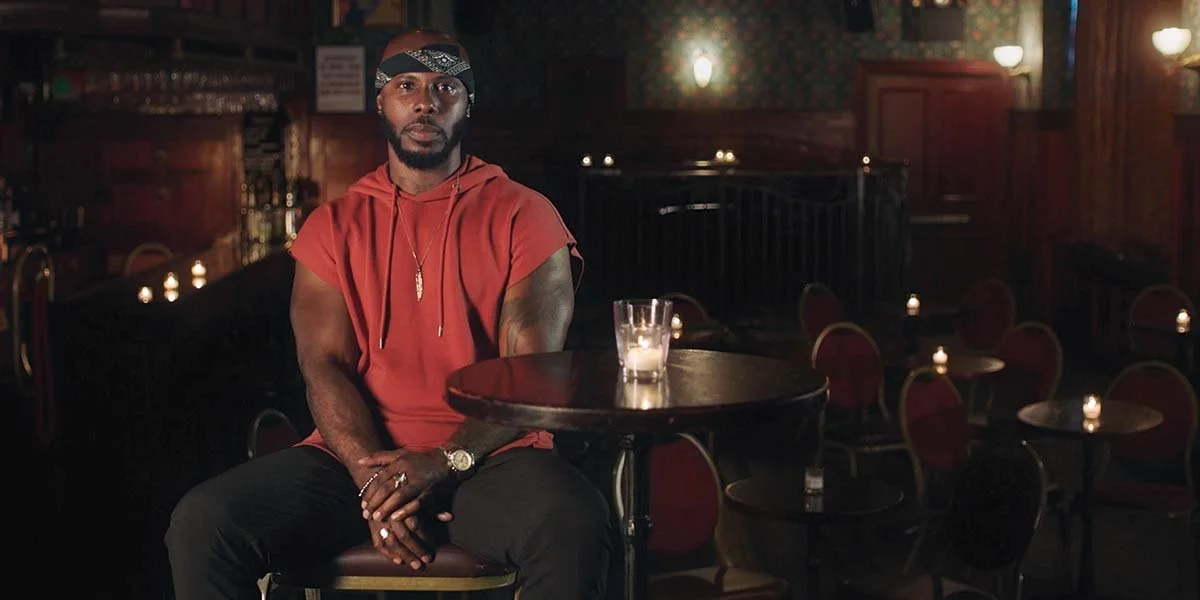
TIFF 2020: ‘No Ordinary Man’ Review
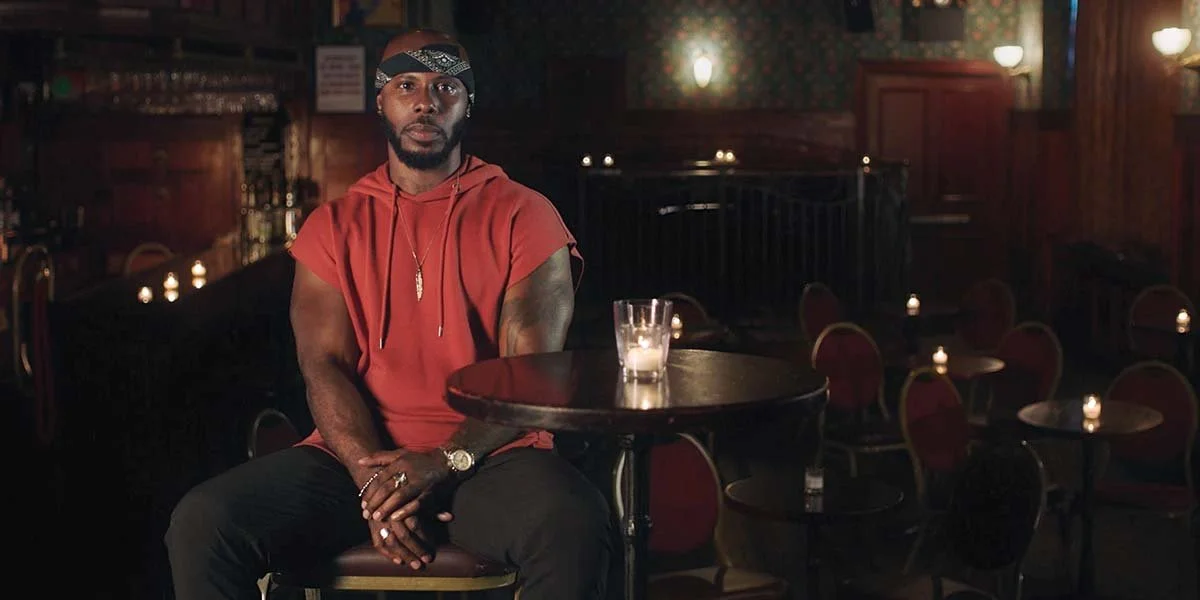
September 12, 2020
No Ordinary Man is a powerful documentary about the story of jazz musician and trans icon Billy Tipton. His legacy is told lovingly through the varying perspectives of artists and activists. With an incredibly thoughtful approach, filmmakers Aisling Chin-Yee and Chase Joynt connect Tipton’s story to the people who followed in his footsteps.
The trans masculine perspectives give this documentary so much more weight, as it’s not only about Tipton’s life but also the inspiration he left behind. The filmmakers avoid formulaic biography structure, giving a voice to multiple lenses and narratives that challenge deceptive representations while bringing Tipton to life. The storytelling truthfully explores the ups and downs of trans representation in the media. Sometimes, with increased visibility comes targeting and violence. The inclusion of trans masculine voices gives them that opportunity to be part of the process in shaping a better understanding, and to be part of trans history.
Knowing nothing about Billy Tipton prior to this documentary, I was left with such a beautiful and powerful insight into how impactful his legacy was. It was moving to watch, especially considering how severely his life was distorted by a media frenzy. To retell his story, the filmmakers infuse creative narratives including a casting call for Billy. The doc introduces trans masculine actors reading a scripted scene, while also discovering more about themselves and about Billy. It’s a wonderful decision to bring some focus onto these actors, who stress the importance of having role models, seeing their realities represented, and knowing that they exist in a world in which trans people’s histories have been erased.
After Billy’s story was released to the media, his family appeared on talk shows and interviews discussing how they felt. One of the most apparent ways the media completely disregarded Billy was their focus on everyone but him. What about his wife? What would it be like to be married to Billy? What about his kids? Part of the documentary includes the perspective of his son Billy Jr., looking at the loneliness that came with carrying his father’s legacy during a media frenzy and now seeing an abundance of people reaching out expressing love and admiration for his father.
What makes No Ordinary Man so engaging in its storytelling is the abundance of different perspectives and narratives uniting in a loving way to retell a misrepresented legacy. The power of role models, truthfulness, and understanding shines through from beginning to end. There’s also a beautiful song that plays in the end credits - Man Like You (No Ordinary Man) by Lane Webber and Patrick Watson. This is a beautiful, insightful must-see doc.
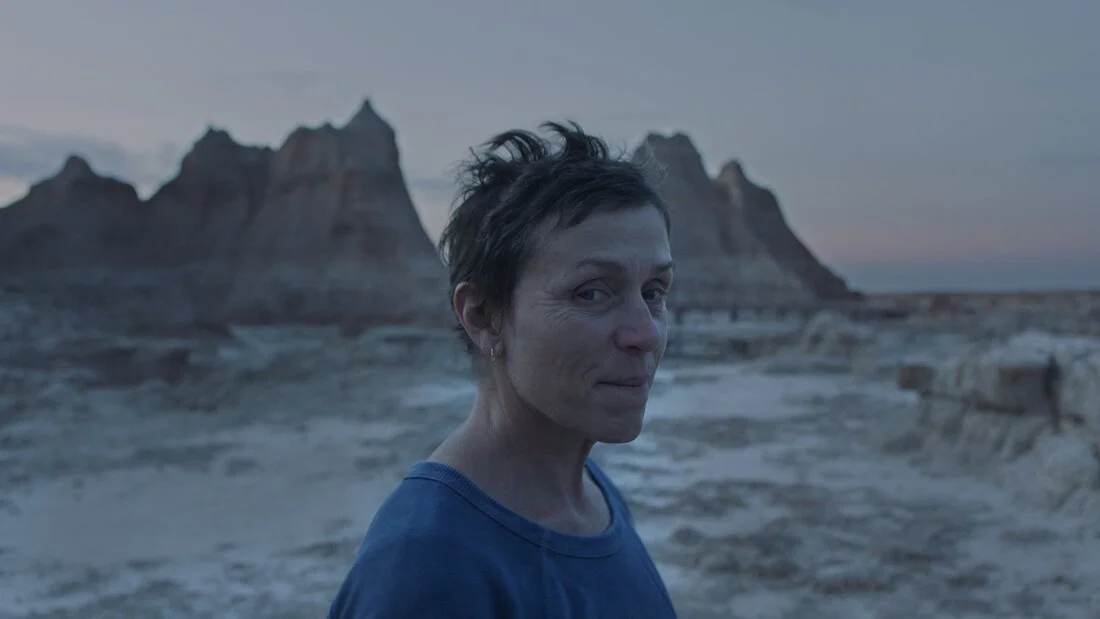
TIFF 2020: ‘Nomadland’ Review
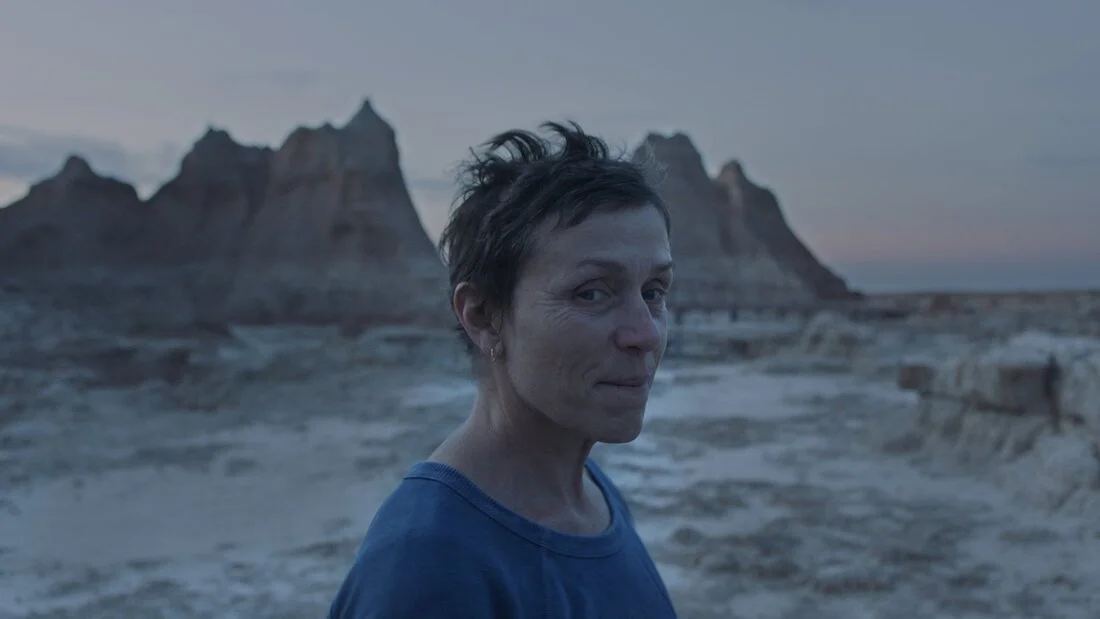
September 13, 2020
Played so seamlessly by Frances McDormand it’s a wonder where she begins and her character ends, Fern is a nomad deep inside. She has a real sense of belonging on the road, where home is not a structure but a feeling. Beautiful landscapes are her museum, and she is the voluntary tour guide. McDormand works her magic in collaboration with the phenomenal Chloé Zhao, who edited, co-wrote, produced, and directed Nomadland. Within the first few minutes of the film, a powerful story is told. Due to reduced demand for sheetrock, US Gypsum shut down its plant in Empire, Nevada. The shuttered town and its discontinued zip code pushed all residents to relocate. One of the residents sifting through the debris of a once thriving life is Fern. In our introduction to her journey, she holds onto her husband Bo’s jacket extra tight before bidding farewell to some belongings and starting up her trusty van. Full of personal trinkets and treasures, she built the self-named Vanguard from the inside out. Her van is her home, and has been for some time. In the aftermath of personal grief and loss, Fern is on the road in search of answers.
Chloé Zhao’s curiosity as a director is the perfect match for this story. She brings immaculate detail to the narrative and also maintains a beautiful openness in her approach. She collects human interactions like rare gems; each nomad encounter is given empathy and space for expression. Zhao introduces many of these characters in the first act of the film, as they gather around a campfire and share stories of what led them to this lifestyle. What they share in common is a gravitation towards nomad Bob Wells and his cheap RV living guide. Although brief in screen time, he takes on a nucleus role in the film as Fern (among others) visits him to share her experience in search of some guidance. As vast as all the landscapes are, it’s a small world and the people in it gravitate towards a shared connection. As Bob tells Fern in a moving scene, months or even years could pass by and he’d see the same people down the road again.
The screenplay was adapted by Zhao from Jessica Bruder’s non-fiction book, ’Nomadland: Surviving America in the Twenty-First Century’. The book is about American nomads, many of whom were affected by the Great Recession, who embark on the road in search of work and a new way of life. Most of the locations and people in the book made it onto the screen; staying close to Bruder’s perspective gives the film a brilliant level of world building. Zhao starts with establishing location and creates the characters from there. Real nomads come to life on screen through monologues and small everyday interactions that reveal a bit about who they are. Two nomads in particular - Linda May and Swankie - are given revealing moments where they explain why they’re on the road. Listening to their stories is like hearing their souls speak. These moments are beyond moving to watch, and are the perfect example of why the film strikes a resonating chord in my heart. Zhao’s screenplay feels incredibly intuitive and personal in telling a story about this particular nomadic lifestyle. She brings so much heart to this film, and sits patiently with the people in this world to hear their stories.
To quote Chloé Zhao, “there are not many people out there as strong as Frances McDormand looking you in the eyes.” In creating the character of Fern, who might be McDormand’s alter ego, Zhao needed someone who would fit in the environment. She needed a good listener…someone who would absorb her surroundings, go with the flow, and also be deeply invested in the people she comes across. Frances McDormand’s screen presence is one of the strongest in film history, and her familiarity works to the film’s benefit as Fern becomes a guide for the audience to explore this nomadic world with. Whether it be working at Amazon, polishing rocks, or running a badlands spa, McDormand lends herself fully to the role. There are some playful moments in the film where the actor and character mesh. “Try McD,” suggests Fern when a receptionist can’t find her name on a camper registration list. McDormand’s performance is a magnificent blend of nuances, powerful stoicism, and surprises.
The character of Fern, like many others passing through in Nomadland, lost the life she knew after the Great Recession. She and her husband had lived in Empire for many years. Empire was a town Bo loved and that loved him back, so she stayed behind because “what’s remembered lives”. The film resonates as a story of grief and finding ways to cope with loss. Fern’s search brings her to a nomadic lifestyle where her self-sufficiency is tested, but there is also an excitement in seeing what’s down the road for her. She finds a special friend in Dave (the great David Strathairn), a familiar face she runs into at various camper locations. Their dynamic is so pure and genuinely lovely to watch unfold. Similar to Fern, Dave takes the odd job here and there to keep afloat. When Fern meets up with friend Linda May in the badlands, there Dave is, working as a guide for tourists. Dave and Fern share some of the most stunning scenes in the film, from wandering off into enormous rocky terrain to gazing at the stars. In tune with Zhao’s direction, Joshua James Richards’ cinematography gives the film a beautiful cinematic lens while also maintaining the openness of their natural environments.
The feeling of being in nature can be humbling and relaxing, followed by a restlessness that rushes in when you leave such a setting. The film captures this emotion so brilliantly, and it’s infused in Fern, who finds comfort in being on the road but shifts restlessly under a roof. Chloé Zhao and Frances McDormand are a match made in heaven as they explore the healing power of nature in gorgeous American landscapes. The beautiful score by Ludovico Einaudi gives melodic reminders that underneath the protagonist’s stoic exterior is a search of life after loss among a community of grieving people. Nomadland is a stunning character study and a moving portrait of learning to live with grief. Zhao tells a timeless story about self-sufficiency, unshared emotions, and the lonely ache in finding a sense of belonging during times of isolation.

TIFF 2020: ‘Wolfwalkers’ Review

September 14, 2020
How enchanting! Wolfwalkers is a magical Irish saga of love, friendship, and female empowerment. Mature and dedicated storytelling bring environmental and philosophical themes to a beautiful fairytale adventure.
The story follows a young apprentice named Robyn (Honor Kneafsey), who lives in Ireland with her loving father Bill (Sean Bean) at a time of superstition, when wolves are seen as evil creatures to be tamed. In a town armed with guards and whispering stories of wolves, the people of Kilkenny never step foot into the forest that sits beyond the gates. Robyn, an adventurer at heart, explores the forbidden forest along with her bird Merlin. Intending to follow her father, who is tasked with hunting and eliminating all wolves, she encounters a wild young girl of mystical powers named Mebh (Eva Whittaker). The two girls form an enchanting friendship that tests her principles and carries them to defend the hunted wolf population of Kilkenny.
Wolfwalkers is the latest from director Tomm Moore and studio Cartoon Saloon, the team behind visionary films such as Song of the Sea (2009) and The Secret of Kells (2014). Co-director Ross Stewart also comes aboard this beautiful adventure. The film explores so many themes in such a mature way, some of which include father-daughter bonding and really coming into your own as an individual. The screenplay is dedicated to exploring the fears that come with parenting and wanting to do what is best. Poignant and energetic voice work adds a deeply resonating layer to the story.
Visually, the delicate watercolour animation and intricate swirling lines are gorgeous. This style of animation fits the storytelling perfectly, particularly in the forest setting. Characters flow into and out of frames like magic. There’s a beautiful fluidity to movement and a fantastic inclusion of seeing this world from the wolves’ eyes, through scent. With gorgeous animation, heartfelt voice work, and a resonating story, Wolfwalkers makes its case for best animated film of the year so far.
TIFF 2020: ‘Inconvenient Indian’ Review
September 15, 2020
Most of Indigenous history in North America has been erased. What we’re left with are artifacts. Voiceless objects from the past, as narrated in this documentary. History is not necessarily the past itself, but more specifically the stories we tell about the past. Inconvenient Indian is an insightful, eye opening documentary looking at Indigenous history and North American culture as a powerful tool of misrepresenting Indigenous culture. Director Michelle Latimer’s visual storytelling is incredibly resonating.
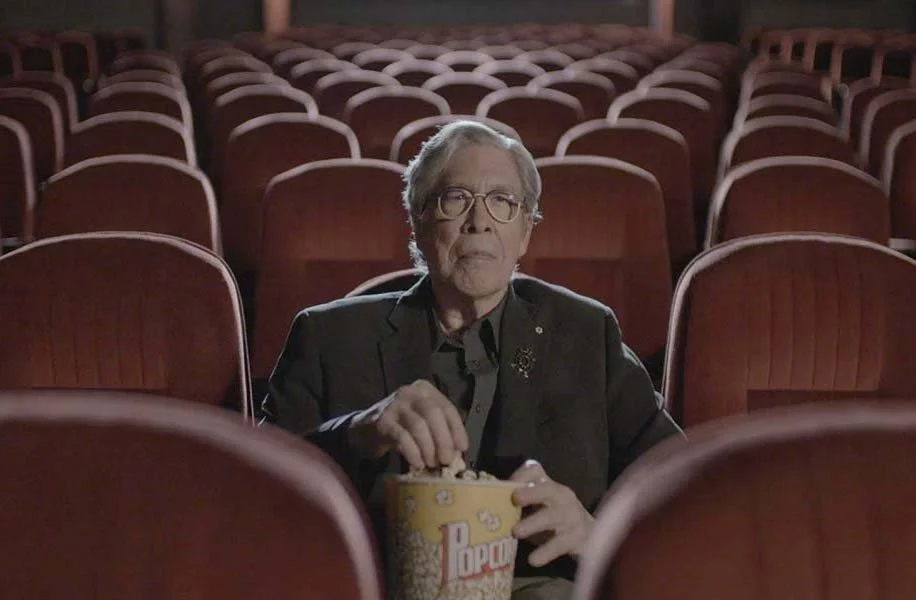
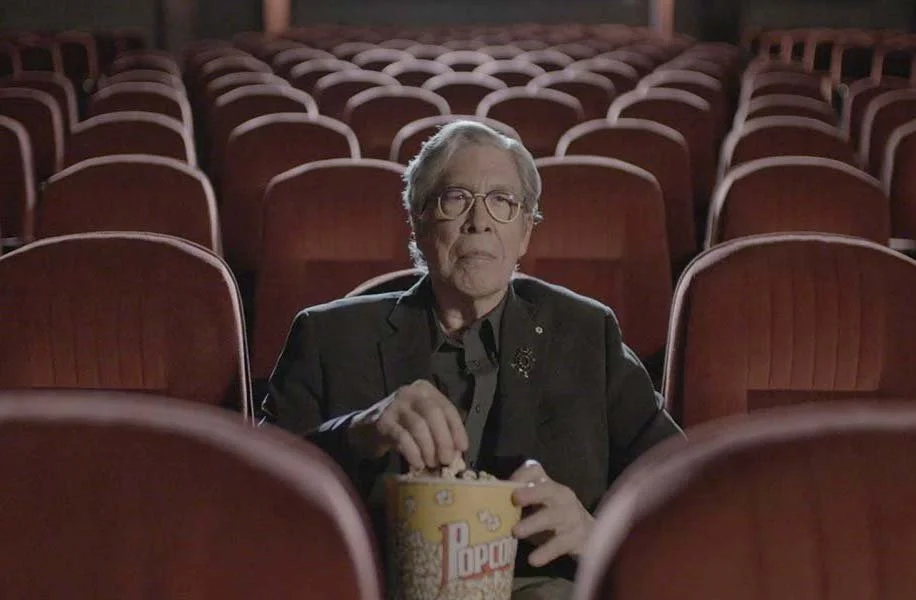
The documentary is based on Thomas King’s award winning 2012 book, 'The Inconvenient Indian: A Curious Account of Native People in North America'. King provides his narration and also appears in the documentary. One particular moment shows him sitting in a movie theater, popcorn in hand, as though seeing what the audience of Inconvenient Indian are watching. What is being seen? Latimer balances an extraordinary array of various storytelling techniques. She seamlessly shifts from one medium to another, including archival footage, visual arts, dance, and interviews.
Among Latimer’s subjects are community workers, filmmakers, and hunters. Every frame has a cinematic element and a strong representation of the height of inconvenience for colonialism: an Indigenous person living exactly as they have. While there is a strong celebration of cultural memories, which are resonating to watch, one of the most eye opening aspects of the documentary is what it has to say on the power North American culture has of misrepresenting and erasing Indigenous living. As narrated in the doc, there is a severe invisibility that comes with looking and acting like the Indians the media has in mind.
Latimer also focuses on Indigenous experiences within multiple industries, such as the art and gaming world. Within the gaming industry in particular, the doc introduces university students who are developing tools to populate spaces with people who look like them. Students are learning how to make their own video games, building technology from the ground up and embedding their values into the technology. This aspect is one of many ways representation shines through in this documentary. Representation not only matters, it is essential. Inconvenient Indian is an essential documentary to watch, in order to take the necessary step to understanding Indigenous stories and being acutely aware of the harmful colonial systems that still exist today.
TIFF 2020: ‘Beans’ Review
September 16, 2020
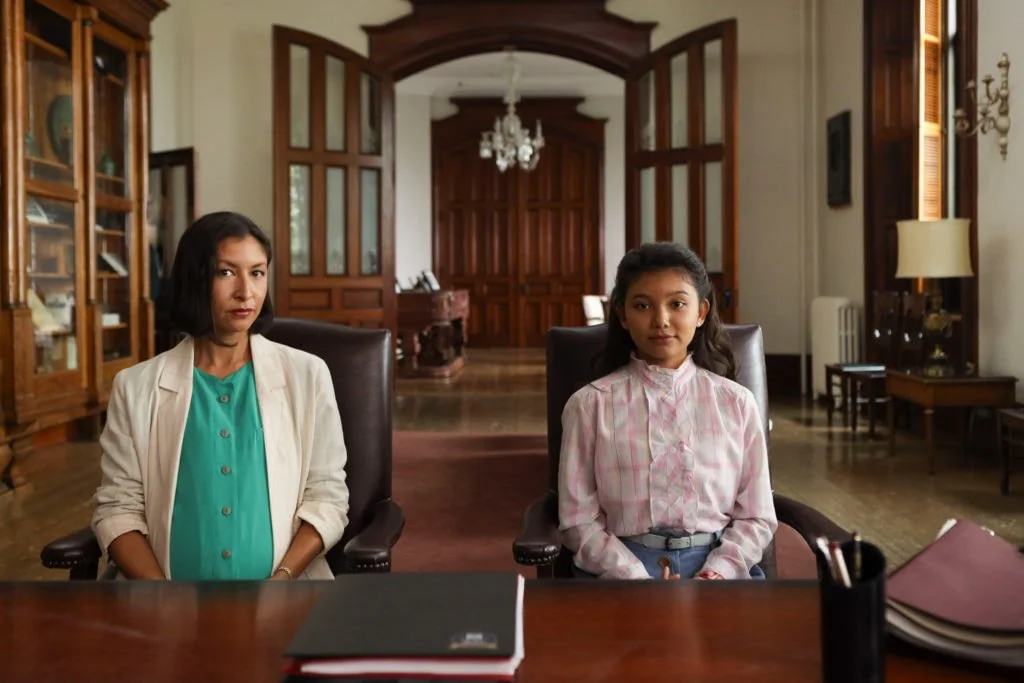
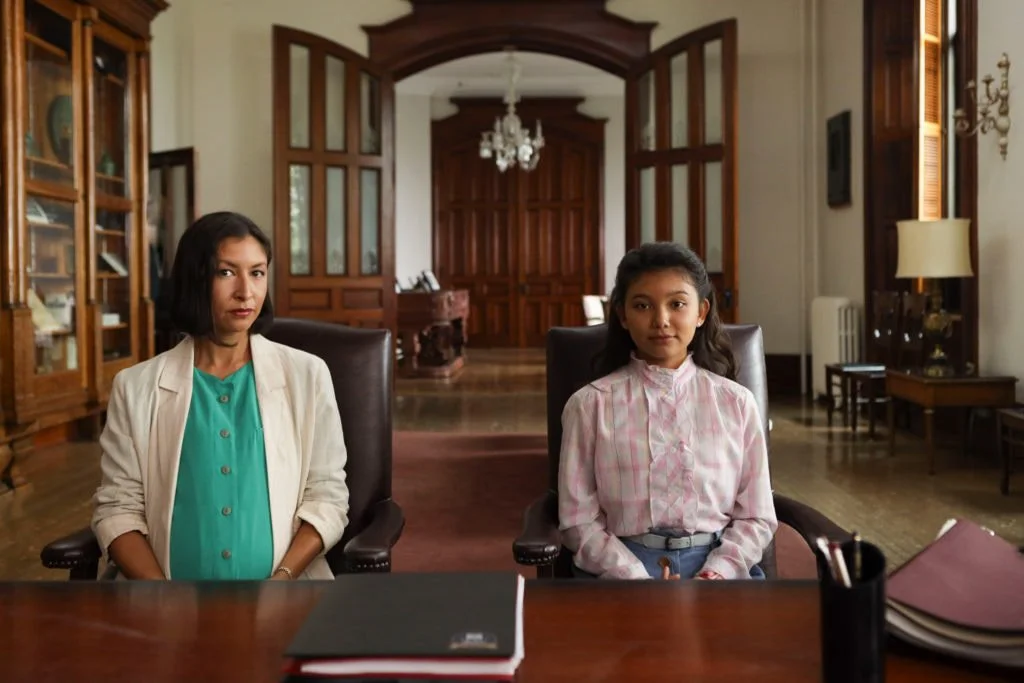
The 1990 Oka Crisis in Quebec witnessed a 78-day standoff between government forces and two Mohawk communities protesting to save their sacred land from being torn by a golf course extension. Tracey Deer’s incredible debut feature, Beans, is based around her experience surviving the Crisis. Deer chronicles the events from the perspective of an Indigenous girl named Beans (Kiawentiio Tarbell). The film completely elevates the coming-of-age genre with a refreshing point of view and a standout performance from Kiawentiio Tarbell as a girl grappling with newfound adulthood.
The film begins with Beans and her mother Lily (Rainbow Dickerson) attending a prospective student interview at Queen Heights Academy, a predominantly white school that boasts opportunity. Lily, who has ambitious dreams for her daughter’s future, preps Beans with interview questions and offers full support, while her father would prefer that she chooses a different school close to her roots. On the page, this recalls plots for multiple coming-of-age stories where parents’ wishes get in the way of what their children want. In the case of Beans, this becomes an afterthought in the midst of a community protest, which the local government escalated by threatening to extend a golf course on sacred Mohawk burial grounds.
Deer's film centers around women as she tells the story through Beans, who tries to grasp what’s happening around her while also caring for her little sister, under the protective wing of their mother. The power of this film is that Deer does not go into linear detail about the beginning, middle, and end of the standoff. She is more interested in the characters of this story, focusing on how they absorb the violent and heartbreaking effects of the Crisis. Deer also takes an incredibly detailed look into how Beans adjusts to adolescence and peer pressure. An innocent Beans meets a teenager named April (Paulina Jewel Alexis), who has a tough exterior and is eager to teach her how to fight. The two soon get into rebellious decision making and side effects of peer pressure, while also grappling with complete rage against local cops and vile residents. Kiawentiio Tarbell delivers a star-making performance as Beans. She’s absolutely riveting to watch, and her screen presence adds a very strong layer to this story. The cast also includes a few standouts: Rainbow Dickerson, playing a protective and firm mother, is great and has a phenomenal car scene that made me weep. Violah Beauvais, playing Beans’ younger sister Ruby, gives a performance mature beyond her years.
Strong writing and overall filmmaking really elevate the coming-to-age genre with a refreshing perspective from an Indigenous girl. It’s unfortunately rare that such representation is seen on film. Beans is a necessary film as well as a doubly exciting debut for its director Tracey Deer and star Kiawentiio Tarbell.
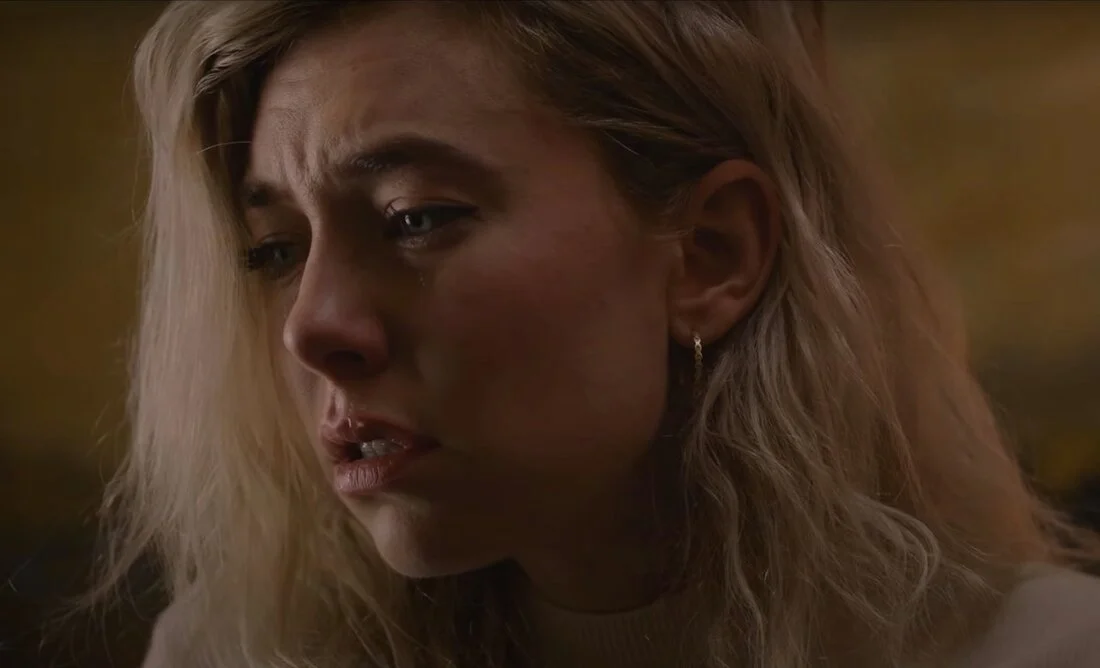
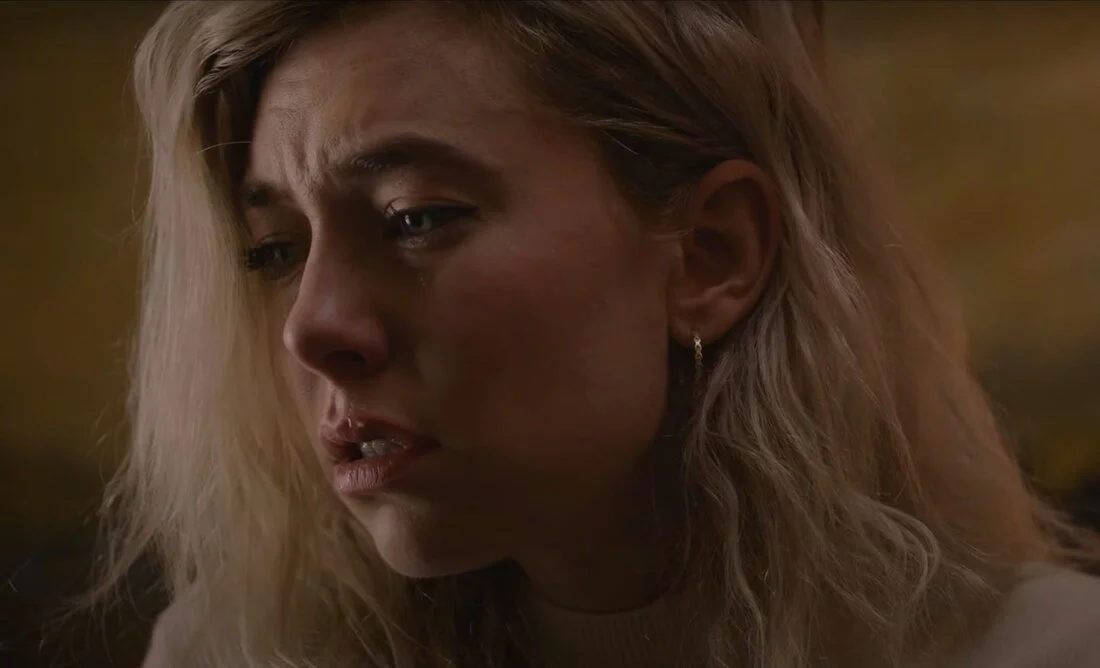
TIFF 2020: ‘Pieces of a Woman’ Review
September 17, 2020
Pieces of a Woman has all the ingredients of a standard melodrama. While its constructing doesn’t always work, the piece that makes it resonate is the fragmented way in which director Kornél Mundruczó studies a character exhausted to bits from unspeakable grief. With an unrelenting focus on moments of discomfort, and an absolutely draining first act, the film has an unwavering emotional charge. Vanessa Kirby is the glue holding all the fragments together with a knock-out performance that is soul-stirring beyond the screen. It’s a performance that will linger in my head for a long time.
Martha (Kirby) and Sean (Shia LaBeouf) are a couple reeling from tragedy in very different ways. After a devastating loss, their relationship shifts into rearranged fragments of a past life. The severe level of disconnection and emotional conflict takes its toll under one roof. There’s one striking scene, actually more of a blink-and-you’ll-miss-it moment, of Martha sitting on her sofa while Sean proposes a road trip to Seattle. The two just had a conflict about the baby’s room. He’s talking in the background, promising how good Seattle would be for them, while she pulls a mimicking face. It’s a testament to Kirby’s skill that she’s given such a lived-in portrayal full of remarkable detail. Her on-screen partner LaBeouf, however, is slightly miscast in the film. He’s a fine actor and it’s not a bad performance, but something feels stilted about his approach.
The film explores relational grief that questions the “right” way to mourn. Martha is constantly at the receiving end of how she ought to grieve. It’s an insistent line of questioning coming from not only Sean, but also Martha’s mother Elizabeth (Ellen Burstyn). The two have a rocky relationship that is being pushed closer and closer towards a breaking point whenever they share scenes together. The tiniest moments - Martha flinching away upon her mother’s reach - speak volumes. Considering the emotionally revealing breaking point, a strong monologue by Burstyn who no doubt gives her absolute all, I think the film could’ve benefitted had Mundruczó unpacked the mother-daughter relationship further.
The subject matter of Pieces of a Woman is heavy to watch for many reasons, one of which being the heart-wrenching opening sequence. The rest of the film slowly stumbles, broken up into multiple dates flashing on screen. The fragmented storytelling that works wonders as a character study of Martha doesn’t always work when trying to fit other pieces of the puzzle in. The screenplay by Káta Weber gets lost in various ideas about the right thing to do, and descends into a courtroom drama that hinders the final act. But what remains the key piece of this film, from beginning to end, is the powerhouse performance by Vanessa Kirby at her best.

TIFF 2020: ‘Another Round’ Review

September 21, 2020
There’s something so intoxicating about Mads Mikkelsen. He’s been delivering consistently great performances over the years, from his villainous turn in Casino Royale and his intriguing work on NBC’s Hannibal to his previous collaboration with Thomas Vinterberg on The Hunt. In Vinterberg’s latest, Another Round, Mikkelsen delivers his best work to date. He gives a remarkable lead performance in a thoughtful film that follows four high school teachers who start a drinking experiment to liven up their lives.
Mikkelsen plays Martin, a high school teacher who has become indifferent towards teaching and life in general. He can’t connect with his students, and his lack of enthusiasm becomes break room chatter. A group of teachers and students call a meeting with him so they could point out their concerns over his teaching methods hindering the students’ learning. Martin accepts their observations with a mere acknowledgment, but deep down, he knows something is missing as he watches life go by. His three teacher friends know it too. One night, the quartet go to friend Nikolaj’s 40th birthday dinner. His friends are no strangers to alcohol, and in observing how much fun they seem to be having while he contemplates, Martin quietly breaks down from a place of emptiness. “I don’t do much […] I don’t see many people […] I don’t know how I ended up like this”, he explains to the table. It’s such a remarkable piece of acting from a very gifted performer who can speak a thousand words with a single look, and Vinterberg knows it. Mikkelsen has many, many close-ups throughout the film.
Martin’s friends think he lacks self-confidence and joy. They urge him to drink…loosen up, have fun, become interesting and alive. Martin takes a sip, opens up, and soon enough they all find themselves having a great night where they feel alive. Holding onto the feeling, the four friends decide to conduct a study on the effects of drinking at consistently low levels, using themselves as the subjects. What ensues is a dangerous, threatening and at times humorous balance of teaching while trying to keep up with this study.
What makes Another Round tick is the way Vinterberg observes the comedic and dramatic elements of alcoholism. He delves into various degrees of drinking, constantly shifting the tone to show how easily one can spiral into addiction just from curiosity. Instead of limiting the film around one perspective, he observes the many ways alcohol affects people. While some fall down devastating paths, others have never felt more productive. Interestingly, none of the characters ever incorporate just one perspective. Some become worse off than others, but they’re all upholding a constant low level of intoxication that gives them each what they consider personal highs. Vinterberg does character work very well.
Mikkelsen in particular sees a strong arc that builds from quiet and unconcerning to spontaneously assertive. Martin finds himself more excited by and dedicated to his lessons, leaving his students buzzing as they leave his class. He finds confidence professionally, which trickles down to his family life as he asserts himself more in the house, particularly as a husband. It’s a side to him that his wife hasn’t seen in a long time, so much so that when he hints at a spontaneous canoe trip and actually books it, she takes a coinciding night shift at work anyway, not thinking he was actually serious. Martin’s relationship with his wife Trine (Maria Bonnevie) had been stalled for some time, and the more he pushes his alcohol intake to up the stakes, the more they suffer as underlying issues are brought to light.
As much as the film plays out its dramatic beats, it’s also a celebration of life, which lays the foundation for a totally joyous ending sequence that comes out of nowhere but still feels completely in place. Another Round leaves a lasting impression about the lengths that people dare go in order to pull themselves out of a midlife crisis and feel something again. Even if they don’t reach a real state of happiness, the moments of relief are refreshing to watch.
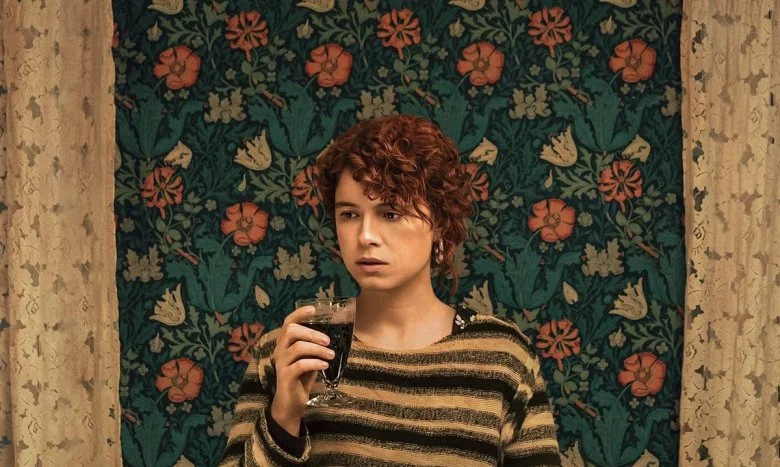
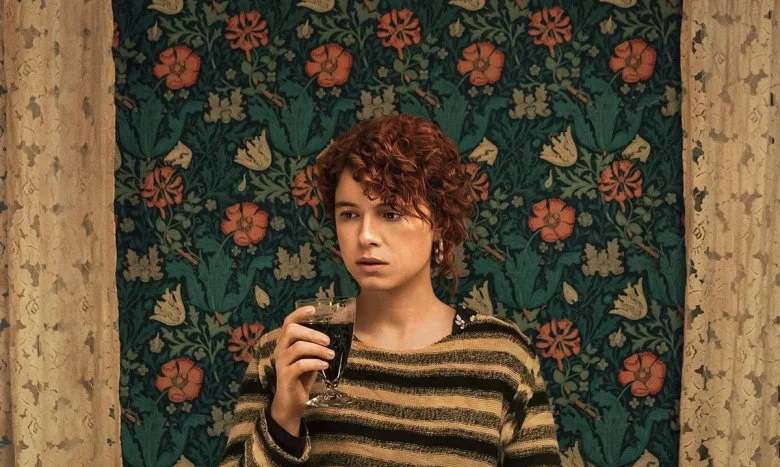
‘I’m Thinking Of Ending Things’ Review
September 23, 2020
Nothing is as it seems in writer-director Charlie Kaufman’s mind-bending new movie, I’m Thinking of Ending Things. The plot centers on a woman named Lucy (or is it Luisa?) who joins her new boyfriend, Jake, on a snowy road trip to meet his parents at their remote farm. Lucy (Jessie Buckley) is experiencing second thoughts about her relationship with Jake (Jesse Plemons). Deep down she already knows they are not going to last as a couple. As far as she’s concerned, this road trip will likely be the last time she’s in a car with him. Lucy is thinking of ending things. Deep down, perhaps Jake knows. Perhaps he’s known for as long as Lucy has.
The first chunk of the movie takes place inside this car on the ride to nowhere and, evidently, everywhere. From the very beginning, Kaufman plays on time, thoughts, and memories. He grapples with longing and regret in a way only he can, and yet it’s unlike anything I’ve ever seen. Everything about this movie is unexpected. The screenplay weaves in and out of past, present, and future frames of the characters’ minds. As if to capture fleeting feelings in a bottle.
Lucy’s uneasiness only grows when she and Jake arrive at his parents’ farm house. Something’s just not right. There is a sense of fear mounting from the deliberately prolonged official entrance of mom and dad. We see a glimpse of mom (Toni Collette) waving through the window when the car pulls up. She keeps waving, more than one normally would, as if to say hello and goodbye within the same frame. In that one tiny moment, a testament to Collette’s talent, I just know she is cracking open the window just a sliver to say that something magnificent is coming. She’s terrific in this movie. Her performance gave me the feeling of journeying through time in someone else’s shoes.
Once Jake officially introduces Lucy to his mom, and dad (David Thewlis), there really is this feeling that the four of them somehow melt into one. As if they’re all sharing the same mind, which is reflected quite strongly in the dinner scene. One of the characters can’t be untethered without it affecting the others. Side note: dinner with Toni Collette sounds fun, doesn’t it? All the performances are pretty fantastic. Buckley is completely in control of and committed to her character, while also being able to throw that all away and give herself to the unexpectedness of her surroundings. Plemons plays someone who has a rollercoaster of a journey, and his performance certainly feels that way. Unassuming from the start, then slowly unravelling into territory where you don’t know what’s going to happen exactly. Thewlis does physicality well; I could feel the wears and tears of his life experiences in the way he carries himself, how he speaks and moves around.
Once dinner ends, and the snow keeps falling, and Lucy’s cell keeps ringing, and the uneasiness keeps growing, Lucy really needs to get back to the city. She’s told Jake countless times from the beginning that she had to get back home that night, in time for work the next morning. And then the movie takes another turn, and this time it’s absolutely bizarre. To say the least. Kaufman goes down a rabbit hole of warped time. I’m nowhere near close to understanding what I watched, and yet there is something about Kaufman’s narrator that pulls me in with a desire to rewatch and repeat the experience. There’s so much going on in this blend of fiction and non-fiction, of live action and animation. I’m Thinking of Ending Things is an intriguing, head scratching, fill-in-the-blanks mind trip.
‘Enola Holmes’ Review
September 24, 2020
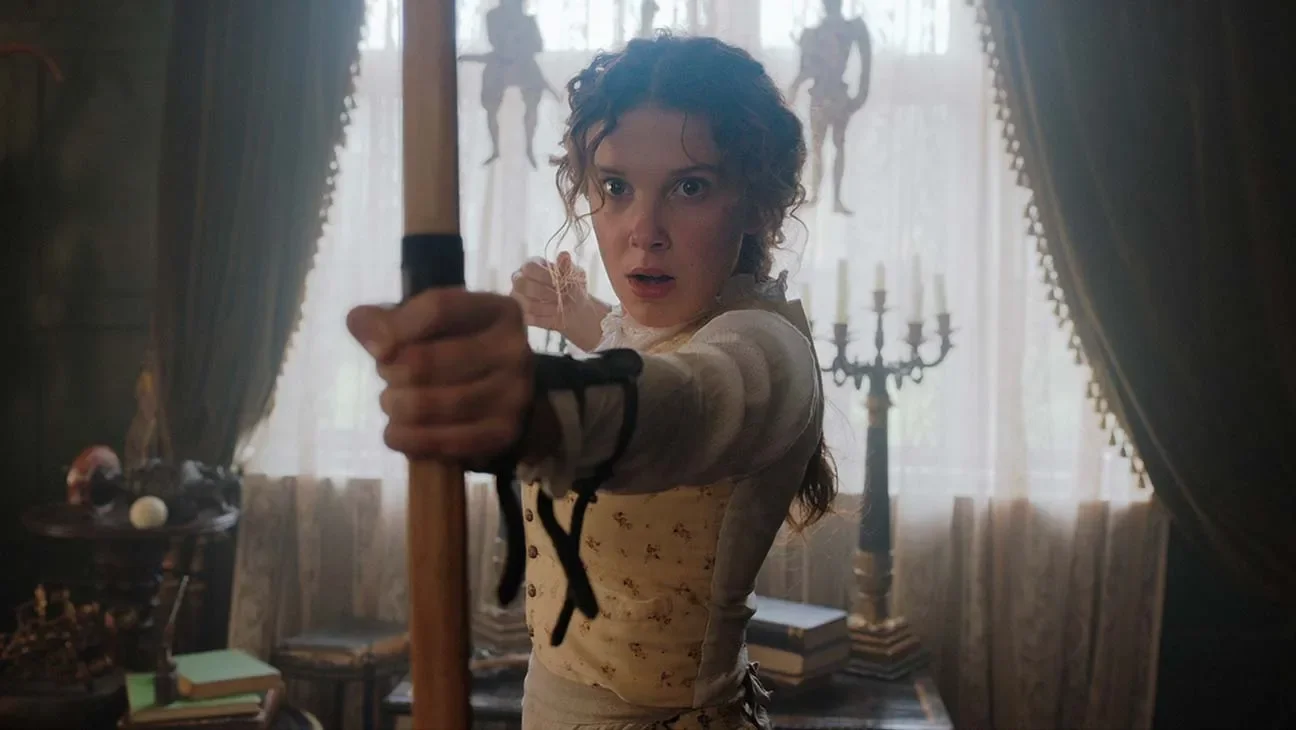
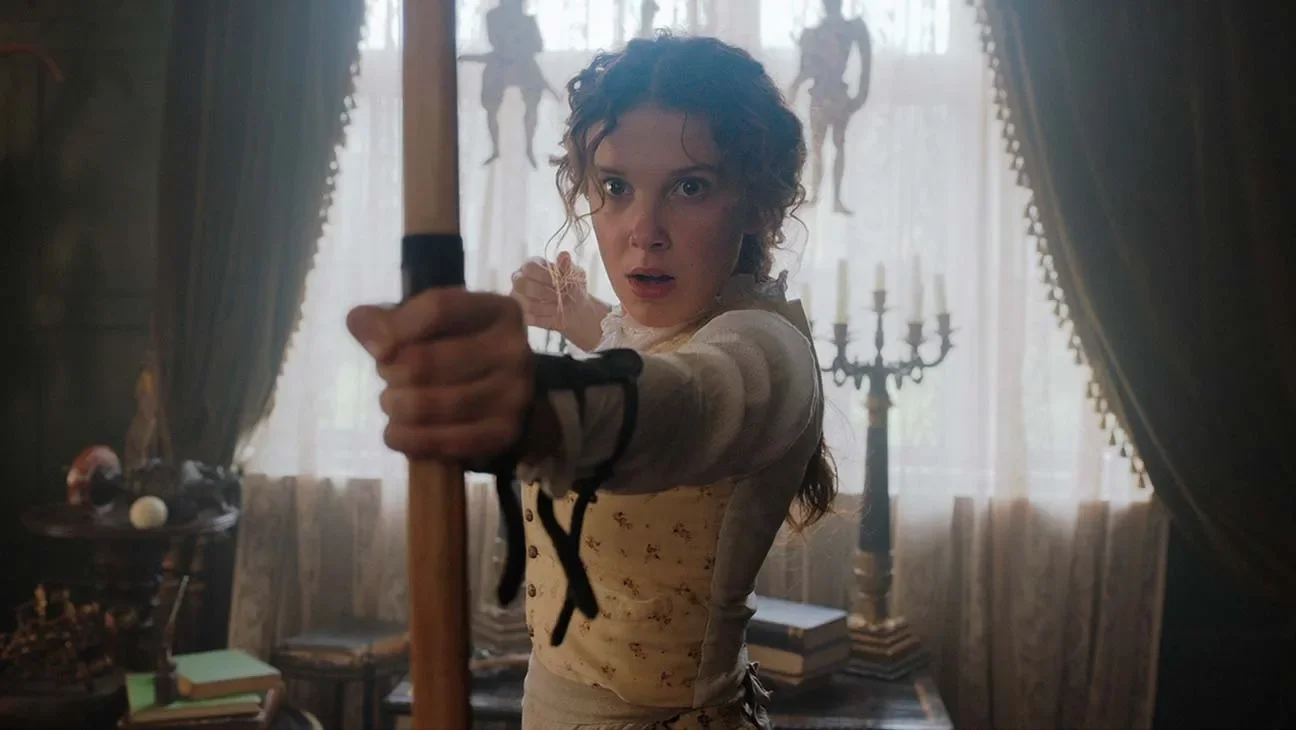
Enola Holmes is an energetic, charming adventure that investigates divided loyalty and the power of taking one’s own path. Millie Bobby Brown, playing her first lead role in a feature, brings plenty of charisma to the title character in an empowering narrative about self-discovery, family ties, and the wrestling for succession in a changing world. Set in 1884 England and based on the book series by Nancy Springer, the film tells the story of free-spirited teenage Enola (Brown) on a mission to follow her own path. Her sleuthing skills are put to the test when she discovers that her mother (Helena Bonham Carter), who raised her to be independent, has disappeared.
Left alone, Enola sullenly finds herself under the wing of her brothers Mycroft (Sam Claflin) and Sherlock (Henry Cavill), both of whom have not so much even written to her since they last saw her many years ago. The brothers decide to split up their responsibilities - Sherlock will solve the case of their mother’s disappearance, while Mycroft will keep Enola under control. His idea of caring for his little sister is to ship her off to finishing school, where she can become a “proper” girl defined by domestic responsibility. In true free spirit, Enola outwits them both and embarks on a London-bound journey to solve the case herself, while fending off those trying to reign her in and stumbling upon a new mystery along the way. On her travels, she becomes entangled with young Lord Tewkesbury (Louis Partridge), on the run from his seemingly domineering family. She at first dismisses their train encounter, but upon discovering that his life is in danger, she narrates her inclination to help someone who doesn’t have the strength to help himself. What begins as a life saved turns into a case of divided loyalties and succession within a family bracing for a country on the brink of change.
The closer Enola gets to finding her mother, the more imminent the danger looms above Tewkesbury, and the story shifts gears at a crossroads. Enola breaks the fourth wall, which she does often throughout the film, to declare that her mother can wait as this silly boy needs more urgent help. The shift feels disappointing at the time it occurs, mainly because up until this point the screenplay has done a splendid job establishing the mother-daughter relationship. There are many charming little sequences of Enola finding herself in situations that we see mirror memories with her mother, stressing all the lessons learned as a child that she can now apply in real life. Plus, the two actresses are wonderful in their roles, more so Brown who totally captures that energetic zest for independence and carries the film on her shoulders. I wanted the story to continue in that direction. But with the film’s conclusion and in retrospect, the shift pieces nicely together as part of the narrative.
The Tewkesbury mystery bits don’t leave for a particularly groundbreaking discovery, and the familial storyline is not nearly as intriguing as Enola’s. While the film lacks in that respect, it’s refreshing in a number of different ways. The familial tie to Sherlock (solid work by Cavill) doesn’t overshadow Enola’s journey as a detective in her own right. What’s also refreshing to discover is the way in which the film depicts her mother's whereabouts, avoiding a typical buildup to a reveal. There are much more satisfying reveals during the actual search, which paint a bigger picture of who her mother is and what she’s fighting for. Reveals are in detailed moments, whether it be a neat closeup of a woman’s suffragette meeting poster or a wonderful jiu-jitsu meeting between Enola and her mother’s friend Edith (Susan Wokoma). The breadcrumbs left behind all come together in HBC's final scene with Brown, an emotional moment of growth between mother and daughter. In searching for her mother, Enola follows breadcrumbs to self-discovery and female empowerment. In her mother’s words, there are two paths she could take. Hers, or the path others choose for her. Enola chose hers. Her life is her own, and the future is up to us.
‘Kajillionaire’ Review
September 28, 2020
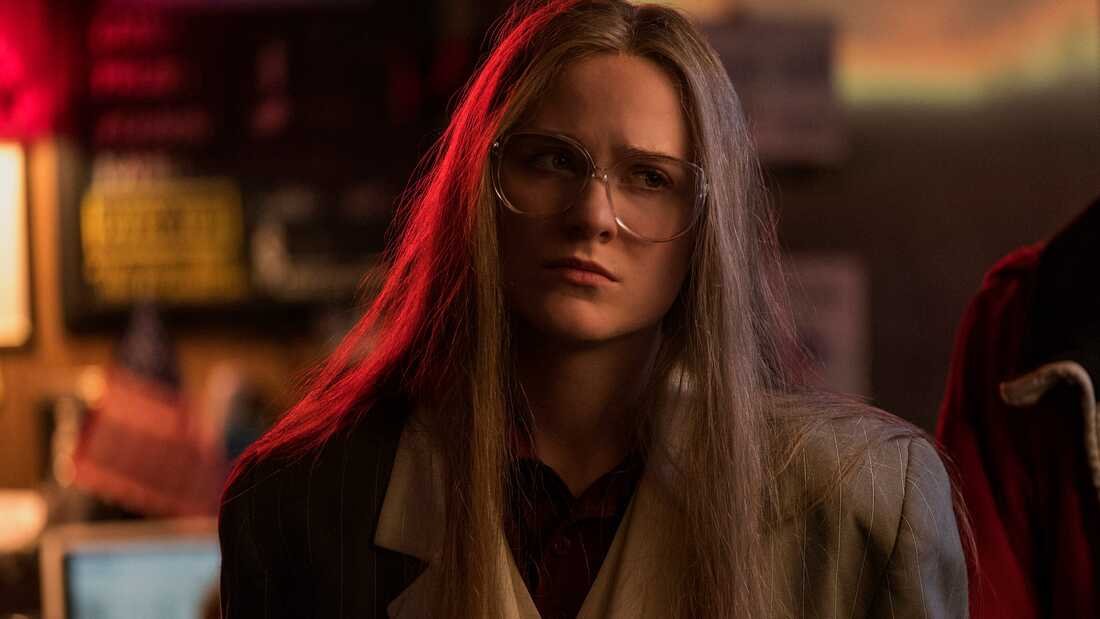
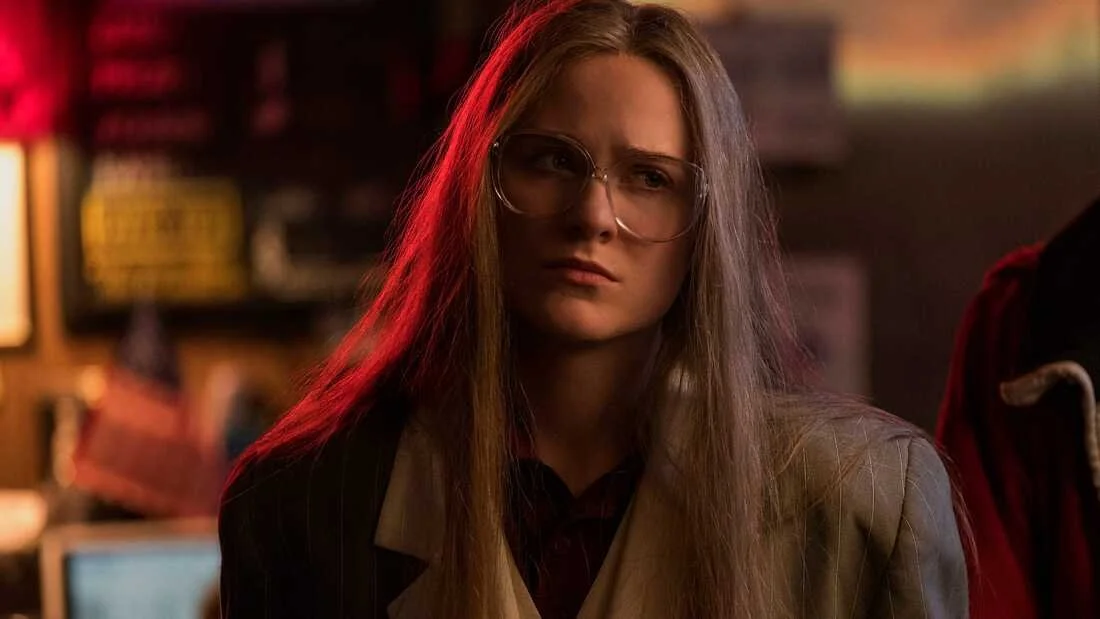
From writer/director Miranda July, Kajillionaire is a wonderfully offbeat story of unexpected human connections and bonds. July’s comedic drama paints a moving picture of con artists, reparenting, romance, and rebirth. At the center of the story is a peculiar family - con-artists Robert (Richard Jenkins), Theresa (Debra Winger), and their daughter Old Dolio (Evan Rachel Wood). They all live in a leaky one-bedroom office/apartment in a bubble factory. Robert and Theresa have spent years training their only child to scam and cheat at every opportunity. Old Dolio learned how to forge before she knew how to write. They are determined not to let her fall into the societal trappings of dreaming for more. “Most people want to be kajillionaires…that’s the dream”, Robert says. “That’s how they get you.”
The scams are small at first (stealing mail; “finding” lost items in the hopes of being rewarded). When the family are given 2 weeks to make up months of rent, however, they are pushed into a $1500 corner. During a desperate heist to pay the rent, they charm a stranger into joining them, only to glide into unexpectedly personal encounters along the way. The film is an emotional heist story unlike any mission impossible. July creates a family of characters who have a detached view of life and so for them, letting go comes easily. They can leave people, places, and things behind without any form of innate personal attachment pulling the strings. But that all changes with the stranger encounter from a hastily planned heist. The plan: fly to New York together, fly back as strangers, and claim a lost baggage fee for Old Dolio’s “missing” luggage. Robert forces small talk to get through turbulence, one of few hints at who he is as a person. Old Dolio’s parents are mysterious figures; it’s unclear what their backstories are and how they came to live the way they do. But not knowing adds to the appeal of these characters, the actors’ performances, and the film. July plays on the unknown so well. Jenkins, Winger, and Wood are wonderful in their roles. Something about this world pulled me in and I can’t explain why.
While on the plane, Robert and Theresa meet Melanie (Gina Rodriguez), a talkative eyewear salesperson who is in her own way entranced by the family. As Old Dolio reluctantly watches on from a few seats behind, her parents manage to bring Melanie into the scam, and Melanie is game. When the heist falls short upon landing - the lost baggage cheque could take as long as 6 weeks to arrive - Melanie comes up with an idea. Visit her elderly clients and coerce them into selling their antiques, which the family can then resell. Melanie comes out of nowhere almost as a knight in shining armor, not particularly for the family but for Old Dolio, whose reluctance to let her in is met with Melanie insisting on getting closer. The relationship is an intriguing dance of emotional tension that plays out brilliantly the closer they come to a personal understanding.
Old Dolio expresses herself in such a guttural way, often reacting in sound and movement. Evan Rachel Wood does such a wonderful job at playing this character from the inside out. Everything she does is a reflection of her mental state of mind. Her wishful yet detached thinking is the beating heart of the story. From Old Dolio’s point of view, life is neither here nor there. Instead of having grown attached to life, she’s ready for when her time is up, which could be any given moment. There’s a standout sequence that takes place at one of Melanie’s elderly client’s home. Abe, a no-show for his glasses pickup, lives alone on his deathbed. Melanie and the family trio arrive to a shell of a home, and Abe has some requests to make things seem alive again. Abe and Old Dolio share a moment together, as a result of a new plan the family hatch when the antique selling goes kaput: look for elderly people’s cheque books, forge the signatures and cash the cheques. Unbeknownst to all, he’s dying, and doesn’t want to do so alone. So Old Dolio stays with him, assuring him it’s okay to let go, because life is nothing. He wants them to watch TV, clink silverware, and make small talk. Old Dolio and her parents play house, which feels clearly like a put-on as these characters are not used to the cozy ‘How was your day, sweetheart?’ setting. In fact, her parents don’t call her sweetheart, or hon, or any comforting words. They’re quicker exhibiting such behaviour to Melanie, a stranger, than to their daughter. So the gravitational pull that happens between her and Melanie begins to chip away at Old Dolio’s sense of duty to her family.
What makes Kajillionaire work so well is its depiction of unexpected connections between people, and the wave of emotions that are conjured up in response. July touches brilliantly on themes of birth and rebirth, parenting and reparenting, another chance at living within the one life we get, and the pangs of regret from not getting it right the first time. A gorgeous, evocative score by Emile Mosseri compliments the story perfectly. Another standout sequence, in the final act of the film, is a family dinner scene which comes after an unfortunate truth about Old Dolio’s parents is revealed (or rather, reinforced). Robert gives a rare glimpse into his emotional regret that he and Theresa didn’t treat their daughter like a child during her childhood. While the love that exists between Old Dolio and her parents is not expressed, she has internalized their way of loving. “We can only ever be how we are,” she says as if speaking for them, “but we love you, and we wish you well.” I felt a part of the con from the beginning up until the very last scene of the film.
‘The Lost Daughter’ Review
December 30, 2021
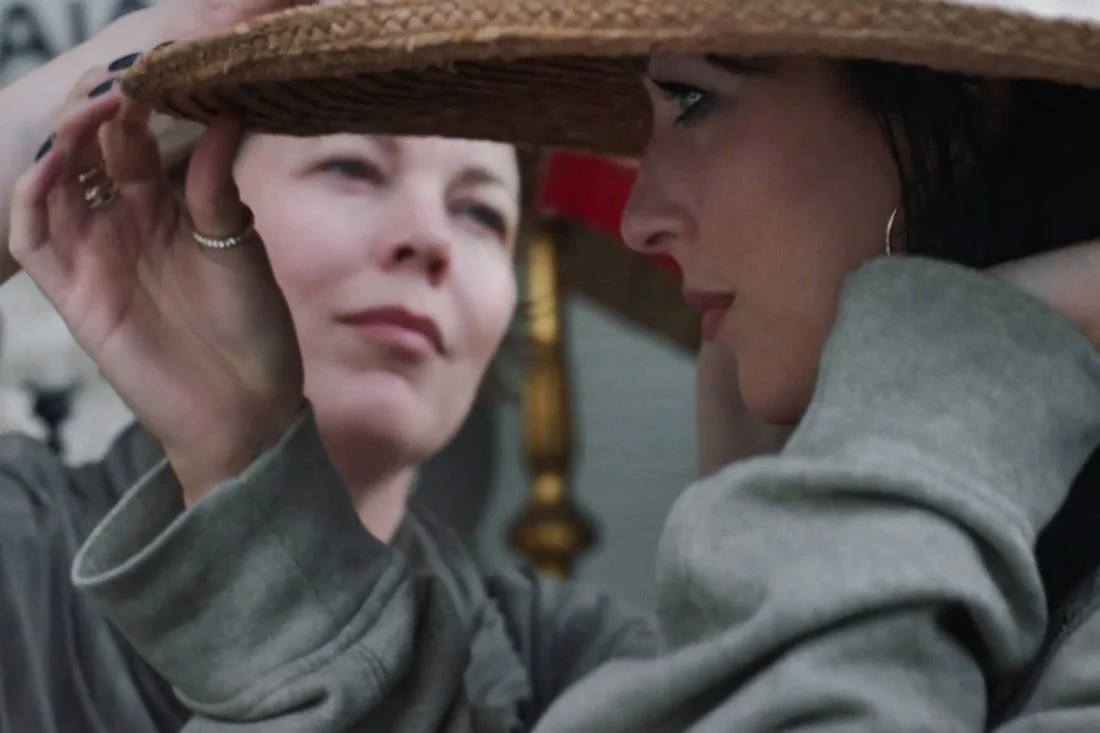
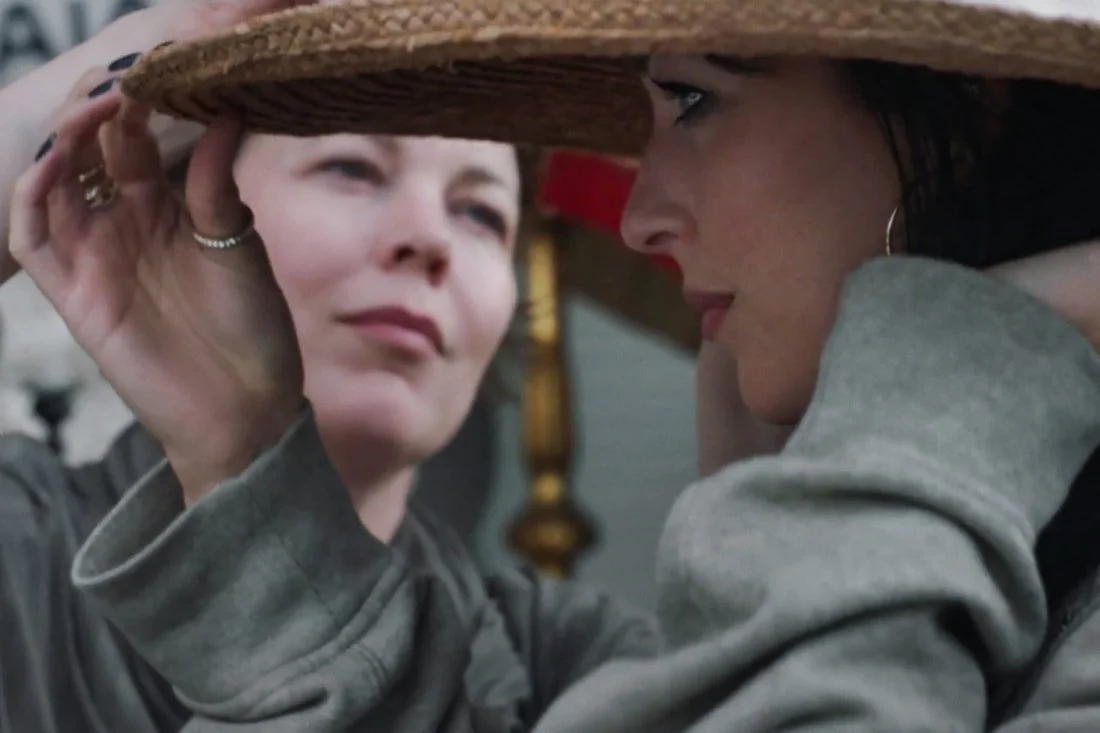
It’s rare to see portrayals of women onscreen that are not glossed cookie-cutter versions of themselves. In Maggie Gyllenhaal’s directorial debut feature, The Lost Daughter, there is no one way to be. There are no shallow aesthetics or inhibitions in that regard. Her film lives inside the mess of conflicting human emotions. Based on Elena Ferrante’s novel of the same name, The Lost Daughter challenges what a woman should look like, how a woman should behave, and the feelings that are eternally tied between mothers and their children. It’s one hell of a story, a deeply sensual and perceptive exploration of motherhood from the unconventional lens of a meditative filmmaker. Deliberately straying from the many glowing depictions of motherhood often painted onscreen, The Lost Daughter voices the messiness; the ugliness, the crushing responsibilities, the flirtation with personal gratification. Characters have the urge to let themselves be swept far away into the sensation of solitary liberty. Gyllenhaal has such rich material to work with and is completely unafraid to play in the realm of uncomfortableness. The Lost Daughter is truly haunting, every bit nightmarish as it is dreamy.
With a cast that includes such talent as Olivia Colman, Jessie Buckley, and Dakota Johnson, not a moment on screen is deprived of compelling action. Colman delivers her most fascinating performance to date, saying a lot considering the impressive work she’s amassed for years. Colman plays the protagonist Leda, a revered English professor and mother to two children. Whilst on a beach holiday in Greece, she anticipates peace and quiet. Soon enough, Leda’s seaside paradise takes a dark turn after encountering a large brazen family, whose presence provoke secrets from her complicated past to wash ashore. Gyllenhaal’s exploratory direction captures the weight of feelings left unspoken for so long, that one seemingly inconsequential event can unravel threads in the protagonist’s mind. The family caught in the troubles of Leda’s memories include young mother Nina (Dakota Johnson), trying to relax while caring for her daughter Elena (Athena Martin Anderson). After Elena gets lost temporarily, the experience of finding her becomes a tipping point for Leda. Her early years as a mother unravel through flashbacks, starring a brilliant Jessie Buckley as the younger version of the character.
The Lost Daughter transitions often from past to present, shedding light on the psychological journey the film goes on from Leda’s perspective. The flashbacks focus on a harried Leda, overwhelmed with motherhood and on the verge of a breaking point. Buckley’s remarkable performance as young Leda makes connecting the dots to present-day Leda all the more commanding. Combined with Colman’s performance, it makes for an intriguing character study with two actors at the top of their game exploring an unsettled psychological confrontation. With both time periods telling an equally interesting story of repressive imperfect emotion, the film is a triumph from start to finish. Besides Leda’s inner voice, there’s also her present-day interactions with Nina that further lift the story to a compelling meditation. Johnson has a strong screen presence, and her playing Nina is a fantastic example of casting done well. Nina’s presence in the film takes ahold of Leda so unexpectedly, and Johnson’s mystique as an actor spills into their exchanges making them all the more thought-provoking. You never really know where their interactions will go next, and by the end, there’s plenty of pondering where the characters will go from there.
There's a recurring image in the film of peeling fruit like a snake. It's a source of nostalgia for Leda, and her daughters as shown in flashbacks, to peel fruit in its entirety without ever breaking into pieces. Gyllenhaal makes use of this imagery just enough without it ever feeling like a forced kind of symbol. It's a great little detail that adds more to ponder on. Gyllenhaal’s direction has such a dreamy rhythm, with lingering closeups and windswept trailing of characters from one moment to the next. She brings an unflinching approach to ambiguousness and unpleasantness. There’s a strong sense that, at any given moment in this ode to motherhood and womanhood, it could all be a terrible nightmare the protagonist will one day wake up from. That one day, the peel will break into pieces, the continuity will end. So much is at stake through the performances; Colman, Buckley, and Johnson each bringing their characters to life in such genuinely intimate ways, utilizing the strengths of acting through physicality. Colman and Buckley in particular are an interesting mirror to one another, both as well a reflection of wonderful and sensory direction. The Lost Daughter is a vulnerable, powerful debut by Maggie Gyllenhaal, whose adaptation of Ferrante’s novel is among the most thought-provoking book-to-screen ventures.
The Lost Daughter arrives December 31 exclusively on Netflix.
‘Belle’ Review
January 14, 2022
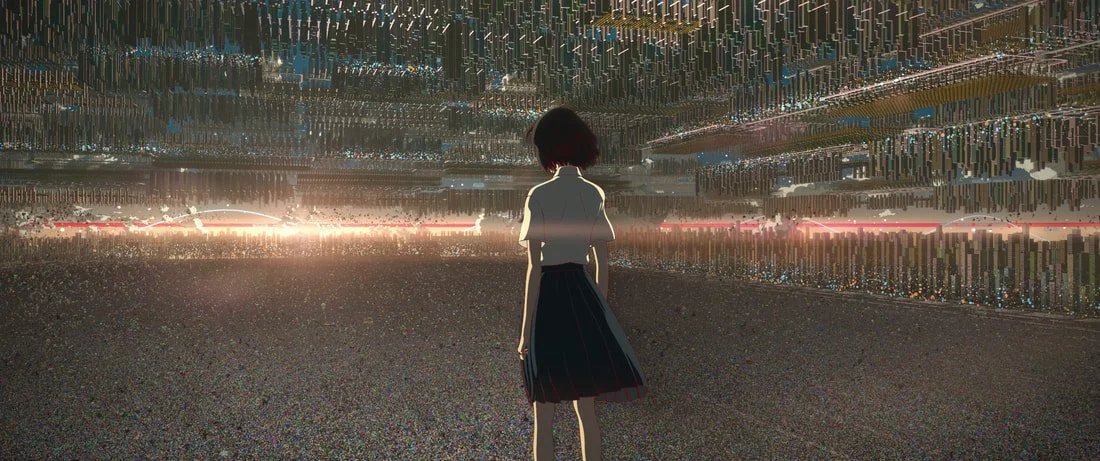
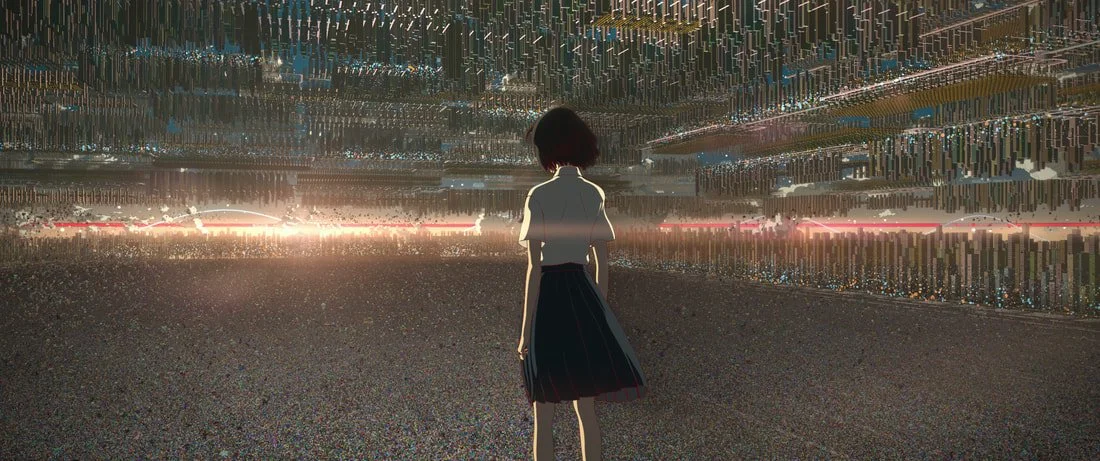
The gorgeously animated Belle explores the consuming experience of not just having digital platforms as a part of life, but living life inside of one. Writer-director Mamoru Hosoda unveils U, an empowering virtual reality in which people become avatars and vie for popularity among millions. U is a place where anything is possible and anyone can become who they want to be, or at least, who they want to present to the rest of the world. For 17-year-old Suzu, the film’s protagonist, U is an alternate reality away from personal grief and loss. In a remarkable marriage of reality and virtual reality, the story draws out the beauty of making meaningful connections from a digital world. With hints of inspiration from Beauty and the Beast, the film feels like a cyber fairytale. The stunning animation, contrasting virtual reality with the serenity of nature’s landscapes, adds remarkable dimension to the dueling worlds at play in Belle.
The story follows high school student Suzu (Kaho Nakamura); she lives in a rural village as a shell of her former self, following a tragic event years earlier. But when Suzu joins the massive online world U, she becomes her persona Belle, a singing sensation who takes the platform by storm overnight. Belle is a transformative figure for Suzu; for one, Belle’s image encompasses an epitome of “standard” beauty and further reinforces a perfected, idealized version of self. From Suzu’s perspective, Belle mirrors the prettiest girl in her class, and amasses fans greatly outnumbering her own friends. As well, Belle’s voice in the virtual world draws from Suzu’s hidden talent in real life. U is where Suzu is able to sing the way she used to, helped by her tech wiz friend Hiroka (Lilas Ikuta) and the instantaneous love coming from millions of viewers. But not all are intent on keeping up appearances and carrying on with the show. One of Belle’s highly anticipated performances is interrupted by an avatar notoriously known as The Dragon (Takeru Satoh). The Dragon is chased out of the performing arena by vigilantes, who’ve been trying to unmask the avatar and consequentially reveal the person behind the screen to keep order in U. The Dragon and Belle cross orbits in the chase, inspiring Suzu in the real world to dig up details about this mysterious avatar and answer the many questions swirling in her mind. The journey leads to an emotional exploration of truth, the reverberating power of being vulnerable and sharing one’s self in a world full of anonymity.
Mamoru Hosoda does a wonderful job conveying the double edged sword of anonymity in the digital age. How it gives rise to cruelty without consequence, how it offers escapism for those searching for another life to exist in. On a more positive note, how it sees strangers band together to carry acts of justice, rallying around those in need of support. The film has a strong balance between all the mixed emotions from being a product of this digital world, and trying to find sources of real intimacy from behind the virtual facades that people put up. Hosada strikes a fine line between emphasizing a fantasy world and getting lost in it. With a refreshing perspective, he is actually pushing the story closer and closer to truth. The more this film unfolds, the less artificial it becomes.
At its core Belle is a story of compassion and selflessness in the face of struggle. It’s clear with every direction, and all roads lead to the film’s protagonist. Her traumatic past is the bridge between real life and fantasy. Belle merges not just virtual reality and real life, but also Suzu’s past and present. Her most cherished, and most painful memories, along with her hopes for the future. It’s interesting to learn more about her character through the good and bad of the online world, and through her developing a relationship with The Dragon whose identity she grows more protective of. The journey of these characters is an empowering one, about finding your voice and standing in your own truth. Suzu is able to unlock the power she holds within, and work through her grief by sharing a vulnerable part of herself. And when this moment comes in the story, it’s truly one of the most beautifully crafted scenes on film, animated or otherwise.
The teensy bit of inspiration Belle lifts from Beauty and the Beast is enough to evoke familiar imagery, but not enough where it becomes a rehashing, or overtakes the central focus of the story. Hosoda engages with many trains of thought and never resorts to the classic fairytale as a fallback. Instead, his search for something authentic and truthful in the shimmering, pixelated world of U carries this film down the road of goodwill and how such a thing may be amplified in a digital age to reach those in need from afar. Belle is a dazzling achievement with as much heart as finesse for the craft of animation. The trajectory of this story packs an emotional punch to the gut, reminding the power of human emotion in a world of ever-increasing technological advances designed to chip away at what makes us human in the first place.
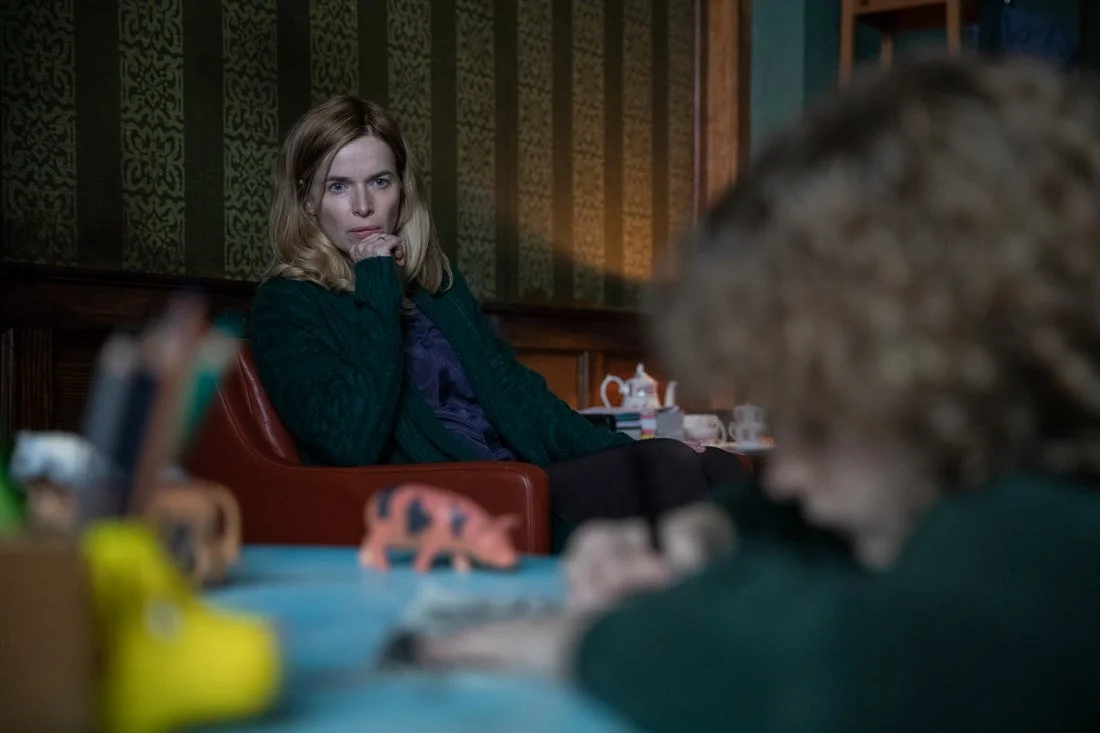
‘Marionette’ Review
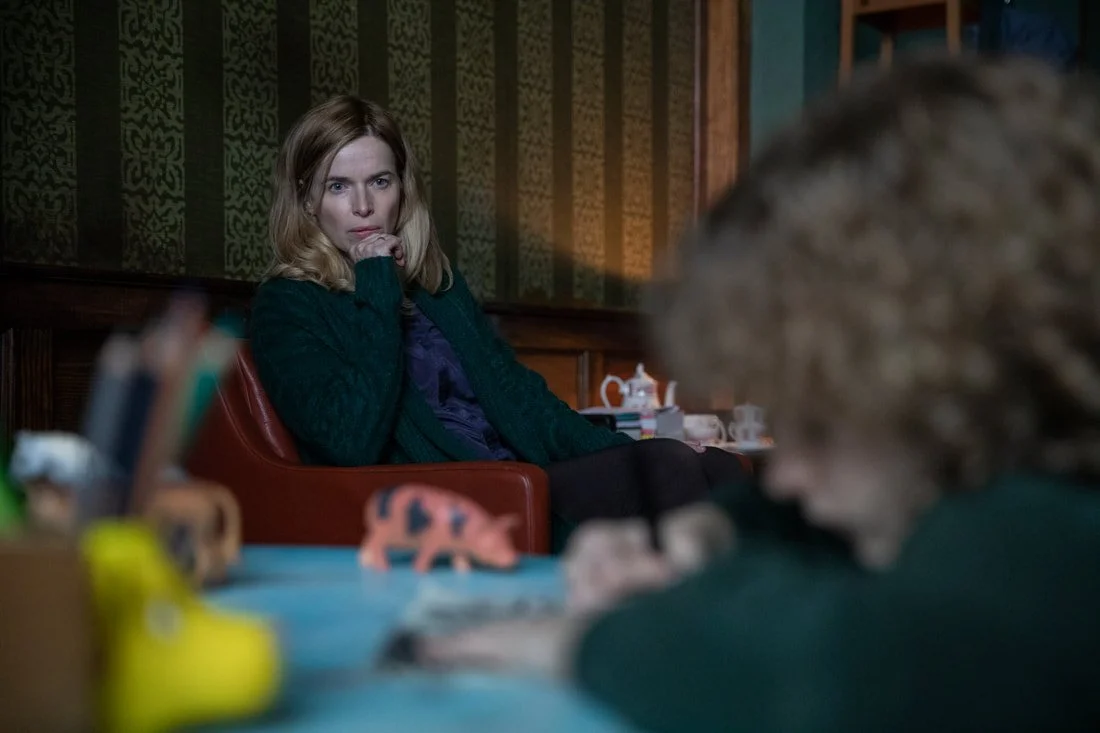
January 21, 2022
One of the ill-fated characters in Elbert van Strien's film Marionette explains that his purpose in this story is to stop the protagonist from thinking. “Don’t think; that’s where all the troubles begin.” Unfortunately this sentiment seems to have overextended to the filmmakers. For the way Marionette unfolds skirts on the surface of its premise and doesn’t delve deep enough to make a resonating impact on the viewer. Marionette tells the story of therapist Dr. Marianne Winter (Thekla Reuten), whose world falls apart when ten-year-old Manny (Elijah Wolf) claims he can control her future. Marianne’s beginnings are somewhat promising; the film introduces her on the move to Scotland. In an attempt to leave behind the residue of a traumatic event, she’s hopeful for a fresh start in life. However, another nightmare is waiting for her in Scotland, as the grey skies and moody atmosphere amplify. Marianne attempts to settle in her new job, the replacement for a children’s psychologist, and meets a troubled child whose drawings hold a strange power. Marionette ponders on the threads of discussing fate vs. free will. Who is pulling the strings of one’s life? How much power does one individual really have to change their own trajectory? Despite how open-ended such questions are, the film leaves nothing to the imagination, instead indulging in one ‘psychological thriller’ cliche after another.
However intriguing a concept is in theory, put into action without focus is another story. Marionette feels directionless; it’s a mystery to solve what van Strien is wanting to say, beyond blatantly pointing out the ‘marionette’ concept at any opportunity. Not much time is given for the viewer to feel connected to the protagonist, and get to know more about her. Marianne is very much in service to a lackluster plot. For a little while, the film begins with the promise of slowly introducing characters as pieces of a puzzle, each one potentially revealing more about what situation Marianne has gotten herself into in Scotland. But the promise for something intriguing quickly dissipates. The film is shrouded in mystery; not in the way that invites curiosity and encourages wonder, but at a level that’s puzzling and frustrating to surrender disbelief to.
Marianne is encouraged to entertain a fresh start; with a new job, a potential new companion, a new setting, the story sets up a whole other universe for her. Though much gloomier than the warm and fuzzy flashbacks she occasionally has of a past life. In Marianne’s new life, she is encouraged by colleagues not to go digging or ask questions, despite one child in particular exhibiting some disturbing behavior. The child is attracted to disasters like a magnet. His pictures each represent a horrific event that becomes real when he finishes drawing them. Like marionettes controlling puppets, these drawings seal fate on paper. The concept tries to create a narrative from the cliché often seen in horror movies of children drawing scary, alarming pictures meant to alert their guardians that something is wrong. But the film operates from a level of presuming the story is far cleverer than it is.
Marionette moves ten steps ahead of the story, and tacks on unnecessary narration from the protagonist spelling out what’s going on, which takes away greatly from the mystery of how the film will unfold. Muddled dialogue does the actors no favors; decent as most of them are, any sense of mystique is weighed down by an over explanatory screenplay. Unfortunately what’s left is an underwhelming piece of storytelling that buckles under the over reliance of its ‘marionette’ concept. Rather than see the story through with a coherent plot, van Strien spells out every twist and turn along the way. Ultimately taking the wind from its sails and leaving little to no room for the stakes to feel real.
Marionette is now available to watch on VOD.
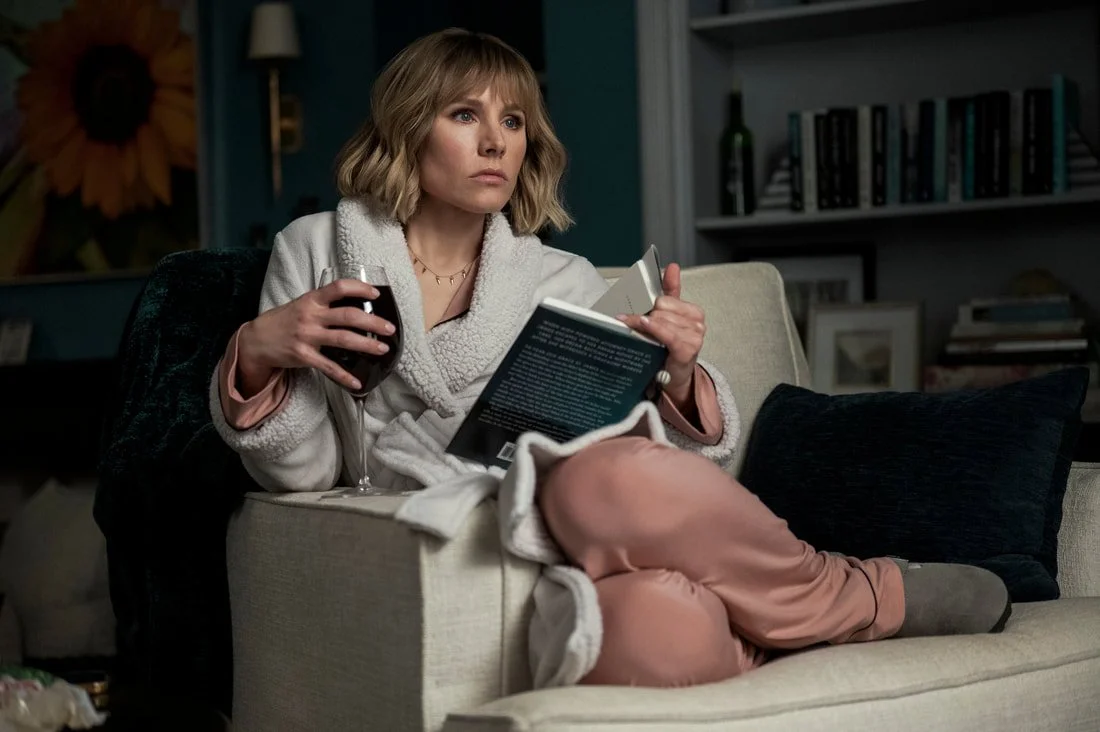
‘The Woman In The House Across The Street From The Girl In The Window’ Review
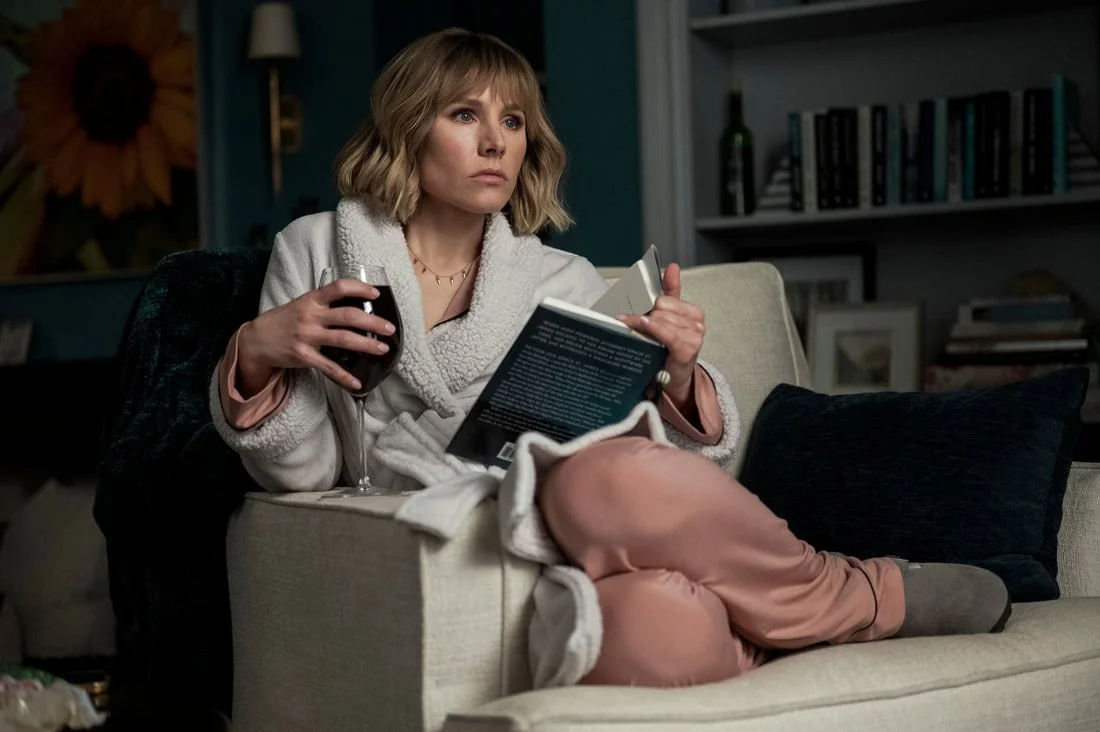
January 26, 2022
The line between sincerity and satire is very thin in the adeptly titled Netflix limited series, The Woman in the House Across the Street from the Girl in the Window. Starring and executive-produced by Kristen Bell, The Woman in the House (for short) is a smattering of psychological thrillers that center on “the hysterical woman,” one whose eye witness accounts of crimes are chalked up to “just imagining things”. Series creators Rachel Ramras, Hugh Davidson and Larry Dorf stretch this plot device to eight thirty-minute episodes, each throwing a wrench in expectations. So much is at play in the story, filled with subplots as extra as the series title. In a pile of twists and turns thrown at the viewer, The Woman in the House finds what works and delivers it on a tightrope. At first, it’s a mystery whether the story will fully lean into its satirical slant, if it will surrender to absurdity or carve something more ingenuous from the chaos. The series pokes fun at all the tropes and cliches to be found in its derivative material. The creators also find interesting points to chew on that speak to the addictive quality of psychological murder-mystery stories, and what keeps the viewer hungry in anticipation for a new reveal. The earlier episodes stumble most from standing out amongst the very stories they satirical aim at. Once the screenplay finds its groove, though not particularly memorable in afterthought, it’s easy to fall down the binge-worthy rabbit hole of The Woman in the House.
Every night, Anna (Kristen Bell) fills up her glass with wine and cozies up on her sofa by the window, watching the lives of others while hers stays the same. Anna suffers from Ombrophobia, a fear of rain originating from a personal tragedy involving rain. The extreme anxiety attacks keep her inside most nights as a precaution in case skies turn grey. But when neighbor Neil (Tom Riley) and his daughter Emma (Samsara Leela Yett) move in across the street, possibilities light up for Anna. Perhaps a fresh start, a new relationship…a picturesque family to fill the void following a traumatic experience. Stepping outside becomes a little easier. A future seems within reach, until one night she witnesses a murder. Or did she?
The age-old question in countless psychological thrillers, ones that portray women’s experiences as hallucinations, that everything they see is actually all in their head and not a serious threat in real life. Most recently, Joe Wright’s adaptation of The Woman in the Window epitomizes the “hysterical woman” not to be trusted, using its protagonist’s mental illness as a means of discrediting her experiences. This is just one of many familiar threads The Woman in the House touches upon, in a way that combines satire with straightforwardness. There’s a wink and a nudge to cliche, and beneath that, a trusting quality towards the protagonist. After Anna witnesses a murder and tells people what she saw, the responses are excessively and expectedly skeptical. Anna’s point of view is deliberately shrouded in hallucination and making the viewer question what is real. But with each episode, the series further stresses there’s a nugget of truth to her perspective. At first it’s not clear which direction the creators want to take. Will the creators fully lean into the satirical slant? Are they trying to find something fresh from a mishmash of repetitive psychological mystery plot devices? The Woman in the House is a bit of both, and while it takes some time to find a happy medium, the absurdity of it all along with an ensemble of game actors make the experience entertaining.
Kristen Bell is an actress whose work is mostly unfamiliar to me, hit television shows Veronica Mars and The Good Place being the biggest blind spots. Bell finds plenty to have fun with as Anna, walking that tightrope of playing satire with utmost sincerity. Once a thriving painter, now finds herself drowning in wine and watching life pass her by, reading books like ‘The Woman on the Cruise’. The character lives vicariously through others, with a yearning underneath to somehow return to what her life once was. Bell perfects that duality and gives a performance well suited to the repetitive material. The dialogue moves amusingly in circles, with some vague inspirational quotes thrown in, saying a lot of words without actually saying anything. Bell and a strong supporting cast know exactly what they’re in and deliver fun performances, flipping multiple sides to their characters and adding intrigue to the story.
Each episode uses subplots as building blocks, finding so many variations of similar material as the title clearly references. Yet there is still something about this psychological mystery storytelling that makes it easy for the viewer to feel invested and stay for the reveals, of which the series has plenty. Being glued to the screen, for answers to a story soaked in silliness, speaks to its binge-power. Is there much to ponder and chew on when it’s all over? Not quite, but the creators earn their chuckles along the way, indulging in the twists and concluding with their juiciest reveal. The creators have the last laugh with The Woman in the House Across the Street from the Girl in the Window. Keeping the viewer guessing and present in the moment, it’s a series best to binge and enjoy the ride, with a glass of wine or two.
All episodes of The Woman in the House Across the Street from the Girl in the Window arrive January 28 on Netflix.