
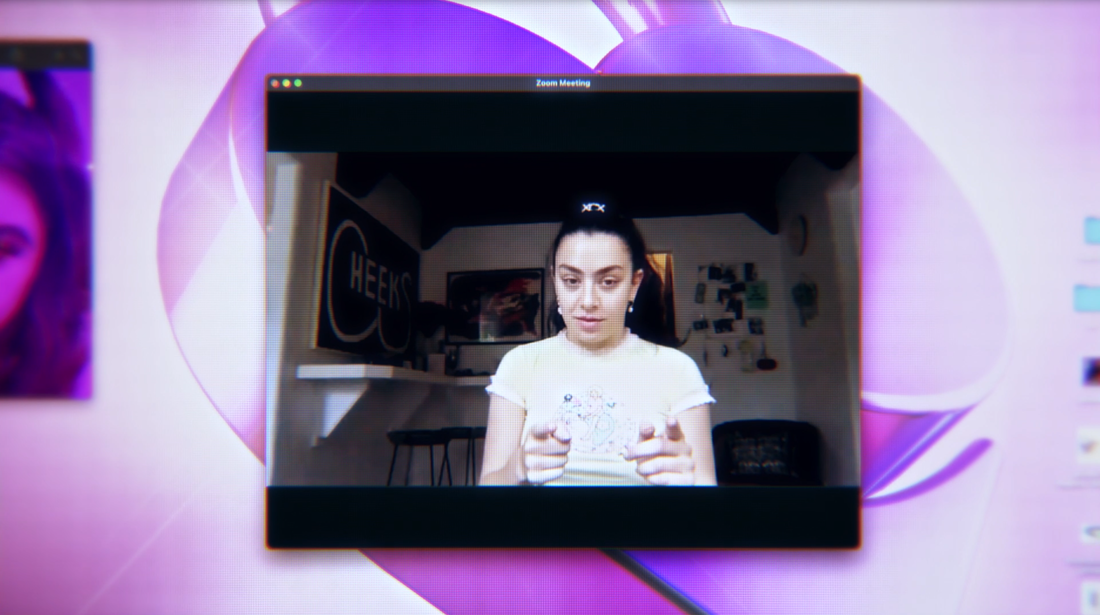
‘Charli XCX: Alone Together’ Review
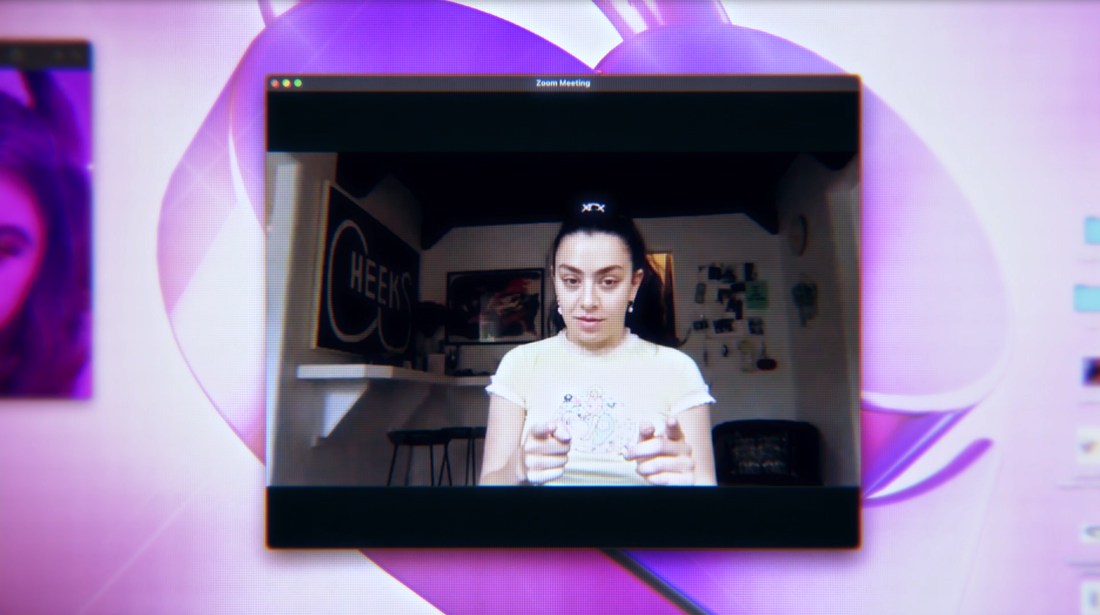
February 23, 2022
Social media is full of countless pitfalls; from the perpetuation of unrealistic expectations, to a manufactured online presence that cherry-picks the greatest aesthetic hits. The silver lining in this sensory overload is the space given for people to find a sense of community and belonging. There will always be a yearning for human connection, made even more apparent over the past few years of collective isolation during a pandemic. Music can be that strengthening tool to bring people together from around the world. Whether one is a fan of a particular artist or not, the influence many of them have on people is crystal clear. In Bradley Bell and Pablo Jones-Soler's documentary Charli XCX: Alone Together, fans of the successful pop artist are in for an intimate vignette of her day-to-day process, where she creates her brand new album 'how i'm feeling now' in 5 weeks during the start of the pandemic. While this is a documentary about Charli XCX, her fans (known as Angels) are given just as much screen time, and the reciprocation of support makes this an endearing watch. The meshing of these perspectives sheds light on the artist’s impact on her fans, as well as her own insecurity in finding her voice and how best to share it with the rest of the world. Clocking in at 67 minutes, Charli XCX: Alone Together is a fairly enjoyable whirlwind of what goes into making an album during lockdown.
The most endearing part of this documentary is indeed the influence Charli XCX has on fans from around the globe. The journey of making a new album is for them; she invites Angels to be part of the creative process in real time, and opens herself up to constant feedback (and criticism). From curbing their enthusiasm and getting creative with a home studio, to the effects of isolation on mental health, the documentary touches upon plenty of subjects to maintain an interest all the way through. At the core, unwavering focus is brought to the connection between Charli XCX and her fans, as depicted in a wave of personal social media videos, messages of enthusiastic support and live interactions. The use of social media graphics throughout is a nice touch that reinforces the power of social media. Juxtaposed with words of encouragement from loved ones and fans, the documentary makes a point of stressing it is possible to find acceptance and form connections in the digital age we are all living in.
Beyond all the fanfare, Charli XCX: Alone Together addresses the question, what comes after success? When Charli XCX kicked off her first online tour in 2019 for her album Charli, she felt very much in control of her whole career in the pop music industry. Her beginnings were not carefully crafted; without having a particular goal or career plan, she just wanted to share her music with the world. It’s thoughtful to see how this sentiment repeats itself at a time when people are collectively isolated; that the artist’s response to isolation is to be creative and make things. The documentary briefly shows how Charli XCX comes to the decision to create a new album live in 5 weeks time, and getting fans involved along the way. At times Charli XCX: Alone Together feels more like a fan-made collection of videos than an in-depth look at its title subject. Sprinkled in between the fan videos is behind-the-scenes footage of her inner journey. The insecurity, the lack of creativity and fulfillment, the stress of not delivering her next album and trying to combat expectations. It would have been interesting to see a more candid approach at her evolvement as an artist in phases, and how she’s bene able to navigate industry experiences. There is a lot of sensory overload, from home footage and backstage glimpses to Instagram videos and news headlines. But once the noise settles, it becomes clear that the core of this documentary is being alone together. It’s about experiencing self-isolation as a collective through music, and the healing power music can have on mental health.
Beneath all the vignettes is the unity of listening to an artist you love with a community of people who share in your interests. There is an added layer of the world going through a pandemic. Of course, everyone is experiencing this crisis in drastically different ways, and many are in a privileged position not to be so severely impacted. The documentary makes smart moves focusing intently on the bonding power of music in a time when a lot of people are searching for a connection. This is an endearing documentary for Charli XCX fans, who get to see themselves reflected on screen through an intimate portrait of the artist’s music-making journey.
Charli XCX: Alone Together releases February 24 on Amazon Prime Video.
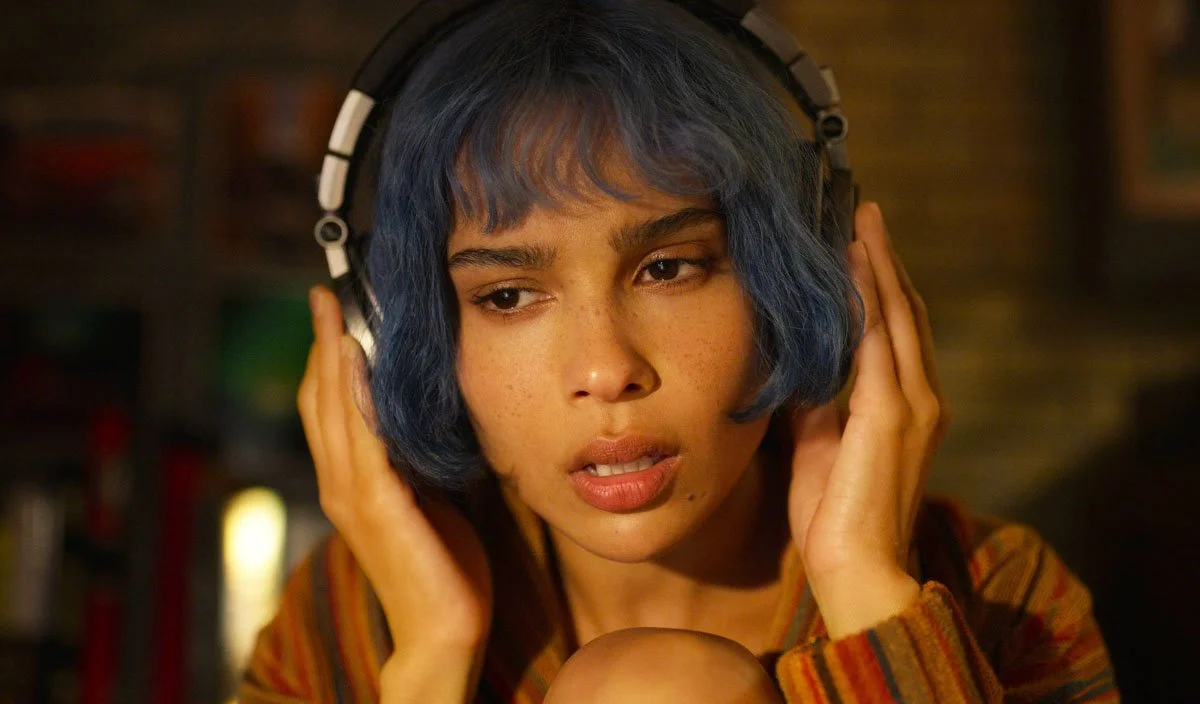
‘Kimi’ Review
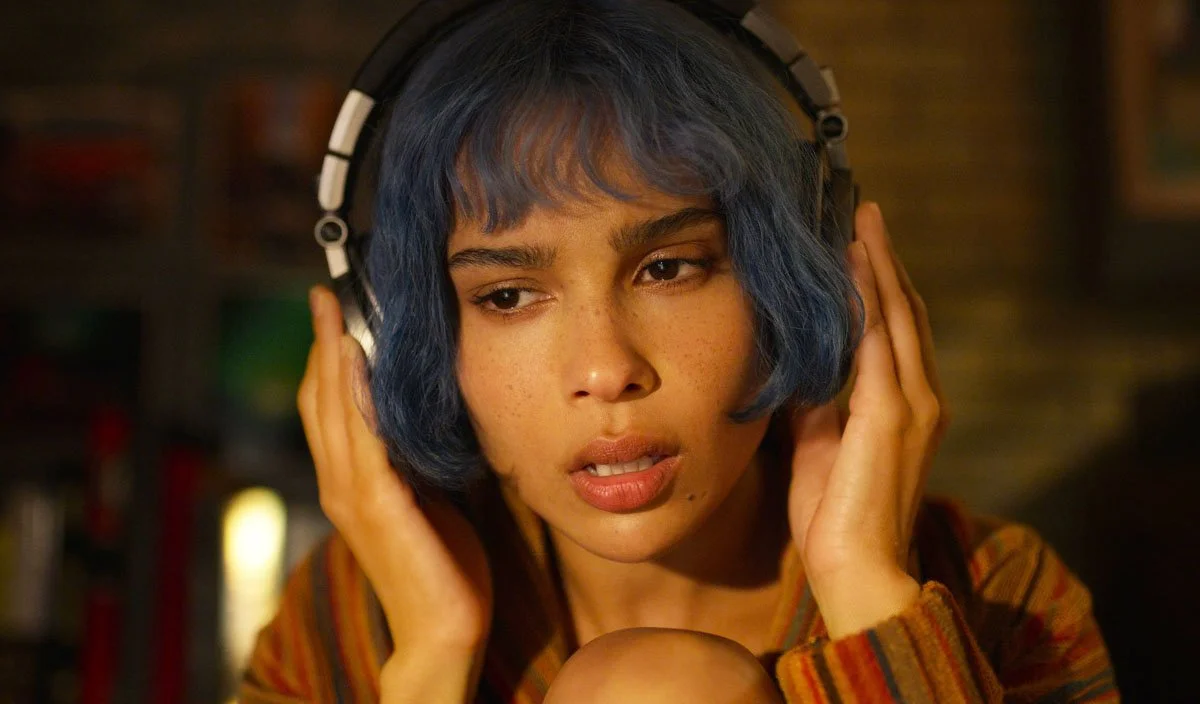
February 24, 2022
It comes at no surprise that the new film from one of the most consistently great directors in the industry is excellent. Given Steven Soderbergh’s track record and the sense of expectation when approaching his work, he still manages to bring an element of surprise to his films. His latest, a techno thriller called Kimi, is no exception. The experience of watching Kimi is like being caught in a nightmarish haze. Cliff Martinez’s gorgeous, dreamy score harkens back to Hitchcockian sounds, and heightens suspense. Zoë Kravitz stars as protagonist Angela Childs, an agoraphobic voice stream interpreter for a big tech company. Angela becomes unwittingly entangled in a series of unfortunate events. The real-life pandemic lingers in the background, just enough to recognize but works its way into David Koepp’s screenplay on such an organic level. Particularly relatable to the way many people are experiencing the COVID pandemic today, whether it be working remotely, or finding it difficult to rejoin the outside world. Beyond that, the increased feelings of isolation, frustration, and paranoia living in a forever-changed world. Kimi tackles so many subjects in delicately drawn ways, amplified through actions instead of overtly explained monologues. The plot sounds bare bones on paper; while listening to a stream picked up by a Kimi device (think Amazon Alexa), Angela (played by Kravitz) discovers evidence of a crime. She reports to the powers in charge and finds herself tangled in a much bigger spiderweb than initially thought. Taking justice into her own hands, she must leave her apartment to piece a dangerous puzzle. Kimi is an intriguing paranoia thriller for the digital ages, featuring a wonderful performance by Zoë Kravitz.
Leave it to Soderbergh to take a story that’s been done plenty before - expertly in the case of Francis Ford Coppola’s The Conversation, for instance - and still make the film flow with a fresh signature voice. The same can be said for Cliff Martinez’s score, which has hints of influence from composers such as Bernard Herrmann, but exists as its own unique and varied accomplishment. The film radiates this energy all around, with a compelling performance by Zoë Kravitz leading the way. From the writing, to the screen presence and precision Kravitz brings to this character, Angela Childs is a multi-layered role, perfect for a showcase of range. It’s always a treat to watch how the smallest of details can say so much about a character, and Kravitz relishes in such moments. From the scenes of Angela bracing herself to open her apartment door, to the impromptu conversations she shares with her mother. To see her agoraphobia portrayed in a thoughtful way, not as a big plot point but as something she has grown to live with, is a refreshing direction Soderbergh takes. Angela is an interesting protagonist and makes the story all the more intriguing to watch. Soderbergh first keeps the film at home base. A slow-build introduces Angela in her element, complete with an extensive WFH tech setup allowing her to stream and fix communication errors between Kimi and its users. Her day-to-day routine is suddenly turned upside down, when she overhears a violent crime on one of the recordings. A fight for justice brings Angela outside her home in the middle of a pandemic, to the office of tech boss Natalie Chowdhury (Rita Wilson). Chowdhury’s blatant dismissal of Angela’s concerns sparks a bigger conversation, and it’s clear Angela isn’t the only one listening.
In addition to being an engaging starring vehicle for Kravitz, Kimi is a great showcase of Soderbergh’s knack for being ahead of the curve when it comes to exploring certain subject material. The research he conducted when preparing for his 2011 film Contagion, a box office hit at the time which then became one of the most watched films of 2020, suggested an outbreak was imminent. On a whole other thread, the increase in remote employment and education during the pandemic has made it scarily easy for companies and schools to not only monitor work, but also control access. The virtual assistant device in Kimi shows the dangers surveillance technology poses on the privacy and safety of its users. Plus, the potential horrors if this information gets into the wrong hands. Having this possibility at the back of Angela’s mind brings a lot of tensity to the situation she’s in, especially in the second half when she takes justice into her own hands to find the pieces of a conspiracy puzzle.
Soderbergh excels at making Kimi feel fresh and exciting even with frequent nods to other films that have a clear influence. One of which is a fun throwback to the 90s classic Home Alone, given the casting of Devin Ratray (a.k.a. “Buzz”) in a supporting role named Kevin. The film plays on the subject of surveillance with the physicality of this character. He lives in the building across from Angela’s and appears to be watching her alone through his window from time to time, the intentions of which are revealed later. Home is supposed to be a place of protection and safety, but can also be one of fear when violated. Then there’s the added layer of COVID, the paranoia that has emerged with lockdowns, and the devastating effects on mental health. Rather than making this COVID-set film directly about the pandemic, Soderbergh zeroes in on the narratives happening in spite of it, because of it, along with it. The way Angela has grown to adapt at home, for instance, is an intriguing thread to follow. As is the potentiality of a relationship between her and Terry (Byron Bowers), a neighbor across the street with whom she tries to follow through with an outdoor date on more than one occasion.
Kimi is a taut techno thriller and Soderbergh’s best film in years, not exactly a knock against him given the decades-long consistency of his work. With a compact runtime, a brilliant score, and clever camera angles, Kimi makes smart moves in grabbing the viewer’s attention and maintaining it. Having a skilled performer at the center, Zoë Kravitz in a career-high performance as Angela Childs, keeps the journey of Kimi an engaging one. She carries the story on her shoulders and draws you in with an instant charisma, while precisely peeling back the layers of her character, each one more revealing than the last. A variety of interesting subjects are at play here, all of which are very much rooted in reality and the ever-present dangers of living in an increasingly advanced digital age. If you're not already side-eyeing your Amazon Alexa...
Kimi is now streaming on Crave Canada and HBO Max.

Year in Review: Best Films of 2021

February 27, 2022
2021 was one of the strongest and most exciting years in film. So many different stories have been etched in my memory, and plenty reflecting the times we are living in on fascinating levels. From Natalie Morales’ depiction of virtual platonic love in Language Lessons, and moral dilemma in Pedro Almodovar’s Parallel Mothers, to what makes humans so intricately human in Joachim Trier’s The Worst Person in the World. This year saw a variety of subject matter tackled by some of the greatest living directors, including Jane Campion’s long-awaited return with The Power of the Dog. As well, many first-timers brought exciting feature debuts to the screen; Emma Seligman’s Shiva Baby, Shatara Michelle Ford’s Test Pattern, and Maggie Gyllenhaal’s The Lost Daughter to name a few standouts.
Here are 25 of the best films of 2021.
25. The Electrical Life of Louis Wain (dir. Will Sharpe)
Gorgeous cinematography, a near-career best performance by Benedict Cumberbatch, a delightful Claire Foy, and a lot of cats. Will Sharpe’s portrait of a grieving artist has an enjoyable whimsical melody, endearing characters, and a strong sense of humour.
24. Bergman Island (dir. Mia Hansen-Løve)
Mia Wasikowska dances to ABBA’s The Winner Takes It All. But wait, there’s more! This story of a filmmaking couple who spend time on the island of Fårö (where Ingmar Bergman spent his final days) is an intriguing reflection on creativity and boundaries. Bergman Island has a quiet build and a lot to say.
23. Cyrano (dir. Joe Wright)
Joe Wright’s latest film, a baroque love story and musical retelling of famed poet Cyrano de Bergerac, is his best in years. There are quite a few reasons, but perhaps none as persuading as Peter Dinklage’s beautiful performance at the center. With charisma and an open heart, his moving performance exudes such powerful yearning.
22. Luca (dir. Enrico Casarosa)
Anchored by a sweet friendship, Luca is an adorable fish-out-of-water story with a big heart. The film holds its own in a sea of highly regarded top tier Pixar films and wholeheartedly succeeds as a charming underdog story. A sunny delight that, underneath its simple surface, makes a big splash with an emotionally satisfying conclusion. Okay, no more water-related word play.
21. Zola (dir. Janicza Bravo)
What. A. Story. Based on a Twitter thread posted by @_zolarmoon in 2015, Janicza Bravo brings a hypnotizing cinematic quality to a wild series of events. Taking the story to a whole new level are the talented ensemble of actors gathered, from Taylour Paige and Riley Keough to MVP Colman Domingo. With a fun score and stunning cinematography, Zola is unforgettable.
20. Dune (dir. Denis Villeneuve)
Oh yes, Villeneuve did that. Dune is dreamy and majestic. The entire production of it all is overwhelming, an impressive spectacle in storytelling. The breadcrumbs of character shifts are wonderfully placed, and the ensemble of actors make their marks, featuring a haunting performance by Rebecca Ferguson as Lady Jessica.
19. Test Pattern (dir. Shatara Michelle Ford)
Shatara Michelle Ford's Test Pattern is a stirring depiction of their vision. The story follows an interracial couple whose relationship is put to the test after a Black woman is sexually assaulted. The coldness with which Ford’s character is dismissed is telling of an even bigger story that women’s lives, particularly women of colour, are disregarded by the healthcare system. Led by Ford’s remarkable performance, Test Pattern confronts a harrowing subject with clarity.
18. The Green Knight (dir. David Lowery)
Epic is the first word that comes to mind on first watch of The Green Knight. It’s an immersive experience that swirls in thought-provoking ideas and leaves plenty behind to digest. It’s a complex tale of knighthood that questions how far one would go to uphold such a title and claim its responsibilities (and consequences). With a mighty performance by Dev Patel, the protagonist Gawain is brought to life so vividly. His curiosity and sheer ambition for honor are such a treat to watch.
17. The Tragedy of Macbeth (dir. Joel Coen)
Coen finds cinematic weight in the Scottish play, using minimalist sound stages as the canvas for a wrathful tale of ambition. Emotions take center stage through the vessels of mighty performances; from the instantly charismatic and compelling Denzel Washington, to the sparkling wit and screen presence of Frances McDormand. Then there’s Kathryn Hunter in a league of her own, a phenomenal display of physicality as a trio of witches. The film may feel out of reach with heavy dialogue, but grows into an absorbing experience.
16. Pig (dir. Michael Sarnoski)
Featuring Nicolas Cage’s finest performance in years, Pig resonates as a compelling character study of a truffle hunter’s love for his pig. The screenplay by Vanessa Block and Michael Sarnoski is a gem to uncover. What resonates most about Pig is its depiction of isolation as an extension of grief, and just how meaningful something can be when it’s all a person believes they have left.
15. Spencer (dir. Pablo Larraín)
Standing out as a fable, Larraín brings a distinct perspective to Spencer that is so defiantly a unique story of character. Set apart from various portrayals of Princess Diana over the years, the film has an interesting ghostly element, as though being haunted by a previous life. Working wonders with Kristen Stewart as the beloved icon, Spencer is a stunning achievement.
14. The Novice (dir. Lauren Hadaway)
The Novice is a remarkable ride on an obsessive, psychological journey. Written and directed by Lauren Hadaway, it’s an intense character study and takes the plunge into experimental filmmaking. Isabelle Fuhrmann is a powerhouse. She commands the screen, takes the audience down a rabbit hole of tears, tension, and unwavering drive. Hold onto your paddles, this film moves at lighting speed and never lets up.
13. Language Lessons (dir. Natalie Morales)
Natalie Morales’ endearing Language Lessons is a heartfelt platonic love story. One that works through grief, healing, and the unwavering power of human connection no matter the distance. Shot entirely through computer and phone screens, the film chronicles a friendship that develops between Spanish teacher Cariño (Natalie Morales) and her student Adam (Mark Duplass). Morales and Duplass are so brilliant to watch, their magical chemistry soars.
12. C’mon C’mon (dir. Mike Mills)
There is something both so personal and universal about the films of Mike Mills, as if he is writing a letter only to you, and that letter carries secrets of the world inside. Mills reaches new heights with his best yet C’mon C’mon, a film full of wonder and empathy for life. The characters are so well written and, much like reality, are everything all at once. Joaquin Phoenix and Gabby Hoffman are great, but it is newcomer Woody Norman who steals the show with a moving performance.
11. The Power of the Dog (dir. Jane Campion)
Packed in each and every frame of the film is a desire to revisit them, to bask in the clues Jane Campion so richly shares. A moment between two characters sharing a cigarette, made exciting and unpredictable by the power of Campion’s eye. The richness of her storytelling is a feast with lingering leftovers. From the memorable Jonny Greenwood score to the startling accomplishments of brilliant casting, The Power of the Dog has the kind of staying power that warrants several revisits. Jane Campion’s tackling of toxic masculinity and lost souls is an unsettling piece of storytelling. A slow-building queer Western thriller, simmering in personal aggression and defeat.
10. The Mitchells vs. The Machines (dir. Mike Rianda)
From the creators of Spider-Man: Into the Spider-Verse comes another must-see adventure. The Mitchells vs. The Machines is an imaginative delight and a loving embrace of individuality. Whether it be watching or making or starring in movies, the celebration of this medium truly shines on screen, as do many resonating themes. Now more than ever, loved ones are having to find new ways of connecting with each other during a time when technology rules all. The Mitchells are here as an entertaining, poignant reminder to protect and nourish human connection.
9. Passing (dir. Rebecca Hall)
That this is a debut feature film is itself a ravishing accomplishment. Passing feels like the magnum opus of someone who’s had multiple films under their belt. From the art direction and cinematography, to the music and the costume design, these achievements show so much care for detail. Then there are the performances, the extraordinary Ruth Negga who beams in every scene, the brilliant Tessa Thompson showing even more of her range. Together they are just magnetic to watch, from beginning to one of the most intriguing endings of the year.
8. Flee (dir. Jonas Poher Rasmussen)
This is powerful storytelling. A remarkably artful documentary by filmmaker Jonas Poher Rasmussen, based on true events. Different styles of animation visualize the experiences of Rasmussen's long-time friend, Amin Nawabi (a pseudonym), who fled Afghanistan as a boy and confronts his past in telling his story. The shift between places and timelines is masterfully done. Amin's words in Flee (full of courage, hope, pain, and love) carry the story with a gently powerful urgency.
7. Petite Maman (dir. Céline Sciamma)
Packing a punch with a fleeting runtime, Petite Maman is a bittersweet experience in which every minute is precious for its characters. As magical as it is melancholy, the enchanting story of a friendship between two girls speaks to the delicate threads embedded on the path from childhood to adulthood. This gentle tale of women’s connections, told through the motions of time, is another absolute winner from Céline Sciamma.
6. The Lost Daughter (dir. Maggie Gyllenhaal)
It's rare to see portrayals of women on film that are not cookie-cutter versions of themselves. So, it’s a treat to watch performances of female characters in The Lost Daughter without the inhibitions of shallow, aesthetic direction. Gyllenhaal’s direction and adapted screenplay work wonders with rich material. Olivia Colman, Jessie Buckley, and Dakota Johnson are all marvelous in their unique ways. The Lost Daughter is haunting, every bit nightmarish as it is dreamy.
5. Titane (dir. Julia Ducournau)
Going in without knowing anything about Titane is the way to go. What a fascinating, thrilling ride this film is. Julia Ducournau instantly pulls you into this world and gives one hundred percent attention to every detail. Agathe Rousselle’s performance is absolutely extraordinary; funny, haunting, unpredictable, riveting. It’s a real shame this performance went mostly unnoticed during award season, though at least comforting that the film found a passionate audience. Titane is all-absorbing and on fire.
4. Shiva Baby (dir. Emma Seligman)
Emma Seligman’s stunning debut feature Shiva Baby is a funny, invigorating, fully realized pressure cooker. Expanding on her short film of the same name, Seligman creates an anxiety-inducing experience in the most compelling of ways. She explores a young woman coming of age while facing family dynamics, traditions, sexuality, post-college pressure, and power shifts in relationships. The story is a day in the life of Danielle (Rachel Sennott), who attends a shiva (a mourning tradition in the Jewish community), where she runs into her sugar daddy Max (Danny Deferrari) and her ex-girlfriend Maya (Molly Gordon). Seligman tells an incredibly grounded and authentic story rooted in universal themes that resonate down to the tiniest details. Shiva Baby is a remarkable blend of comedy and drama, with hints of horror that add a layer of tension to the story. The drama and tension are conveyed to perfection by Rachel Sennott. In a brilliant performance so completely in tune with her character, Sennott gives a masterclass on how to embrace complexities, vulnerability, and lean into truthfulness.
3. Parallel Mothers (dir. Pedro Almodóvar)
Parallel Mothers marks the eighth collaboration between Pedro Almodóvar and Penélope Cruz, showing a remarkable synergy between two artists in search of pieces to a creative puzzle. Two expectant mothers (played by Cruz and newcomer Milena Smit) who meet at a hospital give birth on the same day, unexpectedly altering the course of their lives. The film explores the emotional intensity of relationships, the internal challenges mothers face, and how guilt gnaws at one's core. Cruz is remarkable in this film and gives one of her best performances to date. Also impressive is Milena Smit, in her first major film role, going toe-to-toe with a legend. The story of Parallel Mothers is an urgent letter to healing from old wounds. Almodóvar links contemporary motherhood to a real reckoning across Spain: mass graves, holding those killed during the Spanish Civil War, that after decades are being opened. The years families lost from not being able to find and bury their loved ones, to show their respects with dignity and human rights, is touched upon in the film. Parallel Mothers is a passionate confessional of moving material, building patiently towards painful but necessary confrontations. It's a mystery, melodrama, film noir, and thriller wrapped in one exceptional love letter to families.
2. Drive My Car (dir. Ryusuke Hamaguchi)
It can feel daunting to approach lengthy films, but the art of the slow burn is mastered so beautifully in writer-director Ryusuke Hamaguchi's Drive My Car. Adapted from a short story by Haruki Murakami, Drive My Car has layers upon layers of storytelling. Mysteries are awakened. But with any good mystery comes a sense of clarity afterward, that somehow what you've been searching for presents itself through unexpected ways. In the best possible way, Drive My Car feels like a very long car drive. At a certain point, it feels like you're no longer in a car, but someplace else where anything is possible. All that lies ahead are open roads. Drive My Car casts a remarkable spell and commands attention in quiet details. The film has a sprawling story within a story, inviting many interpretations. Hamaguchi takes such time exploring and developing the characters. With great patience and restraint, the story stirs gently to create a resonating emotional impact by its conclusion.
1. The Worst Person in the World (dir. Joachim Trier)
The title of Joachim Trier's latest film is a perfect one. It's a sentiment felt by so many people, who really aren't the worst in the grand scheme of things, but feel this way for their lives looking different than what societal pressures have carved as "standard". The Worst Person In The World is a relatable overstatement for its protagonist Julie (Renate Reinsve), a young woman whose aimless outlook on life sees her make short-lived plans and roads less traveled. The film takes a look at four years in her life, flowing from one circumstance to the next. The story is told from her perspective, but the film feels every bit universal as it does specific to Julie's experiences. Renate Reinsve's remarkable performance, playing such a multi-faceted human being, really conveys what beats at the core of human existence: the need to be understood, to be loved. This film is a gem, a breath of fresh air.
‘Fresh’ Review
March 2, 2022
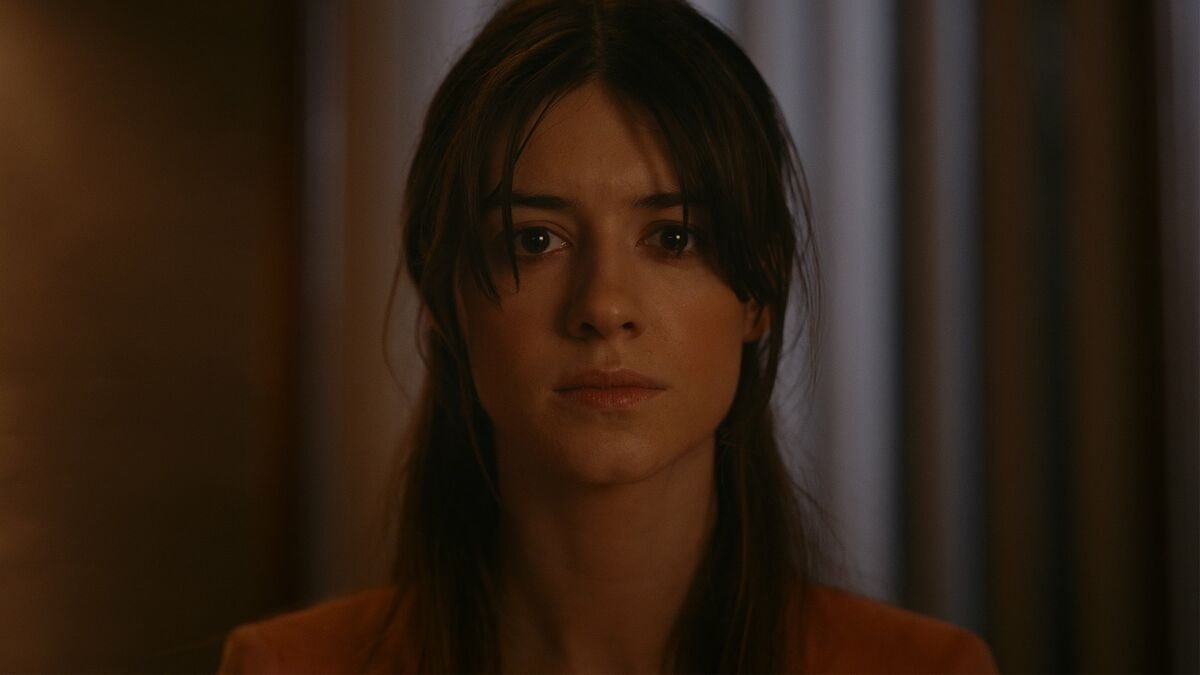
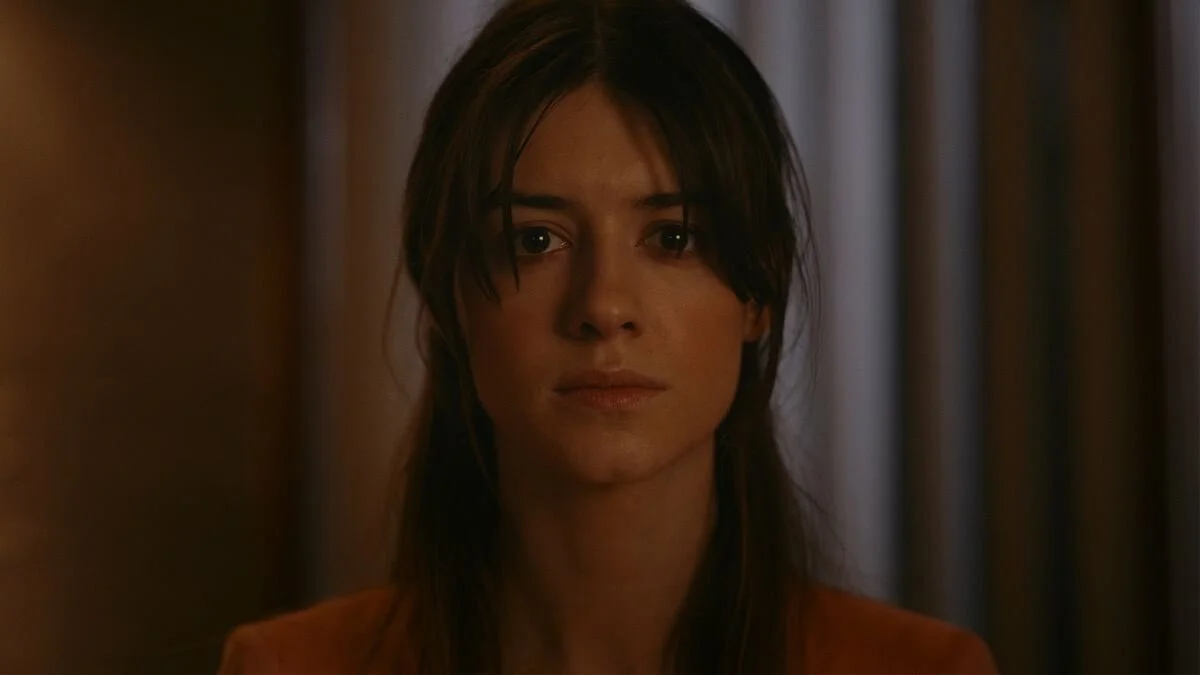
The stomach-churning horror stories that have emerged from dating app experiences are more than enough to fuel the frustration of meeting someone in today’s culture. Visibly frustrated is how Mimi Cave’s directorial feature debut Fresh introduces its protagonist Noa (Daisy Edgar-Jones). After a horrible, horrible first date, Noa is fed up with the online dating world…the texting, the awkwardness, the perfect projection. Just when she’s nearly giving up on all the swiping, Noa meets Steve (Sebastian Stan) in the produce section of a grocery store. On the surface, he ticks the seemingly charming boxes. She takes a chance on a refreshing meet-cute and gives him her number. Caught in a whirlwind after their first date, he surprises her with weekend getaway plans at his place…in the middle of nowhere. The obligatory ‘lone car driving down a winding road through cottage country’ horror shot suggests a scenic route to Noa’s impending doom. With a twisted opening credits reveal 30 minutes in, Fresh takes an unsettling turn into queasy and darkly comic territory. All the while, trying to tackle the disturbing subject matter of viewing women as commodities.
Mimi Cave puts her own distinct stamp on Fresh. Weaving together elements of horror, dark comedy, and rom-com, Cave draws interesting analogies from the concept of bad online dating experiences. Not just to point out how awful they can be. But on a more interesting level, to spark conversation about the capitalization of modern dating, and the countless dating apps making a profit from filtering based on what bodies are considered more valuable than others. Noa (Edgar-Jones) feels stuck after years of being alone; at what point does she let go of her hopefulness in finding a connection outside of such a tech-dependent culture? Fresh meets her throwing caution to the wind at the first man who walks into her (real) life, his lack of social media a red flag given how much value is placed on having an online presence. Yet at the same time, it’s considered refreshing and a change of pace for the awful experiences Noa had before. The first 30 minutes of Fresh play as a rom-com with a sinister undertone, and piece by piece, Cave begins to deconstruct this too-good-to-be-true guy who shows up out of nowhere, just when Noa is losing all hope.
Fresh off her remarkable performance as Marianne in Normal People, Daisy Edgar-Jones thankfully has the talent to lift the way her character Noa is written. Jones brings an unwavering commitment to the film’s tone and maintains a strong connection throughout. Wonderful and spirited as she is, especially considering the duality she brings in the second half of Fresh, Noa isn’t as well written a character as hoped for. When the story takes its twists and turns, it’s more apparent not much time was spent getting to know this character during the introductory world-building. The film feeds into a detached portrayal of Noa, where she’s more of a playing piece in a board game than a multi-layered person. Perhaps this shift is Cave’s way of showing a loss of agency in these unfortunate trappings, but even so, there does feel to be a missed opportunity in not spending more time with Noa’s inner voice.
Steve is the more fleshed out character of the two leads, and Sebastian Stan takes up the opportunity with a psychotic performance. He balances on a thin line of awkwardly charming, enough to stand out but not too much to drive people away. This energy he gives to the ‘rom-com’ part of the film never feels innocent. He brings subtle undertones of bullshit to the person he projects to Noa, and then the performance becomes unlike anything the actor has done before: creepy to a hellish degree. Stan has strong chemistry with Edgar-Jones; they leave the viewer tense in anticipation for what the other one does next. Though there’s more material given to the character of Steve, generally the character development in Fresh does feel as though key ingredients are missing. The story incorporates more of Steve’s point of view, the duality of his world, and slowly abandons the duality of Noa’s that the film promisingly starts with. Faring worse, the supporting roles and particularly roles of colour, feel more like tropes than human beings. Especially Noa’s BFF Mollie; Jojo T. Gibbs is excellent but her talent is undermined by stereotypical sidekick writing.
The screenplay by Lauryn Kahn doesn’t have the consistent energy of Mimi Cave’s direction. Cave’s haunting visualization and persistent closeups, often depicting pieces of characters’ faces as though highlighting most valuable parts, bring an interesting style to how scenes are shot. As well the frequent use of red in the production design, lighting, and costume design adds to the hellscape that is the majority of this film. It’s discomforting to watch at times, not just due to some gruesomeness, but also the ‘popified’ sequences that turn an unsettling scene into something out of a crazy 80s music video. The needle drops in Fresh add to Cave’s more campy dark comedy approach. Cave looks for ways to visualize conversation surrounding how women are viewed as pieces of meat, that so much value is placed on women’s appearances. Given how tech-dependent today’s dating culture is, certain body types/specific features are viewed as deal breakers and indicators of how far one advances to a first date, the next stage, and so on. Cave brings a ferociousness to the subject matter in terms of how certain scenes are shot. But the screenplay doesn’t quite match that hunger, leaving a lot of interesting themes to float on the surface but aren’t worked into strong enough allegories to have a more emotional impact.
Spirited, committed performances by Daisy Edgar-Jones and Sebastian Stan make Fresh engaging to watch. Edgar-Jones especially has such an inherently lovable quality, it’s immediate to feel her frustration and stay connected to her at all times. The story itself benefits from knowing as little about the plot points as possible. While its impact doesn’t feel as clever as perhaps intended, it’s a compelling and exciting feature debut for Mimi Cave. Fresh is well-acted and entertaining to watch, though not without leaving a bad taste afterwards when the dating nightmares are over.
Fresh drops March 4th on Disney+.
‘The Batman’ Review
March 6, 2022
In the sprawling canon of superhero films, Batman and Gotham City have always stood out in terms of the characters and world-building. Among the peaks and plateaus of nocturnal interpretations over the years, writer-director Matt Reeves’ The Batman feels like the most invigorating in a very long time. It’s a fantastical gothic detective story that unscrambles characters and themes with great precision. A fantastic ensemble of actors compliment one another as clues to a bigger picture developing. With glimmers of hope, The Batman dusts off familiar pieces of Gotham’s bleak puzzle to start anew, as a riveting awakening story and a definitive film for its title character.
In this story, Batman uncovers corruption in Gotham City that connects to his own family while facing a serial killer known as the Riddler. Each chilling coded note left behind brings Batman closer to the bigger picture the Riddler has been envisioning. The unscrambling of messages, the lurking through evidence, Bruce Wayne going through dusty file folders and choppy surveillance videos…The Batman plays a little like a great 90s detective mystery. The film maintains that tone throughout, each new clue offering another reveal and shedding light on more characters entangled within the festering morals in Gotham City. With the Batman in particular, a director’s take on the character carries just as much weight as their take on Gotham, which is itself another character. The most striking element about Reeves’ depiction of Gotham, is the sense of unease in the veins of those who reside there. The level of mistrust in broken institutions, and that energy the characters give off, feeds into the visual decay and corruption of the city. It’s of course expectedly gloomy and dark, but the production design opens a portal of so much detail, creating something both fantastical and contemporary. The Batman’s production design carries occasional reminders of what Bo Welch was able to do with Tim Burton’s Batman Returns. Reeves’ film paints a gorgeously gothic picture of Gotham that feels real in the characters.
Speaking of characters, Robert Pattinson makes a fabulous Batman. He’s a fascinatingly conflicted Bruce Wayne who hasn’t yet reached the comfortability of presenting a suave, polished version to the public. Pattison is an equally interesting Batman; from voice to presence, wonderful work. He so convincingly treads the waters of an inner world split in two. Bruce Wayne’s discomfort with fame by association pushes him farther into nocturnal retreat, where the Batman steps into the shadows and commands the direction. What is interesting about this depiction of Batman is the character’s confrontation with his meaning; what does he symbolize in Gotham? Is vengeance the way to go? The film conveys Batman in a state of slumber; he’s on the brink of an awakening, the realization of just how damaged Gotham is and how deep that cut runs in his own spirit. The screenplay by Matt Reeves does a super job of following these threads like detective work; the more Batman uncovers from the Riddler, the more this search steers Batman to look inward and question why it seems to be that perhaps the Riddler would not exist without him. The psychology of Bruce Wayne/Batman takes a strong central role in Reeves’ film.
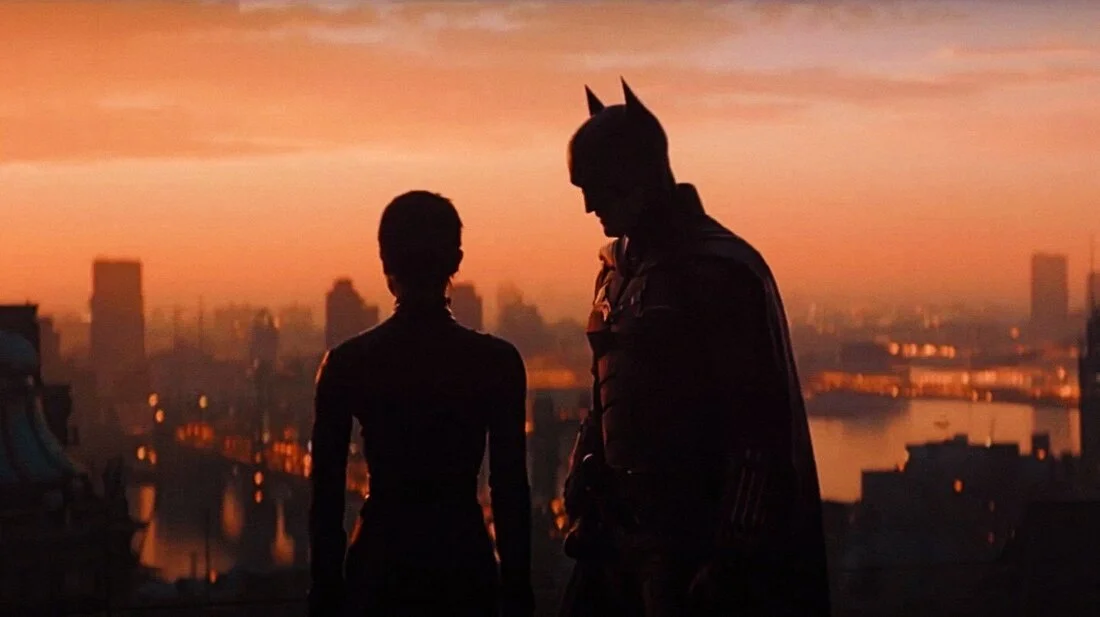
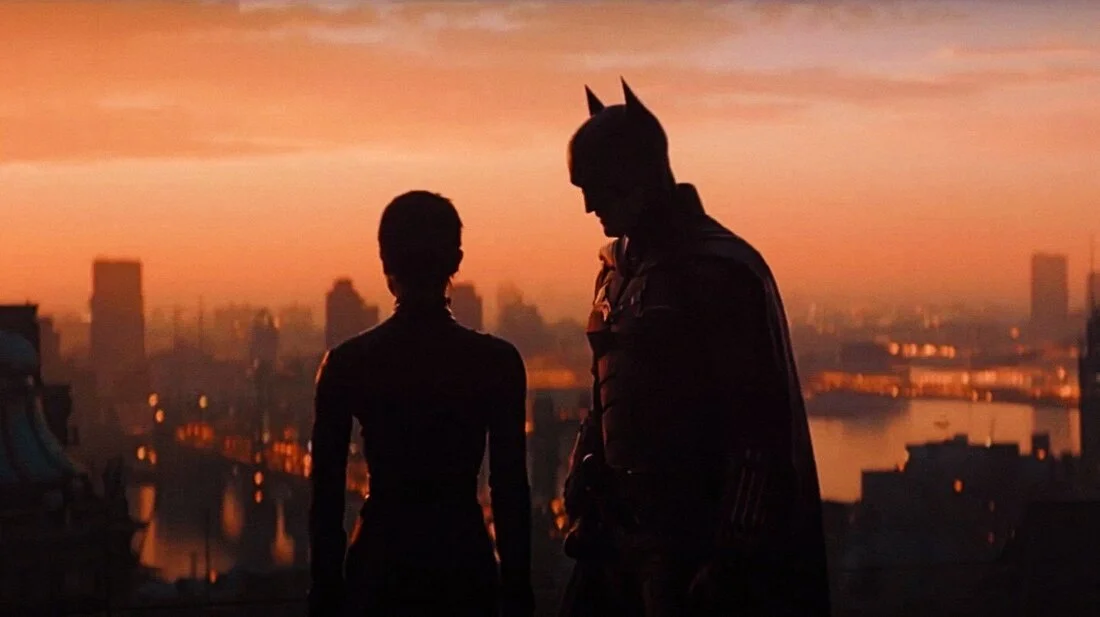
The Batman has amassed a talented ensemble to fill orbiting characters in Gotham. Zoë Kravitz’s rendition of Selina Kyle is a magnetic force. From the moment she appears on screen, she exudes mystery and invites an excitement of learning more about her character, and ultimately her reveal as Catwoman. Selina’s intelligence and independence, plus the way she follows her intuition and stands in her own capabilities, gives Kravitz strong material to explore. She certainly makes the character her own, she’s the Catwoman of dreams. As well, Kravitz and Pattinson ooze chemistry. It is striking how devoid so many blockbusters have been of electric chemistry on screen, and these two absolutely deliver. The film draws an interesting relationship sparking between both characters; they have a push-pull magnetism where Selina’s search for justice and revenge takes her on a dangerous path; one that Batman can foresee leading to a point of no return if she acts on that revenge. The cat and the bat segment are among the strongest of the film.
The quadruple talents of Paul Dano as the Riddler, Jeffrey Wright as Lt. Gordon, John Turturro as Carmine Falcone, and Colin Farrell as Oz/Penguin is a treat to watch. Dano has been delivering consistently good work, and his interpretation of the Riddler is another gem in his career. A performance that builds on teases (each of which are so unsettling) reaches a climatic point in the third act, clinching everything Dano had been doing to get there. His Riddler is absolutely demented; he’s a chilling menace, and when finally face-to-face with Batman, Dano unleashes all hell. Among the supporting cast, Jeffrey Wright is a big standout. He’s been fantastic in everything for years, and gives a fab performance as Lt. Gordon. Just from watching his chemistry with Pattinson, the crux of the relationship between Gordon and Bruce is sensed right away. Another standout, and fine example of great casting, is John Turturro as mobster Falcone. Turturro’s magnetic presence as an actor is key for this character to jump out and elevate every scene.
Then there is Colin Farrell, whose talents are used in a much more cartoonish way. Not a trace of Farrell can be seen in Oz, known also as the Penguin. But as heavy as the makeup and styling clearly is, Farrell’s transformation shines just by the voice and cadence of this character alone. The makeup isn’t doing all the heavy lifting to the point where the performance gets lost. Farrell tailors the physicality instead, the clamminess and the lines on Oz’s face giving another dimension to a character consumed in corruption. Farrell gives a spirited performance that goes cartoon Italian mobster in an enjoyable way. Among the weaker elements of the ensemble are Bruce Wayne’s loyal confidante Alfred. While Andy Serkis is great, something is left missing in that dynamic between the two characters. As well, the buildup to Alfred in danger and the handling of the aftermath feels like a messy element in otherwise precise storytelling.
The characters of The Batman are complimented by Greig Fraser’s stunning cinematography and James Chinlund’s intricate production design. The film brings a strong depiction of Batman as a presence; the weight of his image in shadows, stepping into the light, is chilling. The use of lighting and play on shadows is strong throughout. There are plenty of memorable scenes, immaculately orchestrated moments that leave a giddiness behind. The cherry on top is Michael Giacchino’s outstanding melancholy score. It’s suspenseful and brooding, gothic and elevating, with fantastic horror elements sprinkled throughout. Batman's theme carries so much weight, a great mirroring to the character work being done in the film. Giacchino's suite is an incredible blend of mystery and suspense.
By the end of Matt Reeves’ The Batman brings a powerful sense of awakening in Bruce Wayne, in the history of his family lineage and in his relationship to Batman. At the core of this film is Batman in confrontation with the meaning of his place in Gotham, in contemplation with whether vengeance is the answer to the rot of this city. With compelling performances by Pattinson and Kravitz, plus an overall entertaining ensemble who bring their A game to Gotham, The Batman puts in the detective work to craft one of the most engaging and distinguishing comic book films.
The Batman is now playing in theatres.

‘Sundown’ Review

April 3, 2022
Sundown, written and directed by Michel Franco, unfolds around the magnetism of Tim Roth. The actor plays protagonist Neil Bennett, a character seemingly detached from his surroundings from the start. He is introduced in paradise, spending time with family at a secluded resort in Acapulco. There is something about his presence that feels he is lightyears away from where he is physically, as if he is not existing at all. A distant emergency disrupts the vacation, but this news quickly fades into oblivion given where the story progresses. His family: sister Alice (Charlotte Gainsbourg), and her children Colin (Samuel Bottomley) and Alexa (Albertine Kotting McMillan), appear to be tight-knit. Together upon hearing the news, they don’t think twice about packing and heading for the airport. Neil trails behind with uninhibited demeanor, nonchalantly realizing he’s forgotten his passport and ensures the family fly home without him. Neil’s intentions and reasoning for his actions to follow are tricky to understand, but it is Roth’s knowing gaze that invites curiosity beyond else to see this performance (and this film) through to the end. It is no easy feat to play a character whose emotions are more hidden, and Roth does so with a gut-punch reminder of why he’s such a great actor. For Sundown benefits greatly from a towering talent at the center who can create a simmering tension by way of aura alone. Without uttering any explanation for all the questions his actions conjure up, Roth casts a relaxed spell on this existential puzzle of a story.
Sundown takes a slow-build look at the rising tensions within a wealthy British family, of which Neil is part of. Much like this protagonist who doesn’t seem to be thinking twice, fleeing from one decision to another, the film moves at a measured pace matching the energy he carries. The distant emergency that cuts the Bennett family vacation short is just one of a series of bleak events. Michel Franco does well to frame the story around Neil and his perspective, which itself is shrouded in mystery. Sometimes the director pushes too far into vagueness and starts to lose grip of a story to tell, but Roth’s performance is a strong enough core to anchor the long contemplative takes. The protagonist running away from confronting the cause and effect of his actions makes watching this film consistently unexpected. By the end, Franco’s screenplay reveals a puzzle left unfinished. Sundown sparks conversation around the human urge to be someplace different, to change your surroundings. Neil acts on this urge, though what is most interesting to watch is the space in between his past life and the life he wants elsewhere. It’s the perpetual state of not just being lost, but losing what you had. Those moments of Neil in utter silence and hard-to-read are the most memorable.
Sometimes a film comes along where the collaborative magic between an actor and director is felt so strongly. The trust in Tim Roth to lead this journey, holding the key to what makes you feel so inclined for answers and yet kind of pleased not to know, is well-placed. The restraint with which this character leaves one life behind to start another is startling to process. Neil makes awful choices, painful ones that are consequential for his family, especially his sister Alice who is left shellshocked by what has transpired. Charlotte Gainsbourg has the more heightened emotional scenes of the two; she expertly conveys her character’s frustration and the pain of being left behind in the blink of an eye. One scene of an aloof Neil asking Alice to dinner so nonchalantly, after everything that happened between them, is a standout moment indicating just how unnerving it is to watch the consequences of his actions without accountability. Especially when not knowing the thought process behind it all.
The unsettled disposition of Neil Bennett calls into memory the protagonist of another recent film: Leda Caruso (Olivia Colman) in The Lost Daughter, Maggie Gyllenhaal’s adaptation of Elena Ferrante’s novel. Albeit, they find themselves at different stages of making difficult choices with familial consequences. While Leda is confronting years-long memories, Neil is fresh in the wake of his decisions. Whoever you think Neil is at sunrise, his character is painted in an entirely new light by sundown, and the pattern repeats. There is more to the character than meets the eye. Tim Roth does a fantastic job of revealing just enough to maintain mystery, without giving too much sway towards a definite conclusion. With impressive restraint in Franco’s direction, matched by Roth’s played-down performance, Sundown shines as a thought-provoking story of a human being in perpetual search not necessarily for something better, but for an awakening from his slumber. Someplace where the warmth of the sun will be there to greet him without interference.
Catch Sundown at the TIFF Bell Lightbox starting April 8.
‘Nitram’ Review
May 11, 2022
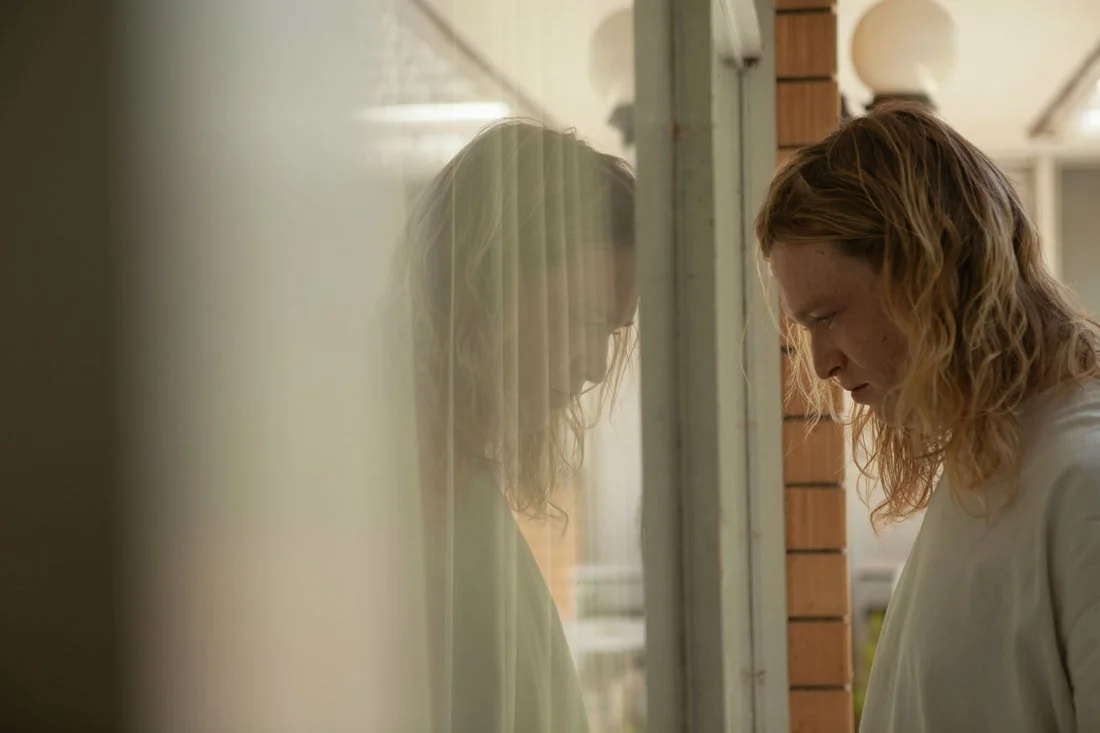
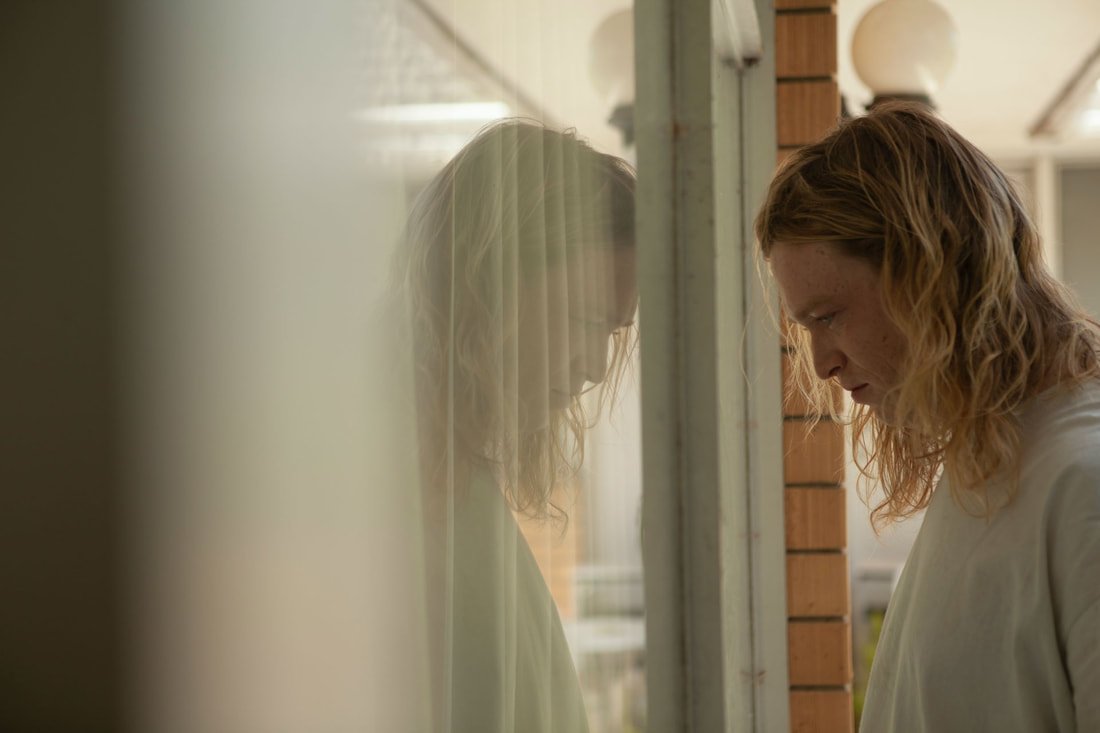
The 1996 Port Arthur massacre in Tasmania is one of the worst atrocities that occurred in Australia. The lives of several people were tragically stolen. Media coverage of shootings tend to focus heavily not on the victims but the shooter’s identity. Movies about this subject tend to reenact events of the shooting from a day-of perspective. But expectations are challenged in director Justin Kurzel’s film Nitram, which is based on the Port Arthur massacre. Kurzel and screenwriter Shaun Grant approach the subject matter with delicacy. The real shooter’s name is not specifically referenced. Shootings are filmed from afar, never sensationalizing nor showing the aftermath. The film opens with a list of support lines for anyone in distress. While any depiction of a day such as the Port Arthur massacre will understandably be met with scrutiny, the filmmakers behind Nitram bring authenticity and sensitivity in an attempt to understand the unfathomable. As the film follows in the footsteps of the shooter “Nitram” (played by Caleb Landry Jones), the story questions what leads someone to commit such evil acts, and how the inaction by others can build to devastation. Nitram is a disturbing, uncomfortable character study of a family shattering to pieces like a crash in slow-motion.
Nitram has a slow-building sense of dread, the early makings of a cloud about to cloak a quiet suburban town in mid-90s Australia. “Nitram" lives with his parents, struggles to fit in, and is often found playing with fireworks. Despite suffering serious burns as a child, he never learned his lesson about getting too close to the flames. The film opens with archival footage of “Nitram” as a child, recounting the experience. This scene is one of many examples of Kurzel using warning signs in the storytelling to indicate something is amiss. The signs are alarming, but the way they are revealed speaks to the inaction of those around “Nitram”. For instance, during a scene when he assaults his father (played by Anthony LaPaglia) for not getting off the sofa, his mother (played by Judy Davis) watches silently from afar. The weight carried by “Nitram’s” family is felt deeply. His mother in particular has an emotional detachment, knowing who her son is and not having the resources to help beyond keeping a watchful eye on him. Because of what she knows, she sees no future for “Nitram” that is different from the cocoon she has seemed to keep him under. Where her character seems more resigned to her son’s behaviour, “Nitram’s” father expresses the frustration of being accustomed to not understanding him. Even though centered on “Nitram,” who is looking for a way out, the film is every bit about parenting and mental illness as it is about the heinous acts he commits.
There is a candor about Kurzel’s direction that teeters on the verge of documentarian. Instead of reenacting the events of the massacre, the story takes a completely different approach that grounds it into humanity. Not by means of justification for “Nitram’s” crimes, but to inject the very unsettling reminder that for some people in the world, this is a reality. Whether it be the shooter’s family, the victims and their families, the bystanders, those who saw troubling signs and chose to look the other way. The film intently questions what leads someone to commit atrocities, and explores a nightmarish culmination of anger that immerses the story in overwhelming dread. As a viewer, it feels like being dropped in the middle of this unassuming community in Tasmania and experiencing first-hand the genesis of evil. As a testament to authenticity, the casting of Nitram is in large part what gives the film its immersive quality. Caleb Landry Jones is exceptional as “Nitram”; his performance feels so settled into the character’s mindset, not a single trace can be found of watching an actor “act”. This is nuanced, unflinching work; no doubt a haunting portrayal that will be impossible to shake.
While certainly clear that Jones is the acting standout, the talented supporting cast help keep the film rooted in realism, as opposed to sensationalism. Playing “Nitram’s” parents, Anthony LaPaglia and Judy Davis carry different weights of knowing their son fully. What they know simply cannot be accessed by anyone else, no matter how willing they seem to understand. When “Nitram” randomly knocks onto a neighbor’s door offering to mow her lawn, she extends pity when the lawnmower fails to start and offers that he walk her many dogs instead. The viewer eventually gets to know this neighbor as Helen (played by Essie Davis), an aloof heiress who listens to old-time instrumental music and dreams of going to Hollywood. She takes “Nitram” under her wing: buys him a car out of the blue, lets him live in her mansion, sees a potential in him. It is never made clear whether she views him in the figure of a son or a partner, but either case is a cause of concern for “Nitram’s” mother. When the two women are introduced at “Nitram’s” birthday lunch, the tension is palpable. The scene is a turning point in the film; an astonishing monologue by Davis gives insight into her character’s experience as a parent. She tells a story of “Nitram” as a boy, hiding in a fabric store and ultimately sneaking away from her. After frantic attempts to find him, she gives up and walks to her car, only to find him hiding there laughing at her pain, like it was the funniest thing in the world.
All hell is unleashed after the ‘fabric store’ monologue in Nitram. Not only does it give warning to Helen and remind the viewer how unpredictable “Nitram’s” behavior is, but it also speaks to Judy Davis’s talent. With just one scene, she speaks volumes about her character's distress as a parent. The monologue alludes to what must have been years and years of her trying to find ways of coping, ultimately resigning to the idea that her son cannot be changed. Davis brings remarkable detail and understanding to the character. As an actor, she holds her cards close to her chest, which makes her screen presence even more intriguing to watch. She and LaPaglia (also delivering some career-best work here) make the family feel like a real family. Their portrayals accomplish what Kurzel’s direction and Grant’s screenplay tap into: challenging the role parenting plays in the story. As well, the film sheds light on the stigmas around mental illness and how lack of treatment can manifest into dangerous paths. In Kurzel’s depiction of what leads up to the massacre, he sits with the root of evil and questions the enablers who let it rise. He doesn’t attempt to justify nor determine what exactly causes “Nitram” to commit violence. Instead, he sits with the family dynamics and observes. The humanity makes the film so unsettling; that a human being could be capable of such monstrous acts.
After the Port Arthur massacre, thousands of guns were bought back and destroyed by the government. The shootings changed gun laws in Australia forever, initially taking less than two weeks for reform. The swiftness calls into memory a scene from the film that happens just as swiftly, on a far more destructive level. “Nitram” is able to walk into a gun shop, without a license or any sort of background check, and purchase rifles. Kurzel avoids using this scene as a cause-and-effect moment. Instead it is yet another delicate observation made about the way numerous factors, whether social or personal, build over time. The character of “Nitram” is depicted with the same delicacy. Kurzel observes from afar a person who is ultimately unknowable, not just to his surroundings but to himself. There is understandable trepidation going into a film based on a tragedy that is still raw for many people. While Nitram is an uncomfortable watch, the cast and crew bring a level of sensitivity to the story that keeps it grounded.

‘Benediction’ Review

May 31, 2022
The biopic sub-genre has seen plenty of films follow a similar trajectory: one that lands on the greatest hits of a person’s life and feels like a Wikipedia page adaptation in chronological order. With the ‘no stone unturned’ approach, a lot of material is crammed into a few hours of screen time out of obligation. As a consequence, you lose the intrigue of what makes a subject interesting to explore in the first place. For writer-director Terence Davies, his new film Benediction shines through an observational portrait of 20th century English poet and solider Siegfried Sassoon. The film is about Sassoon’s life in fragments, as he is in perpetual search for peace of mind over time. As a solider who lived through the first World War, his vulnerability was raw. As a gay man who expressed his sexuality at a time when it was dangerous to do so, his relationships under the pressure of societal expectations pushed him further from his own truth. Through narrative past and present, Davies makes such keen observations of Sassoon’s internal battle as someone drowning in regret while cushioned by privilege. With a sharp screenplay and non-linear direction, Benediction makes impact as a haunting story of a redemption that never comes.
In the best performance of his career, Jack Lowden plays war poet Siegfried Sassoon, whose poetry is a vivid reflection of his internal conflict. The film introduces him protesting a war of aggression, and the political eras against which men are being sacrificed. Having survived the war, he finds himself in a different dilemma. One that calls into question his morals, his responsibilities, everything he once believed in. From the way Sassoon carries himself, you can tell this character has crossed the bridge from passive resistance to active salvation. His engine of change is powered by the way he challenges the war, no longer willing to be part of suffering to unjust ends. In challenging his beliefs, he finds himself committed to an Edinburgh mental hospital for “questioning his superiors and his own duties as a captain”. A nervous breakdown, others call it. The film drives Sassoon to an endless crossroad; he is in constant search for truth and resolution, looking everywhere except the one place he ought to, within himself.
From Sassoon’s hospital time in Edinburgh, to his affluent interactions with members of high society, to the later stages of his married life, Benediction is a story driven by memory. The film explores the war poet’s life in the way he seemed to have left it: unresolved. While fragmented in structure, Davies has a measured eye. His attention to detail, both as a director and writer, is far too strong for the story to ever lose focus. Benediction takes shape with the use of poetry, which features as narration of Sassoon’s experiences from time to time. These moments recall how Davies shows a deep understanding of his subject. Through writing, Sassoon was able to articulate emotion that could not be explained outside of poetic expression. Davies honors the sentiment by choosing to convey pieces of Sassoon’s life as if they were dreamt up from reading the poet’s words.
The power of one’s mind is captured so beautifully, and tragically, throughout this film. Because of Sassoon’s internal conflict and constant search for contentment in life, the memories that flood in from his past experiences take on a haunting quality. With memory comes the painful regret of his destructive relationships; after befriending and losing fellow poet Wilfred Owen (Matthew Tennyson), Sassoon falls for the wrong men over and over again; we see some who are cruel and indifferent towards him. Ultimately, his experiences lead him down a path later in life where he struggles to face all his regrets. The film includes elegantly shot transition scenes between young characters and older versions of themselves. Peter Capaldi plays the older version of Sassoon; while not given nearly as much material to chew on in comparison to Lowden, Capaldi brings a visible exhaustion that speaks to the life of someone who got lost along the way of finding himself. The later stages of Sassoon’s life show how, following years of unfulfilling relationships, he manages to carry on in a new life unrecognizable from the one he once led. The way Sassoon grapples with his decisions can’t be explained by just one reason. Getting from one point to another in life is a collection of tiny moments, many of which seem inconsequential, but for a filmmaker like Davies are the stuff of plentiful significance.
Working magic with Davies is Jack Lowden, who gives what is easily a career-best performance as Sassoon. His blend of sensitivity and rigorous detail is Davies’ match made in heaven. Lowden dives deep into an intriguing portrait of a character in the thick of grief and loneliness. His performance is layered, witty, and full of the command needed for this character to feel alive. Often times period films can generate and encourage performances that exist in the confines of a regimented structure. But with themes of morality and humanity on the table of discussion, Benediction gives Lowden the material to find something fresh to say through the vessel of such a mysterious subject. He consumes his lines with passionate spirit and delivers with a punch. Davies’ screenplay is full of biting dialogue, quick-witted and at times funnier than expected.
As the dialogue so carefully crafted in Benediction shows, the story cuts through pleasantries with an unapologetic straightforwardness. What appears to be an old fashioned war film very quickly becomes a reminiscent study of Sassoon’s life. The film has the look of a classic period piece, from Nicola Daley’s elegant cinematography to Annie Symons’ polished costume design. But Davies makes a point not to forget what lies outside the privileged walls of Sassoon’s surroundings. He juxtaposes wealthy and distinguished settings with grim 1920s footage from the First World War. It’s a reminder that while Sassoon and the circles he ran in were somewhat protected from a life of artistic influence, the lower class of the world were facing imminent repercussions.
The story of Benediction is a fascinating exploration not just of Siegfried Sassoon, but also the climate in which he lived. Davies mediates on the emotional aftermath of war and how it alters the rest of a person’s life. As well, the pressures around a gay man expressing his sexuality at a time when doing so could have resulted in jail time. Davies’ storytelling portrays Siegfried Sassoon like a collection of memories; ranging from poetic and funny, to lonely and tragic. There’s an unrelenting tang of regret in the character’s eyes that both Lowden and Capaldi capture well at different periods of the man’s life. Not much time is spent on articulating what Sassoon is thinking at any given moment, but by the end of Benediction, it is clear just how much sadness he carried across a turbulent lifetime. The film builds to a final scene that will certainly be hard to shake from one’s memory.
Benediction is now playing at the TIFF Bell Lightbox.
‘First Kill’ Review
June 10, 2022
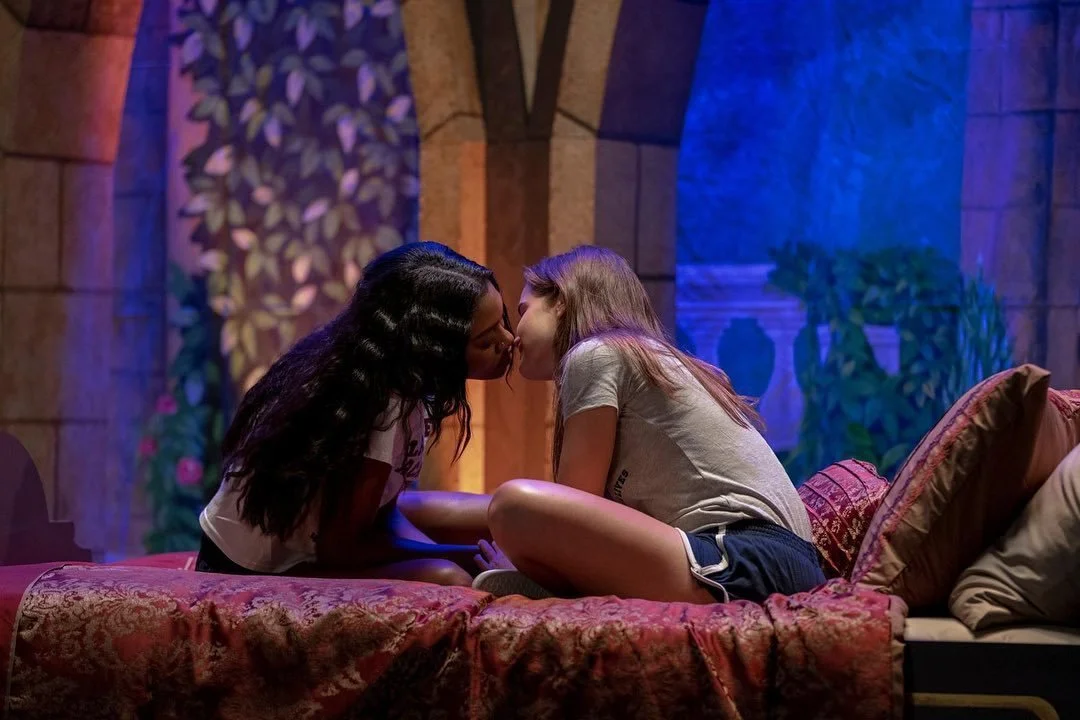
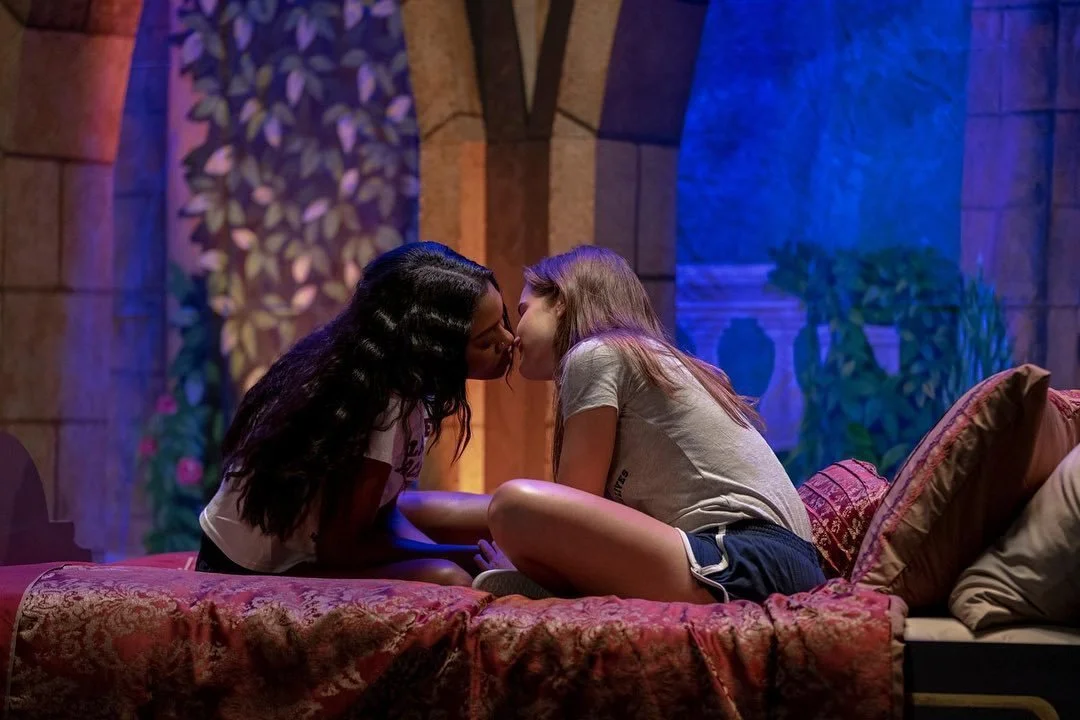
In the vampiric underworld of Savannah, The Fairmonts and the Burns are two powerful feuding families. After all, vampires and vampire slayers are destined to be at war for eternity. That is until the families’ youngest, Juliette Fairmont (Sarah Catherine Hook) and Calliope Burns (Imani Lewis), meet and fall in love. Juliette had been crushing on Calliope (nicknamed Cal) at school for a while, and clumsily invites her to a house party. After a quick round of spin-the-bottle, they are alone in a room together for the first time. But this ‘first time’ quickly becomes a potential ‘first kill’ as the teenagers reveal their true nature. Both on the cusp of achieving this ‘milestone,’ they feel pressure from their families to prove themselves worthy. Juliette and Cal are taught the three golden rules of a first kill: stay calm, keep your head on, and be prepared for anyone. But nothing could prepare them for the emotional rollercoaster following their first kiss. Based on the short story by best-selling author Victoria “V.E.” Schwab, First Kill is an entertaining queer YA series and a modern day Shakespearian Buffy with a love story at the core. Many young adults will be able to see themselves on screen given the open-hearted storytelling, subversion of queer tropes, and strength of representation.
While film and television has been saturated with vampire content over the years, First Kill feels refreshing in its central themes around identity and belonging. Rather than turn queerness into a point of conflict, this is simply portrayed on screen as matter-of-factly and invites a younger generation of viewers to watch queer characters who feel real. Juliette and Cal are going through normal teenage insecurities and butterflies, plus dealing with a high standard set by their families to succeed within a very specific path. On top of all the typical teenaged angst, they face the otherworldly threats of ghouls, zombies, and stake knives to the heart. Juliette comes from a family of Legacies, powerful vampires who draw strength from their queen mother serpent and make it nearly impossible for slayers to kill. Cal is from a family of celebrated vampire slayers whose mission is to ward off monsters. Savannah is a tough city to keep clean, its centuries of violence the perfect hub for the Legacies to feed. In order to fulfill destiny, Juliette as a vampire and Cal as a vampire slayer, they must train to see each other as monsters. But when it comes to the heart, no amount of training can simply change how they feel. The first episode sets up the premise nicely; we learn the perspectives of both protagonists and their family dynamics at home. We also get to know how Cal in particular is able to see the signs of Juliette’s identity as a day-walker vampire.
This love story has Shakespeare written all over it: two young lovers destined to be together but whose love is forbidden by opposing families. Episodes five and six feature sweet references to Romeo & Juliet (in the protagonists’ case, Juliet and Juliet), from recreating the famous balcony scene to reciting words from the play. Whether Juliette and Cal will subvert tragedy and get a happy ending is enough reason to anticipate the green light of a second season. As well, the concept of First Kill works through interesting dynamics within the horror genre. The question of ‘what if the monsters are not all monsters inside?’ is the driving force for most of the conflict. Cal is taught that vampires don’t feel and don’t love. As the love grows between her and Juliette, she begins to question her family’s beliefs and her loyalty to them is tested. Meanwhile, Juliette uncovers ugly truths about her own family and in particular her sister Elinor (Gracie Dzienny), whose ‘perfect vampire’ persona has dangerous tendencies.
First Kill is a fitting example of how ‘cheesy’ is not necessarily a weakness. Sure, the visual effects are goofy and stick out like a sore thumb. Yes, the dialogue can be on-the-nose and a little stifled. But the episodes are certainly entertaining to watch unfold. The story is anchored by great chemistry between the two leads; Imani Lewis and Sarah Catherine Hook bring such conviction to their characters, it would be impossible for this series to have much bite without them. They have a push-pull kind of attraction and carry the emotional weight of their characters with an understanding of Cal and Juliette’s internal conflict. Also complimenting their work is a strong female gaze behind the camera. Felicia D. Henderson, show runner/writer/executive producer, is among a team of mostly female producers including Emma Roberts and Sarah Preiss. As well as a female writer, V.E. Schwab, who is adapting her own short story. From the way the protagonists’ backstories are presented, there is a clear level of care taken to exploring who they are and how they navigate the world as teenagers under pressure. Time is also given to a lot of the supporting characters, played by actors who are game for the material and know exactly how to draw that fine line between camp and earnest. Among the cast standouts are Aubin Wise, who plays Cal's mother Talia with such wonderful pathos and screen presence.
Schwab’s story resonates as one that older audiences may have wished they had growing up. First Kill is a campy 8-episode horror series centering queerness in a way that feels authentic and simply a part of the storytelling. The two protagonists are each given autonomy in their perspectives, and share a compelling dynamic that intensifies. Each episode ends with an unraveled thread that keeps the stakes high and makes you thirsty to watch more. While the ending opens doors to a second season, the decision to end on the development of less interesting supporting character journeys is questionable. Especially given the strong dynamics set up between Juliette and Cal for the series duration. Both protagonists are still learning about themselves, their capabilities, and whether to pursue the true feelings they have for each other despite the vampire/slayer roles. What Juliette and Cal come to realize is that there is a first for everything.
All eight episodes of First Kill are streaming June 10th on Netflix.
Future of Film Showcase (FOFS) 2022 Capsule Reviews
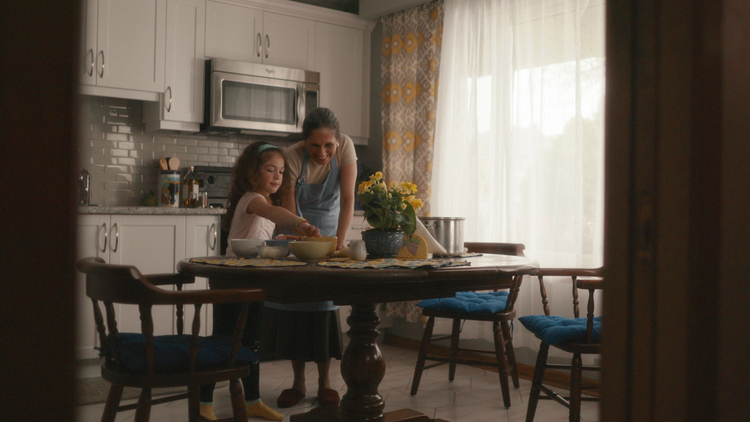
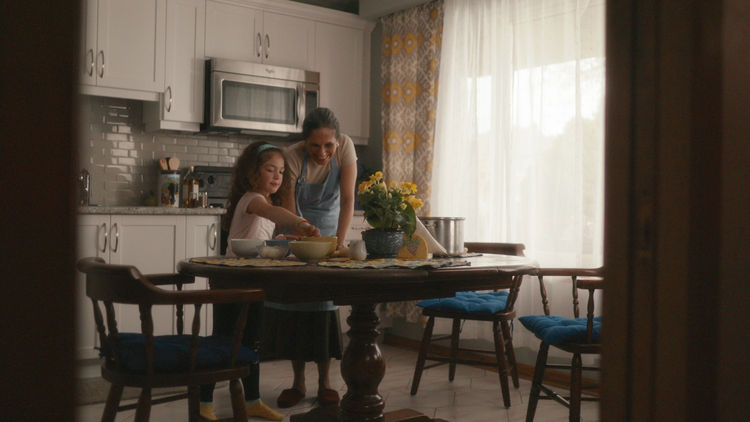
“Well-acted and beautifully shot, Abuela is a heartfelt directorial debut filled with the promise of a great filmmaker.”
July 31, 2022
Having spent most of my childhood with my grandparents, I have since carried into adulthood an unbreakable bond, indescribable but unmistakable in the emotions it stirs. The relationship between a child and their grandparent can be a beautiful thing. Precious lessons and memories are passed from generation to generation. Whether it be through a favorite past time, or a particular food dish. Making a family recipe is a powerful way of connecting to your loved ones, as seen in writer-director Rebeca Ortiz’s debut short film Abuela. This beautiful short, which premiered at the 2022 Future of Film Showcase (FOFS), feels like a warm hug of a story. Abuela tells the story of a young girl named Kathy (played by Eleana Ignazzitto) and her visiting grandmother/Abuela (played by Liliana Suarez); the two initially struggle to connect through different languages, but ultimately find a way to break through barriers. One afternoon, when the grandmother starts making empanadas, the granddaughter switches off the TV in the next room and is drawn toward the kitchen. In one moment, through a traditional family recipe, their relationship begins to blossom.
The film shows a sweet glimpse into family dynamics and the dichotomy that dissolves between both characters by sharing an activity together. Resonating themes of generational bonding and tradition are wrapped into a few short minutes. Ortiz finds strength in simplicity; with a brief runtime, one setting, and two main characters, Abuela is a memory in the making. In real-time, as the young girl helps her grandmother make empanadas, Ortiz engages with the power of generational bonding. She sits with the idea that the young girl will carry this memory with her when she grows up, and that the grandmother has made a mark on the younger generation. The richness of perspective and detail is impressive. Ortiz brings a marvellous voice to this story, sure to resonate as a memorable depiction of generational relationships. Well-acted and beautifully shot, Abuela is a heartfelt directorial debut filled with the promise of a great filmmaker.
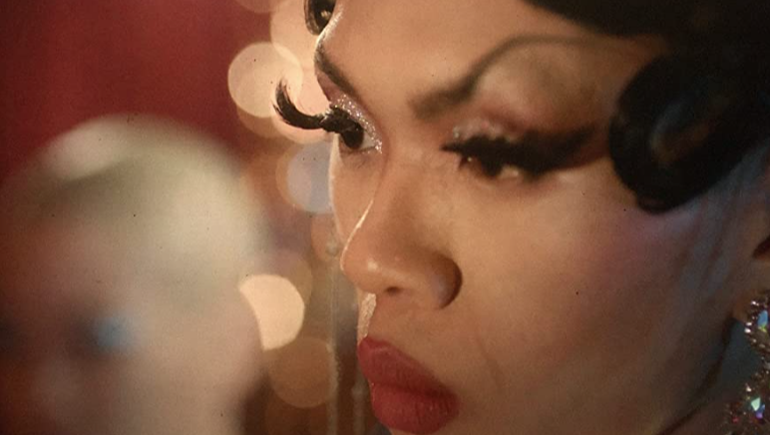
“With a strong voice and resonating emotional core, Little Sky is a beautiful portrait of childhood memories that linger into adulthood.”
June 29, 2022
From June 17-26 at the Scotiabank Theatre in Toronto, the 2022 FOFS presented a showcase of Canadian short films that explored a range of subjects and complex storytelling. One of the shorts that premiered at this year's showcase was Jess X. Snow’s incredibly cinematic Little Sky. The short is executive produced by Andrew Ahn (director of Fire Island, Driveways, and Spa Night). Little Sky is about non-binary Chinese American drag sensation Sky (Wo Chan), who returns to their hometown to confront their estranged father. The film shows glimpses of Sky’s childhood memories through hazy flashbacks that give the viewer an idea of what their experiences were like within a nuclear family household. Their father can be seen in those tense moments. But the impact their father had has never truly left Sky. In the present day, those childhood memories haunt their frame of mind and feel difficult to shake. When Sky and their father finally meet face to face by surprise, the tensity is raw. As Sky emotionally reaches out to him, he fails to recognize them for who they truly are. Instead of attempting to understand, their father backs away in rejection of their child. Jess X. Snow tells this story (along with co-writer Moxie Peng) of identity from an intimate, consuming perspective. With a strong voice and resonating emotional core, Little Sky is a beautiful portrait of childhood memories that linger into adulthood. As well, a striking depiction of self-acceptance, chosen families, and the comfort of expression drag performances give to Sky.
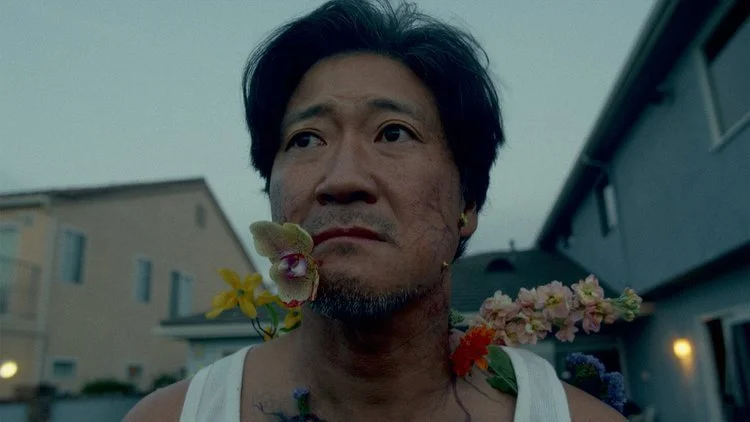
“Written, directed, and edited by Xu, the film has an original premise around the significance of flowers at a funeral.”
June 19, 2022
Calling all moviegoers! The Future of Film Showcase kicks off tomorrow, and believe me, you will not want to miss this year’s tremendous lineup. Running from June 17-26 at the Scotiabank Theatre in Toronto, the 2022 FOFS presents a showcase of Canadian short films that explore a range of subjects and complex storytelling.
One of the shorts premiering at the festival is Wendy Xu’s Til It Blooms, a 10-minute horror-comedy about grief. A distraught father, just before his big speech at his own father’s funeral, desperately tries to suppress a “grief flower” sprouting from his face and body. Written, directed, and edited by Xu, the film has an original premise around the significance of flowers at a funeral. Not only can grief be difficult for mourners to express into words, but the process of grieving is often hard for family and friends to understand. Flowers are a visual condolence, an expression of sympathy and healing. The life of a flower is also fragile, beautiful, and fleeting.
Til It Blooms explores the flower as an expression of grief, that the film’s protagonist Bo (played by Tom Choi) wants to push away. The film uses florals to convey body horror and achieves realistic-looking effects. An eerie scene of a flowerbed in a bathtub, rising and falling as if taking breaths, stands out as a vivid image. The film has a strong sense of place; as a viewer, you feel immediately drawn to the setting and understand the weight of being in a room of mourners. Xu strikes a great balance of fantasy, horror, and drama with an interesting concept. The film makes a memorable mark among this year’s FOFS lineup.
Til It Blooms premieres June 19 at the Scotiabank Theatre Toronto. Visit www.fofs.ca for online and in-person tickets. The shorts program will also screen nationwide on CBC Gem starting June 20.
‘Bodies Bodies Bodies’ Review
August 5, 2022
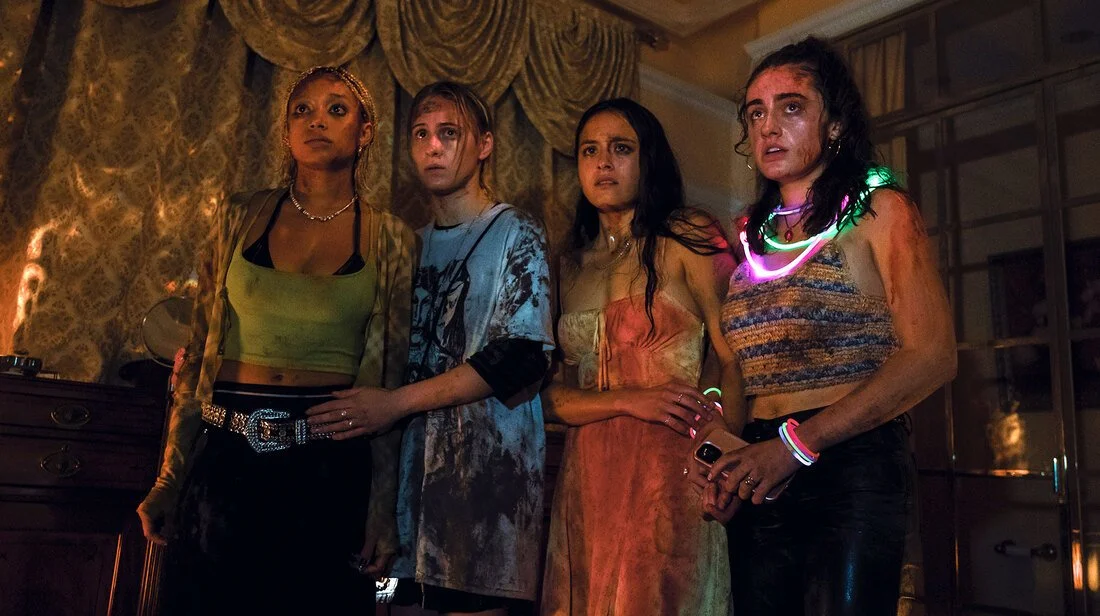
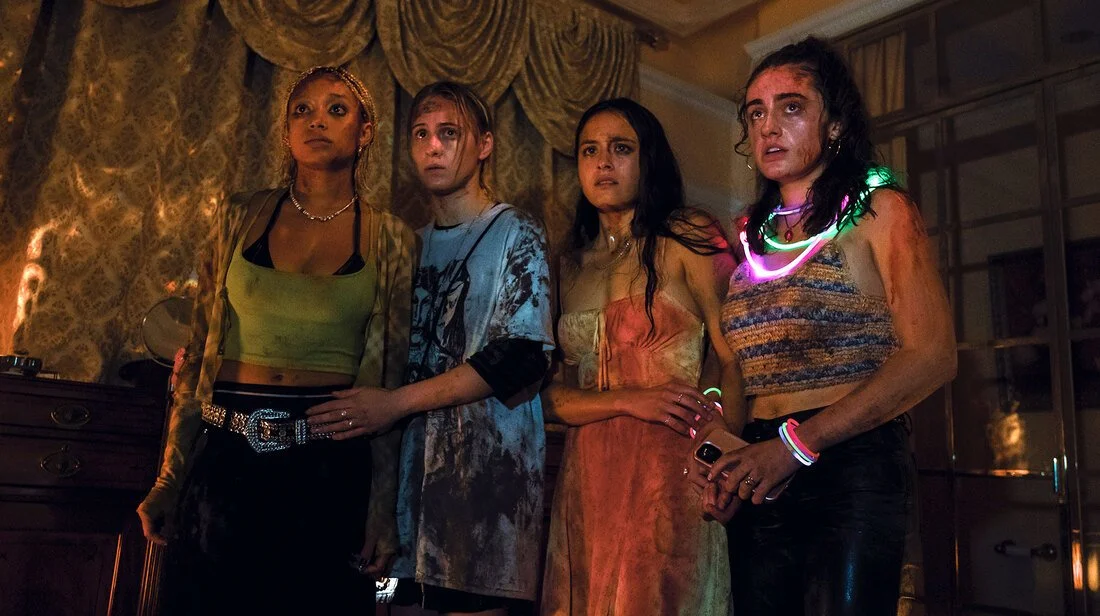
How well can you trust the company you keep? That is the question posed by Halina Reijn’s horror-comedy, Bodies Bodies Bodies, a blood-soaked satirical blend of murder mystery and fragile Gen Z friendships. Written by playwright Sarah DeLappe, and based on a story by author Kristen Roupenian, the entertaining A24-produced slasher has an endgame with a twist. The film takes place in one setting, a remote family mansion in upstate New York, where a group of rich twenty-something friends gather for a hurricane party. A storm is on the horizon, and tensions within the group are about to make impact like crashing waves. When an ice-breaker drinking game leads to an actual murder, the friends must identify the killer among a group where everyone is a suspect. Ah, the classic “party gone wrong,” a familiar trope in the horror genre designed to disrupt safe spaces. There are some parties where you do not want to be a guest at. But sometimes horror films are best enjoyed with the company you keep, especially a wickedly fun experience like Bodies Bodies Bodies, which deploys a good ensemble as the driving force for its story. Reijn’s film is stacked with a brilliant cast — from the tremendous comedic timing of Rachel Sennott, and the mysterious effervescence of Amandla Stenberg, to the appealing naivety of Lee Pace. Bodies Bodies Bodies shape shifts around the company it keeps, and mutates into a sharp narrative about vulnerable relationships in a digital-obsessed age.
The ‘bodies bodies bodies’ game of “killer” and “victims” playing in darkness is an effective framework for a film with silent dynamics at play. When the lights are out, the killer taps other players, who must pretend to play dead on the spot. Once the lights are turned on, the surviving players vote on who the killer is. But Bodies Bodies Bodies goes beyond a simplified whodunnit. The film is not just about the killer’s identity, but asks where the killer resides from a big picture. Is an outside threat slashing their way in, or is the call coming from inside the house? A literal storm may be raging, but what’s brewing behind closed doors is far scarier. Sarah DeLappe’s screenplay pushes characters to the edge of their respective breaking points. All the thoughts left unsaid between them are coaxed out through backstabbing, resentment, jealousy, paranoia, and passive aggression. Staring fear in the face, they reveal dark sides of themselves to one another that they may not have intended to. As more bodies fall, the film leans more into the complicated dynamics at play between the characters and offers something else to chew on, beyond simply escaping from a house of horrors. The film constantly makes you second-guess the characters’ intentions and convictions. The idea of everyone being a suspect in a deeply satirical setting has been done before, expertly in films such as the “Scream” franchise. Bodies Bodies Bodies feels fresh and twists in all the right places.
DeLappe’s sparkling script, Rejn’s energetic direction, and a fabulous cast captures lightning in a bottle. While questionable on whether this will stand the test of time, the film has a lot of fun conveying Gen Z social relevance and privilege, sprinkled with buzz words and a strong meta self-awareness. The characters are well defined, and the actors do a tremendous job fleshing them out. Bodies Bodies Bodies has one of this year’s best casts — naturally, some (Rachel Sennott, Lee Pace, Myha’la Herrold) shine brighter, but all of the actors bring a burst of charisma here. The film zones in on Amandla Stenberg and Maria Bakalova who play Sophie and Bee, a new couple visiting Sophie’s friends at a luxurious mansion. Pete Davidson plays the chaotic house party host, and Chase Sui Wonders plays an aspiring actor in a toxic relationship with him. Myha’la Herrold plays the tough passive-aggressive friend, and Lee Pace plays the goofy intimidating older guy of the group. Then there’s Rachel Sennott, who absolutely runs away with this film as self-obsessed Alice, who loves having a good time and has a podcast. She brings levity to the more tense situations with dazzling spirit, and in equal measure, tangible panic in the face of immediate danger. One can’t help but wonder just how much of Alice’s lines are improvised by Sennott herself. Her comedic timing and pitch-perfect delivery shine brighter than her character's glow-stick jewelry.
The cast share an entertaining push-pull dynamic that pulls you into the characters’ emotional, problematic mayhem. Every moment of paranoia and distrust feels high-stakes. The friend group’s crumbling relationships become the focal point in a setting of murderous bloodshed. Reijn brings an up-close-and-personal quality to her direction. She achieves an impressive feat where you feel trapped in the stormy mansion alongside the characters, as opposed to being unpleasantly stuck with them. While the friends are subjects of deep satire and mockery, they are not left for dead. The screenplay is full of strong characterization and keeps an enlightening thread open for each of the characters. The actors bring out interesting layers and are complemented by Reijn’s remarkable empathy, never veering into Gen Z caricatures but instead holding a mirror to the universality of wanting to belong. The balance of generational specificity and ubiquitous themes speaks to a grounded, relatable sensation. Looming in the darkened corners of the remote mansion is a deep-down desire to be part of something. Proving to be as good as the company it keeps, Bodies Bodies Bodies is an energetic slasher that blends humorous satire with sincerity.
Bodies Bodies Bodies arrives in U.S. theaters on August 5 and Canadian theaters on August 12.
‘Desi Standard Time Travel’ Review
January 15, 2023
Sometimes it’s easy to forget that your parents are more than your parents. That they have their own history, aspirations and dreams in addition to raising children. With time and the passing of it, comes a deeper appreciation of the sacrifices and responsibilities involved within parenthood. The weight of such responsibility isn’t always at the forefront of every conversation between a parent and child. Nor is the possibility that any given conversation could be the last. You don’t know how much time you have with someone on earth. Time is the one thing you can’t make more of — but what if you could relive past moments with lost loved ones? What if you could go back in time and say what you wished you could’ve said more often? Kashif Pasta’s Desi Standard Time Travel answers these questions with a gentle urgency. This sci-fi drama short finds a sweet narrative within the wishful train of thought that is, ‘If only I could go back in time’. The film tells a character-driven story centered on fatherhood and unconditional love. With an incredibly human story at the core of a fantastical plot, Desi Standard Time Travel is an enjoyable and poignant reminder to be present in life.
When new father Imran (Adolyn H. Dar) suddenly loses his own dad, an opportunity arises to travel back in time for an evening. Imran receives a call to accept a time travel voucher in his late dad’s name — in substitution of a will, this voucher is left behind for Imran to redeem wisely. He reflects on a time he was assembling a crib while on the phone with his dad. The conversation ended on a haunting note; that Imran will call one day, and his dad won’t be there to pick up. With regret and longing, Imran jumps at the opportunity to end things on a better note. But instead of the travel device taking Imran back to that particular phone conversation, he is transported to the early 90s — before he was born. His parents had recently immigrated to Canada. His father was not a father yet; he was on the cusp of it, awaiting Imran’s birth. When Imran steps into this 90s childhood home and is faced with a younger version of his father, the sense of rediscovery is overwhelming. His father didn’t have all the answers. He too felt uncertainty around becoming a parent for the first time.
The film packs plenty of resonating themes in a short timeframe, which is fitting for the overall message this story conveys about time itself. The relationship drawn between the concept of time travel and the fragility of life is beautifully depicted. The concept never overpowers the story; it has the opposite effect, where the characters and the family dynamics ground the sci-fi elements. Pasta’s direction, in addition to the screenplay he co-wrote with Nessa Aref, highlights intimate moments of being alone with your thoughts. You spend enough time with Imran’s character to understand he is quietly processing different stages of grief — from regret and anxiety, to much deeper realizations and his urge to understand as much about his dad as possible when presented the opportunity. Time travel as a plot device is used so intimately here, and is a touching reminder that the very concept of time after losing a loved one can be indistinguishable. Days blend together and before you know it, a year has passed. The abyss of grief can feel as though life has come to a standstill. Desi Standard Time Travel hits pause on the fast-forwarding of life in its unwavering focus on a father and son opening up to each other. Their emotional vulnerability, played beautifully by Adolyn H. Dar and Ali Kazmi, invites you to reflect on how present you are with your own loved ones.
Which particular moment in your parents’ life would you revisit, or want to learn more about? Desi Standard Time Travel poses just as many if not more questions than answers. Through an intimate use of the time travel concept, the film shines at its own pace and sparks moments of personal reflection. It’s a deeply personal story of second chances, new beginnings, and making memories full of joy. The decision to take the story back to before Imran was born stresses his parents’ individuality and particularly his father’s nerves about becoming a parent. The nostalgic warmth that radiates from Imran’s childhood home conveys a home full of love and possibility for what the next day will bring. Desi Standard Time Travel leaves you in a state of deep appreciation and wonder for the most cherished relationships in life.
Desi Standard Time Travel has screened across film festivals in Canada, and won a variety of awards including Best Short at Toronto Reel Asian. The film is currently in contention for a Canadian Screen Award this year; nominations will be announced on February 22.
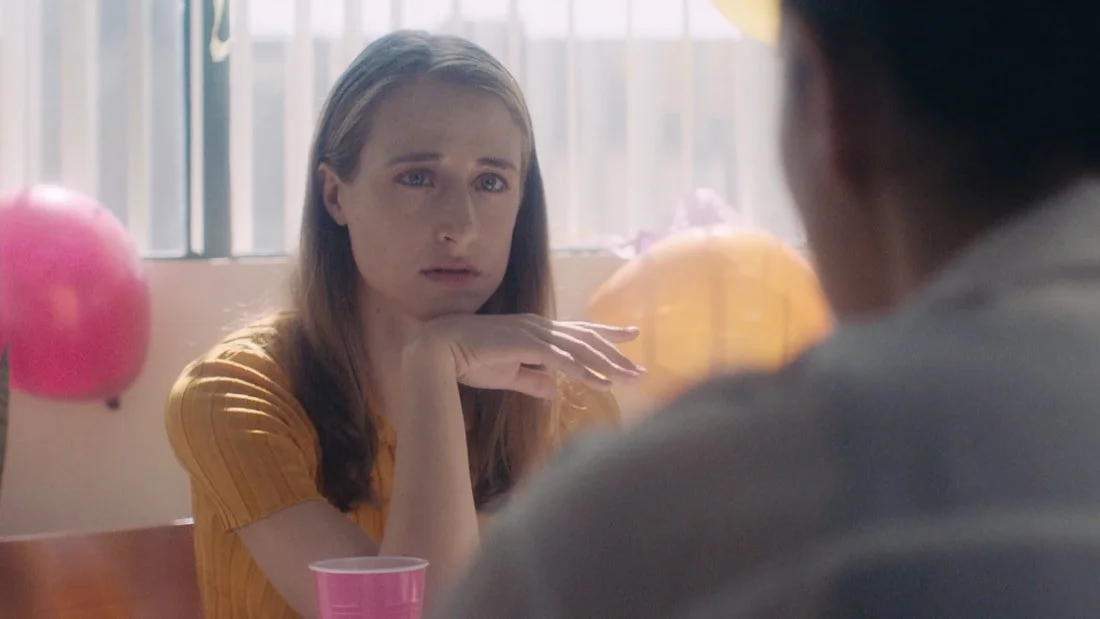
‘Adult Adoption’ Review
January 23, 2023
Director Karen Knox and actor-writer Ellie Moon make a charming collaborative team in the absurdist comedy Adult Adoption. Set in contemporary Toronto, the film follows Rosy (Ellie Moon), who has aged out of foster care and is now working as a bank teller. She has a solid job, but is living a life that does not feel personal to her. Rosy seeks to make sense of the world around her, to find a semblance of purpose and to fill the void felt from growing up without parental figures. One day her coworker Helen (Leah Doz) brings up the idea of meeting prospective parents, an idea to which Rosy immediately warms to. Through an online service, Rosy decides to connect with older adults who are in search of adult surrogate children. The journey of familial love introduces her to “dates” with various parental-like figures who have the potential of stepping into a guardian role, but they are figuring things out just like Rosy is. Karen Knox brings an off-center sensibility to her direction, which complements the protagonist’s awkward path of self-discovery. The zany storytelling accentuates the ridiculousness of assuming anyone has the answers to all of life’s mysteries.
From loneliness and neglect to chosen families and self-acceptance, significant themes are approached from a tinted lens. Adult Adoption is made with a soft pastel palette, as though depicted from rose-colored glasses. The production design by Talia Missaghi and the cinematography by J Stevens add to the cautious optimism this film evokes. The protagonist shares some of her deepest most vulnerable thoughts to strangers. One potential parental figure in particular, with whom Rosy spends increased time with, is not as attentive as Rosy would like. The sense of frustration Rosy experiences when the disillusion of life kicks in is one of the more resonating moments in the film. After years of not feeling wanted from foster families and adoption agencies, she wants to finally experience being part of a family. Ellie Moon’s strength both as an actor and writer brings a great level of openness to understanding Rosy’s perspective.
Moon’s screenplay finds strength in the dynamics shown between Rosy and two prospective parents. Through the characters’ interactions, the film engages with manifestations of love and loneliness in familial relationships. Everyone involved in the adult adoption process is searching for a balm to solitude in some way. Sometimes the simplest gestures can speak to a need of being comforted. Rosy at one point asks one of the prospective parents she regularly meets with to brush her hair. With a quirky pop song bopping in the background, the hair-brushing scene shows Rosy’s level of maturity as though she is frozen in youth. In addition to Rosy’s childlike bedroom and the various uses of pastel colors throughout the film, Adult Adoption makes excellent use of visual cues to accentuate that the protagonist is emotionally stuck at a certain age.
Self-love plays a role in Rosy uncovering her hurt and finding a way to process it. She often searches for emotional support in other people. She brings with her a certain level of expectation from them, in addition to her needs of being accepted. The journey leads her to realize the importance of her own self-acceptance. With a single line in the film — “I am the creator of my own life” — Rosy embraces the practice of self-love with much greater complexity and control. As such, the world begins to open up for her. In one of the film’s most resonating moments, she walks out of a club with a spring in her step. Through Moon’s facial expression and the way this scene is shot, her surroundings become clearer. This moment is a fitting parallel to the very last shot of the film that sees Rosy surrounded by trees: a significant symbol of growth, change, nourishment. Rosy’s life is in bloom.
The film tackles a subject not often explored in many films — adult adoption. This subject is conveyed with care, and an emphasis on the wide range of emotions one would imagine this process involves. There’s also a quirkiness to the telling of this story. From the music choices and acting, to the direction and writing, Adult Adoption brings a mostly refreshing approach to big themes. While some scenes feel too lightweight for the subject matter, the film more often than not reaches a strong balance of humor and sadness. Above all, Ellie Moon’s performance as Rosy is an endearing anchor. She captures the sensibility of a young woman trying to figure out her path in life while frozen in time.
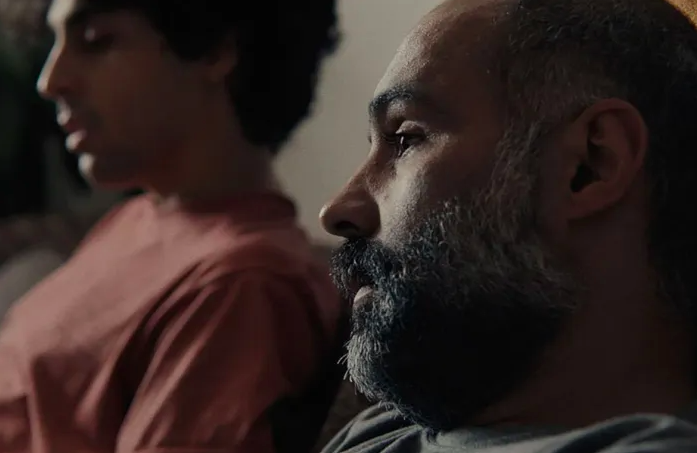
‘Baba’ Review
Filmmakers Anya Chirkova and Maziyar Khatam are two of the most exciting emerging talents in the industry. From writer-director Chirkova’s summer romance Flower Boy (which starred Khatam), to Khatam’s clever Sundance short film Bump (which he directed, wrote, and starred in), these 2021 works exemplify clear artistic voices. Through relatable characters and impactful gestures, they tell stories of everyday life. Flower Boy, filmed in a dreamy summer haze, captures the hopes and dreams of a teenager figuring out who he is. Bump, in broad daylight of a city sidewalk, finds physical humor in the trivial altercation of getting accidentally bumped into. These films are the epitome of short and sweet, which has come to define what one can expect from Chirkova and Khatam. Their new collaboration is a short film called Baba, which screened at Sundance earlier this year.
Co-directed by Chirkova and Meran Ismailsoy, Baba follows a middle-aged Iranian man (Amir Zavosh) as he desperately tries to keep his apartment. All the while, his relationship with his son (Maziyar Khatam) is unraveling in real time. From the moment these characters are introduced, the parental tension is palpable. The father, behind on his rent, is dodging his son’s attempts at conversation. Not to mention pleas from the landlord (James Choy) as well as an upset neighbor complaining about the noise. The film excels at placing you in the thick of a claustrophobic environment, both on an emotional level and by way of setting. A narrow apartment traps chaotic conversations in its walls. Each character who steps foot in this space is immediately caught up in the chaos. The flow of dialogue and use of setting create an echo chamber, which is a strong reflection of the film’s protagonist — he exists in an environment where he engages only with opinions that reinforce his own. Whether it’s his son or his landlord, no one can really get through to him. Baba holds attention on a father’s fall from grace, doing so with such a visceral approach that you feel present not only in the apartment, but in his frame of mind.
Maziyar Khatam’s screenplay evokes a human experience in a way that feels effortless. The dialogue shines a light on the hurdles of communication barriers and the heartache of isolating from one’s surroundings. Amir Zavosh’s character is so deeply wrapped up in his personal scenarios, everyone else who steps foot into the apartment at some point becomes background noise to his centrality as a protagonist. It is also through the supporting characters that you get a glimpse into the protagonist’s relationships, such as that with his son. Amir Zavosh and Maziyar Khatam, who share wonderful chemistry with each other, bring a grounded quality to the story. You feel immediately drawn to the realism of their characters as they navigate one anxiety-ridden scenario after another. In feeling like a fly on the wall of their experiences, Zavosh’s character especially, the ending is made all the more reverberating as a stunning moment of self-reflection.
From the frenetic handheld camera work and overlapping tense dialogue to the claustrophobic setting, Baba unfolds mostly in a state of disorder. The direction by Chirkova and Ismailsoy finds strength in beginning the story at a place where tension has already risen and you find yourself in the thick of it. Given the tensity, it is an unexpected surprise how Baba ends with such peacefulness. The film’s strong use of a close-up stresses a poignant moment for the protagonist; it’s a well-earned window to his emotional vulnerability, which Zavosh plays very well. Aligned with the direction and screenplay, the acting showcases strong commitment to making a day-in-the-life story feel as realistic as possible.
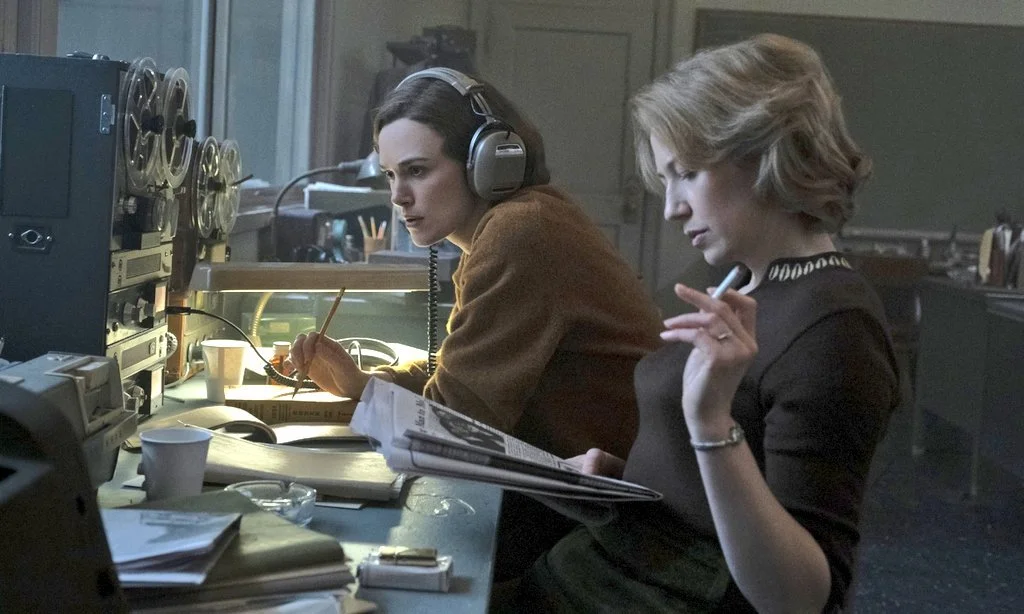
‘Boston Strangler’ Review
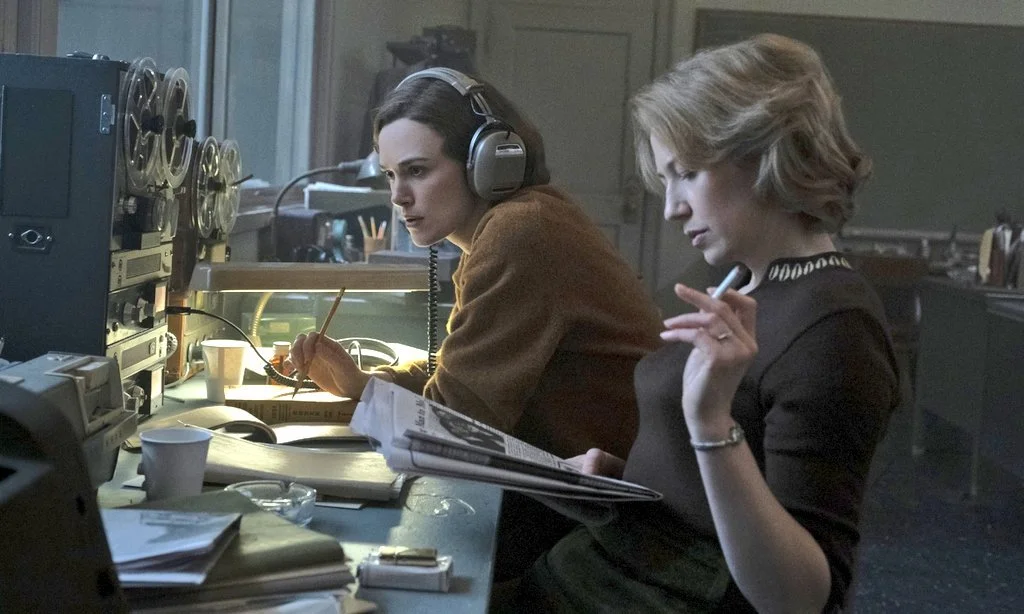
March 16, 2023
When it comes to journalism films that put a much-needed spotlight on women in the newsroom, the more the merrier. Often faced with harassment and sexism from colleagues, female journalists face an uphill battle of being taken seriously in the field. Such was the case in 1960s Boston, Massachusetts, when a serial killer known as the Boston Strangler terrorized the streets. He targeted women as his victims, and committed 13 murders in the city. The investigative reporters who broke the story – Loretta McLaughlin and Jean Cole of the Record American – are given the narrative focus in the Hulu film Boston Strangler. Written and directed by Matt Ruskin, the film follows Loretta and Jean’s tireless work around the clock to connect the murders and make the city of Boston safer for women. With similarities drawn to Maria Schrader’s She Said released last year, Boston Strangler joins the chorus of films that prioritizes women’s contributions to an increasingly important industry.
Boston Strangler doesn’t move at the most exciting speed, which is a road block that many true crime films face. Procedurals based around an investigation naturally have lulls in the process. Potential leads dry up. Cases become drawn out. The chase of a story can be an incredibly long process, which the film seems to take to heart. The monotonous approach grows a bit tiresome and undercuts the engaging performances that Knightley and Coon deliver in their compelling roles.
The film focuses more so on Knightley’s character, Loretta McLaughlin. Her inspiring determination to cover stories beyond the lifestyle section leads to one of the most prolific pieces of journalism in history. When Loretta notices a connection between the underreported deaths of women in the city, she brings the information to her editor Jack Maclaine (Chris Cooper). After being turned down to cover the story, she persists, and ultimately gets the opportunity to pursue the investigation. Though her work faces pushback from a male-dominated newsroom, as well as a male-dominated household in which her husband James (Morgan Spector) believes she is neglecting her duties as a wife and mother. Loretta also faces the terrifying risk of putting herself into potentially dangerous scenarios.
Loretta’s commitment to the work continues alongside seasoned colleague Jean Cole (Coon). The two journalists team up and become trusty confidantes who understand the personal and professional risks of this case. The film smartly focuses on the trust and bond formed between both characters. Viewers are given a resonating glimpse into Loretta and Jean’s passion and dedication to conducting the most thorough work. The film also gives a spotlight to how they put themselves in harm’s way to bring the truth to their readers, and the city at large. Adding a compelling layer to the storytelling are two great performances by Knightley and Coon. Through their authenticity and command of the screen, the strength and perseverance of their characters stands out.
Additionally, there is something to be said for Ruskin’s perspective on the acts of violence. Among the most disturbing and upsetting scenes of the film are the Boston Strangler’s attacks. The assaults are not shown in full detail, and do not linger on how the violence is carried out. Ruskin admirably indicates that depictions of brutality committed against women do not need to be explicitly shown for an impact to be made. In the film, women’s perspectives are taken seriously, and their identities respected.
Boston Strangler can be engaging to an extent, mostly thanks to committed performances by Knightley and Coon in the starring roles. The film also resonates in its focused perspective from women in the newsroom. However, the overall direction and writing feels far too reserved to capture the sense of urgency and suspense around the case. In a sea of films about true crime and journalism, Boston Strangler falls short of being memorable in retrospect.
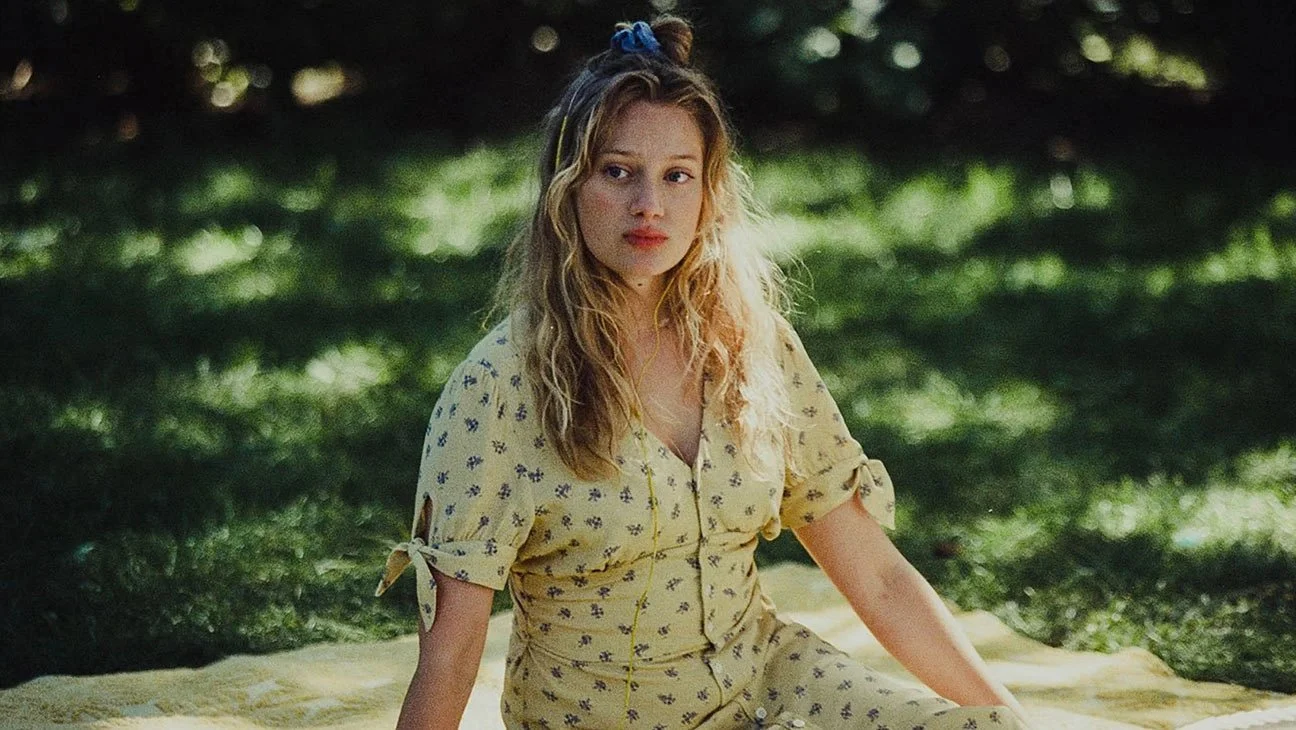
CFF 2023: ‘Babysitter’ Review
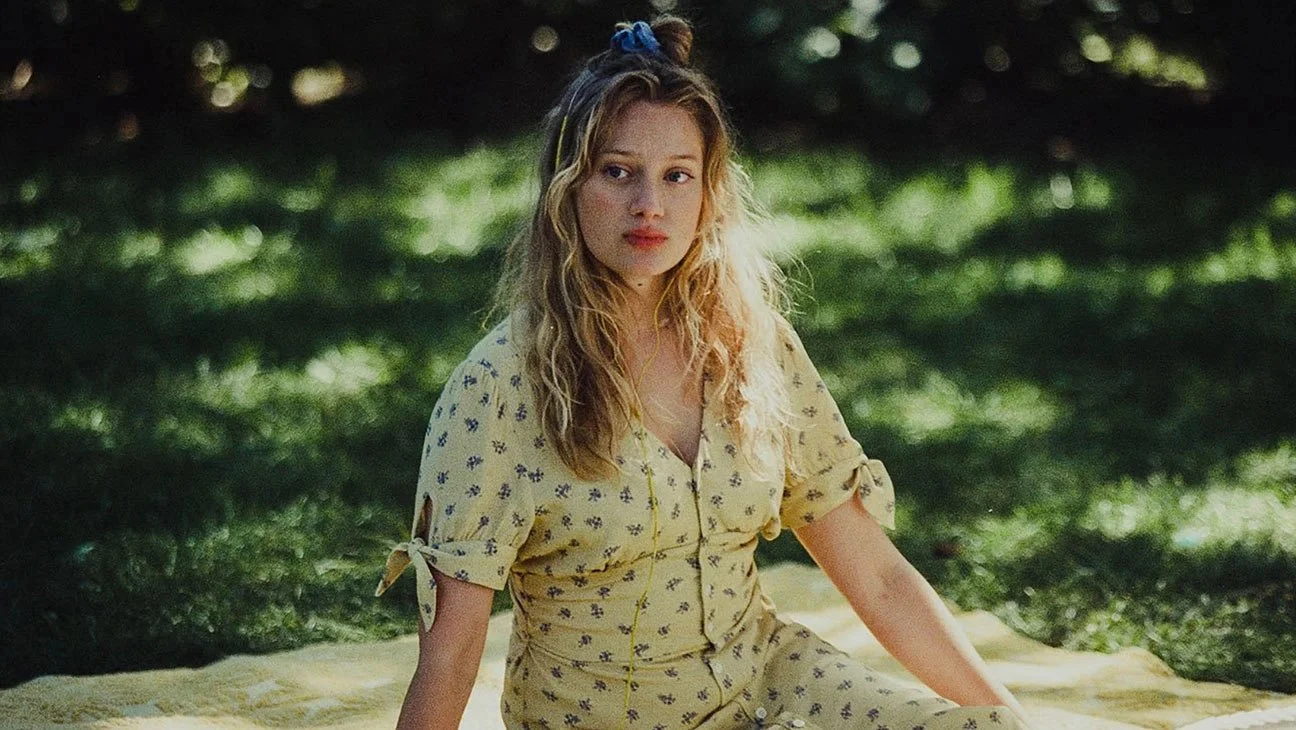
March 28, 2023
Following its world premiere at the 2022 Sundance Film Festival, Babysitter is arriving in Toronto to kick off this year’s Canadian Film Fest (CFF). The CFF is an indie-spirited festival dedicated to celebrating Canadian filmmakers. The festival returns this spring for its 17th edition, and for the first time, as a hybrid with both in-person and virtual screenings. This year’s slate has a strong focus on women in film, both in front of and behind the camera. Babysitter, directed by Monia Chokri and written by Catherine Léger, confronts misogyny with a sardonic point of view. The story follows Cédric (Patrick Hivon), who after committing sexual assault and losing his job, attempts to “free” himself from sexism by co-writing a book to attack misogyny. His wife Nadine (Chokri), a new mother exhausted by his behavior and in search of her own fulfillment, becomes drawn to their child’s babysitter Amy (Nadia Tereszkiewicz). Amy’s presence creates a more mysterious, playful environment. As Cédric and Nadine drift further apart, their lives become more and more like a fever dream.
The film plays up qualities of dreamlike strangeness, from the technicolor set pieces and cinematography, to the exaggerated acting. There is a cartoonish, eccentric energy to Chokri’s direction. The characters feel like caricatures instead of human beings. The costumes and sets have a coat of plasticity to them, not unlike pieces you would find in a doll’s house. While Babysitter has a specific vision aesthetically, the film lacks in a coherent narrative structure. Adapted from Catherine Léger’s 2017 play of the same name, Chokri’s genre-bending approach explores themes of toxic masculinity and gender politics through elements of horror and comedy. The use of different genres has its intriguing moments, particularly with the babysitter character who channels satire fairly well. However, the potentiality of this film resonating in its social commentary is overpowered by inconsistent direction and over-exaggerated performances.
Babysitter is often difficult to follow and keep engaged by, which makes one curious for how the film could have worked better through a different perspective. By centering Cédric as the protagonist, the story is told largely from his point of view as he attempts to apologize for his sexist behavior. This relegates a far more interesting character to the background: Nadine. While she isn’t given much material to work with, Chokri brings an enjoyable stoicism to the character and maintains the film’s magical realism. Nadia Tereszkiewicz’s performance as Amy fits the fairytale-like directorial style; rather than a character who advances the plot, the babysitter appears to be a figment of one’s imagination. Of the cast, Chokri and Tereszkiewicz stand out in balancing the film’s erratic tone. The rest of the ensemble leans too far into exaggeration, reaching the point where they distract from the story. This is the case for the majority of factors at play in Babysitter. While refreshing in its genre-bending approach, and full of energy, the muddled screenplay and unfocused direction make for a wearying experience.
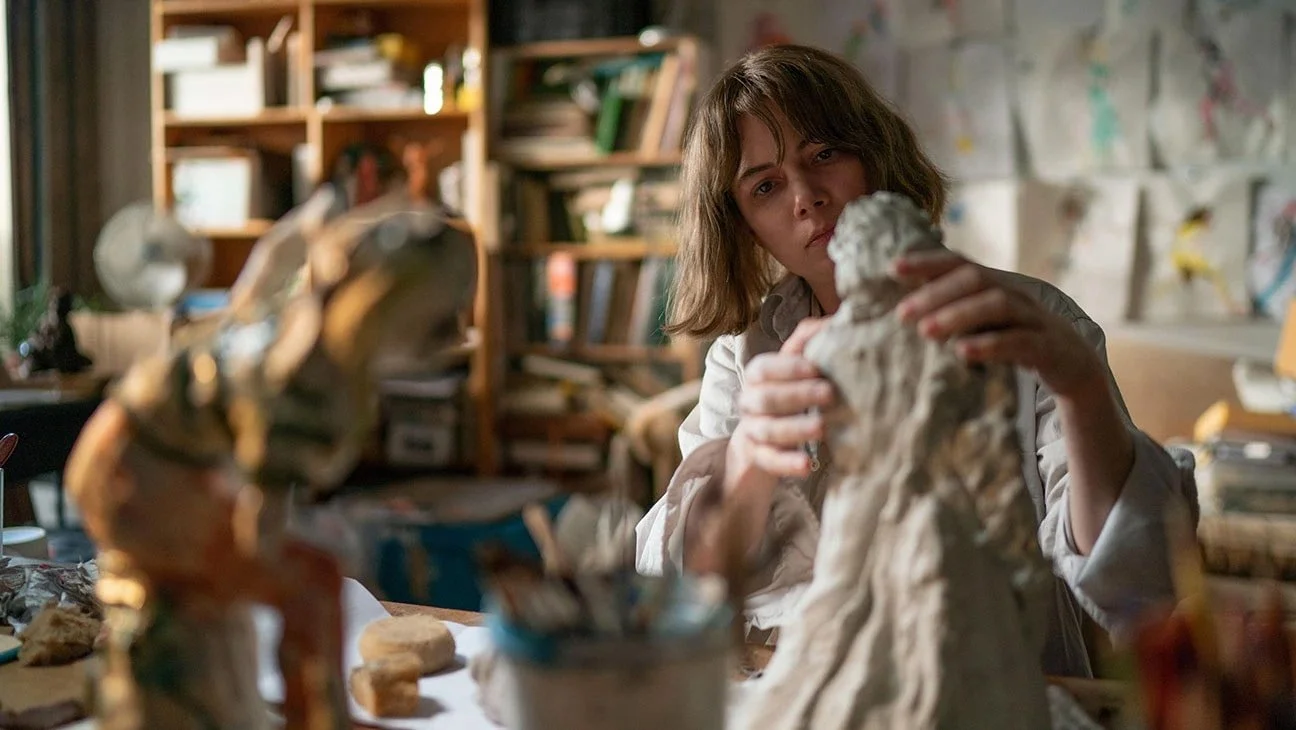
‘Showing Up’ Review
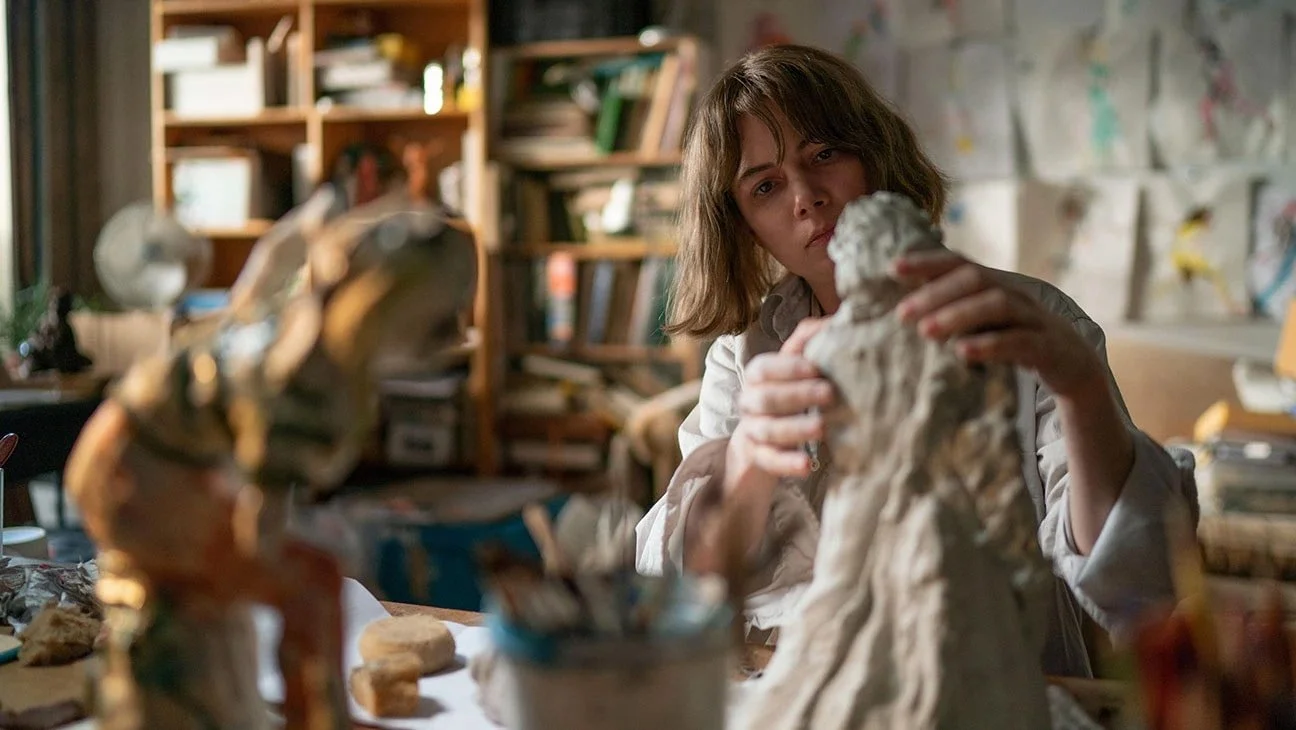
April 8, 2023
As the opening credits roll on Kelly Reichardt’s latest film Showing Up, the director’s perceptive sensibility is on full display. A collection of sculpted pieces are given uninterrupted focus. The viewer soon discovers whose artistic hand is behind each creation. Michelle Williams plays Lizzy Carr, an antisocial sculptor artist on the verge of a career-changing exhibition. In the lead-up to her show, she navigates the quiet stresses of her family, friends, colleagues, pet cat, temporary pet pigeon, and everyday life itself. As Lizzy tries to mould a place of solitude and protect her artistic process, daily setbacks get in the way. Showing Up moves at a gentle pace, which is exactly the kind of minimalist approach that has come to define one of the most distinctive filmmakers of our time. From Wendy and Lucy and Certain Women to First Cow, Kelly Reichardt tells low-key stories about characters going about their lives, simply passing through. A clear continuation of this type of storytelling, Showing Up is a wonderfully perceptive piece about nurturing creativity and navigating obscurity.
Lizzy lives with her cat and prefers an unbothered life when she’s at home. She has a tranquil workspace, where she makes sculpted people who are rough around the edges. Each piece, as you see in the beginning of the film, is about to be part of an upcoming gallery exhibit. Given the obscurity of Lizzy’s work, this show is a big deal, and she wants everyone in her life to be there, however dysfunctional. Lizzy works administration at a small arts college in Portland, Oregon. Her mother Jean (Maryann Plunkett) is her boss, a detail which the film reveals in a perfectly subtle way. Jean floats in and out of the story, as do Lizzy’s ceramicist father Bill (Judd Hirsch) and mentally ill brother Sean (John Magaro).
Among Lizzy’s limited social circle, there’s sweet pottery expert/co-worker Eric (André Benjamin, also known as André 3000), and pesky landlord Jo (Hong Chau) who is also an artist. The majority of these characters represent a daily setback on some level, particularly Jo repeatedly ignoring Lizzy’s requests to fix the water heater in her rental house so that she could take a shower. The interactions between Lizzy and Jo are incredibly stressful to watch, made even more so by the discreetness of both characters. Their dynamic feels truthful, especially for Lizzy’s character who is more introverted and avoids confrontation. Another highlight is Lizzy’s return home from a stressful family situation, clearly in emotional distress, only to find that Jo is throwing a party next door. The camera stays on Lizzy as she walks from her car to her front door, and it’s one of the most quietly nerve-wracking moments in the film.
Rather than exaggerate for dramatic effect, Showing Up underplays conflict to the point where it fades into the mundanity of everyday life. Lizzy having to remind Jo to fix the shower becomes part of a routine. When a pigeon flies into Lizzy’s window and she carefully puts it back outside, Jo finds the bird down the road and hands responsibility over to Lizzy for nurturing. The pigeon becomes part of a routine. The film conveys several moments such as these, where Lizzy’s work schedule is interrupted by various people (and animals) and she shows up to face each mini challenge. It’s a slice-of-life story that unfolds the way daily life does: routinely, though not without a curveball or two, in varying degrees of extremity. No one captures the mundane like Reichardt. She has perfected the art of drawing out the significance from unassuming moments.
Showing Up shines in its focus on mood and atmosphere over a highly eventful plot. Not much is happening in this story. The screenplay, co-written by Reichardt and Jonathan Raymond, prioritizes the bits of life happening right under your nose. It’s a patient character study just as much about Lizzy as it is about her surroundings. As is often the case in Reichardt’s body of work, characters are conveyed through a language of what’s left unsaid between them. When we first see Lizzy among a group of people, there’s an energy to the way she interacts with them, suggesting how close or distant she is to them. Explanatory dialogue is not needed. The inflections of a character speak volumes, and in this artistic world of Portland, reveal how creative impulses shape how you go about your day. Lizzy’s character is an engaging depiction of how it feels to immerse yourself in art and craft, while feeling the tug of responsibility.
The role of Lizzy is right up Michelle Williams’ alley. Showing Up marks her fourth collaboration with Reichardt and by this stage, the two have established an incredible shorthand with each other. It’s easy to see why Williams continues to show up, they feel made for each other on an artistic level. Williams slips into the unassuming slumber of Portland without missing a beat. Her performance is a subtle showcase of her instinctive, naturalistic gifts as an actress. While her character is emotionally reserved, Williams is an open book with perceptive expressions that call on your patience to sit with her and simply observe. She makes Lizzy’s insecurity palpable on screen, to the point where you do feel quietly stressed out (and at times mildly amused) by her day-to-day life.
In addition to Williams, Hong Chau is terrific and makes a case for becoming another wishful Reichardt regular. After her breakout role in 2017’s Downsizing, Chau has continued to show phenomenal range, from 2022’s The Whale and The Menu to the 2019 HBO stunner Watchmen and this year's crafty whodunit series Poker Face. Showing Up is another wonderful turn; the character of Jo is tricky to find. She’s self-centered and annoying in her neglect. She also has a deep impulse to create as much as possible, and despite previous challenges, she shows up for Lizzy’s big night. Jo and Lizzy show up for their art in different ways, and that dichotomy is resonating to reflect on.
Throughout Showing Up, there are blissful uninterrupted vignettes of artists making things. Artists in their element, focused only on the creation at hand. Reichardt finds a sublime balance between portrayals of isolated artists like Lizzy, and the prospering art world she’s surrounded by. “Showing Up” depicts the creative process in a way that you can assign your own perspective. Once you find your creative skill, how do you nurture and protect it? How willing are you to show up for it? Is your willingness at the expense of others, who need you and count on you for something that exists outside of your creative zone? Showing Up may seem specific in its focus on a small slice of life, but Reichardt engages in such resonating universal themes about wrestling with self-security as an artist, and finding a place in a community full of creatives.
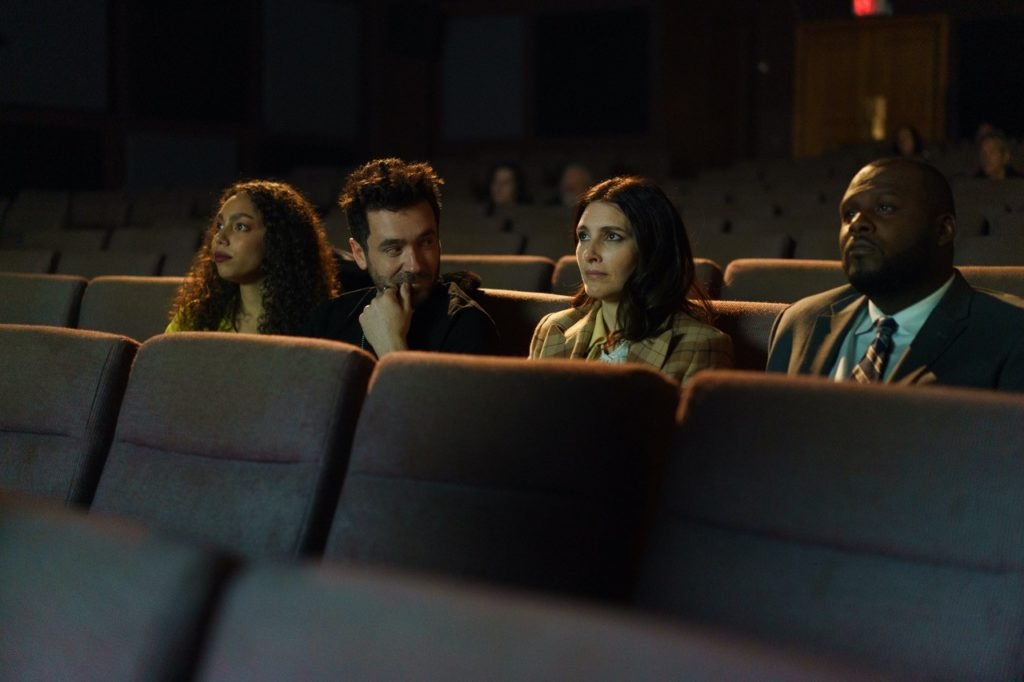
‘Midnight at the Paradise’ Review
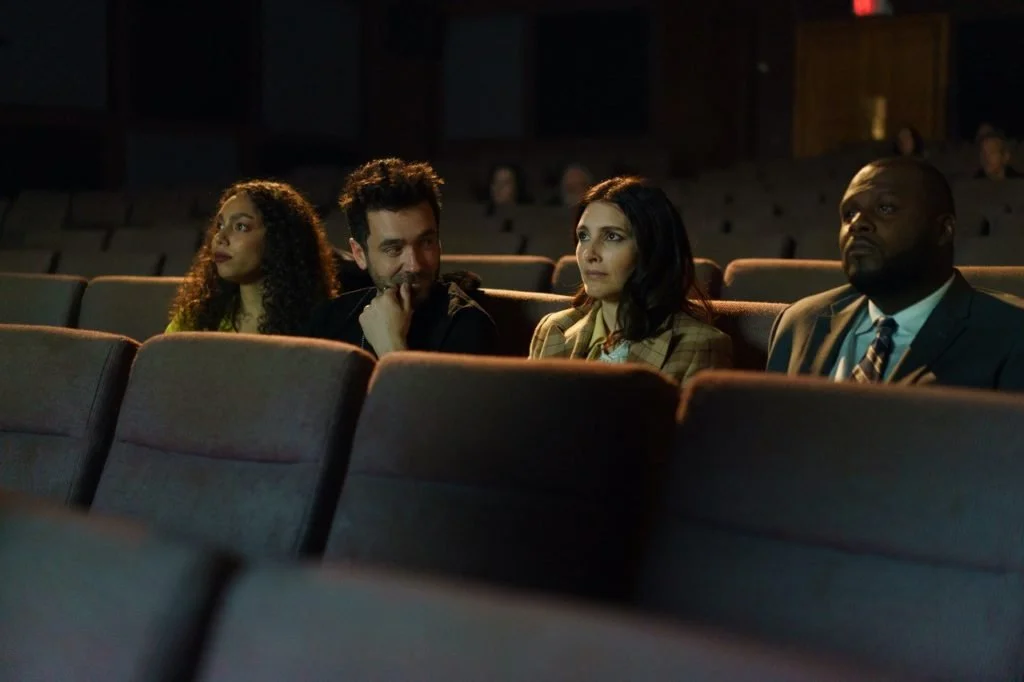
April 21, 2023
The Paradise Theatre on the corner of Bloor Street and Westmoreland Avenue has been a part of Toronto’s neighborhood for decades. With its 1930s art deco style and welcoming atmosphere, the Paradise brings audiences together. It’s a place where people not only watch films, but create memories, and make connections with people that last forever, no matter how much time passes. For the characters in Midnight at the Paradise, a gem of a picture directed by Vanessa Matsui, the theatre is a checkpoint. It represents a moment of reflection, and a reminder of the past. It is through the significance of this landmark that the film gently finds its way. From passion and grief, to the fickleness of time, resonant themes are explored with care and the power to evoke strong emotion. With terrific subtext and authentic performances, Midnight at the Paradise shines as a meditative slice-of-life story about personal journeys.
Midnight at the Paradise follows two former lovers — Iris (Liane Balaban) and Alex (Allan Hawco) — years since they first met. Living in Toronto, Iris is unhappily married to Geoff (Ryan Allen), raising their daughter Alice (Lauren Brady), and caring for her terminally ill father Max (Kenneth Welsh). Meanwhile in Montreal, Alex feels disconnected from his girlfriend Anthea (Emma Ferreira), and is eager to make a trip back to where he found his everlasting early love. Upon being introduced to Iris and Alex separately, there is an intriguing unspoken connection between these two characters. Though physically cities apart, they feel joined at the hip. You pick up on their history without question, a testament to good acting and complimentary editing that flows incredibly well.
Iris and Alex have a tenderness and a shorthand that unravels slowly, leading up to when the two reconnect at the Paradise. They pick up where they left off, as if no time has passed. Often when it comes to films about lost lovers finding their way back to what they once shared, the story zones in on their personality traits and who they are as defined by each other. Midnight at the Paradise stands out in depicting a romantic connection from the perspective of daily life and how it informs the pursuit of revisiting past experiences. In addition to Iris and Alex, the screenplay (written by Bill Robertson) invests in the supporting characters of their lives and how the protagonists’ love impacts them in small ways. Instead of being defined by each other, the film incorporates the bits of life happening around them to create portraits of people that feel real.
The characters are brought together by the Paradise — Iris has plans to save the theatre with a screening of Jean-Luc Godard’s Breathless (1960), a prime example of French New Wave cinema. Both Iris and her father Max (a former film critic whose motto is to let a movie be a movie), hold “Breathless” in high regard. The Paradise screening is a tribute to Max, who is suffering from pancreatic cancer. The film depicts a complex father-daughter relationship that thrives in subtext. The emotions left unsaid between them speaks volumes as they share several scenes centered on just a look, or a parting word.
From the way Iris looks at her father, there is a heartache and a longing behind her eyes, that gives you a sense of how difficult it is to see him unwell. As someone who shares in a similar experience, the pain brings about deep reflections of the future and time itself. You remind yourself of what matters at your core, and feel a greater desire to follow what makes your heart sing. Iris reconnecting with Alex, even on a subconscious level before the two physically meet again, is a resonating manifestation of one of her deep desires. Alex takes her back to young love, endless possibility, and the experience of watching Breathless together for the first time. As well, her love and appreciation for her dad’s work and what films meant to him. Midnight at the Paradise excels at showing how a true love story continues to build — further away from reality — in its struggle to survive the everyday.
Midnight at the Paradise marks Vanessa Matsui’s feature directorial debut and an exciting new chapter in her career. One that has been long awaited considering her wonderful dark comedy web series “Ghost BFF,” which premiered its first season in 2018 and followed with a second in 2020. The series tells the story of two best friends (one alive, one a ghost) navigating their past and present life choices. “Ghost BFF” shines a light on mental health in a truly accessible and authentic way. Matsui brings a similar authenticity to the topic of romantic relationships in Midnight at the Paradise. The film balances Iris and Alex’s story while exploring sparks flying between Geoff and Anthea, as well as the long-lasting connection between Max and his wife Charmaine (Kate Trotter). Each of these relationships are given the time to unfold naturally, and feel rooted in truthfulness. The performances are grounded and bring emotional weight to the story, especially Balaban and Hawco who convey subtext beautifully.
Matsui embraces the messiness of love and the mixed emotions around what people want out of their partners. She maintains a compelling exploration of characters at different points of their relationships, and how the overlapping of their lives brings out their personal pursuits. In addition to being a great piece on complicated relationship statuses, Midnight at the Paradise is a sweet love letter to the power of films. From the backdrop of saving the Paradise theatre to the use of Godard’s Breathless as a compatibility test for the characters, there is so much love around this medium of storytelling and its power of bringing people together.
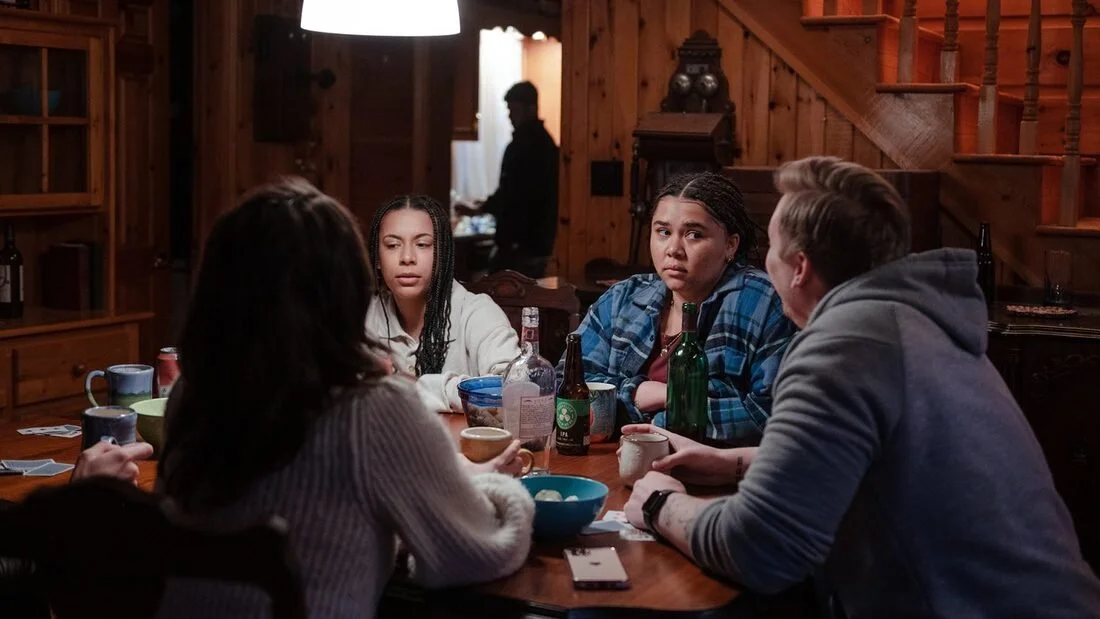
‘Bystanders’ Review
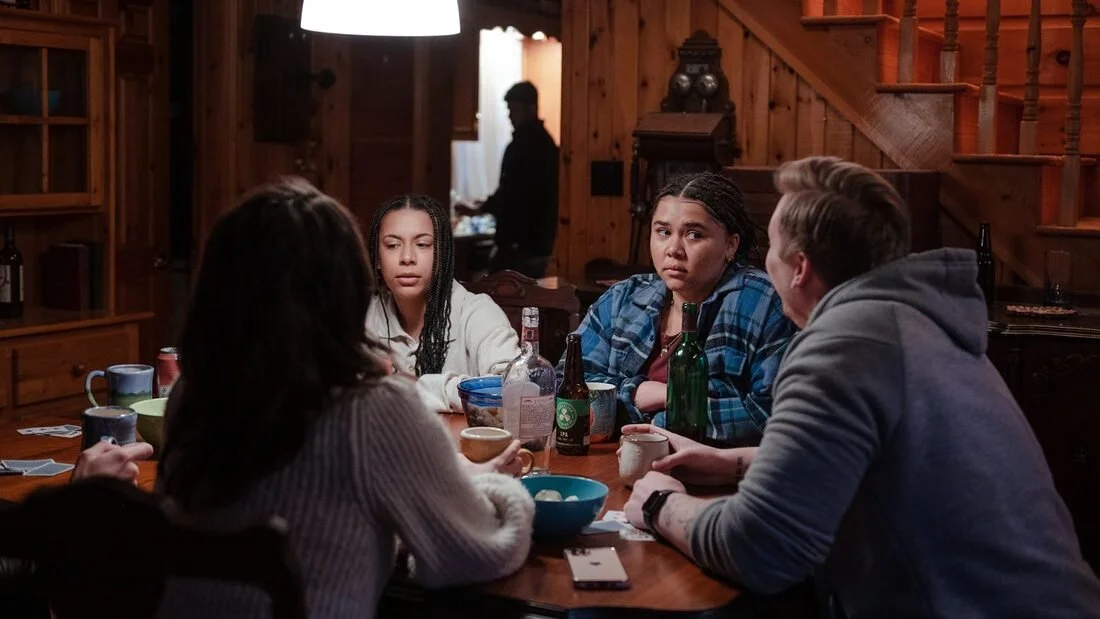
April 26, 2023
Friendship reunions run the gamut of emotion. Some relationships are able to pick up where they left off as if no time has passed. Others have been shaken by the very common occurrence of simply drifting apart, without rhyme or reason. Approaching a reunion is a cocktail of expectation and uncertainty, as you are getting to know someone all over again, for better or worse. The Canadian film Bystanders, written and directed by Koumbie, explores what happens when six childhood friends ruminate on the disturbing past experiences of someone in their circle. The group, who gather for their annual weekend getaway at a remote cottage, are forced to confront the knowledge that one of them is guilty of sexual assault. Each friend takes a stance, ranging from defense and bewilderment, to accountability and punishment. Bystanders tackles the aftermath of sexual assault from the perspectives of those who personally know the abuser. Will the circle of friends maintain silence and complicity? Or will the abuser be confronted? Adhering to its title, Bystanders is an uncomfortable story of how people navigate confessional wrongdoing and how their decisions reflect society at large.
The story begins with an air of innocence. In watching the group of friends arrive at the getaway home, Koumbie refrains from giving an early indication of the difficult conversations to come. She initially brings a more light hearted tone to the film, engaging in a secret romantic relationship between two characters Ayda (Marlee Sansom) and Zeke (Cavell Holland). The two of them toy with the idea of telling the rest of the group that they are seeing each other. The viewer also sees jovial moments among the friend group overall. Though as the film progresses, the tone becomes more dramatic with the arrival of Justin (Taylor Olson), Adya’s first love and Zeke’s roommate. From the chemistry that Sansom and Olson share, to the energy they bring to their performances, it’s clear that their characters have a history. Ayda appears to have moved on, but Justin is adamant about continuing to pursue her attention. The film establishes from early on that he crosses boundaries and lacks accountability.
The tensions between characters, and the way they all observe one another in a shared space, eventually build to a shattering dinner table conversation. It is revealed that Justin is guilty of sexually assaulting his girlfriend when they were university students. When he describes what happened, he fails to grasp the wrongdoing of his behavior. Rather than turn into a character study about the perpetrator, the film branches outward to his surroundings. How each of them reacts to this information is extremely telling of their character. One of the friends, Sophia (Katelyn McCulloch), immediately calls him out and stresses to the group that Justin should be jailed for what he did. Justin’s brother, Kyle (Peter Sarty), carries the frustration that a family member committed something horrible, struggling to fathom that his own brother would do such a thing. The film’s bystanders constantly navigate not only how to approach Justin, but whether their own reactions align with their core beliefs and values.
Co-written by Koumbie and Taylor Olson, the film explores literally and figuratively how shared spaces are utilized. Whether sharing a physical space, or an intimate experience. Justin shatters the safe space that held his friend group together; trust is broken upon them finding out someone they thought was a decent human being had committed violence. The film also explores how a man’s actions puts a woman’s experiences into perspective. In light of the news, Ayda begins to reexamine her own relationship history with Justin, and specifically the times she felt that her own safety was violated. It is an unsettling moment in the film that speaks to how women are so often gaslit, and their experiences are not taken seriously.
The biggest missed opportunity in Bystanders is not centering Ayda’s character throughout. The majority of her scenes tend to revolve around Justin’s presence, rather than elaborate on her point of view. This is a character with conflicting emotions, trying to reconcile the person she once had feelings for with the person he reveals himself to be on the weekend getaway. While there is a strong imbalance of perspective, Bystanders makes for a promising feature debut by Koumbie. In exploring the bystanders of the story, she takes an intriguing and introspective approach to heavy subject matter.
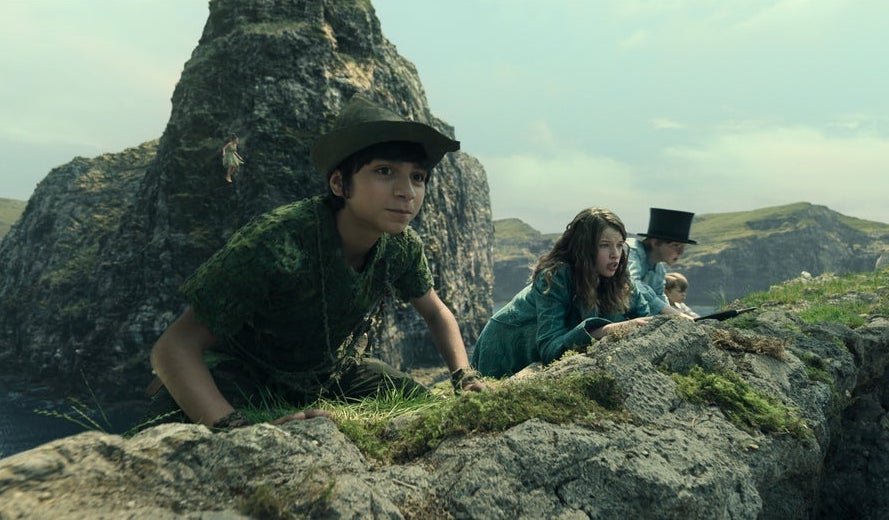
‘Peter Pan & Wendy’ Review
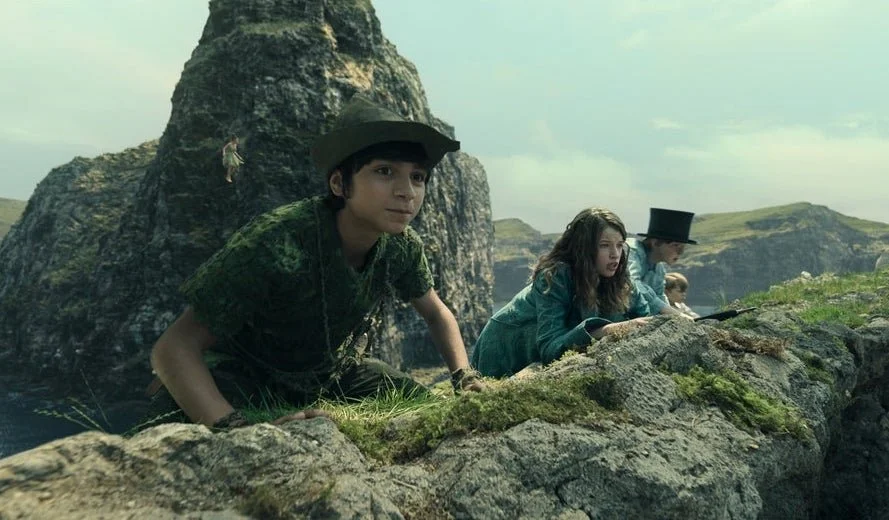
April 28, 2023
After bursting onto the scene with such films as Pete’s Dragon, A Ghost Story, and visual marvel The Green Knight, David Lowery became an exciting name to anticipate a new project from. When news broke of a live-action reimagining of Peter Pan with Lowery at the helm, ideas swirled around how the director would bring a coming-of-age classic to the screen. There seemed to be a fitting prelude to the task. Much of Lowery’s recent work explored wistful fables and lost souls. His stories often explored the imaginative, indescribable planes of consciousness where fantastical new worlds still felt grounded. As such, there is something about Lowery’s Peter Pan & Wendy that feels independent from a lot of disheartening Disney live-action remakes. But as he injects realism into Neverland, he loses the pixie dust that makes this adventure so magical.
The J.M. Barrie play, originally published in 1904, has sparked several re-imaginings from the 1953 Disney animated Peter Pan and the 1991 Steven Spielberg adventure Hook, to P.J. Hogan’s dreamy 2003 adaptation Peter Pan. Spielberg and Hogan had their distinctive visions that felt fully realized and committed. The former asks the question, what if Peter Pan grew up? The latter leans fully into the whimsy of innocence and first love. Lowery’s version exists somewhere in between realism and idealism. Based on Barrie’s play and the 1953 animation, Peter Pan & Wendy somehow feels both engaged in the material and disinterested in it altogether. The familiar skeleton of Peter Pan plays out in the story. The film follows young Wendy Darling (Ever Anderson) and her little brothers (Joshua Pickering and Jacobi Jupe), living in 20th century London with their mother (Molly Parker) and father (Alan Tudyk). On the eve of Wendy’s move to boarding school and about to leave her childhood home, she gets a visit from Peter Pan (Alexander Molony), the free-spirited boy who refuses to grow up. He arrives looking for his shadow, and alongside his fairy best friend Tinker Bell (Yara Shahidi), brings the Darling siblings to the ethereal world of Neverland. Once there, the group embark on an adventure and thwart the evil pirate, Captain Hook (Jude Law).
Lowery re-teams with his The Green Knight co-writer Toby Halbrooks to pen the screenplay for Peter Pan & Wendy, which doesn’t necessarily live up to its title of giving Wendy interesting exploration. She is admirably given an outgoing role in the story, and often takes the lead on action-based sequences as well as more emotionally charged moments. But the film tends to keep her at arm’s length when it comes to who she is beyond the circumstances, and what sparks her intense interest in what being a grown up would be like. Complex ideas are thrown into the narrative without really coming to fruition.
One such idea is the relationship between Peter and Captain Hook being given more history. This leads to the revelation of Captain Hook as a more tragic figure than expected, which paints Peter in a negative light. But the screenplay doesn’t engage in the history of their dynamics, and as a result it sits on the surface. Though the relationship does give Jude Law a bit more material to play with. The actor relishes in Hook’s backstory beneath the moustache-twirling persona. His lively performance is far and away the most engaging; he flies with an energy that the rest of the film can’t quite reach.
Peter Pan & Wendy is filled with glimpses of greatness. By taking on a more realistic approach to Peter Pan, Lowery shakes the glitter off of its iconography. He makes stunning use of Newfoundland landscapes, which add a natural quality to the film’s grounded and ethereal version of Neverland. The visual language and soundscape are a strong extension of Lowery’s vision. He presents the opportunity to dive deep into the wistfulness of this story, and the pangs of eternal childhood. Unfortunately, the screenplay is only halfway there, intrigued by fresh ideas but not fully equipped to explore them well. The film holds onto the familiar structure of the Pan story, and takes away the parts that make the possibilities of this world feel so enchanting. Lowery’s full vision feels broken into pieces between the two approaches.
Peter Pan & Wendy is now available on Disney+.