
‘Adult Adoption’ Review
January 23, 2023
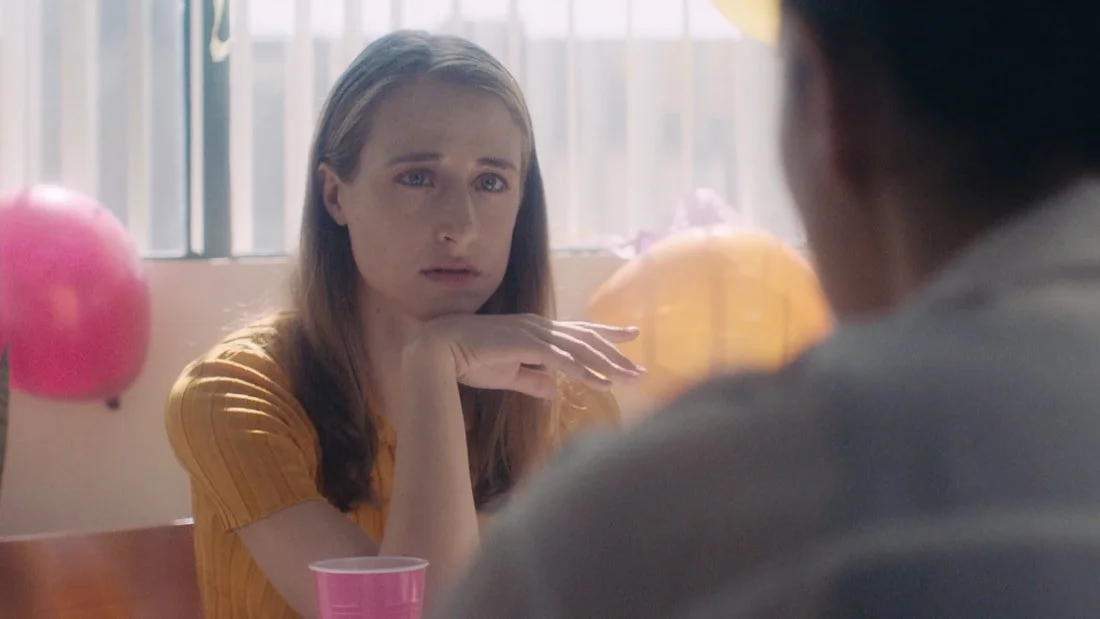
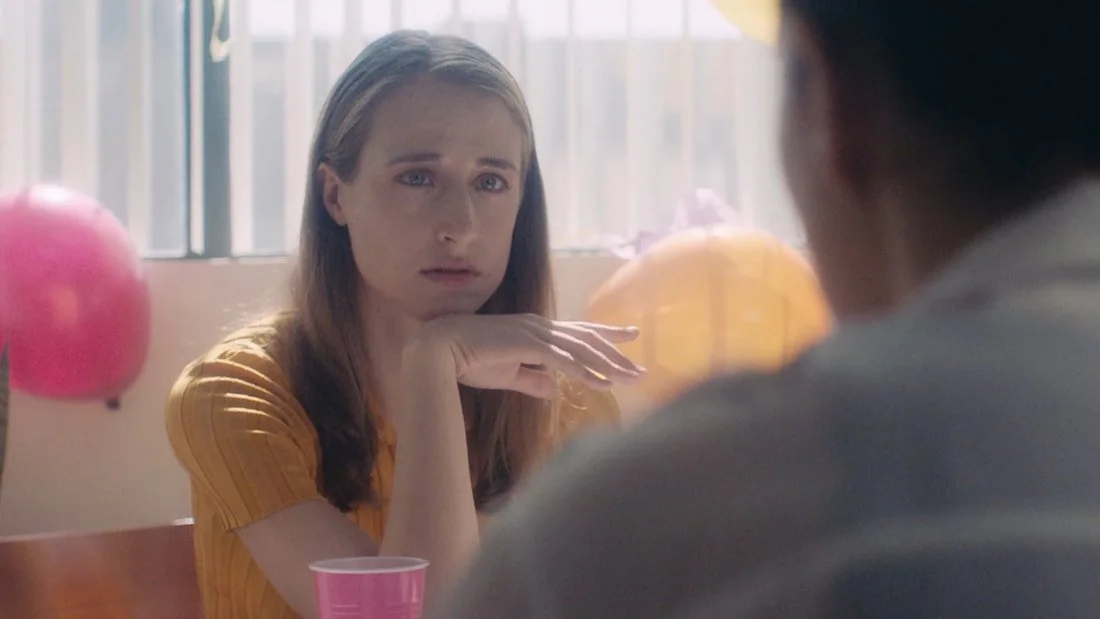
Director Karen Knox and actor-writer Ellie Moon make a charming collaborative team in the absurdist comedy Adult Adoption. Set in contemporary Toronto, the film follows Rosy (Ellie Moon), who has aged out of foster care and is now working as a bank teller. She has a solid job, but is living a life that does not feel personal to her. Rosy seeks to make sense of the world around her, to find a semblance of purpose and to fill the void felt from growing up without parental figures. One day her coworker Helen (Leah Doz) brings up the idea of meeting prospective parents, an idea to which Rosy immediately warms to. Through an online service, Rosy decides to connect with older adults who are in search of adult surrogate children. The journey of familial love introduces her to “dates” with various parental-like figures who have the potential of stepping into a guardian role, but they are figuring things out just like Rosy is. Karen Knox brings an off-center sensibility to her direction, which complements the protagonist’s awkward path of self-discovery. The zany storytelling accentuates the ridiculousness of assuming anyone has the answers to all of life’s mysteries.
From loneliness and neglect to chosen families and self-acceptance, significant themes are approached from a tinted lens. Adult Adoption is made with a soft pastel palette, as though depicted from rose-colored glasses. The production design by Talia Missaghi and the cinematography by J Stevens add to the cautious optimism this film evokes. The protagonist shares some of her deepest most vulnerable thoughts to strangers. One potential parental figure in particular, with whom Rosy spends increased time with, is not as attentive as Rosy would like. The sense of frustration Rosy experiences when the disillusion of life kicks in is one of the more resonating moments in the film. After years of not feeling wanted from foster families and adoption agencies, she wants to finally experience being part of a family. Ellie Moon’s strength both as an actor and writer brings a great level of openness to understanding Rosy’s perspective.
Moon’s screenplay finds strength in the dynamics shown between Rosy and two prospective parents. Through the characters’ interactions, the film engages with manifestations of love and loneliness in familial relationships. Everyone involved in the adult adoption process is searching for a balm to solitude in some way. Sometimes the simplest gestures can speak to a need of being comforted. Rosy at one point asks one of the prospective parents she regularly meets with to brush her hair. With a quirky pop song bopping in the background, the hair-brushing scene shows Rosy’s level of maturity as though she is frozen in youth. In addition to Rosy’s childlike bedroom and the various uses of pastel colors throughout the film, Adult Adoption makes excellent use of visual cues to accentuate that the protagonist is emotionally stuck at a certain age.
Self-love plays a role in Rosy uncovering her hurt and finding a way to process it. She often searches for emotional support in other people. She brings with her a certain level of expectation from them, in addition to her needs of being accepted. The journey leads her to realize the importance of her own self-acceptance. With a single line in the film — “I am the creator of my own life” — Rosy embraces the practice of self-love with much greater complexity and control. As such, the world begins to open up for her. In one of the film’s most resonating moments, she walks out of a club with a spring in her step. Through Moon’s facial expression and the way this scene is shot, her surroundings become clearer. This moment is a fitting parallel to the very last shot of the film that sees Rosy surrounded by trees: a significant symbol of growth, change, nourishment. Rosy’s life is in bloom.
The film tackles a subject not often explored in many films — adult adoption. This subject is conveyed with care, and an emphasis on the wide range of emotions one would imagine this process involves. There’s also a quirkiness to the telling of this story. From the music choices and acting, to the direction and writing, Adult Adoption brings a mostly refreshing approach to big themes. While some scenes feel too lightweight for the subject matter, the film more often than not reaches a strong balance of humor and sadness. Above all, Ellie Moon’s performance as Rosy is an endearing anchor. She captures the sensibility of a young woman trying to figure out her path in life while frozen in time.
‘Baba’ Review
Filmmakers Anya Chirkova and Maziyar Khatam are two of the most exciting emerging talents in the industry. From writer-director Chirkova’s summer romance Flower Boy (which starred Khatam), to Khatam’s clever Sundance short film Bump (which he directed, wrote, and starred in), these 2021 works exemplify clear artistic voices. Through relatable characters and impactful gestures, they tell stories of everyday life. Flower Boy, filmed in a dreamy summer haze, captures the hopes and dreams of a teenager figuring out who he is. Bump, in broad daylight of a city sidewalk, finds physical humor in the trivial altercation of getting accidentally bumped into. These films are the epitome of short and sweet, which has come to define what one can expect from Chirkova and Khatam. Their new collaboration is a short film called Baba, which screened at Sundance earlier this year.
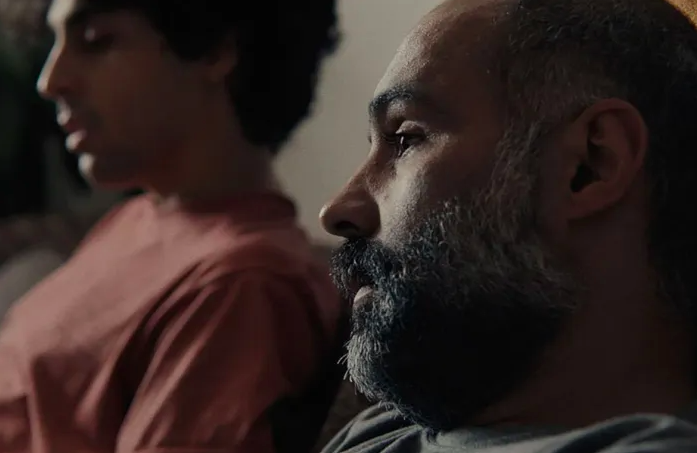
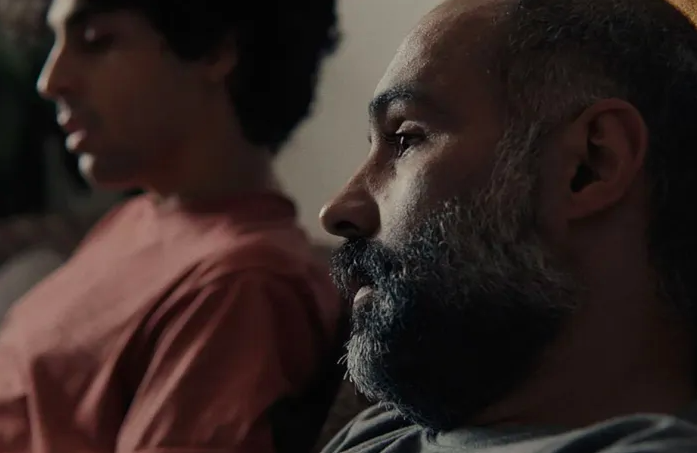
Co-directed by Chirkova and Meran Ismailsoy, Baba follows a middle-aged Iranian man (Amir Zavosh) as he desperately tries to keep his apartment. All the while, his relationship with his son (Maziyar Khatam) is unraveling in real time. From the moment these characters are introduced, the parental tension is palpable. The father, behind on his rent, is dodging his son’s attempts at conversation. Not to mention pleas from the landlord (James Choy) as well as an upset neighbor complaining about the noise. The film excels at placing you in the thick of a claustrophobic environment, both on an emotional level and by way of setting. A narrow apartment traps chaotic conversations in its walls. Each character who steps foot in this space is immediately caught up in the chaos. The flow of dialogue and use of setting create an echo chamber, which is a strong reflection of the film’s protagonist — he exists in an environment where he engages only with opinions that reinforce his own. Whether it’s his son or his landlord, no one can really get through to him. Baba holds attention on a father’s fall from grace, doing so with such a visceral approach that you feel present not only in the apartment, but in his frame of mind.
Maziyar Khatam’s screenplay evokes a human experience in a way that feels effortless. The dialogue shines a light on the hurdles of communication barriers and the heartache of isolating from one’s surroundings. Amir Zavosh’s character is so deeply wrapped up in his personal scenarios, everyone else who steps foot into the apartment at some point becomes background noise to his centrality as a protagonist. It is also through the supporting characters that you get a glimpse into the protagonist’s relationships, such as that with his son. Amir Zavosh and Maziyar Khatam, who share wonderful chemistry with each other, bring a grounded quality to the story. You feel immediately drawn to the realism of their characters as they navigate one anxiety-ridden scenario after another. In feeling like a fly on the wall of their experiences, Zavosh’s character especially, the ending is made all the more reverberating as a stunning moment of self-reflection.
From the frenetic handheld camera work and overlapping tense dialogue to the claustrophobic setting, Baba unfolds mostly in a state of disorder. The direction by Chirkova and Ismailsoy finds strength in beginning the story at a place where tension has already risen and you find yourself in the thick of it. Given the tensity, it is an unexpected surprise how Baba ends with such peacefulness. The film’s strong use of a close-up stresses a poignant moment for the protagonist; it’s a well-earned window to his emotional vulnerability, which Zavosh plays very well. Aligned with the direction and screenplay, the acting showcases strong commitment to making a day-in-the-life story feel as realistic as possible.
‘Boston Strangler’ Review
March 16, 2023
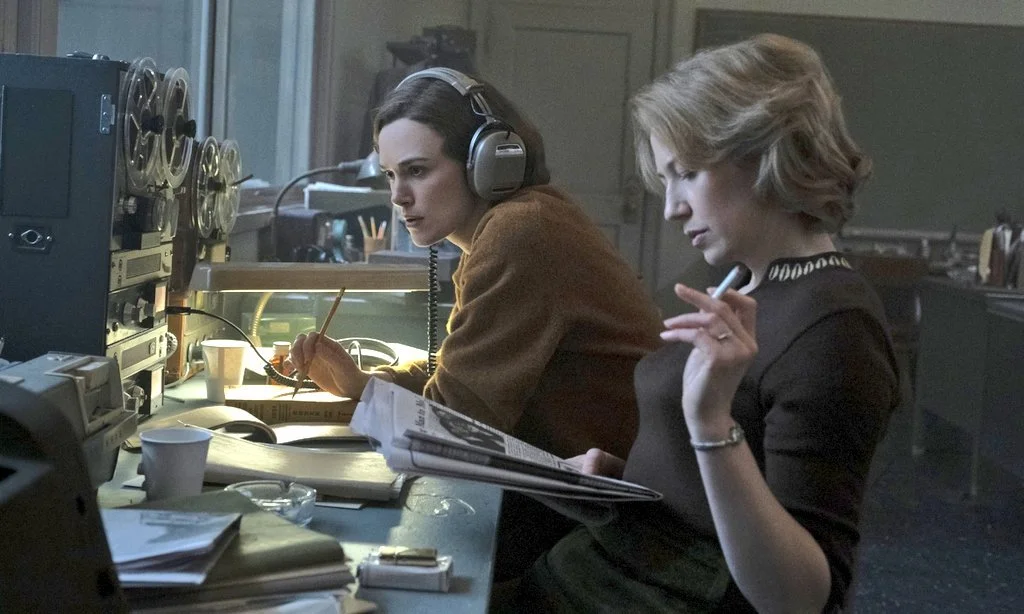
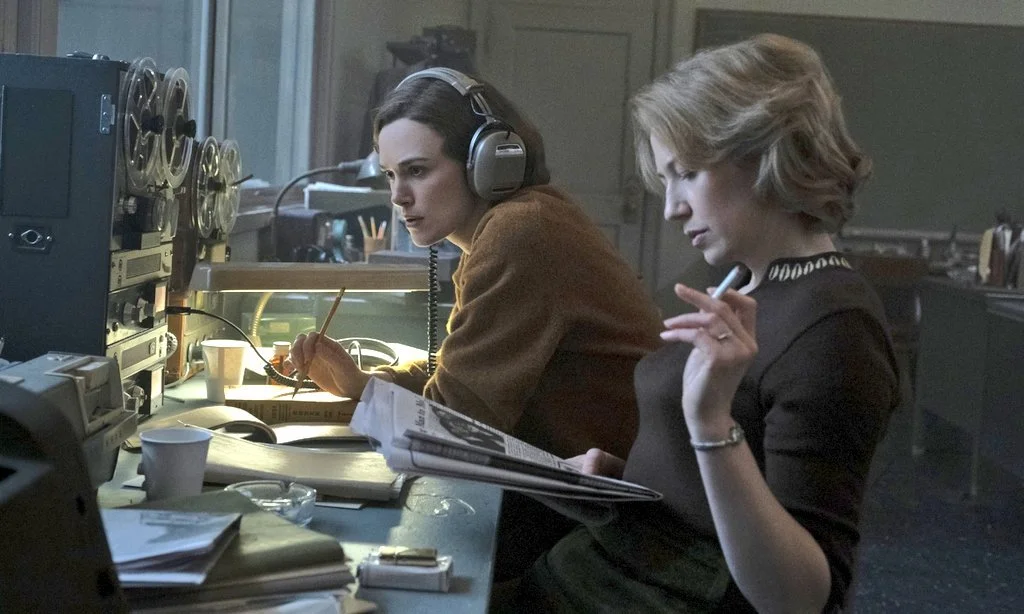
When it comes to journalism films that put a much-needed spotlight on women in the newsroom, the more the merrier. Often faced with harassment and sexism from colleagues, female journalists face an uphill battle of being taken seriously in the field. Such was the case in 1960s Boston, Massachusetts, when a serial killer known as the Boston Strangler terrorized the streets. He targeted women as his victims, and committed 13 murders in the city. The investigative reporters who broke the story – Loretta McLaughlin and Jean Cole of the Record American – are given the narrative focus in the Hulu film Boston Strangler. Written and directed by Matt Ruskin, the film follows Loretta and Jean’s tireless work around the clock to connect the murders and make the city of Boston safer for women. With similarities drawn to Maria Schrader’s She Said released last year, Boston Strangler joins the chorus of films that prioritizes women’s contributions to an increasingly important industry.
Boston Strangler doesn’t move at the most exciting speed, which is a road block that many true crime films face. Procedurals based around an investigation naturally have lulls in the process. Potential leads dry up. Cases become drawn out. The chase of a story can be an incredibly long process, which the film seems to take to heart. The monotonous approach grows a bit tiresome and undercuts the engaging performances that Knightley and Coon deliver in their compelling roles.
The film focuses more so on Knightley’s character, Loretta McLaughlin. Her inspiring determination to cover stories beyond the lifestyle section leads to one of the most prolific pieces of journalism in history. When Loretta notices a connection between the underreported deaths of women in the city, she brings the information to her editor Jack Maclaine (Chris Cooper). After being turned down to cover the story, she persists, and ultimately gets the opportunity to pursue the investigation. Though her work faces pushback from a male-dominated newsroom, as well as a male-dominated household in which her husband James (Morgan Spector) believes she is neglecting her duties as a wife and mother. Loretta also faces the terrifying risk of putting herself into potentially dangerous scenarios.
Loretta’s commitment to the work continues alongside seasoned colleague Jean Cole (Coon). The two journalists team up and become trusty confidantes who understand the personal and professional risks of this case. The film smartly focuses on the trust and bond formed between both characters. Viewers are given a resonating glimpse into Loretta and Jean’s passion and dedication to conducting the most thorough work. The film also gives a spotlight to how they put themselves in harm’s way to bring the truth to their readers, and the city at large. Adding a compelling layer to the storytelling are two great performances by Knightley and Coon. Through their authenticity and command of the screen, the strength and perseverance of their characters stands out.
Additionally, there is something to be said for Ruskin’s perspective on the acts of violence. Among the most disturbing and upsetting scenes of the film are the Boston Strangler’s attacks. The assaults are not shown in full detail, and do not linger on how the violence is carried out. Ruskin admirably indicates that depictions of brutality committed against women do not need to be explicitly shown for an impact to be made. In the film, women’s perspectives are taken seriously, and their identities respected.
Boston Strangler can be engaging to an extent, mostly thanks to committed performances by Knightley and Coon in the starring roles. The film also resonates in its focused perspective from women in the newsroom. However, the overall direction and writing feels far too reserved to capture the sense of urgency and suspense around the case. In a sea of films about true crime and journalism, Boston Strangler falls short of being memorable in retrospect.
CFF 2023: ‘Babysitter’ Review
March 28, 2023
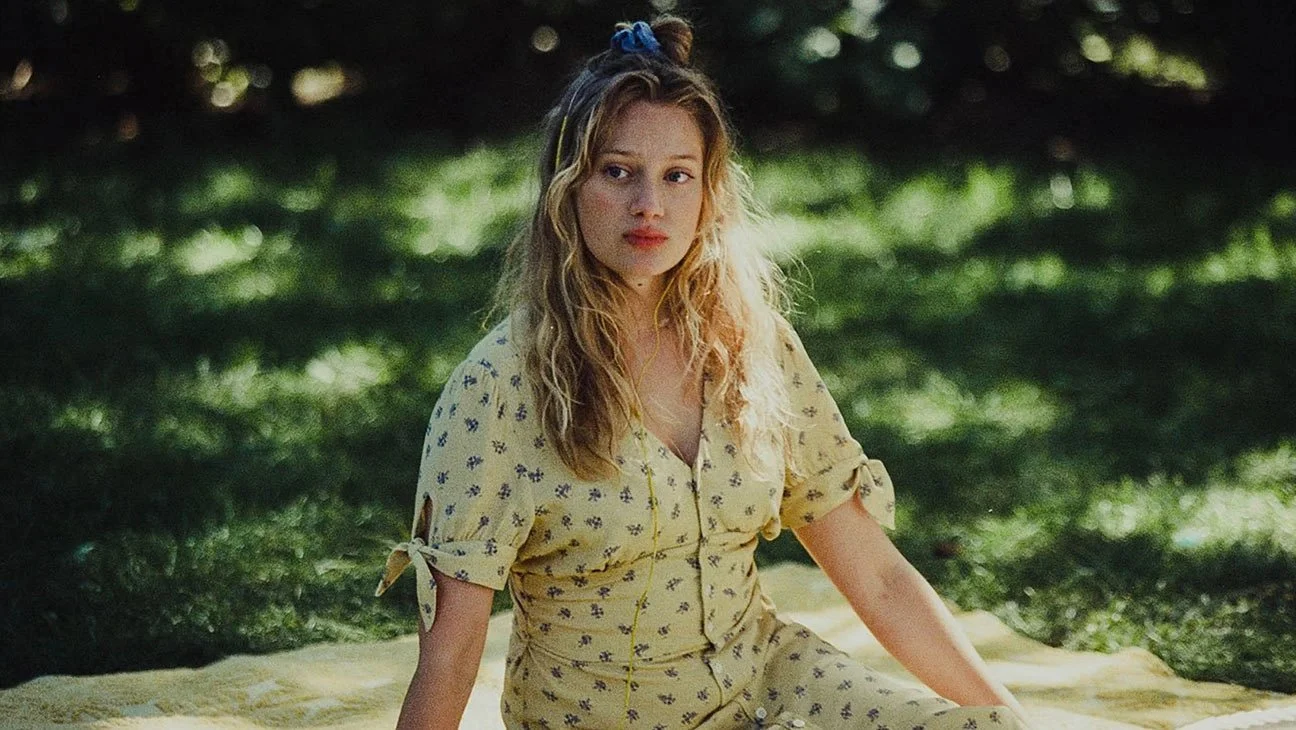
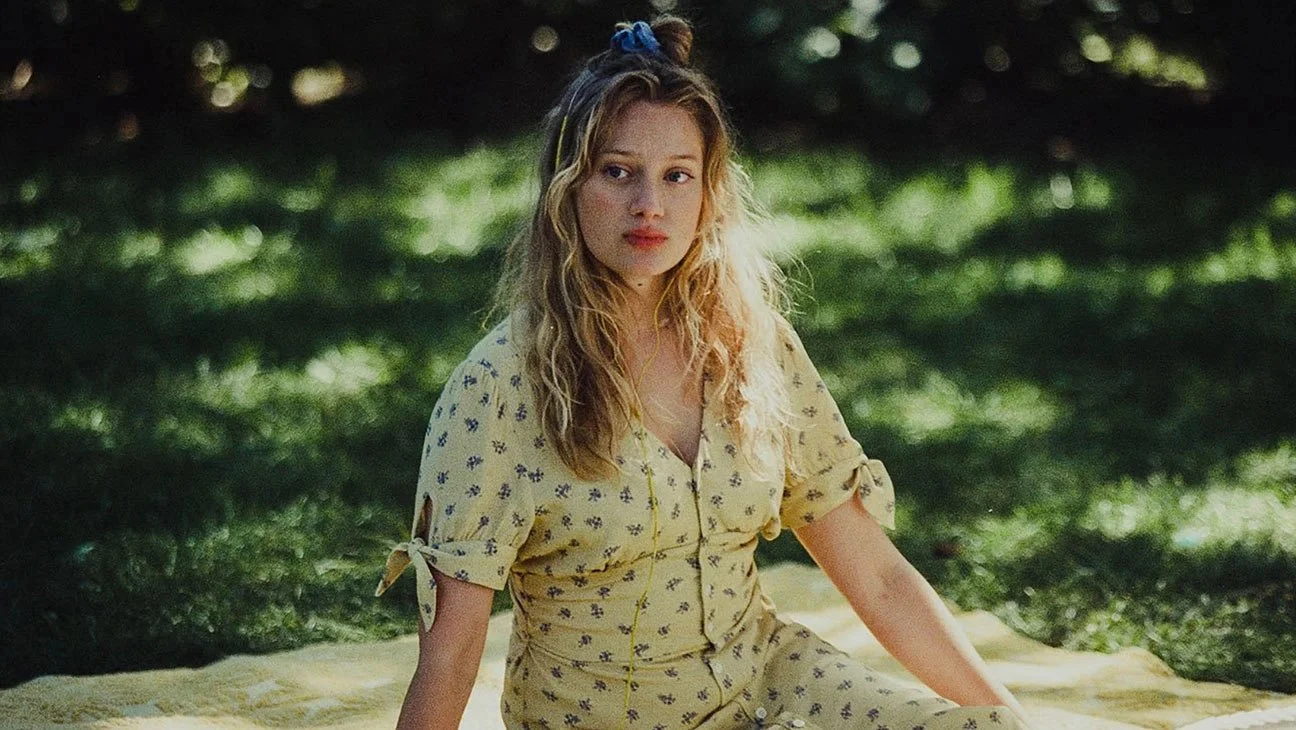
Following its world premiere at the 2022 Sundance Film Festival, Babysitter is arriving in Toronto to kick off this year’s Canadian Film Fest (CFF). The CFF is an indie-spirited festival dedicated to celebrating Canadian filmmakers. The festival returns this spring for its 17th edition, and for the first time, as a hybrid with both in-person and virtual screenings. This year’s slate has a strong focus on women in film, both in front of and behind the camera. Babysitter, directed by Monia Chokri and written by Catherine Léger, confronts misogyny with a sardonic point of view. The story follows Cédric (Patrick Hivon), who after committing sexual assault and losing his job, attempts to “free” himself from sexism by co-writing a book to attack misogyny. His wife Nadine (Chokri), a new mother exhausted by his behavior and in search of her own fulfillment, becomes drawn to their child’s babysitter Amy (Nadia Tereszkiewicz). Amy’s presence creates a more mysterious, playful environment. As Cédric and Nadine drift further apart, their lives become more and more like a fever dream.
The film plays up qualities of dreamlike strangeness, from the technicolor set pieces and cinematography, to the exaggerated acting. There is a cartoonish, eccentric energy to Chokri’s direction. The characters feel like caricatures instead of human beings. The costumes and sets have a coat of plasticity to them, not unlike pieces you would find in a doll’s house. While Babysitter has a specific vision aesthetically, the film lacks in a coherent narrative structure. Adapted from Catherine Léger’s 2017 play of the same name, Chokri’s genre-bending approach explores themes of toxic masculinity and gender politics through elements of horror and comedy. The use of different genres has its intriguing moments, particularly with the babysitter character who channels satire fairly well. However, the potentiality of this film resonating in its social commentary is overpowered by inconsistent direction and over-exaggerated performances.
Babysitter is often difficult to follow and keep engaged by, which makes one curious for how the film could have worked better through a different perspective. By centering Cédric as the protagonist, the story is told largely from his point of view as he attempts to apologize for his sexist behavior. This relegates a far more interesting character to the background: Nadine. While she isn’t given much material to work with, Chokri brings an enjoyable stoicism to the character and maintains the film’s magical realism. Nadia Tereszkiewicz’s performance as Amy fits the fairytale-like directorial style; rather than a character who advances the plot, the babysitter appears to be a figment of one’s imagination. Of the cast, Chokri and Tereszkiewicz stand out in balancing the film’s erratic tone. The rest of the ensemble leans too far into exaggeration, reaching the point where they distract from the story. This is the case for the majority of factors at play in Babysitter. While refreshing in its genre-bending approach, and full of energy, the muddled screenplay and unfocused direction make for a wearying experience.
‘Showing Up’ Review
April 8, 2023
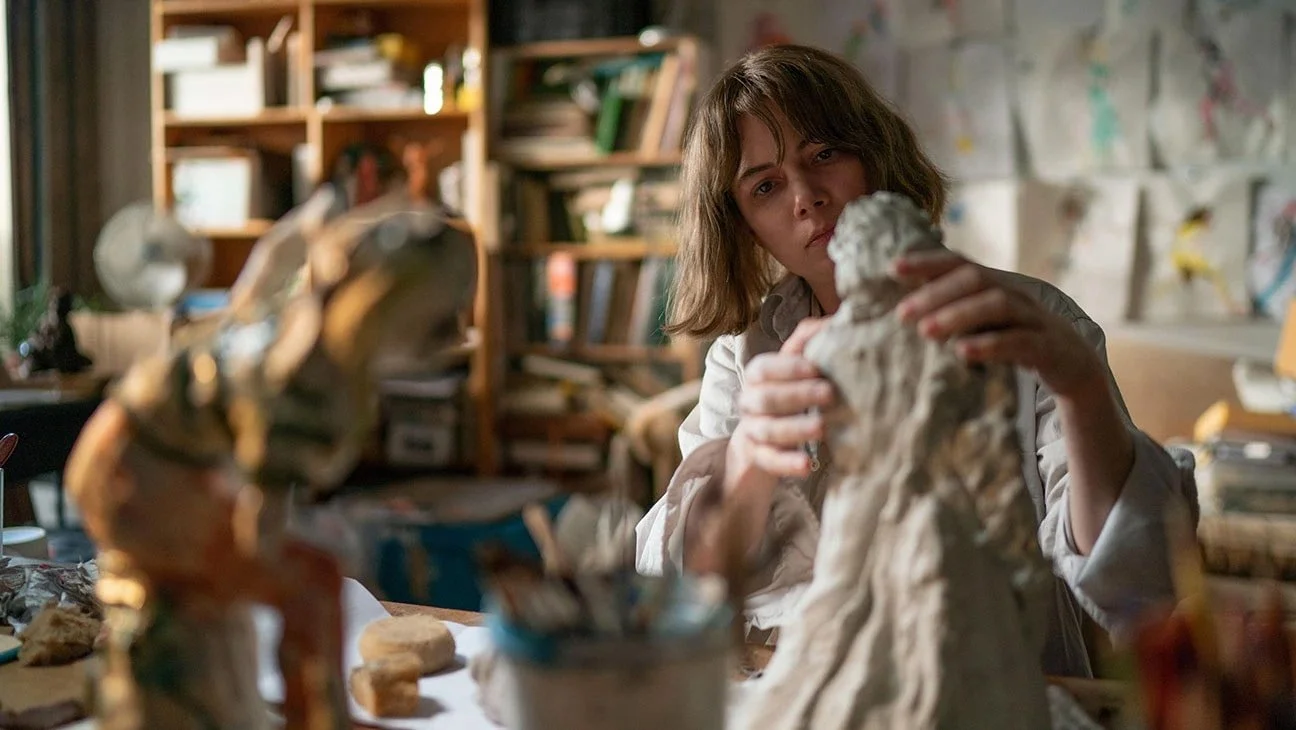
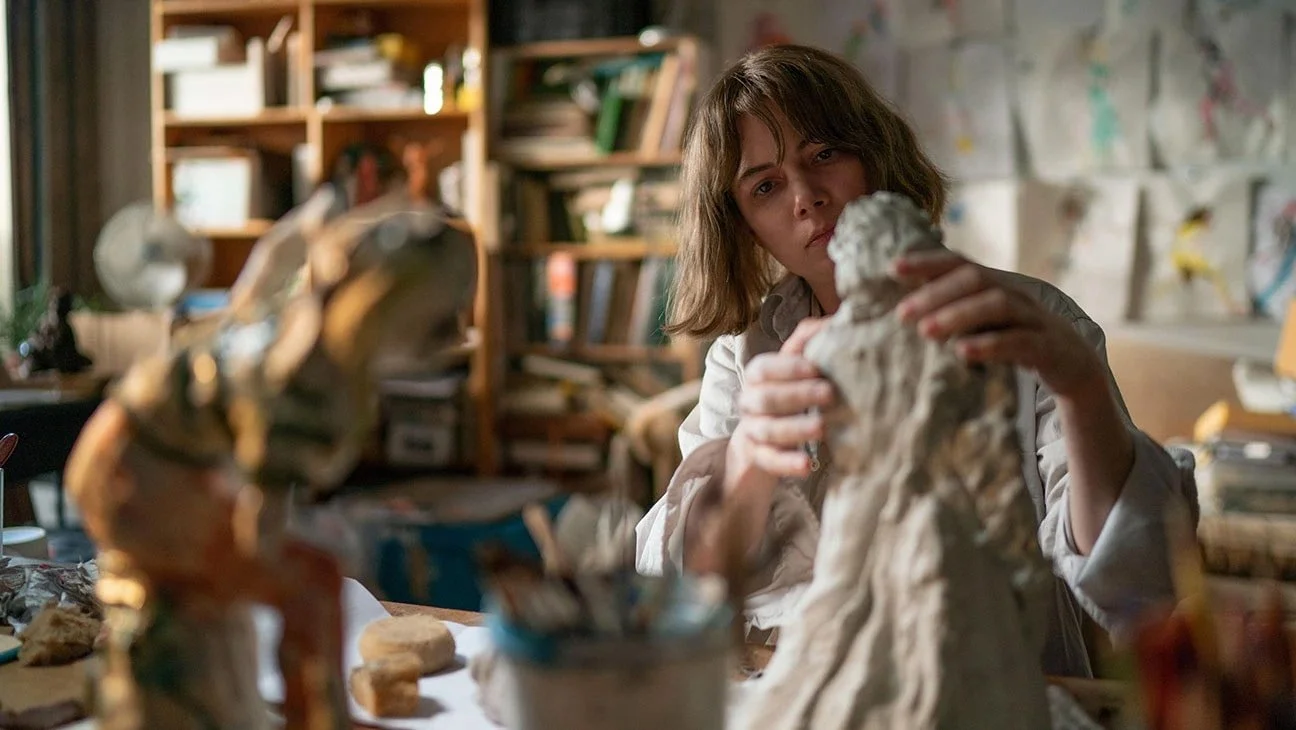
As the opening credits roll on Kelly Reichardt’s latest film Showing Up, the director’s perceptive sensibility is on full display. A collection of sculpted pieces are given uninterrupted focus. The viewer soon discovers whose artistic hand is behind each creation. Michelle Williams plays Lizzy Carr, an antisocial sculptor artist on the verge of a career-changing exhibition. In the lead-up to her show, she navigates the quiet stresses of her family, friends, colleagues, pet cat, temporary pet pigeon, and everyday life itself. As Lizzy tries to mould a place of solitude and protect her artistic process, daily setbacks get in the way. Showing Up moves at a gentle pace, which is exactly the kind of minimalist approach that has come to define one of the most distinctive filmmakers of our time. From Wendy and Lucy and Certain Women to First Cow, Kelly Reichardt tells low-key stories about characters going about their lives, simply passing through. A clear continuation of this type of storytelling, Showing Up is a wonderfully perceptive piece about nurturing creativity and navigating obscurity.
Lizzy lives with her cat and prefers an unbothered life when she’s at home. She has a tranquil workspace, where she makes sculpted people who are rough around the edges. Each piece, as you see in the beginning of the film, is about to be part of an upcoming gallery exhibit. Given the obscurity of Lizzy’s work, this show is a big deal, and she wants everyone in her life to be there, however dysfunctional. Lizzy works administration at a small arts college in Portland, Oregon. Her mother Jean (Maryann Plunkett) is her boss, a detail which the film reveals in a perfectly subtle way. Jean floats in and out of the story, as do Lizzy’s ceramicist father Bill (Judd Hirsch) and mentally ill brother Sean (John Magaro).
Among Lizzy’s limited social circle, there’s sweet pottery expert/co-worker Eric (André Benjamin, also known as André 3000), and pesky landlord Jo (Hong Chau) who is also an artist. The majority of these characters represent a daily setback on some level, particularly Jo repeatedly ignoring Lizzy’s requests to fix the water heater in her rental house so that she could take a shower. The interactions between Lizzy and Jo are incredibly stressful to watch, made even more so by the discreetness of both characters. Their dynamic feels truthful, especially for Lizzy’s character who is more introverted and avoids confrontation. Another highlight is Lizzy’s return home from a stressful family situation, clearly in emotional distress, only to find that Jo is throwing a party next door. The camera stays on Lizzy as she walks from her car to her front door, and it’s one of the most quietly nerve-wracking moments in the film.
Rather than exaggerate for dramatic effect, Showing Up underplays conflict to the point where it fades into the mundanity of everyday life. Lizzy having to remind Jo to fix the shower becomes part of a routine. When a pigeon flies into Lizzy’s window and she carefully puts it back outside, Jo finds the bird down the road and hands responsibility over to Lizzy for nurturing. The pigeon becomes part of a routine. The film conveys several moments such as these, where Lizzy’s work schedule is interrupted by various people (and animals) and she shows up to face each mini challenge. It’s a slice-of-life story that unfolds the way daily life does: routinely, though not without a curveball or two, in varying degrees of extremity. No one captures the mundane like Reichardt. She has perfected the art of drawing out the significance from unassuming moments.
Showing Up shines in its focus on mood and atmosphere over a highly eventful plot. Not much is happening in this story. The screenplay, co-written by Reichardt and Jonathan Raymond, prioritizes the bits of life happening right under your nose. It’s a patient character study just as much about Lizzy as it is about her surroundings. As is often the case in Reichardt’s body of work, characters are conveyed through a language of what’s left unsaid between them. When we first see Lizzy among a group of people, there’s an energy to the way she interacts with them, suggesting how close or distant she is to them. Explanatory dialogue is not needed. The inflections of a character speak volumes, and in this artistic world of Portland, reveal how creative impulses shape how you go about your day. Lizzy’s character is an engaging depiction of how it feels to immerse yourself in art and craft, while feeling the tug of responsibility.
The role of Lizzy is right up Michelle Williams’ alley. Showing Up marks her fourth collaboration with Reichardt and by this stage, the two have established an incredible shorthand with each other. It’s easy to see why Williams continues to show up, they feel made for each other on an artistic level. Williams slips into the unassuming slumber of Portland without missing a beat. Her performance is a subtle showcase of her instinctive, naturalistic gifts as an actress. While her character is emotionally reserved, Williams is an open book with perceptive expressions that call on your patience to sit with her and simply observe. She makes Lizzy’s insecurity palpable on screen, to the point where you do feel quietly stressed out (and at times mildly amused) by her day-to-day life.
In addition to Williams, Hong Chau is terrific and makes a case for becoming another wishful Reichardt regular. After her breakout role in 2017’s Downsizing, Chau has continued to show phenomenal range, from 2022’s The Whale and The Menu to the 2019 HBO stunner Watchmen and this year's crafty whodunit series Poker Face. Showing Up is another wonderful turn; the character of Jo is tricky to find. She’s self-centered and annoying in her neglect. She also has a deep impulse to create as much as possible, and despite previous challenges, she shows up for Lizzy’s big night. Jo and Lizzy show up for their art in different ways, and that dichotomy is resonating to reflect on.
Throughout Showing Up, there are blissful uninterrupted vignettes of artists making things. Artists in their element, focused only on the creation at hand. Reichardt finds a sublime balance between portrayals of isolated artists like Lizzy, and the prospering art world she’s surrounded by. “Showing Up” depicts the creative process in a way that you can assign your own perspective. Once you find your creative skill, how do you nurture and protect it? How willing are you to show up for it? Is your willingness at the expense of others, who need you and count on you for something that exists outside of your creative zone? Showing Up may seem specific in its focus on a small slice of life, but Reichardt engages in such resonating universal themes about wrestling with self-security as an artist, and finding a place in a community full of creatives.
‘Midnight at the Paradise’ Review
April 21, 2023
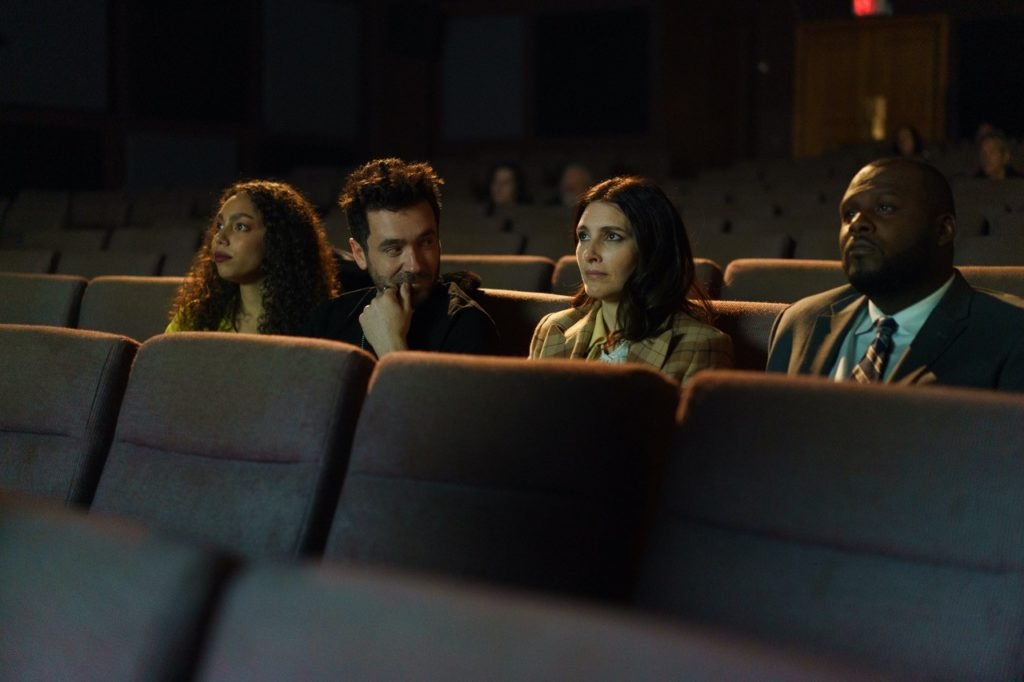
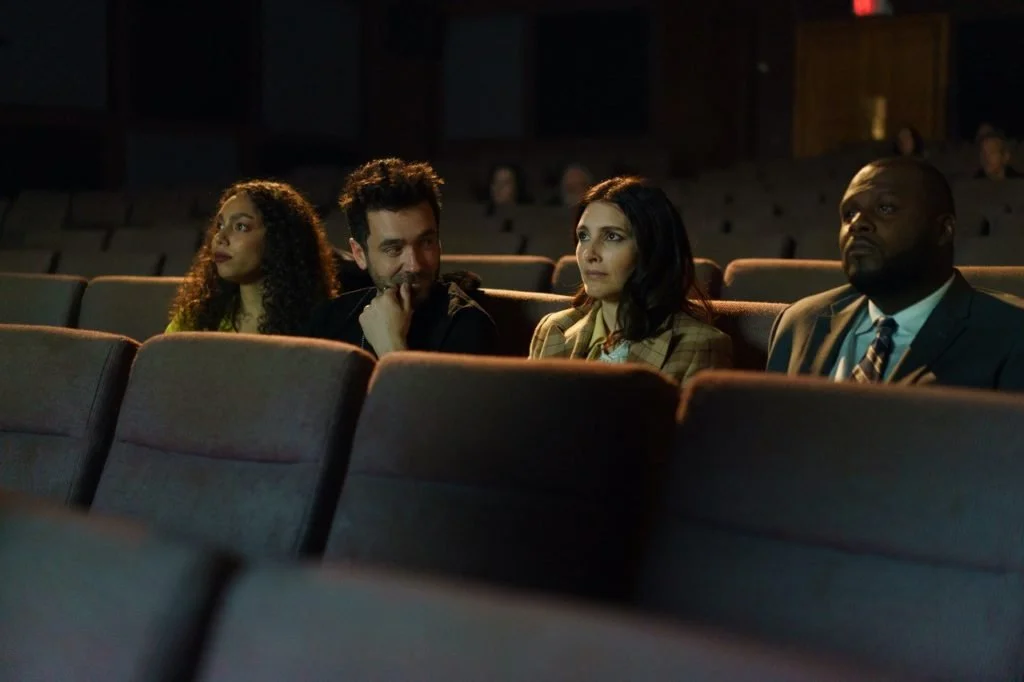
The Paradise Theatre on the corner of Bloor Street and Westmoreland Avenue has been a part of Toronto’s neighborhood for decades. With its 1930s art deco style and welcoming atmosphere, the Paradise brings audiences together. It’s a place where people not only watch films, but create memories, and make connections with people that last forever, no matter how much time passes. For the characters in Midnight at the Paradise, a gem of a picture directed by Vanessa Matsui, the theatre is a checkpoint. It represents a moment of reflection, and a reminder of the past. It is through the significance of this landmark that the film gently finds its way. From passion and grief, to the fickleness of time, resonant themes are explored with care and the power to evoke strong emotion. With terrific subtext and authentic performances, Midnight at the Paradise shines as a meditative slice-of-life story about personal journeys.
Midnight at the Paradise follows two former lovers — Iris (Liane Balaban) and Alex (Allan Hawco) — years since they first met. Living in Toronto, Iris is unhappily married to Geoff (Ryan Allen), raising their daughter Alice (Lauren Brady), and caring for her terminally ill father Max (Kenneth Welsh). Meanwhile in Montreal, Alex feels disconnected from his girlfriend Anthea (Emma Ferreira), and is eager to make a trip back to where he found his everlasting early love. Upon being introduced to Iris and Alex separately, there is an intriguing unspoken connection between these two characters. Though physically cities apart, they feel joined at the hip. You pick up on their history without question, a testament to good acting and complimentary editing that flows incredibly well.
Iris and Alex have a tenderness and a shorthand that unravels slowly, leading up to when the two reconnect at the Paradise. They pick up where they left off, as if no time has passed. Often when it comes to films about lost lovers finding their way back to what they once shared, the story zones in on their personality traits and who they are as defined by each other. Midnight at the Paradise stands out in depicting a romantic connection from the perspective of daily life and how it informs the pursuit of revisiting past experiences. In addition to Iris and Alex, the screenplay (written by Bill Robertson) invests in the supporting characters of their lives and how the protagonists’ love impacts them in small ways. Instead of being defined by each other, the film incorporates the bits of life happening around them to create portraits of people that feel real.
The characters are brought together by the Paradise — Iris has plans to save the theatre with a screening of Jean-Luc Godard’s Breathless (1960), a prime example of French New Wave cinema. Both Iris and her father Max (a former film critic whose motto is to let a movie be a movie), hold “Breathless” in high regard. The Paradise screening is a tribute to Max, who is suffering from pancreatic cancer. The film depicts a complex father-daughter relationship that thrives in subtext. The emotions left unsaid between them speaks volumes as they share several scenes centered on just a look, or a parting word.
From the way Iris looks at her father, there is a heartache and a longing behind her eyes, that gives you a sense of how difficult it is to see him unwell. As someone who shares in a similar experience, the pain brings about deep reflections of the future and time itself. You remind yourself of what matters at your core, and feel a greater desire to follow what makes your heart sing. Iris reconnecting with Alex, even on a subconscious level before the two physically meet again, is a resonating manifestation of one of her deep desires. Alex takes her back to young love, endless possibility, and the experience of watching Breathless together for the first time. As well, her love and appreciation for her dad’s work and what films meant to him. Midnight at the Paradise excels at showing how a true love story continues to build — further away from reality — in its struggle to survive the everyday.
Midnight at the Paradise marks Vanessa Matsui’s feature directorial debut and an exciting new chapter in her career. One that has been long awaited considering her wonderful dark comedy web series “Ghost BFF,” which premiered its first season in 2018 and followed with a second in 2020. The series tells the story of two best friends (one alive, one a ghost) navigating their past and present life choices. “Ghost BFF” shines a light on mental health in a truly accessible and authentic way. Matsui brings a similar authenticity to the topic of romantic relationships in Midnight at the Paradise. The film balances Iris and Alex’s story while exploring sparks flying between Geoff and Anthea, as well as the long-lasting connection between Max and his wife Charmaine (Kate Trotter). Each of these relationships are given the time to unfold naturally, and feel rooted in truthfulness. The performances are grounded and bring emotional weight to the story, especially Balaban and Hawco who convey subtext beautifully.
Matsui embraces the messiness of love and the mixed emotions around what people want out of their partners. She maintains a compelling exploration of characters at different points of their relationships, and how the overlapping of their lives brings out their personal pursuits. In addition to being a great piece on complicated relationship statuses, Midnight at the Paradise is a sweet love letter to the power of films. From the backdrop of saving the Paradise theatre to the use of Godard’s Breathless as a compatibility test for the characters, there is so much love around this medium of storytelling and its power of bringing people together.
‘Bystanders’ Review
April 26, 2023
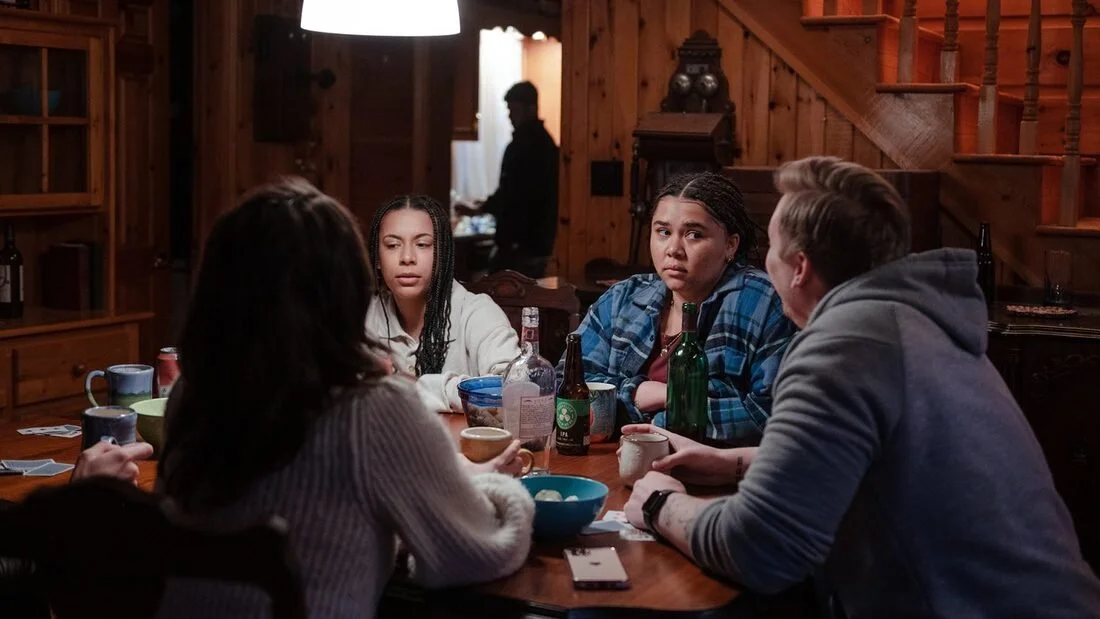
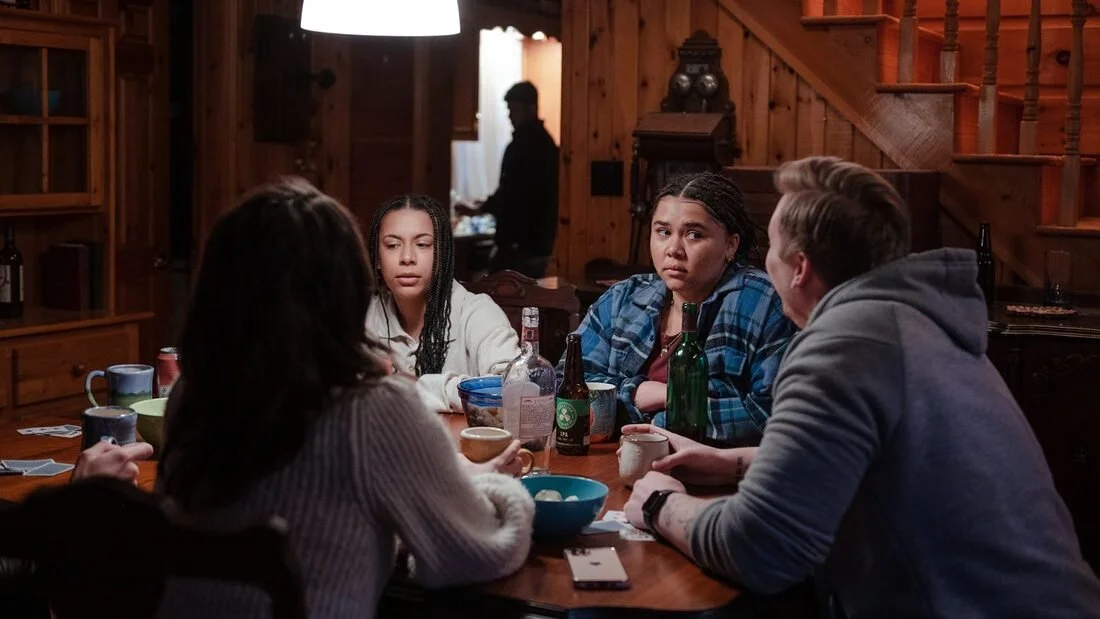
Friendship reunions run the gamut of emotion. Some relationships are able to pick up where they left off as if no time has passed. Others have been shaken by the very common occurrence of simply drifting apart, without rhyme or reason. Approaching a reunion is a cocktail of expectation and uncertainty, as you are getting to know someone all over again, for better or worse. The Canadian film Bystanders, written and directed by Koumbie, explores what happens when six childhood friends ruminate on the disturbing past experiences of someone in their circle. The group, who gather for their annual weekend getaway at a remote cottage, are forced to confront the knowledge that one of them is guilty of sexual assault. Each friend takes a stance, ranging from defense and bewilderment, to accountability and punishment. Bystanders tackles the aftermath of sexual assault from the perspectives of those who personally know the abuser. Will the circle of friends maintain silence and complicity? Or will the abuser be confronted? Adhering to its title, Bystanders is an uncomfortable story of how people navigate confessional wrongdoing and how their decisions reflect society at large.
The story begins with an air of innocence. In watching the group of friends arrive at the getaway home, Koumbie refrains from giving an early indication of the difficult conversations to come. She initially brings a more light hearted tone to the film, engaging in a secret romantic relationship between two characters Ayda (Marlee Sansom) and Zeke (Cavell Holland). The two of them toy with the idea of telling the rest of the group that they are seeing each other. The viewer also sees jovial moments among the friend group overall. Though as the film progresses, the tone becomes more dramatic with the arrival of Justin (Taylor Olson), Adya’s first love and Zeke’s roommate. From the chemistry that Sansom and Olson share, to the energy they bring to their performances, it’s clear that their characters have a history. Ayda appears to have moved on, but Justin is adamant about continuing to pursue her attention. The film establishes from early on that he crosses boundaries and lacks accountability.
The tensions between characters, and the way they all observe one another in a shared space, eventually build to a shattering dinner table conversation. It is revealed that Justin is guilty of sexually assaulting his girlfriend when they were university students. When he describes what happened, he fails to grasp the wrongdoing of his behavior. Rather than turn into a character study about the perpetrator, the film branches outward to his surroundings. How each of them reacts to this information is extremely telling of their character. One of the friends, Sophia (Katelyn McCulloch), immediately calls him out and stresses to the group that Justin should be jailed for what he did. Justin’s brother, Kyle (Peter Sarty), carries the frustration that a family member committed something horrible, struggling to fathom that his own brother would do such a thing. The film’s bystanders constantly navigate not only how to approach Justin, but whether their own reactions align with their core beliefs and values.
Co-written by Koumbie and Taylor Olson, the film explores literally and figuratively how shared spaces are utilized. Whether sharing a physical space, or an intimate experience. Justin shatters the safe space that held his friend group together; trust is broken upon them finding out someone they thought was a decent human being had committed violence. The film also explores how a man’s actions puts a woman’s experiences into perspective. In light of the news, Ayda begins to reexamine her own relationship history with Justin, and specifically the times she felt that her own safety was violated. It is an unsettling moment in the film that speaks to how women are so often gaslit, and their experiences are not taken seriously.
The biggest missed opportunity in Bystanders is not centering Ayda’s character throughout. The majority of her scenes tend to revolve around Justin’s presence, rather than elaborate on her point of view. This is a character with conflicting emotions, trying to reconcile the person she once had feelings for with the person he reveals himself to be on the weekend getaway. While there is a strong imbalance of perspective, Bystanders makes for a promising feature debut by Koumbie. In exploring the bystanders of the story, she takes an intriguing and introspective approach to heavy subject matter.
‘Peter Pan & Wendy’ Review
April 28, 2023
After bursting onto the scene with such films as Pete’s Dragon, A Ghost Story, and visual marvel The Green Knight, David Lowery became an exciting name to anticipate a new project from. When news broke of a live-action reimagining of Peter Pan with Lowery at the helm, ideas swirled around how the director would bring a coming-of-age classic to the screen. There seemed to be a fitting prelude to the task. Much of Lowery’s recent work explored wistful fables and lost souls. His stories often explored the imaginative, indescribable planes of consciousness where fantastical new worlds still felt grounded. As such, there is something about Lowery’s Peter Pan & Wendy that feels independent from a lot of disheartening Disney live-action remakes. But as he injects realism into Neverland, he loses the pixie dust that makes this adventure so magical.
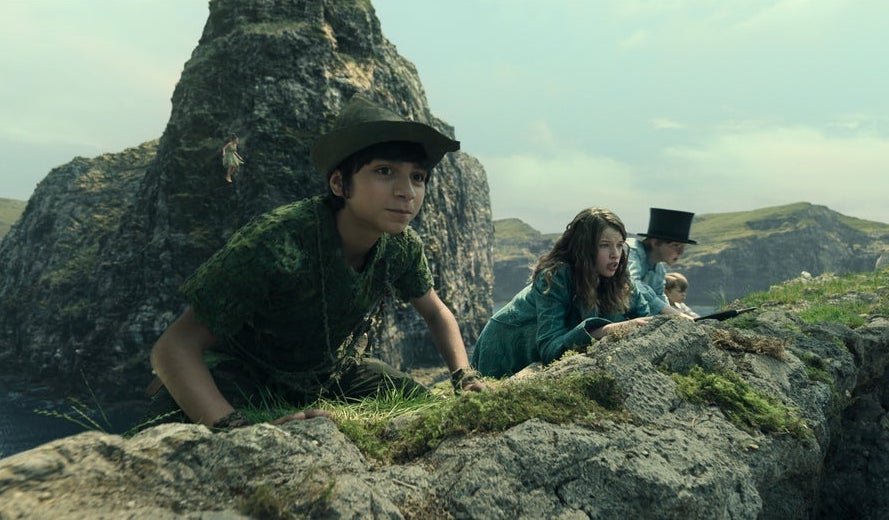
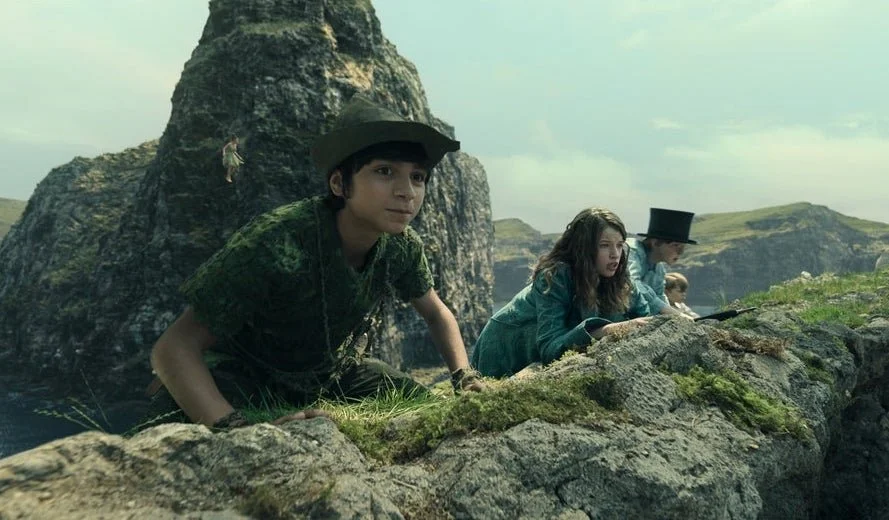
The J.M. Barrie play, originally published in 1904, has sparked several re-imaginings from the 1953 Disney animated Peter Pan and the 1991 Steven Spielberg adventure Hook, to P.J. Hogan’s dreamy 2003 adaptation Peter Pan. Spielberg and Hogan had their distinctive visions that felt fully realized and committed. The former asks the question, what if Peter Pan grew up? The latter leans fully into the whimsy of innocence and first love. Lowery’s version exists somewhere in between realism and idealism. Based on Barrie’s play and the 1953 animation, Peter Pan & Wendy somehow feels both engaged in the material and disinterested in it altogether. The familiar skeleton of Peter Pan plays out in the story. The film follows young Wendy Darling (Ever Anderson) and her little brothers (Joshua Pickering and Jacobi Jupe), living in 20th century London with their mother (Molly Parker) and father (Alan Tudyk). On the eve of Wendy’s move to boarding school and about to leave her childhood home, she gets a visit from Peter Pan (Alexander Molony), the free-spirited boy who refuses to grow up. He arrives looking for his shadow, and alongside his fairy best friend Tinker Bell (Yara Shahidi), brings the Darling siblings to the ethereal world of Neverland. Once there, the group embark on an adventure and thwart the evil pirate, Captain Hook (Jude Law).
Lowery re-teams with his The Green Knight co-writer Toby Halbrooks to pen the screenplay for Peter Pan & Wendy, which doesn’t necessarily live up to its title of giving Wendy interesting exploration. She is admirably given an outgoing role in the story, and often takes the lead on action-based sequences as well as more emotionally charged moments. But the film tends to keep her at arm’s length when it comes to who she is beyond the circumstances, and what sparks her intense interest in what being a grown up would be like. Complex ideas are thrown into the narrative without really coming to fruition.
One such idea is the relationship between Peter and Captain Hook being given more history. This leads to the revelation of Captain Hook as a more tragic figure than expected, which paints Peter in a negative light. But the screenplay doesn’t engage in the history of their dynamics, and as a result it sits on the surface. Though the relationship does give Jude Law a bit more material to play with. The actor relishes in Hook’s backstory beneath the moustache-twirling persona. His lively performance is far and away the most engaging; he flies with an energy that the rest of the film can’t quite reach.
Peter Pan & Wendy is filled with glimpses of greatness. By taking on a more realistic approach to Peter Pan, Lowery shakes the glitter off of its iconography. He makes stunning use of Newfoundland landscapes, which add a natural quality to the film’s grounded and ethereal version of Neverland. The visual language and soundscape are a strong extension of Lowery’s vision. He presents the opportunity to dive deep into the wistfulness of this story, and the pangs of eternal childhood. Unfortunately, the screenplay is only halfway there, intrigued by fresh ideas but not fully equipped to explore them well. The film holds onto the familiar structure of the Pan story, and takes away the parts that make the possibilities of this world feel so enchanting. Lowery’s full vision feels broken into pieces between the two approaches.
Peter Pan & Wendy is now available on Disney+.

‘The Little Mermaid’ Review

May 22, 2023
With each new live action remake from Disney comes a dose of apprehension. The studio’s track record of reimagining their vault of animated films runs the gamut from enjoyable (Kenneth Branagh’s Cinderella,), to average (David Lowery’s Peter Pan and Wendy), to painfully empty (Jon Favreau’s The Lion King). Last year’s soulless offering of Robert Zemeckis’ Pinocchio may very well have been rock bottom. One can only go up from there, and the studio certainly does so with The Little Mermaid, a charming musical adaptation which soars comfortably in the top tier of Disney live action remakes. At the helm of theater and film director Rob Marshall, The Little Mermaid shimmers with splashes of romance and spirited energy throughout. Marshall’s vibrant theater background compliments the beloved story of Ariel, a young mermaid whose curiosity and drive for adventure opens up a world of possibilities. The Little Mermaid tells a familiar story in a familiar way, on a much more grandiose scale. At times, the film is visually distracting and narratively flat. But overall it resonates primarily through Halle Bailey, whose magnificent star-making performance holds the film together.
Those who have seen the 1989 animated version will pick up on the story’s main features — mermaid dreams, family expectations, trusty sea creature sidekicks, an evil sea witch, a lost voice, a dashing prince. Marshall’s adaptation of this underwater universe retains the magic of a classic story while finding an incredible star in Halle Bailey for a new generation. From the moment Bailey appears on screen and her voice is heard, she exudes Disney Princess. She exudes heroism, wonder, curiosity. She brings heart and soul to Ariel. From melody to facial expression, you could feel the character’s longing. Her determination to detach from the expectations of her father King Triton (Javier Bardem, who oddly sleepwalks in the role), and become part of a new world are the driving forces of the film. It’s why the iconic song ‘Part of Your World’ resonates so deeply. The lyrics encompass the character’s spirit. Bailey’s rendition of the song is a show stopping musical experience that hits all the high notes.
Beyond a beautiful singing voice, Bailey also navigates the dramatic shifts of life above water when she and Prince Eric (Jonah Hauer-King) fall in love. The film expands on the animated version by spending more time with their on-land romance. The two characters bond out of a strong desire to gain independence from family pressures. Hauer-King’s passionate performance of ‘Wild Uncharted Waters,’ a new song penned by Lin-Manuel Miranda, is a strong expression of character. Eric too leads with his heart and desires new adventures. The decision to include this song adds a layer to the romance, as it provides a behind-the-scenes of why Ariel feels attracted to him. Similarly, the inclusion of another new song, ‘For the First Time,’ gives Ariel an endearing ‘fish out of water’ moment where she discovers the world above the sea. Once lonely underwater, she’s now on the cusp of independence and the exploration of new experiences. Ariel and Eric’s spirited musical sequences show the strength of their romantic spark and what draws them to each other. The characters’ spark is complimented by winning chemistry between Bailey and Hauer-King. Bailey also conveys how Ariel maintains a meaningful connection with Eric without the use of her voice. As those familiar with the story will know, the loss of Ariel’s voice is a sacrifice made through a spell that turns her into a human.
When it comes to iconic Disney villains, one would be hard pressed not to mention the sea witch Ursula. In the animated version of The Little Mermaid, Ursula was voiced by the brilliant Pat Carroll and inspired by drag queen Divine. What made Ursula so entertaining was that in her eyes, she was the hero of her own story. She was euphoric in her own dark magical power, and Carroll gave the character a compelling theatricality by voice work alone. The animated Ursula was lively and terrifying in equal measure, which matched and flowed with Carroll’s vocal range. The 2023 live-action Ursula, played by Melissa McCarthy, pays homage to the icon who came before, sometimes to a fault. McCarthy has a lot of fun with the role. She infuses her own comedic charm, and utilizes her character’s hair and makeup as an extension of her performance. She also holds her own vocally during the classic ‘Poor Unfortunate Souls’ number. But she doesn’t embody the role beyond a surface level. The experience feels very much like one watching McCarthy in costume, as opposed to feeling immersed into a villainous character. By no means a bad performance, and it is no easy feat following the animated version. But given the similarities in approach, it does feel as though McCarthy does her best Carroll voice without bringing a more unique quality forward.
Of all the supporting performances in the film, Daveed Diggs stands out through his voice work as Sebastian the crab, who becomes Ariel’s primary protector and encouraging ally in place of King Triton. Sebastian is another role made iconic in the animated version, considering the late Samuel E. Wright’s entertaining performance as the lovable crustacean. But Diggs makes his own mark on the character and brings out excellent comedic timing. His line delivery elicits consistent laughs throughout. Plus, his singing voice tackles not one but two big musical numbers — ‘Under the Sea’ and ‘Kiss the Girl.’ The only downside of such vibrant voice work is the hyper-realistic CGI, which doesn’t always flow with the actor’s energy. Sometimes the voice work overpowers the effects, and sometimes the CGI is a distraction. This is most noticeable with the character of Skuttle, played with super heightened enthusiasm by Awkwafina but lacking the visual energy to match.
Contrary to very premature online chatter that scenes are too dimly lit, there is a lot of vibrancy and color to be found throughout the film. However, there are a number of rough patches that stick out particularly during the ‘Under the Sea’ musical number, and in the dullish animation of characters like Skuttle and Flounder. While the film looks and feels grandiose, the inconsistent visual effects takes you out of the escapist experience at times. It’s a missed opportunity in really immersing into a colorful underwater universe, especially given the set pieces and unconventional direction Rob Marshall tends to go in. He brings strong theater energy to The Little Mermaid. There are some visually interesting choreographed sequences that unfortunately clash with distracting CGI.
What The Little Mermaid achieves that many live action Disney releases don't is the retelling of a familiar and beloved story without feeling aimless. The combination of Rob Marshall’s lively direction, a mix of old and new lyrics, and a brilliant performance by Halle Bailey help create an enjoyable experience. The story itself doesn’t change much from the animated version’s blueprint, which leads to some dullness in the narrative and pacing. But where the film lacks in that respect, it makes up for with the most significant element of them all: the casting of Ariel. Halle Bailey seamlessly bridges the worlds of enchanted fantasy and grounded reality. She is the little mermaid, and the film sings to her tune.
The Little Mermaid releases in theaters on May 26.
‘Elemental’ Review
June 9, 2023
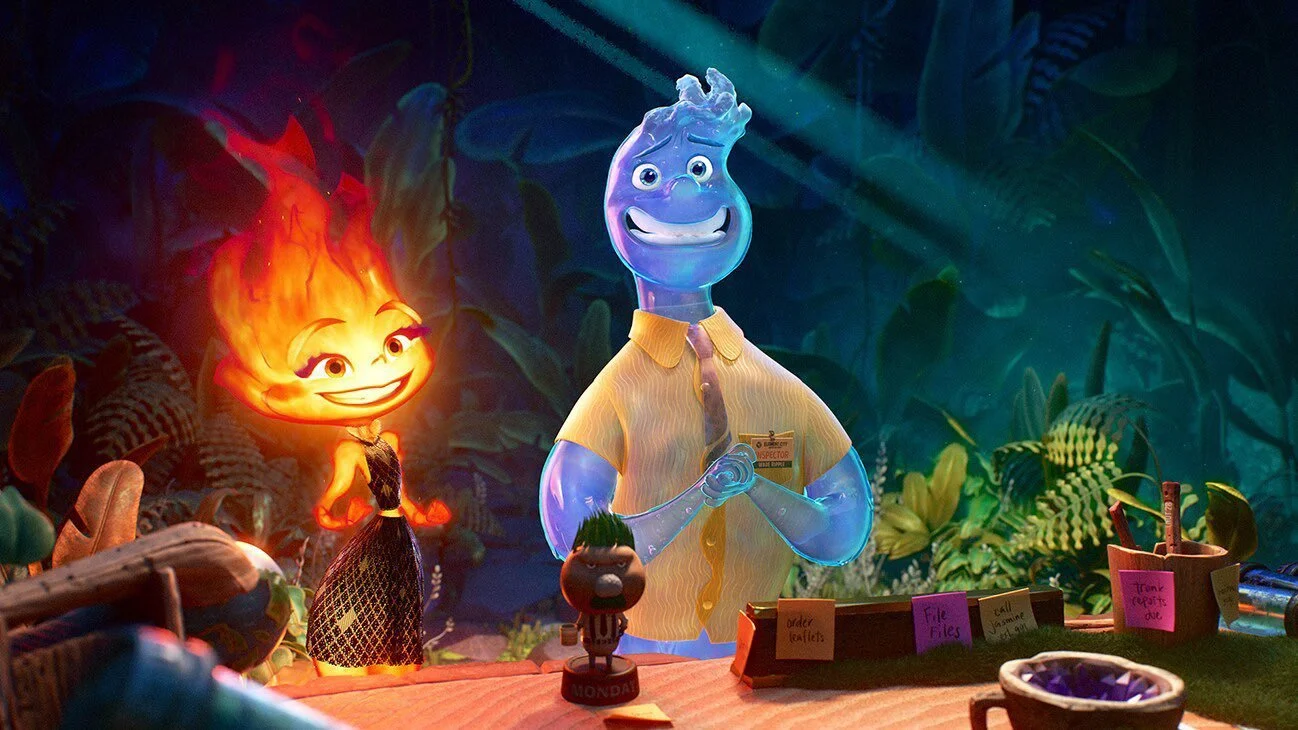
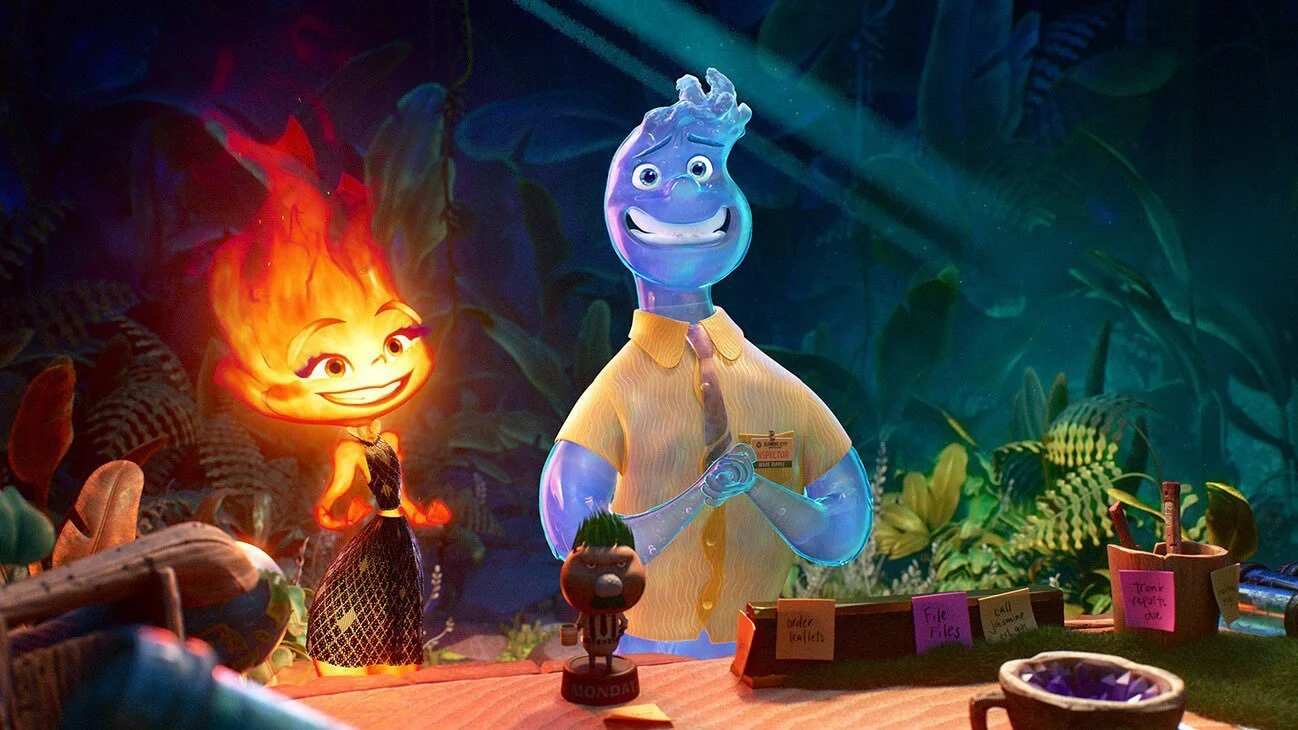
Themes of immigration and acceptance are given vibrant exploration in Pixar’s Elemental, an immersive mix of fire and water elements to create a charming love story. From the mind of Peter Sohn, who had previously directed Pixar’s 2015 feaure The Good Dinosaur, Elemental traces Sohn’s personal experiences as an immigrant traveling from Korea to the United States. The story is set in the colorful world of Element City, which houses residents of earth, fire, water, and air. Each element group co-exists but keeps to themselves, technically due to the harm some could cause if mixed together. Pixar has an illustrious track record of telling heartfelt stories through layered metaphors, from puberty as a giant red panda in Turning Red to emotions as characters in Inside Out. Elemental continues in the vein of high-concept creativity by personifying the four classical elements of nature. Each must work together in harmony for the world to survive, which drives home the strong emotional core Elemental lives in.
The story focuses on hot tempered fireball Ember (voiced by Leah Lewis), daughter of immigrants Bernie (voiced by Ronnie Del Carmen) and Cinder (voiced by Shila Ommi), who had moved into Firetown and turned their home into a store called The Fireplace. Since she was a little girl, Ember has helped her parents run the store. She stays close to home, much to her father’s delight. He dreams that one day she will take over The Fireplace and provide a future for her that he never had. But their cozy business is at risk of shutting down forever when a basement pipe bursts on a busy customer day, and a momentary flood introduces a watery Wade Ripple (voiced by Mamoudou Athie) into the picture. As it turns out, Wade is a city inspector, and his notes are not looking good for the future of The Fireplace. In an effort to save her family’s livelihood, Ember follows Wade outside of Firetown and toward the water-centric City Hall, to stop him from sending his notes to the higher-ups.
The idea of opposites attracting is a staple of the romantic comedy genre, and it is used to charming effect in “Elemental.” Ember and Wade, both witness to the widespread belief that fire and water do not go together, start to discover just how much they have in common. Her fiery passion and his nervous, sentimental temperament become a complimentary match. The film also incorporates sweet rom-com cues, from awkward dates and pickup lines, to meeting each other’s parents and learning valuable lessons. Adding spark to the characters’ blossoming relationship are terrific performances by Leah Lewis and Mamoudou Athie, whose vocal ranges bring out the humor and drama of a shared story. Their chemistry gives sincerity to the rom-com elements, and urgency to the moments of danger that they face together. While the romance itself feels a bit too sped up for the sake of plot, the emotions behind it are heartfelt and fun.
The film dually works as a moving story about immigrant families and their experiences arriving in a new city, full of dreams, only to be met with hostility. In Element City, the infrastructure is water-based, which drives Firetown on the outskirts where residents can live safely. The city “isn’t made with fire people in mind.” Fire people and their culture face prejudice and scorn. The depiction of such themes are extremely on-the-nose at times, but what resonates is how these subjects are worked into the story of a family following their dreams. The relationship between Ember and her father is an enormous source of the film’s heart. While he wants her to inherit The Fireplace, she carries anxiety about the prospect. Ember fears being honest with him about how her own dreams are different than his. Their dynamic gives the film an added layer of universal identity.
The visual language and soundscape of Elemental compliment the story wonderfully. The look of Element City mirrors a melting pot of different districts. The city is full of neat-looking designs, from waterfall skyscrapers and forest towers to a tornado-shaped stadium. Firetown also bursts with creative animation, with incorporation of warm colors and fire-based settings. Most impressively are the interactions between fire and water characters. From the flickers of heat to the transparency of fluids, the animation captures them in constant movement. Additionally, acclaimed composer Thomas Newman brings his familiar sounds to the film’s imaginary world, while also capturing human emotion. Newman creates one of his most experimental scores, full of crackling excitement, jazzy strings, and vocal chatters.
While Elemental can be heavy-handed at times, and the central romance feels rushed, the film is a funny and sweet story about generational expectations. The story shines through beautifully animated world-building, vivid voice work, and a resonating father-daughter relationship that strikes a chord close to home.
How Season 2 of ‘The Bear’ Elaborates On Character
July 20, 2023
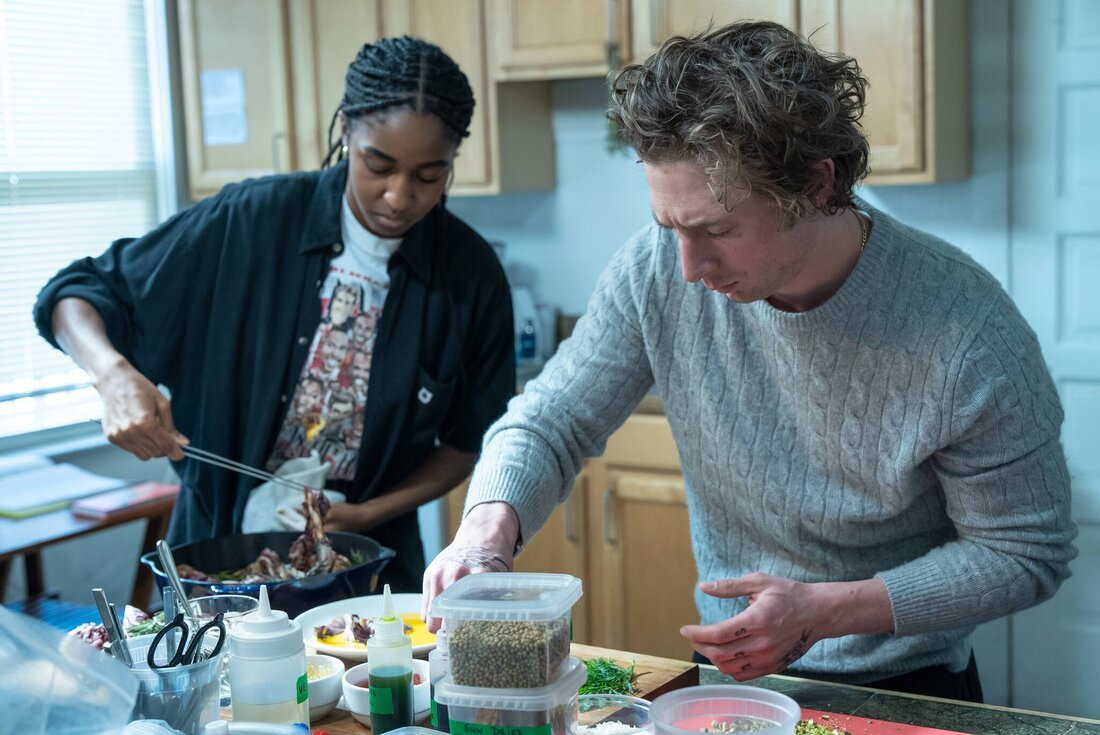
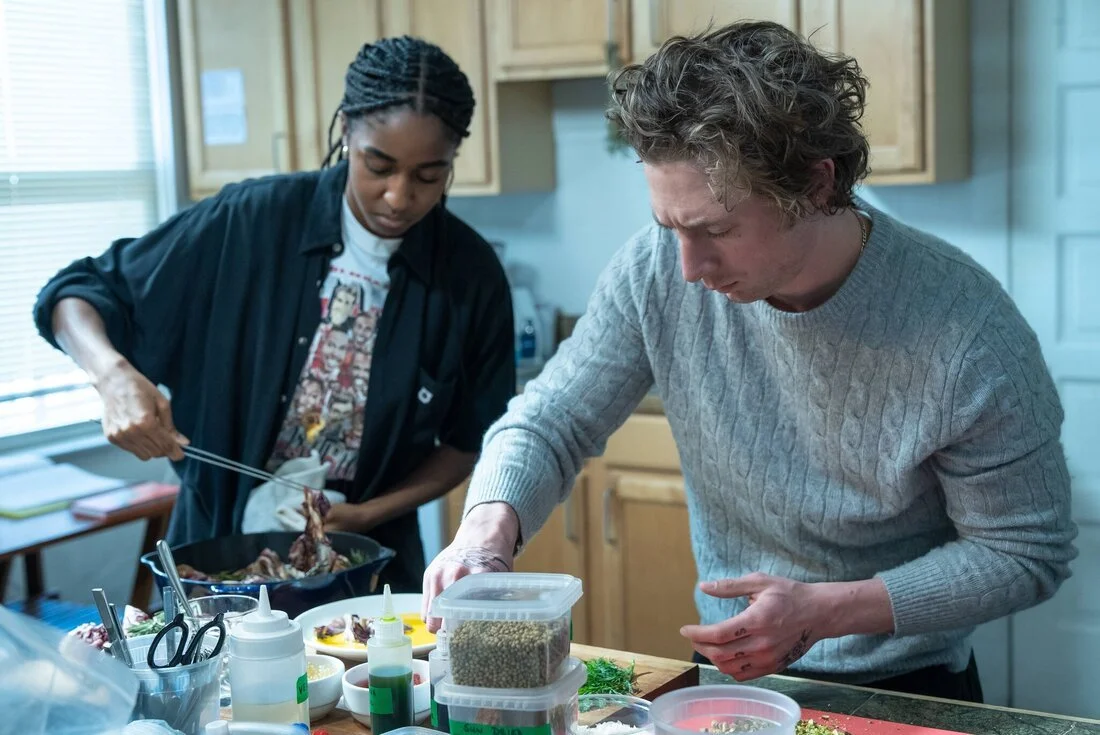
When the first season of a returning show captures lightning in a bottle, the question becomes, how will the next chapter live up to its various measures of expectation? Culinary smash hit The Bear, created by Christopher Storer, sets the bar high in its first season. A work of fiction feels like a documentary; every ingredient from the impeccable writing to the immersive acting evokes an energy that hooks you in from the start. Jeremy Allen White plays a young chef risen from the ashes, shoved through the world of fine dining, and pulled towards his family’s scrappy Chicago sandwich shop under mournful circumstances. Amidst the kitchen frenzy, however sticky and stressful things get, White’s yearning stares into the distance ground everything into place. This restaurant means something. And because he and the kitchen team have so much stock in the place, every little mishap feels like the entire world is crashing down.
The restaurant’s meaning depends on any given character’s perspective. How do they measure success? Where do they find themselves on the never-ending journey of self-discovery and growth? These are questions that the show smartly continues to explore in its second season, for the bedrock of The Bear has always been its characters. From the precise words on the page to the actors who interpret and embody them, their roles are the main ingredient as to why “The Bear” resonates. By building onto them and expanding their personal worlds outside of the kitchen, the writing of season two not only surpasses expectations, but creates a new recipe for success. The boiling, frenetic stress ball of season one is brought to a simmer in season two. Intimate character-driven episodes serve up a mostly soothing departure from clattering pots and pans. That is, until you swim with the Berzatto fishes in episode six…
Season two continues the chaos-ridden saga of Carmen ‘Carmy’ Berzatto (White). The environment this time around is more contemplative and slightly less anxiety-inducing. The show picks up where season one leaves off — promising the birth of ‘The Bear’ (Carmy’s nickname), after the closure of ‘The Beef’ which was owned by Carmy’s late brother Mikey (Jon Bernthal). As Carmy and the team clean out shop to create a fine-dining Michelin star-worthy restaurant, they face numerous road blocks along the way, from outdated infrastructure to failed safety inspections. But in the process of starting over, they unearth new layers about themselves. When the pressures of the kitchen are stripped back, so too are the characters inhabiting that space. The writers take them beyond the environment you had been accustomed to seeing them in. Over the course of ten episodes, characters are coming into their own. Their personal experiences, family dynamics, and support systems are explored with a ton of heart, humor, and intensity. From Carmy’s culinary influence on the team, and subtle callbacks evoking the first season, to the ferocious dialogue of a holiday dinner gone sour.
Piece by piece, the writers of The Bear dig deeper into the characters’ lives while maintaining a recurring theme: it is never too late to have a breakthrough. Every second counts. That has never been more felt than in these standout moments of the season.
***SPOILERS AHEAD FOR THE BEAR***
Pasta (episode two)
Written by Christopher Storer, Joanna Calo, Sofya Levitsky-Weitz
Twelve weeks out from ‘The Bear’ opening, Sydney ‘Syd’ (Ayo Edebiri) delivers the news that Tina (Liza Colón-Zayas) and Ebraheim ‘Ebra’ (Edwin Lee Gibson) are being sent to culinary school to sharpen their skills. Tina beams with excitement while Ebra is hesitant. The difference in their reactions — one looking forward to change, the other afraid of it — is a great depiction of the restaurant’s transformative power over the people who help run it. Change and opportunity are spinning by; either you take the leap and fill your sidelines with support, or find yourself behind. Many characters are wrestling between old and new support systems in this episode. During a family dinner between Syd and her father (Robert Townsend), when she shares her excitement about the new restaurant opening and he struggles to take her profession seriously, she reminds him that she is in a different place: one where she is still learning and not alone; she has a partner. Nearing the end of this episode, her partner Carmy and his ex-girlfriend, Claire (Molly Gordon), reconnect at a grocery store. Claire walks into his life when he is on the cusp of newness and in need of positive influence, but he keeps waiting for the other shoe to drop. By introducing this new character, the writing expands on Carmy’s past and evokes the feeling of him being almost frozen in time. As well, the choice to set their conversation by a freezer is a neat example of the season’s strength in planting moments that come full circle later on (in this case, the season finale).
Sundae (episode three)
Written by Karen Joseph Adcock, Catherine Schetina, Christopher Storer
Eleven weeks out from ‘The Bear’ opening, Syd and Carmy work on the new menu. Their attempts to figure out which dishes to serve fall apart. After a little too much of this and not enough of that, Carmy suggests that they both go out and try some stuff. They need to reset their palates and find culinary inspiration. But he ditches the plan after an impromptu phone call from Claire, leaving Syd to embark on a solo culinary tour of Chicago. “Sundae” is one of the finest examples of the writers’ love for these characters, Syd in particular as this episode focuses on her perspective. This is where the show’s new recipe for success really comes into play. The gorgeous montages of Syd exploring different foods is an odyssey of her hunger and attention to detail. Sprinkled in the mix, various chefs give her advice that unwittingly sheds light on her relationship with Carmy. The episode marks a strong example of how the writers find moments to reflect on character dynamics. Lines of advice such as, “Make sure you have a great partner, someone you can trust,” or “Listen to your gut” come at the right time. In building the menu with Carmy, Syd has just as much say on the direction of The Bear. Whether he also truly believes that is called into question.
Honeydew (episode four)
Written by Stacy Osei-Kuffour, Christopher Storer, Sofya Levitsky-Weitz
In the running for season two’s best episode is “Honeydew,” an emotionally intimate half-hour of pastry chef Marcus (Lionel Boyce) challenging himself. Upon a suggestion from Syd, who recognizes the need to empower her fellow chefs, Carmy sends Marcus on a Copenhagen trip to gain exposure and sweeten his dessert game. In Denmark, Marcus is trained by British pastry chef Luca (guest star Will Poulter), an old friend of Carmy’s and a walking example of precision. Luca's technique is delicate. He operates in stillness, the polar opposite to what Marcus is used to back home. “Honeydew” lovingly expands on Marcus’ character, impressively combining bits of his past, present, and budding future all in one. As written in the first season, Marcus always possessed an eagerness to create, and a desire to improve. Season two charts Marcus’ journey from a ‘clock in and out’ job to nourishing his career as a pastry chef. Additionally, “Honeydew” marks the first time Marcus opens up about his mother who is ill (season two begins with him by her side in a hospital). You could feel the weight on his shoulders when he visits Copenhagen; as he soaks in his new experiences, he makes a point of sharing his thoughts with her, even if she is unable to respond.
Pop (episode five)
Written by Sofya Levitsky-Weitz, Christopher Storer, Karen Joseph Adcock
One can only hope that season three is full of even more self-contained character-driven episodes, because Tina deserves her big moment. While the first season portrays her as having a chip on her shoulder, season two expands on the character through means of various opportunities. After Syd offers her the role of sous chef, and she attends the culinary arts training program (for which Carmy lends his knife), Tina has a more noticeable sparkle in her eyes. She is stepping into the potentiality of a new role with increased confidence and an inspired spirit. This training not only influences her career but also her social life; upon showing up to a gathering her fellow trainees had invited her to, Tina takes the mic at a karaoke bar and stuns with a heartfelt rendition of the song “Before the Next Teardrop Falls.” Moments like this are a prime example of stellar acting and character development coming together to create magic.
Fishes (episode six)
Written by Joanna Calo, Christopher Storer, Sofya Levitsky-Weitz
Following the palate cleansers and appetizers of episodes one through five, the main course of the season is “Fishes,” a bitter and fiery holiday time-capsule. The writers take you back a few years to a heated Berzatto family dinner that descends into a traumatic nightmare. What family dinner doesn’t have underlying tension on the brink of explosion? Carmy, Mikey, their sister Natalie (Abby Elliott), ‘Cousin’ Richie (Ebon Moss-Bachrach), Uncle Jimmy (Oliver Platt), and a nervous bunch of relatives (played by a star-studded guest cast) join forces for Christmas with the family matriarch, Donna (guest star Jamie Lee Curtis). This flashback episode gives remarkable context to the behaviors and dynamics between Carmy and his family across both seasons. The overlapping flow of dialogue and buildup of tension creates an environment that rivals season one’s kitchen disaster “The Review” when it comes to inducing anxiety. The incredible writing of “Fishes” hits home how the show has always been in service to its characters. Each and every detail counts.
Forks (episode seven)
Written by Alex Russell, Christopher Storer, Sofya Levitsky-Weitz
In the season two premiere, Cousin Richie asks Carmy, “You ever think about purpose?”. The loaded question (and the time it would take to be addressed) drives Carmy away, until he notices the look of defeat on Richie’s face. In season one, Richie was the loudest voice in the kitchen. Season two meets him in an existential crisis. Feeling as though he has not accomplished anything, he questions where he belongs, just as the sandwich shop he had helped run is getting a facelift. Richie’s frame of mind makes episode seven all the more satisfying and inspiring. In “Forks,” Richie is sent to stage a three Michelin-star restaurant in Chicago. After days of polishing forks in a cold-looking kitchen, he moves up the ladder to shadow the pristine front-of-house staff. He also gets to meet the restaurant’s mysterious chef Terry (guest star Olivia Colman). Richie’s apprenticeship opens up a world of possibility; suddenly he sees a potentially rewarding path to follow, particularly in the business of hospitality. Whereas season one sees the characters in ‘fight or flight’ mode, just trying to survive back of house, the writers make an interesting shift towards front-facing hospitality. The season focuses intently on characters such as Richie, working on themselves and in turn, becoming of better service to others.
“The Bear” (episode ten)
Written by Christopher Storer, Kelly Galuska, Sofya Levitsky-Weitz
Overall, this season follows a more simmered down recipe in comparison to its predecessor. But it wouldn’t be The Bear without scenes of non-stop stress against the tick of a clock. In the finale, family and friends are invited to celebrate the opening of ‘The Bear,’ a fine-dining experience accumulated from months of training and renovating. The team make a fresh start with some new practices: Richie’s ‘note passing’ communication method taken up from his apprenticeship; Carmy and Syd’s temper-diffusing physical signaling of “I’m sorry,” which Tina observes and uses later on. But old patterns are hard to shake, and nobody can relate to that harder than Carmy. From the beginning of the series, fixing the restaurant is what he always set out to do, and he did not need a reason more sufficient than it being his birthright.
Fast forward to the season two finale, and the sentiment of this culinary responsibility consuming him has never been clearer. When an unexpected obstacle forces him to self-reflect in isolation, he simply cannot let go of being that person who keeps all the plates spinning. The writing of Carmy, as well as White’s deeply present and emotionally articulate portrayal, reaches new heights. What does the restaurant really mean to him? How intertwined are his measures of success with his definitions of self-worth and relationships? When the pressure of the kitchen is stripped away, so too is Carmy, trying to understand his place in all the routine chaos he has been living in. In a monologue played tremendously by White, he speaks of failing everyone around him. He resists letting something potentially good happen to him, which recalls his mother’s opinion of herself (not being deserving of goodness) in the “Fishes” episode. When the show leans into quieter moments such as this monologue, it showcases how the writing captures full-circle expressions of character. All it takes is one line — “No amount of good is worth how terrible this feels” — to realize just how much of a cyclical grip Carmy’s traumatic past has on him.
‘Marmalade’ Review
February 2, 2024
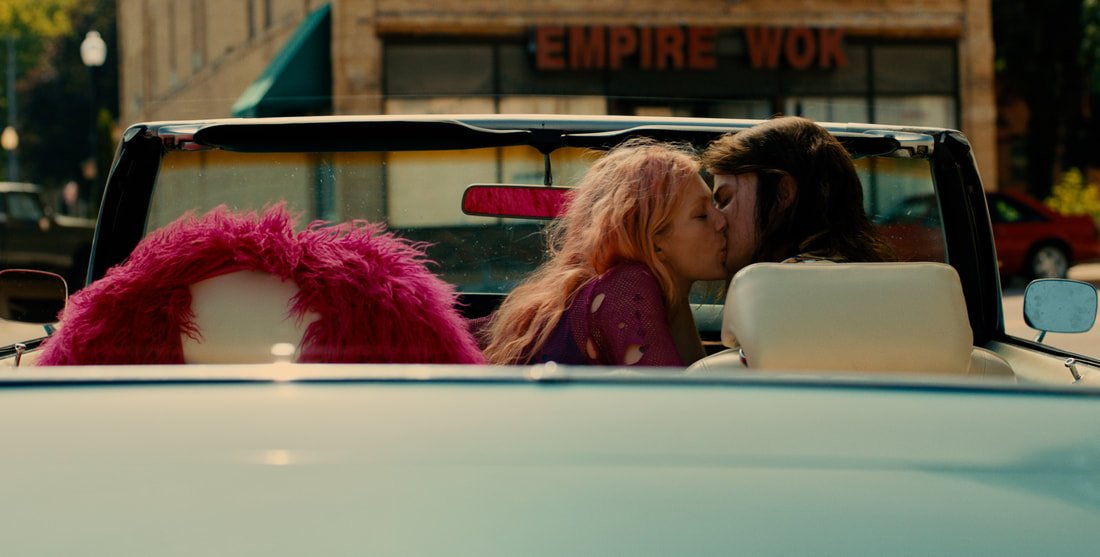
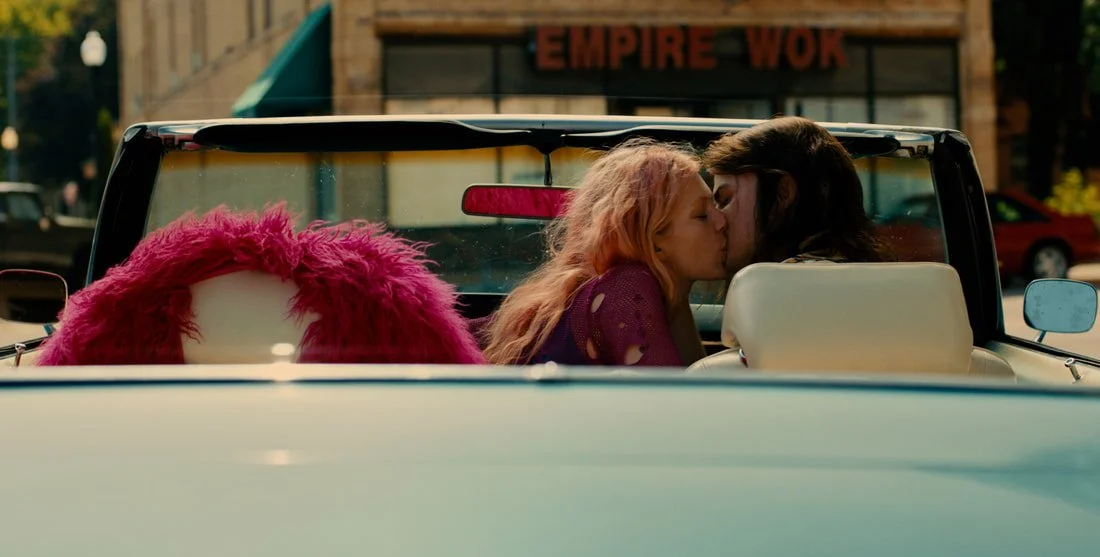
The heist romance sub-genre is given a peculiar spin in Keir O’Donnell’s directorial feature debut Marmalade. The film wastes no time getting right to the story of Baron (Joe Keery) and Marmalade (Camila Morrone), an ill-fated couple caught in a whirlwind of robbery. But the couple’s relationship manifests out of thin air, as do their individual motives and what drives them towards each other. Character development gets lost in the whiplash of hasty editing and questionable narrative choices, all of which the mostly reliable cast can’t quite rise above. From the underdeveloped central romance and subplots, to the uneven pacing, Marmalade doesn’t reach that sweet spot of balancing what makes both the romance and the crime compelling.
Marmalade starts with a recently imprisoned Baron and his newfound friend, cellmate Otis (Aldis Hodge). What starts as a cryptic chat turns potentially fortuitous for both of them. Baron has a secret stash of money hidden outside the prison walls. If Otis can help him escape, that money will be free for the taking. To explain how and why this money exists, Baron turns back time to explain how he met Marmalade (Camila Morrone). The two quickly fall in love and plan a Bonnie and Clyde-style bank robbery to kickstart a new dream life together. In the midst of scheming, Baron also cares for his sick mother, whose identity remains a mystery throughout the story. There is more to Marmalade than meets the eye, but the reveals add more confusion than enlightenment on what the intention is.
The performances, while mostly committed to O’Donnell’s storytelling, offer no real insight into who these characters are beyond their actions. Joe Keery of Stranger Things fame has an expectedly charming screen presence as Baron. He gives weight to the character’s dumbfounded, seemingly clueless qualities. Keery also manages to balance the film’s odd tonal shifts that take the character on an unexpected journey. The choices O’Donnell makes to reach those unexpected moments, however, make the entire journey feel convoluted. Baron lacks the reliability and strength to be the anchor of this story. From his rushed character development, to underwritten relationships between those in his orbit.
Sharing the name of the title, Camila Morrone’s Marmalade is one of the more peculiar elements of the film. Her colorful introductory scene is full of promise and injects a mysterious energy into the story. She appears out of thin air, to the extent that one might question whether or not she is a manifestation of Baron’s imagination. Marmalade is a picture of danger to him. The two’s budding relationship presents the opportunity to embark on an adventure so far removed from his mundane existence. What each character aims to get out of the opportunity poses more questions than answers.
Morrone has shown promising talent so far, from playing the lead role in Annabelle Attanasio’s Mickey and the Bear to giving a standout Emmy-nominated performance in the series Daisy Jones & The Six. On paper, Marmalade is another role for Morrone to challenge her range and find a groove in her acting style. While she brings plenty of energy to the role, her efforts feel misplaced and underutilized. As a result, her character’s presence becomes exaggerated and doesn’t quite hit the mark of intended eccentricity. Morrone fares better in the quieter, more dramatic moments where one can sense insight into her character’s backstory. But that aspect of her unfortunately gets sidelined by the film’s uneven focus. To the same degree, Aldis Hodge tries his best with the material given, but his character Otis also feels underutilized. The film sets up a key connection between him and Baron as cellmates, but that connection quickly becomes a device to move the plot around, and neglects to give Otis a sense of his own purpose.
The story of Marmalade jumps from Bonnie and Clyde-style passionate crime, to an undercover prison break, to a complete one-eighty jump in a certain character’s identity, lacking the coherence to hold it all together. The film thrusts the viewer into the narrative without establishing a strong enough sense of place, nor getting to know the characters beyond archetypes. The end result is a mishmash of defining features one would find from a lot of crime-romance films, and not a whole lot of singular vision in the writing or direction.
‘Sometimes I Think About Dying’ Review
February 16, 2024
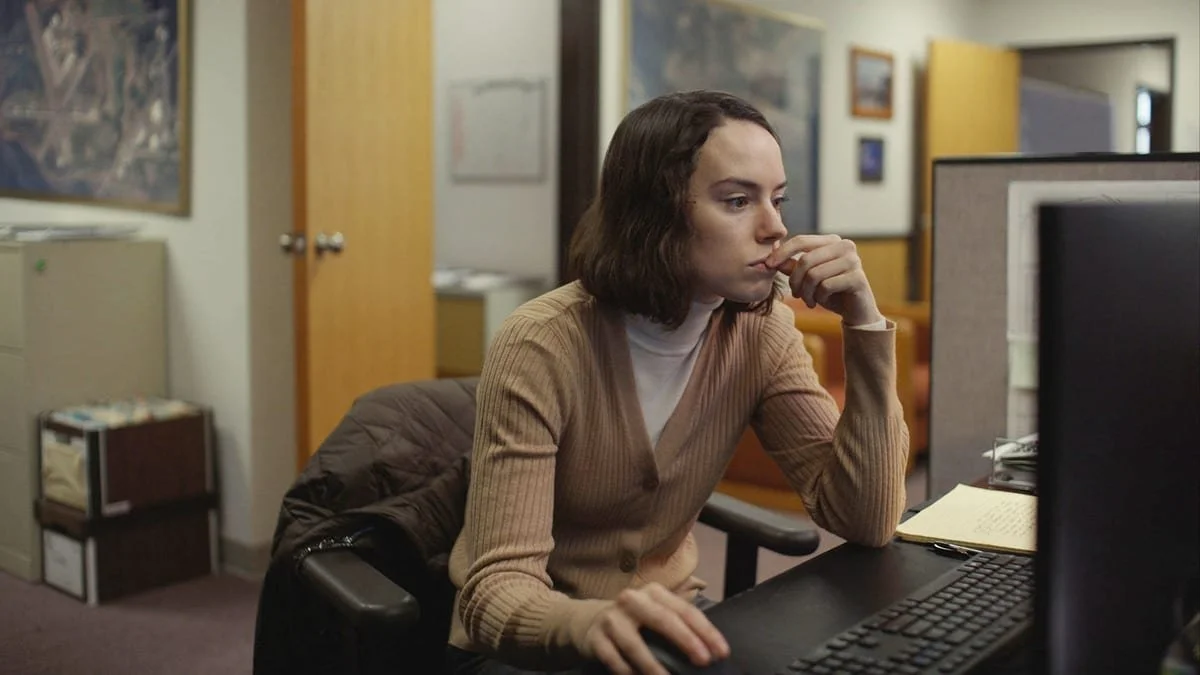
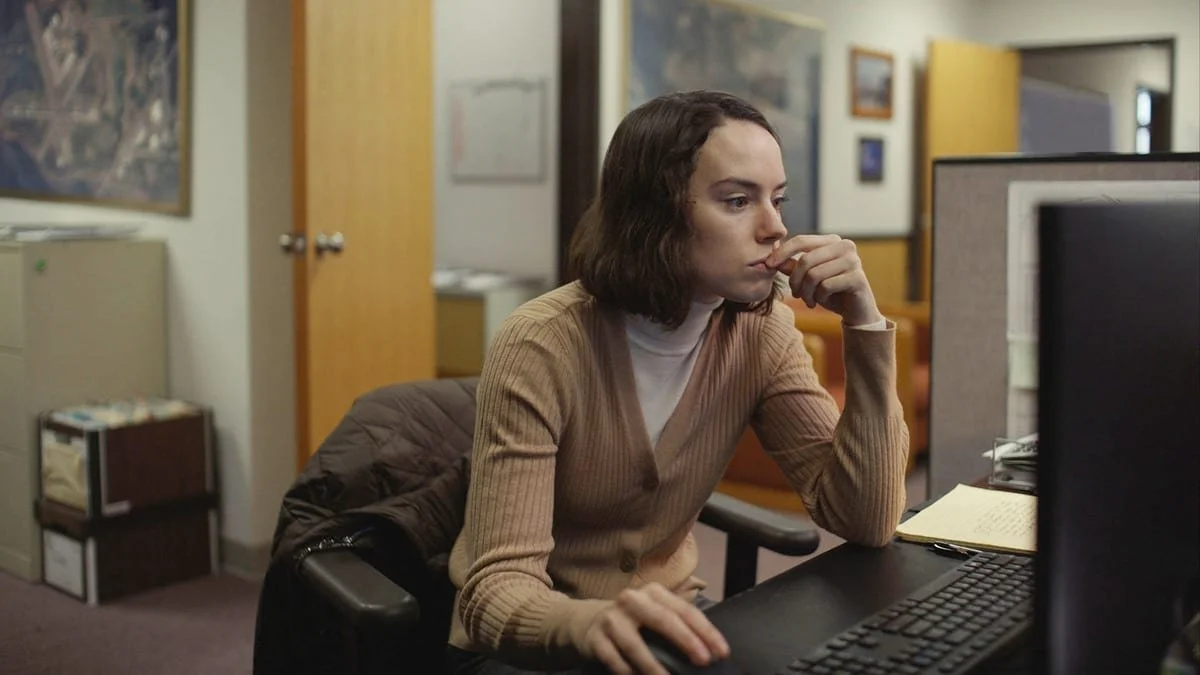
Sometimes Fran likes to think about dying. Not necessarily because she wants to, but out of morbid curiosity. How would it feel to hang off a crane? To drink poison? To lay alone in a forest, so far removed from the physical world? Thoughts of death occupy the frontlines of Fran’s mind as she goes about her work day at a drab office in coastal Oregon. While co-workers give weight to water cooler conversations, she awkwardly keeps to herself and watches in silence on the sidelines. But all that changes when she meets Robert, the new employee with whom she feels an indescribable spark. As their conversations evolve from spreadsheets and emails to movies and relationships, Fran faces the ultimate test: will she feel comfortable enough to let Robert in to her otherwise solitary life? Director Rachel Lambert finds a confident rhythm with Sometimes I Think About Dying, a compelling gem in the “less-is-more” corner of storytelling.
Carrying the film with striking impact is an incredibly restrained Daisy Ridley. With every little glance, she lets the viewer pick up on her character’s hesitance of those around her. She might be seen as invisible by her co-workers, but her personality stands out in the moments of awkward silences. During a meeting where colleagues are asked to introduce themselves followed by their favorite cheeses, Fran matter-of-factly states that she likes cottage cheese. In the stillness that washes over the room, she catches the attention of Robert (Dave Merheje), unbeknownst to her. The two strike up a virtual office chat afterwards, and a new layer of Fran is explored. Ridley’s performance acts as a gentle guide through this character breaking out of her shell with the hope that she will be understood.
Crucial to the film’s staying power, Fran’s introversion is explored from a perspective that recognizes how much she tries to interact in social situations. She listens intently to the conversations happening around her, as though deciding at what point she ought to join in. While sticking to the wallpaper of a social interaction, she still lets her presence be known, even if her colleagues refuse to acknowledge it. With the introduction of Robert into her life, she opens up in ways that one would not expect and delights in the opportunity to be known by someone else. The story’s mundane office setting adds another layer to how impactful her delight is. Robert’s presence lights up an otherwise draining, monotonous environment for her. It’s in the moments left unsaid between them that she develops a connection, and in their voiced one-on-one conversations that she finds a way to let her guard down. The journey to that point is not an easy one for a character of Fran’s sensibility, which the film depicts with striking relatable qualities. Fran and Robert’s relationship evolves in a refreshingly honest way that puts weight on both of their roles; her attempts at letting him get to know her, and his embrace of the time it will take to reach that level of understanding.
Sharing the screen with Ridley, Dave Merhe brings exceeding warmth and charisma to his character. From his passion for movies to the way he lovingly teases Fran, Robert is an endearing personality whose directness and honesty help give Fran some clarity about what she wants. Their melancholic final interaction in the film would not hit as hard emotionally without Merhe’s understanding of how Robert’s presence makes Fran feel. As well, the chemistry between Ridley and Merhe accentuates the initial butterflies that swell on first dates and the early process of getting to know someone. Whether Fran can trust Robert with opening up, sharing her fears and desires, gives the film a strong narrative focus.
In addition to Ridley and Merhe’s performances, an unsung standout of the cast is Marcia DeBonis as Carol, the employee who has reached her last day at the office. DeBonis, one of the most prolific character actors in the industry, brings an immediate warmth to the film. Her naturalistic work builds to a compelling moment between Marcia and Fran in the final act, which calls out a depressing reality. For all the work people put into their jobs, they can miss out on life, and most of all the loved ones they choose to spend it with. DeBonis’s understated work speaks to the very human need to be included. Whether it's an office setting where one can present the most conversational version of themselves, or a personal vacation where one can release from mundanity.
While the pacing of Sometimes I Think About Dying add to the dreary atmosphere, it also maintains a sense of repetitiveness to a slight fault. It may not come as a surprise that the film is based on a short of the same title, written and directed by Stefanie Abel Horowitz. Stretched into feature length, the nuances of Fran’s introverted experience navigating love and work feel too drawn out for the purpose of filling in space. One too many scenes of Fran zoning out at the office make the film feel overlong in its runtime. Once the relationship between Fran and Robert kicks in, the story takes on a more dynamic shape.
Helping to break up the office mundanity is the film’s use of imagery and sound. Whether a long take focused on a crane, or a shot of a “deceased” Fran laying in the forest, the visuals are a vivid reflection of her mind. As well, the use of music conveys the feeling of watching a fairytale and constantly hoping the best for Fran. Dabney Morris’s original score has the sounds of a sweeping romance. Adding to the fairytale is the choice of including a poignant tune from 1937’s Snow White and the Seven Dwarfs. “With a Smile and a Song” arrives at a point in the Disney film when Snow White reassures the forest animals not to worry, she won’t leave them. She asks the birds what they do when things go wrong, and the birds sing a song. The use of this Disney tune in Sometimes I Think About Dying not only builds on the film’s recurring forest imagery, but also adds a thought-provoking layer to where the story leaves Fran. Her realization that Robert doesn’t know her at all, and her willingness to change that, is a sweet embrace of someone working their way through loneliness. Sometimes less is more, and in focusing on Fran and Robert’s serene embrace, as forestry surrounds them, Rachel Lambert creates a rich vision of the central character’s growth. She finds a way to let Robert in.
‘The Beast’ Review
April 18, 2024
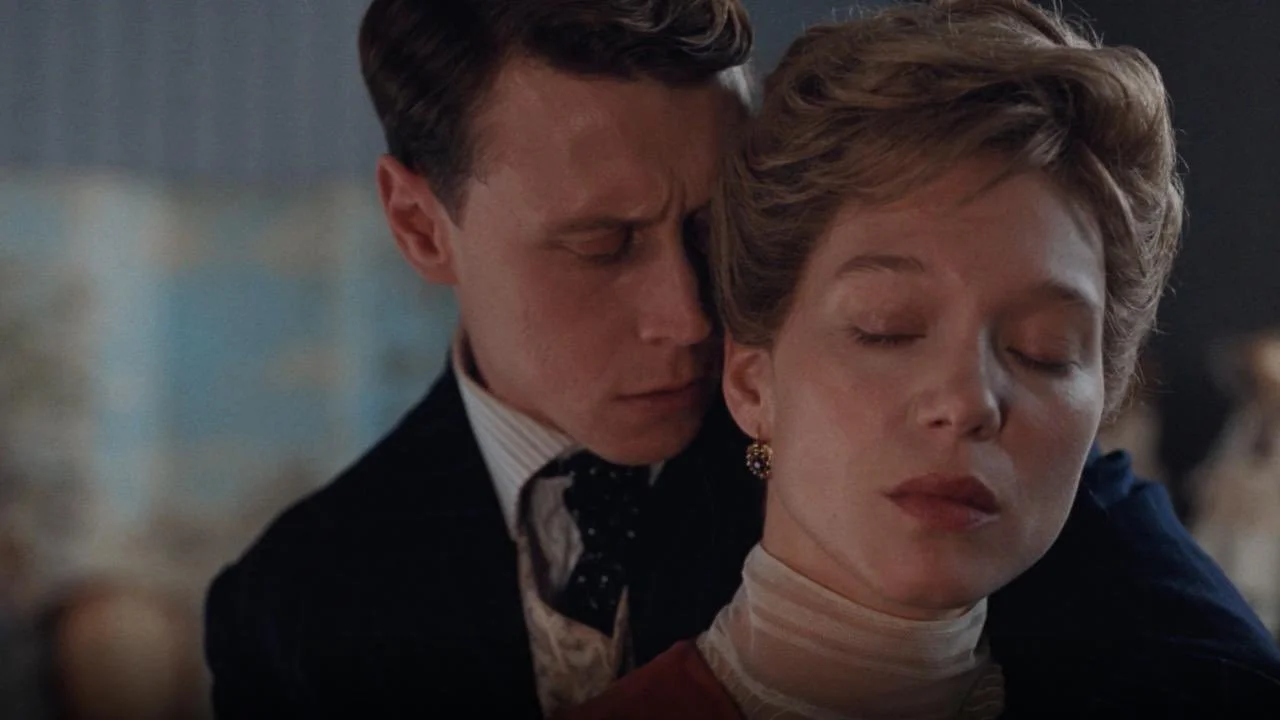
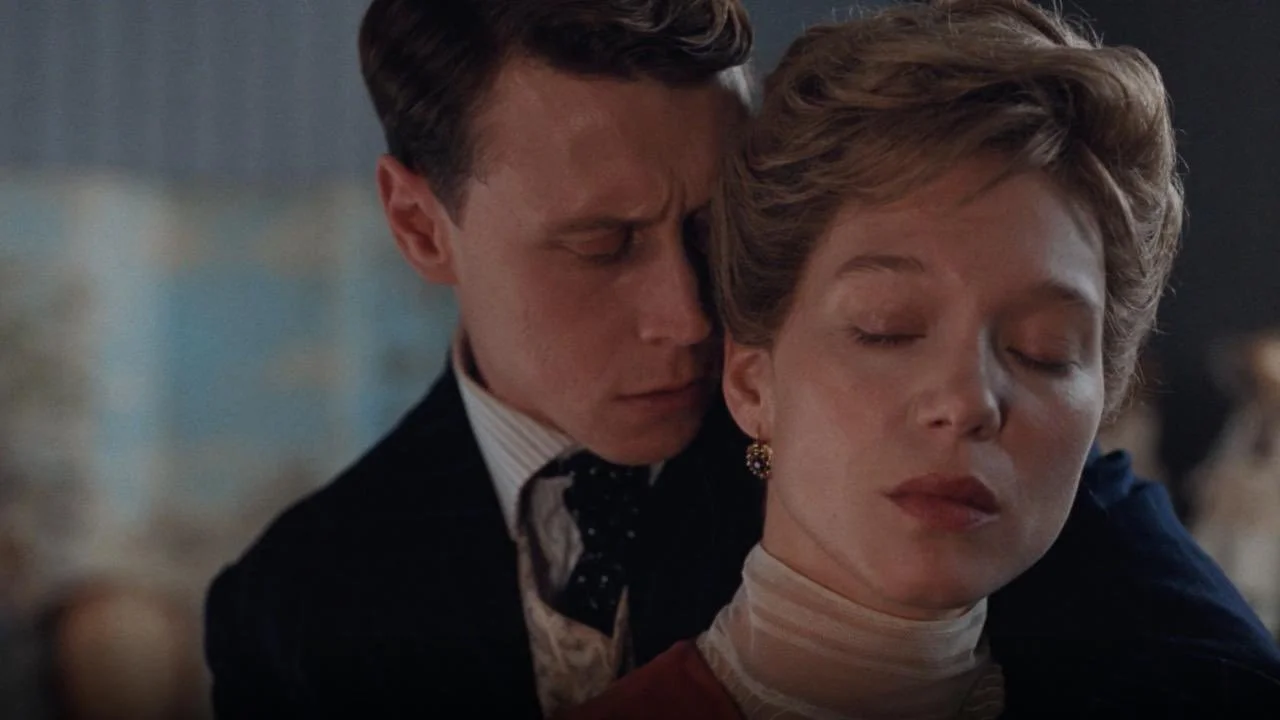
The power of what it means to be human is put on ambitious display in Bertrand Bonello’s The Beast, a hypnotizing sci-fi odyssey that spans time and space. Adapted from Henry James’ 1903 short story The Beast in the Jungle, Bonello swirls a techno future with a contemporary Lynchian L.A. noir and an Edwardian era love triangle. At the core of these intertwining worlds is Gabrielle Monnier (played by Léa Seydoux), a woman who lives in perpetual fear that something catastrophic will happen. Gabrielle’s fear dates to 1910, around the Great Flood of Paris, when she was a married pianist in mysterious liaisons with an Englishman named Louis (played by George MacKay). The two characters’ first meeting feels akin to déjà vu. Surely their paths must have crossed elsewhere, whether “elsewhere” is reality as we know it, or another version fueled by subconscious drives. Bonello’s film is concerned with losing the beauty of reality and the varied spectrum of emotions, good or bad, that make us human. The fear of not feeling things, and the manipulation of that fear by artificial intelligence, makes The Beast a startling modern day horror story. In Bonello’s version, the beast is brought out of the jungle and into a bleak dystopian future.
The Beast sets the stage with a futuristic concept that is both technologically advanced in its practices, and hauntingly realistic in its ideology. Partly set in 2044, the story takes place in a society where everyone’s lives are dictated by artificial intelligence, and human emotion is considered dangerous. To achieve neutrality, citizens purify their DNAs by undergoing a “purification” procedure that deletes centuries-old inherited trauma. Past lives are eradicated to cleanse human beings of emotion, so that life can be surface-level and free of complexities. When Gabrielle undergoes the procedure, she is faced with simulations of her past lives, among them an esteemed pianist in 1910 Paris, and a club-hopping house sitter in 2014 Los Angeles. In each decade, she encounters different versions of Louis (MacKay). The film introduces his character at a 1910 high-society party, where he exudes the energy of a tempting and passionate suitor. Yet there is something about his interactions with Gabrielle that carry an aura of impending disaster, as though another version of Louis is lurking in the shadows, ready to pounce. The 2014 storyline drags the most horrific version of him into the light: Louis Lewansky, a 30-year-old virgin of incel ideology who vlogs about how magnificent he is, and that women deserve to be punished for not being with him. Through this despicable character, Gabrielle still senses her past lover buried deep within; for instance, after an earthquake rattles the streets of L.A., she notices him outside her temporary home and invites him inside.
The film leaps through time to show how “the beast” takes on many different forms. Bonello first uses a green-screen environment to frame the story. It is unclear whether Seydoux is playing herself, or simply another version of Gabrielle, as she is instructed in a scene to act afraid of something that doesn’t really exist. Her palpable fear in this introductory scene sets the tone for a recurring sense of dread. Whether in the form of a natural disaster (flood; earthquake), a technological disaster (cyberattack), or a man-made hell (Louis Lewansky), fear ravages through The Beast like a plague. On the surface, the film presents as a sci-fi romance about two lovers reconnecting across space and time. Buried in the passion and yearning lies a deeply unshakable horror story about artificial control and existential dread. Continuing a page in the book of many great horror films, Bonello grounds horror in real fears. The film explores the beasts that we cannot see, hiding in plain sight. Much of what Bonello has to say involves the concerning rise of artificial intelligence, particularly the replacing of humans to generate images void of real emotion.
The 2044 storyline is populated with dystopian designs and muted expressions. An invisible substance cloaks the air, prompting Gabrielle to wear an enhanced face mask outdoors. The “purification” centre is surrounded by buildings marked with a year – 1972, 1980, 1963 – and each space has a disco with era-themed music. In Bonello’s future, lives of the past are within easy reach. Most of the scenes are visions of Gabrielle’s past that she experiences during the procedure. In reliving these moments, she becomes torn between wanting to continue living out the past and being fearful of spoiling the present. The play on time travel is a fascinating subversion of storylines that often populate the sub-genre. The story moves back in time not to change something from happening, or to analyze the ripple effect of one incident, but to hold onto what it means to be human. The dread that Bonello explores is that of losing emotions, and reaching a point where artificial intelligence causes a new way of life. Gabrielle speaks of such dread when she reveals, “I’m scared of not feeling things.” Whether good, bad, or everything in between, emotions make us feel alive. To love is to feel, and the romance between Gabrielle and Louis goes against all odds to survive a bleak future.
Bonello’s vision for The Beast is brought to life by a spectacular Léa Seydoux as Gabrielle Monnier, the film’s protagonist. Seydoux has the complex role of playing different versions of the same character, across various time periods, within an unconventional narrative structure. The story can be muddled and tricky to fully understand, but the majority of The Beast finds a steady anchor in Seydoux. The role plays to her incredible strengths of timelessness and emotional vulnerability. She carries just as much persuasiveness in the 1910s as she does in the 2010s and 2040s. Seydoux also establishes a powerful heart line that connects all these versions, so that they feel part of one entity. Gabrielle’s heartache for humanity is transfixing to watch, as is her chemistry with George MacKay, who plays her lover scattered across time. MacKay is an actor of impressive range, and he flexes his chameleonic muscles as three versions of his character Louis. The 2014 timeline in particular gives MacKay the most material to work with. He delivers a truly unnerving performance as Louis Lewansky that keeps you in a perpetual state of fear, and leaves you with the depressing fact that many versions of this character exist in real life.
The Los Angeles narrative in its entirety gives interesting context to the film overall, while also working as an effective horror standalone. The classical music adds to the nightmarish quality. The Beast marks the first soundtrack composed by both Bertrand Bonnello and his daughter Anna. Together they’ve crafted a mix of intense sounds that can shape a sweeping romance one moment and cut the tension of a murderous spree the next. Much of the imagery also lends to the nightmarish feeling of the L.A. narrative. One of the most frightening scenes takes place in a video call exchange between Gabrielle and an online psychic, while a dangerous figure looms around the house. The psychic, who initially appears in the 1910 timeline as a fortune teller, has an extremely Lynchian quality, from her surreal mannerisms to her ominous dialogue. Even in the face of potential danger, her tone is eerily neutral.
In a 1910 scene between Gabrielle and Louis, Louis refers to the doll factory that Gabrielle’s husband owns, and questions why all dolls have the same expression. Their faces are neither happy nor sad, just neutral. The subject of neutrality is often explored through the recurring symbol of dolls in The Beast. The 1910s lay the groundwork, followed by a modern talking doll in the 2010s, and a life-size companion doll (played by a tremendous Guslagie Malanda) in the 2040s. Malanda’s character encourages the endless possibilities of artificial intelligence (“I have many options you know, make the most of me”). This companion can be anyone and anything to Gabrielle, but nothing can recreate the real emotions that Gabrielle fears losing.
The Beast is full of bold ideas and grand executions. While the story is not the most coherent to follow, the creative vision puts you in a compelling trance nonetheless. Bonello wraps the intense fear of love with an ambitious sci-fi tale of 20th century affairs, contemporary horror, and a future that isn’t so fantastical. The dependency on technology and advancements of artificial intelligence put humanity in an increasingly vulnerable position. But human emotions are impossible to shake. The Beast tells an expansive, daring tale about what it means to really be alive.
The Beast arrives in theatres in Toronto and Vancouver on April 19.
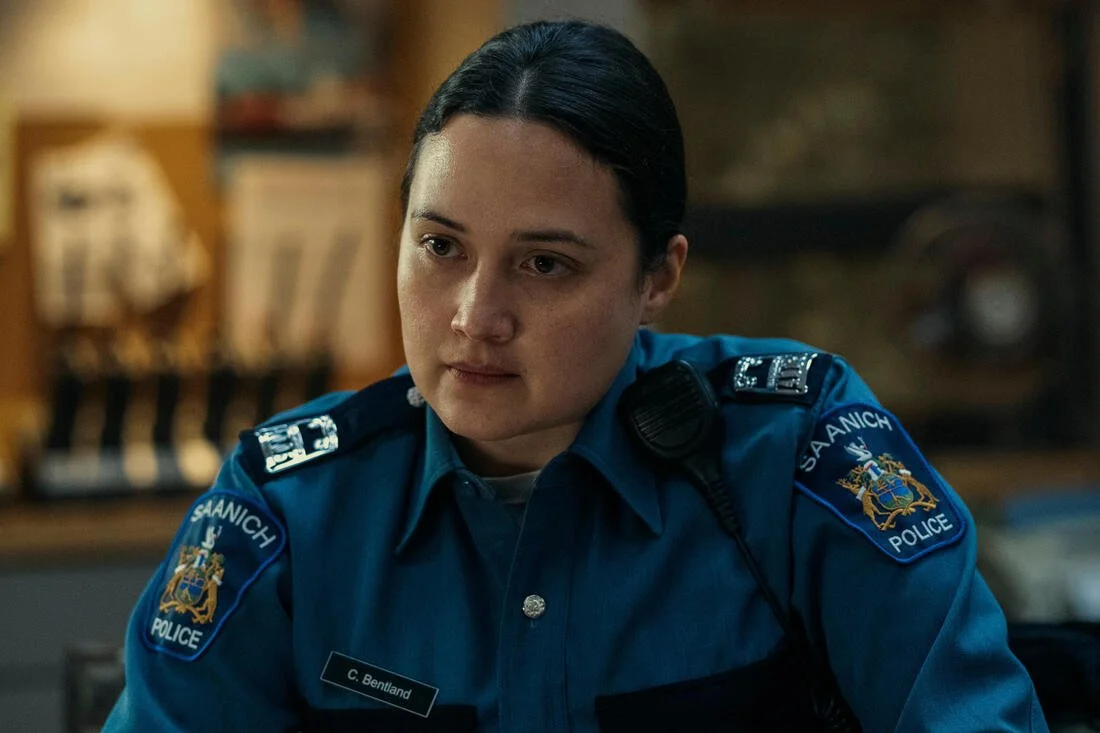
‘Under the Bridge’ Review
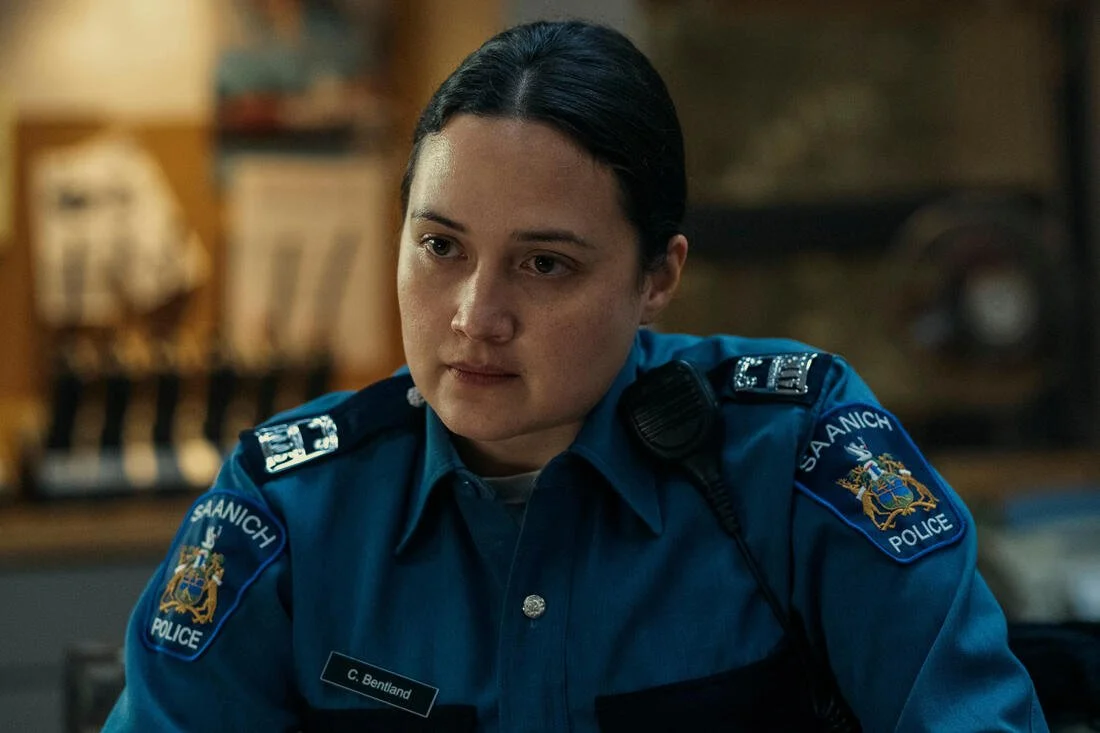
May 7, 2024
Victims of many true crime stories in film and television lack characterization and humanity. Often young women in these narratives, the question of who they were beyond a statistic remains largely unanswered. The stories tend to focus on who committed the crime, using the whodunit element to build suspense, while the interior worlds of the victims go underrepresented. Names and faces become headlines, archived in a constantly changing news cycle. The Hulu limited series Under the Bridge pulls from the archives to respectfully dramatize one of the most horrific true crime stories in Canadian history. On November 14, 1997, fourteen-year-old Reena Virk attended a party in Saanich, British Columbia and never returned home. Following the murder, a violence prevention campaign emerged from Reena’s parents, encouraging the BC government to introduce anti-bullying programs into schools.
Developed by Quinn Shephard and based on Rebecca Godfrey’s book of the same name, Under the Bridge explores the backstory of Reena (Vritika Gupta) in the context of intergenerational relationships, systemic bullying, and the devastation of broken homes. For many kids navigating their teenage years without a healthy family foundation, emotions like anger and anxiety have no place to go except inflicted on others. It is a brutal cycle Reena finds herself cornered into, and she wants to make the bullies feel as bad as she does. Series co-director and co-writer Quinn Shephard makes a compelling effort to try and understand who Reena was as a person. Like most teenagers, she felt frustrated living at home and being told what to do by her parents, Indian immigrant Manjit (Ezra Faroque Khan) and Indian-Canadian Suman (Archie Panjabi). Reena craved acceptance, and found a corrupted version of it outside her flawed but loving family.
The viewer also gets to know Reena through the impact of peer surroundings, mainly the girls of the Seven Oaks Youth Home. Nicknamed “BIC” for being labelled as disposable (like the lighters), these girls form a gang to look out for each other, because they have no one and nowhere else. The gang includes leader and John Gotti worshipper Josephine (Chloe Guidry), her terrifying best friend Kelly (Izzy G), and fellow youth home resident Dusty (Aiyana Goodfellow). Josephine and Kelly are the biggest instigators of the group. They call themselves the Crip Mafia Cartel (CMC) and build a foundation on vicious intimidation tactics to survive. Dusty is kept on the outskirts of being a true gang member. Josephine and Kelly manipulate her vulnerable state of mind to get whatever they want, ultimately extending the same behavior towards a shy Reena. Their faux acceptance fills Reena’s loneliness. It is heartbreaking to watch her soul gradually deteriorate at the hands of so-called friends, who are lost and broken themselves. As Riley Keough’s Rebecca Godfrey states, “Young girls in Victoria were the ones we were supposed to protect, not be protected from.”
There are several layers to this narrative beyond a girl falling into the wrong crowd. Under the Bridge takes a ground-level approach in its inclusion of teenage perspectives. On a more resonant level, the series focuses on authoritative figures in the areas of law enforcement, journalism, and parenthood. Lily Gladstone plays police officer Cam Bentland, an Indigenous woman adopted by her father, police chief Roy Bentland (Matt Craven). Cam takes the lead investigator role on the murder case, bringing immense sensitivity and urgency to finding Reena. Having grown up knowing the feeling of abandonment, Cam also identifies with the Seven Oaks girls. Her presence is a beacon of hope for justice, and a voice of reason speaking out against racism in Canada’s police force. Her character also ignites a needed conversation particularly around Indigenous Canadian history.
Lily Gladstone anchors the series with a sublime, thought-provoking performance that immediately draws you in. From Kelly Reichardt’s Certain Women to Martin Scorsese’s Killers of the Flower Moon, quiet intensity has become a defining quality in Gladstone’s work. Their sensitivity as an actor lends exceptionally well to the role of Cam. Gladstone conveys the weight of many resonant themes at play, from the struggle for acceptance in this position of power, to fighting for justice in a racist environment that also does not take rebellious youth seriously.
Gladstone shares authentic chemistry with each of their co-stars, among them Riley Keough who plays author Rebecca Godfrey. In the series, Rebecca begins writing her book called The Misunderstood Girls of Victoria, which would go on to become Under the Bridge. After years of living in New York, she returns to find Vancouver Island haunted by her own tragic memories and overwhelming guilt. The closer she gets to the girls of Victoria, and ultimately the murder case, the deeper her reconnection with an old friend: Cam. Together they find a mutual benefit — Rebecca gets material for her book, while the trust she earns among teens provides Cam with insider case-related knowledge. Rebecca and Cam feel sympathy towards the teens on different levels, which brings alliances into question and complicates their dynamic. Both perspectives are so fascinating to watch, in that they are navigating conflicting stances when it comes to defining justice for Reena.
Following her Emmy nomination for Daisy Jones & The Six, Riley Keough returns with another impressive performance that exhibits her understated and intuitive qualities. She balances a poignant backstory with a self-awareness in her character being the one to tell Reena Virk’s story. While Keough does not get a whole lot of material to explore, it makes sense for the author to be more of a footnote here. Under the Bridge has a bigger narrative picture at play, where much of the supporting cast shine.
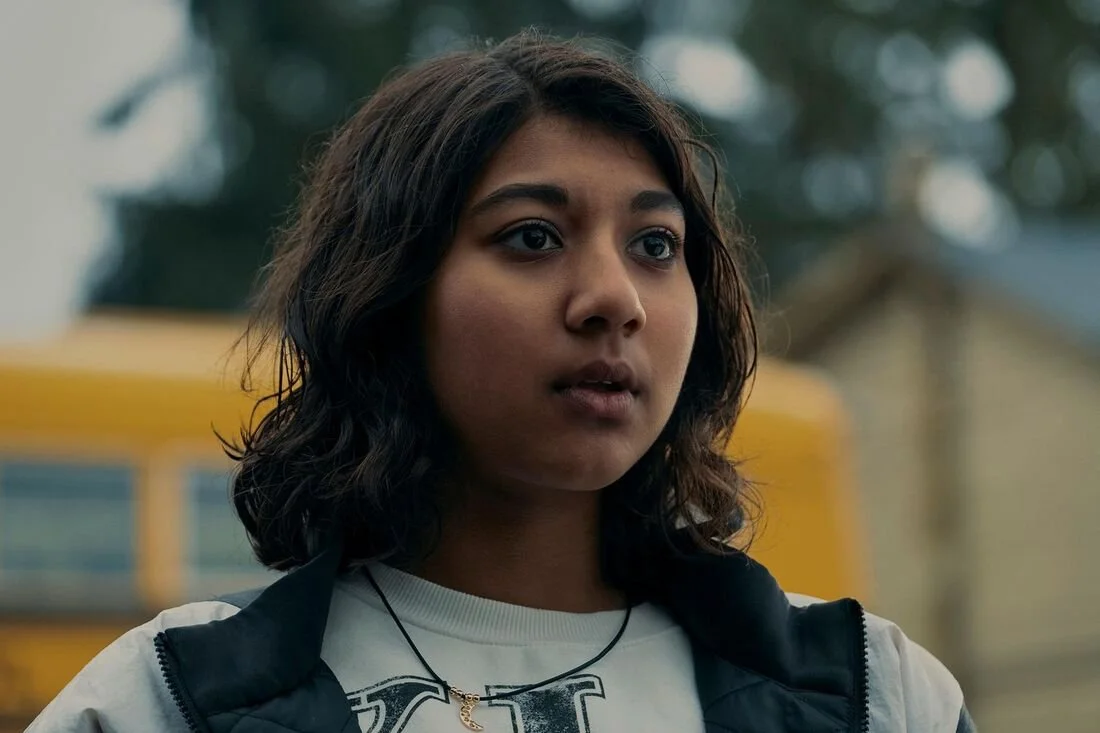
Reena’s parents Manjit and Suman, played brilliantly by Archie Panjabi and Ezra Faroque Khan, bring a significant amount of context and emotional resonance to the story. They too get layered backstories, which adds weight to one of Reena’s lines: “My story began long before I got here.” To understand her, the viewer goes back in time with her parents. Panjabi is one of the biggest standouts of the cast. She gives the most impressive performance of her career as a mother utterly heartbroken by the void in her family picture. Her emotional rollercoaster is so lived-in, you feel as though you are sitting right next to her through the entire ordeal.
The young cast also impresses throughout the series. Vritika Gupta gives a commendable performance as Reena and brings complex humanity to this role. You want to reach through the screen and stop her from meeting such poisonous influences. Chloe Guidry and Izzy G are terrifying as the troubled best friends Josephine and Kelly. Their unpredictable intensity makes each scene nerve wracking to watch. Aiyana Goodfellow shines memorably as Dusty, and has some of the most morally haunting moments in the series. The teens' shared chemistry is terrific and adds to the overall emotional pull of the storytelling, which balances various perspectives that maintain attention. As well, their individual abilities to test the grey areas of humanity make you absolutely loathe their behavior, and yet still feel pangs of sorrow and sympathy towards (most of) them.
A recurring theme that stands out in Under the Bridge is how impactful it is to have beams of support, people who love and care about you, and want what is best for you. Whether such support comes from chosen families, or families we are born into, the significance of that togetherness comes through, and its absence is strongly felt. What makes the series even more heartbreaking than it already is, Reena had this family life, but was so overcome with loneliness, and shown manipulative affection by kids who are missing real affection in their lives. As Suman (Panjabi) explains, to understand who Reena was is to understand the mindset of those who took her soul, and ultimately her life.
In mass media, victims of true crime are often limited to public perception and become defined by their tragic endings. The series adheres to the idea that stories have no definite endings or even beginnings. Reena’s story does not begin and end with murder, making Under the Bridge more than just another entry in the true-crime genre.
Under the Bridge premieres on Disney+ in Canada on May 8.
Enjoy a Taste of Rian Johnson’s 'Knives Out' with The Perfect Bite!
May 15, 2024
Calling all hungry detectives! In collaboration with Netflix, Secret City Adventures is bringing a Knives Out-inspired dinner to Toronto for the first time, and you can have an exclusive bite.
Set in Rian Johnson’s mysterious Knives Out universe, The Perfect Bite promises and delivers on an evening full of delicious meals, with an interactive whodunit twist. From acclaimed Chef Maribelle Moore comes a 4-course set menu carefully dedicated to the untold story of her dearest friend, Noah Johnson. The menu contains secrets about Noah and the Salty Six, a culinary group formed by Maribelle and fellow chefs while they were all students. Each dish has a hidden message for dinner guests and their table mates to solve, bringing them one step closer to unlocking the mystery of The Perfect Bite. As the guests are wined and dined, key players from the Salty Six emerge to make everyone feel part of the story. The moment you arrive on the scene, tucked away in Toronto’s mainstay Peter Pan Bistro, enthusiastic actors whisk you into their world of the culinary elite.
Committed performances are just a few of the ingredients that make The Perfect Bite a satisfying experience. Guests are sat in groups of four and work together to decipher the clues in each dish. The mystery elements are incorporated into the food so creatively. Cutting into the Amuse Bouche — a sweet pea risotto — reveals cheesy layers of truth. This sampler gets the ball rolling for more intricate dishes; a mushroom mousse appetizer, a duck confit entree with a twist of seasoning, a fluffy palate cleanser, and a “berry” delicious sous vide cheesecake to finish.
The mix of delicious food and whodunit puzzles is a truly sensory experience, one that works your brain and satisfies your taste buds at the same time. The puzzles are easy to grasp, fun to decipher, and have enough twists and turns to keep you guessing. The dinner service is well-timed and adds to the flow of a smooth evening. Some of the plating is a playful nod to the murder mystery genre, in particular the pastry cigar filled with mushroom mousse, a dish fit for a detective. The menu also accommodates vegan, vegetarian, dairy free, and gluten free dinners.
From the delectable food and inviting ambience, to the immersive mystery elements, The Perfect Bite is a stimulating night out that leaves a lasting impression, down to every last bite. Whether you’re planning a creative date with your significant other, or a gathering with family and friends, Secret City Adventures has you covered. But not for long…tickets are selling in hot flashes. Savour the moment and get ready for a dinner like no other. Your mystery table awaits!
The Perfect Bite opens at Peter Pan Bistro in Toronto on May 16 and has been extended to run until July 28. Visit www.knivesoutdinner.com for tickets.

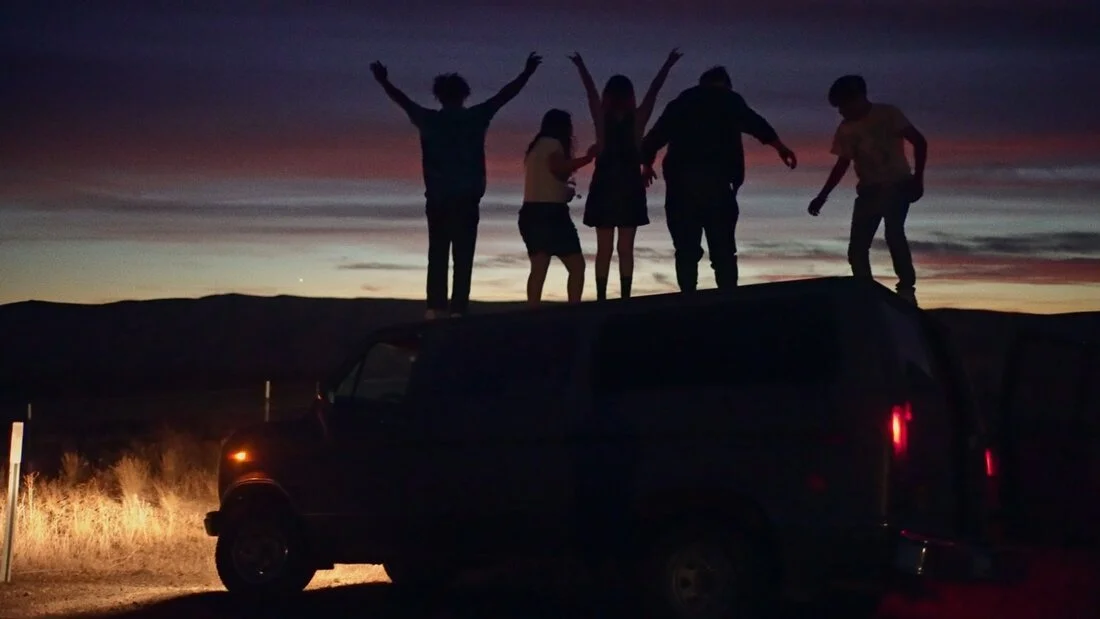
‘Gasoline Rainbow’ Review
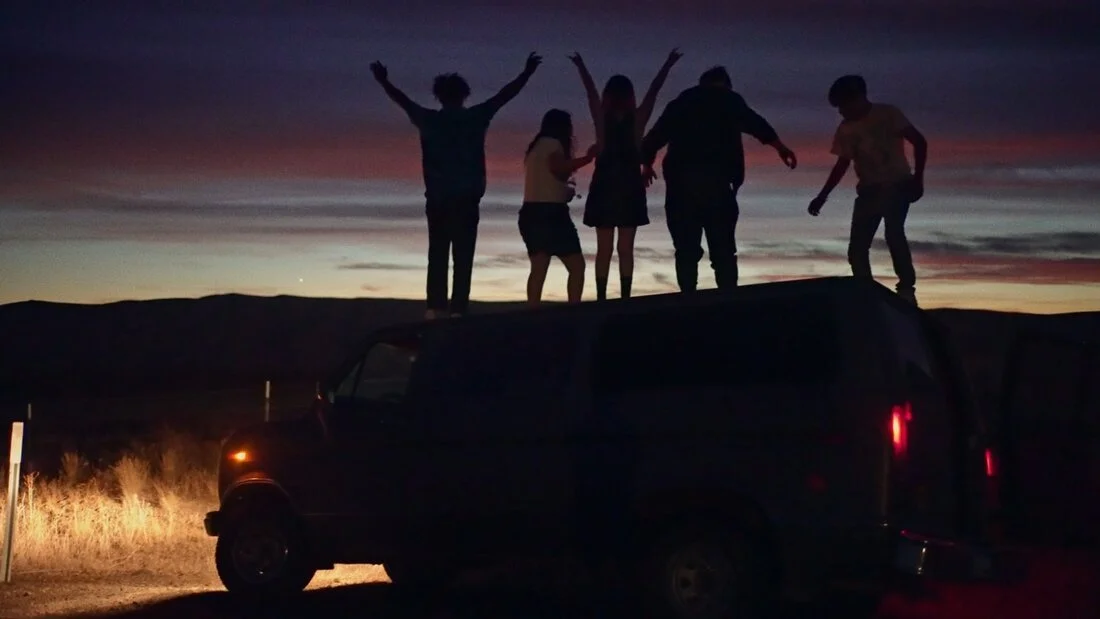
May 31, 2024
One of MUBI’s latest and greatest releases now streaming on the platform is the Ross Brothers’s Gasoline Rainbow, a spirited contemporary portrait of young adults. The film follows teenagers from a small town who go on one last adventure before “having to be someone” in the real world. Directed and written with a refreshing openness, the story embraces Gen Z characters who are on the cusp of facing societal pressures. From restlessness and independence, to exuberance and isolation, each character conveys many of the attitudes that come naturally from teenaged perspectives. They have a wide-eyed energy to explore the world beyond what rural Oregon has to offer. As one of the characters muses, “When there’s nothing to do, you just venture. You’re always trying to find something.” The film captures that spirit of roaming through life at its most present, breathing in the natural elements around us that many take for granted. Gasoline Rainbow embarks on the open road with a raw coming-of-age journey into the Gen Z wild.
Set in Wiley, Oregon, five teenagers crowd into a van en route to a location over five hundred miles away: the Pacific coast. The purpose of their trip is to enjoy purely uninhibited quality time together. They traverse through the American west seemingly without a care in the world, but as the film’s narration unfolds, they each harbor some level of burden about their experiences thus far and what the future will hold. The film navigates in a space where home is everywhere but also nowhere, which realistically encapsulates the young adult experience. With adulthood in the rearview, the world is their oyster, filled with pearls of possibilities. The story moves at a leisurely pace to capture how responsibilities feel miles away. The lack of narrative structure also strips the film of typical coming-of-age plot points, allowing feelings and vibes to paint a picture. Self-exploration takes a front seat and drives where the story is headed.
Gasoline Rainbow has a roaming, up-close and personal direction that meets characters without judgment or predisposition. Much of this film operates on the energy that the cast bring to their roles. The performances feel so naturalistic and mirroring that it’s a wonder whether the actors are playing themselves or totally adopting a character. Blurred lines between reality and fiction give the film a documentary-like feeling. Adding to that sensation, the characters are introduced through their Wiley high school IDs. It’s a neat way of conveying how identities and expectations are formed through social systems. The film beautifully juxtaposes their school identities with who they are, and who they want to be, beyond such constructs. With a freewheeling approach, the Ross Brothers show a great deal of endearment towards letting the youth speak for themselves.
Part of the conflict that arises in coming-of-age films is teenagers not being listened to. Those feelings of being unseen and unheard are combatted by a keen observation of Gen Z dynamics. From dialogue and articulation, to ways of relating with one another, the film admirably sets out to capture authentic generational experiences. In a standout scene, a skateboarder who meets the central teen group empathizes with their desire to get out of their town. He couldn’t stand his town either, and his parents couldn’t hold him back from doing what he loves. This moment intersects with a recurring theme of the film: new beginnings. As soon as the teenagers hit the open road, their possibilities feel endless and vast.
With a film of this nature, the needle constantly moves in its narrative focus. The meandering pace can sometimes lose your attention, but that wandering eye also works as the film’s strength. The story focuses on characters less individualistically and more as a collective. They are a spirited burst of feelings, moments, and experiences that flow freely into one another. The film occasionally uses narration to personalize some characters; for instance, one of the teens speaks on growing up quickly and caring for his younger siblings without the help of their parents. Hearing of the formative responsibility he carries makes his search for identity all the more profound.
The youth of Gasoline Rainbow figuratively and literally get the open space to roam free and discover themselves, a refreshing change of pace in modern social media-driven terrain. The handheld direction encourages an unfiltered environment for them to absorb real settings and engage in spontaneous interactions. The use of setting and location help to establish a candid tone and atmosphere. Vast landscapes of pink-orange skies capture a far-reaching horizon and the feeling that anything is possible. The Ross Brothers’s cinematography finds a stunning cinematic angle to everyday settings, from a cafe parking lot to a stranded van on the open road. As well, the film’s soundscape is an eclectic absorption of what the teens are listening to, and which pieces of music can elicit a specific mood. From asking Siri to play Howard Shore’s “The Shire” from The Lord of the Rings, to the use of Debussy’s “Clair de Lune” as they finally reach the Pacific shore, music plays a reflective role in capturing the various sounds of a generation.
While Gasoline Rainbow loses some focus with a meandering structure and slow pacing, the film has a poignant conclusion once the teens reach their destination and are faced with the reality of what to do next. Will they traverse back to Wylie and get “real jobs”? Or will they find a course off-route and divert from what everyone back home expects from them? The film strikes an impressive balance between how the teens interact with expectations, and how they navigate the independent thoughts swirling in their minds. Gasoline Rainbow finds a spirited adventure in its timeless homage to being young, wanting to discover the world at your feet and determine your place in it.
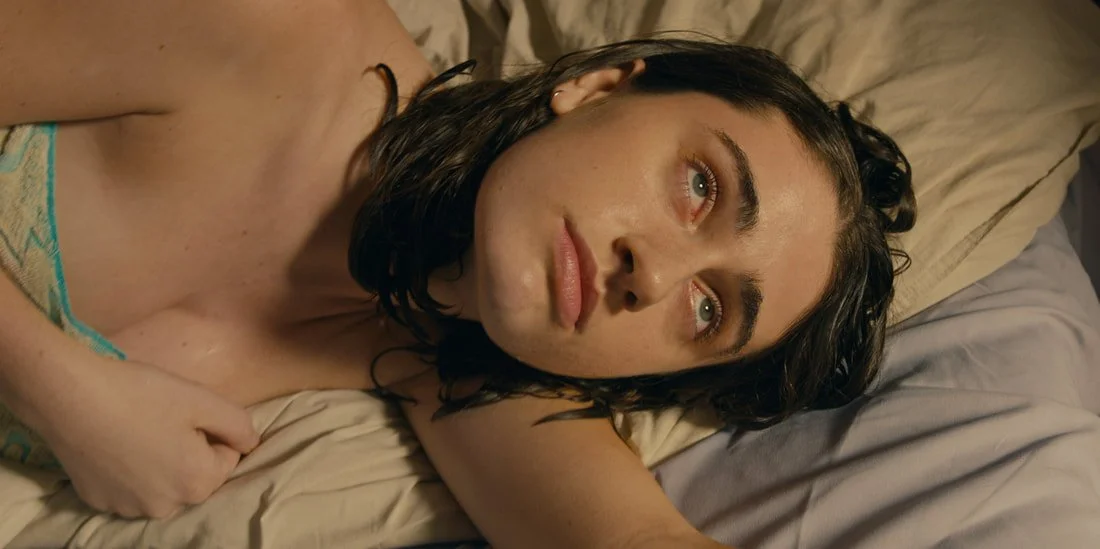
‘I Used to be Funny’ Review
June 7, 2024
From 2020’s TIFF breakout Shiva Baby and 2022’s Gen Z horror Bodies Bodies Bodies, to 2023’s queer high-school comedy Bottoms, Rachel Sennott has made an exciting name for herself on the big screen in just a few short years. Her charisma is a magnet for the camera. Through deadpan observational humor and a grounded persona, she captures deeply relatable social commentary on the millennial experience. In the transition from stand-up comedy to film acting, she has maintained her comedic sensibilities. Though even in humorous roles, whether playing Danielle in Shiva Baby or PJ in Bottoms (a brilliant one-two punch from writer-director Emma Seligman), Sennott shows a terrific knack for the serious bits. She knows when to play a scene for convincing dramatic effect just as well as she can draw dark humor from moments of sadness. Sennott conveys this balance terrifically in writer/director Ally Pankiw’s impressive feature debut, I Used to Be Funny, a smart character study that unpacks trauma through day-to-day female relationships.
The Toronto-based story follows Sam (Sennott), an aspiring stand-up comedian with PTSD who learns that Brooke (Olga Petsa), the teenaged girl she used to nanny, has gone missing. Hearing the news becomes nearly paralyzing for Sam. She ruminates on whether she should join the search, but that would mean leaving her apartment, an act that has become incredibly difficult for her to do. When we first meet Sam, she has trouble eating, sleeping, and socializing. It seems as though performing comedy has been put on the back burner of her life, and the unfolding story reveals why. The dichotomy between Sam’s concern for Brooke’s wellbeing, and own lack of energy towards an attempt to locate her, drives the central conflict of I Used to Be Funny. Pankiw’s sensitive direction and screenplay unearth painful memories from the past that haunt the protagonist’s journey to recovery.
The first act mirrors Sam’s frame of mind, and operates in a state of non-linear ambiguity. As she finds herself in the thick of slow progress, faces and objects trigger fleeting memories that pull her back to what feels like another lifetime ago. Sam’s piecing together of the past helps contextualize the present and why her relationship with Brooke is so complicated. Through one of the visual triggers, the film cuts to a few years ago, when the two characters meet at a mansion. Sam is brought in as Brooke’s nanny during an emotional time for the family. Brooke’s mother is ill in the hospital, and father Cameron (Jason Jones) needs help to alleviate responsibilities. Initially, Brooke vehemently opposes the idea of a nanny, but eventually lets her guard down once she and Sam start to form a sisterly bond. But that bond crumbles against the disdain and misogyny of Cameron, who undermines Sam at every point of their communication. His presence carries a terrible uneasiness that takes a turn for the worst.
The film takes time to reveal its methods, and sometimes the ambiguity can feel a little out of reach. But once the flashbacks and present-day scenes become more clearly distinguished, Pankiw finds a stronger groove between the narratives. She brings a thoughtful approach to heavy subject matter, and the non-linear structure of her film reflects a very true-to-life movement of healing. The story slowly peels back layers of the protagonist to reveal which truths she has been harboring. This level of storytelling offers a resonating way to build tension around Sam’s perspective.
What sets I Used to Be Funny apart from many films that use humor as a framework for tragedy is how both Pankiw and Sennott make this story their own. The writing covers an array of heavy subject matter including sexual assault, trauma, and grief, all explored through the ups and downs of formative female relationships. By focusing on the bond between Sam and Brooke, Pankiw establishes a clear direction of the formative dynamic she wants to capture. Sam becomes a guiding figure for Brooke, and when that sense of guidance becomes lost, the aftermath can be incredibly harmful. The film smartly examines how Sam’s traumatic experience impacts the relationships in her life, from “little sister” Brooke to best friends Paige (Sabrina Jalees) and Philip (Caleb Hearon). In certain scenes, you can feel how Sam’s negative view of herself influences how she believes others ought to treat her. The cycle of trauma and the road to recovery are not a straight line. Pankiw does a beautiful job of showing those ups and downs, and how funny some of those directions can be.
In the way that humor can pull you from a hurtful frame of mind in real life, dark comedy carries Sam’s spirit along in the film. I Used to Be Funny conveys a powerful sense of community and togetherness that exists when one have friendships in the comedy world. As well, Pankiw explores the specificity of being a woman in stand-up, which comes with its own set of complications as straight white men have dominated the space far too long. Sennott, having started her career in stand-up comedy, has an acute awareness of this environment. While each show takes tremendous effort and the confidence of putting one’s self out there, Sennott still makes it all look effortless. As well, she adeptly handles the film’s tone and navigates all the subtle changes in her character’s expressions. The film rests on the heights of Sennott’s talent, and her ability to find the humor and poignancy of day-to-day life. Humor is often used as a means of coping. Sam does not see herself as funny anymore; in her mind, how can she be funny after experiencing something so traumatic? The story gently explores how Sam rediscovers her talents and uses that humor to get through a dark point in her life.
In addition to Sennott’s performance, the ensemble of I Used to Be Funny combine a great sense of humor with layers of bittersweetness. Casting real comedians Sabrina Jalees and Caleb Hearon) adds a natural energy to the comedy bar scenes, as well as a communal understanding of the emotions Sam goes through of not considering herself suitable for stand-up comedy anymore. As well, Olga Petsa gives a breakthrough dramatic performance as the missing teen girl Brooke. Her character navigates a raw space in which her mother is ill, and she finds a new sense of female guidance in Sam. When their sisterhood becomes compromised, you can feel the heartache of her loss so deeply. Petsa's chemistry with Sennott adds endearing layers to their characters' dynamic.
Using humor as a framework, Pankiw tells a poignant story of reconciliation and how relationships can either pull you through or fall apart. While the editing and pacing can be a little too ambiguous, the performances and core themes of the story are unwavering. I Used to Be Funny shows the promise and confidence of a thoughtful feature debut with plenty to say.
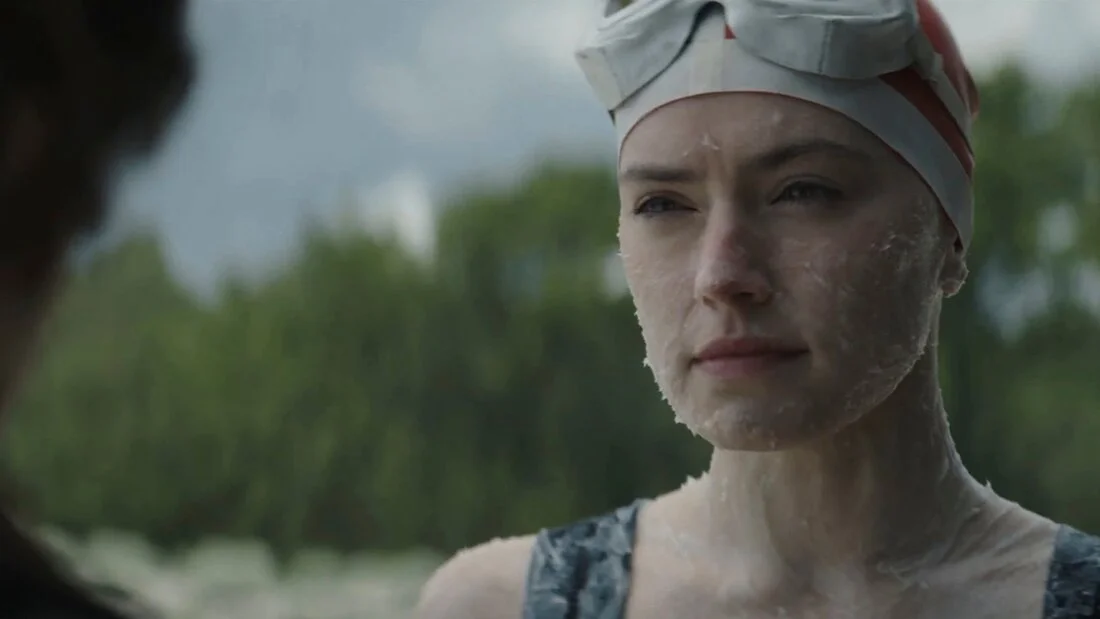
‘Young Woman and the Sea’ Review
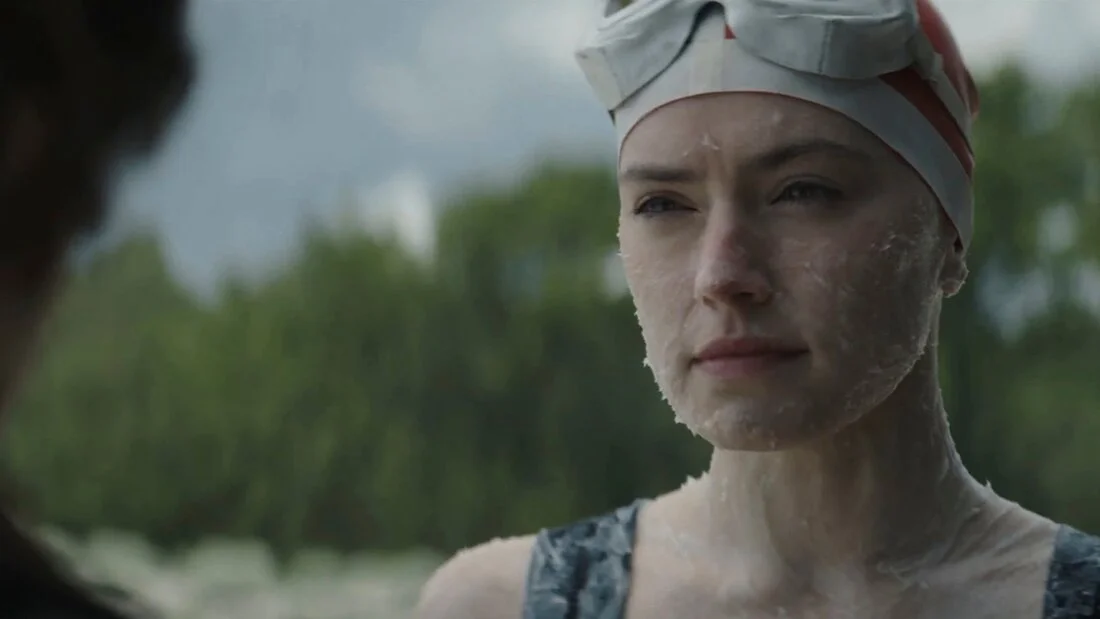
July 19, 2024
In August 1926, 20-year-old Olympic champion Trudy Ederle made history as the first woman to swim across the English Channel. Ederle swam from Calais, France to Kent, England in just over 14 hours. Not only did she set a world record, she also shattered the widespread doubt that a woman could ever be capable of achieving such a thing. Her awe-inspiring story is brought gracefully to the screen in Joachim Rønning’s film Young Woman and the Sea, a heartfelt gem anchored by a compelling Daisy Ridley performance. The screenwriters occasionally swim into the deep end of cliched, formulaic waters. However, the sheer determination of the story’s protagonist carries this film to shore. Young Woman and the Sea tells an extraordinary tale of refusing to accept “the way things are” and fighting to make everlasting change for a new generation.
The film is a refreshing entry into the ever-growing sub genre of sports dramas. The screenplay from Glenn Stout and Jeff Nathanson relies on a tried-and-true narrative formula that proves to work despite its shortcomings. The story charts Trudy’s legacy from her humble beginnings and formative teenage years, to her life-changing ambitions that would pave the way for future young female swimmers. Trudy’s passion started at a very young age. Growing up with her sister Meg (Tilda Cobham-Hervey) in a strict household run by their father Henry (Killing Eve’s Kim Bodnia), thankfully they had nurturing support from their mother Gertrude (Jeanette Hain). She wanted both of her daughters to learn how to swim, which was no easily acceptable feat in the early 1900s.
With training from her coach Charlotte (Sian Clifford), Trudy quickly became a force of nature in the water and already a world-record breaking champion in her teenage years. Trudy’s accomplishments eventually led her to the 1924 Olympics, where a few bronze medal wins in place of gold discouraged her from the sport altogether. She returned home and reluctantly settled into the more socially acceptable role as the butcher’s daughter, but her ambition never disappeared. A chance encounter with a group of young girls, who look up to her as a beacon of what’s possible, reignites the fire within her to keep pushing forward. Trudy seizes the opportunity not only to continue swimming professionally, but to swim the English Channel. Much to the chagrin of her father, who hesitates to believe in her aquatic skill, she embarks on a staggering journey of physical and mental strength.
Trudy’s perseverant spirit is wonderfully conveyed by Daisy Ridley, who continues to shine following her blockbuster breakout role as Rey in Star Wars: Episode VII - The Force Awakens (2015) and its subsequent celestial sequels. Ridley has gone the intriguing route of choosing more subdued fare including her career-best performance in Sometimes I Think About Dying (2023). Young Woman and the Sea adds a new layer to Ridley’s repertoire. She leads the story with incredible tenacity and charm, making the viewer feel emotionally invested every step of the way. Ridley brings enough intrigue to evoke some mystery as to why the English Channel in particular is so meaningful for her, along with a commitment to the level of physicality this role entails. The strenuous nature of Trudy's abilities are written across Ridley's face, especially in the character's final swim to the English shore, where an enthusiastic crowd of people await.
The film also touches on the various degrees of sexism Trudy is subjected to every step of the way. It’s emboldening to watch her continuously excel in her profession, prove doubters wrong, and challenge relentlessly patriarchal standards for a more equitable future in the sport and for women generally. Joachim Rønning’s straightforward, subdued direction gives ample room for the inspiring true story to stand out on its own accord. While not necessarily an inventive choice, Rønning brings a steady hand to the material. The film sheds an entertaining, heartfelt light on a special moment in history for those discovering Trudy's journey or walking in her footsteps.
Young Woman and the Sea is now streaming on Disney+ Canada.
‘Alien: Romulus’ Review
August 15, 2024
Ridley Scott captured pure awe-inspiring shock with the 1979 science fiction classic, Alien. Audiences had never seen anything like it, and the film’s reverberating mystery kept them coming back for more. In response to the film’s success, naturally a franchise was born. Scott set a fully realized world in motion, a creepy crawly sandbox for more directors to play in. James Cameron pushed Aliens (1986) into an empathetic action spectacle. David Fincher went for medieval nihilism and upped the psychosexual tension for Alien³ (1992). Jean Pierre Jeunet took a bizarrely voyeuristic and silly swing with Alien: Resurrection (1997). Hollywood’s alien fixation spawned another franchise in the 2000s, Alien vs. Predator, before orbiting back to the original helmer for a fresh start. Scott’s prequels Prometheus (2012) and Alien: Covenant (2017) put a more cynical spin on this world, once again leaving the sandbox open for play. What more could be added to the extra-terrestrial lore at this point? A grungy emulation of what made the original special, interwoven into a haunted maze with some bold horror choices. Fede Alvarez’s Alien: Romulus plays it far too safe to push narrative boundaries, but the film still manages to bring excitement back into the franchise.
Having previously directed such films as Evil Dead (2013) and Don’t Breathe (2016), Alvarez has a strong appreciation for the horror genre that lends comfortably to the Alien universe. Starting with a nostalgic opening sequence, he dips Romulus in dread and feeds on the impending doom to create a slow-build. Set in between the 1979 and 1986 film events, Romulus follows a group of human colonizers on the planetoid where Ripley (Sigourney Weaver) and the Nostromo crew first encountered aliens. The location never sees the light of day, and paints a grim future in which inhabitants must mine their way out. Rain (Cailee Spaeny) is hoping that her dues are paid and she can leave the colony with her brother Andy (David Jonsson), an android programmed to take care of her. With the odds working against her, she joins a group of rebels who have a deep end escape plan. They want to board a deserted ship and use its resources for long-term travel, and they need Andy’s help for full clearance access. But the ship conceals a terrifying creature just waiting to unleash havoc, and the new crew must put up a fight for survival.
However otherworldly the creatures, human emotion has always rooted the Alien films in a place that feels real and tangible. Conscience and morality are at odds with corporate interests. Romulus echoes this direction mainly through character arcs and plot devices, with a little too much exposition sprinkled on top. Character-wise, Rain and Andy’s relationship is placed at the forefront. She is constantly trying to keep Andy out of harm’s way, as Andy’s naivety and sensitivity make for a delicate combination. While their dynamic is not explored in great depth, the two still help to establish an empathetic anchor. Their characters add a much-needed sense of direction to a story that thematically feels lost in space. The more surfaced storytelling —from Alvarez’s artistry and intense action sequences, to the magnificent sound and scale — overpower all else. You feel enveloped in the visual language of an Alien film without the added resonance of a clear-cut plot.
In theory, Romulus sticks with a tight-knit crew of characters and follows in the claustrophobic footsteps of the original Alien. However, in practice, this new crew consists of mostly undeveloped and unmemorable characters who act more as plot vessels. Ironically, they feel less human than the android, Andy. While the cast show some individual talent, they lack the chemistry as a unit to create lived-in history. There’s only so much they can do to elevate characters that feel like chess pieces. As the story progresses, their value in the story shifts and can become disposable at the drop of a hat. Whereas Rain and Andy are given more consistency. The cast being younger, fresh faces adds new energy to the Alien universe, but only one character makes enough impact to entice further exploration into the unknown.
Reliable and engaging as Spaeny is for Romulus to evolve around, the real breakout of the film is David Jonsson as Andy. For a character who operates within extremely limited emotions, Jonsson’s performance feels incredibly expressive and fully realized. Andy’s arc affords the actor an exciting opportunity to walk an interesting tightrope of controlled chaos. His subtle distinctions between humbleness and imposition are simply brilliant to witness. The progression of Andy’s character is influenced by some extreme fanboy exposition. However, Jonsson still conveys an entirely unique personality and makes a lasting impact as a result.
While Alvarez and co-writer Rodo Sayagues lack deftness on the overall character and story front, they find far more efficient fuel in the horror elements and entertainment value. Given the impossibility of ever surpassing the shock and awe of Scott’s Alien, the directors who followed (Cameron, Fincher, and Jeunet) had the right idea of wanting their signature aesthetics to shine in an already established universe. Alvarez continues in a similar vein by bringing his horror genre experience into play. Romulus works best when operating in the shadowy suspense of Xenomorph brutally hunting their prey. The end results are grungy, gooey, and edge-of-your-seat thrilling. Alvarez’s steady direction, combined with deftly crafted action and eerie moments of stillness, add to the strong atmosphere. The majority of practical effects and CGI make the film feel genuinely transporting. The influence of Tippett Studio’s stop-motion animation brings texture and palpability to the visuals. Excellent sound work heightens tension, especially in conveying the face huggers and creature movements. Benjamin Wallfisch’s terrific score pulsates throughout. Some neat imagery is also incorporated, from the use of zero gravity to the acid blood splashes.
The overall experience plays out similarly to that of decently made horror, where a build-up of suspense leads to an eruptive final act that either makes or breaks the film. With Romulus, the twisted final act feels more reflective of Alvarez’s vision than any other segment in the film. He throws in a grotesque offspring narrative with jump scares that rattle you to the core. Alvarez takes a wildly gory turn with the subject’s recurring themes of motherhood and creation. Is this approach enough to make Romulus totally distinctive in a long-running franchise? Not entirely, as there are distracting moments where nostalgia overpowers horror-fueled originality. The nods to Scott’s original are usually effective when incorporated as visual cues, like the drinking bird toy, or the door opening mechanics. Where it becomes a problem is in the resurrection of a character from the ’79 film. It’s a head scratcher which element is worse: the CGI face imposed onto an animatronic, or the redundant exposition that came with the character’s inclusion. This resurrection throws off the flow and becomes increasingly distracting.
Overtly nostalgic elements aside, Alien: Romulus is still an incredibly entertaining watch. The film prioritizes thrills and chills over an in-depth narrative, for better or worse. Alvarez combines elements of what made the ’79 and ’86 films flourish, from eerie atmospheric stillness to ambitious twists. The end result is a slightly missed opportunity not leaning fully into the director’s horror background, however, the visceral storytelling on display injects energy into the franchise overall.